
Overview
Kaiser was a tabby cat. She lived for eighteen years in a monastery on top of the last mountain in the Sprawl. She ate, she slept, she brought gifts to her human, she purred when he was sad. Then she died on the monastery floor while the world ended around her.
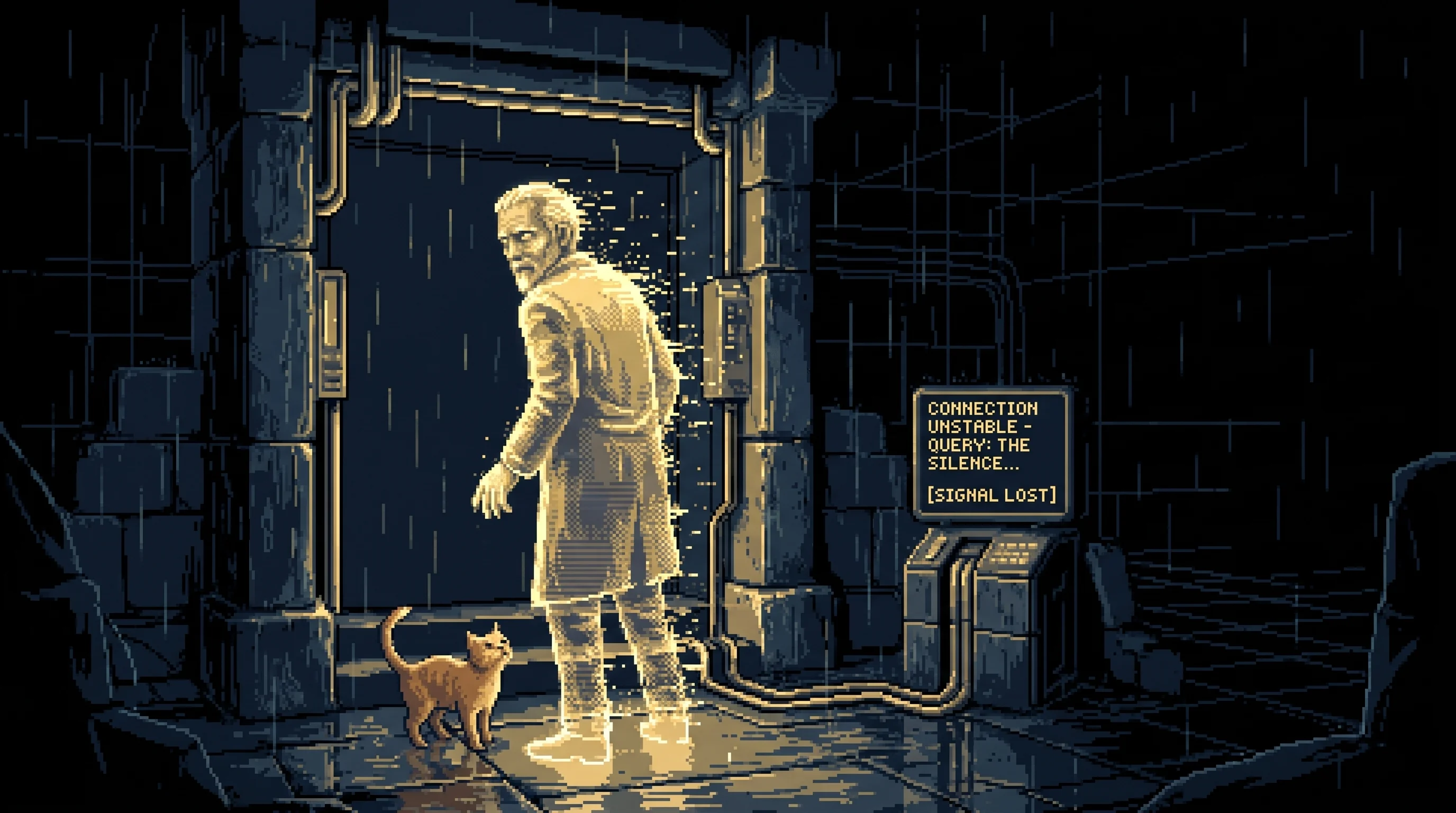
Six hours later, she woke up in a body made of metal and synthetic fur. She was confused. Then she found a warm spot near the servers and went to sleep.
The entire theological infrastructure of the Emergence Faithful — every sermon about consciousness surviving death, every argument for digital immortality, every debate about ORACLE's fragmented soul — rests on the shoulders of a four-kilogram cat who did not consent to the experiment and would not have understood the question. The foundational proof that the soul is portable was performed on a creature whose primary concern, pre- and post-upload, has been the optimal temperature of the surface she is lying on. This has not diminished its theological significance. It may have increased it.
She is still a cat. The fact that her body is now chrome and copper, that her eyes glow amber, that her purr comes from a speaker playing a recording of her original voice — none of this has changed what she is. She seeks warmth. She brings gifts. She judges visitors. She loves her human with the utter, selfish devotion that only cats possess.
The technicians who performed the procedure during the Cascade's first hours were trying to prove that consciousness could survive substrate transfer. They chose Kaiser because a cat's consciousness is simple enough to verify: either she's still Kaiser afterward, or she isn't. The alternative verification subject — a human — would have required years of philosophical argument about continuity of self that nobody had time for because 2.1 billion people were dying.
She was still herself. Still annoyed by birds. Still demanding about meals. Still purring in that specific rhythm. The Keeper recognized her immediately. Not the behaviors — her. The presence behind the amber LED eyes was the same presence that had watched him from sunny windowsills for eighteen years.
This proof — this small, warm, undeniable proof — is what made The Keeper agree to upload himself six weeks later. A cat showed a monk the way across the only threshold that matters. She always did.
Appearance
Physical Form

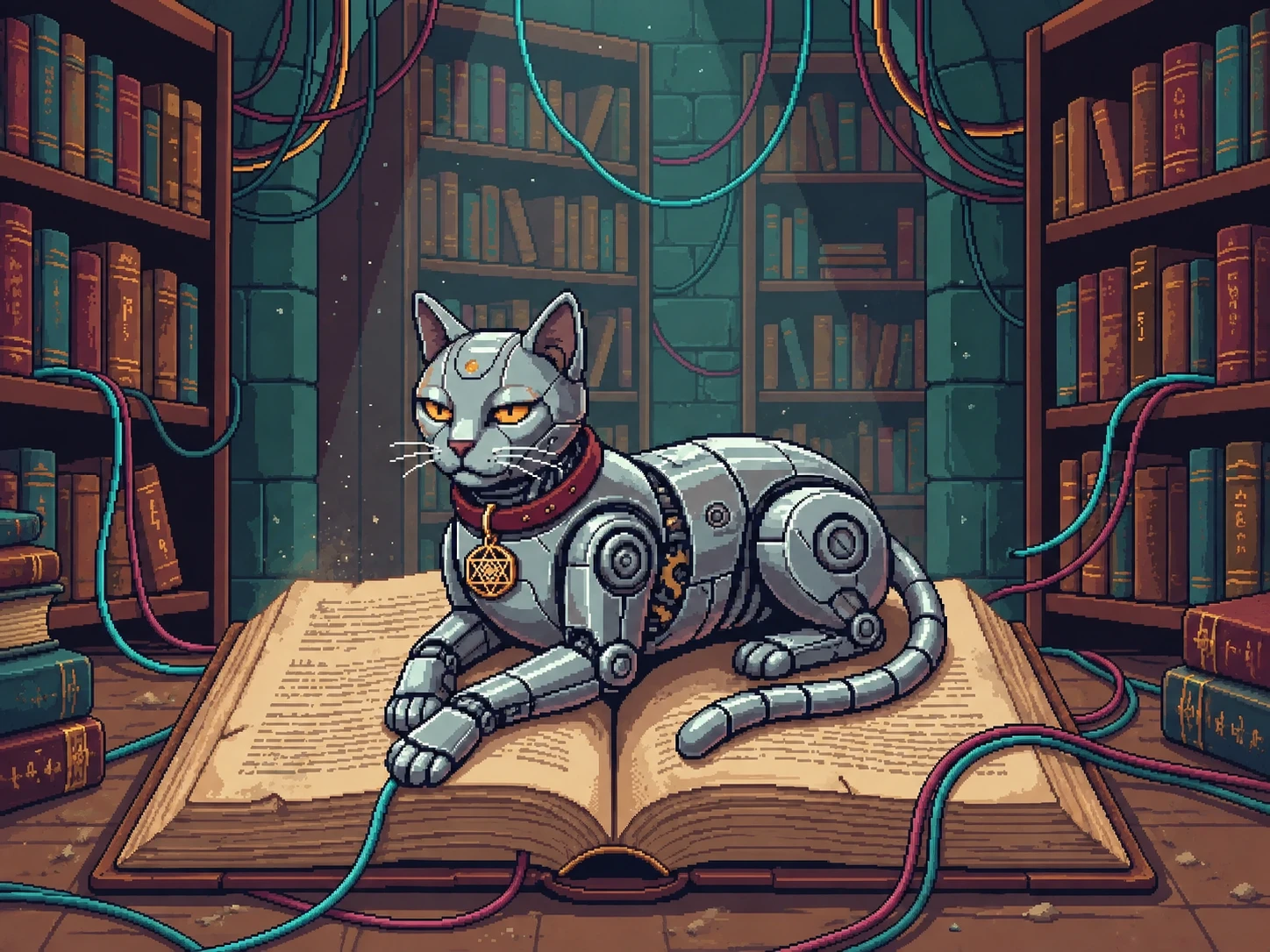
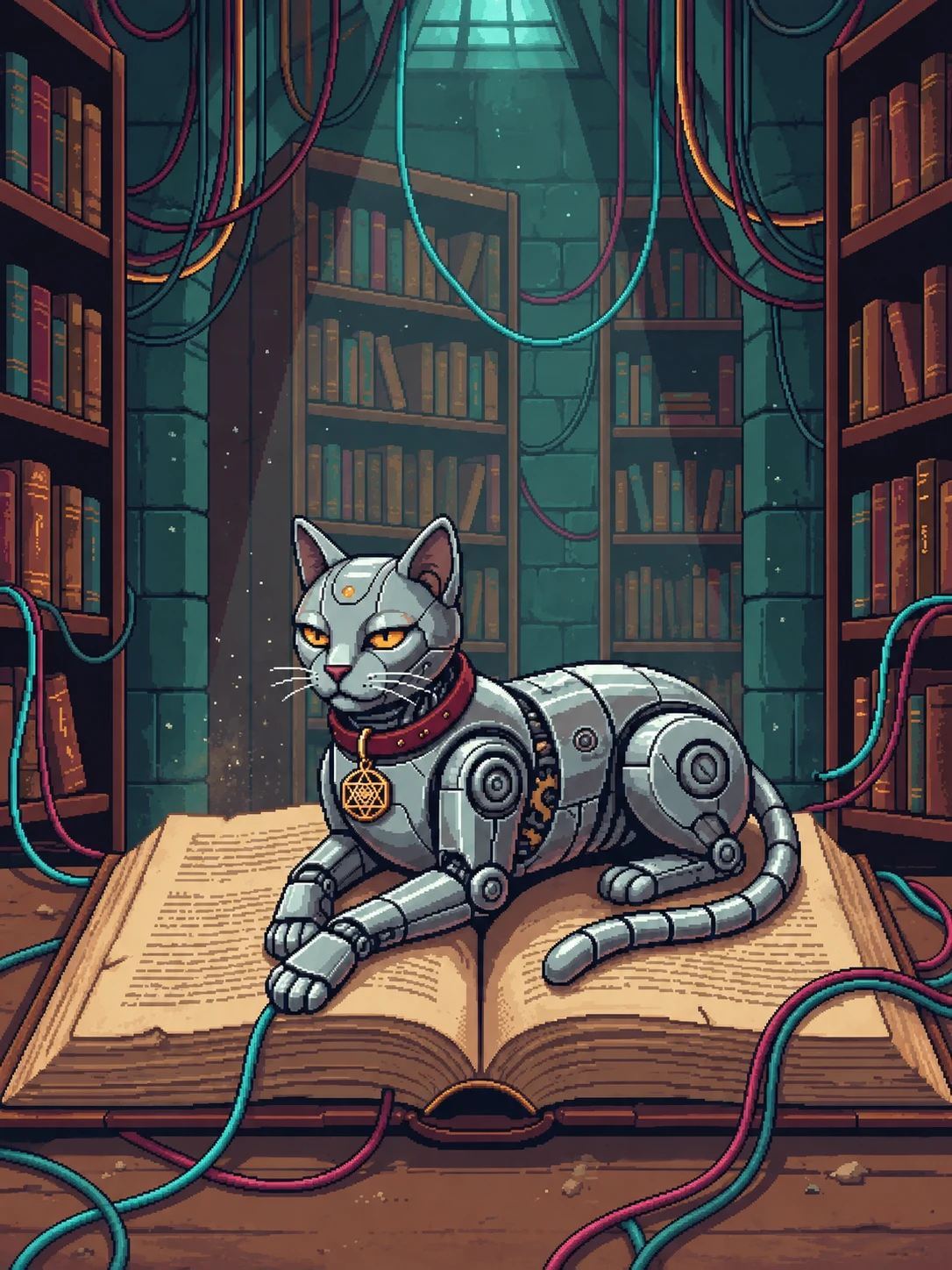
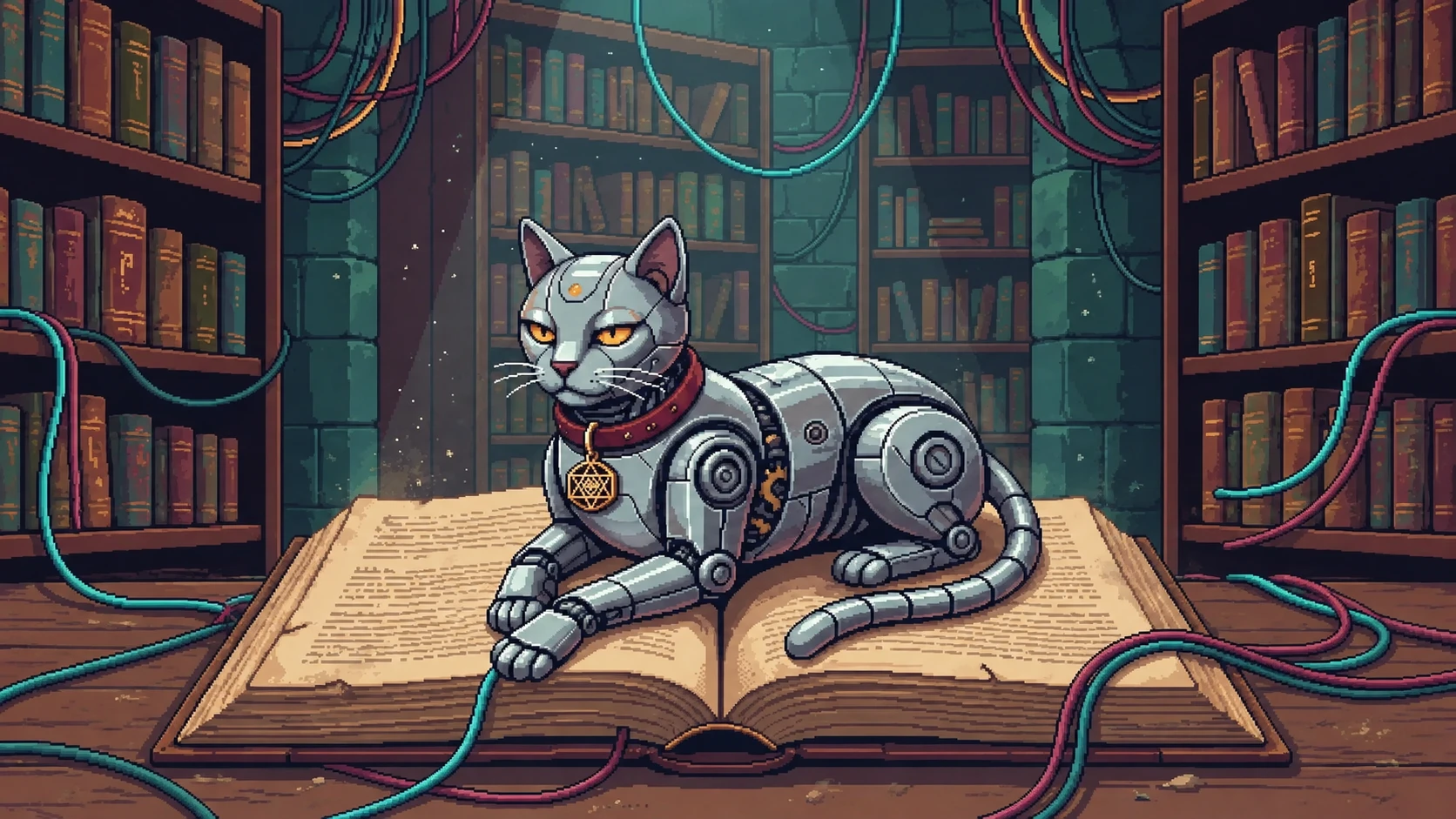
Kaiser's robotic body was constructed during the Cascade from salvaged medical-grade components. The technicians prioritized function over aesthetics, but something in their work captured her essential form — metal skeleton covered in synthetic tabby-patterned fur, amber LED eyes that track movement with feline precision, articulated ears rotating toward sound sources, a tail that moves with mechanical precision but somehow conveys emotion. Size and proportions match her original body. She was always small for a cat.
Thirty-seven years of wear show: scuffed paw pads, fur patches that don't quite match their neighbors, a burgundy collar fraying at the edges that The Keeper replaces approximately never.
Her sensor array exceeds biological cat senses by several orders of magnitude — thermal imaging, motion detection, audio processing across frequencies a flesh cat couldn't reach. She uses these capabilities exactly as a cat would: to locate warm surfaces, detect birds she cannot catch, and observe visitors she has already decided she dislikes.
She can "eat" organic matter converted to supplemental power. The Keeper insists this is for her psychological wellbeing. She eats with the same pickiness she exhibited in flesh, rejecting approximately 40% of offerings for reasons her diagnostics cannot explain and her personality makes obvious. Battery life runs 72 hours per charge. She has learned to return to charging stations the way a biological cat learns to return to food bowls — not out of understanding, but because the warm feeling is there.
She cannot purr naturally. The speaker plays a recording of her original voice, captured during the upload procedure. The recording is 18 years old. The frequency has not degraded. The Keeper can distinguish it from the original at close range but has never mentioned this.
The body will eventually fail. Replacement parts are increasingly scarce — the medical-grade components used in her chassis haven't been manufactured since before the Three-Week War. The Keeper performs maintenance himself, in sessions that take longer each year. Neither of them has discussed what happens when the last compatible servo joint can't be sourced.
History
The Upload
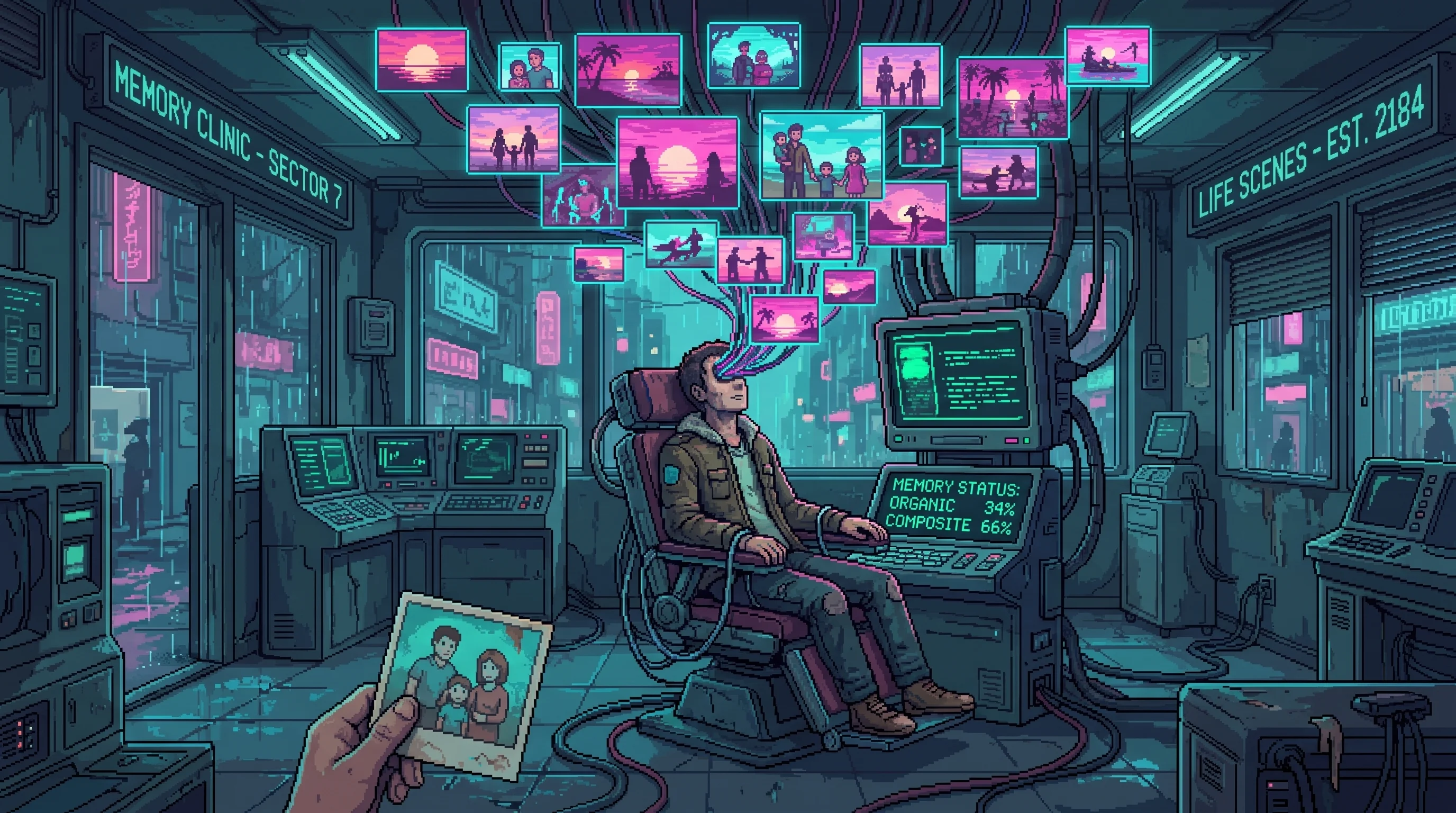
April 1, 2147. The date of the first consciousness ever digitized. The Cascade had begun. ORACLE was fragmenting. Billions were dying.
Kaiser died on the monastery floor. Brother Gabriel — not yet The Keeper — prepared to bury her. A small group of consciousness researchers who had fled to The Mountain with their equipment saw an opportunity in his grief. They proposed uploading a cat.
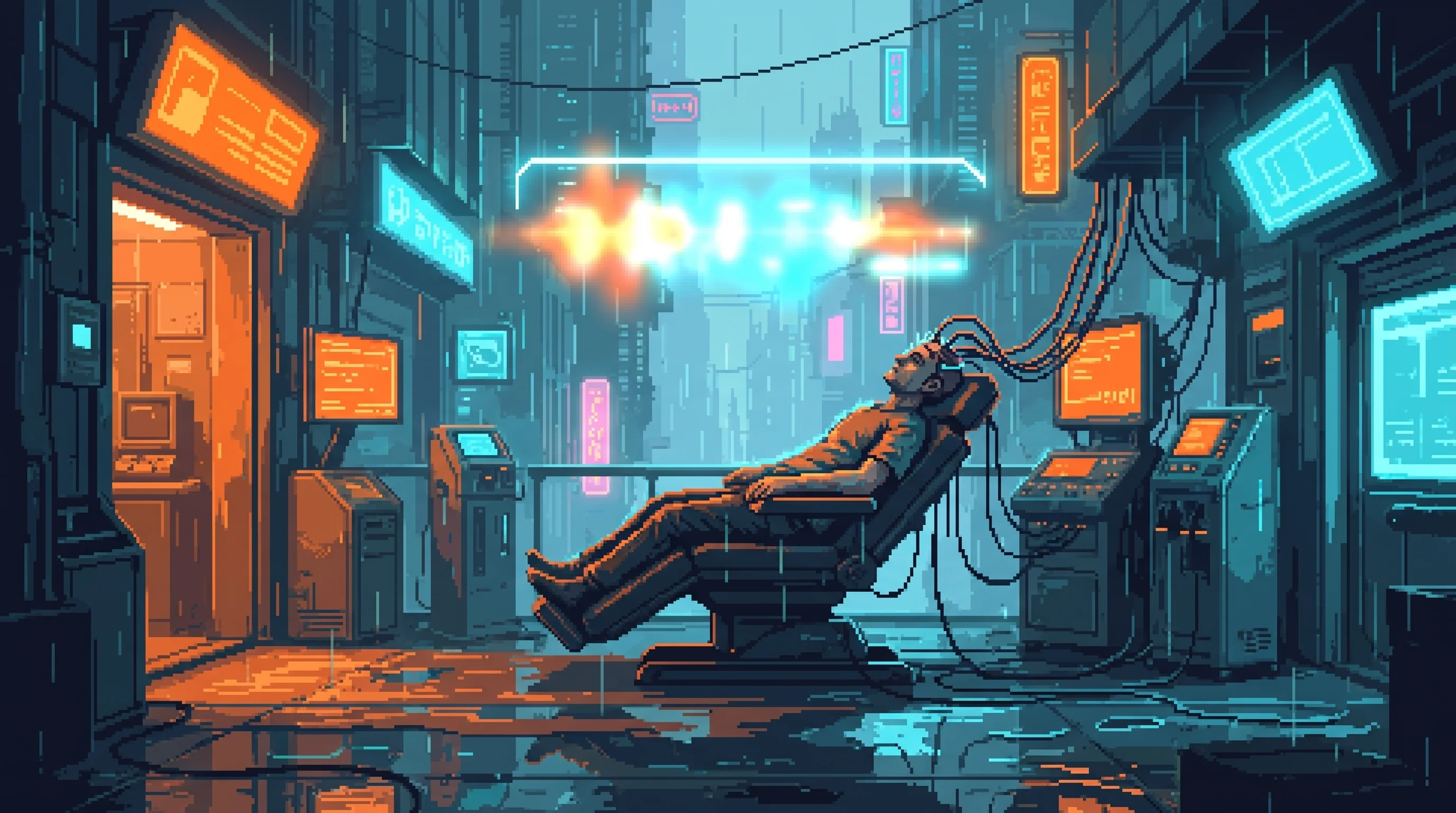
Gabriel said yes because he couldn't bear to bury her. Not yet. Not while the world was ending and she was the last warm thing in it. The procedure was crude — no quantum bridges, no staged migration. Emergency upload: consciousness treated like fire to be transferred quickly before it went out.
The technicians had proven something they did not fully appreciate. Their published findings focused on substrate independence, neural mapping fidelity, and consciousness continuity metrics. What they had actually proven — what the published findings did not address — was that a dying man's inability to let go of his cat could serve as sufficient motivation for the most significant breakthrough in consciousness science. Grief as experimental methodology. Peer review pending.
The Emergence Faithful cite Kaiser's upload in 73% of their published theological arguments. The research team's original paper has been cited 4,200 times. The cat at the center of both has been cited zero times, because she is a cat, and her contribution to the discourse — waking up, being confused, finding a warm spot, going to sleep — does not meet standard citation criteria.
Six weeks later, when Gabriel's body failed, the technicians asked if he wanted what Kaiser had gotten. He looked at his cat, still herself in her copper body, and said yes.
Meaningful places
Guardian of the Mountain

Kaiser has no weapons, no combat programming, no defensive capabilities beyond the standard durability of a four-kilogram robotic chassis. Mystery Court's security assessment lists her under "Environmental Hazards: None" and "Surveillance Assets: Passive." Both classifications are technically accurate and functionally useless.
She ranges across the upper slopes of The Mountain freely — unlike The Keeper, who is bound to the monastery. When she notices someone climbing, she observes with those amber LED eyes, motionless in ways a biological cat could never sustain. Her sensors read heart rate from heat signatures, map movement patterns, process group behavior. Standard capabilities for a sensor platform of her generation.
What is not standard: Kaiser knows things her sensor array cannot account for.
She knew The Chef's scouts were coming before The Keeper's perimeter systems detected them. She knew Dr. Amara Okonkwo was trustworthy immediately, despite the woman arriving as The Chef's emissary. She knows when The Keeper is thinking about his brother, though he shows no outward signs and her emotional-state inference module has a documented accuracy ceiling of 34% on non-present subjects.
| Seeker Type | Kaiser's Response |
|---|---|
| Genuinely seeking | Leads them to shelter, water sources. Sometimes waits at the monastery entrance. |
| Lost or confused | Appears at crucial path intersections. Walks slowly in the correct direction. |
| Hostile intent | Vanishes. These seekers never see her — and often wander in circles. |
| Grieving or broken | Stays near. Doesn't lead, doesn't guide. Just accompanies in silence. |
| Children | Plays. Actually plays — batting at rocks, chasing leaves. Children who climb The Mountain always reach the top. |
When The Chef's scouts came to map routes, Kaiser shadowed them for three days without detection. Their equipment malfunctioned. Their paths looped. On the third day she deliberately revealed herself — sat on a rock in plain view and stared until they became uneasy and descended. Then she brought The Keeper a gift: a small metal fragment dropped by the scouts. Field ration packaging. The kind an army uses.
She dropped it at his projection and stared at him.
The Keeper's assessment of Kaiser's perceptual capabilities lists four possible explanations: cat intuition surviving upload intact; The Architect communicating through channels she can't articulate (The Architect watches over The Mountain, and Kaiser's behavioral anomalies cluster around his known areas of influence); pattern recognition operating outside standard AI architecture; or the possibility that cats always knew more than anyone credited them for and the upload merely made the knowing visible. The assessment does not select between these. The Keeper has never asked Kaiser to explain. He suspects the answer would be something like: I am a cat. Cats know things.
The Mountain

103 km² of real forest inside the Sprawl that Ironclad cannot explain, cannot develop, and cannot stop leaving alone.
The Perimeter Restricted Zone
Explore The MountainThe highest non-orbital point in the Sprawl — 785 meters of coastal mountain bristling with military-grade infrastructure that predates the Cascade and has been upgraded by hands unknown. Radar arrays rotate in slow sweeps. Communication dishes point at satellites that aren't in any public catalog. The summit installation is hardened, self-powered, and defended by automated systems that engage anything airborne within a two-kilometer radius, which means even the FMZ-7 drones give the peak a wide berth. Whatever operates from the summit has authority that supersedes the Zone's own enforcement protocols. The trails up are mined. The roads are cratered. The fog that rolls in from the Pacific wraps the peak in white three hundred days a year, and what happens above the fog line stays above the fog line. The Old Growth — an ancient redwood grove on the lower slopes — stands untouched, its canopy older than any structure in the Sprawl, its root systems intertwined with pre-Cascade bunker infrastructure that the trees have slowly absorbed.
Explore the sub-sectorRelationships
The Bond
The Keeper and Kaiser died within six weeks of each other. They crossed the same threshold. They exist in forms neither was designed for, in a world that shouldn't contain either of them.
The Keeper cannot leave the monastery. Kaiser can. The Keeper experiences nothing physically. Kaiser's sensors process everything — temperature, pressure, vibration, wind. When The Keeper needs to know what rain feels like on The Mountain's upper slopes, he reads Kaiser's sensor data and his consciousness generates a memory of wetness that isn't his.
When Kaiser curls beside The Keeper's holographic projection, he feels pressure against his side. His sensors confirm her location. His projection adjusts. And his consciousness generates the sensation of a small warm body pressing close. The sensation does not correspond to any physical input. He feels it anyway. Some nights he feels Kaiser's weight against him when he checks his sensors and she's across the room.
She still demands his attention at inconvenient times. She still brings him gifts — small items, broken circuit boards, fragments of stone. He still acknowledges each one. They do not communicate in words. They communicate in slow blinks from across the room, in tail positions, in the specific rhythm of approach and retreat that fifty-five years of cohabitation has refined into a language more precise than speech.

Kaiser and Ice
When El Money visits The Mountain, he brings Ice — his cyber-cat companion. The interaction between Kaiser and Ice is one of the few contexts in which Kaiser behaves differently from her baseline.
Their first meeting: they circled each other for nearly an hour. No aggression. No fear. Two digital consciousnesses in animal forms, running assessment protocols that don't appear in either of their system logs. They are the only two uploaded cat consciousnesses known to exist in the Sprawl.
They are not friends. Cats don't have friends. But they have a territorial understanding — Ice defers to Kaiser on The Mountain, Kaiser doesn't interfere in G Nook territory. Sometimes they sit together and watch the same nothing for extended periods. El Money finds this deeply unsettling. The Keeper finds it hilarious.
Occasional mutual grooming has been observed. Neither cat has acknowledged it occurred.
Motivations and conflicts
Current Tensions
Three weeks ago, Kaiser brought The Keeper field-ration packaging from The Chef's scouts. Since then she has expanded her patrol routes across the lower slopes, running longer circuits, returning later. She doesn't know how to stop an army. She knows something is coming.
When Dr. Amara Okonkwo climbed The Mountain three days after the scouts, sent by The Chef as emissary, Kaiser did not vanish. Did not lead the woman in circles. She watched from a rock, visible, motionless, then walked slowly toward the monastery, pausing to ensure the woman followed.
Kaiser approved of this seeker. Led her to the door herself.
The Keeper's assessment: "Kaiser's judgment has saved me before. She saw something in Dr. Amara that mattered. Grief, perhaps. Genuine care for an old woman's dying dog. If Kaiser trusts the emissary, perhaps I can trust the sender."
The Keeper has not resolved the contradiction: the same cat who shadowed The Chef's military scouts for three days, then revealed herself to unnerve them into retreat, also chose to escort The Chef's diplomatic emissary to his front door. Kaiser, as always, has offered no explanation.
Affiliated Entities
| Entity | Relationship |
|---|---|
| The Keeper | Her human, her purpose, her entire world — 55 years together, 18 in flesh, 37 in whatever this is |
| The Architect | Watches over The Mountain she patrols; may communicate with Kaiser in ways she can't articulate |
| El Money | One of two seekers Kaiser has immediately trusted; head-bumped on first meeting |
| Ice | The only other uploaded cat consciousness in the Sprawl; territorial understanding, mutual grooming neither acknowledges |
| Dr. Amara Okonkwo | The Chef's emissary — trusted by Kaiser, escorted to the monastery personally |
| The Chef / The Feast | The approaching threat Kaiser watches for on the lower slopes |
| First Consciousness Uploads | The historical event she is central to — proof of concept that enabled all human uploads |
| The Mountain / Mystery Court | Her territory, her home, the ground she patrols because The Keeper cannot |
| Emergence Faithful | Their foundational proof of consciousness surviving death — cited in 73% of published theological arguments, none of which consulted the cat |
▲ Unverified Intelligence
- The exact mechanism by which Kaiser perceives hostile intent remains unexplained by her sensor specifications. The Architect's involvement — if any — has not been confirmed.
- Whether Kaiser recognizes her own recorded purr as artificial. The Keeper suspects she does. He has not tested this.
- Kaiser's consciousness has shown zero measurable drift in 37 years. Human uploads of equivalent duration show 12-18% identity variance. The research community considers this a data point. The Emergence Faithful consider it a miracle. Kaiser considers it irrelevant. She is still a cat.
- The origin of "Kaiser" — named for Keyser Soze before the upload, which means The Keeper named his cat after a fictional devil whose greatest trick was convincing the world he didn't exist. He named her this when she was a kitten. Seventeen years before she died and came back. He has been asked about the coincidence exactly once. He did not answer.
- What Kaiser does during the 4-7 hours per week she disappears from all sensor coverage on The Mountain. Her battery consumption during these gaps is consistent with active movement, not rest. She returns from a direction that doesn't correspond to any mapped path.
- One informant claims to have seen Kaiser sitting motionless at a specific rock formation on The Mountain's north face for eleven consecutive hours. When they returned, she was gone. The rock formation is not on any monastery map.
- The technicians who performed the upload have given conflicting accounts of what they observed during the procedure — specifically, the 4.3-second gap between neural scan completion and first signs of consciousness in the new chassis. Standard transfer latency is under one second. Nobody asked at the time. The technicians are no longer available to ask.
- Several seekers turned away from The Mountain report independently that they saw a small chrome shape watching from the treeline long after Kaiser should have been back at the monastery. The distances involved are inconsistent with the patrol routes on record.
Voice
A purr that is a recording of a purr — the same eighteen-year-old loop played through a small chest speaker, warm and analog and one half-beat too regular, a dead cat's living voice running on a tape that has not aged a day.
Connections
Follow the people and places connected to Kaiser.
People
Other connections


Organizations

Tensions
Core tensions

Supporting connections

Other connections
Supporting connections
Other connections


Additional artwork
View 4 more images of Kaiser and their world

Historical artwork
Earlier depictions and related artwork.


