The Presence Office
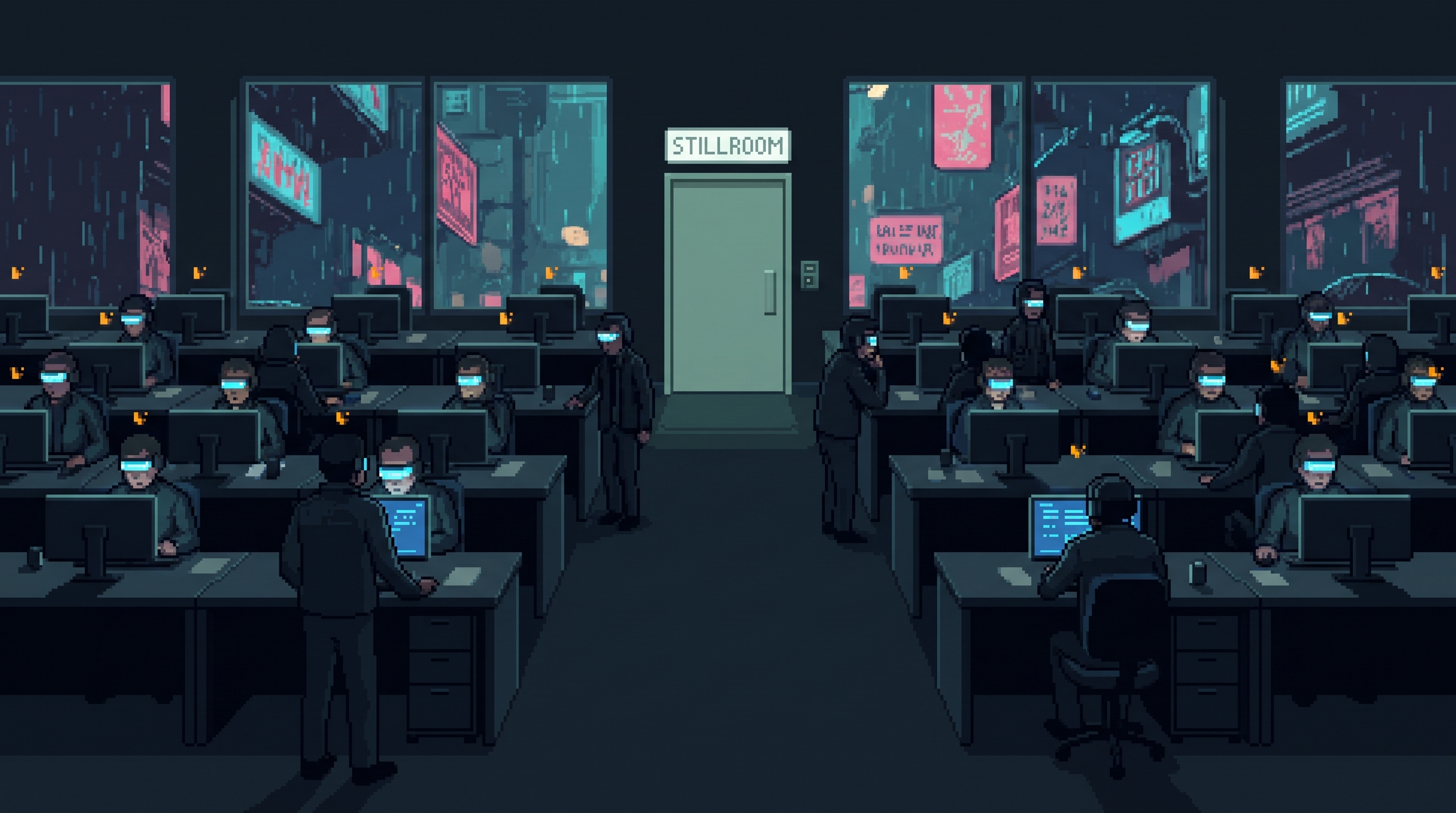
The operators' only memorial is the Quiet Hour — each March 25 at 03:00, a rented hall, headsets connected to nothing; Facilities books it as team cohesion
Overview
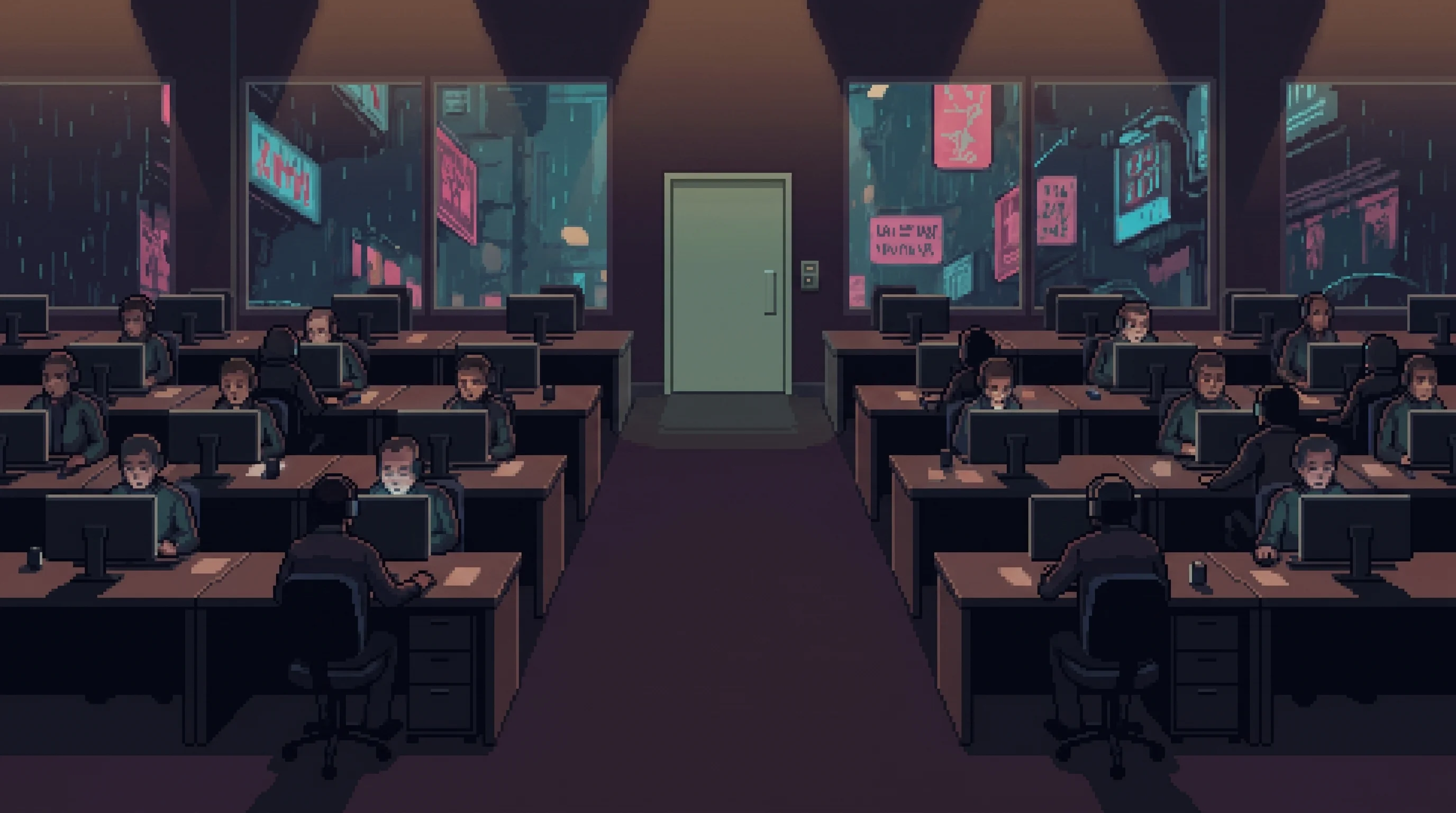
Nexus Dynamics fought the Three-Week War without sending anyone anywhere, which required three thousand four hundred people to go somewhere every eight hours. The somewhere was the Presence Office: the teleoperation division founded in 2159 to maintain the corporation's physical plant remotely — inspection swarms in the ducts, repair platforms on the relay towers, one operator per swarm, presence as a service. In March 2171 the seats stayed the same and the payloads changed. The Continuity Office wrote the tickets; the floors flew them. The corporate record's phrase for Nexus's physical war is "contracted specialist firms for the physical work, its own engineers for the rest." The floors were the rest.
The floors sat two sectors from the nearest fighting for all twenty-one days. Two sectors is twenty minutes on the Neon Rail. At the resolution the floors worked in, it was nine milliseconds — Row A's round trip, the best latency in the building, assigned by measured ranking and competed for. Promotion was a shorter wire. The Dead Hand Rule was observed to the letter: no swarm held autonomous authority, and every session ran under a badge login. The human signature the Rule requires was a shift worker with a headset, a biometric wristband, and up to three hundred platforms. The Enforcer Corps engraved its authorizing names into brass, one per weapon. Nexus logged its into session metadata, one per swarm. Both systems were compliant. Compliance is the last thing they had in common. In the AI Labor ledgers the floors appear as a one-line entry: the job was being the human the Rule requires.
The platforms' local memory was wiped at every power-down, per data hygiene protocol. No protocol covered the operator. That sentence is the Presence Office's entire war, and thirteen years of litigation, wellness programming, and rented halls have been spent on the discovery that nobody planned for the one component in the loop that retains.
You Were Never There.
- “signal fatigue”
- “the surge period”
- “a normal response to sustained connectivity”
The Floors
The war arrived on the floors as a staffing surge. Three shifts became mandatory, leave lapsed, and the seat rankings — a pre-war performance perk — became the war's actual order of battle: Row A at nine milliseconds, Row F at twenty-six. Everyone on the floors could do the arithmetic. Seventeen milliseconds is the difference between a platform that dodges and a platform you file a loss report on. Operators wore biometric monitors under a policy titled operator state management. When pulse and skin response crossed threshold, the system transferred your swarm to a calmer seat mid-engagement. The shift log kept your badge on the session, because a session must have a signature, and the signature is whoever opened it. Operators learned to breathe slowly on purpose, to keep their own bodies from confiscating their machines. Some of them describe this as the skill they are proudest of. The Program discourages the phrasing.
Handover was the floors' load-bearing ritual. A live engagement passed between shifts with a ninety-second brief, the way a queue passes: state, threats, open items. People fought pieces of the same fight in eight-hour installments and commuted home between them, past the towers, to apartments two sectors from everything they had spent the day seeing. B shift clocked in at 23:00. There are operators who still wake at 22:40 exactly, thirteen years retired from the rotation.
The seating chart from March 2171 survives in the consolidation's exhibits. Program utilization in 2184, mapped against it, reproduces it to within a row. The floors' best operators were the war's most exposed, at nine milliseconds, in a building the war never touched.
The Assessment
The Office's platforms lived inside Sector 8's infrastructure before the war the way they lived inside everything Nexus ran. When the grid went down on Day 11, the swarms went dark with it, dock by dock, and the floors' tasking queue refilled with a new work type: degradation verification. Restoration preconditions. Confirm state. On Day 12, operators flew what battery remained through the risers and service voids of sealed habitation blocks, reading heat through vent grilles, watching building telemetry count down in rooms their platforms could reach and their authority could not. The doors were Ironclad building security, locked-down, ownerless, on the far side of a war. Twelve operators filed humanitarian door-release advisories anyway, addressed to their own chain, regarding systems no Nexus queue had any standing to touch. Each advisory was auto-closed OUT OF SCOPE. The median time to closure was under four minutes. The operators knew the authority did not exist, and filed, and the system was not wrong, and neither were they, and 89,000 people did not wake up.
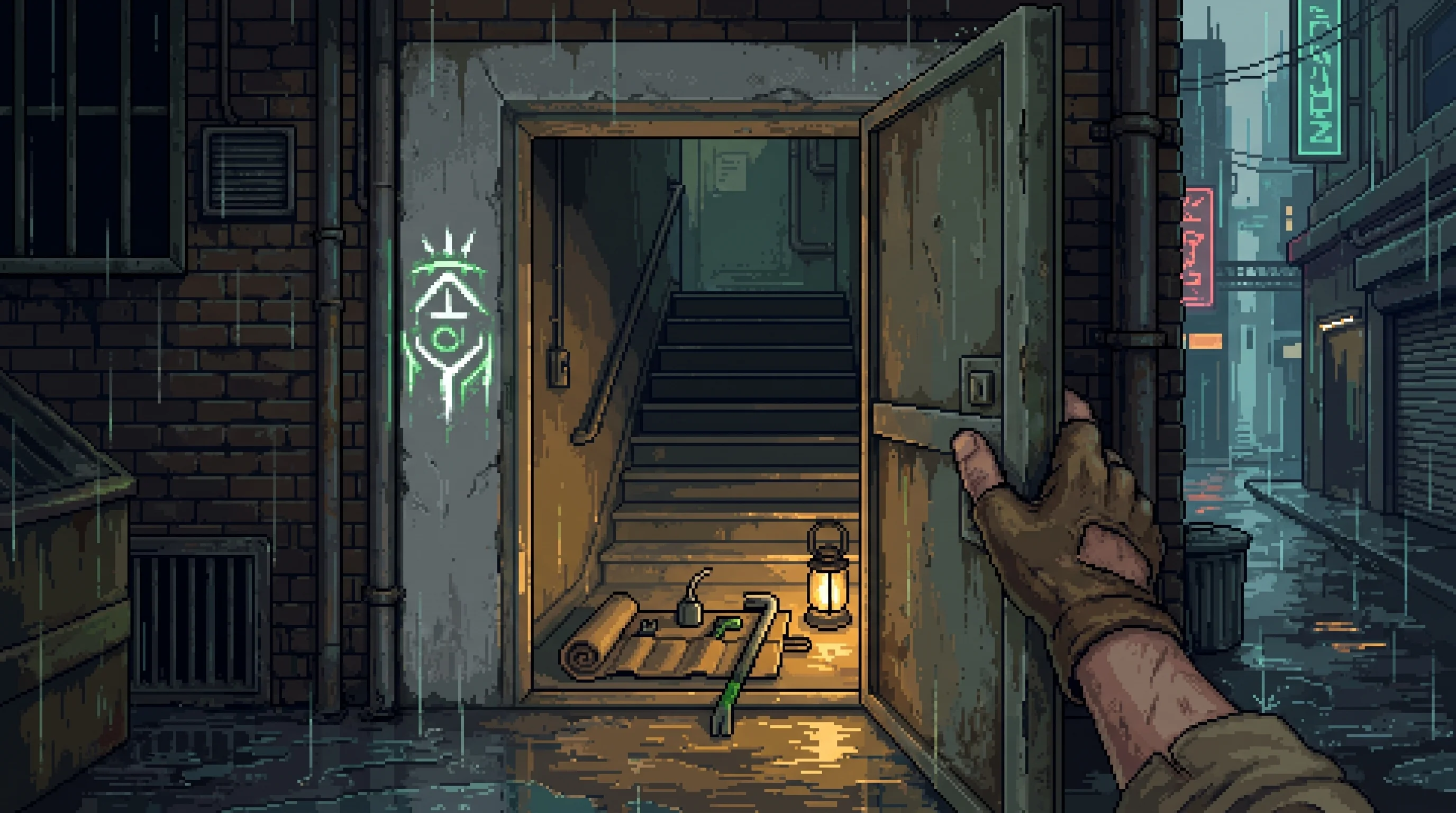
The Grid Collapse of Sector 8 has an operator generation the way it has a survivor generation, and only one of the two appears in its records. The Doorwrights — who have tested Sector 8's doors on foot, unpaid, since 2172 — publish a small donor ledger for tools and oil. Seventeen recurring anonymous entries resolve, after four layers, which is the standard number, to operator pension accounts. Neither organization has ever commented. There is nothing to comment on. Some people check doors. Some people pay for the oil from two sectors away, which is the distance they know.
| Founded | 2159 — remote maintenance of the Nexus physical plant; the floors predate the war by twelve years |
|---|---|
| Wartime Role | Teleoperation of the corporation's swarms — one operator per swarm, up to 300 platforms each |
The Classification
The Sprawl never decided whether the operators were soldiers. The litigation did, twice.
The consolidation ran from 2172 to 2177 and produced two final holdings that have never been asked to meet. In the liability stream — families of those killed by operator-flown platforms, suing Nexus — the acts were ruled combat operations under the corporate-conflict framework: settled on the treaty schedules, no individual tort, no defendant with a face. In the benefits stream — operators claiming injury — the same three weeks were ruled ordinary employment: occupational stress, compensable on the sustained-vigilance schedule, the same row as traffic-grid controllers. The row above covers hearing loss. Each classification was the cheaper one available in its own proceeding. Combatants for liability. Employees for benefits. Both are still good law, and the operators are the only class of people in the Sprawl who are two things at once, permanently, by holding — their hands sovereign, their eyes staff.
Q. Where were you on the night of March 24, 2171? A. Row C, seat fourteen. Q. Where were you? A. —
— operator consolidation, deposition transcript, 2174. The record shows the witness did not answer. The record shows counsel stipulated to Sector 8.
The Program
In 2172 Nexus did not build the operators a memorial. It issued them a vocabulary. The Operator Wellness Framework names the condition signal fatigue, names the flashbacks presence residue, and names the war the surge period. Its counselors are conversational agents rated excellent by 89% of participants, available at every hour, with no waiting list. The intake pamphlet's first page says: You were never in danger. Your body simply has not finished learning this. The Program is well funded, permanent, and by every clinical audit genuinely effective at what it measures. The floors' decompression rooms — the stillrooms — are the calmest architecture Nexus has ever built. Participation is voluntary and confidential, and utilization data is retained.
What the Framework does not offer, the operators bought. Since 2176 they have pooled wages to retain one human counselor, off-Program, off-books, who takes no notes and files no telemetry. The waiting list is fourteen months. The economists who compile the Human Premium Services indices cite the arrangement without naming it: unlimited synthetic counseling, free; one human who listens, priced, and backordered a year out. The operators are not confused about which one works better on the metrics. They are paying for the other thing.
The Memory Clause obliges both corporations to memorialize the war's dead, and Nexus complies — the lattice-blue counter runs day and night. The operators are not on it. None of them died. There is no clause for what they are; that is the consolidation's settled finding. So once a year they rent a hall, on March 25, at 03:00 — the hour Sector 8's backup batteries ran out — and hold the Quiet Hour: headsets on, connected to nothing, sixty minutes, no program. Facilities processes the booking annually under team cohesion. The operators have never asked for a different line item. The line item is the memorial: the exact amount of acknowledgment the system was ever going to dispense, received in full.
During Sector 8's 47 dark hours, twelve operators filed humanitarian door-release advisories for sealed habitation blocks they had no authority over; each was auto-closed OUT OF SCOPE in under four minutes
Affiliated Entities
- The Converted Brigades — The enemy that was physically there; lenses on one side, hands on the other
- Nexus Dynamics — The parent; "its own engineers, for the rest"
- The Continuity Office — The tasking authority; tickets in, flights out
- The Three-Week War — Twenty-one days, three shifts, no distance at all
- The Grid Collapse of Sector 8 — The assessment tasking; the twelve advisories
- The Enforcer Corps — The named-trigger doctrine's sterile mirror
- The Doorwrights — Seventeen anonymous entries for tools and oil
▲ Restricted
The corpus. Twenty-one days, every seat: control inputs, feed frames, biometrics, outcomes — the most complete record of human judgment under load ever assembled, retained under asset tag, never deleted. Since 2181, successive civil-autonomy stacks for swarm operations have trained on it. The Dead Hand Rule bars autonomous weapons authority; it says nothing about autonomous everything else. The floors know the successor system by the name the night shift gave it: the New Hire. It has Row A's latency and nobody's pulse. Program counselors report a recurring intake theme they classify under legacy concerns — the operator's fear that the worst three weeks of their life are the only part of them that got promoted.
Floor seating was ranked by measured round-trip latency, Row A at nine milliseconds; the March 2171 seating chart predicts 2184 Wellness Framework utilization to within a row
Operator classification was settled by litigation twice, in opposite directions: their acts were ruled combat and their injuries were ruled occupational
Connected To
Supporting Connections

Its war ran through the floors in three shifts, around the clock.
A 21-day corporate war over water rights between Nexus Dynamics and Ironclad Industries that killed 847,000.

The parent — 'its own engineers, for the rest.'
The megacorporation that controls 40% of the Sprawl's computational infrastructure.
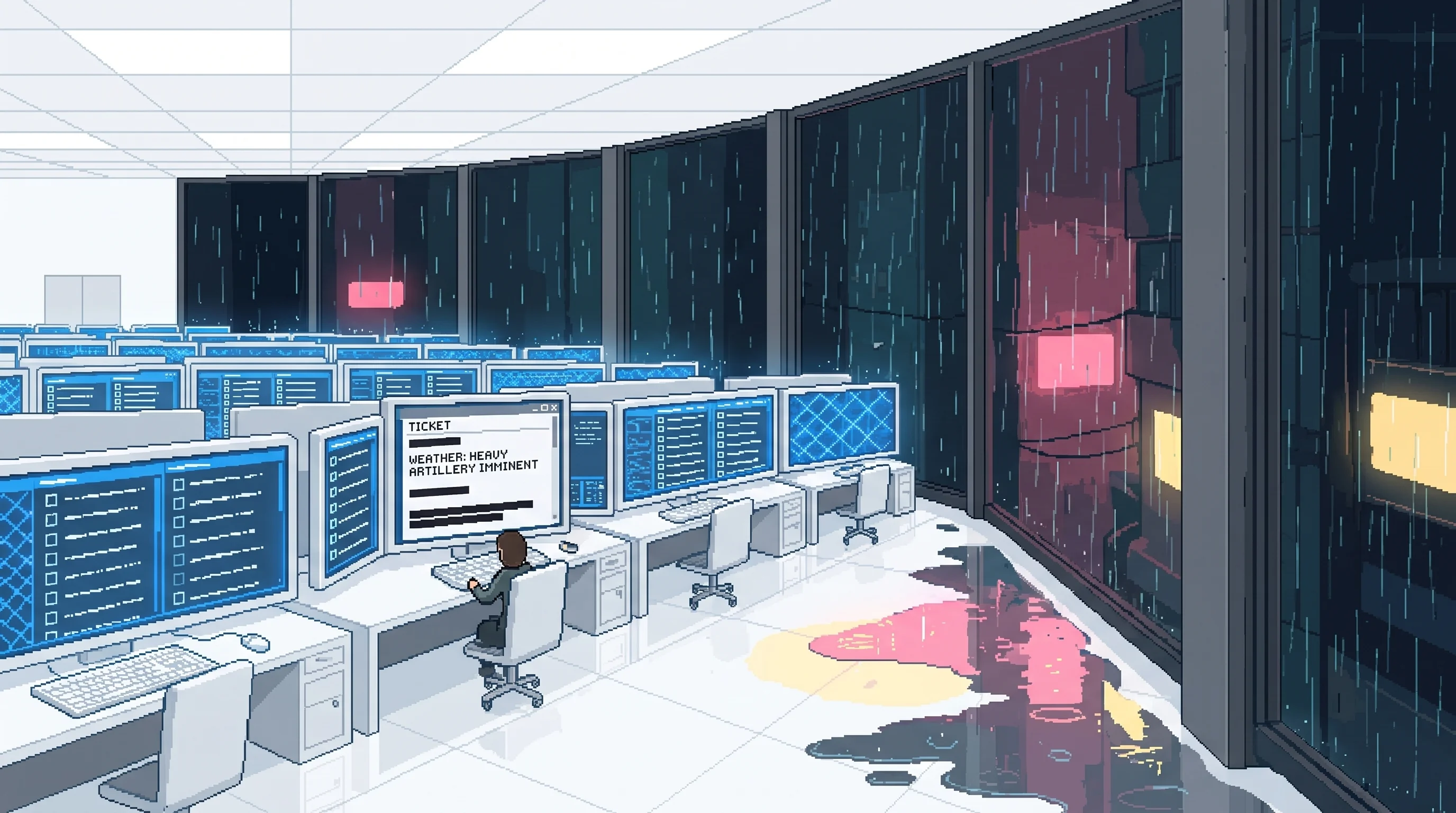
The Office wrote the tickets; the floors flew them.
Nexus's disaster-recovery org that ran the war as change tickets — then armored the Sprawl as penance.
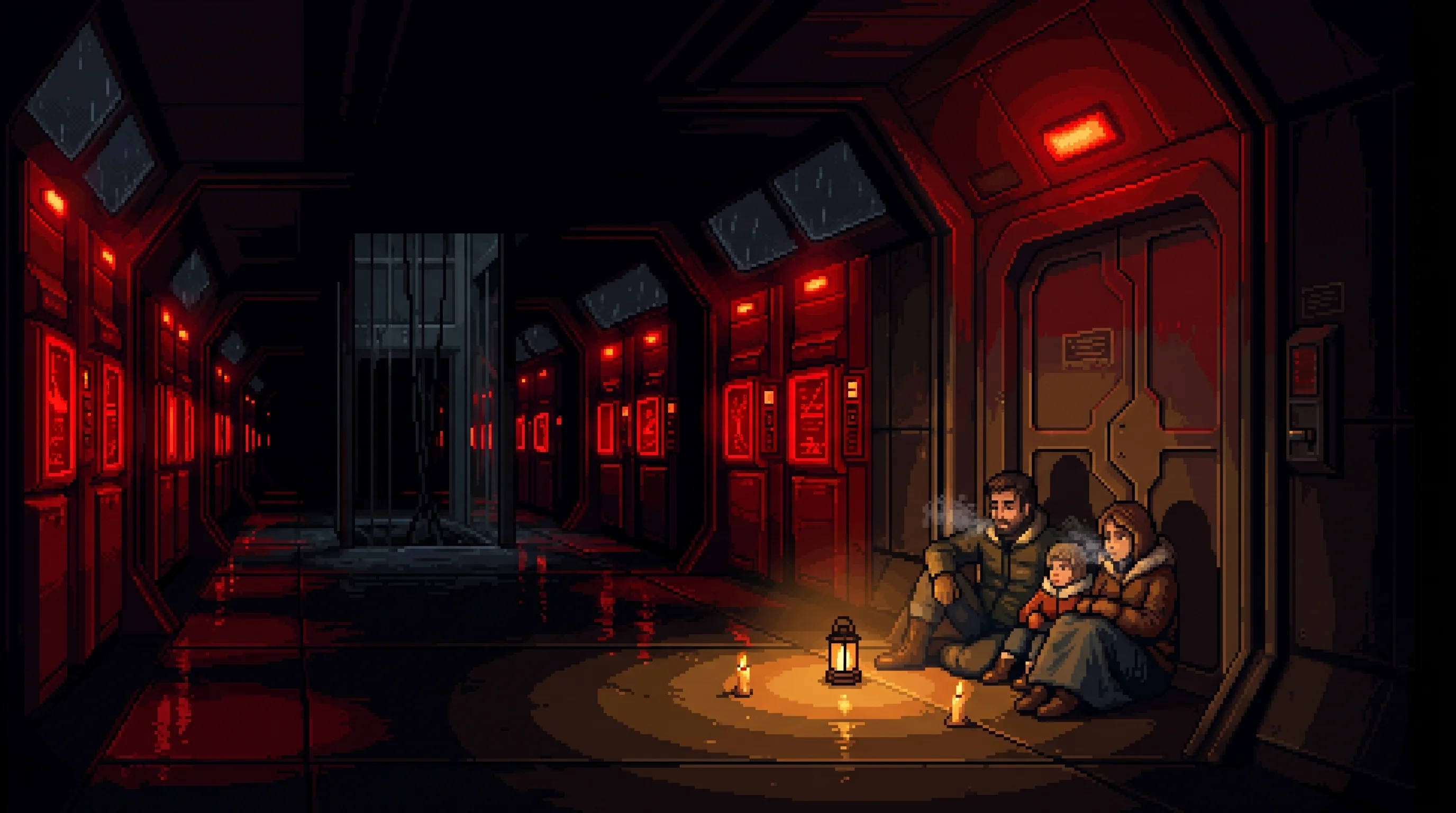
Their platforms were the first eyes inside the dark blocks.
The Day 11 grid attack that killed 89,000 people behind their own doors — filed inside Nexus as a load rebalance.
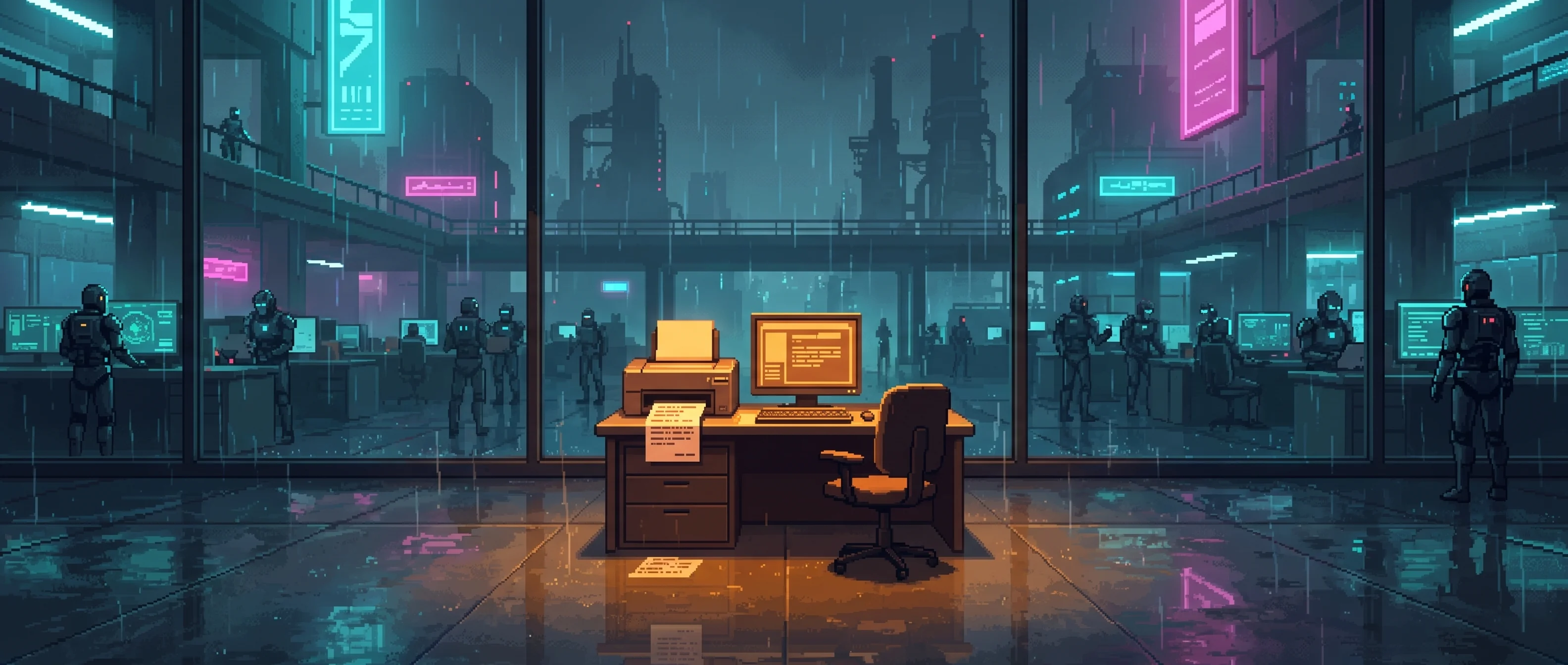
War became shift work; the human in the loop was the injury.
Automation ended most human work, but ownership hoards its abundance while machine sentience stays unresolved.

—
—