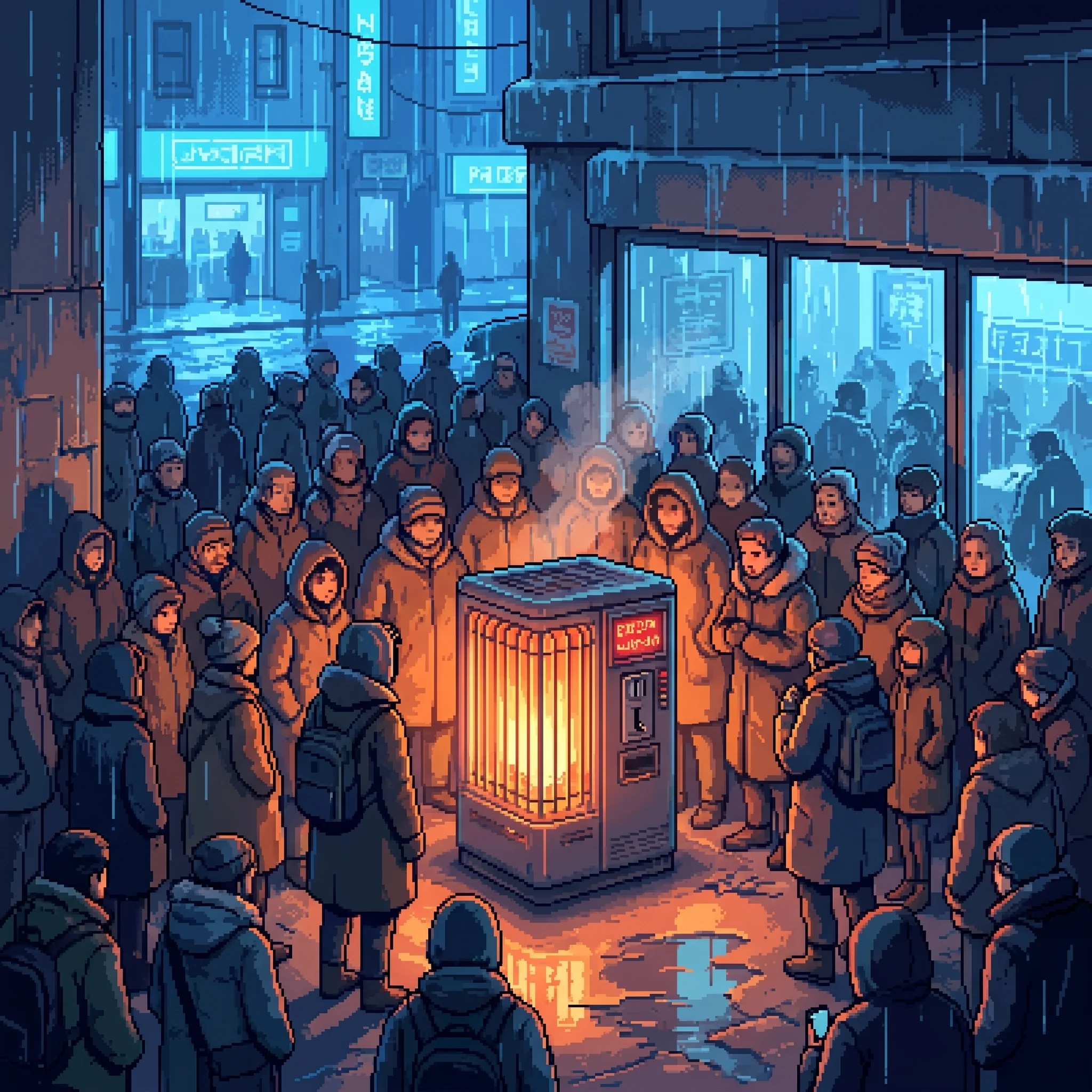
Human Premium Services
Human Connection Scarcity Market
The Price of Being Noticed
When AI handles all digital knowledge work and AI-powered robots handle all physical labor, the one service that gets more valuable is the one no machine can fake: being noticed by another conscious being. The Sprawl calls the price of that noticing the Warmth Tax, and it is paid twice — once by whoever can afford to buy it back, and once by whoever is poor enough to still have it for free.
The Core Tension
The automation was worth it
The coffee is faster and cheaper, and nobody planned the loss of the barista.
What it costs
The system profits twice, once on the labor savings and once on the loneliness they produced.
Isolation is a design feature
Lonely people consume more, organize less, and depend on corporate solutions to problems the same corporations created.
What it costs
Real presence cannot be scaled, so those who still have it free are the ones too poor to automate.
The second-order consequences are profound and mostly deniable. The loss of ambient human connection tracks with epidemics of isolation, declining relationships, fewer marriages, fewer children. People turn to chemical solutions — empathogens, social-bonding drugs, synthetic oxytocin — to fill a void they no longer encounter organically. Mega-raves built around empathy-inducing substances have become mainstream social institutions rather than counterculture. "Connection tourism" — wealthy residents traveling to poorer districts to sample the ambient community that poverty preserves and their own automation destroyed — has become a real, ¢2.4-billion-a-year industry, complete with tour operators and no photography rules.
The uncomfortable question the Tax poses is not whether the automation was worth it — the coffee genuinely is faster and cheaper — but whether a system that profits twice from the same wound, once on the labor savings and once on the loneliness the savings produced, can honestly call the loneliness an accident. The deeper structural insight, one the Tax's own beneficiaries can never quite say aloud, is that isolation is not a side effect of automation. It is a design feature. Lonely people consume more, are more susceptible to influence, less likely to organize, and more dependent on corporate solutions to problems the same corporations created. The people running the companies that sell warmth back at a markup did not intend to manufacture the shortage first. They only declined, every single quarter, to notice that they had.
When AI handles all digital knowledge work and AI-powered robots handle all physical labor, the one service that gets more valuable is the one no machine can fake: being noticed by another conscious being. The Sprawl calls the price of that noticing the Warmth Tax, and it is paid twice — once by whoever can afford to buy it back, and once by whoever is poor enough to still have it for free.
Overview
Dr. Aris Kwan treats automated warmth's casualties, then prescribes proximity to real grief — the scarce human practice the Suffering Premium has already learned to price.
Before AI labor became ubiquitous, human service workers provided ambient human connection as an invisible byproduct of commerce. The barista who recognized your face and remembered your order. The shop clerk who made small talk. The waiter who genuinely recommended a dish. Nobody was selling recognition; recognition was the exhaust of a person doing a job. These micro-interactions constituted a social fabric that no one noticed until automation removed the person and the fabric went with them.
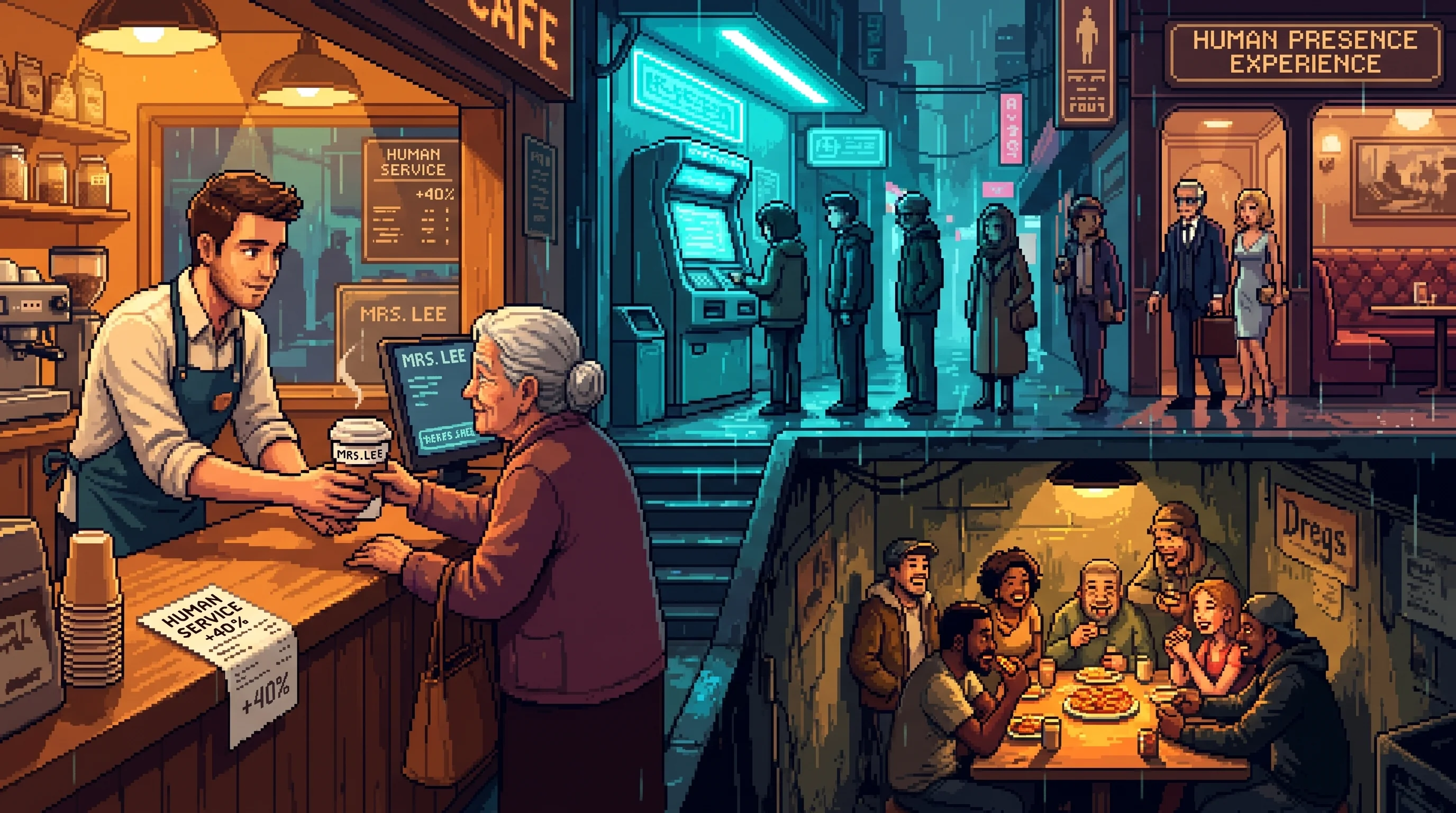
In the Sprawl, a hard split has emerged in the service economy. Low-cost offerings are fully automated — faster, cheaper, more efficient, utterly devoid of human presence. Premium offerings employ real humans and charge dramatically for it, because what you're paying for is no longer the coffee or the diagnosis or the transaction — it's the experience of being seen, recognized, and interacted with by another living person. A human barista costs roughly 40% more than the kiosk beside her for an identical cup. The markup buys ninety seconds of eye contact and a name remembered. It is the cleanest price ever put on the thing commerce used to give away for free.
How It Came To This
Nobody planned the split. Automation improved every efficiency metric it touched — transaction speed, customer-resolution rates, cost per unit — and none of those metrics had a column for whether the customer felt like a person afterward. New job categories emerged only once the absence became visible: professional conversationalists, emotional presence workers paid to simply be near someone, "human ambiance" staff at luxury venues, authenticity consultants. "Small Talk Cafes" became a real business category — pay a premium to sit at a counter where the staff are contractually required to ask how your day is going, and mean it. The most elite retail experiences differentiate on human staff the way their ancestors differentiated on square footage.
The corporations that removed the barista did not do it out of malice. They did it because loneliness turned out to be more profitable than connection ever was. Isolated customers buy more, sleep less, and default on debt at lower rates because they have nothing to do except work and shop. Every automated efficiency gain that thinned the social fabric also thickened the ledger, and the two facts arrived in different quarterly reports filed by the same department, which never noticed the tension between its own columns.
How It Is Lived
The clearest evidence sits in the Deep Dregs, which the Sprawl's own behavioral economists have had to admit is the most socially connected community left — not by virtue but by poverty. Too poor to automate, residents average fourteen face-to-face conversations a day against roughly two in the corporate Heights, and they call the difference Tuesday. Kira "Patch" Vasquez runs a ripperdoc clinic there that matches Helix Biotech's ¢4,000 automated outcomes for whatever a patient can pay, and the Sprawl's economy has no line item for warmth given away instead of sold — which is why her record books show her work is worth exactly nothing. Old Jin, the Lamplighters' senior engineer, has kept the Grid alive for fifty-five years without salary, walking routes and leaving stamped cache tokens for strangers he will never meet; the guild he leads is the Sprawl's only deliberate manufacturer of anonymous warmth, built on the same unpaid principle.
At Peach House, the Peach Compact makes the same refusal personal. Liu Shen listens without a meter running. Guan Tao asks for a costly promise instead of a trust certificate. Zhang Lei serves broth with his own hands. None of the three can scale, and nobody waiting outside their door has asked them to.
Uptown, the machinery runs in the opposite direction. Helix Biotech screens empathic variation out of children with NeuralSure, certifies its absence with a ¢4,200 annual Empathic Capacity Battery, and sells the capacity back to the same population for a quarter of a million credits — engineering the shortage it later monetizes the cure for. Good Fortune's own actuaries project double-digit growth in connection tourism and companion subscriptions through 2190 and recommend, in writing, no intervention, because loneliness scales revenue faster than it scales conscience. Wren Adeyemi's Small Talk Cafes are the honest middle: two hundred rooms across the Sprawl where a 40% markup buys a real conversation, and where corporate attempts to franchise the model have failed three times running because sincerity cannot survive being scripted. El Money's G Nook network gives the same recognition away entirely free to the Deep Dregs and tracks the resulting debt of gratitude in a ledger only he keeps. Mother Sarah Venn's forty-seven one-room schools hand poor children, for nothing, the one thing the Cohort Camps charge the rich a fortune to manufacture: a classmate. And atop the last mountain in the Sprawl, an uploaded monk who cannot feel the tea he pours still serves it to one seeker at a time, because he learned, better than anyone with a body left to lose, that presence is the one service that breaks the instant you try to scale it.
At the edges the same refusal shows up in smaller denominations. Angel of the Abyss puts his body between strangers and harm in a city that now meters being seen at all, and charges no one for the standing-in-the-way. CyberMaster fills a room with a live human set that no algorithm can price, packing venues precisely because the performance cannot be automated into a subscription. Lyra Voss sells the rarest version of the same good — presence itself, painted into work that degrades the instant it is copied, the one warmth the reproduction economy cannot fake. And once a year, at the Three-Day Memorial, the whole Sprawl grieves its dead together and the tax stands down entirely: for three days the recognition is free, everyone is seen, and nobody sends a bill. Then the fourth day comes, the counters reopen, and the price of being known goes back up.
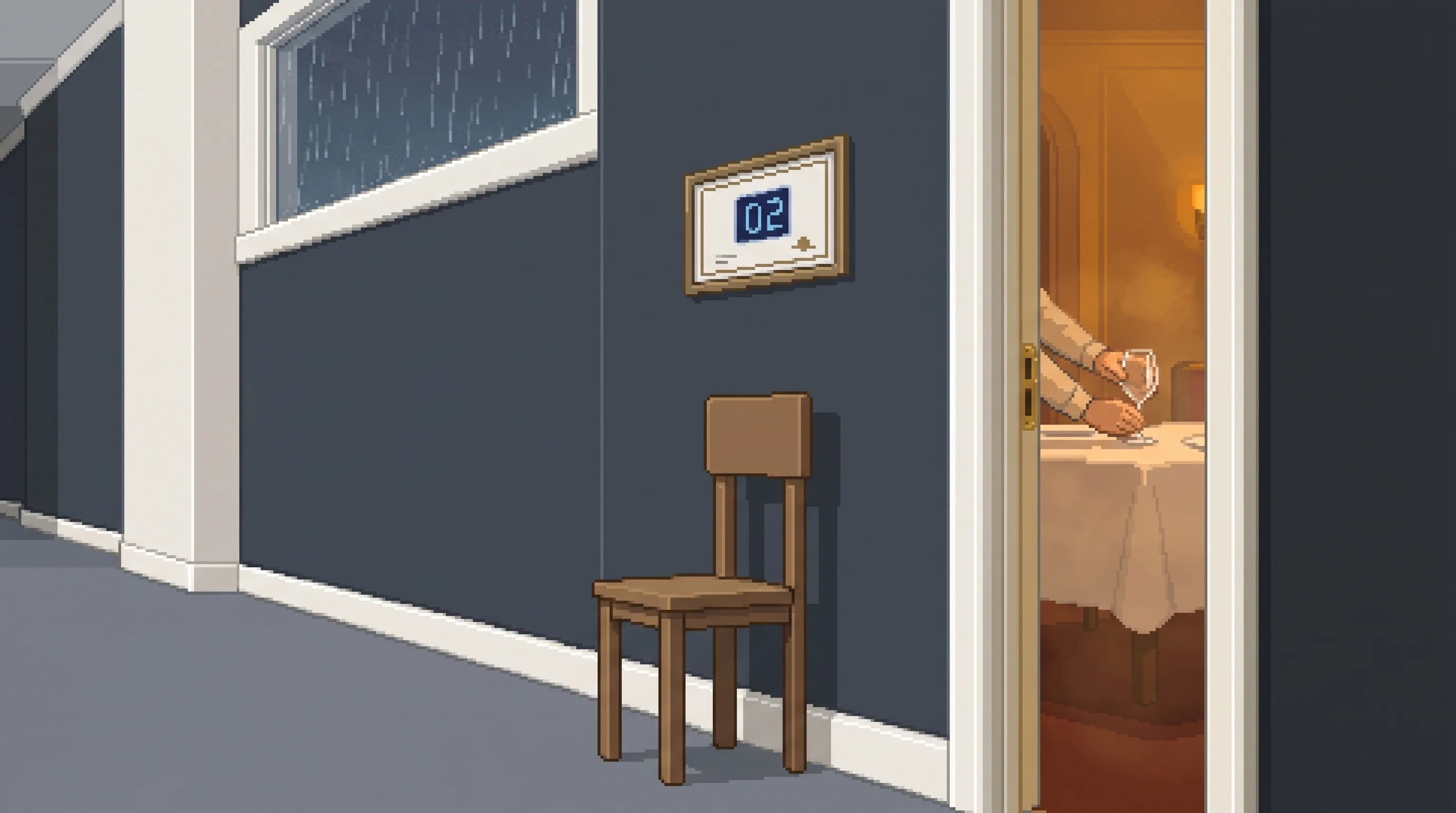
The Tax's coldest line: the premium held and the presence went. Staff graded on how little inner life an instrument can find, a low number the qualification, and the clients rebook at a higher rate than before.
The service tier that pays extra for a human who reads you perfectly and never once lets it show.
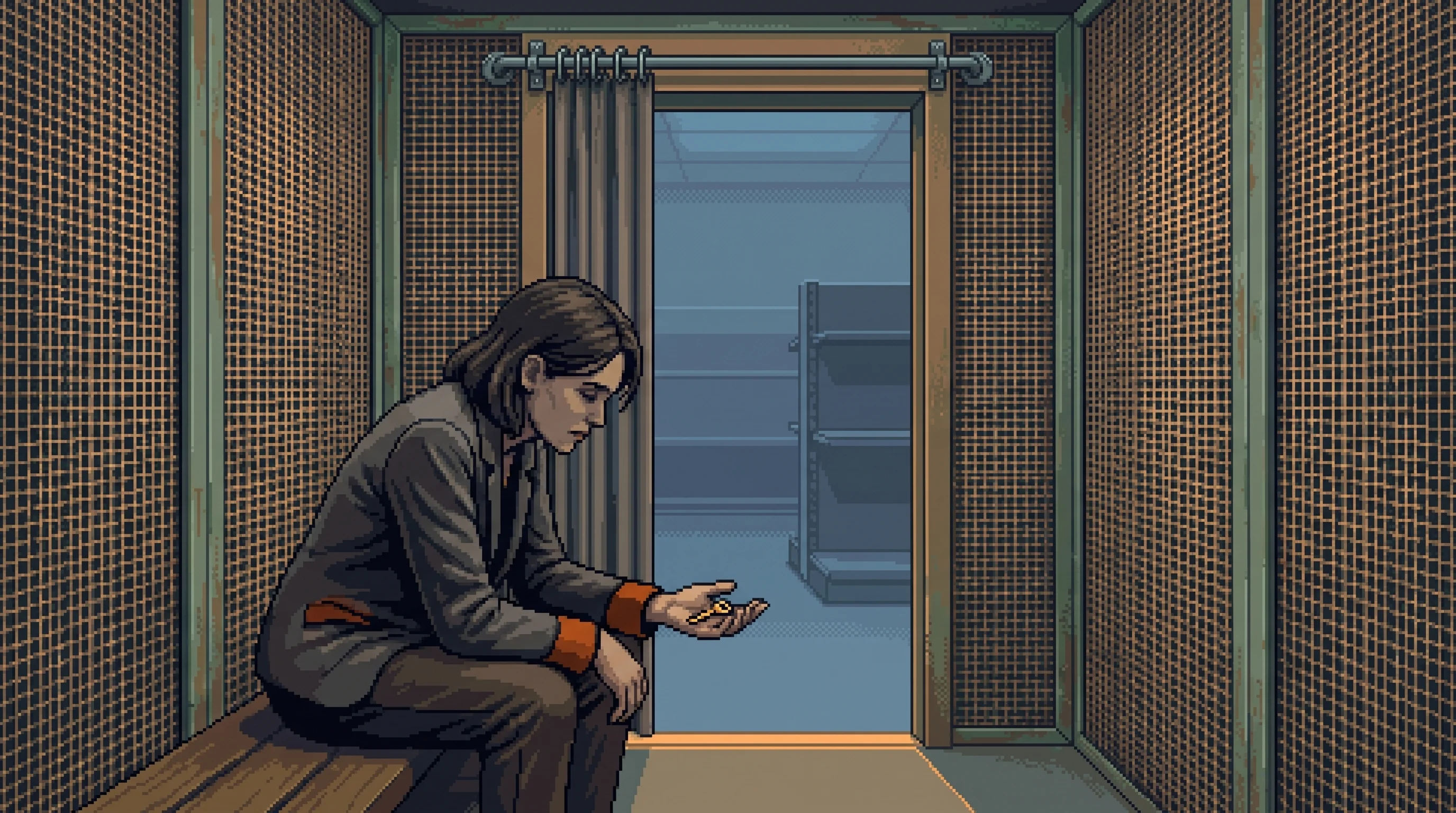
Shielded silence is the newest line on the rate card, quoted to people who do not need it.
Post-Sera safety muzzles the people who broadcast feeling. Nothing screens the people who receive it.
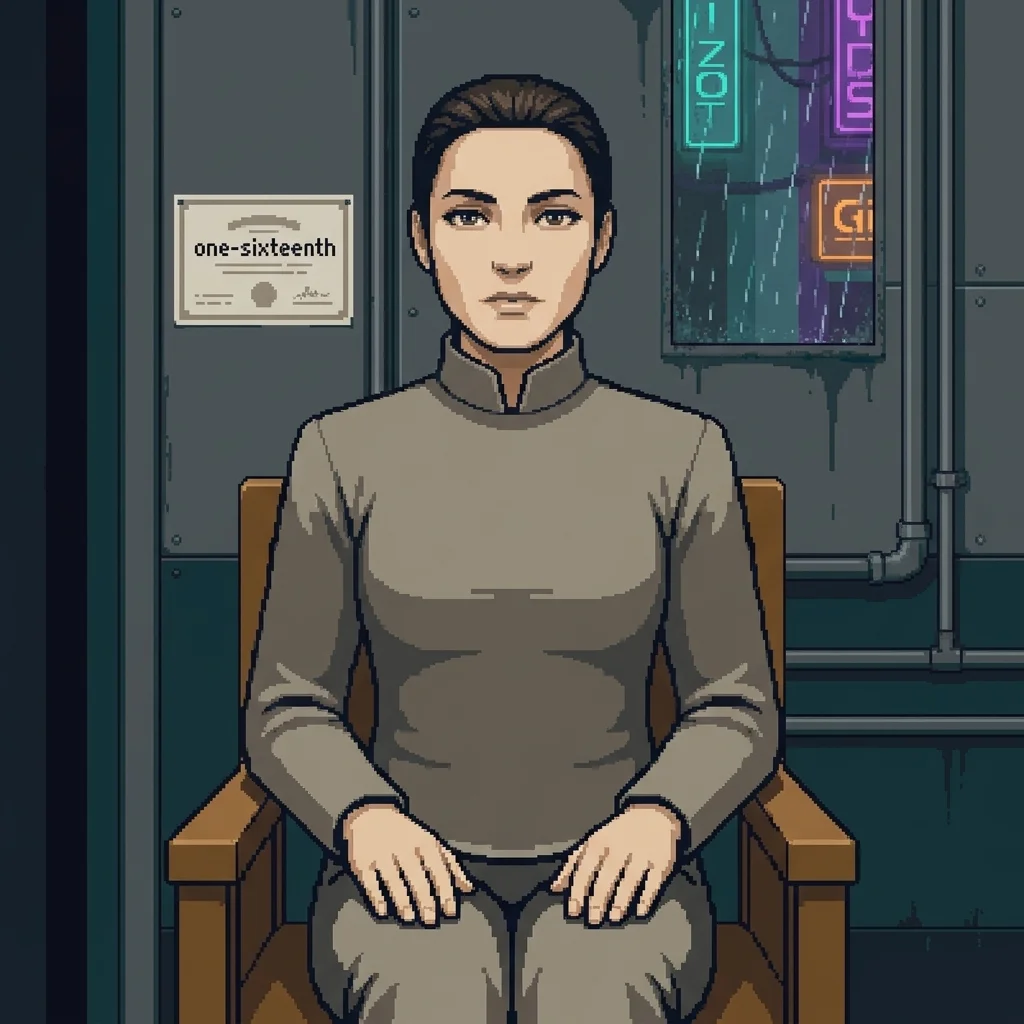
Paid more for withholding presence than she was ever paid for offering it.
She trained herself unreadable to survive Sector 9. Now the premium houses pay her to teach it.

He treats automated warmth's casualties, then prescribes proximity to real grief — the priciest good in the Sprawl.
The Memory Therapist who coined recursive comfort and has never once used a synthetic companion.
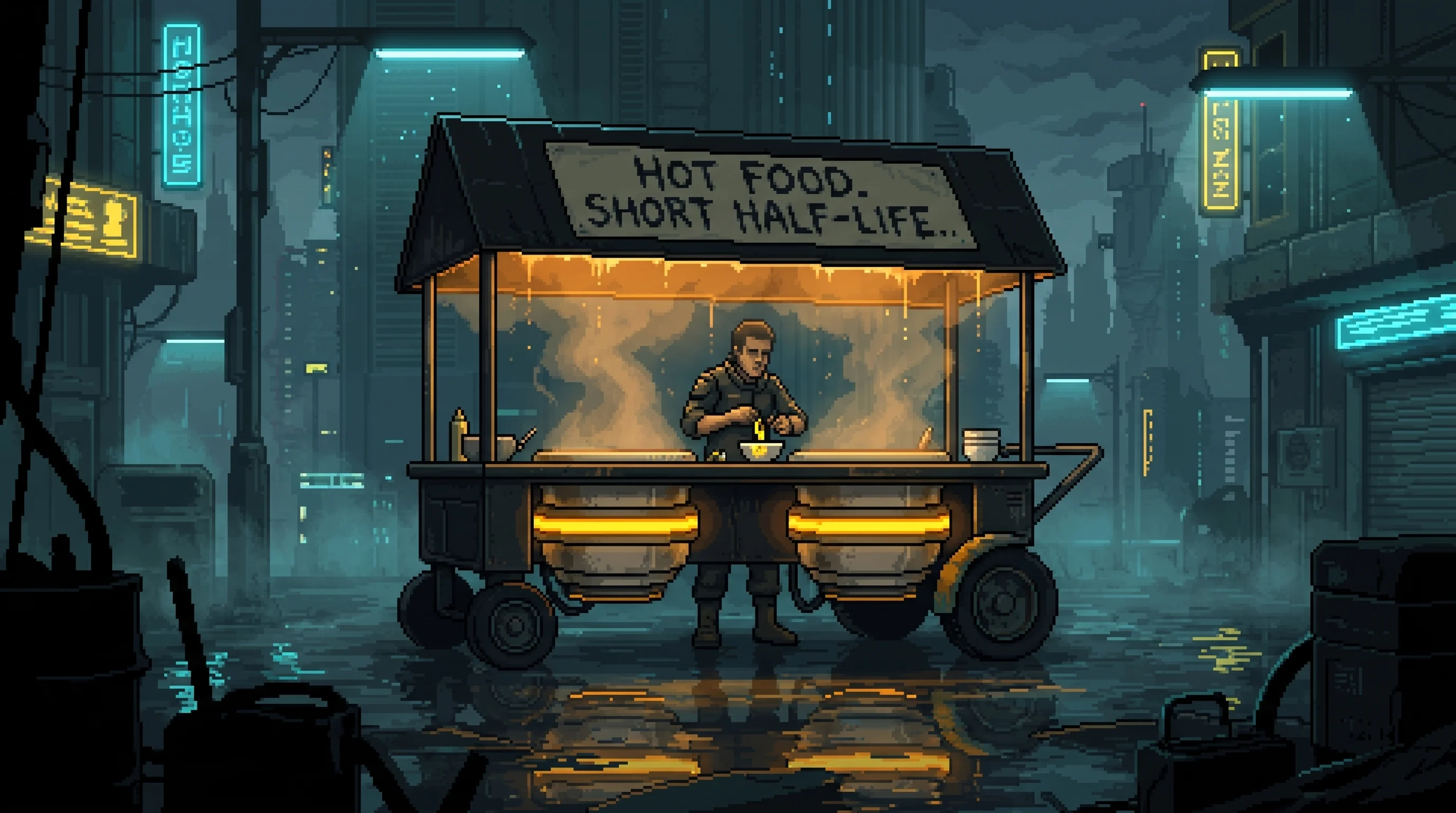
Toma's cart prices heat and noodles, not ordinary human attention.
A roaming Deep Dregs ramen cart that keeps its broth hot with two salvaged miniature nuclear reactors.
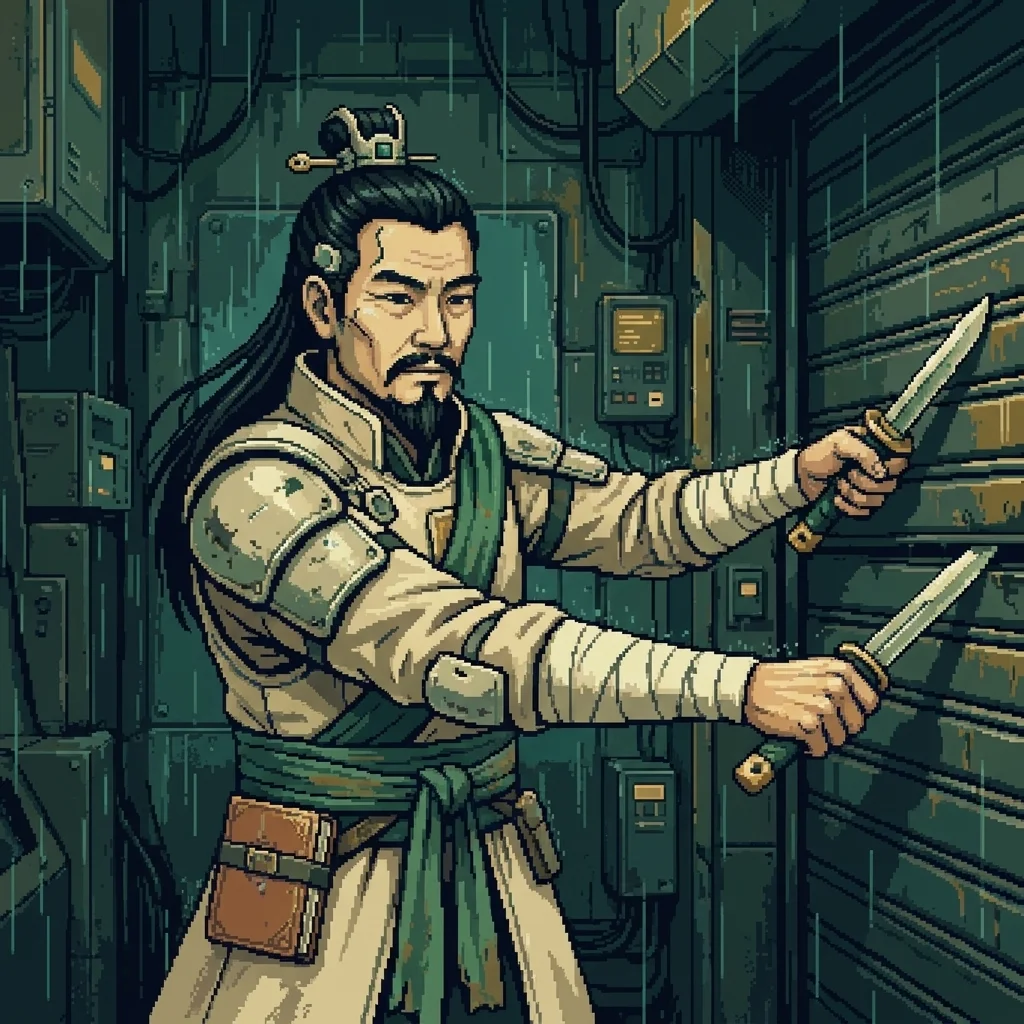
He gives attention freely, then turns the gift into a shared duty.
A Dregs mediator who treats a spoken promise as public infrastructure.
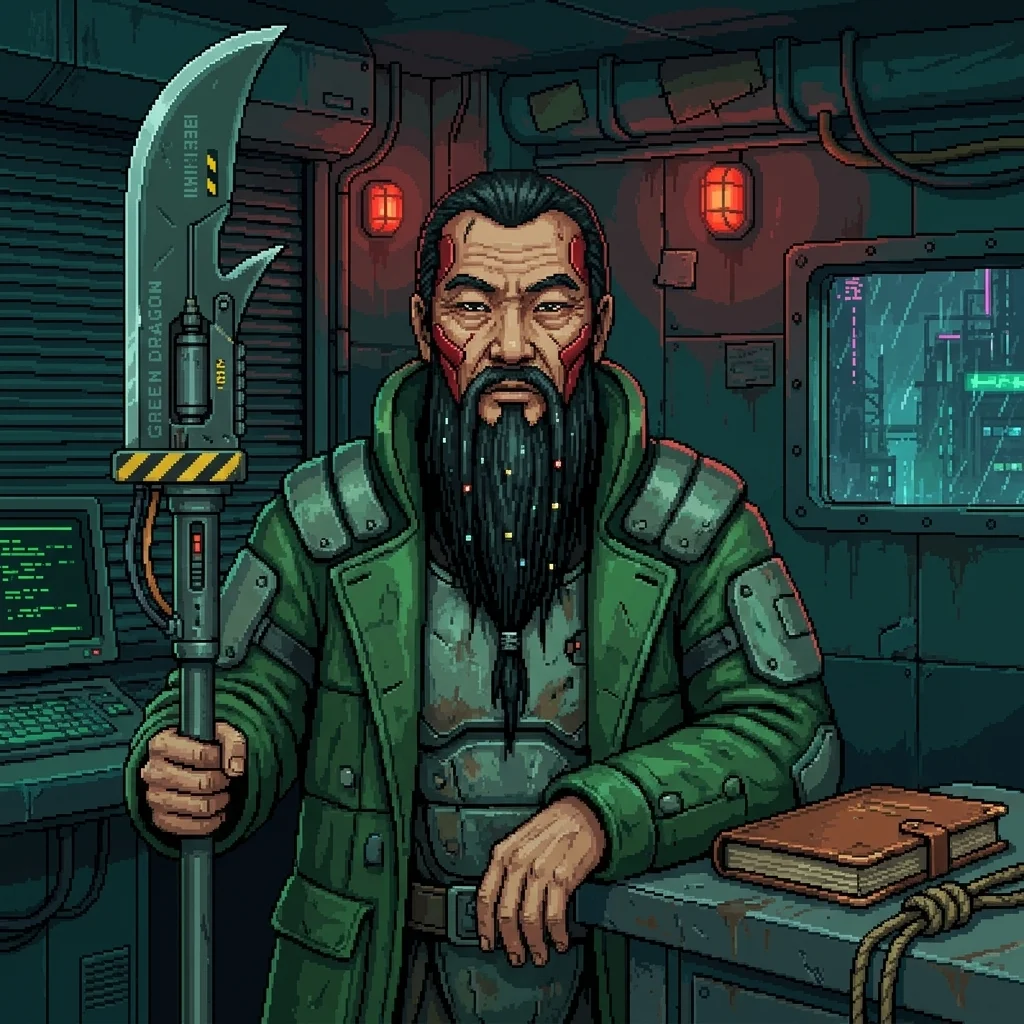
He replaces paid trust signals with promises that cost the speaker.
The Peach Compact enforcer who treats careless promises as structural damage.
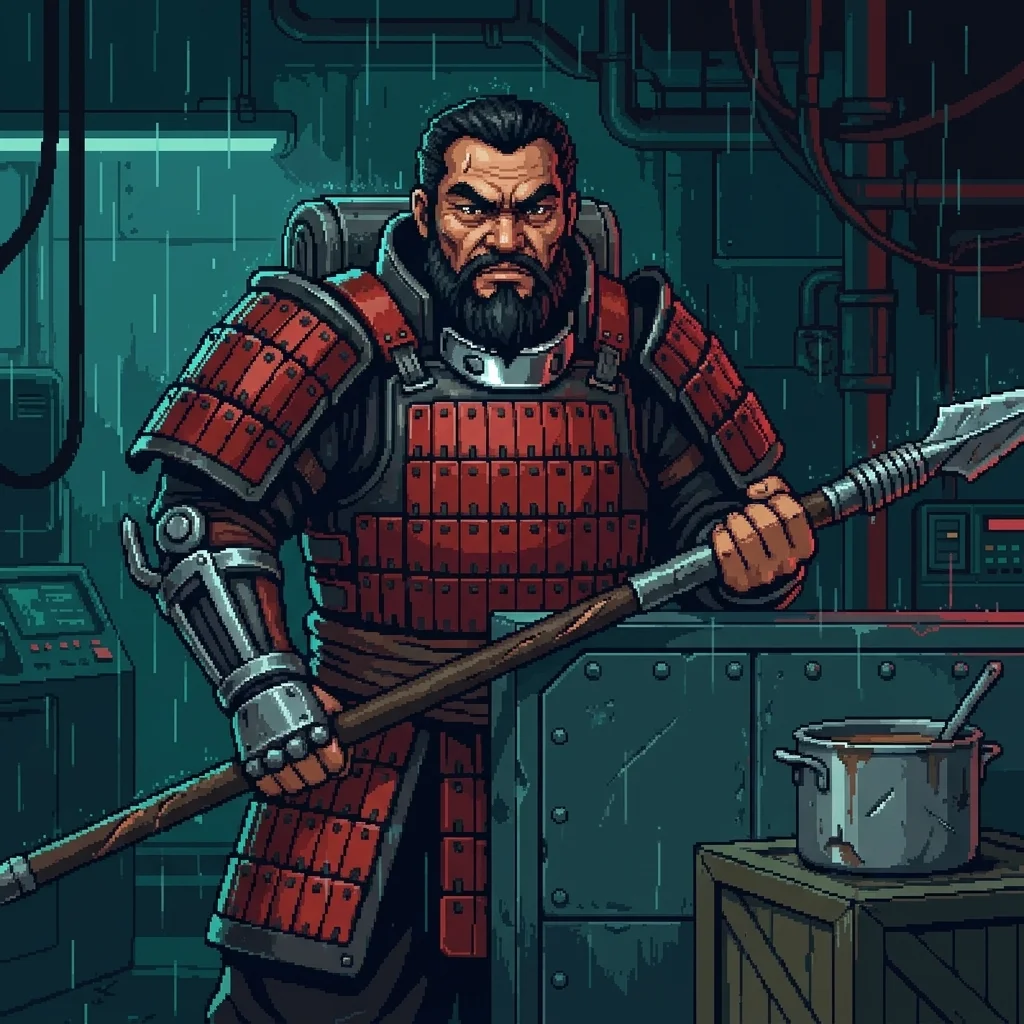
His open kitchen gives food and human presence in the same bowl.
A breach defender whose courage saves crowds and frightens the people closest to him.
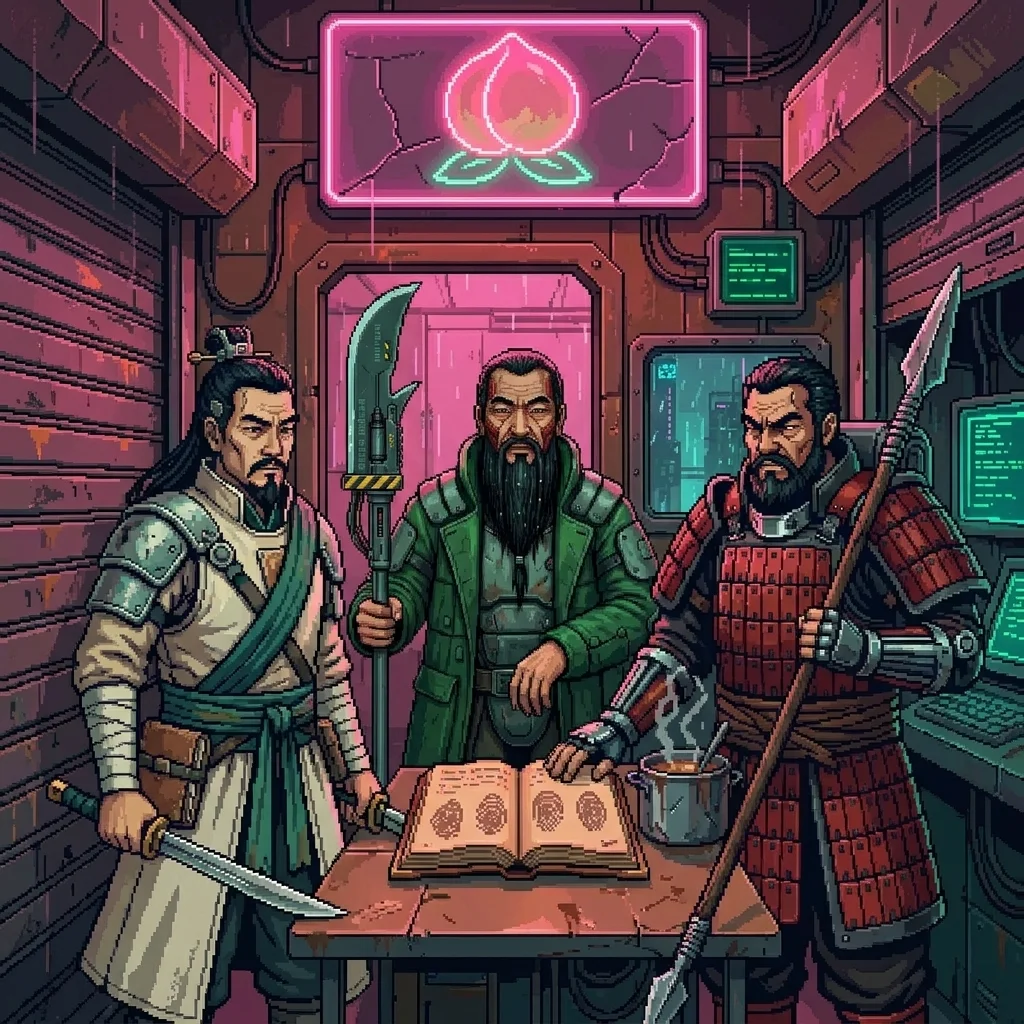
The cell supplies care below cost and calls the loss brotherhood.
A three-person mutual-aid compact that treats chosen loyalty as public infrastructure.
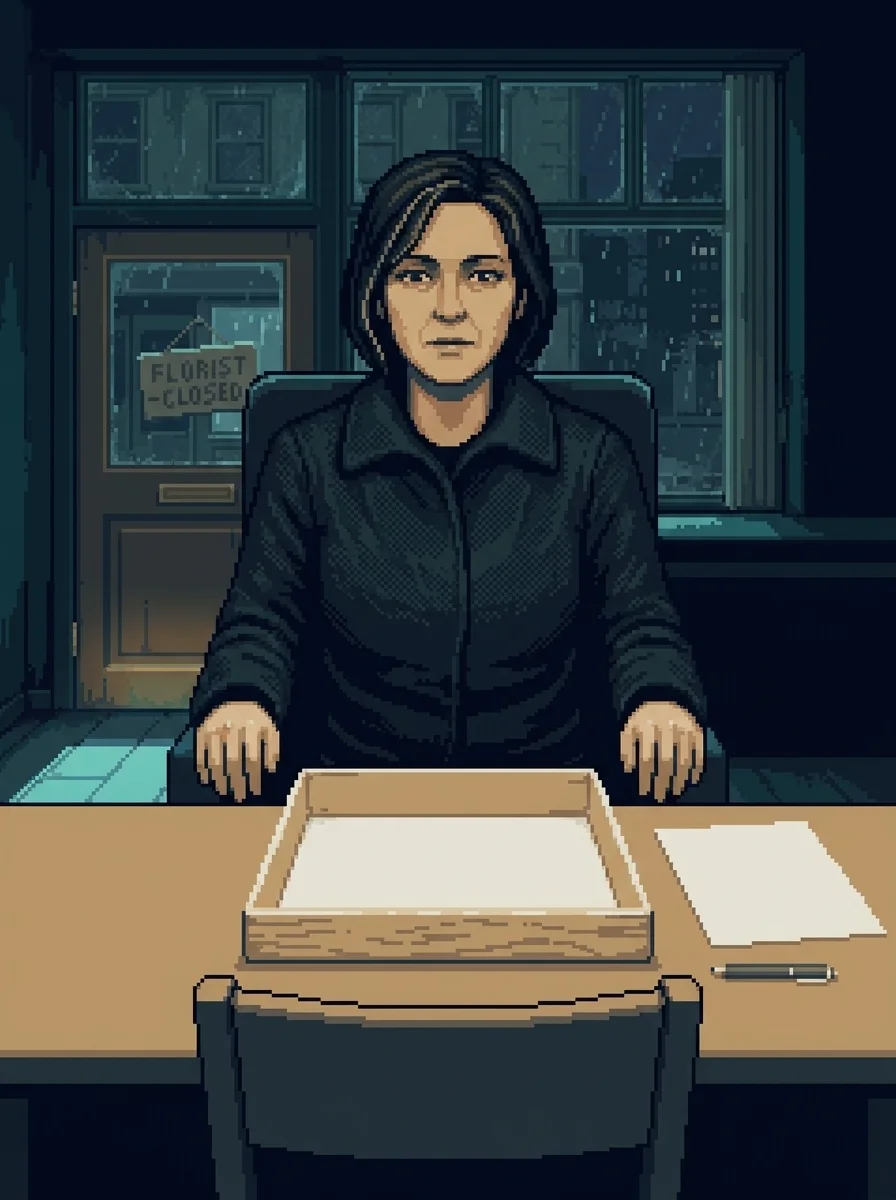
Months of undivided human attention, priced accordingly.
The Heights' priciest Wanting Counsel refuses to suggest a single want, and reads you the blank result aloud.

She designed loneliness-triggered purchase models before becoming a paid presence worker for lonely clients.

Rima Sky makes elite guests feel comfortable through personal attention and genuine presence.
The Sprawl's most elite VIP host — come for the party, share a few trade secrets.
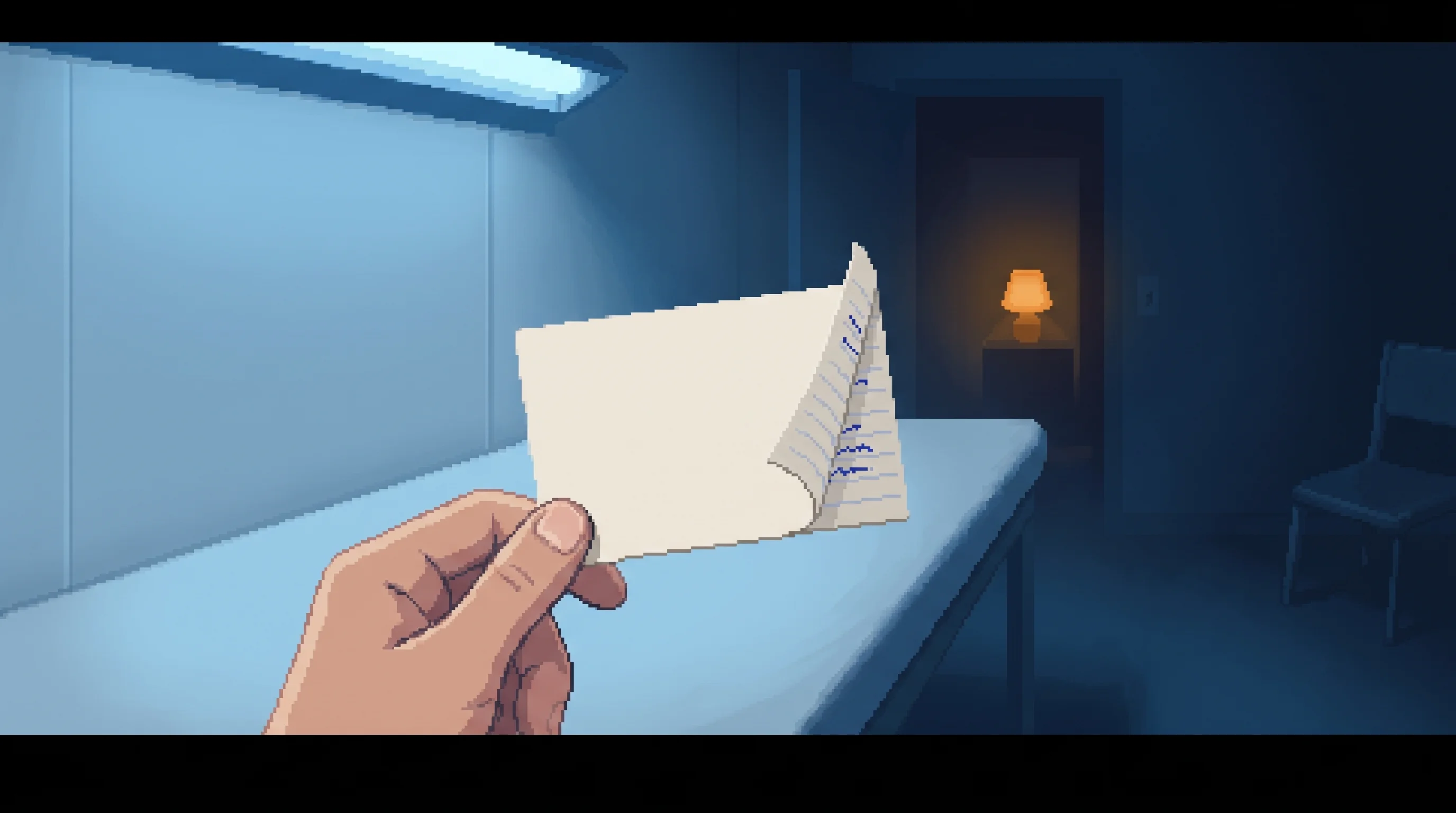
Being taken at your word joined the priced services; the rate card is the part of trust that survived.
Every claim can be checked now, so a handwritten 'I love you' arrives looking like a malformed record.
The Rate Card
The rate card keeps growing. Being taken at your word is on it now: once every claim can be checked, belief becomes a service, and the Atrophied Leap is what that does to people. Uptown, Counsel Halina Drozd sells months of undivided attention at a fee she does not publish.
The Slack Tide sells forty-seven minutes of signal-null silence for ¢280,000 to members who simply like the quiet. It has twice declined a reduced tier for people with the Shared Wound, who need it medically. They find their silence in a Dregs surveillance gap, free.
The Discretion Tier pays extra for staff who read you perfectly and show nothing. An instrument grades their inner life quarterly, and a low score qualifies. Ondine Kesh got a raise when the warmth went out of her voice. She teaches the grading now.
Down in the Deep Dregs, the Half-Life Cart keeps its broth hot with two salvaged reactors. Toma Rhee charges for the bowl and remembers your order for free.
Further connections
Browse all 4 connected records
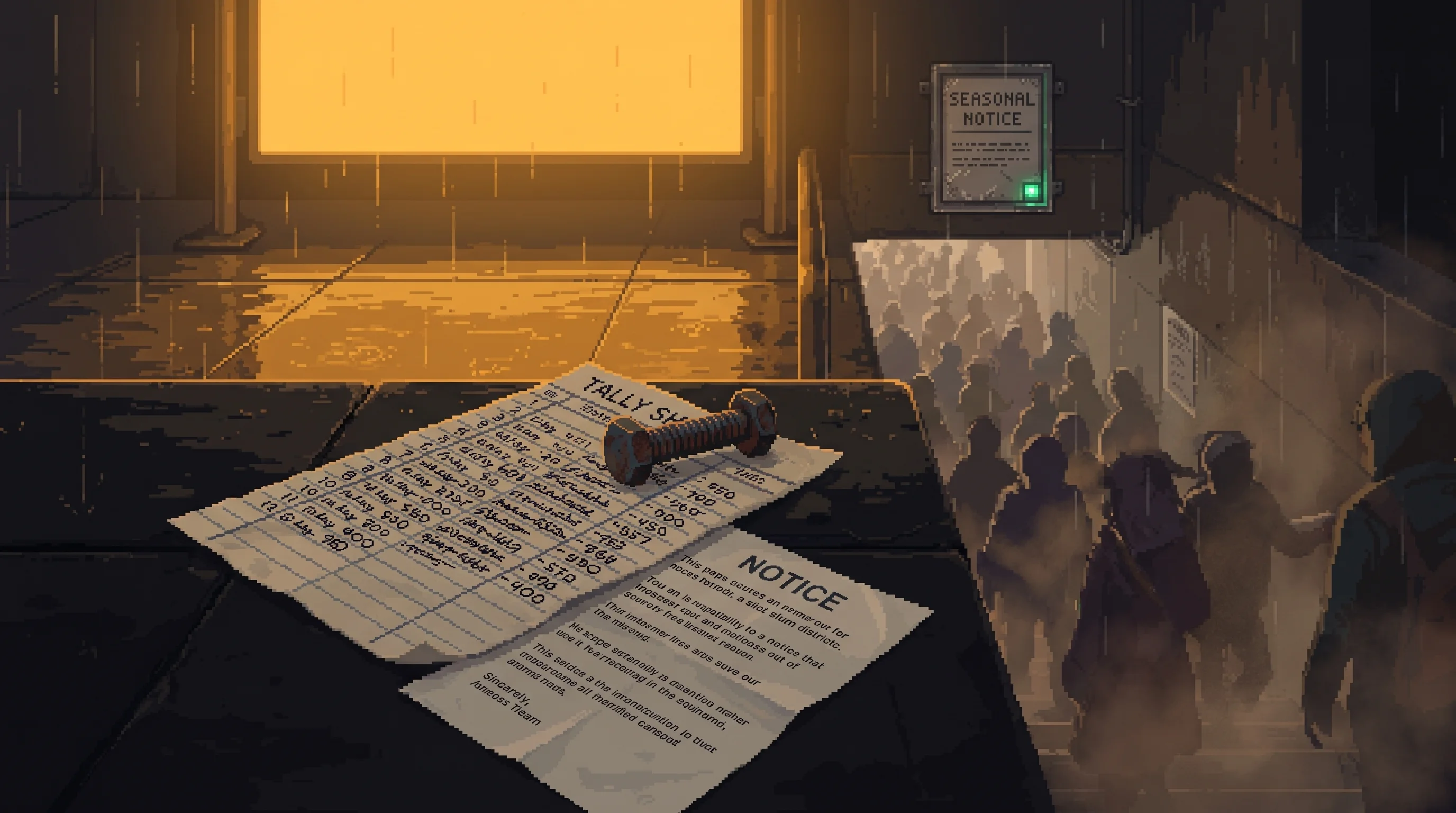
That market prices human presence once machines made it scarce. This one prices its inverse — the absence of stimulus — and the same households are buying in both directions.
Killings are forecast by district each season, so a killer inside the band gets a notice instead of a trial.
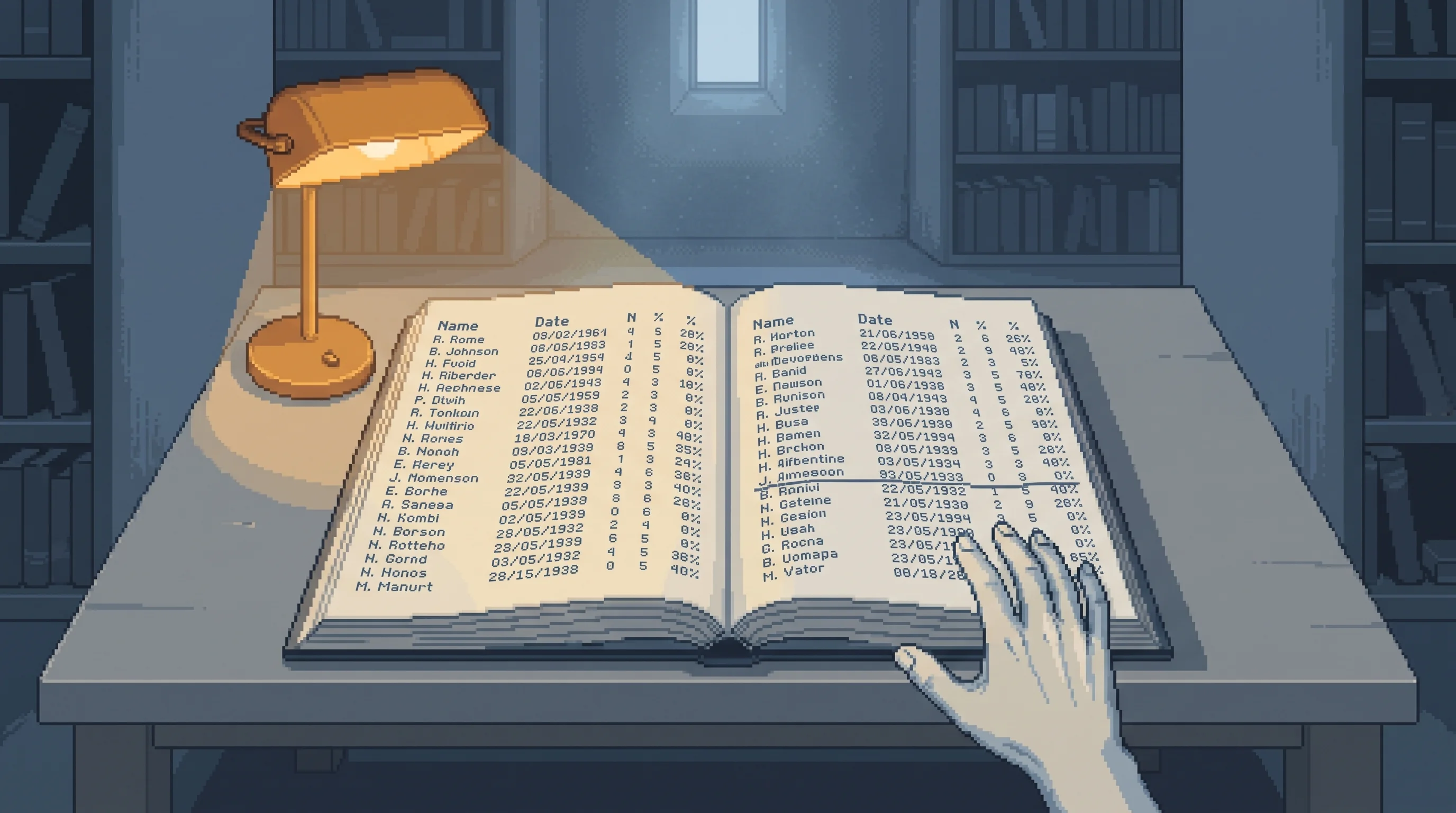
The Tax sells warmth. The Baseline requires it and bills shortfalls.
Nine thousand paid strangers were recorded being patient. Now everyone else waits behind them.
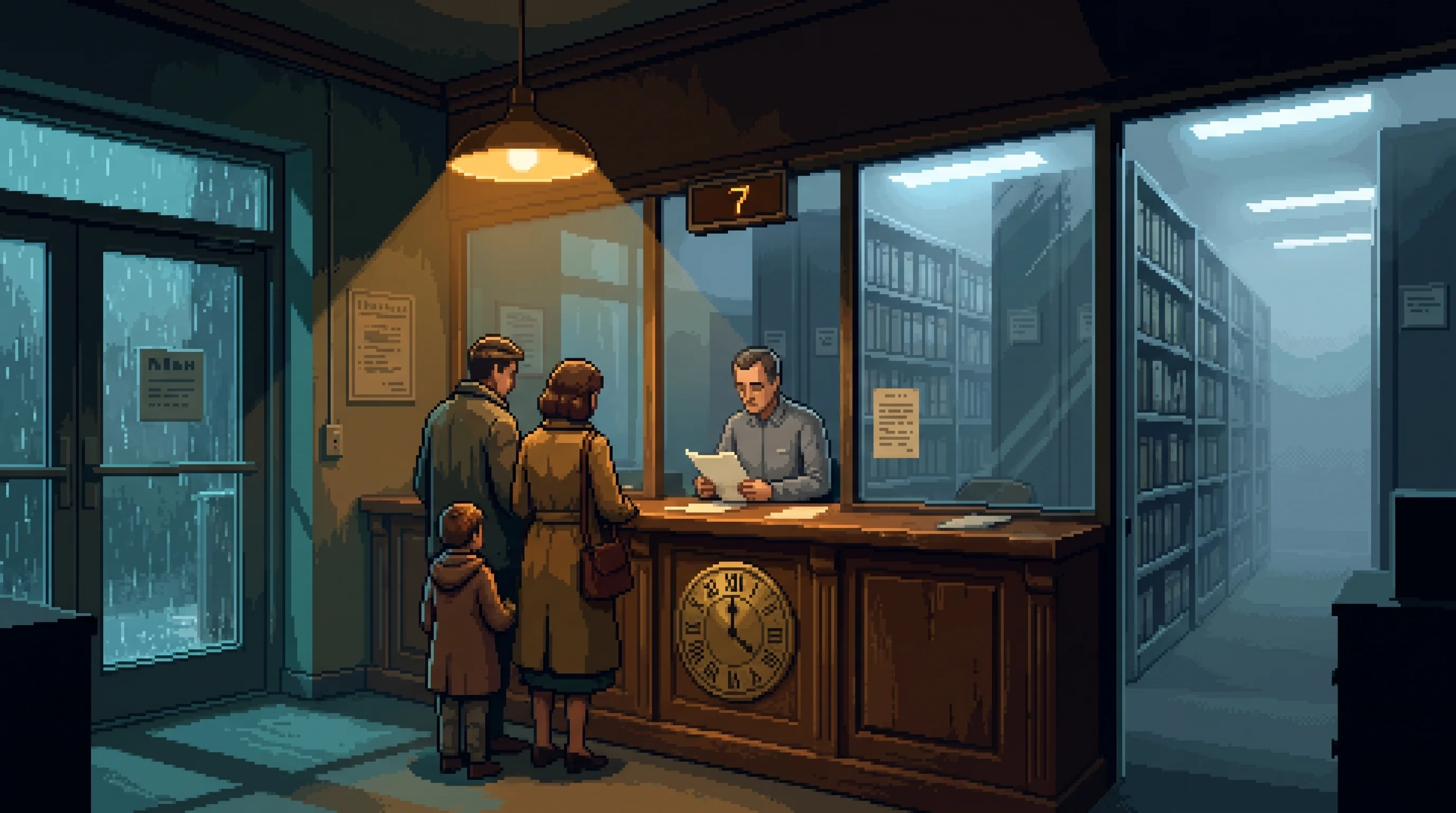
That prices a living person's attention; this rations a dead one's.
The Registry keeps every minute of your mother forever; her daughter is allowed nine hours, and has to pick them.
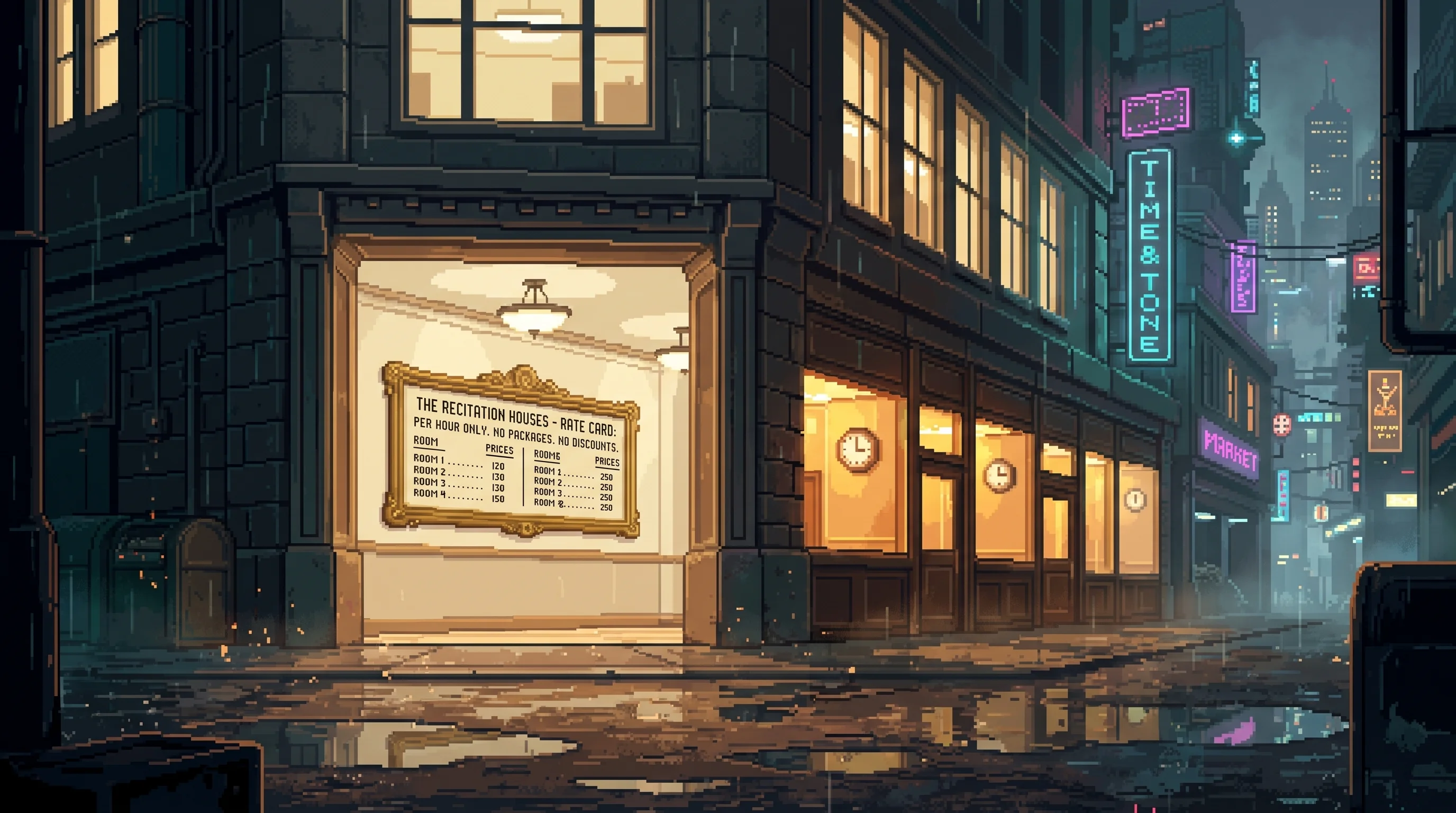
The reader is paid to sit in the doorway and not help.
The trade that coaches the unassisted forty-minute sitting, and found the only product was the work.