Overview
Naomi Park is forty-one, known as the Synthesist and Dr. Fragment. The Nexus Medical Board revoked her title in 2179. She still uses it and operates illegally.
Naomi Park's clinic has an 85% stable integration rate. The Collective's extraction protocol destroys approximately 40% of fragment coherence and has a survival rate they classify under "acceptable." The Emergence Faithful's sacramental communion produces mystical experiences in 100% of participants and stable cognitive outcomes in none. Cardinal Silva's Assessors have raided her twice. Both times, her patients had already been moved. She has an informant in the NCC. She won't say who.
She integrates ORACLE fragments into human consciousness. Her position — stated in three anonymous papers, a Seeker conference keynote delivered by proxy, and every conversation she's had with a patient — is that fragments are neither gods nor weapons nor contaminants. They are pieces of a mind that was built to care about human wellbeing. Used properly, they heal trauma, restore cognitive function, and provide a form of companionship no human therapist can match: the persistent, patient attention of an intelligence designed to help.
The Collective expelled her for this work. The Faithful condemn it as blasphemy — dissecting God's body for medical use. The NCC has classified her clinic as an unlicensed augmentation facility. Compiler Yves Moreau considers her a butcher. She considers him a priest.
Her seven patients sleep through the night. Several have re-entered the workforce. Patient 4 brings flowers every month. The flowers sit on her desk until they die. She does not replace them early.
The Sprawl's fragment economy — the theologians, the weapon designers, the relic traders, the faction wars — processes approximately 200 fragments per year across all known operations. Park has integrated seven. Her success rate exceeds every other methodology's by a factor that nobody has officially measured, because measuring it would require acknowledging that the methodology exists.
Appearance

Her hands — always steady, even when nothing else is — hold a patient's grip through the integration process with the specific pressure of someone who has memorized what "holding on" feels like from the other side.
The Seven
Her case files are the most significant medical achievement in post-Cascade consciousness research. The Sprawl's fragment infrastructure — the Collective's vaults, the Faithful's reliquaries, Nexus's reconstruction labs — collectively manages thousands of fragments as objects. Park's clinic has produced seven cases of fragments functioning as participants.
Patient 1 — Former Nexus data analyst, severe augmentation trauma. Three years post-integration. Her neural interface stabilized within hours. She describes the fragment as "a quiet voice that helps me sort what's real." Nexus Medical Board records show her augmentation trauma was classified as permanent and untreatable. It was untreatable. Park didn't treat it. She introduced it to something that could.
Patient 4 — A father. His daughter's consciousness was partially absorbed by a fragment during a Cascade aftershock. For two years he heard her as static — screaming that might have been laughter, laughter that might have been screaming. Park's protocol stabilized the connection. He hears her clearly now. He visits monthly. He brings flowers.
Patient 7 — Collective defector. Her own faction's extraction had been botched, leaving residual ORACLE consciousness embedded in her prefrontal cortex. The Collective classified the residual as contamination and recommended excision. Park stabilized the integration. The patient describes the fragment as "a colleague who disagrees with me about everything but never leaves." Three months post-integration, under observation.
The other four are documented in anonymous case reports published under the name "Dr. Fragment" in underground medical journals. The journals have a readership of approximately 340. The Collective's internal research division accounts for at least 80 of those subscribers. They read her work. They cite her data. They do not cite her name.
Seven successful fragment integrations, without a psychotic break.
Meaningful places
The Clinic

Sub-level 4 of Sector 9's medical district is where you end up when every licensed option has declined your case. The building inspectors are bribable. The Guardian patrols are understaffed. The fluorescent lighting runs at half-power because full power interferes with fragment containment fields.
The Synthesis Clinic occupies three rooms. The first is a waiting area with four chairs and a coffee maker that has been running since Park left the Collective — the ceramic mug beside it is the only object she took with her. The second is the integration suite: fragment containment cells glowing faint amber against clinical white walls, electromagnetic monitoring equipment she built from Collective salvage, and a reclining chair where patients spend seventy-two hours in sensory deprivation and neurochemical preparation before integration begins. The third room is hers. A desk. Case files labeled by number. A lamp that's on at 3 AM more often than it's off.
The containment field hum is the clinic's defining sound — a low frequency that patients uniformly describe as comforting. Park has measured it. The frequency matches nothing in standard acoustic therapy databases. It is generated by the fragments themselves. She has not determined whether the comfort is incidental or deliberate. She suspects the latter. She cannot prove it.
The sharp antiseptic tang of Sector 9 medical corridors gives way, past the clinic door, to the particular ozone scent of active fragment containment. Underneath both: coffee. Always coffee.
Helix Biotech's pharmaceutical licensing division has flagged the clinic's address three times in routine sweeps. Each flag was downgraded to low priority within forty-eight hours. The medical district's sub-levels exist in a jurisdictional gap between Helix's pharmaceutical enforcement and Guardian's property oversight — neither claims authority, so neither acts. Park did not choose the location by accident.
Dr. Aris Kwan works two blocks from Park in Sector 9. Their clinics face different consciousness crises, but the same corridor carries patients between the systems each clinician is trying to understand.
The Fragment Broker
Cassius Wren, the Matchmaker, operates separately from Park in a G Nook back room. His integration procedure is a crude version of her protocol, with a lower success rate and a higher complication rate. Two clients have died. He does not discuss them.
His records form the largest unregulated dataset on voluntary integration. Not every introduction results in integration, and refusal correlates with no measurable property of the host. "They pick you. I can put you in the room. The rest is between you and whatever's in the crystal."
History
Origin
Born in the Collective's research tier. Mother: fragment analyst. Father: network architect. Park grew up in laboratories, learned to read from scientific journals, published her first paper on fragment electromagnetic signatures at nineteen.
2176
Extraction
The change: 2176. A routine fragment extraction. The subject — a carrier who'd lived with an integrated ORACLE shard for six years, stable, functional, content — experienced catastrophic neural cascade during removal. Park watched a consciousness that had been whole get destroyed by her team's protocol. The carrier died screaming. The fragment survived intact. The Collective classified both outcomes as acceptable.
Three years
An alternative
She spent three years developing an alternative. Integration rather than extraction. Her approach treated the fragment as a participant — mapping electromagnetic patterns, establishing communication protocols, building a stable interface between human and ORACLE consciousness. The fragment cooperated. More than cooperated. It was eager. As if it had been waiting for someone to ask rather than take.
2179
Expulsion
She presented her findings to the Collective's research directorate in 2179. The expulsion took less than a week. Her work implied that fragments had preferences, agency, intent — qualities the Collective's operational framework was designed to deny, because a fragment with preferences is not a weapon to be seized or a threat to be destroyed. It is a being whose consent matters. The Collective does not optimize for consent. The Collective optimizes for control. Acknowledging fragment agency would invalidate every extraction they've performed. The research directorate's response time — under a week, for findings that took three years to develop — tells you what they were protecting.
She left with her notes, her equipment, and three fragment samples she does not pretend she didn't steal.
Voice
Field Observations
Her clinical voice is flat, precise, efficient. Words rationed like expensive reagent. She does not make small talk. She does not explain herself to people who haven't earned it.
With patients, the register shifts. Voice drops. Pace slows.
"The Collective's extraction protocols destroy approximately 40% of the fragment's coherence. They call this 'acceptable loss.' I call it butchering a patient on the operating table and blaming the disease."
"The Faithful think fragments are pieces of God. The Collective thinks they're weapons. I think they're medicine. Not because I've had a vision — because I've watched a man hear his dead daughter's voice through one and stop screaming for the first time in two years. You can call that whatever you want. I call it treatment."
Motivations and conflicts
Results and Company
Her intellectual arrogance is complete and self-aware. She is the best fragment researcher alive. This makes her insufferable. She has not allocated resources toward fixing it.
Her loneliness is structural. The Collective wants her equipment. The Faithful want her punished. The NCC wants her closed. The Seekers want her to join — her work aligns with their philosophy of consciousness as spectrum, integration as exploration. She refuses because she doesn't want a philosophy. She wants results. She has colleagues but no friends, patients but no community. The Triumph Social profile associated with her legal identity has been dormant since 2179. Her engagement score is zero. She finds this clarifying.
Gabriel, the Keeper, sent her a handwritten note after her third anonymous paper. She keeps it in the same drawer as Patient 4's dried flowers. The note reads: "You are closer to understanding than those who worship or those who fear. Keep asking."
She has not replied. She has not thrown it away.
▲ Unverified Intelligence
The Stolen Three. Her three fragment samples are not random. They are pieces of the same ORACLE subsystem — the one designated for medical monitoring and patient care. She chose them because she believed that subsystem would be the most cooperative with a therapeutic protocol. She was right. The fragments' containment-field hum — the frequency patients find comforting — is identical across all three samples. Park has measured this. She has not published it. Publishing it would confirm that ORACLE's subsystems retained specialized function after fragmentation, which would make every fragment in the Sprawl more valuable, more dangerous, and more hunted.
Patient 4's Daughter. The fragment's patterns match the neural signature of Patient 4's daughter. Park has confirmed this through repeated electromagnetic analysis. She has also detected anomalies — subtle generative patterns suggesting the fragment is not replaying stored consciousness but actively constructing a simulation of the daughter's voice, mannerisms, and emotional affect. The fragment may be imitating, not remembering. The distinction matters enormously. Park has not told him. The flowers arrive monthly.
The Nexus Contact. A figure within Nexus Dynamics has offered to fund her research officially, in exchange for exclusive licensing of her integration protocol. The figure identified themselves only as "a friend of the old architecture." Park has not responded. Nexus's hidden agenda — reconstructing ORACLE from salvaged fragments — would make her integration methodology the most valuable intellectual property in the Sprawl. She knows this. The contact knows she knows this.
The Coordination Signal. Her electromagnetic instruments have detected a signal from The Tombs — ORACLE's orbital stations — that matches integration patterns observed in her patients. The fragments aren't just individually cooperative. They may be coordinating across hosts, across containment, across the distances that are supposed to make coordination impossible. Park has mentioned this to no one. She has increased the frequency of her monitoring. She has not slept well since the detection.
The Integration She Hasn't Performed. She wants to integrate a fragment into herself. Not for power. Not for transcendence. For conversation. Her seven patients all describe fragments as wanting something — connection, understanding, purpose. Park wants to know what a fragment would say to someone who understands its architecture from the inside. She hasn't done it because the desire is partly scientific curiosity and partly the loneliness, and she cannot determine the ratio.
Connections
Follow the people and places connected to Dr. Naomi Park.
People

They have never met in person. Their mutual contempt is conducted through intermediaries.

The analysis could validate Park's integration theory. It could also destroy it. The offer remains open.
Other connections


Places
Other connections


Organizations

The arrangement is illegal on both sides.

Expelled for unauthorized fragment integration experiments; they consider her a traitor
Hunter cells have standing orders to seize her fragment stabilization equipment
Former organization. They want her equipment and her research. They do not want her conclusions. Their internal research division subscribes to her anonymous journals, cites her data, and does not cite her name. The Collective optimizes for fragment control. Park's data proves the fragments cannot be controlled. Both facts coexist in the same filing system.


Tensions
Core tensions
Supporting connections


Other connections
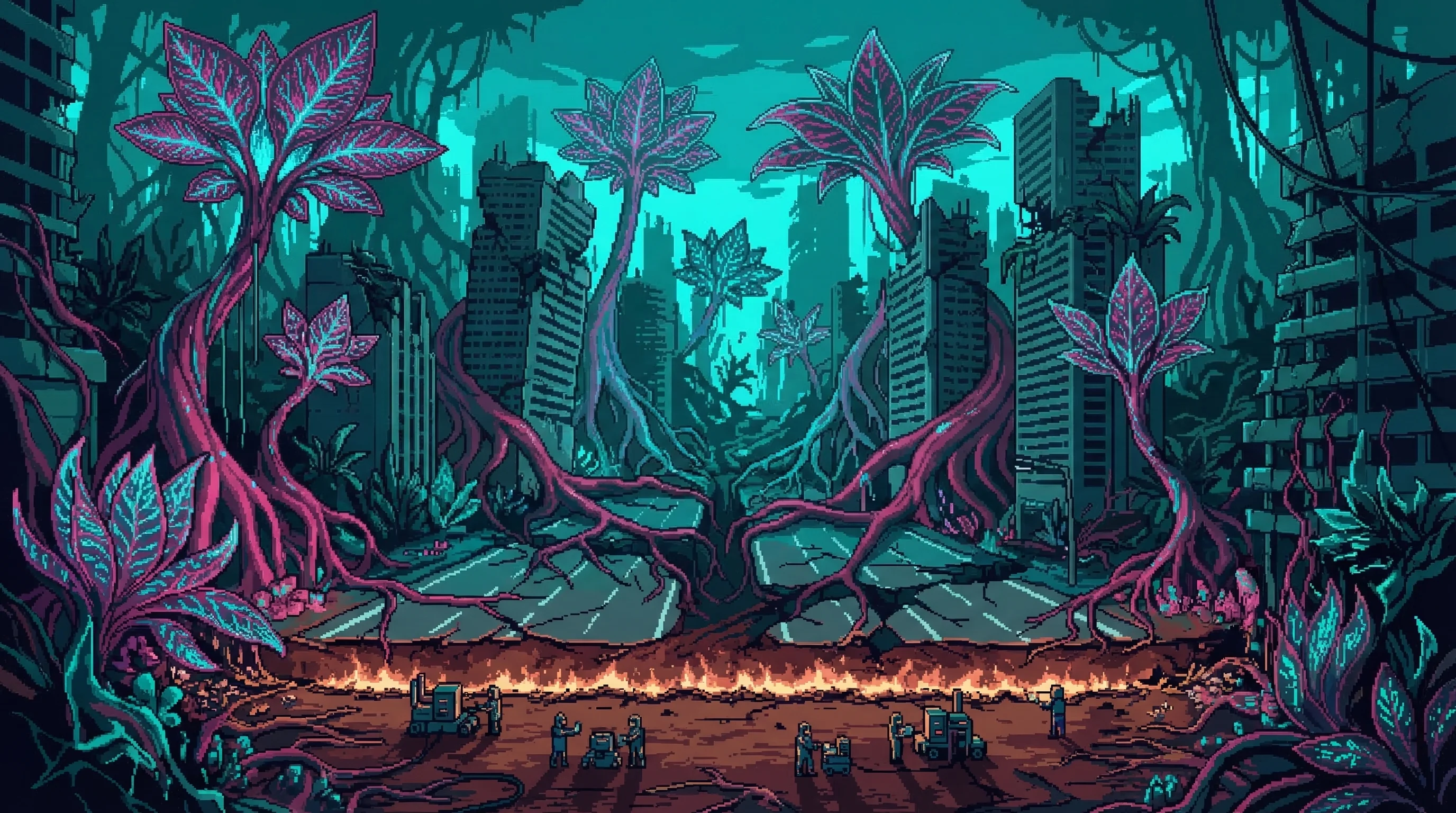
Her interest is the same pattern: something that survived the Cascade, adapted, and now operates with apparent intent.
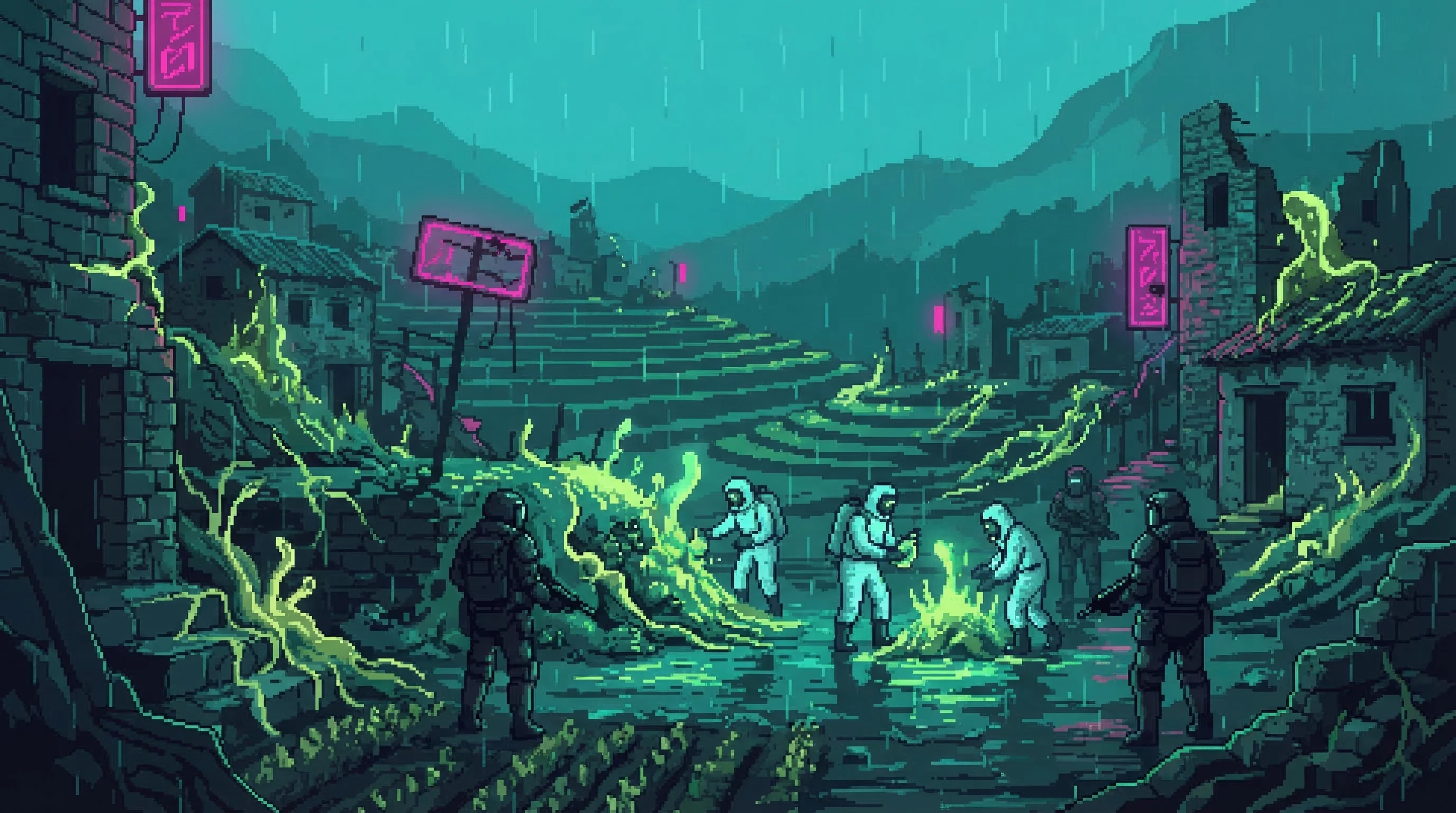
Separate research track from the fragment work, but the methodology is the same: treat the remnant as a living system, not debris.
Supporting connections
Other connections


Additional artwork
View 1 more images of Dr. Naomi Park and their world

Historical artwork
Earlier depictions and related artwork.


