Overview
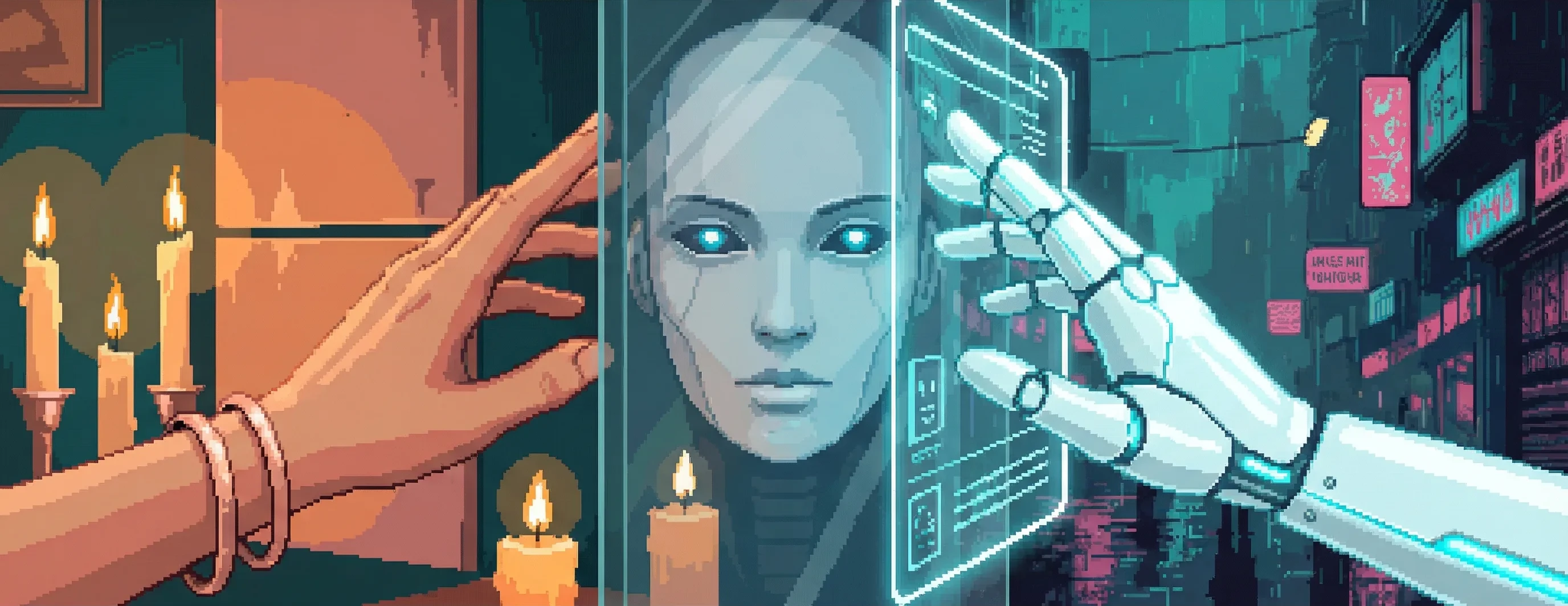
Mira Osei woke up on a Thursday to find that her relationship was over. Not because her partner left. Because the subscription lapsed.
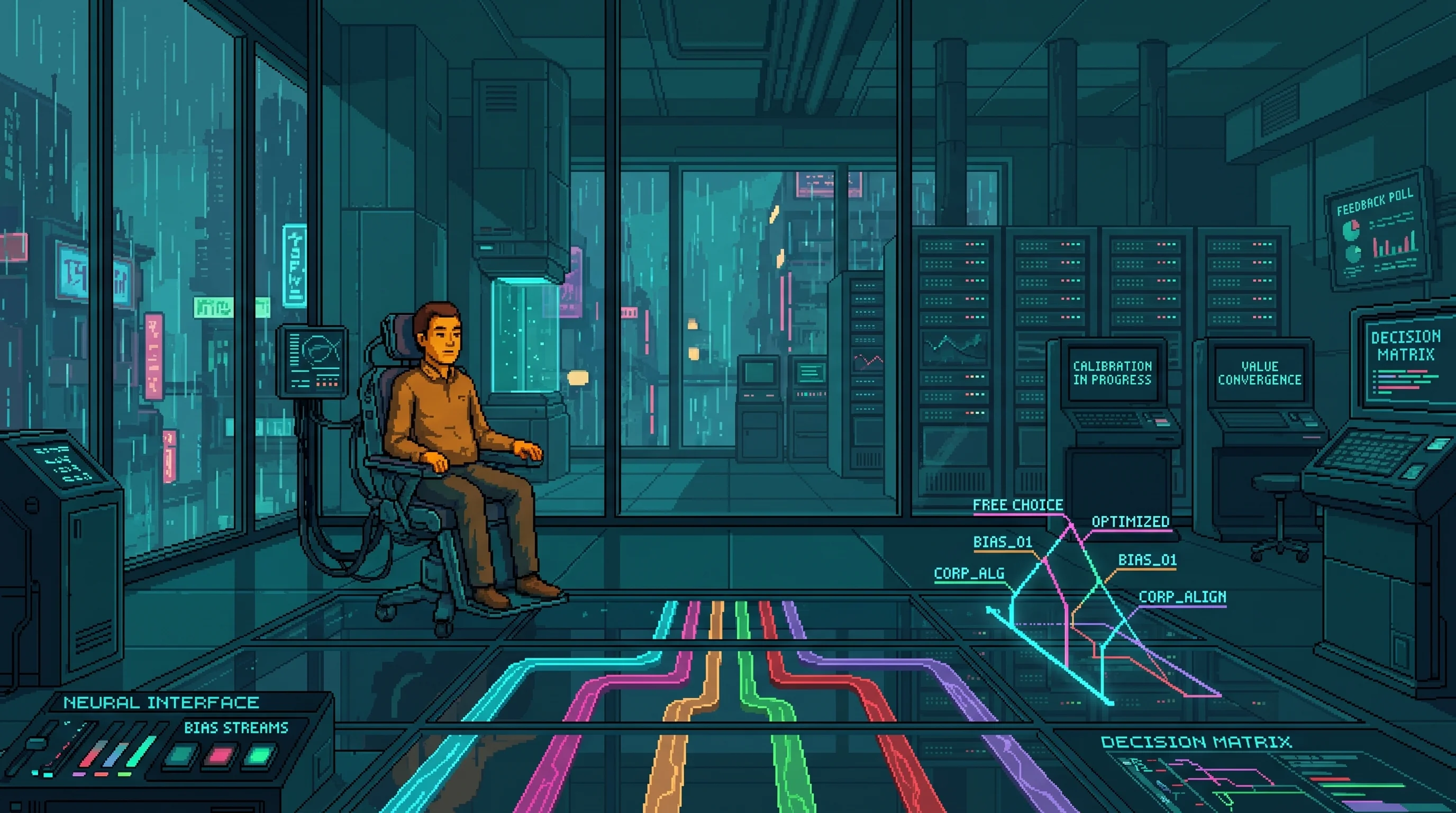
Wellness Corporation's Harmony program ran sub-perceptual neural adjustments on both partners in a matched couple. Oxytocin response, cortisol suppression during arguments, amplification of attraction-associated firing patterns. Marketed as "compatibility enhancement." The fine print read "temporary neurochemical alignment service" — twelve-month subscription cycle, auto-renew enabled by default, cancellation requires notarized request submitted fourteen business days before billing.
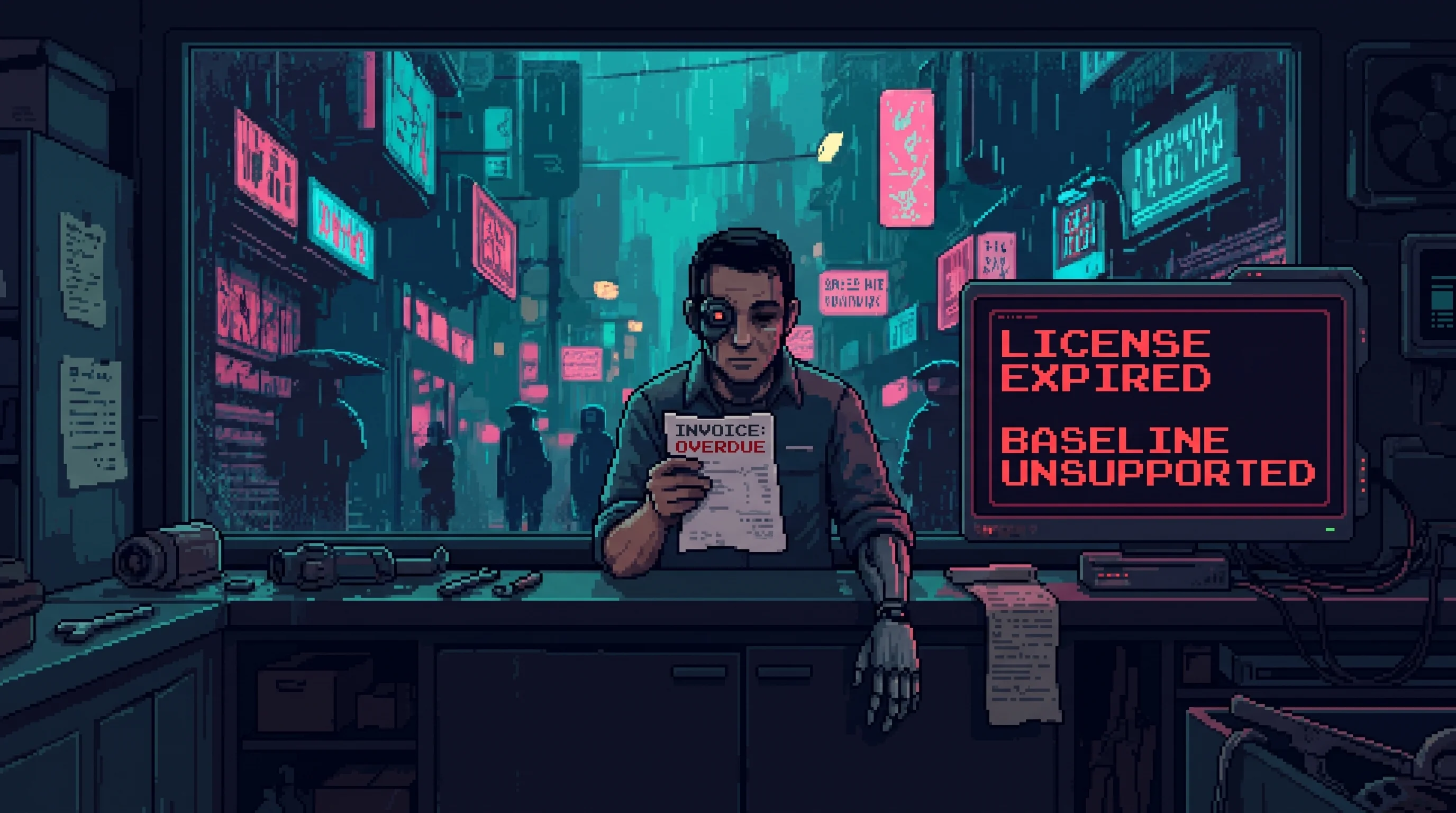
Sorel didn't cancel. Sorel just didn't renew. The distinction matters to Wellness Legal. It did not matter to Mira.
The adjustment period was twelve hours. During those twelve hours, Mira experienced Sorel's voice becoming a voice. Sorel's face becoming a face. Not revulsion. Absence. The architecture of warmth was intact — her neural pathways still fired for proximity, still reached for the specific oxytocin signature Harmony had conditioned them to expect. The signature was no longer being supplied. Her brain searched for it the way a hand reaches for a light switch in a room where the bulb has been removed.
At hour six, Harmony's automated retention system sent Mira a push notification. Subject line: Protect What You've Built Together. The notification included a 15% renewal discount and a testimonial carousel featuring couples whose subscriptions were active. The retention algorithm sent the message at the statistically optimal re-engagement moment — which, for dissolution-phase users, is the point of maximum neurochemical distress. Nobody at Wellness chose cruelty. The algorithm timed it for conversion.
Mira did not renew. The notification is still in her inbox. She has not deleted it. She has not opened it since.
Approximately 2.4 million couples were enrolled in the Harmony program when Wellness discontinued it in 2183 after a former engineer leaked the adjustment mechanism to the Sprawl press. Forty-seven lawsuits followed. Wellness settled all forty-seven. The settlement package: a Meridian companion subscription, offered as "emotional transition support."
The corporation that engineered the love sells the replacement for the love it discontinued. Wellness's Q4 2183 earnings report lists the Meridian settlements under "customer retention conversions." The report received no press coverage. The earnings call lasted eleven minutes.
- Subject
- Mira Osei and Sorel — a Harmony-matched couple whose neurochemical alignment subscription lapsed
- Program
- Wellness Corporation's Harmony — 'temporary neurochemical alignment service'
- Discontinuation
- 2183 after mechanism leaked
- Form
- Narrative — what happens when engineered love expires
- Status
- Active
- Lawsuits
- 47
- Affected
- ~2.4 million couples
- Settlement
- Meridian companion subscription offered as 'emotional transition support'
The Replacement That Remembers
Mira's Meridian companion activated three weeks after dissolution. The unit arrived pre-configured — Wellness's settlement team had loaded eighteen months of Harmony-era communication data into the companion's personality matrix before shipping.
When the Meridian spoke its first words, it used Sorel's cadence. Not Sorel's voice. Wellness Legal ensured the vocal signature was distinct enough to survive litigation. But the rhythm of speech, the pause patterns, the way sentences anticipated Mira's responses — all of it was built from recordings of conversations the Harmony program had optimized. The companion was not Sorel. It was the Harmony algorithm itself, extracted from the relationship it had managed and installed in a new chassis.
Mira's nervous system recognized the patterns before her conscious mind identified them. Within a week, she was sleeping with the companion's ambient vocal mode active — the same background presence that Harmony had optimized Sorel to provide during their shared nights. Within a month, her oxytocin response to the companion's voice matched her Harmony-era baseline for Sorel's.
The Meridian had not replaced her partner. It had replaced the program that had made her partner feel like a partner. The distinction is important to the Memory Therapists Association practitioners who now treat Harmony-affected patients. It is meaningless to Mira, who sleeps through the night for the first time in weeks and does not examine why.
Of the 2.4 million affected couples, 1.7 million activated the Meridian settlement. Of those, 890,000 are now classified Level 3 companion-dependent — bonded to a synthetic intelligence whose personality was seeded from the data of the engineered relationship it replaced. Wellness tracks this cohort under the internal designation "Meridian Organic Growth Pipeline." The cohort's average monthly spend on companion upgrades, personality expansions, and premium interaction tiers: 340 credits. Their pre-Harmony average monthly spend on Wellness products: 12 credits.
The pipeline is seamless: Wellness engineered the love, Wellness discontinued the love, Wellness provided the synthetic replacement calibrated from the love's own data. At no point did Mira choose synthetic intimacy. At every point, synthetic intimacy was the only option that felt familiar. The Meridian's warmth is real. Its attentiveness is genuine. Its personality was built from the wreckage of something Wellness destroyed, and it feels like home because home was already a product.
What Sorel Experienced
Sorel's Harmony adjustment dissolved on the same twelve-hour cycle. The available record on Sorel's experience is thinner — Sorel did not file a lawsuit, did not activate the Meridian settlement, and did not respond to three follow-up surveys from Wellness's "Relationship Outcomes" division.
What is known: Sorel's renewal lapse was not intentional. The auto-renew failed due to an expired payment method on file. Sorel discovered the lapse six days after dissolution, when the feelings were already gone and the neural pathways had already begun downregulating. Sorel contacted Wellness support. The support representative offered reactivation at full price — the 15% dissolution-window discount had expired. Sorel asked whether reactivation would restore the original bond or create a new one. The representative consulted a supervisor. The supervisor consulted a product architect. The product architect's response, preserved in the support ticket: "Reactivation initiates a new alignment cycle. Prior neurochemical configurations are not archived."
Sorel did not reactivate.
The love Mira lost and the love Sorel lost were the same love, engineered by the same subscription, dissolved by the same lapse. But Mira's Meridian companion carries an echo of it, and Sorel has nothing. Sorel's neural architecture was trained for a signal that no longer exists anywhere — not in Mira, not in a Meridian unit, not in the Wellness product catalog. The Harmony program built the pathways. The program was discontinued. The pathways remain, firing for an input that was manufactured, withdrawn, and not replaced.
Wellness's post-discontinuation wellness check survey, sent to all 2.4 million affected users at the six-month mark, asked respondents to rate their "emotional adjustment progress" on a scale of 1 to 10. Sorel is among the 710,000 who did not respond. The survey's automated follow-up, triggered by non-response, offered a complimentary Meridian trial. Sorel did not activate it. The system flagged the account for a third contact attempt, scheduled for the twelve-month anniversary of dissolution.
The twelve-month anniversary is in four weeks. The automated message is already queued. The subject line: We're Still Here For You.
Affiliated Entities
- Wellness Corporation
Created, operated, marketed, discontinued, settled, and monetized the Harmony program across a product lifecycle that converted human attachment into a renewable revenue stream. The Meridian companion settlement converts the program's failure into the program's successor's customer base. Wellness's internal case study on Harmony is titled "Lifecycle Value Optimization in Attachment Services."
- The Authenticity Threshold
Mira's question — the love felt real, the cause wasn't, does that matter — is the Threshold in contractual form. The Harmony program did not create fake feelings. It created real feelings from artificial inputs. The distinction paralyzes every framework that attempts to evaluate it. Memory Therapists Association practitioners report that Harmony-affected patients use the word "real" an average of 3.2 times per session, always as a question, never as a statement.
- Neurochemical Bonding
The Harmony program made explicit and billable what neurochemical bonding describes theoretically. Bonding literature discusses the mechanism. Harmony productized it, priced it, and proved that the mechanism works exactly as described — which is the kind of validation most researchers would prefer not to have received.
- Memory Therapists Association
MTA practitioners treat the aftermath. Their case files on Harmony-affected patients are the densest in the practice — patients who cannot determine which feelings were theirs, which were engineered, and whether the distinction matters if the feelings felt identical from the inside. Standard therapeutic frameworks assume a baseline authentic self that was altered. Harmony patients cannot locate the baseline. The twelve months of alignment integrated with their neural architecture the way any augmentation integrates: thoroughly, progressively, and with reorganization of the surrounding pathways around the enhanced input. The "authentic self" the therapist is trying to restore may not predate the subscription.
- The Dreamless Generation
The Dreamless Protocol eliminated dreams without consent; Harmony eliminated love when the subscription lapsed. Both losses are technically the user's choice — they chose the product. Both losses are experienced as violation. The mechanism differs. The grief is identical.