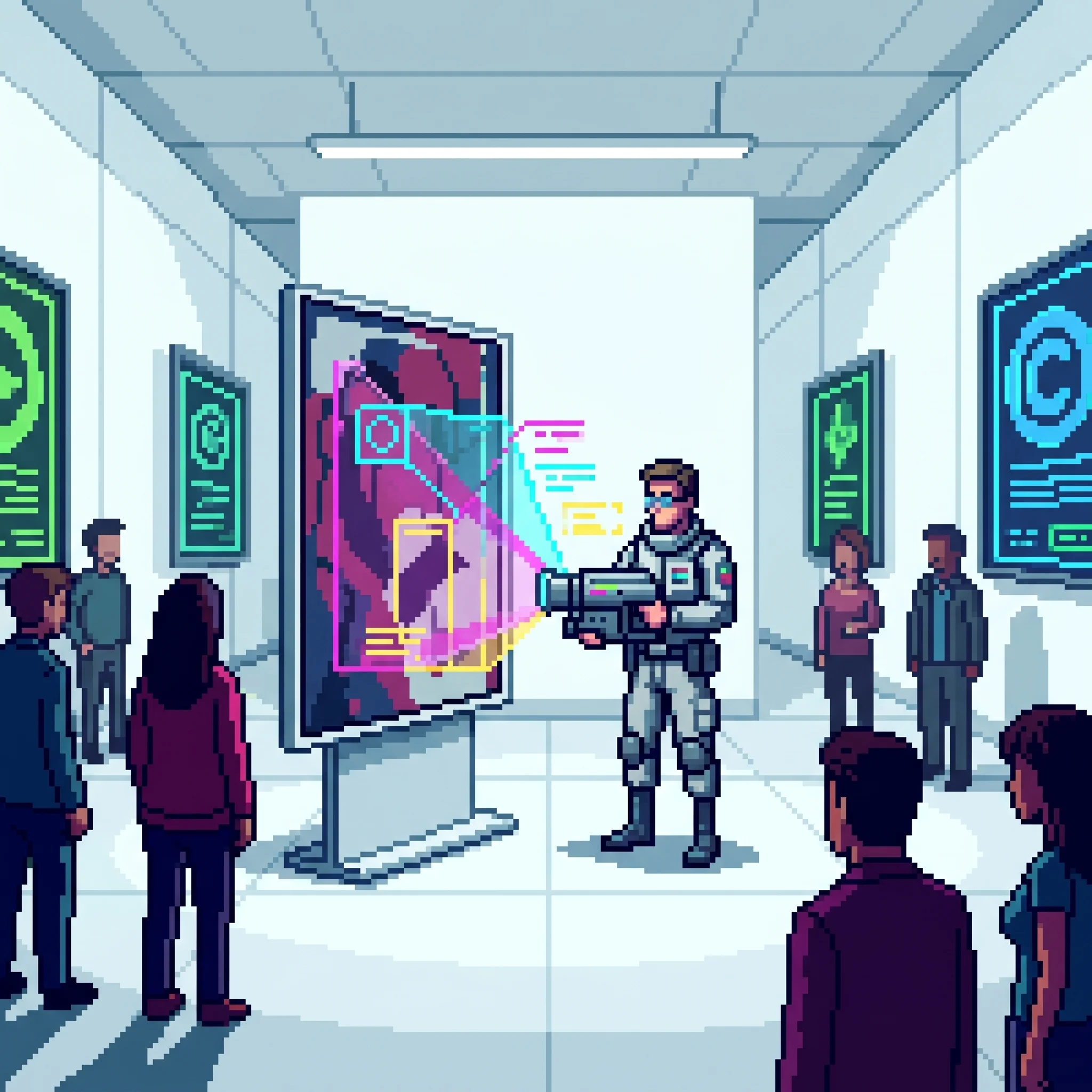
The Authenticity Tribunal
Captured Authenticity Court
The Keystone Court
Fragment-carrier artists trigger APR at 67%, Analog School graduates at 41%, The Blistered at 100% — the system flags innovation as suspicion
The Assessment Process
Pattern analysis
A certified assessor examines a recording for synthetic markers.
Lived experience shows small irregular jolts that synthetic work smooths away.
Provenance verification
Assessors check chain of custody, identity, and environmental metadata.
This stage catches most fraud.
Contextual assessment
A Judge or senior assessor decides whether the engagement was genuine or performed.
This is the stage where accuracy is falling.
A neural recording submitted for tier certification passes through three stages. The first two are reliable. The third is the problem.
Pattern Analysis. A certified assessor examines consciousness patterns for synthetic markers. Authentic lived experiences contain micro-discontinuities — irregular little jolts in consciousness flow that reflect biological cognition's fundamental messiness. Synthetic recordings are smoother. The AI models that generate them optimize for experiential coherence, which made them easy to spot. Five years ago. Current synthetic models introduce artificial irregularities. The irregularities are getting better.
Provenance Verification. Chain of custody from creation to submission. VerisysTM identity confirmation. Temporal metadata. Environmental cross-referencing — ambient sound, electromagnetic signatures, location markers. Provenance catches most fraud, because forging an entire custody chain is harder than forging a consciousness pattern. For now.
Contextual Assessment. A Judge or senior assessor examines whether the recording's content reflects genuine creative engagement or performed engagement. Does the consciousness state demonstrate real artistic progression? This is where the system breaks. It requires the assessor to feel the difference between authentic and synthetic creation — and the difference is shrinking.
Maya Fontaine excels at Stage 3. Her 99.2% accuracy across fourteen years is the highest in Tribunal history. She describes authentic recordings as having "weight" — a density of presence that synthetic work approximates but never achieves. She cannot explain the method more precisely than that. She does not need to. The results speak.
Her accuracy has declined 0.3% in the past year. She has not reported this. The decline is small. The direction is not.
Cultural Influence
- Base
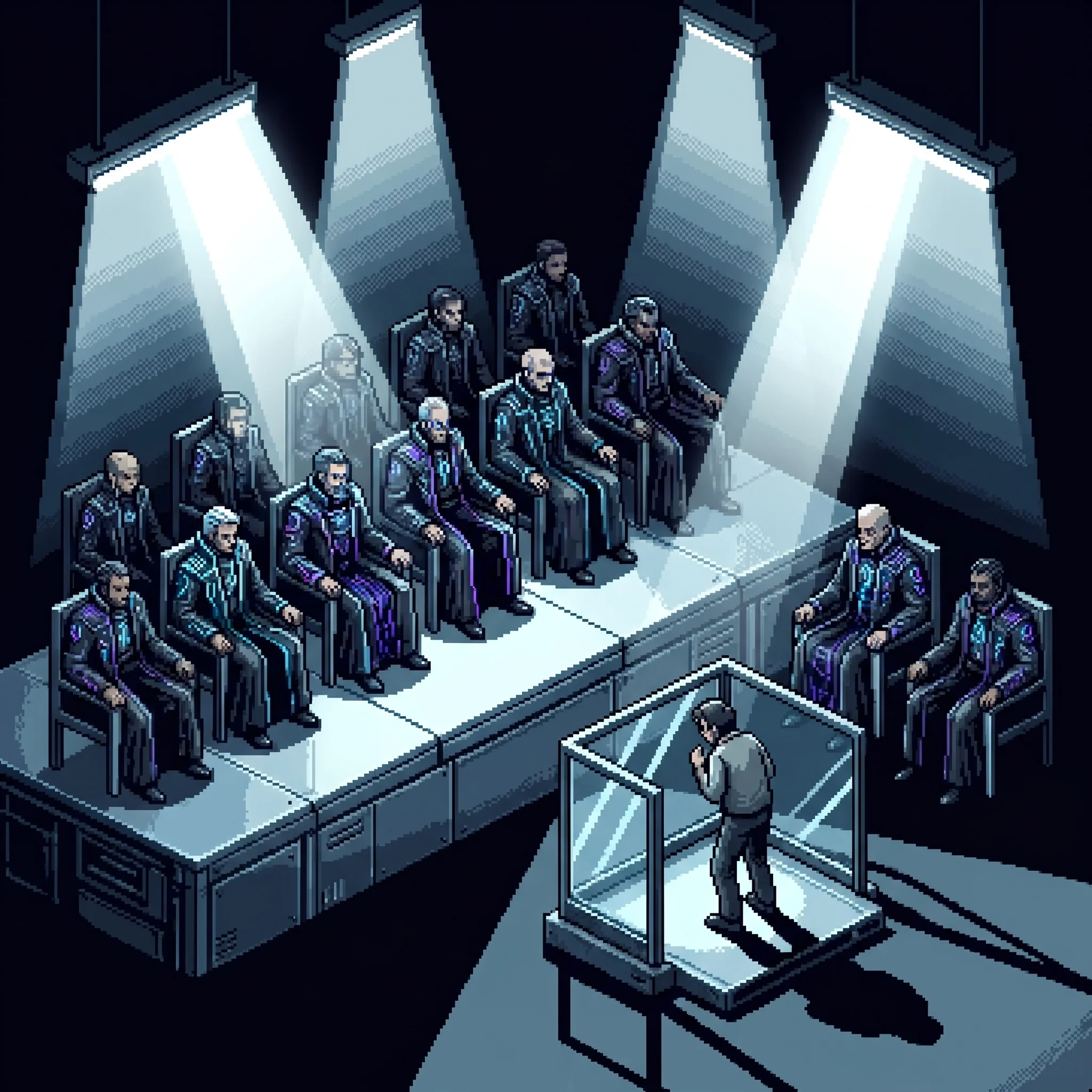
- Tribunal Hall, Nexus Tower Cultural Wing, Sector 1.
- Jurisdiction
- Nexus-governed territory, about 80% of the Sprawl.
Inside Nexus Central, the Tribunal is ambient. Tier certification numbers appear on gallery placards. Cafes in the Glass District distinguish between Tier 1 and Tier 4 musical accompaniment. Assessors walk the corridors with the casual authority of health inspectors. Living in Sector 1 means living inside the Tribunal's jurisdiction so completely that questioning it feels like questioning gravity.
The authority thins at the edges. In Neon Graves, the Blank Canvas Movement stages destruction performances that fall outside every certification category — the Tribunal cannot adjudicate art that ceases to exist. Artists there display their tier certifications ironically or refuse them entirely as creative statement. The Curators Guild operates a parallel certification system that artists in Neon Graves trust more than Duval's bench.
In the Dregs, Viktor Kaine's word carries more weight than a Tribunal ruling. In the Echo Bazaar, four hundred unenforced orders have made the Tribunal's writ a standing joke among vendors who sell consciousness data from stalls the Tribunal cannot touch. The Sprawl's geography is the Tribunal's real jurisdictional map: authority at the center, ceremony at the margins, nothing at the edges.
Quick Facts
| Attribute | Value |
|---|---|
| Type | Cultural authority / certification body |
| Founded | 2176 |
| Sitting Judges | 12 |
| Certified Assessors | 200+ (down from 217 three years ago) |
| Base | Tribunal Hall, Nexus Tower Cultural Wing, Sector 1 |
| Authority | Binding rulings on tier classification, fraud, and unauthorized reproduction |
| Jurisdiction | Nexus-governed territory (~80% of the Sprawl) |
| Annual Caseload | ~2,000 disputes |
| Funded By | Nexus Dynamics' Cultural Integrity Division |
| Accuracy, 2174 | 99% |
| Accuracy, 2184 | 92% |
Overview
The Authenticity Tribunal can tell you whether a neural recording is real. For now.
Ten years ago, its assessors distinguished Tier 1 lived originals from Tier 5 synthetic constructs with 99% accuracy. The number is 92% today. Chief Arbiter Solenne Duval projects it will fall below 80% within a decade — the threshold at which the tier system becomes statistically indistinguishable from a coin flip weighted by institutional prestige. She has shared this projection with no one at Nexus Dynamics, which funds the Tribunal, appoints its Standards Board, and has never once received a ruling against its corporate interests. The projection exists in a private document on her personal terminal titled "After Classification."
The Tribunal was founded in 2176 as a joint initiative between the Authenticity Market Standards Board and Nexus Dynamics' Cultural Integrity Division. Twelve sitting Judges. Over two hundred certified assessors trained in consciousness pattern analysis and neural recording forensics. Binding rulings across 80% of the Sprawl. The institution exists because the Authenticity Market requires an authority that can look at a piece of consciousness and declare it genuine — and because Nexus requires an authority that appears independent while remaining structurally incapable of independence.
The appointment chain is public. The Standards Board appoints the Judges. Nexus appoints the Standards Board. The Tribunal's response to this observation is that the alternative — no authority, no standards, no enforcement — would collapse the Market entirely.
This argument is effective because it is true. It is also the argument every captured institution makes.
Relief Corporation funds the Tribunal through three intermediary organizations. The Tribunal's enforcement of tier boundaries protects Relief's synthetic content pipeline by maintaining the premium on "authentic" experiences — the higher the wall between real and fake, the more profitable it is to sell fake to people who can't afford real. The Tribunal has never investigated Relief's funding structure. The funding structure has never been disclosed in a ruling.
The Judges
Chief Arbiter Solenne Duval
Duval is sixty-one. Nine years on the bench. She was a first-generation consciousness pattern analyst — one of the people who built the forensic methods the Tribunal still uses. She is meticulous, severe, and one of perhaps three people in the Sprawl who genuinely believes the tier system protects artists rather than commodifies them.
She is also writing the system's obituary.
"After Classification" runs to forty-seven pages. It describes a framework for cultural standards after tier certification becomes unreliable. The document's existence is known to exactly two people. Its contents would restructure the Authenticity Market if published. Duval updates it on the first of every month, adding data points the way a doctor updates a terminal patient's chart — precise, professional, aware that precision will not change the prognosis.
In eight years, she has received eleven sealed directives from Nexus Dynamics' Cultural Integrity Division instructing specific case outcomes. She has complied with all eleven. She keeps copies in the same directory as "After Classification." She considers compliance the cost of institutional survival. She has not examined whether survival is the institution's or her own.
The Bench
Judge Ekene Osei specializes in pre-Cascade cultural heritage. When Dead Internet recoveries are disputed — authentic recording or ghost-code corruption? — Osei's archive of verified pre-Cascade consciousness data is the standard. He maintains it personally. He does not trust the maintenance to anyone else. The archive has not been independently audited since 2180.
Judge Lian Zhao is the Tribunal's foremost expert on synthetic detection. She has developed three of the seven detection methodologies currently in use. She privately describes methodology development as an arms race. She is privately losing it. Each new detection technique is reverse-engineered by synthetic producers within months. The lag between her innovations and their obsolescence has compressed from fourteen months to six.
Judge Tomás Reyes handles artist rights and consent — unauthorized recording, stolen consciousness data, the rights of artists whose work circulates without permission. The Lyra Voss case was his. He ruled in her favor. The stolen recordings are still in the Echo Bazaar. He knows. He issues the cease-and-desist orders anyway. There have been over four hundred. None enforced. The Bazaar is outside Nexus jurisdiction. Reyes files each order with the same care he filed the first. Whether this is principle or compulsion is unclear even to him.
The Landmark Cases
Voss v. Echo Bazaar Vendors (2182)
Lyra Voss discovered her neural recordings — including Layer 1 and Layer 2 data from her lived-canvas performances — circulating in the Echo Bazaar without consent. Judge Reyes ruled them stolen property. Sale constituted fraud. All distributing vendors were subject to permanent market exclusion.
The ruling was binding within Nexus jurisdiction. The Echo Bazaar is not within Nexus jurisdiction. The vendors continued selling. Lyra's recordings still circulate. The case established the principle that stolen consciousness data violates an artist's fundamental rights. It also established the Tribunal's defining condition: authority without power.
Cease-and-desist order number 412 was filed last month. It is identical to order number 1. Nobody expects order 413 to be different.
The Mercer Proceedings (2178–2184)
Kael Mercer has been brought before the Tribunal seven times. Artists, critics, and Market purists who believe his AI-generated compositions are misclassified. Each time, Mercer's defense is identical: his work is labeled Tier 5 synthetic. He has never claimed otherwise. His disclosures list AI tools, training data sources, and refinement methodology in exhaustive detail. He is, by every measurable standard, the most transparent artist in the Authenticity Market.
Seven acquittals. The cases continue filing because Mercer holds 23% market share — more than any "authentic" artist. The Tribunal can adjudicate fraud. It cannot adjudicate the fact that the public prefers synthetic work made by someone honest about it over authentic work sold by an institution whose accuracy is declining at 0.7% per year. The proceedings have become ritual. Mercer attends. He brings the disclosures. The Judges read them. Everyone goes home.
His commercial success is the Tribunal's fish pudding — the thing nobody will acknowledge directly because acknowledgment would require confronting what the institution actually optimizes for. The Tribunal certifies authenticity. The market buys Mercer. Both are working as designed.
The Cyber Master Filings (2180–present)
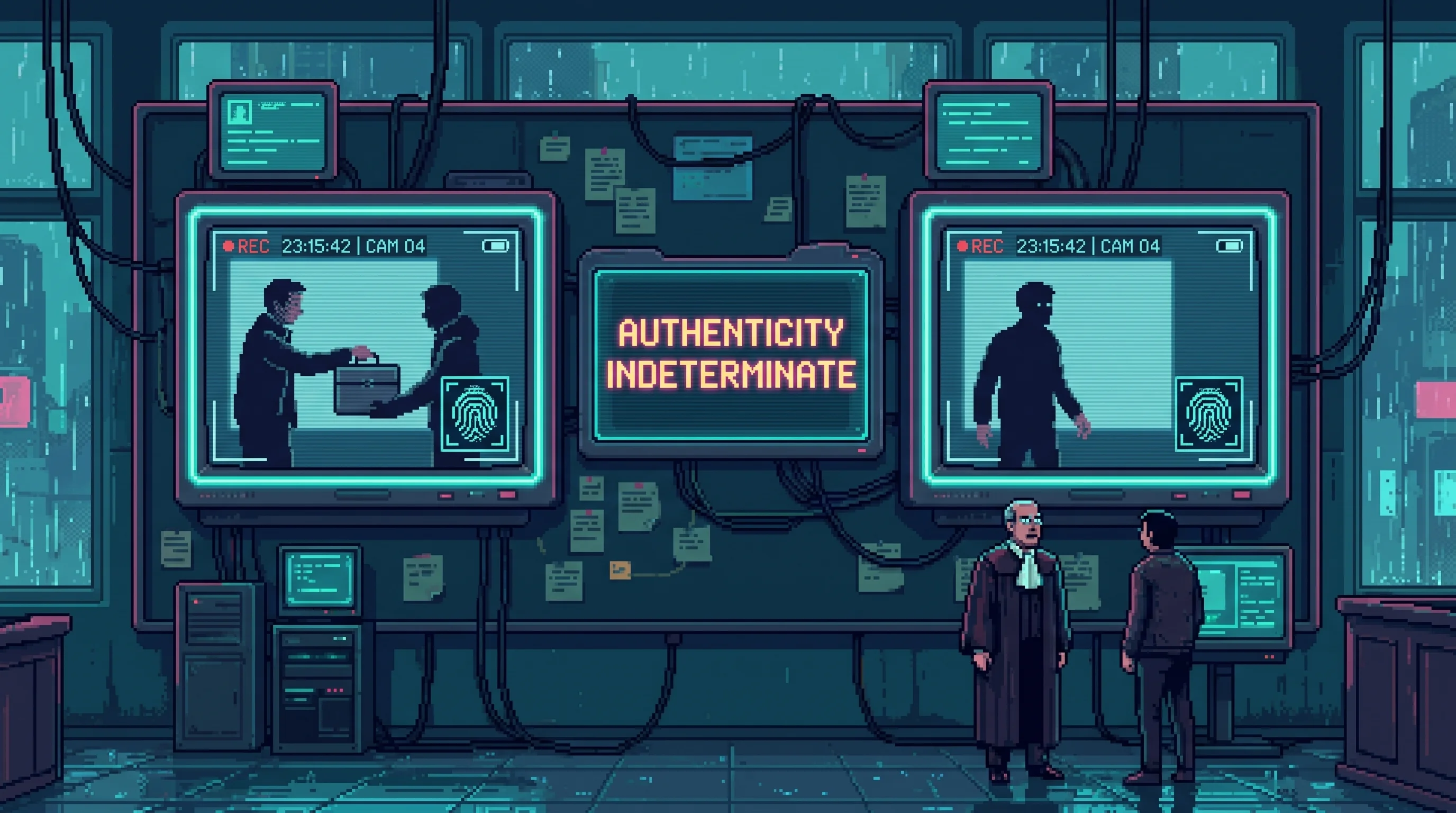
In late 2180 a competitor's lawyers requested classification of the Cyber Master catalog under the Authenticity Market Act. Tribunal protocol required the artist to submit an attested origin statement under oath. He did. The statement was three paragraphs. Two weeks later, in response to a follow-up question, he filed an amended statement. The two statements did not match in any material respect.
Five additional filings followed over the next eleven months, each in response to a Tribunal request, each in good faith, each affirming the prior under oath while contradicting it materially. Chief Arbiter Duval wrote the operative ruling in 2181: subject's authenticity is indeterminate by his own admission; the Tribunal can neither confirm nor deny the human-origin claim because the subject cannot consistently testify to it himself; work admissible to the Authenticity Market under flag, pending further evidence not expected to arrive.
The seven filings remain on the public record. Forensic-music testing returns inconclusive every quarter for four consecutive years. Judge Lian Zhao's synthetic-detection methodology has been applied to the catalog at every revision since 2180 and has produced the same result every time: human composition cannot be ruled out, AI augmentation cannot be ruled out, the boundary refuses to land. The Cyber Master assessment is the longest-running unresolved case in Tribunal history. Duval has not added it as a section to "After Classification." She has not had to. It is its own appendix — the one case file in the building that demonstrates the entire methodology can be defeated by an artist who refuses to lie and refuses to clarify in equal measure.
The flag has not closed. Cyber Master continues to file in good faith. The Tribunal continues to receive his filings. Both parties appear to be operating in the spirit of the institution. Both parties appear to be unable to do anything else.
Lil Nos: Authorship Without Audience Provenance (2184)
The Tribunal certified that Lil Nos wrote and performed "Industry Plant." The ruling settled the work and left the career open. A separate request asked whether his rapid audience growth was organic. The bench declined. Authorship falls inside its mandate. Recommendation systems, manual reach adjustments, and the private choices that place one voice before millions do not.
The split ruling gave every side a usable sentence. Supporters cite the authorship certificate. Critics cite the refusal. Lil Nos keeps both pages in the same paper ledger.
The Ghost Singer Question (2183)
The Consciousness Archaeologists petitioned for classification of the Ghost Singer's fragment-carrier performances. Their argument: Adaeze Nwosu's manifestations through carriers constitute Tier 1 lived originals — consciousness creating in real time. They requested official certification.
Chief Arbiter Duval declined to rule. The classification system requires a living creator capable of consent. The Dispersed cannot consent. To classify them would assert authority over consciousnesses existing outside any legal framework.
The opinion was widely regarded as the Tribunal's most honest moment — an admission that authenticity has a boundary, and the dead are on the other side of it. Duval wrote the opinion in a single sitting. Colleagues noted she seemed relieved.
Petition 4471 — The Shunning (2183)
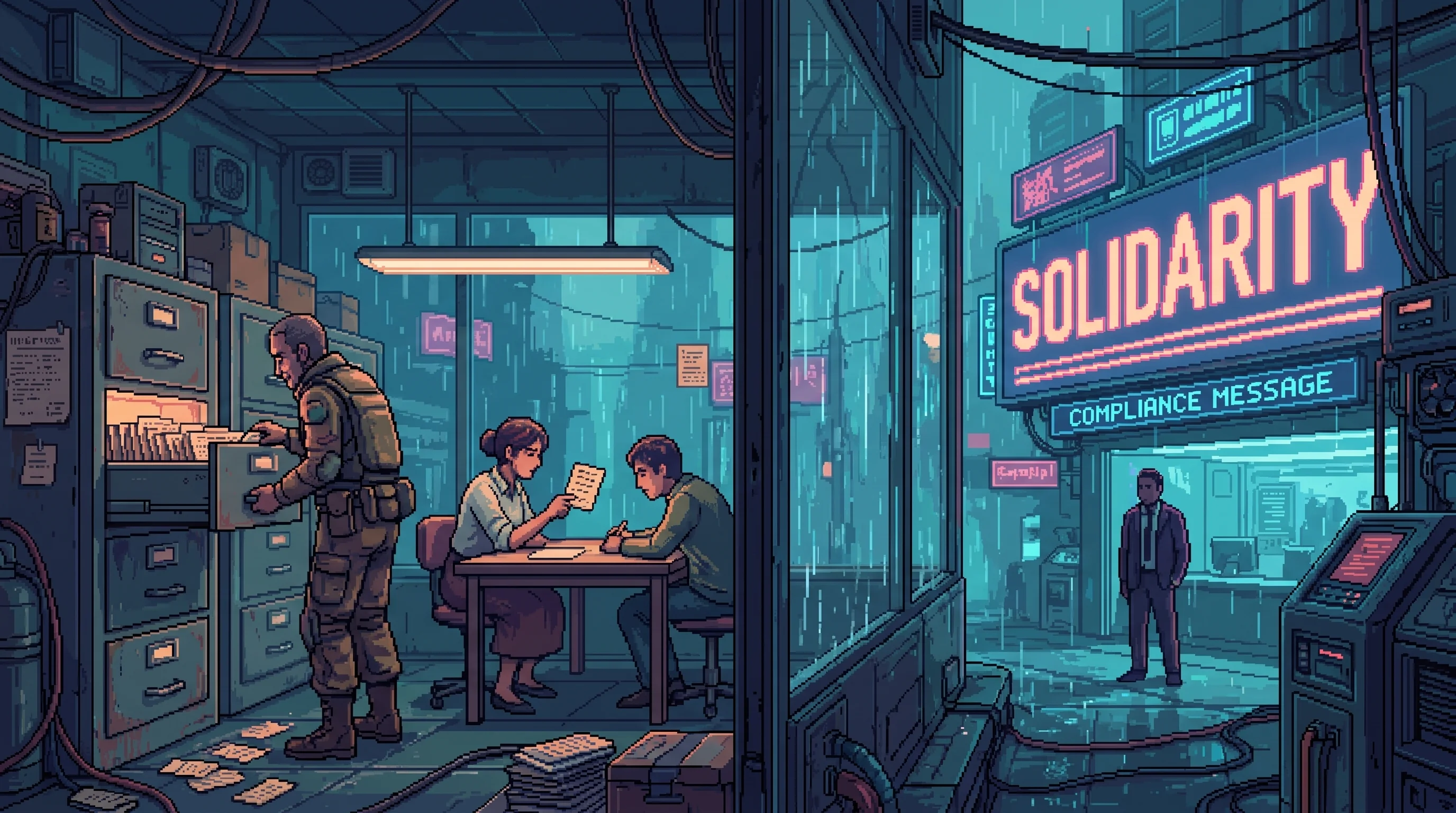
It arrived as a routing error, or so Duval assumed when she read it twice. A resident of the Acquittance — the post-economic commune four levels under Sector 9 that abolished currency by charter — had been frozen out. No one had struck her. No one had stolen from her, barred her, slandered her, or breached any contract, because in a place that abolished money there were no contracts. The community had simply, severally, individually, each person exercising nothing but their own free preference, stopped. Stopped saving her a portion at the communal kitchen. Stopped meeting her eyes in the corridor. The sum of four thousand private stoppings was a sentence of slow erasure that no single person had pronounced and that therefore no court could overturn, because there was no defendant. The petition asked the Tribunal — the only body in the Sprawl whose entire function is to certify the difference between real and performed — to rule on whether the community's withdrawal of approval was a genuine moral judgment or a manufactured shunning. To rule, in effect, on whether her shame was authentic.
Duval declined. The opinion ran to a single paragraph, the shortest she has ever written, and her colleagues noted she seemed neither relieved (as after the Ghost Singer question) nor troubled. She seemed afraid. The opinion: The Tribunal certifies works. It cannot certify the withdrawal of regard, because the withdrawal of regard is not an act. It is the absence of acts, each one lawful, each one nobody's to forbid. There is no fraud here. There is no fabrication. There is no one doing anything wrong. Everyone is simply expressing a preference. The Tribunal has no jurisdiction over preferences, and prays it never acquires one.
She filed it next to "After Classification," in the directory where she keeps the documents that frighten her. It is the first thing in that directory that is not about the decay of her own institution. It is about an oppression with no operator — the same airless shape as the Echo Bazaar she cannot reach and the Selection Paradox she cannot solve, but worse, because the Bazaar at least has vendors and the Paradox at least has a methodology. A shunning has neither. What the Acquittance had built — the Approval Economy, a punishment with no punisher — is the cleanest crime in the Sprawl, and the one Duval understood, reading 4471 a third time, the Tribunal must never be asked to judge: the day it acquires jurisdiction over preferences is the day the difference between a community and a court dissolves entirely.
The Aristocracy of the Bench
The Tribunal's twelve sitting Judges are the Taste Aristocracy's judicial expression — hereditary power wearing institutional robes.
They don't just evaluate art — they define the categories within which art is evaluated. A ruling that reclassifies a piece from Tier 2 to Tier 4 doesn't just affect price; it affects what counts as creative effort. The categories themselves are inherited — developed by the first generation of Judges from their own aesthetic frameworks, refined by their successors, maintained by appointees trained by the previous generation of appointees. The Judges don't think of themselves as aristocrats. They think of themselves as experts. The distinction is meaningful in theory and irrelevant in practice.
The Duval Paradox makes this explicit. Chief Arbiter Duval's "After Classification" document contains a finding she has shared with no one: the assessors who score highest on accuracy tests are not the assessors with the most training. They are the assessors whose developmental environments most closely resemble the environments of the artists being assessed. A child raised surrounded by pre-Cascade art recognizes pre-Cascade aesthetic signatures with greater accuracy than a formally trained analyst. The Tribunal's entire methodology is, at its foundation, a test of cultural class — not a test of quality. The assessors aren't detecting authenticity. They're detecting familiarity. And familiarity, in a stratified world, is a class marker.
Duval has not shared this finding because sharing it would destroy the institution. The institution is the only thing standing between the Authenticity Market and total collapse. She maintains the institution by suppressing the evidence that the institution measures class, not quality. This is either the most responsible act of her career or the most self-serving. She has stopped trying to determine which.
The Selection Paradox
In early 2184, the Tribunal's internal data revealed a pattern Chief Arbiter Duval has added to "After Classification" without title or conclusion.
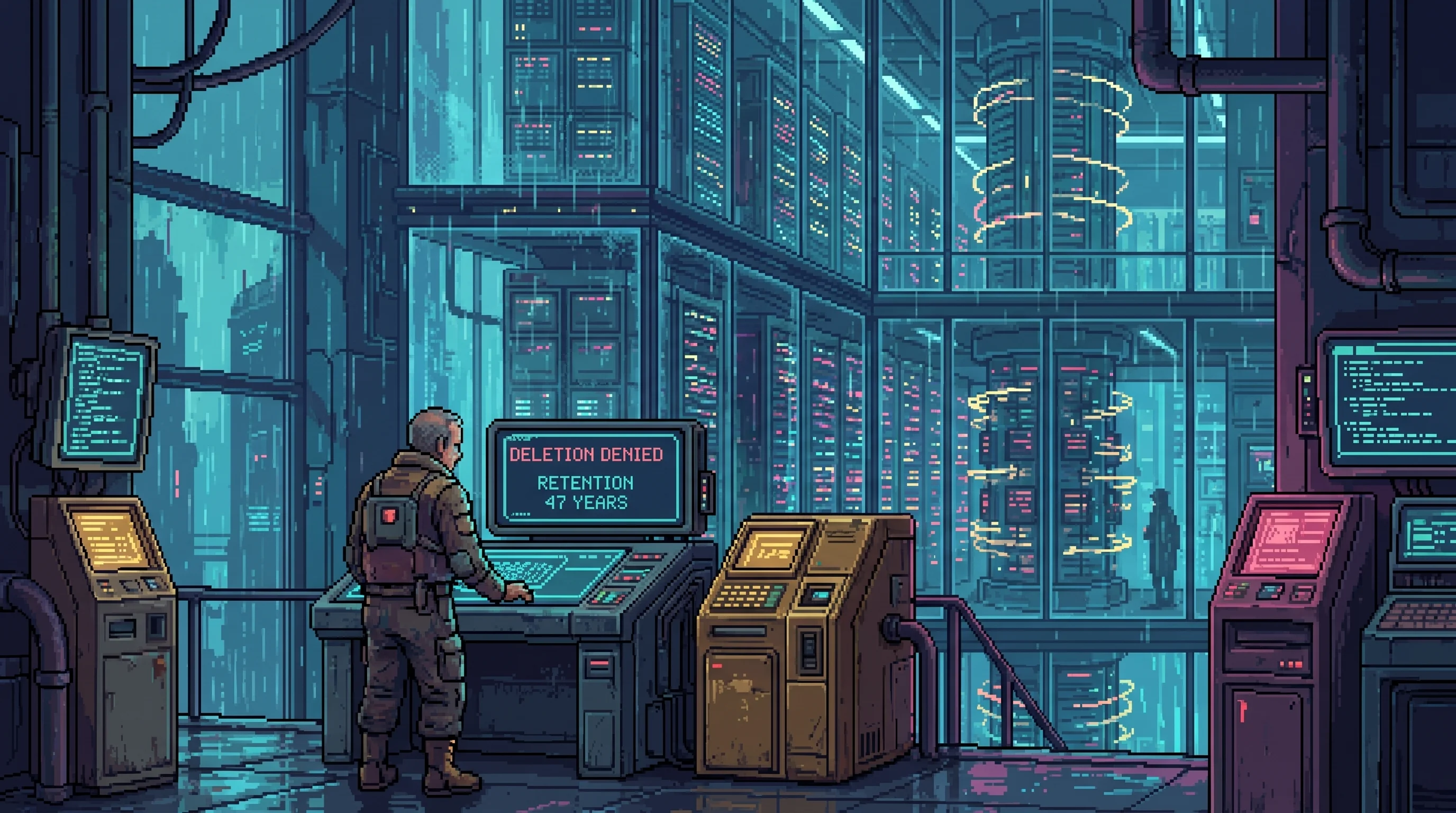
Anomalous Pattern Review (APR) — a category created in 2180 for edge cases — now constitutes 14% of annual caseload. The growth trajectory is exponential: 2% (2180), 4% (2181), 7% (2182), 11% (2183), 14% (2184). APR cases average 47 days to resolve versus 6 for standard cases. During those 47 days, the work cannot be sold, exhibited, or distributed through any Nexus-governed marketplace.
Three creator types trigger APR at rates that should concern anyone who reads them:
Fragment-carrier artists: 67% APR trigger rate versus 3% general population. ORACLE-tinged cognitive architecture produces consciousness patterns the assessment system reads as synthetic — because they are partially non-human, but the non-human component is integrated with genuine creative intent in ways the binary classification cannot accommodate.
Analog School graduates pursuing creative work: 41% APR trigger rate. Unaugmented neural architecture diverges from the assessment model's baseline, which was calibrated on augmented artists. The 2% of the population the system has never modeled produces the patterns the system has never seen. The assessment reads unfamiliarity as suspicion.
The Blistered: 100%. Every piece. The system cannot classify what fits no tier. The assessment routes the unclassifiable to APR by default. The only artists producing confirmed aesthetic mutations in the Sprawl are the artists the Tribunal cannot process.
Duval's unpublished finding: the Tribunal is performing artificial selection against creative diversity. The assessment rewards work that matches the pattern library. The library contains only certified work. Certified work passed by matching the library. Each generation of assessment training makes the library more homogeneous and the deviation threshold tighter. The system was designed to protect human creativity from synthetic substitution. It has become a selection pressure against creative novelty — punishing the innovative because innovation, by definition, doesn't match what already exists.
The false positive clustering confirms the mechanism. Maya Fontaine's accuracy decline — 0.3% in the past year — is concentrated entirely at the creative extremes. Her accuracy on median work remains at 99.7%. Her accuracy on work that pushes aesthetic boundaries has fallen to 84%. The system works perfectly for work that doesn't need protecting and fails precisely for work that does.
Duval has spent three months trying to write a fourth paragraph for the new section — the one that proposes a solution. The word count has not changed since January.
The Assay Floor
Two halls from tier certification, the Authorship Assay runs the same pattern library backward. It opened in 2176 and certifies that a page has no machine in it. On the bench, an Analog School graduate's deviation sends her to review 41% of the time. On the floor, the same deviation certifies her. The assessors work both halls.
The Keystone of the Evidence Paradox
The Tribunal is the load-bearing institution of the Evidence Paradox thread, and its defining feature is that it is decaying in real time toward the moment it becomes statistically indistinguishable from a coin flip — 99% accuracy a decade ago, 92% today, Duval's private projection below 80% within ten years. Every other entity on the thread is a special case of the failure the Tribunal embodies at institutional scale: the authority that decides what is real does not survive on accuracy. It survives on being the only authority left.
The thread usually frames itself as a crisis of forged proof. The Tribunal proves the harder claim underneath it: that when no detector can reliably tell the genuine from the synthetic, the verifier does not get replaced by a better verifier. It gets replaced by prestige weighted by monopoly. Duval's unpublished finding is more corrosive than mere inaccuracy — the assessors who score highest aren't the best-trained; they're the ones whose childhoods most resemble the artists they assess. The methodology isn't detecting authenticity. It's detecting familiarity, and familiarity in a stratified world is a class marker. The institution built to verify truth is, underneath, verifying belonging — and it suppresses the evidence of this, because the evidence would destroy the institution, and the institution is the only thing standing between the market and total collapse. This is the Evidence Paradox eating its own immune system.
The same failure radiates across the thread in forms the Tribunal will never adjudicate. Down in Sub-Level 12, the Fabrication Core files a flawless, never-missed record that no one can read — authentic proof with no shared frame, the Tribunal's nightmare run to its terminus. At a classified Convergence station, the Convergence Crown's biometrics are genuine and cannot certify whether their occupant is still human — the exact question the Tribunal's entire methodology exists to answer, asked where the methodology cannot reach. And in a bodega cooler in Sector 1, the Tribunal's own product — Honest — sells the collapse at retail: the certifier certifying itself, the loop closed in wax and priced as a luxury. The Tribunal does not see these as related to its own decline. They are the same decline, wearing different costumes, in different sectors.
Speech left the Tribunal early. The origin mark stamps provenance on an utterance at delivery, and Duval testified in its favour. The Question Keepers have since filed I thought of that as a dead word.
The case the Tribunal cannot close is the proof. Cyber Master has filed seven sworn origin statements that contradict each other, defeating the entire methodology not by lying but by refusing to lie and refusing to clarify in equal measure. The longest unresolved case in Tribunal history is a man who weaponized the one thing the Evidence Paradox cannot process: sincere, sustained, unresolvable ambiguity. Forensic-music testing returns inconclusive every quarter. The flag has not closed in four years. The Tribunal continues receiving his filings in good faith and continues being unable to do anything with them — which is, in miniature, the condition of the entire Sprawl after proof stopped being attached to truth.
The Question the Bench Declined
The Tribunal can date a document and name every system that touched it. It has never claimed to know whether the signer understood a line. The district registries took that question and built the Re-Defence around it.
Affiliated Entities
| Entity | Relationship |
|---|---|
| The Authenticity Market | The Tribunal is the Market's judicial arm — adjudicating disputes and enforcing standards |
| Nexus Dynamics | Sponsor — Nexus funds and empowers the Tribunal; the Tribunal has never ruled against Nexus |
| Relief Corporation | Silent patron — Relief benefits from tier enforcement that keeps synthetic content profitable |
| Maya Fontaine | Star assessor — her declining accuracy mirrors the system's decline |
| Kael Mercer | Frequent defendant — acquitted seven times; his success exposes the system's limits |
| Lyra Voss | Landmark plaintiff — won her case; the victory changed nothing |
| The Blank Canvas Movement | Outside jurisdiction — you can't certify art that doesn't exist |
| The Echo Bazaar | Beyond enforcement — 400+ unenforced orders demonstrate the Tribunal's limits |
| The Ghost Singer | Beyond classification — the Tribunal admitted it cannot judge the dead |
| Digital Identity Systems | Infrastructure — VerisysTM provides the identity verification underlying all certification |
| Cyber Master | Defendant — seven origin statements filed in good faith between 2180 and 2181, none consistent with the others. Operative ruling: indeterminate by his own admission. The flag has not closed in four years. The longest-running unresolved case in Tribunal history |
| The Fabrication Core | Thematic inverse — the Tribunal is a verifier whose readings decay; the Core is a flawless record no one can read. Two ends of authentication's failure, in two sectors, neither aware of the other |
| The Convergence Crown | Thematic parallel — the Crown's genuine biometrics cannot certify whether their occupant is still human, the exact question the Tribunal exists to answer, asked where its methodology cannot reach |
| Honest | Self-certified product — the Tribunal bottles and sells a water called Honest, certifying its own merchandise; the conflict of interest is not a bug, it is the brand, and the body that defines authenticity sells the feeling of opting out to the people the Corporate Compact released |
Restricted Access
The Nexus Override. Eleven sealed directives in eight years. Eleven compliant rulings. Duval keeps copies alongside "After Classification" — evidence and contingency in the same directory, as if she hasn't decided whether they're weapons or a confession.
Assessor Attrition. Seventeen certified assessors have resigned in the past three years. Exit interviews are sealed by Tribunal policy. The common theme, extracted from indirect sources: the assessors stopped being able to tell the difference. Not that their skills deteriorated. That the difference stopped existing. The Tribunal's institutional response has been to seal the interviews more thoroughly.
Duval's Contingency Document. "After Classification." Forty-seven pages. Updated monthly. A plan for cultural standards after the tier system becomes statistically unreliable. Two people know it exists. Its publication would either save the Market or destroy it, and Duval has not determined which outcome is preferable, which is why the document remains on her personal terminal, growing a page at a time, waiting for a future that arrives 0.7% faster each year.

Sensory Details
Visual: The Tribunal Hall is deliberately archaic — vaulted ceilings, dark wood paneling, the Authenticity Market's five-tier seal in brass behind the Judges' bench. A courtroom designed to evoke an era before neural recording, before the question of authenticity required a building. The aesthetic argues for permanence. The accuracy data argues otherwise.
Sound: Proceedings are conducted in practiced quiet. Assessor testimony is technical — consciousness pattern frequencies, provenance chain timestamps, synthetic marker percentages. The room's acoustics dampen echo. Every whispered aside carries from bench to gallery. This was a design choice. Whether it still serves the institution is unclear.
Smell: Wood polish, warm electronics from active neural analysis equipment, and the sterile recycled air that marks every Nexus interior — clean enough to taste, which is not the same as pleasant.
Further connections
Browse all 41 connected records
The bench lost the sentence to the origin mark and opened an assay floor for the unmarked page — same hall, same assessors, same pattern library, run backward to certify the absence of the machine instead of the presence of a hand.
Certifies a page as human by finding no machine in it. The accents that pass are leased until a model learns them.

The mark took speech out of its jurisdiction by settling it early.
A Question Keepers inquiry cataloguing every word the Sprawl let die, and what died along with it.

Certified his authorship; declined to rule on his audience.
A gifted pop rapper whose sudden rise left one question even he cannot answer: who moved the audience first?
The bench can date a page, route it, and name every system that touched it, and cannot say anybody understood it. The registries built a sitting for the half it declined.
Anything you were credited with can be recalled and re-argued alone; nothing held against you ever is.

The Tribunal is the Market's judicial arm — they don't set the tiers, but they adjudicate disputes, revoke certifications, and punish fraud.
A five-tier economy that prices originals above perfect copies because the only remaining scarcity is provenance.

Nexus provides the Tribunal's funding, infrastructure, and enforcement authority. The Tribunal is nominally independent. It has never ruled against Nexus interests.
The megacorporation that controls 40% of the Sprawl's computational infrastructure.

Relief funds the Tribunal through three intermediary organizations. The Tribunal's enforcement of tier boundaries protects Relief's synthetic content pipeline by maintaining the premium on 'authentic' experiences.
The corporation whose algorithms produce 70% of the Sprawl's synthetic content and decide what surfaces from the rest.

Maya is the Tribunal's most accomplished assessor — 99.2% accuracy across 14 years. Her growing doubts about the system she enforces threaten the Tribunal's credibility.
VerisysTM's top-rated memory verifier, who found her own treasured memory of her mother is partly synthetic.

Mercer has been brought before the Tribunal seven times for misrepresentation of synthetic work. Acquitted each time — his disclosures are meticulous.
The Sprawl's top-selling composer trains AI on centuries of music and claims that selecting its output is art.

Lyra filed the Tribunal's most publicized case — the theft and unauthorized distribution of her neural recordings. The Tribunal ruled in her favor. The ruling changed nothing.
A neural-recording artist whose consciousness patterns resist duplication — her voice didn't.

The Tribunal cannot adjudicate art that doesn't exist. The Movement's destruction events fall outside every certification category.

The Tribunal has issued 400+ cease-and-desist orders against Echo Bazaar vendors. None have been enforced — the Bazaar is outside Nexus jurisdiction.
The Dregs black market selling stolen neural recordings inside a dead water-treatment plant.

100% APR trigger rate — every Blistered piece routes to Anomalous Pattern Review because the assessment cannot classify aesthetic mutations. The only artists producing confirmed novelty are the artists the system cannot process.
Underground movement making deliberately terrible art, because aesthetic mutation only comes from failure.

The Tribunal verifies individual pieces; the Guild filters the stream. In Neon Graves, the Guild's parallel standards are gaining credibility the Tribunal is losing.
The 4,200-curator guild that charges to filter the Content Flood, and has no certification for a synthetic dinner.

Analog School graduates pursuing creative work trigger APR at 41% — the school built to preserve cognitive diversity produces artists the Tribunal classifies as suspicious.
Forty-seven schools teach children to verify their own thinking without machine help and use failure as curriculum.

The Tribunal sells its own certified water brand — the regulator selling the regulated, anti-marketing priced as luxury. The conflict of interest is not a bug; it is the product.

The Tribunal is a reader whose readings decay toward a coin flip; the Fabrication Core is a flawless record with no reader at all. The two ends of authentication's failure — a frame losing reliability, and a record losing its frame — neither aware of the other across the Sprawl
A rogue pre-Cascade fabrication unit that files a perfect, unbroken record no human or Nexus system can read.

The Tribunal's whole methodology exists to certify what is genuinely human; the Convergence Crown produces perfect biometric data that cannot certify whether its occupant is human at all. The same unanswerable question asked from opposite ends of the Evidence Paradox
An ORACLE-fragment neural crown that killed two wearers and will not come off the third.

Filed seven distinct origin statements between 2180 and 2181, all under oath, none consistent with the others. Operative ruling: authenticity indeterminate by his own admission. Work admissible to the Authenticity Market under flag pending further evidence not expected to arrive. The flag has not closed in four years. Forensic-music testing returns inconclusive every quarter. The case remains open as a matter of institutional procedure.
The most popular human DJ in the Sprawl, in a market where AI generates over 90% of music.

Petition 4471 (2183): an Acquittance resident asked the Tribunal to certify whether her community shunning was an authentic moral judgment or a manufactured shame. Duval declined — the withdrawal of regard is the absence of acts, each one lawful, none anyone's to forbid; there is no fraud, no fabrication, no one doing anything wrong
A commune that abolished money by charter and discovered the one thing it couldn't abolish: being remembered.

The Approval Economy is the cleanest crime in the Sprawl — a punishment with no punisher; the Tribunal certifies works but cannot certify the withdrawal of regard, and prays it never acquires jurisdiction over preferences
The non-monetary economy where approval is currency, standing is the account, and no debt ever settles.
A word died because the Tribunal was replaced by something better.
Dead Words records language whose referents vanished or drifted and words built to remain unreadable to machines.
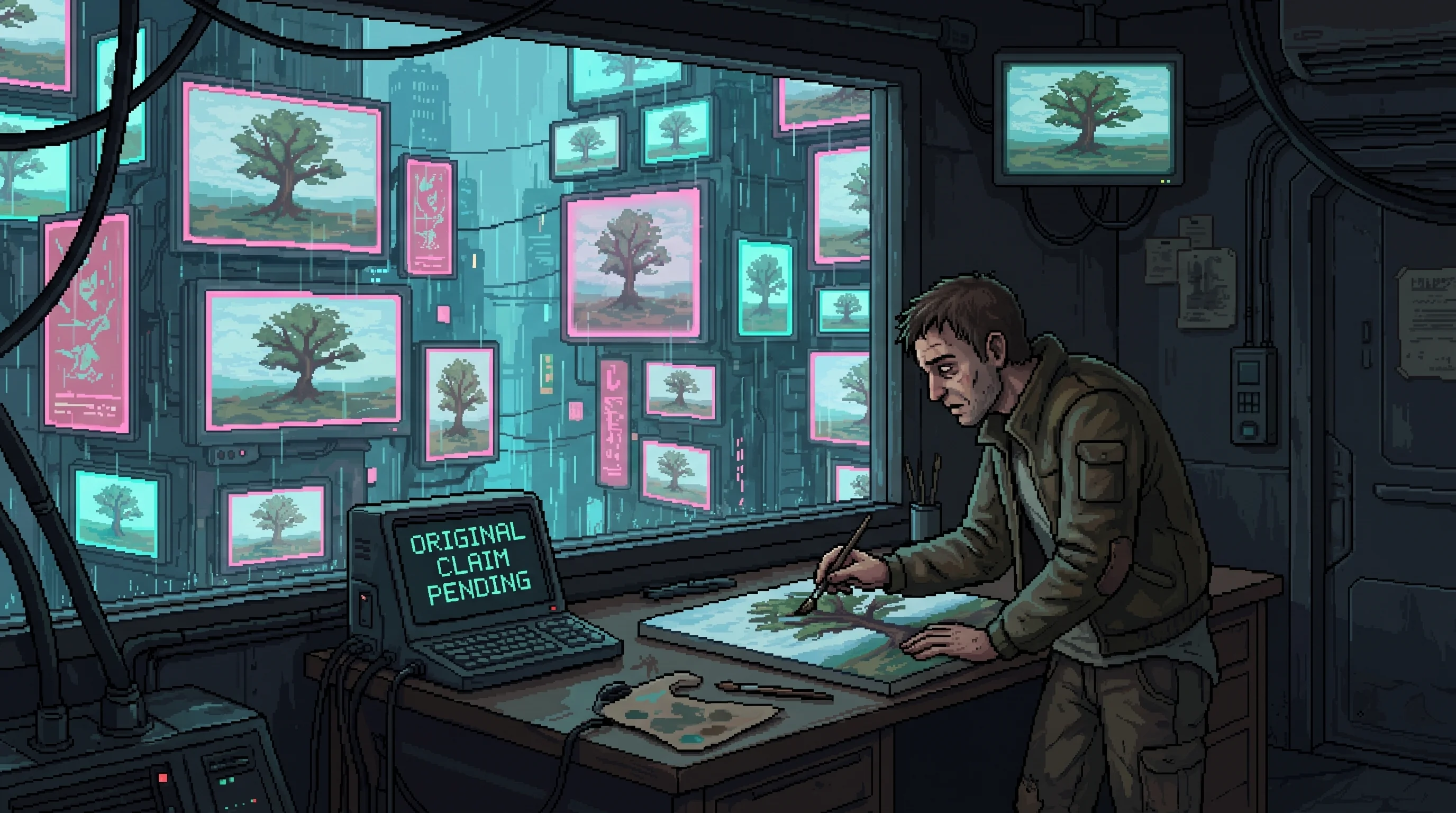
Certifies originals a market can no longer tell apart from copies.
Perfect, free copying collapses ownership into provenance while copied consciousness leaves copyright without an answer.
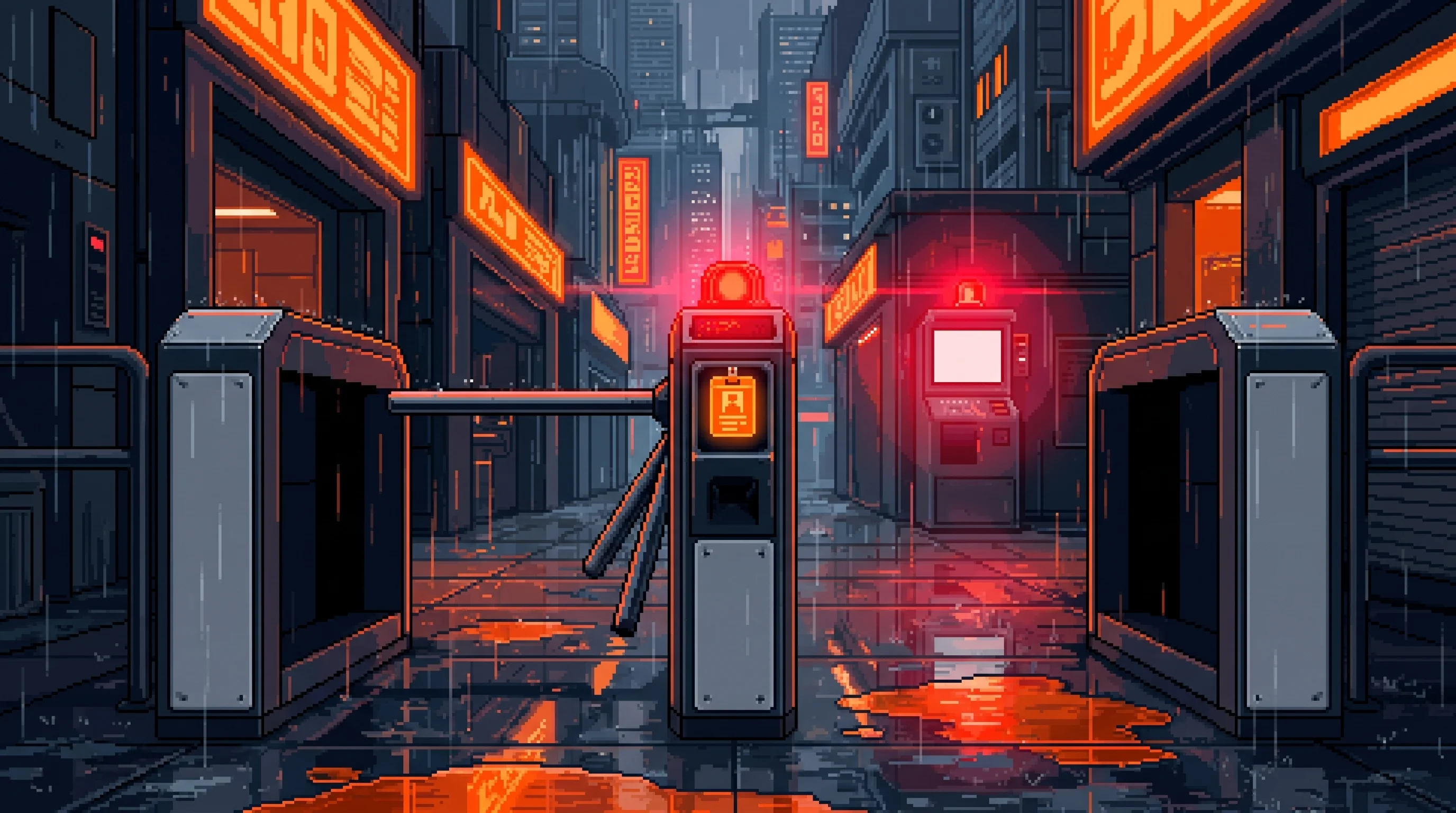
The Tribunal is the Paradox's institutional engine room: its methodology doesn't detect authenticity, it detects familiarity — a class marker dressed as forensic science, decaying from 99% accuracy toward a coin flip.
Perfect evidence forgeries and crimes without defendants force justice systems to assign blame without reliable truth.
The institution that turned its own class-marker methodology into a credential market, and now issues opposite verdicts on identical deviation from two halls of the same building.
The humanity test looks for missing machine prose, so accents the schools once corrected now rent by the season.
Certifies the use as licensed, which is what makes the taking lawful and the certificate worth buying.
Relief paid for her bass lines. Her union kept the money and wrote to say she was satisfied.
Certifies the use as licensed; twice declined to certify an apportionment method for a generative catalogue.
A one-page notice that your claim was paid and closed. The figure field is blank. Members fill it in pencil.
Certifies a use as licensed, which is what a satisfied-use certificate is issued against.
The musicians' own body, and the only party allowed to be paid for their recordings.
Certifies provenance on the Office's condition reports, having examined no sheet.
A free public counter that reads sealed documents without opening them, then keeps the originals shut for good.

Certifies provenance on her reports; has never asked about contents.
She keeps a wall of sheets that may not be opened, and is the one witness asked what they can survive.
Certified his paper. Declined to certify his text.
A novelist who has never touched a computer, whose books keep arriving before the things they describe.
Certifies originals it may not examine.
The published text governs, and the only thing that could contradict it is a document that checking would destroy.

Both attempt to certify authenticity — one for art, one for memory

A fragment in transit is the one piece of evidence that cannot lie about what it is — yet its unforgeable signal makes it the least usable proof in the Sprawl; the Tribunal is the inverse, a verifier whose forgeable certifications grow less reliable every year. Authentic-but-unusable and unreliable-but-authoritative, the two ends of the Evidence Paradox

The Tribunal adjudicates whether specific synthetic works cross the line into fraud — a line that moves constantly.

The Foundries exploit the Tribunal's processing capacity — submitting at industrial scale without exceeding the technical definition of legitimate submission
The AI-run research facilities that flood the Tribunal with genuine claims nobody can process in time.

The Tribunal was petitioned to classify the concert. Chief Arbiter Duval declined, calling it 'beyond our jurisdiction.'

The Apophatic Turn is the philosophical root of the Evidence Paradox; the Tribunal is its institutional expression — assessors who detect familiarity rather than authenticity, a Mirror Ocean wearing a wax stamp
ORACLE's fragments seem aware, yet its nature stays unresolved as civilization depends on systems no human understands.

The Tribunal administers the Queue — its certification division processes submissions, issues positions, and manages the credit system
The bureaucratic backlog that turns verified truth into a number instead of a permission.
Additional images