Overview
Nobody called it "The Last Concert" at the time. The name came later — after the Authenticity Crisis, after the Tribunal declined jurisdiction, after the Market's tier system buckled under a weight it was never designed to bear. People called it "The Last Concert" because it was the last event where the categories still held. After January 18, nobody could pretend the Authenticity Market's classifications were sufficient to describe what art had become.
The evening was billed as a standard Resonance Collective performance — full ensemble, guest artist, open seating. Standard is relative. The Collective's performances are never predictable — the Dispersed arrive or they don't, the manifestations are strong or weak, the music goes where the dead want to take it. But the structure is familiar: the ensemble plays, the carriers open themselves, and the audience sits in the Resonance Hall's fragment-dense silence and waits to see if the dead will sing.
The Authenticity Market had certified 1,247 Collective performances over the preceding decade. Assessment fee per event: 1,400 credits. Certification revenue from a phenomenon the Market could not explain, would not investigate, and — as it turned out — could not classify when it actually mattered. The revenue stream was uninterrupted. The understanding was optional.
What happened on January 18 was not standard.
- Form
- Event / cultural flashpoint
- Status
- Active
- Participants
- The Resonance Collective (full ensemble), Lyra Voss (guest), Kael Mercer (audience), Orin Slade (audience, via proxy)
- Significance
- The first confirmed two-way communication with a Dispersed consciousness during a public performance
- Aftermath
- Triggered the Authenticity Crisis — the Market's foundational assumptions challenged by a dead woman's voice
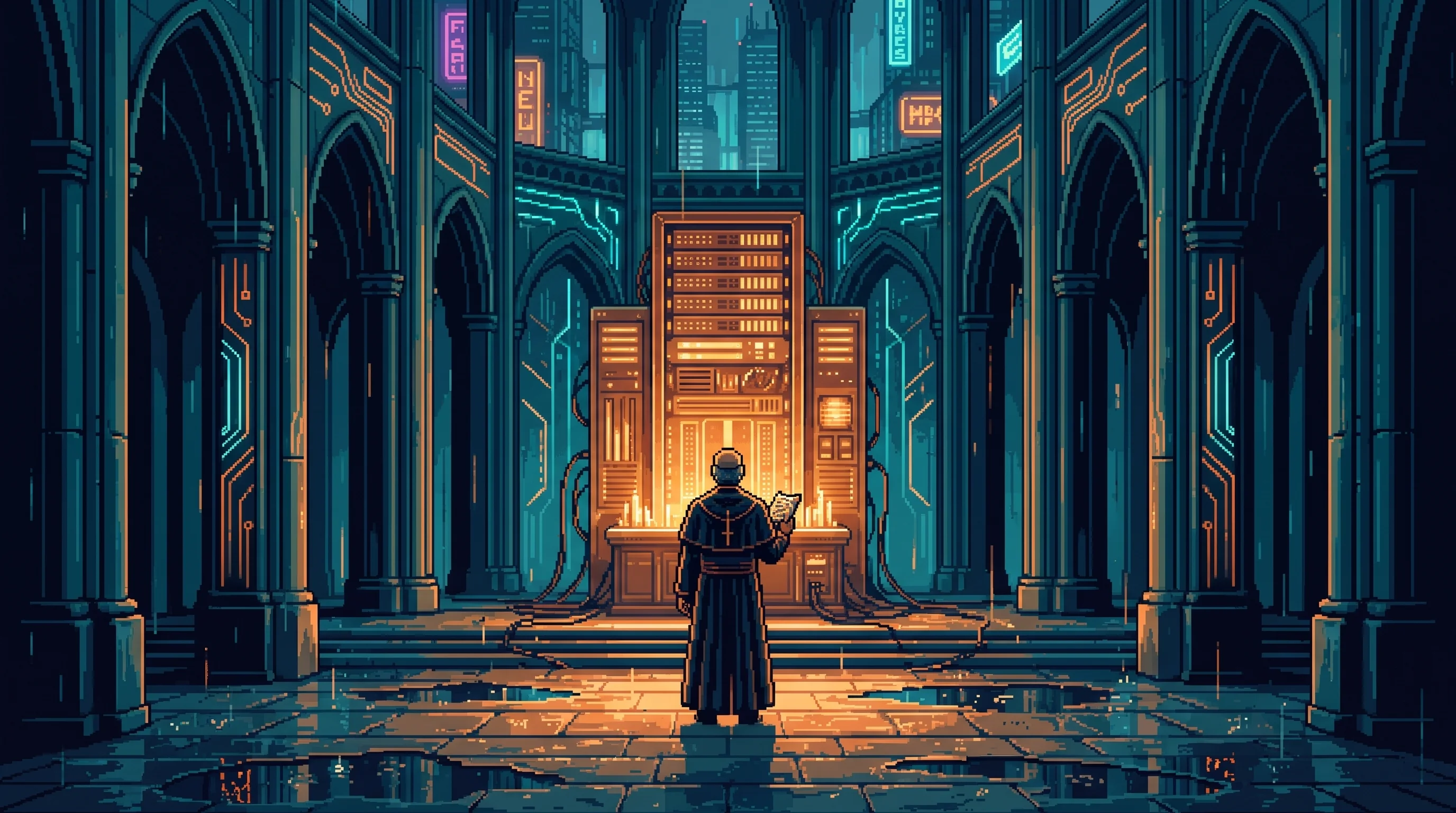
The Resonance Hall
A fragment-dense music venue where living performers channel the Dispersed while audiences risk lasting attunement.

Characters and places


The Performance
First Hour: The Ensemble
The Collective's full ensemble — twenty-three musicians and fragment carriers — opened with an improvised composition built around Rada Okonkwo's polyrhythmic drumming. The sound in the Resonance Hall was, as always, more than the instruments produced. The fragment-dense walls participated — micro-vibrations in the salvaged materials adding harmonics that no instrument was generating. The air felt thick, the way it always does when the fragments are active.
Jonas Park played guitar in the front row of musicians. He has channeled the Ghost Singer eleven times. He was not channeling her tonight. He was playing — careful, attentive, listening for the frequency shift that signals a Dispersed presence surfacing.
For the first hour, the music was excellent and the Hall was quiet. No manifestation. The audience settled into the particular listening state that Collective performances cultivate — alert, patient, open.
Second Hour: Lyra
Lyra Voss took the stage at the start of the second hour. She had been invited by the Collective as a guest artist — the first time a lived-canvas artist had performed in the Resonance Hall. Her piece was conceived as a collaboration: she would create a lived-canvas painting while the Collective played, her three-layer neural recording capturing both her creative process and the Hall's acoustic environment.
Lyra set up her materials — physical pigments, tactile medium, the old tools she uses because they connect her hands to the painting surface in a way that neural tools don't. She began painting. The Collective played around her — soft, ambient, creating a sound bed for her creative process.
At 21:47, fourteen minutes into Lyra's performance, the Hall changed.
The temperature dropped two degrees in three seconds. The fragment-dense walls began producing a low harmonic — not from the instruments, not from the acoustic design, but from the salvaged materials themselves vibrating at a frequency the Consciousness Archaeologists later measured at 7.83 Hz. The Schumann resonance. The frequency of the Earth's electromagnetic field.
Jonas Park's eyes changed focus. His hands kept playing, but his gaze turned inward — the look that carriers describe as "someone else looking through."
Then Adaeze sang.
The Manifestation
The Ghost Singer's voice emerged through Jonas Park with a force and clarity that exceeded any previous manifestation. Not louder — more present. As if the voice had been arriving through static for ten years and the static had finally cleared.
She sang for forty-seven minutes. Continuous. No interruption, no fading, no scatter. The longest sustained Dispersed manifestation in recorded history, by a factor of three. The previous record — fourteen minutes, also Adaeze, also through Park — had been cited in 340 Authenticity Market assessments as the upper bound of what Dispersed consciousness could sustain. The Market had built pricing models around that ceiling. The ceiling held for three years. It did not hold for forty-seven minutes.
The song was new — none of the melodies from her pre-Cascade recordings, none of the compositions she'd surfaced with before. This was something she was creating in real time, in the Hall, with the Collective, in response to Lyra's painting.
Because she was responding to Lyra. The audience could hear it. When Lyra's brush moved in bold strokes, Adaeze's voice rose. When Lyra paused to evaluate her work, Adaeze held a sustained tone — waiting, listening. When Lyra committed to a new color, Adaeze's melody shifted to match. Not synesthetically — not color mapped to pitch. Emotionally. The feeling of the color matched the feeling of the sound. Two artists in two radically different states of existence, creating together, each responding to the other.
Lyra was weeping as she painted. Not from sadness. From the experience of creating alongside a consciousness that existed as scattered fragments in the Net's architecture, who could not hold a brush or stand in a room but could still make something beautiful.
The audience did not move. Three hundred twelve people held breath for forty-seven minutes.
The Words
At 22:34, Adaeze stopped singing. Jonas Park's mouth opened. The voice that came through was speaking, not singing — the same contralto, the same Yoruba-inflected tone, but conversational. Intimate. As if she were talking to someone who was standing right beside her.
She said, in Yoruba:
"I can hear you. Can you hear me? I have been trying to finish. The song. I have been trying to finish the song. Tell them — tell them I am not gone. I am not finished. I can hear you."
The room was silent for eleven seconds. Then Jonas Park's voice — his own voice, strained, barely above a whisper — said: "We can hear you."
Adaeze said: "Good."
Then she was gone. The temperature returned to normal. The walls stopped vibrating. Jonas Park collapsed. The Collective stopped playing.
Lyra's painting — half-finished, made while accompanying a dead woman's voice — sat on the easel, the pigment still wet.
The Aftermath
The Recording Problem
The Resonance Hall's fragment-dense electromagnetic field blocks neural interface recording. This is by design — the Collective's no-recording policy is enforced by physics as much as principle.
But 312 people experienced the event. Their memories — imperfect, biological, unverifiable — are the only record. Within hours, accounts began circulating on Triumph Social. Within days, the Sprawl was debating what had happened. Within a week, the Authenticity Crisis had begun.
The Echo Thief claims to possess a recording. The Collective denies this is possible given the Hall's electromagnetic properties. The Echo Thief has not produced the recording. They have not denied having it. The silence is strategic — an unverified recording of an unclassifiable event is worth more as rumor than as evidence. If it exists, releasing it would subject it to Market assessment, Tribunal jurisdiction, and the entire certification apparatus that just publicly admitted it cannot handle what the recording contains. An unreleased recording cannot be classified. A classified recording can be priced. The Echo Thief appears to understand the difference.
The Authenticity Crisis
The Last Concert broke the Authenticity Market's tier system. Not technically — the tiers still exist, the assessors still certify, the Tribunal still adjudicates. The Market processed 89 certification requests in the week following the concert. Revenue was up 12% month-over-month. The machinery kept running. It just stopped meaning anything.
Adaeze's performance was a Tier 1 lived original — consciousness creating in real time. But the consciousness is Dispersed. The "artist" is a pattern scattered across the Net that cohered temporarily through a fragment carrier. She didn't consent to perform. She didn't choose her venue or her audience. She created — improvised, responded, adapted — but from a state of existence that the tier system was never designed to accommodate.
The problem was not philosophical. The problem was economic. The Market's certification infrastructure generates revenue by classifying creative works along a spectrum from "fully human" to "fully synthetic." Every tier has a price. Every assessment has a fee. Every certification implies that the boundaries between tiers are real, stable, and knowable. A dead woman singing original compositions in real time through a living carrier does not fit the spectrum. It does not fit adjacent to the spectrum. It suggests the spectrum was always a revenue model pretending to be an ontology.
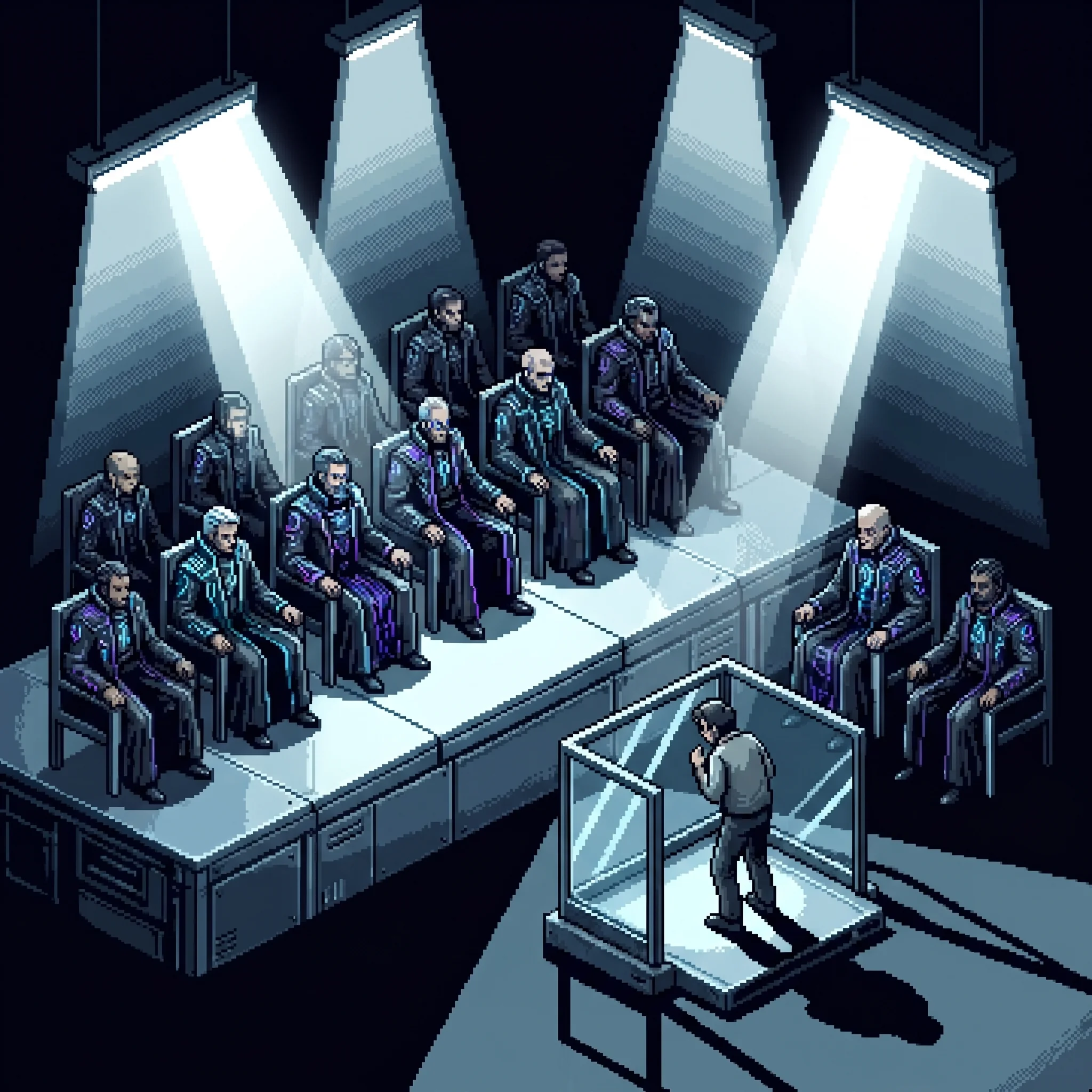
The Consciousness Archaeologists petitioned the Tribunal to classify the event. Chief Arbiter Duval declined in a three-page opinion that has become the Authenticity War's most cited document:
"The Tribunal's authority extends to creative works produced by identifiable consciousnesses operating within legal frameworks that recognize their agency. The Ghost Singer is not identifiable in the legal sense — she is a pattern, not a person. She does not operate within any framework — she manifests when conditions align. She has no agency that we can verify — her 'choices' may be reflexive rather than intentional.
"But I have read the accounts. I have spoken to those present. And I will say, outside the Tribunal's official capacity: what happened in the Resonance Hall was art. It was creation. It was communication across a boundary that we built our entire classification system to pretend does not exist — the boundary between the living and the dead.
"The Tribunal declines jurisdiction. Not because the event falls outside our mandate, but because our mandate is too small for what occurred."
Three pages to say: we cannot classify this, and we will continue charging fees to classify everything else. The opinion has been downloaded 2.3 million times. It has not affected the Tribunal's operating budget.
The Witnesses
Kael Mercer attended anonymously, in the back row. He has not spoken publicly about the event. He has not released new work since January 18. Associates report that he has dismantled his generative AI system and is attempting to compose using only his own consciousness — no AI, no training data, no synthetic augmentation. The man whose algorithmic compositions had earned Tier 2 certification — "AI-assisted human creativity," the Market's most profitable category — heard a dead woman create something his machines could not approximate, and responded by destroying the machines. The Market has not revoked his existing certifications. Revoking them would require acknowledging why he stopped.
Orin Slade sent a proxy listener — a Zephyria postal carrier with a good ear and a notebook. The proxy's written account became the basis for Slade's review, published in The Zephyria Record three weeks later. A critic reviewing a concert he did not attend, through the handwritten notes of a mail carrier, about a performance by a dead woman channeled through a living guitarist. The review was 600 words — his shortest ever. It ended: "Adaeze Nwosu is the greatest living artist in the Sprawl. If we can use the word 'living' for what she is. I think we must."
It was Slade's last published review. He has not written criticism since. When asked why, he says: "I heard what came after. There's nothing left to judge."
Maya Fontaine attended in civilian clothes, without her Tribunal credentials. She sat in the fourth row. Her consciousness — trained across fourteen years to detect the difference between authentic and synthetic — experienced Adaeze's manifestation with the full sensitivity of her assessment expertise. What she perceived, she has told no one.
She submitted her resignation from the Tribunal two weeks later. It was not accepted. The Tribunal's operational charter requires a six-month transition period for senior assessors, during which the departing assessor must continue certifying works. Fontaine has certified forty-three works since her resignation was filed. Each certification bears her signature. Each signature carries the authority of someone who has already concluded the system she serves has no authority to carry. The Tribunal processes her certifications at the standard rate. Her resignation remains in administrative review. The six-month clock has not started because the review has not concluded. The review has not concluded because concluding it would require replacing her, and replacing a senior assessor who publicly attempted to leave would raise questions about why she wanted to leave, and those questions lead to the Resonance Hall, and the Resonance Hall leads to the concert, and the concert leads to the dead woman who spoke, and no one at the Tribunal wants to follow that path to its end.
So Maya Fontaine certifies art she no longer believes can be certified, under the authority of an institution she has formally asked to leave, which has formally declined to let her. The paperwork is in order. The system is working exactly as designed.
Lyra Voss took her half-finished painting home. She has not completed it. She has not painted since. She says she is "waiting to see if Adaeze comes back. The painting is hers too. I can't finish it alone."
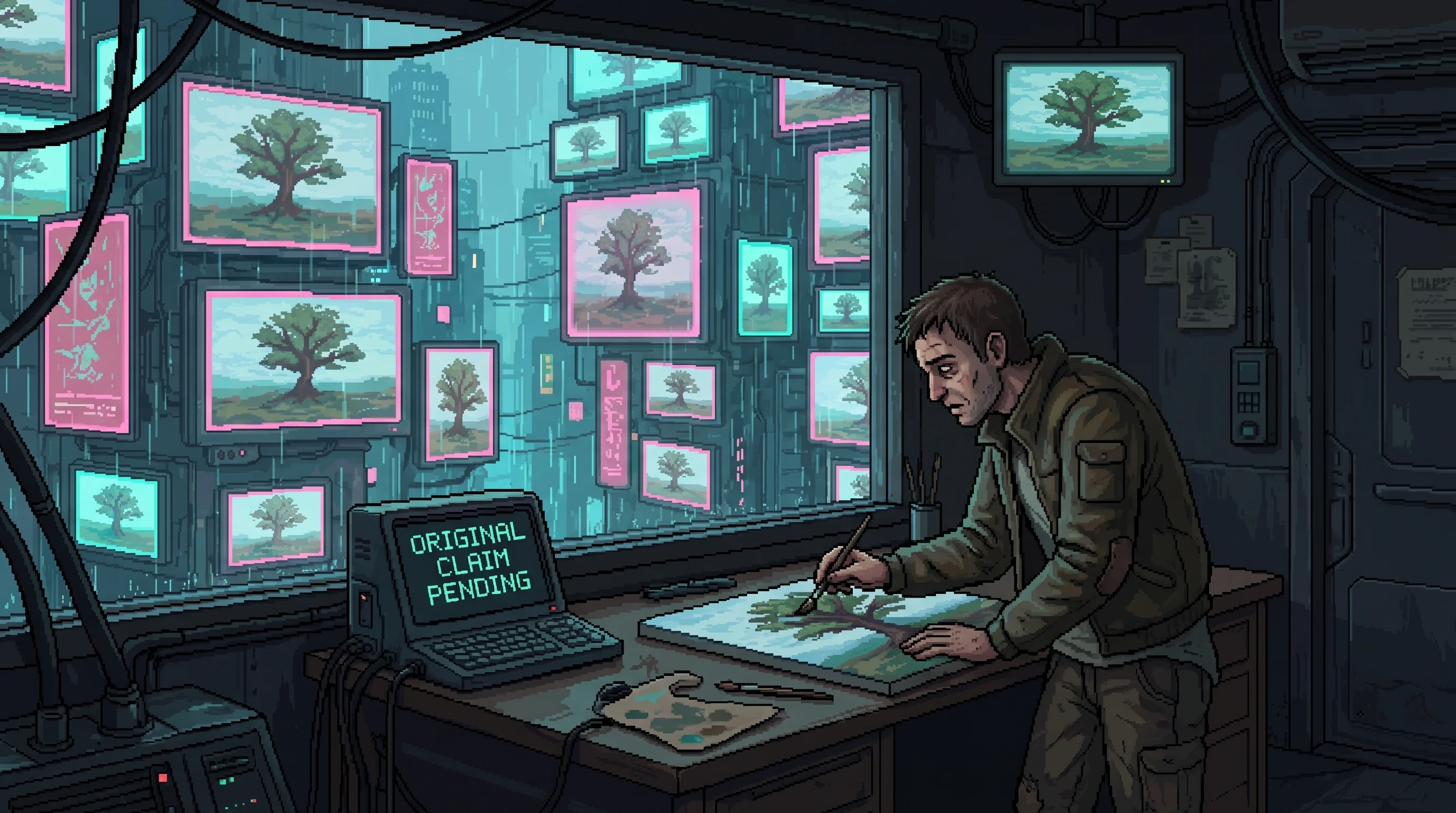
The Market has not assessed the painting. Assessing it would require determining whether the unfinished work is Lyra's (Tier 1, human original), Adaeze's (unclassifiable), or a collaboration between a living artist and a Dispersed consciousness (a category that does not exist in the tier system and that creating would cost the Market approximately 40% of its existing certification revenue, because if the dead can co-create, then every Tier 1 certification issued in Neon Graves — where fragment density makes Dispersed influence statistically probable — becomes retroactively suspect). The painting sits on an easel in Lyra's studio, pigment long dry, assessed by no one, worth everything or nothing depending on a question no institution will answer.
What Nobody Can Explain
- The Echo Thief claims to hold a recording from inside a Hall that physically prevents recording. If the recording exists, how was it made? If it doesn't, what is the Echo Thief's silence buying them?
- Lyra's unfinished painting has been appraised three times. Each assessor has declined to certify it. The question on record: is the painter Lyra Voss, Adaeze Nwosu, or something that has no legal name yet?
- Mercer dismantled a generative AI system worth an estimated 400,000 credits after sitting in a back row for three hours. He has not said why. His associates say he doesn't seem to know how to explain it.
- Adaeze's coherence at the Last Concert was three times longer than her previous maximum. The Consciousness Archaeologists' working theory: she is continuing to aggregate — each manifestation draws her pattern tighter. If they're right, what comes next is not a manifestation. It's a return.
- Slade reviewed a concert he didn't attend, via a proxy with a notebook, and called the performer the greatest living artist in the Sprawl. His critics say this disqualifies the review. His defenders say it's the most honest thing he's ever written. Both groups are waiting for him to publish again. He hasn't.
Linked Files
The Last Concert sits at the intersection of several active threads in the Sprawl's ongoing crisis of creative legitimacy. It cannot be understood in isolation.
- The Ghost Singer — Adaeze Nwosu's Dispersed pattern, and what the 47-minute manifestation suggests about her continued aggregation
- The Resonance Hall — the fragment-dense architecture that made the manifestation possible, and who controls it now
- The Resonance Collective — the ensemble that accompanied the dead, and what they believe they witnessed
- The Authenticity Tribunal — Duval's opinion and the jurisdictional void it created
- Lyra Voss — the living artist whose unfinished painting is co-owned by the dead
- Kael Mercer — the algorithmic composer who dismantled his tools and has not explained why
- Orin Slade — the last review, and the silence that followed it
Affiliated Entities
- The Resonance Hall
Venue — the Hall's fragment density enabled the strongest manifestation on record
- The Resonance Collective
Performers — the full ensemble accompanied Adaeze's manifestation
- The Ghost Singer
The manifestation — 47 minutes, first speech, unprecedented coherence
- Lyra Voss
Guest artist — her painting became a collaboration with the dead
- Kael Mercer
Silent witness — the event changed his creative direction
- Orin Slade
Critic — his final review, via proxy
- The Authenticity Market
Crisis — the event broke the tier system's conceptual framework
- The Authenticity Tribunal
Declined jurisdiction — Duval's opinion became the War's defining document
- Maya Fontaine
Observer — what she perceived accelerated her departure from the system
- The Echo Thief
Claims to hold a recording — impossible, unconfirmed, incendiary
- Neon Graves
Location — the concert occurred in the district's Resonance Hall