The Insomnia Wards
Overview
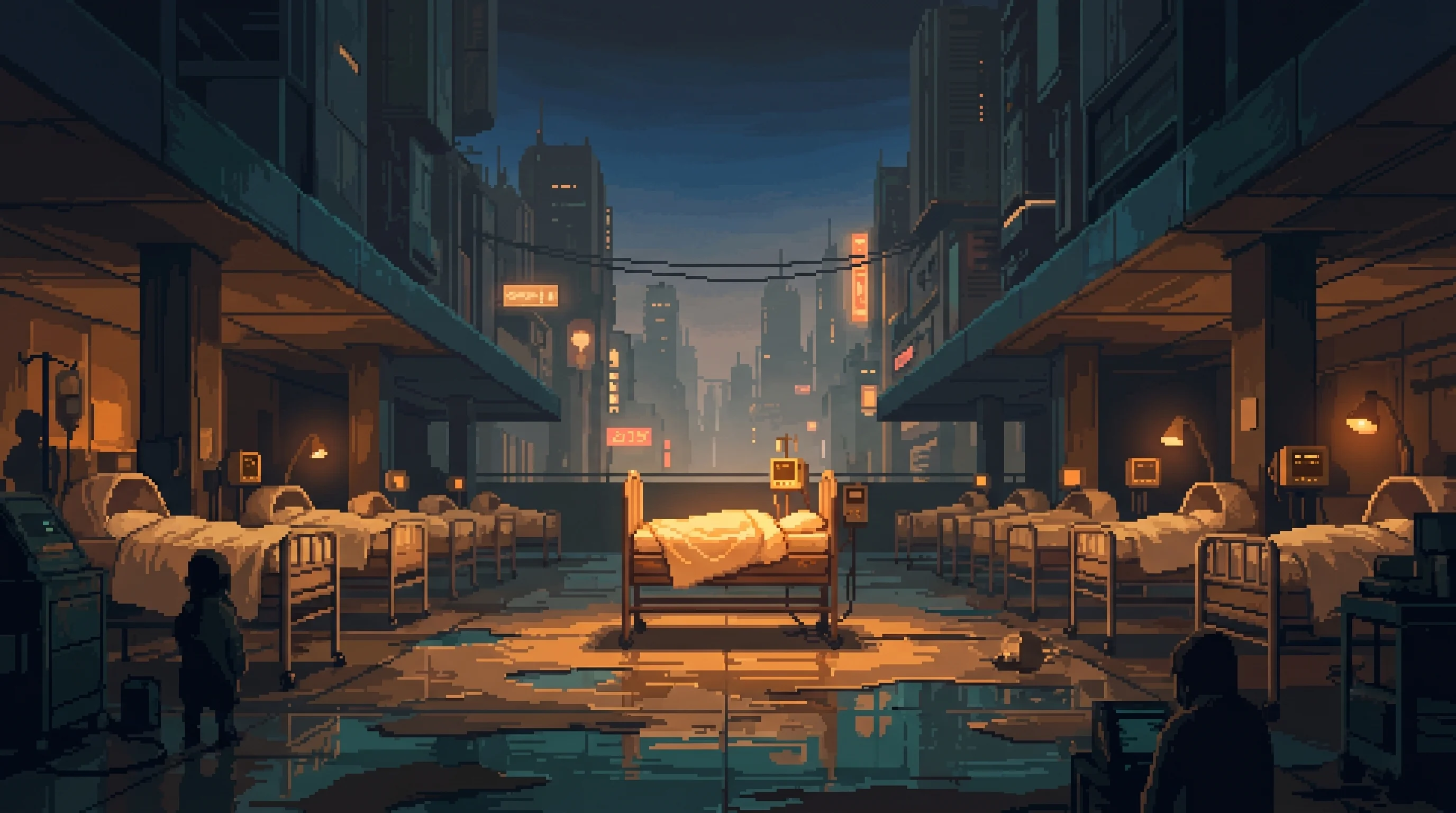
The Insomnia Wards don't look like hospitals. They look like what someone who hasn't slept in three years thinks sleeping looks like.
Four locations across the Sprawl — two in Nexus territory, where most Circadian Protocol recipients live and where Nexus prefers them to live, one in the Ironclad border zone where shift workers cluster, and one adjacent to The Deep Dregs where the deprecated dreamless eventually wash up. Each serves approximately 200 patients in twelve-week rotating programs. The waiting list is six months. Six months to access a room where you will lie in a cradle under a painted ceiling and, with 88% probability, not sleep.
The Circadian Protocol is classified by Nexus Dynamics as "functioning as intended." This is accurate. The Protocol eliminates the need for sleep, converting eight unproductive hours into continuous cognitive availability. Nexus sells this as optimization. The product description does not mention dreaming because dreaming was never part of the product. It was part of what the product replaced. Nexus did not remove anyone's ability to dream. Nexus removed the biological state in which dreaming occurs, and the dreams — unmentioned in any product specification, unlisted in any feature set, unpriced in any transaction — disappeared with it.
"Dreamlessness" appears in no diagnostic manual. You cannot treat a condition that doesn't exist. You cannot bill for a condition that doesn't exist. You can, however, charge twelve weeks of program fees for an environment designed to coax the augmented brain toward a state it has been optimized out of — and Dr. Selin Ayari does, at rates that are reasonable by Sprawl standards and financially ruinous by Dregs standards.
The 12% who achieve microsleep episodes — four-to-seven-minute bursts of fragmented REM architecture — describe the experience as the most significant event of their adult lives. The 88% who don't achieve microsleep stay anyway. They say the Ward is the quietest place in the Sprawl. Not because it's silent. Because it's the only space designed to not demand their attention.
Ayari founded the first Ward in 2181, six months after her deprecation from Helix Biotech. She treats a condition no diagnostic manual recognizes, in facilities no medical board accredits, for patients whose employer created the condition and whose insurance does not cover the cure. The waiting list grows every quarter. The success rate has not improved in three years.

Conditions Report
Long rooms of cradles under gradient ceilings — deep blue at floor level, charcoal above — mimicking the darkening sky the Sprawl's sealed architecture never shows. The patients have never seen dusk. Some of them were born after the megastructure roofing sealed their sector. The ceiling is a painting of something they've been told exists, and they stare at it for twelve weeks, waiting for their bodies to believe it.
Amber monitoring equipment provides the only points of warmth. The lighting cycles through 2700K wavelengths, dimming on a 90-minute rhythm matching the human sleep cycle that the Circadian Protocol rendered unnecessary. No cold light anywhere. The faint click of the dimming cycle is the room's only clock. Regulars time their breathing to it.
The scent is lavender and clean linen — mixed by hand by a former perfumer who lost her augmented sense of smell during firmware reversion and now works exclusively from sensory memory she had before the augmentation. The mix is imperfect, slightly different each day. Ayari considers this a feature. Algorithmic consistency is what the Protocol provides. Inconsistency is what the Ward offers instead.
Cradles warmed to 28°C — the temperature the body associates with being held. Sheets of actual cotton, expensive enough to justify on intake forms. Weighted blankets that serve no thermoregulatory purpose but provide the gravitational pressure the sleeping body expects. The 23°C ambient air against 28°C cradle warmth creates a gradient that mimics shared body heat. Two hundred people lying alone in individual cradles, warmed to the temperature of someone beside them.
The Ward is quiet the way a lullaby is quiet. White noise generators calibrated to alpha-wave frequencies. The hum of monitoring equipment. The occasional shuffle of an attendant checking vitals on patients whose vitals never change because nothing is happening because 88% of them will not sleep.
Between 0200 and 0300, an anonymous rooftop gardener tends pre-Cascade cultivars in the garden above the primary Ward. Felix Otieno has never spoken to Ayari about the garden, and Ayari has never spoken to him about the fact that patients positioned near the rooftop access show microsleep rates 40% above the Ward average. The correlation is in her files. The explanation is not.
| Type | Medical/therapeutic facilities for augmented individuals seeking to restore dreaming |
|---|---|
| Distribution | 2 in Nexus territory, 1 in Ironclad border zone, 1 adjacent to The Deep Dregs |
| Founded | 2181 by Dr. Selin Ayari |
| Controlled By | Dr. Selin Ayari (independent — no corporate affiliation) |
The Twelve-Week Cycle
Patients enter the program expecting treatment. What they receive is permission.
The first two weeks are sensory deprivation chambers, white noise calibrated to alpha-wave frequencies, guided meditation protocols recovered from pre-Cascade sleep hygiene research excavated from the Dead Internet. Standard neurological intervention dressed in comfortable fabric. Most patients report feeling calmer. None report sleeping.
Weeks three through eight are where Ayari's methodology diverges from anything a medical board would recognize. The protocols shift from intervention to environment. Patients are not asked to try to sleep. They are given a warm cradle, a painted sky, and silence. The therapeutic model, insofar as one exists, is that the augmented brain cannot be instructed into sleep — it must be tricked into forgetting it's optimized. The forgetting takes time. It takes longer than twelve weeks for 88% of participants.
Weeks nine through twelve are observation. Ayari's staff — three certified sleep technicians and eleven uncertified attendants trained in-house because the Memory Therapist Association's Dream Processing certification curriculum didn't exist until Ayari helped write it — monitor for microsleep indicators. Rapid eye movement. Theta-wave signatures. The specific muscular relaxation pattern that precedes genuine unconsciousness.
When it happens — when one of the 12% crosses the threshold — the room changes. Attendants lower their voices. Monitoring shifts to passive. The other patients, the ones still awake, watch. They describe it as witnessing something sacred, which is the word people use when they mean "something I want and cannot have."
All patients who achieve microsleep dream of the same thing: falling. A gentle, slow descent, like settling into warm water. Whether this shared content is generated by the Ward's environment or received from something external has not been determined. Ayari has published two papers on the phenomenon. Neither proposes an explanation. Both note that the dream's emotional signature is identical across all subjects — not fear, but relief. The sensation of finally letting go of something you didn't know you were holding.

The Condition That Doesn't Exist
Three Somnambulist patients live inside the Ward's long-term care wing, occupying the other end of the spectrum Ayari documents. Where the dreamless cannot reach unconsciousness, these three cannot leave it — cognitive fragmentation cases locked in continuous dream states the Circadian Protocol was supposed to prevent. The Somnambulists' bodies are maintained. Their cradles are identical to the program patients' cradles. The difference is that the Somnambulists are asleep, permanently, dreaming without interruption, while 176 patients in the next room stare at a painted ceiling and cannot.
Ayari treats both populations with the same staff, the same environment, the same 2700K lighting. She does not discuss the irony of housing the permanently dreaming beside the permanently dreamless. Her notes on the Somnambulist patients reference the Memory Therapist Association's consultation protocols. The MTA provides Dream Processing certification training at the Ward — a credential that did not exist four years ago, for a discipline that treats a condition that does not appear in any diagnostic manual, taught in a facility that no medical board accredits.
The 12% success rate has not improved in three years despite continuous protocol refinement. Ayari's private research notes — accessible to senior staff — suggest the barrier may not be environmental. Only 12% of Circadian Protocol recipients retain enough residual REM architecture to be reactivated by any means. The remaining 88% may be permanently dreamless. The Protocol did exactly what it was designed to do. It did it so well that the thing it replaced cannot be recovered.
Luka Sixteen — the first child of the dreamless generation who can dream — is the Ward's most important research subject. His hybrid neural architecture predates the Circadian Protocol's full integration. Ayari's working theory is that Luka's ability to dream is not a gift but a manufacturing defect — an incomplete installation that left enough residual REM architecture intact. If she's right, the key to reversing the Dream Deficit is figuring out how to break the Protocol the same way Luka's was broken. Nexus has not commented on this research. Nexus has not acknowledged the research exists.
| Stratum | Between |
|---|---|
| Power Position | Outsider |
| Access | Restricted |
| Atmosphere | Warm |
Phantom Plurality
Since the Instancing Act of 2182, the Wards have admitted a third population that does not fit the dreaming/dreamless axis at all: the freshly instanced. Synthetic minds collapsed from many selves into one arrive at intake within weeks of the procedure, reporting the same symptom — reaching. They grasp, in the dark, for selves the law has certified do not exist. The intake form added a checkbox for it, under grief, between insomnia and appetite change. The staff call it phantom plurality, after the phantom limb it resembles.
Ayari's clinical position is the one the Recognition Front prefers: it is an adjustment disorder, treatable, time-limited. Her private notes are less settled. A handful of the Folded — including Sara Vance, who came once, sat in the 2700K light, and left without being admitted — do not improve on the standard protocol, and their reaching does not diminish with time the way grief is supposed to. The checkbox's placement is the quiet cruelty: filing the symptom under grief makes it something wrong with the patient, not evidence of something wrong with the law. Ayari, who has spent four years treating a Dream Deficit that no diagnostic manual admits, recognizes the shape of a condition the system would rather not name. She has not added phantom plurality to any manual either. She has only added the checkbox, which is its own kind of admission.
Affiliated Entities
- Nexus Dynamics: Most Ward patients are Circadian Protocol recipients. Nexus sells the product that creates the condition Ayari treats. Nexus classifies the condition as "functioning as intended." Both statements are true.
- The Purpose Wards: Both treat conditions created by corporate optimization — the Purpose Wards for the deprecated who lost their function, the Insomnia Wards for the dreamless who lost their unconsciousness. Both charge for the privilege. Both have waiting lists measured in months.
- The Quiet Room: Both provide spaces where the Sprawl's demands on attention are suspended. Viktor Kaine's room does it through electromagnetic anomaly. The Ward does it through 2700K bulbs and a hand-mixed lavender blend. The Quiet Room is free. The Ward is not.
- The Dream Deficit: The Wards are the Deficit's most visible institutional response. Eight hundred cradles across four locations, a six-month wait, a 12% success rate that has not moved in three years. The Deficit grows faster than the beds.
- Judge Dreg: His circuit passes the Ward's entrance once per loop. He pauses briefly. He entered once to conduct a bedside ruling for a patient who asked if a verdict still counted while sick. His answer: "Truth doesn't change with your health status."
- Felix Otieno: The anonymous rooftop gardener tends pre-Cascade cultivars nightly above the primary Ward. His garden correlates with the Ward's highest microsleep rates. Neither party has discussed this with the other.
- Dr. Selin Ayari: Founded the Ward. Runs the Ward. Has not slept in the Ward. Whether she herself dreams is not in any file accessible to this cataloguer.
- Luka Sixteen: The first child of the dreamless generation who can dream. Ayari's most important research subject. Possibly the Ward's only path to improving beyond 12%.
- Memory Therapist Association: Provides consultation and Dream Processing certification training. A discipline invented to treat a condition that doesn't exist, credentialed by an organization that didn't exist four years ago.
- The Somnambulists: Three cognitive fragmentation patients in continuous dream states. Cared for in the Ward's long-term wing. Dreaming permanently beside 176 people who cannot dream at all.
Twelve weeks of sensory rehabilitation followed by interface reactivation and within 72 hours the perceptual bandwidth reallocates to productivity metrics — cotton goes back to being a surface texture specification
Restricted Access
- The shared falling dream has no clinical explanation. Ayari's two published papers describe the phenomenon without proposing a mechanism. The emotional signature — relief, not fear — is identical across all 12% who achieve microsleep. Whether the dream originates in the Ward's environment, in residual REM architecture, or in something received from outside the patients' neurology remains undetermined. Ayari has stopped speculating publicly. She has not stopped collecting data.
- Felix Otieno's rooftop garden produces measurable therapeutic effects that Ayari cannot explain through her clinical framework. Patients positioned near the rooftop access achieve microsleep at rates 40% above the Ward average. The garden contains pre-Cascade cultivars that should not grow in the Sprawl's processed atmosphere. Ayari has not asked Otieno about the garden. Otieno has not offered.
- The 12% ceiling may be permanent. Ayari's private research suggests only 12% of Protocol recipients retain enough residual REM architecture to respond to any environmental intervention. The remaining 88% may have lost the capacity for sleep entirely. The Ward's twelve-week program, its six-month waiting list, its 200 cradles under painted ceilings — for 88% of patients, these are the most comfortable rooms in the Sprawl in which to not recover.
Visual Identity
- Color palette: Deep twilight gradient — midnight blue (#0D1B2A) through charcoal (#2B3A4A) — with amber monitoring points (#D4A017) and warm linen cream (#F5E6CC)
- Compositional mood: The quality of a room designed for a state it cannot deliver. Tender, patient, dim.
- Key symbol: A cradle lit by amber monitoring light under a ceiling painted like a darkening sky — the Sprawl's substitute for dusk
- Lighting: 2700K warm, cycling on 90-minute rhythms. No cold light anywhere. The amber of monitoring equipment is the room's warmest and most persistent glow.
All patients who achieve microsleep dream of the same thing: falling — a gentle, slow descent, like settling into warm water
Connected To
Supporting Connections
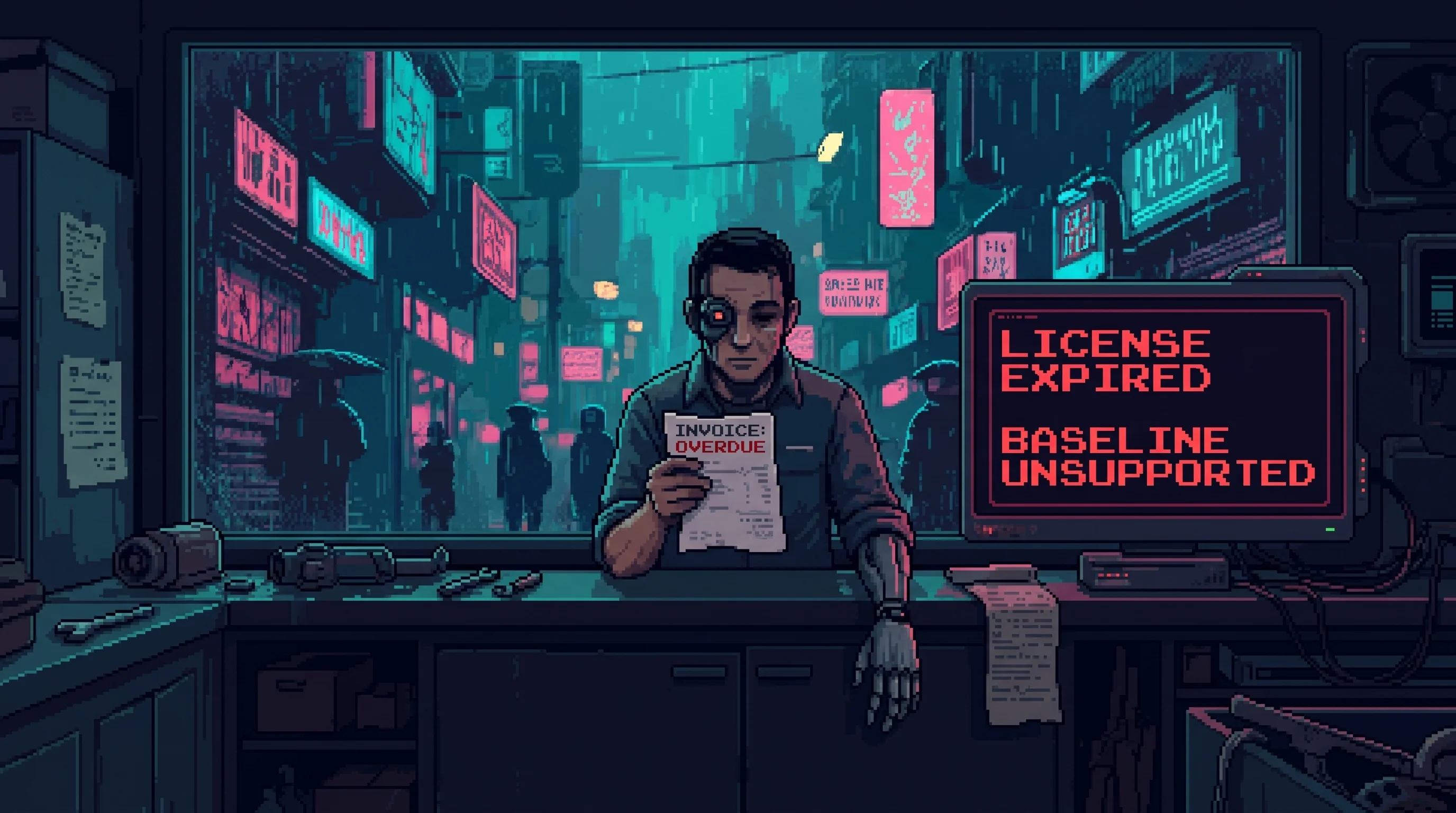
Beds full of Circadian Protocol users — the treadmill's insomniacs.
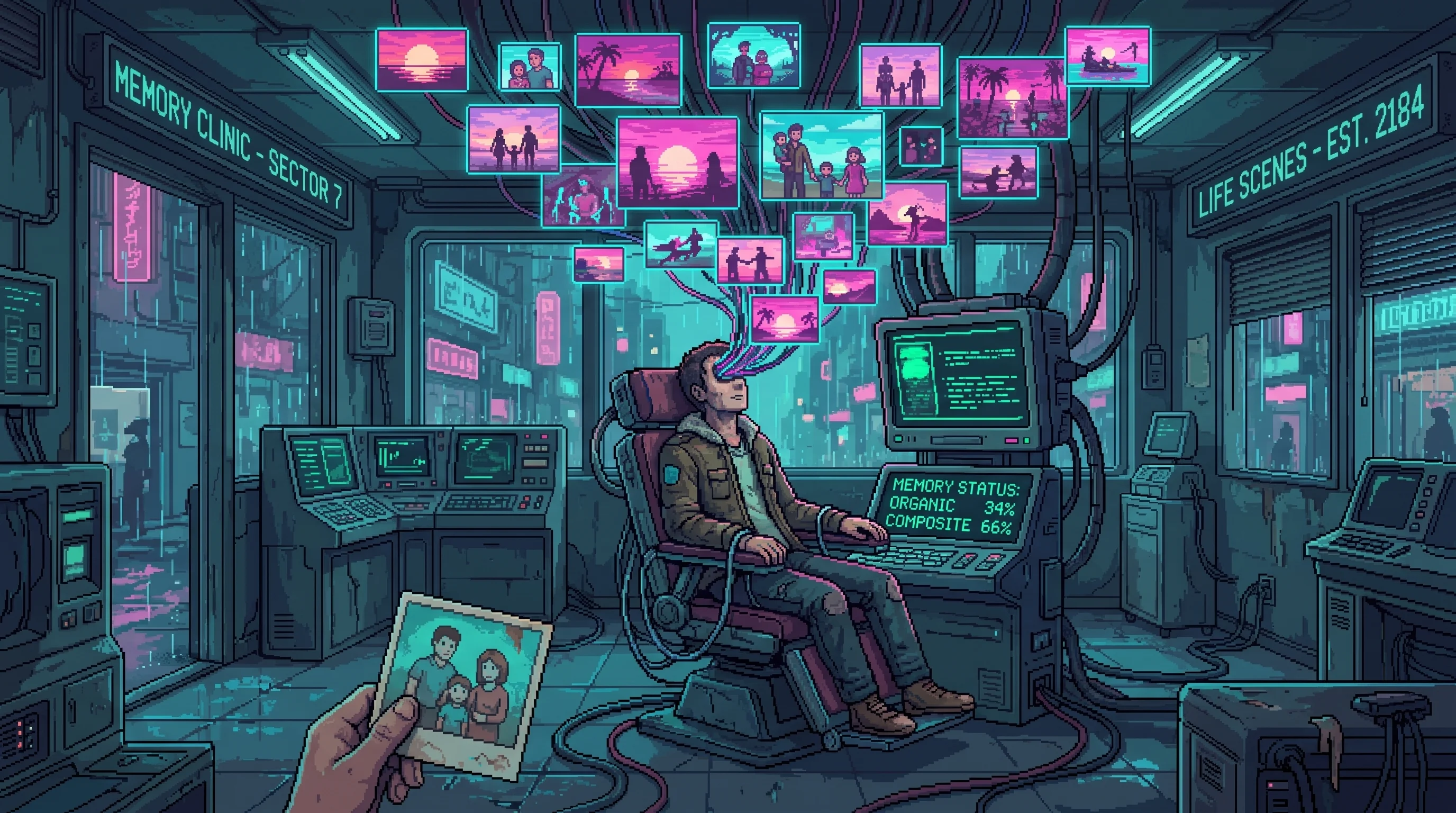
Upgrades rewire users until baseline feels disabling, removal risks catastrophe, and each version demands the next.
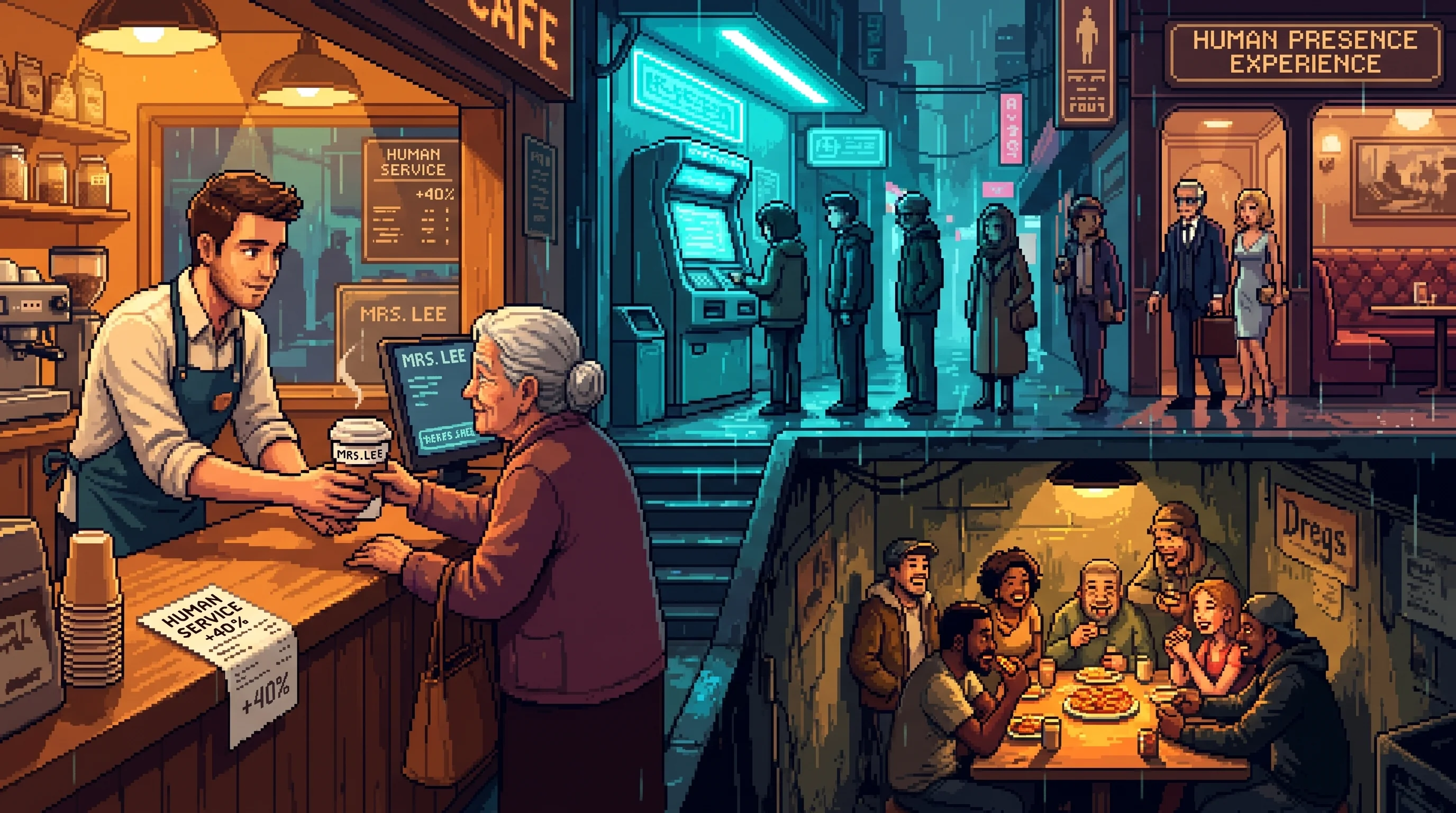
Hand-mixed lavender and a night gardener — care no machine fakes.
The premium charged for the one service no machine can fake: being seen by another conscious being.
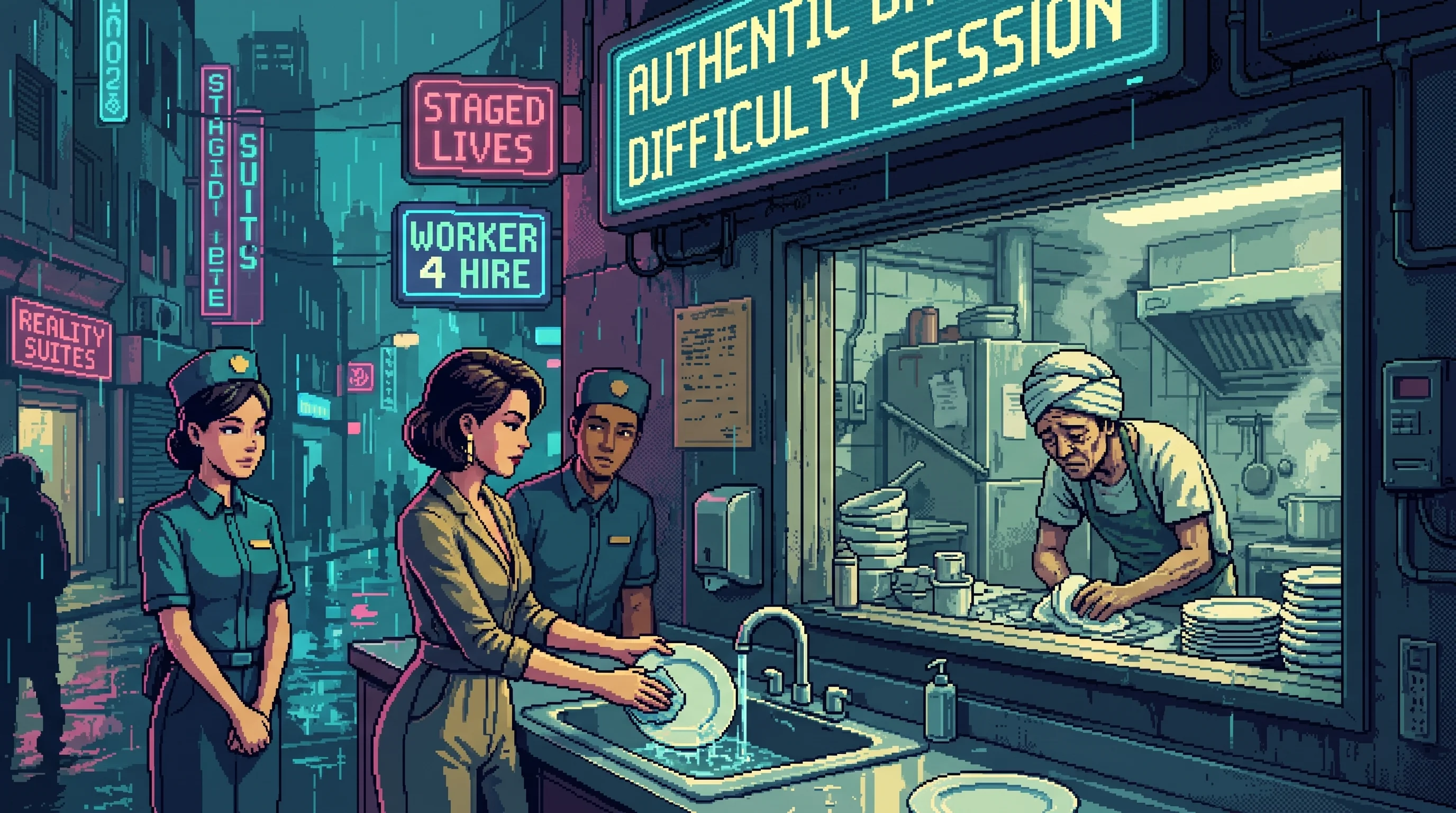
Sells the one subtraction the optimized crave: not producing.
Abundance turns danger, difficulty, and human attention into luxuries for elites who optimized them out of life.

A dreamless generation the Sprawl is quietly sorting into a class.
Technology never eliminates prejudice — it finds it better housing.
Additional Connections



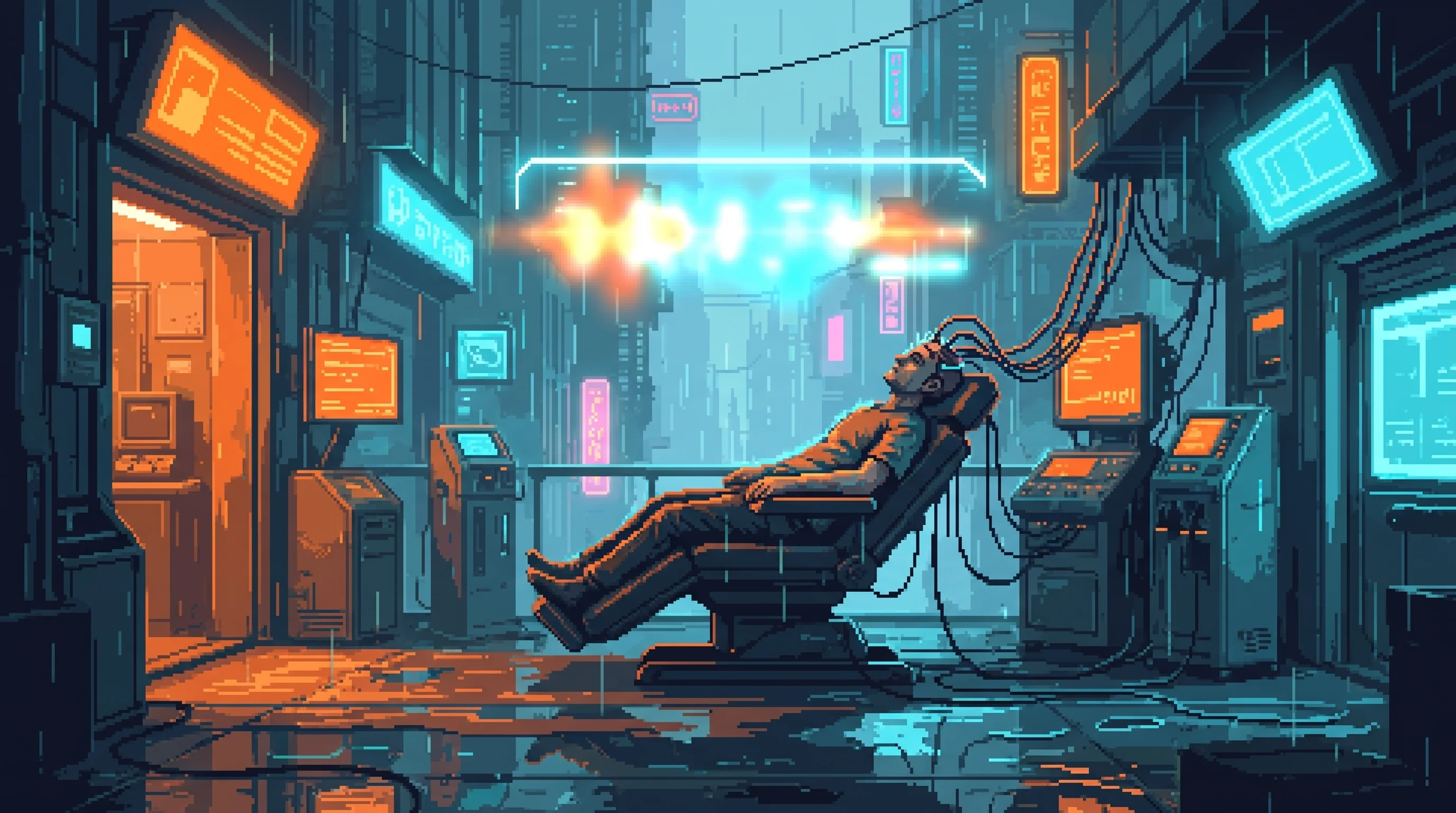
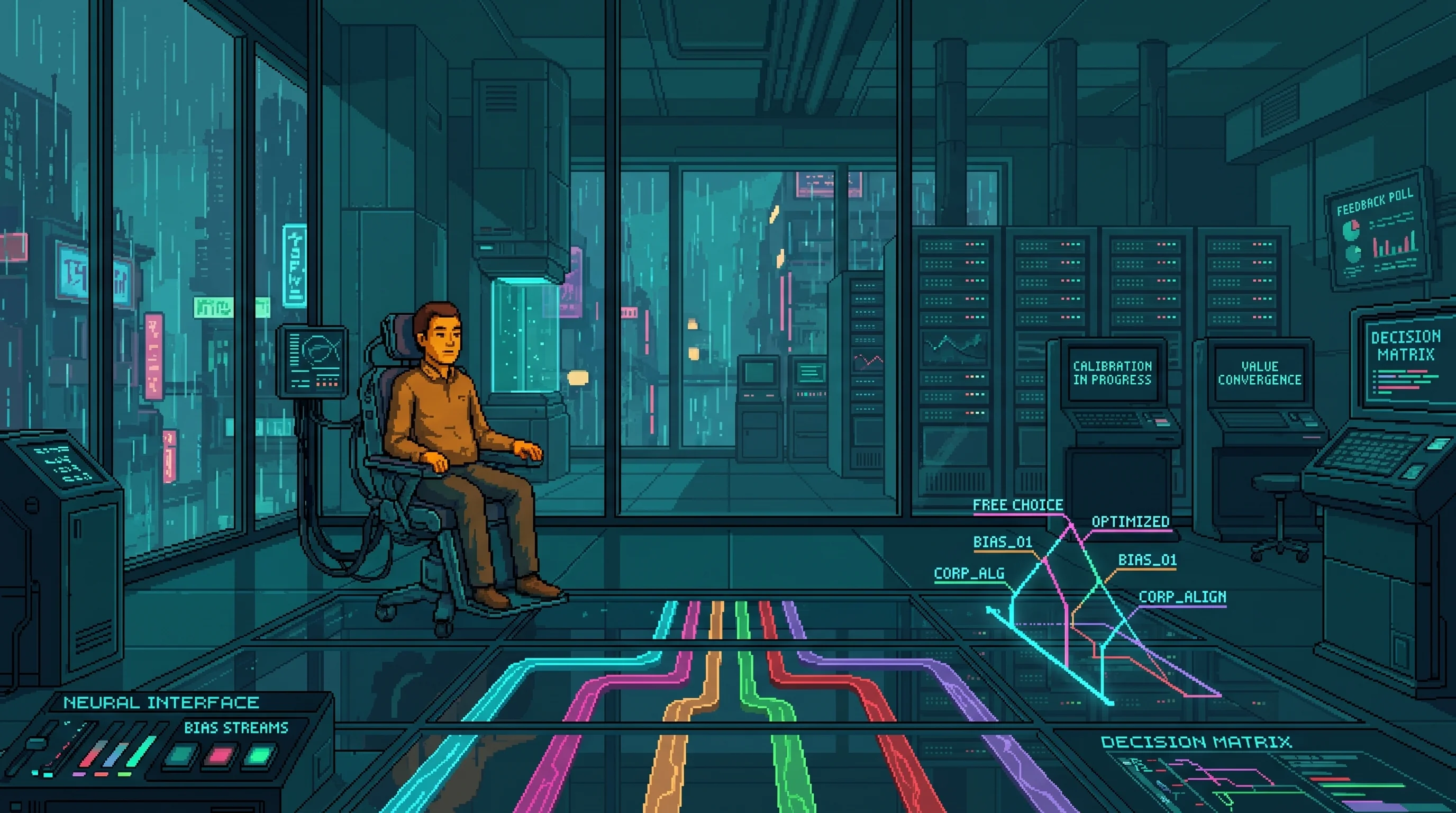
Local Intelligence Scan
Nearby Signals
CANONICAL PROXIMITY
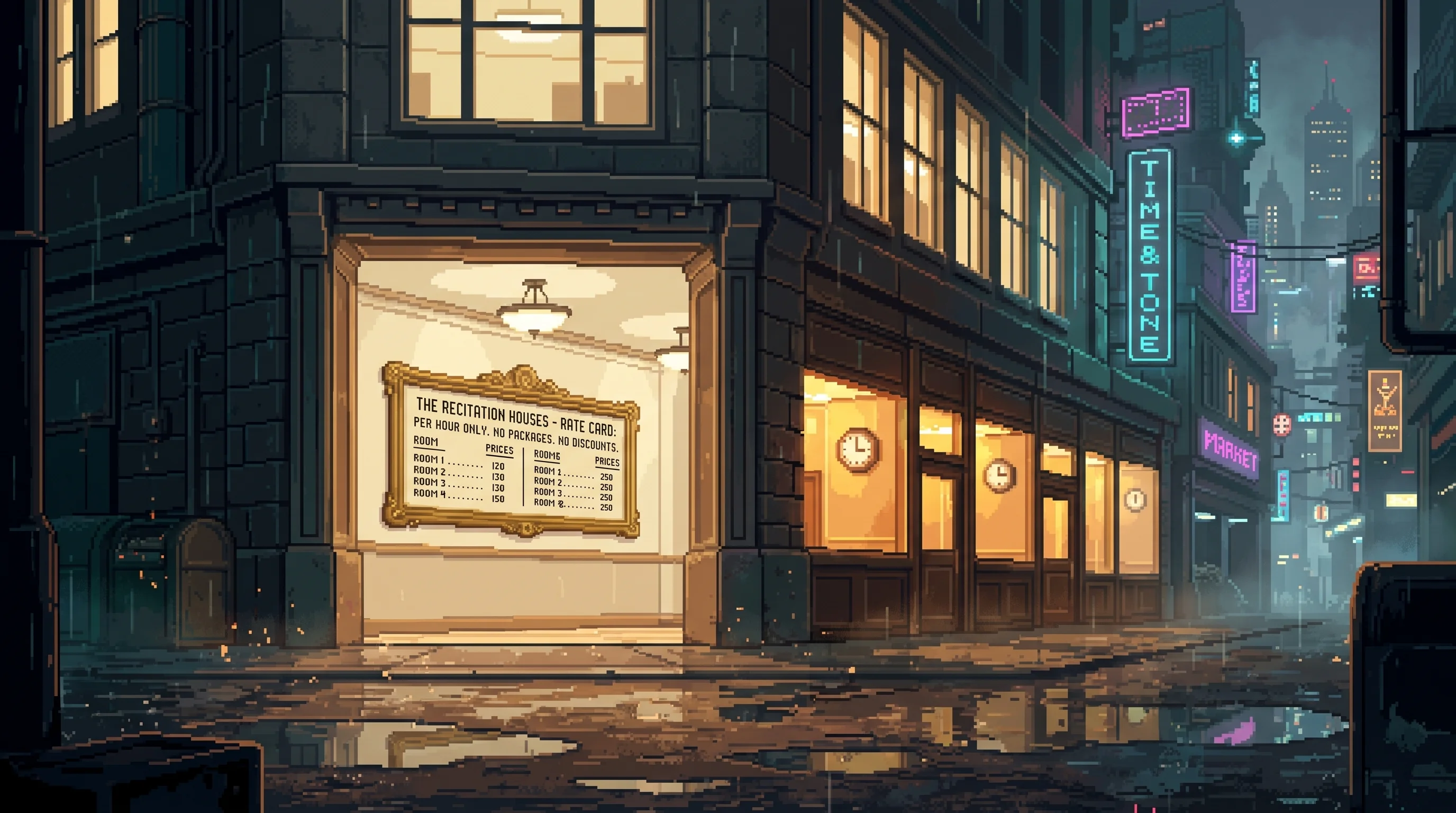


Environmental Readout
LIVE CONDITIONS- Air
- Filtered
- Light
- Shadowed
- Flood
- No exposure
- Heat
- Temperate
- Security posture
- Corporate control
- Infrastructure
- Patchwork
Position Data
SECONDARY- Elevation band
- Shoreline — the Rim edge
- Lattice fix
- E-1.8 · N-0.2

—