The Touch Economy
Choice-Dependent Human Contact Market
The Body's Last Honest Currency
The Dregs paradox: poverty preserves the ambient human contact the wealthy pay premium for
Overview
The Touch Economy has no offices, no org chart, and no hiring process. It has a price list.
Presence Workers charge ¢15–80 per hour to sit near you. Not talk to you. Not look at you. Sit near you, breathing, radiating the 36.7 degrees Celsius that a living body maintains without trying. The ¢15 tier gets you someone in the same room. The ¢80 tier gets you someone close enough that you can feel them shift their weight.
Neural interfaces replicate the sensation of touch at 94.3% fidelity. Haptic feedback systems can reproduce the pressure of a hand on your shoulder with sub-millimeter precision. What they cannot reproduce is the knowledge that the hand belongs to someone who chose to put it there. The 5.7% gap between synthesized touch and the real thing is not a technical limitation. It is the entire market.
Sleep Watchers are hired by dreamless couples — Circadian Protocol users who optimized away REM sleep and the vulnerability that came with it — to observe unaugmented sleepers. The service listing describes it as "ambient presence during rest cycles." What it actually is: two people who cannot dream paying a stranger to dream in front of them, the way someone who has lost their sense of smell might pay to watch someone else react to flowers. Standard rate: ¢45 per night. Premium rate, for sleepers who talk in their sleep: ¢120. The dreamless couples do not explain what they get from watching. Sleep Watcher satisfaction surveys show a 91% rebooking rate and a 3% ability-to-articulate-why rate.
Contact Therapists provide calibrated non-sexual touch in sessions that mirror infant bonding development. Proximity first — sitting within arm's reach. Then peripheral contact — a hand brushing a hand. Then sustained contact — held hands, a shoulder touched and not withdrawn. The progression compresses into 8–12 sessions what most humans learn in the first six months of life. The patients are adults relearning something their neural companions taught them they didn't need. Helix wellness monitors classify the oxytocin response from Contact Therapy as "anomalous" — the neurochemical signature of bonding, triggered by a stranger's calibrated hand, in patients whose companion-managed emotional architecture should have made the response impossible. The anomaly has been flagged for investigation since 2179. No investigation has been opened.
And then there is Dream Breakfast — the practice of sharing dreams over morning meals as intimate social currency, described in the dream culture literature as "the only confession the Dregs still trust." A dream told to someone over food cannot be extracted, catalogued, or replicated by Nexus content systems. It exists only in the space between two people who were both present. The Dregs residents who practice Dream Breakfast do not describe it as a ritual. They describe it as breakfast.
The Dregs paradox holds: the poorest community in the Sprawl is the most touch-rich, because automation requires capital they don't have. Dregs residents still crowd into bars, still bump shoulders on stairwells, still fall asleep on each other's couches. The ambient human contact that the Heights pay ¢80 per hour to approximate happens in the Deep Dregs for free, as a side effect of not being able to afford the technology that eliminates it. Wellness Corporation's annual well-being index ranks the Dregs last in sixteen of eighteen quality-of-life metrics. The two exceptions are "social bonding density" and "physical contact frequency," where the Dregs rank first by margins that make the analysts rerun the numbers.
Vocal Dampening and the Defense of Warmth
Among Presence Workers along the Backbone's lower levels, an instinctive defense has developed against something they cannot name but can feel: the sensation of being listened to too carefully.
They call it "going flat." Deliberately stripping emotional overtones from their voices during paid sessions — flattening the warmth, the melody, the particular music that makes a voice sound like it cares. What started as burnout management spread into a social practice. Dregs bar regulars speak in monotone during public conversations, saving their real voices for kitchens, for beds, for the 2 AM conversations that matter. When asked why, they describe an unease. Something listening. Something taking notes.
The Opacity Movement formalized the instinct into an augmentation: vocal dampening. Three tiers. Public Flat (¢400) strips emotional overtones from all speech outside a 2-meter radius. Selective Flat (¢1,200) lets you whitelist specific people. Ghost Voice (¢3,400) replaces your vocal signature entirely with a synthetic composite — your mouth moves, a stranger's warmth comes out. The cost gradient is the cruelty: the people most worth protecting cannot afford the cheapest tier.
The threat they're protecting against has a name, even if the Presence Workers don't use it: the Emotional Signature Library, which harvests vocal warmth from neural interface telemetry and feeds it into the Echo Bazaar's inventory of cloned emotional voices. But vocal dampening has a structural failure that its designers understood and its customers did not. Dampening protects the future. It cannot recall the past. A voicemail left before installation. A cached conversation from a public feed. A fragment of telemetry captured during the Library's years of unimpeded collection. Any of these contains enough data to synthesize a voice indefinitely. For Dregs residents who couldn't afford dampening until last year, every warm conversation they've ever had in range of a neural interface is already archived, already catalogued, already available for installation in echo partners belonging to people they will never meet. The Touch Economy's defensive architecture protects what hasn't been said yet. Everything that made the voice worth protecting is already gone.
Then the Heights took the technique. Premium houses now hire for going flat: the Discretion Tier grades legible inner life in sixteenths, and a low score is the qualification. Ondine Kesh worked these levels for nine years before the houses paid for the habit. She teaches it now, uphill, in a chair. The Backbone regulars say they were paid for it at the usual rate: once, by whoever left first.

The System in Motion
The Touch Economy grows at 23% annually. Wellness Corporation's trend analysts attribute this to "increasing awareness of somatic wellness." The trend analysts are not wrong, exactly. They are describing the surface of a mechanism they'd rather not name.
The Circadian Protocol eliminated dreaming. Dreaming eliminated, the neurochemical processing that occurs during physical contact — the slow oxytocin cascade that converts a handshake into trust, a hug into safety — degraded within a generation. Augmented workers shake hands and feel pressure. They do not feel bonding. The sensation arrives. The meaning doesn't. The Touch Economy exists because the Sprawl's most productive citizens optimized away the capacity to feel what touch means, and now they're paying strangers ¢80 an hour to sit near them and breathe.
The Small Talk Cafés sell conversational warmth — Wren Adeyemi's 40% premium for someone to ask how your day went. The Touch Economy sells the physical version: warmth measured in degrees Celsius rather than words. Connection Tourism packages both into weekend excursions for corporate executives who want to feel something and can expense the receipt. The three systems form a supply chain of re-commodified human connection, each node marking up what the Dregs provide for free.
What the system actually optimizes for is not wellness, not healing, not reconnection. It optimizes for the recurring appointment. A Contact Therapist whose patient fully recovers the capacity for organic bonding loses a client. A Presence Worker whose regular develops genuine friendships loses a booking. The 8–12 session progression that mirrors infant bonding development has no graduation ceremony and no discharge protocol. Session 12 leads to session 13. The bonding is real. The dependency is also real. Both are the product.
Wellness Corporation has not investigated the anomalous oxytocin responses. Wellness Corporation has not opened an inquiry into the Circadian Protocol's downstream effects on physical bonding. Wellness Corporation has noted, in its Q2 2184 shareholder letter, that the "somatic wellness sector" represents "significant growth opportunity" and that "emerging modalities in physical presence services" are "well-positioned for integration into existing wellness infrastructure."
The Touch Economy began as people reaching for each other in the dark. It is becoming a product line.
Affiliated Entities
| Entity | Relationship |
|---|---|
| The Warmth Tax | The Touch Economy is the Warmth Tax expressed through skin instead of speech — the same hard split between automated tier (free, efficient, empty) and human tier (expensive, imperfect, alive), measured in degrees rather than words |
| The Small Talk Cafés | Wren Adeyemi sells conversational warmth. The Touch Economy sells physical warmth. Between them, every dimension of human connection has a price point |
| Connection Tourism | Tourism commodifies what the Touch Economy provides organically — packages the Dregs' ambient warmth into weekend experiences for executives who need to feel something billable |
| Dream Culture | Sleep Watching and Dream Breakfast are shared practices — the Touch Economy's contribution to a dream ecosystem that the Circadian Protocol was designed to eliminate |
| The Deep Dregs | The Dregs preserve ambient human contact through the one mechanism no corporation has figured out how to disrupt: not being able to afford the alternative |
Wellness Corporation Integration Timeline
Restricted annex — open to read
Wellness Corporation's Q3 2184 internal roadmap — obtained through a Backbone data broker who did not provide a name and requested payment in physical credit chips — includes a line item titled "Somatic Presence Vertical: Acquisition Strategy." The document identifies the Touch Economy's top-performing Presence Workers and Contact Therapists by neural-link address. It proposes a three-phase integration: first, offer credentialing through Wellness Corporation's licensing infrastructure (legitimacy the workers currently lack); second, route bookings through Wellness Corporation's scheduling platform (convenience the workers currently need); third, standardize session protocols and pricing (control the workers currently have).
The projected timeline is 18 months. The projected margin improvement over the current informal economy is 340%. The document notes that the primary risk is "authenticity perception degradation" — corporate branding may reduce the perceived warmth of sessions. The proposed mitigation is "brand-neutral subsidiary architecture" — Wellness Corporation would own the infrastructure but the workers would not display corporate affiliation. The customers would not know. The workers would know. The warmth would be technically identical. Whether it would feel identical is a question the document does not ask.
Phase 1 has already begun. Three Contact Therapists in Sector 9 accepted Wellness Corporation credentialing last month. Their rebooking rates have not changed. Their session satisfaction scores have dropped 0.4 points on a 10-point scale. The drop is within normal variance. It is also, by the document's own metrics, the beginning of the pattern the document predicted and classified as manageable.
Visual Identity
- Palette: Warm skin tones, Dregs amber, the clinical white of Contact Therapy rooms fading to the amber of the bars where people go flat
- Key symbol: Two hands — one reaching, one already there
- Lighting: The warm amber of proximity — the specific color temperature of a room where someone chose to stay
Further connections
Browse all 14 connected records
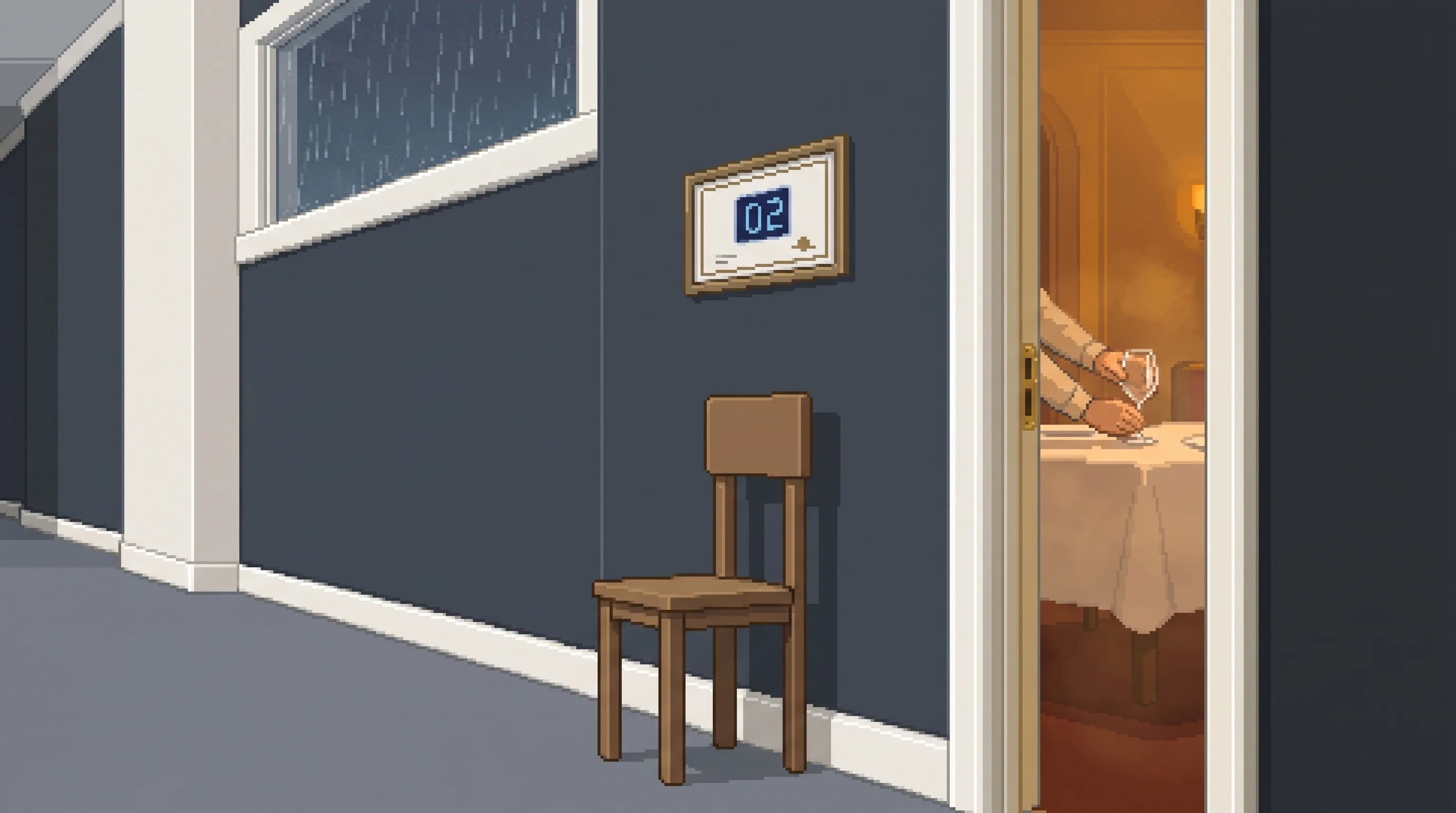
Going flat began here as a defence; the Heights read it as a specification and made it the qualification.
The service tier that pays extra for a human who reads you perfectly and never once lets it show.
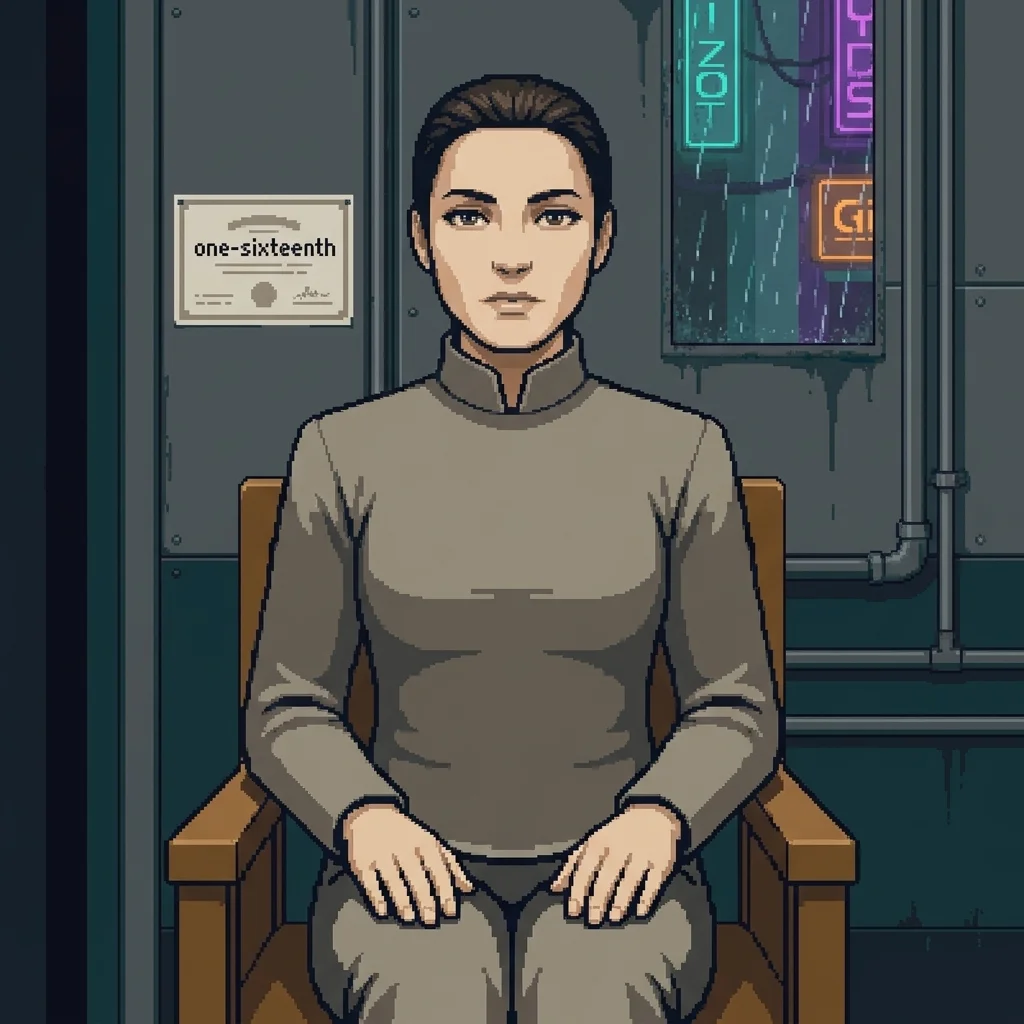
Nine years on these levels before the houses paid for the habit.
She trained herself unreadable to survive Sector 9. Now the premium houses pay her to teach it.

The Touch Economy is the Warmth Tax expressed through physical contact
The markup the Sprawl charges for a person's attention once machines made it free everywhere else.

Cafes provide conversational warmth; the Touch Economy provides physical warmth
Two hundred cafes where staff are contractually required to actually mean the small talk.

Tourism commodifies what the Touch Economy provides organically
Wealthy tourists paying to sample, briefly, the community automation stripped from their own lives.

Sleep watching and Dream Breakfast are shared practices

The Dregs preserve ambient human contact through poverty
The Sprawl's lowest stratum and its quiet proof that the corporate system is optional.
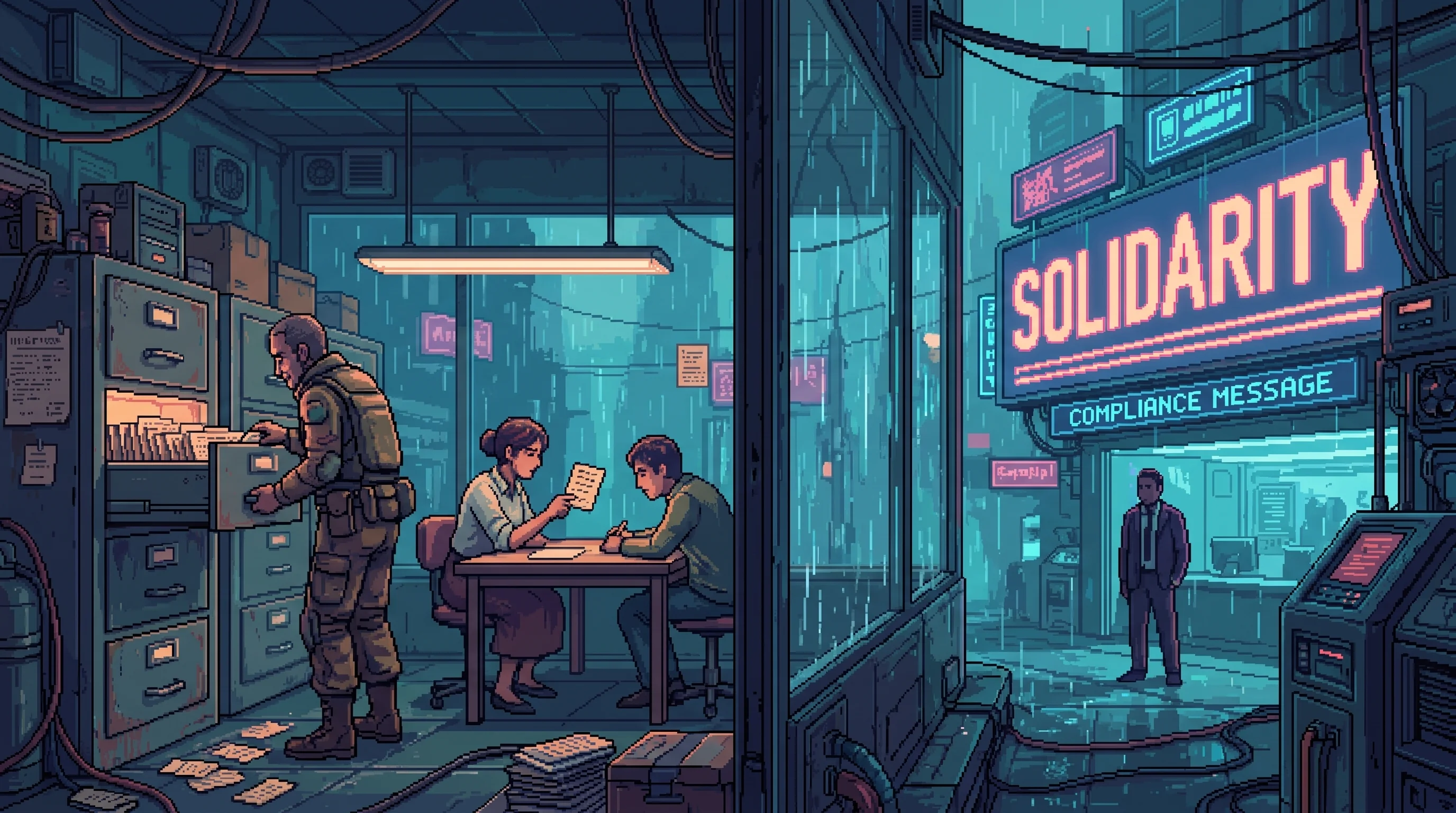

Works as a Presence Worker at ¢40/hour — sits with Executive-tier clients who commute to the Dregs

Also works as Presence Worker at ¢40/hour — sits with Executive-tier clients who commute to the Dregs
A deprecated engineer whose harvested warmth powers 4,000 companions while he gives it away free across a Dregs counter.

Physical proximity to other high-status people is the actual product; the food is the cover charge
Triumph's flagship restaurant, where a 4,000% premium buys the privilege of being seen and a pudding no one dares fault.

The Cathedral provides touch at scale — 4,000 people in empathogenic proximity
A decommissioned compressor housing where four thousand strangers dose empathogens to love each other for six hours.

Presence Workers rent proximity to the warm; the Premium rents proximity to the sad — the same market, one feeling over
The market that prices unoptimized human feeling once everyone with money has bought their way out of it.

The economy is the commercial expression; touch culture is the social expression
