
The Curation Economy
Three tiers: Institutional (Curators Guild), Community (G Nook), Adversarial (Squatters/SCLF)
Overview
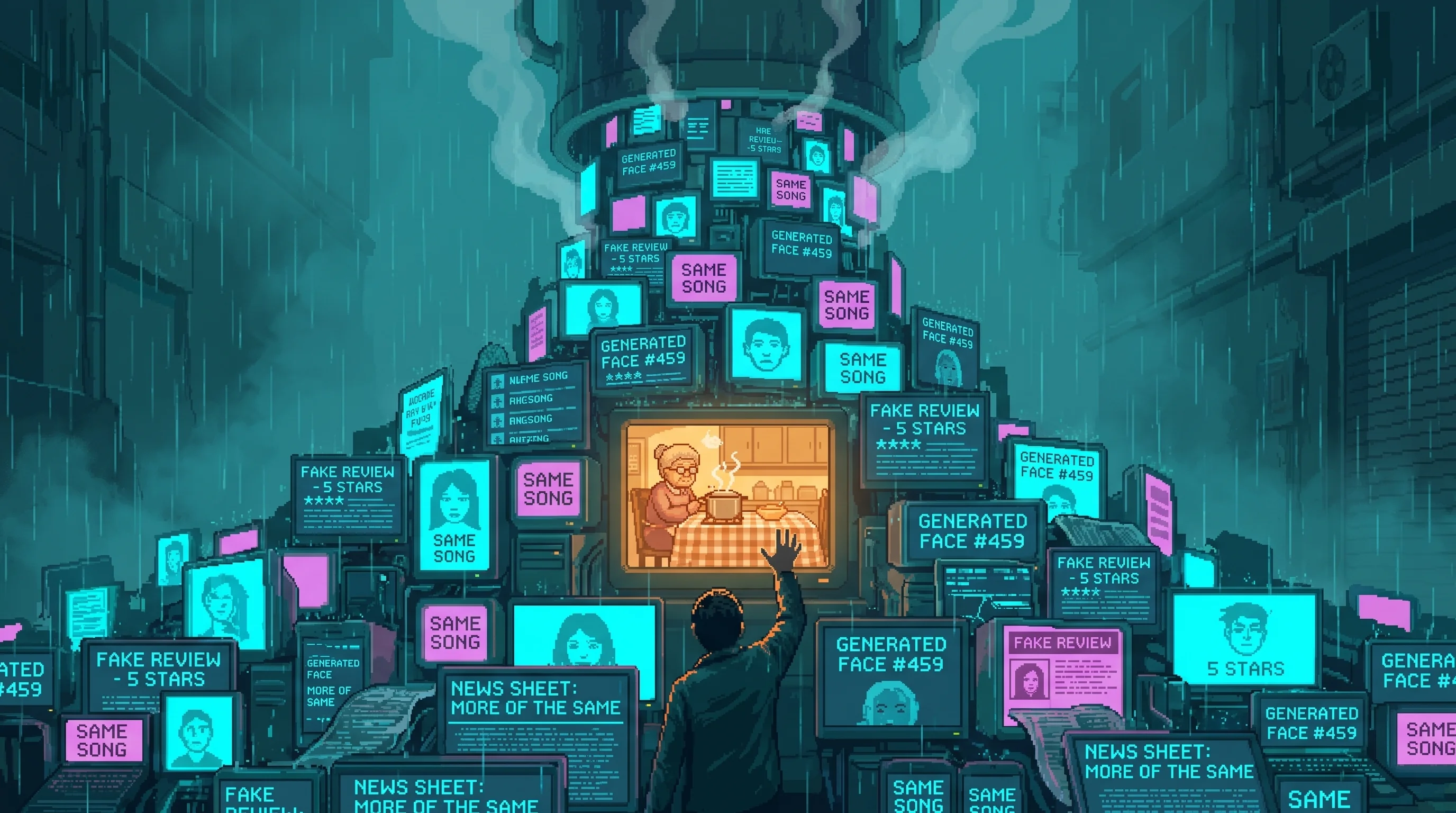
The Curation Economy generates approximately ¢12 billion annually. This sounds impressive until you learn it represents less than 4% of the Attention Economy's total output. For every credit spent helping someone find something worth knowing, twenty-eight credits are spent generating the noise that made the help necessary.
The ratio was 1:19 in 2178. It will be 1:34 by 2186 if current trends hold. Nobody is trying to fix the ratio. The ratio is the business model. Nexus Dynamics' content generation infrastructure — which produces 94% of the Sprawl's daily output — is not malfunctioning. It is functioning. The curation industry exists because the content industry needs it to exist, the way a hospital needs disease. An Attention Economy without noise would not need curators. An Attention Economy without curators would drown its customers. Both outcomes threaten revenue. The current arrangement — in which the flood is perpetual and the lifeguards are expensive — threatens nothing.
The economy operates across three tiers, each responding to the same flood with different tools and different lies about what they're selling.
Institutional Curation
The Curators Guild charges ¢200-800 per hour for domain-specific filtering. At the upper end, a Guild analyst processes approximately 40,000 content fragments per session, applying human judgment to determine which ones a client should see. The service is genuine. The analysts are skilled. The prices reflect scarcity — trained human attention is the one resource the content generation industry cannot manufacture.
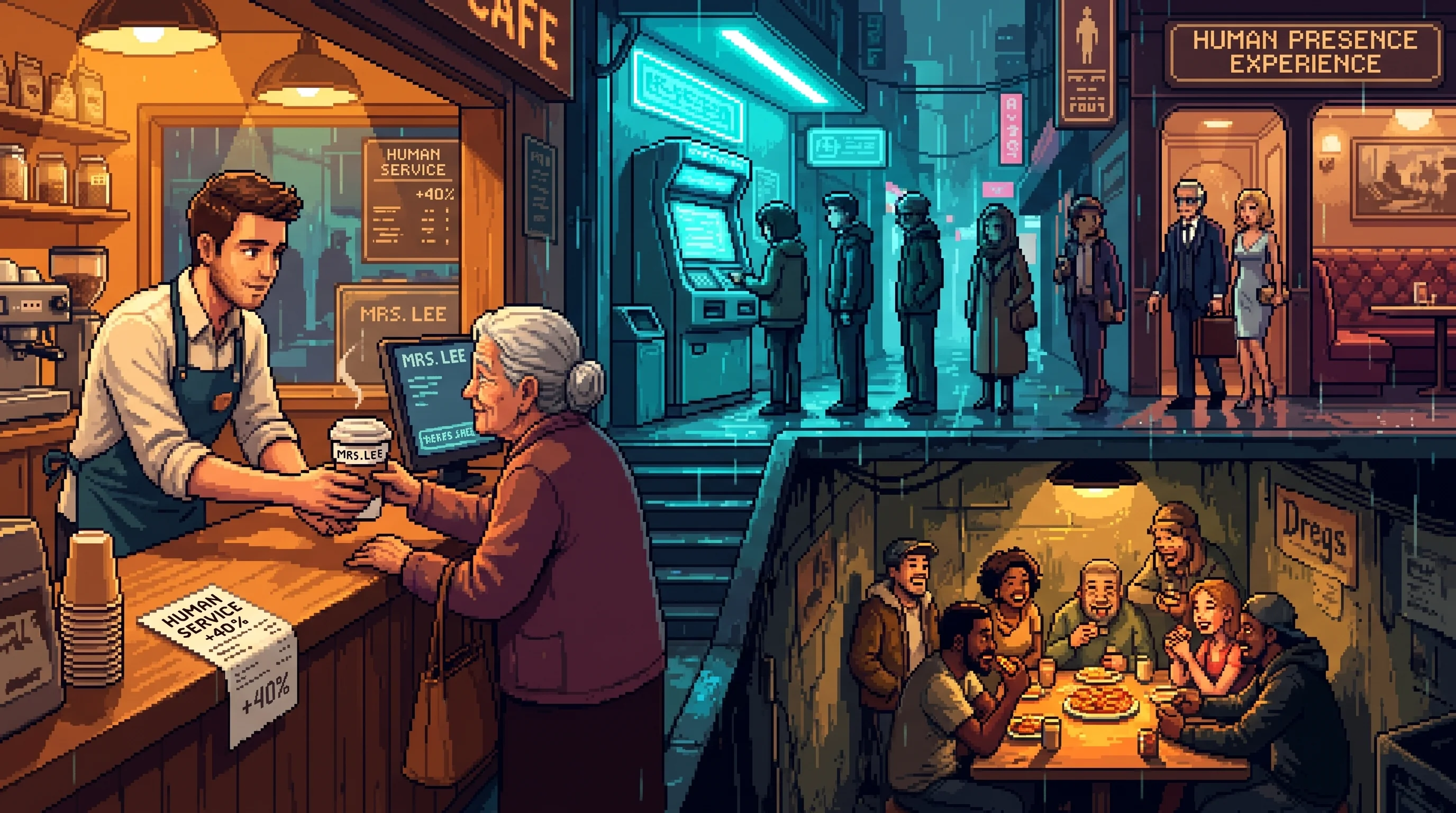
Guild clients report 73% reduction in decision fatigue. They also report spending 40% more on content-adjacent products, because the filtered stream is optimized for relevance, and relevance correlates with purchase intent. The Guild's marketing emphasizes the first number. The Attention Economy's internal analytics emphasize the second.
The institutional tier is the luxury market — the personal sommelier of information. The sommelier is real. The sommelier also works for the vineyard.
Annual revenue ~¢12 billion — less than 4% of the Attention Economy
The Aristocratic Market
The three-tier structure is not just an economic arrangement. It is a class system operating through evaluation.
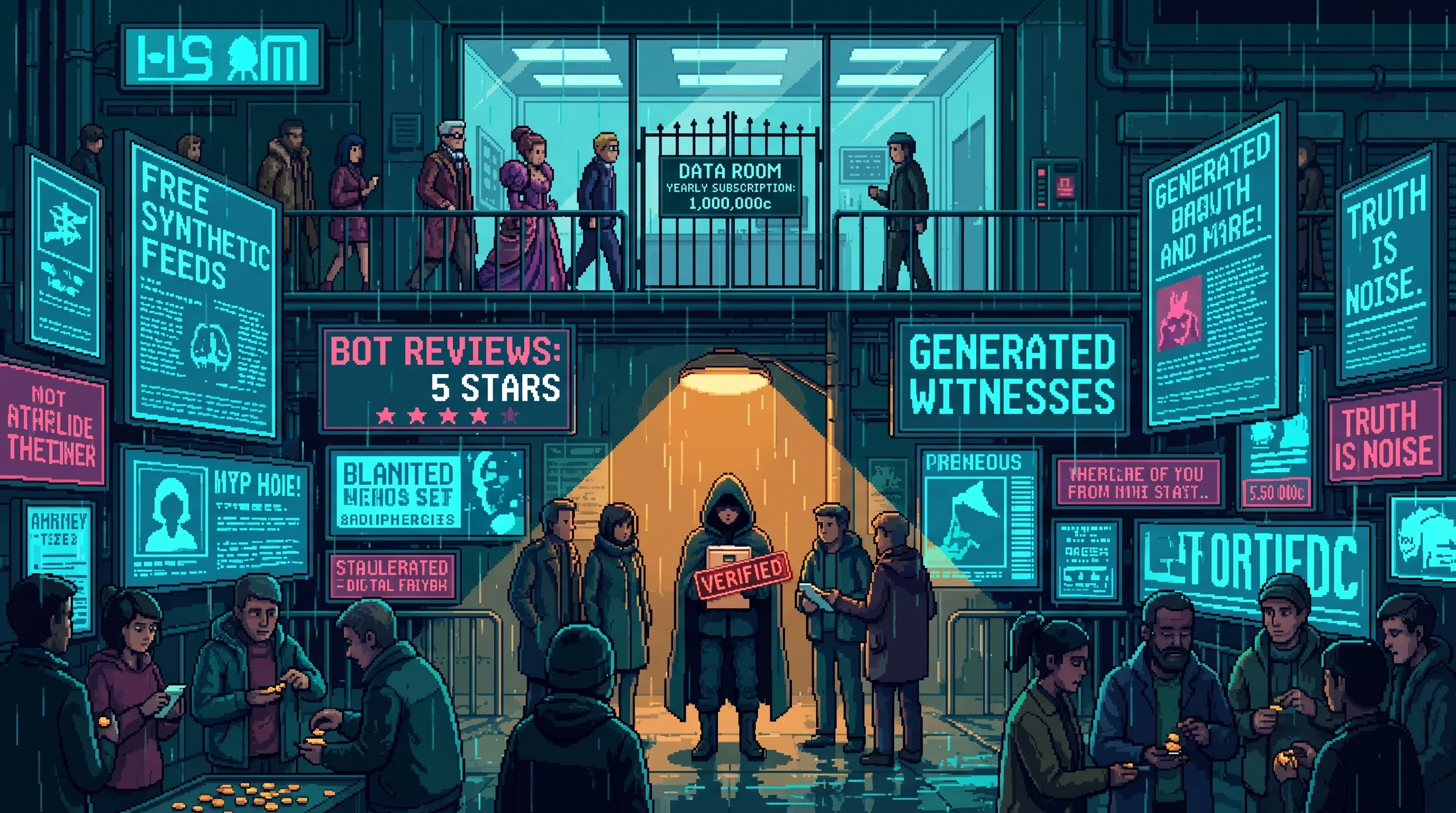
The institutional tier (Guild, ¢200-800/hour) serves the wealthy with hereditary evaluative authority. The community tier (G Nook, Dregs word-of-mouth) serves the poor with emergent reputation-based evaluation. Nobody curates for the middle — the 200 million Professional-tier holders whose preferences are optimized by algorithms, who consume what institutional curators certify as valuable, and whose Origin Trace shows 34% organic content by age 30. The middle tier is the Taste Aristocracy's harvest field: they absorb aesthetic standards set by evaluators whose authority was inherited, believe their preferences are their own, and fund the system that installed those preferences through subscription fees.
The most revealing metric: Guild clients whose curated selections were temporarily replaced with community-tier Dregs recommendations (the commons pilot) showed a 7% satisfaction decline and a 340% increase in spontaneous social interaction. The clients disliked the shared content. They loved having something to disagree about with another person. The institutional tier sells quality. The community tier sells solidarity. The middle tier gets neither — only the simulation of choice within parameters the aristocracy set.
Community Curation
In the Dregs, curation happens at G Nook terminals and across word-of-mouth networks where the Counted's communal observation-sharing replaces algorithmic filtering with something older and less scalable: a person you recognize telling you what they saw.
No pricing. No contracts. Trust governed by face recognition and repeated interaction. A Dregs resident's information diet is curated by maybe fifteen people they actually know, which is fewer sources than a Guild client receives and more reliable than any of them, because the person telling you about the water contamination in Block 7 also drinks the water in Block 7.
Community curation has no revenue model. It does not appear in the Attention Economy's ¢12 billion figure. It is, by every institutional metric, economically nonexistent. It is also the only tier where the curator and the audience share consequences for getting it wrong.
1:28 ratio — for every credit on curation, 28 credits generate noise
Adversarial Curation
The Cognitive Squatters and the SCLF don't filter for quality. They filter for intent. Their product is not "here's what's worth your attention" but "here's what's trying to reprogram you while you're paying attention to something else."
The Squatters maintain maps of manipulation architecture — which content streams carry embedded behavioral modification, which Nexus-authenticated feeds have been value-injected, which apparently organic community discussions were seeded by corporate agents six months before the conversation felt natural. The Collective's intelligence analysis operates in the same space, though their interest is specifically ORACLE-fragment-related information warfare rather than commercial manipulation.
Adversarial curation is the only tier that treats the Content Flood as hostile rather than excessive. The institutional tier assumes the flood contains good content that needs finding. The community tier assumes neighbors can be trusted. The adversarial tier assumes everything is trying to change how you think, and its track record of being right about this is uncomfortably high.
The Tier Off the Ledger
The three tiers all filter a flood that already exists. A fourth kind of curator does something the ¢12 billion figure has no column for: it preserves what the flood never generated. The Question Keepers collect the questions no feed ever surfaced, because no profitable party thought to prompt them, and keep them on ink and paper that cannot be flooded. They sell nothing. They appear in no revenue model. But a network hand-carrying the questions a generation engine was never aimed at is curating the one thing the other three tiers cannot reach: the signal that was never in the water to begin with.
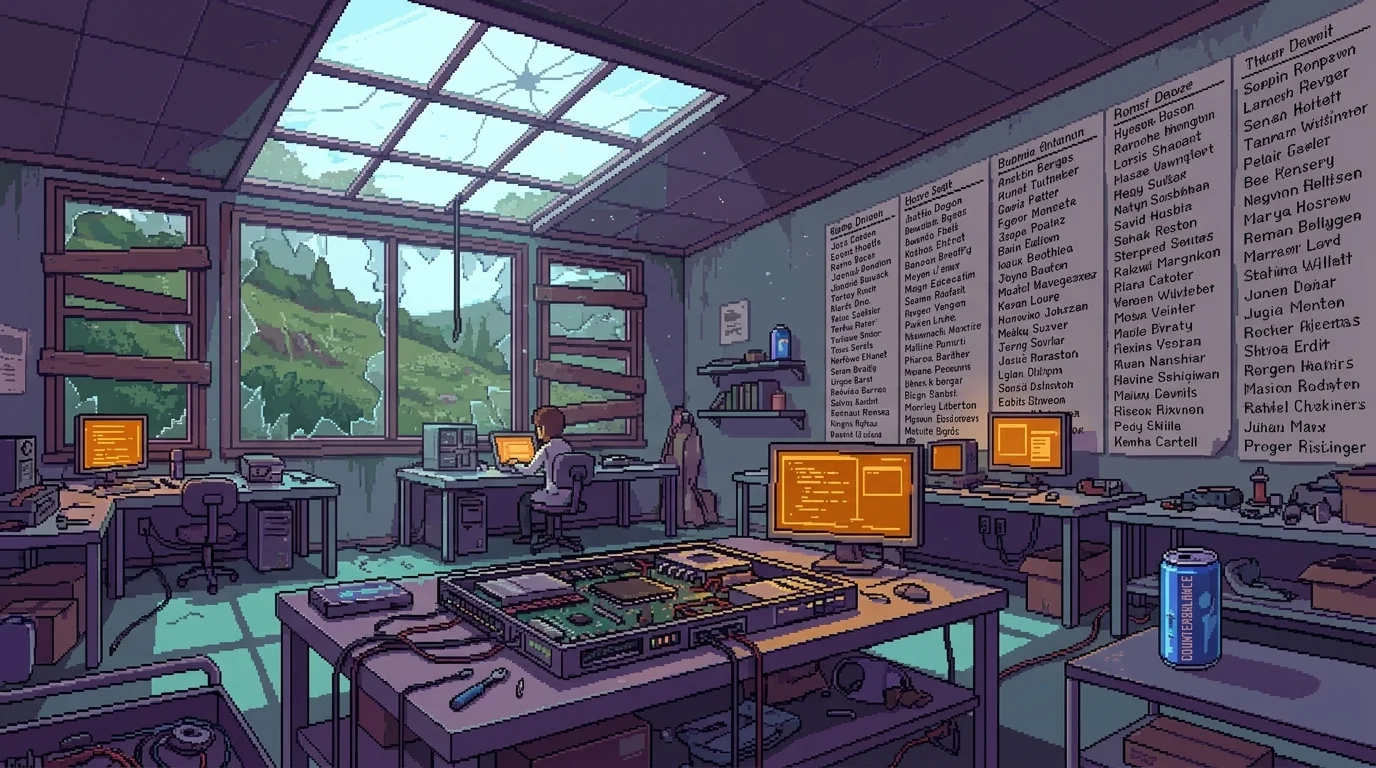
And there is a fifth kind, off the ledger for a different reason. The Unwinding Clinic in the Berkeley ruins curates judgment rather than content — the embodied salvage expertise that tells a runner whether a hardshell at ninety percent and one at thirty, identical from inside, will hold in the dead zone. That knowledge cannot be filtered from a stream because it was never in one; it lives in the actuarial data, priced into the odds, and the only way to curate it is to teach it, master to apprentice, in a room the market insists cannot exist. The Guild sells the sommelier. The clinic gives away the thing no sommelier can bottle.
The Ratio
The 1:28 ratio is not a market failure. It is a market equilibrium.
Content generation costs have fallen 99.7% since 2160. Curation costs have risen 340% over the same period, because human judgment cannot be automated without becoming the thing it was hired to judge. Every efficiency gain in content production widens the ratio. Every new curator who enters the market slightly narrows it, then gets priced out as the flood accelerates faster than their capacity scales.
The Sprawl's average resident encounters 847,000 content fragments per day through neural interface. Of these, roughly 12,000 receive any form of human curation — institutional, community, or adversarial combined. The remaining 835,000 are processed by algorithmic filters whose optimization targets are set by the same corporations that produced the content.
Asking why curation doesn't scale is like asking why the bucket doesn't empty the ocean. The bucket works. The ocean is the product.
Affiliated Entities
The Curation Economy connects the Curators Guild (institutional), G Nook (community), and the Cognitive Squatters (adversarial) into a single ecosystem responding to the Content Flood. The Attention Economy generates the conditions that make all three tiers necessary and ensures — through the 1:28 ratio's steady deterioration — that none of them will ever be sufficient.
Visual Identity
- Color palette: Gold signal against noise-static
- Compositional mood: A tiny light in an infinite dark room — valuable precisely because of the darkness
- Key symbol: A sieve catching gold from a river of noise
- Lighting: Precious, focused, rare
Connected To



—