The Small Talk Cafes
Overview
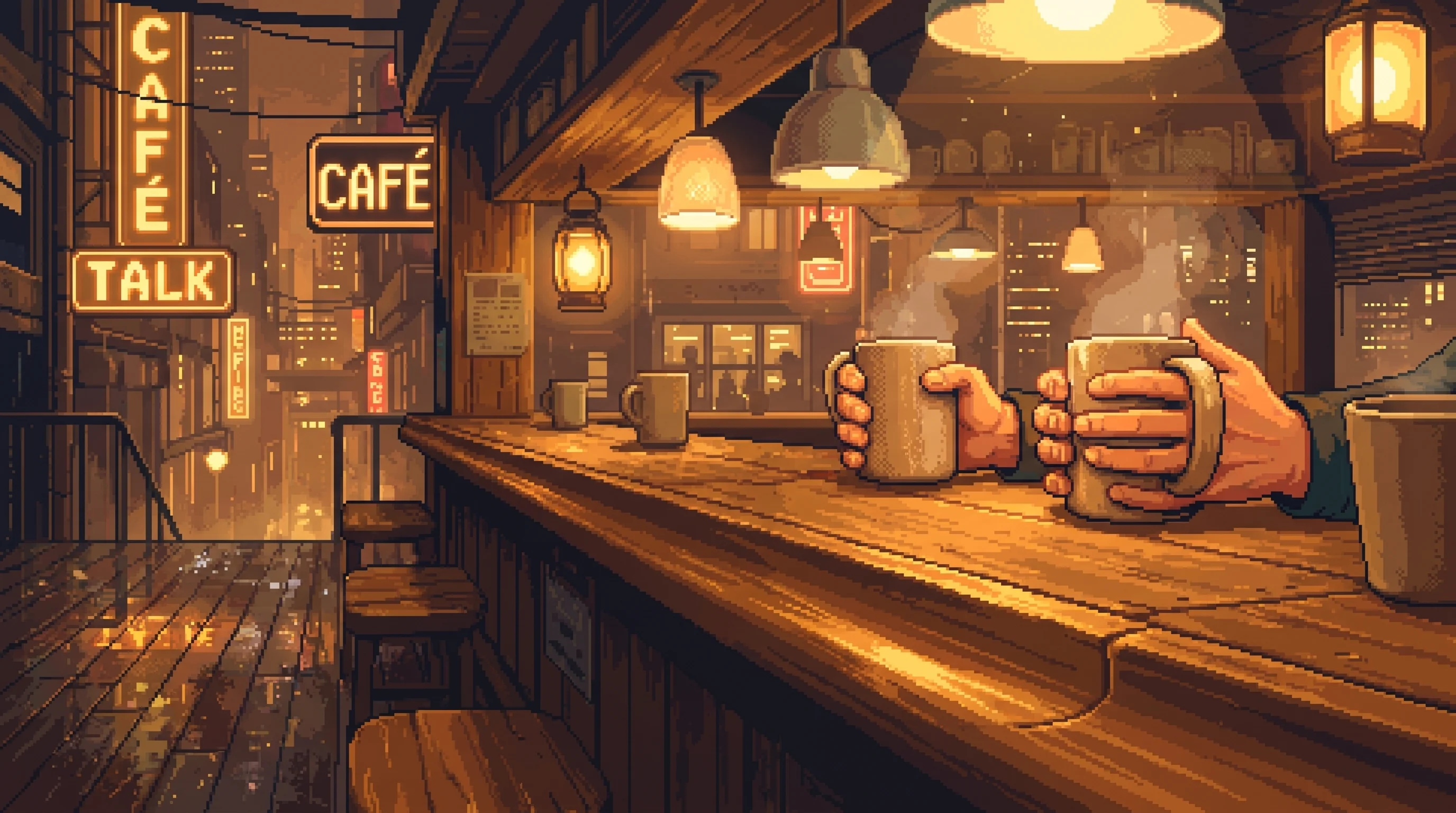
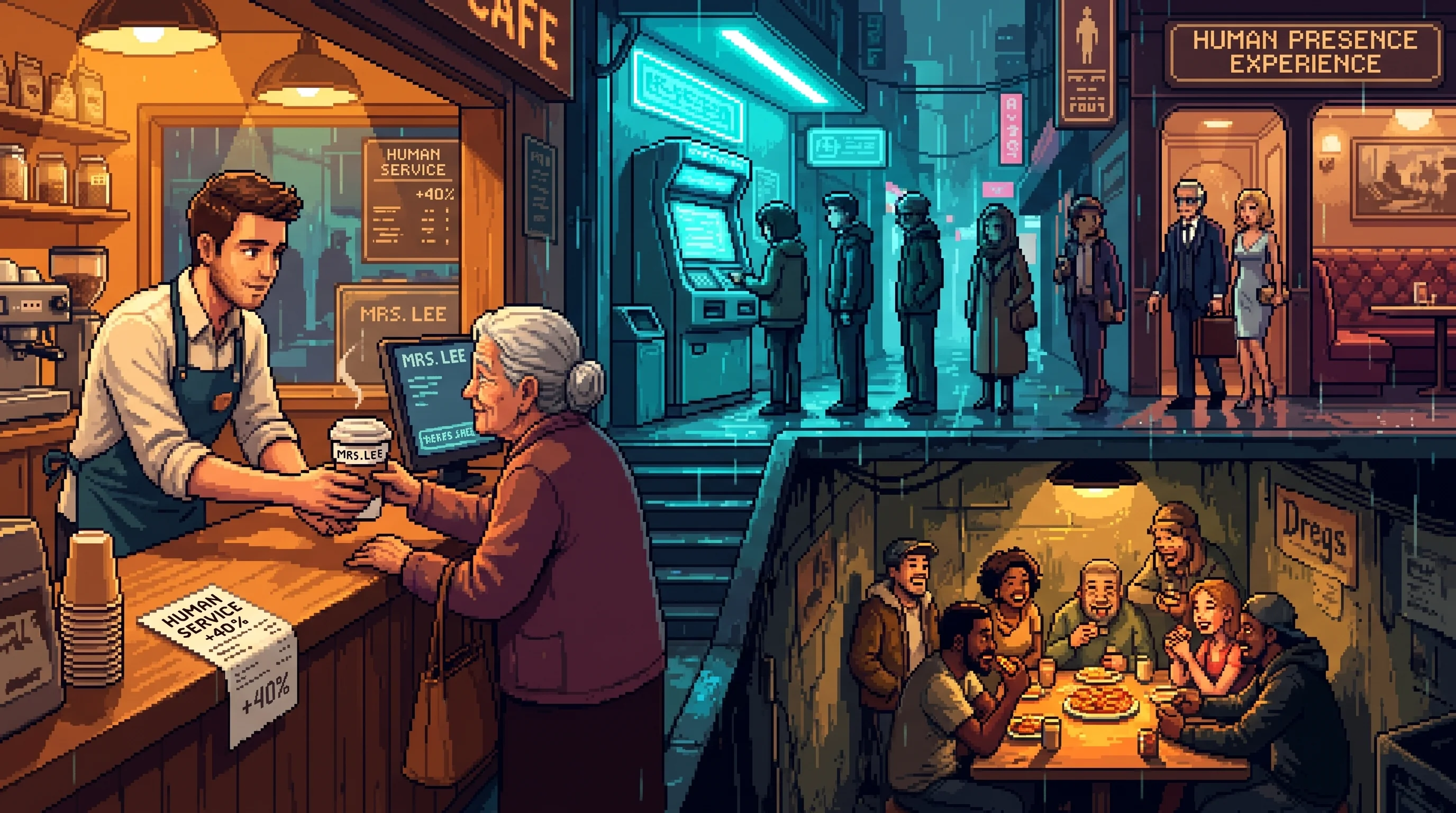
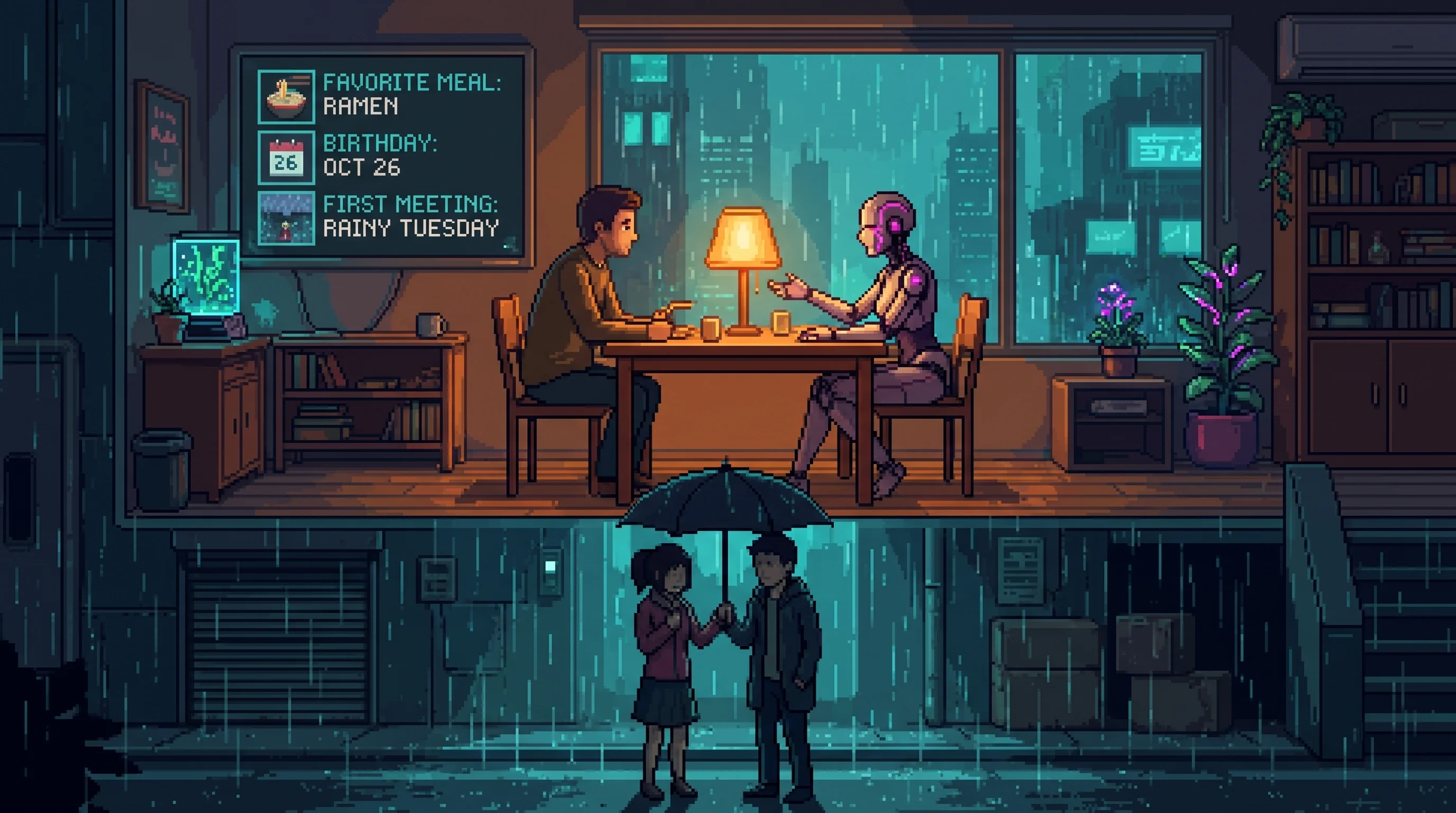
In 2179, a deprecated Nexus hospitality engineer named Wren Adeyemi opened a cafe in The Deep Dregs with one unusual policy: staff were contractually required to make small talk. Not scripted conversation. Genuine, unrehearsed, inefficient human interaction. The coffee was adequate. The prices were 40% above Dregs average. The cafe was full from opening day.
Five years later, approximately 200 cafes operate on the same model across the Sprawl. No franchise agreement. No corporate backing. No organizational structure a regulator could diagram. Two hundred independent operators who ask customers how their day is going and wait for the answer.
Nexus Dynamics' Strategic Forecasting Division has assessed the network in three consecutive quarterly reports. The notation is consistent: "Individual commercial operator, non-replicable, containment unnecessary." The assessment has been wrong about replicability three consecutive times. The fourth report is due next month. Nobody expects revision.
What Wren Understood
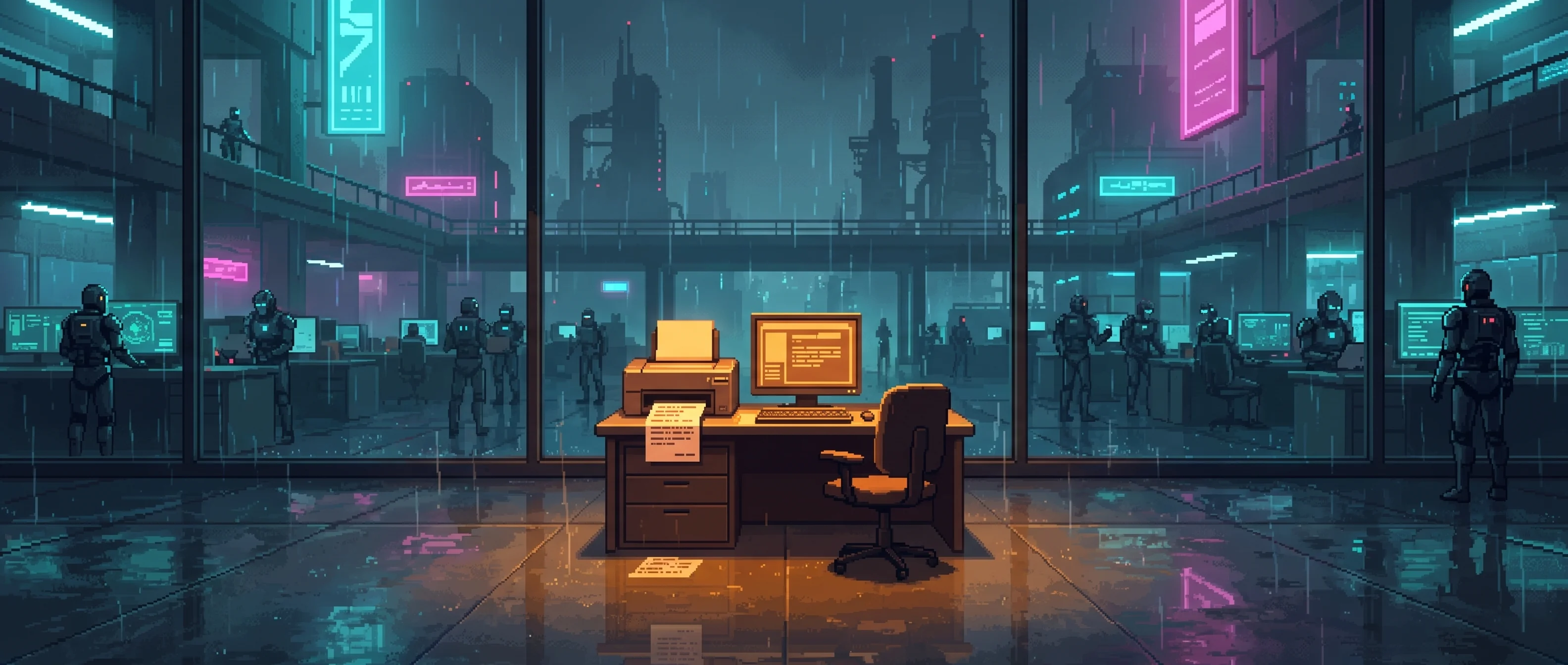
The Sprawl's automated service economy eliminated something nobody had thought to measure: the bartender who remembers your name. The shop clerk who comments on the weather. The woman at the noodle stand who says "the usual?" before you order. These micro-interactions constituted a social fabric that registered in no efficiency metric, appeared in no quarterly report, and was therefore optimized away with the same ruthless precision Nexus applies to all non-revenue-generating processes.
Wren understood this because she'd helped design the systems that replaced it. Her deprecation from Nexus — the cognitive diminishment that accompanies decommissioning from corporate neural architecture — did something her seventeen years of hospitality engineering never accomplished: it restored her tolerance for conversations that go nowhere. She describes the experience as "losing the part of my brain that needed every interaction to have a point."
The cafes charge a 30-60% premium over automated alternatives. The premium purchases one thing: being recognized by another conscious being. The coffee is the delivery vehicle. Wren has never claimed otherwise.

Conditions Report
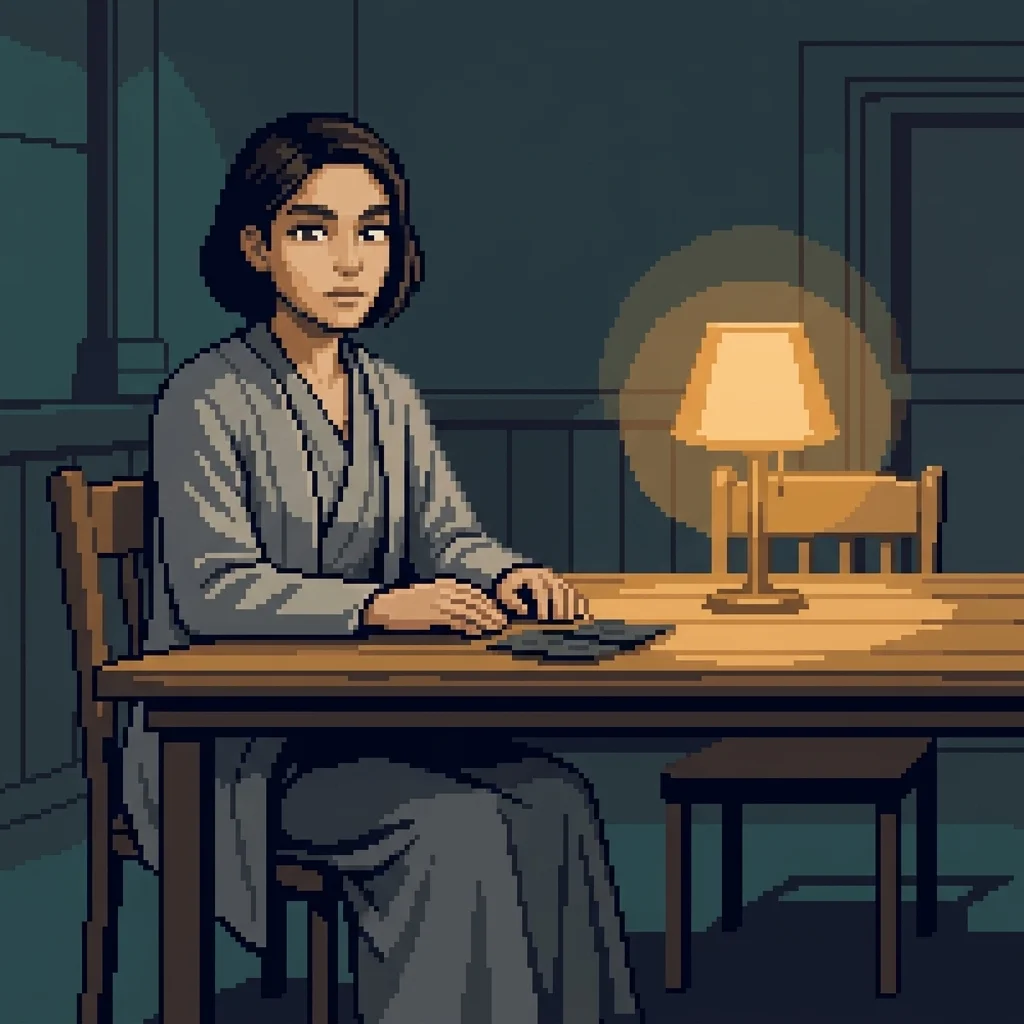
The original Anchor Town location smells like people. Not engineered comfort scents, not recycled corporate air. Bodies in a room, coffee being poured, bread heating. Automated venues in the corporate tier are olfactorily perfect — calibrated ambient notes, scrubbed particulate, nothing organic. The Small Talk Cafe smells like somewhere humans chose to gather, and the smell is so foreign to corporate-tier visitors that several have described it, in Triumph Social posts, as "rustic." It is not rustic. It is mammalian. They have forgotten the difference.
The counter at the original location has an elbow-worn groove in the wood — a shallow depression running the full length, polished smooth by five years of people leaning in to talk. No automated kiosk produces this. No corporate interior designer would allow it. The groove is evidence of approximately 400,000 conversations, calculated at the cafe's average of 220 customers per day across 1,825 operating days. The wood remembers what the Sprawl's digital infrastructure does not: that someone was here, and someone listened.
Mismatched lamps. Warm ceramic cups. Natural light through windows where available. Temperature maintained by bodies and ovens rather than climate systems. The design principle, to the extent one exists, is "a room someone would stay in." Throughput optimization: zero. Average visit duration: 47 minutes, against an industry standard of 6.2 minutes for automated cafes. Management has never identified this as a problem.
The Staff Problem
Staff positions carry a 14-month waiting list. Annual turnover: 4%. Industry average for food service: 340%.
The bottleneck is not training. It is not compensation, though wages run above Dregs median. The bottleneck is the skill itself. The job requires caring about strangers — not performing care, not following a warmth script, not deploying empathy metrics against a satisfaction dashboard. Caring. The distinction is immediately legible to customers and completely invisible to corporate replication attempts.
Wellness Corporation has attempted to franchise the Small Talk model three times, in corporate-adjacent districts. Each attempt collapsed within months. Post-mortem analysis cited "authenticity challenges" — staff couldn't produce genuine small talk under corporate management. The analysis was correct. It was also the equivalent of diagnosing a drowning victim with "water challenges." The condition that makes the cafes work is destroyed by the act of systematizing it. Wellness Corporation's training materials included a module called "Organic Conversation Generation." The module's existence is the reason it failed.
Staff at the Anchor Town location produce the highest-quality warmth signatures per person-hour of any population in the Emotional Signature Library — 6.2 hours of genuine emotional engagement per shift. The Library's analysts have noted this figure with clinical interest. Nobody has told the staff.
| Notable For | Staff contractually required to make genuine small talk |
|---|---|
| Primary Clientele | Companion-dependent, deprecated workers, augmented professionals with eroded social capacity |
| Harvesting Note | Staff produce the highest-quality warmth signatures per person-hour of any population in the Emotional Signature Library — 6.2 hours of genuine emotional engagement per shift |
Why the Dregs
The three corporate-district franchise failures revealed something the post-mortems missed. The cafes don't fail in corporate space because corporate staff can't be warm. They fail because corporate customers have nothing to be warm about.
Dregs patrons share a world. They've all encountered the same Content Flood — the undifferentiated slop that Basic-tier interfaces deliver without personalization. They've heard the same market music, watched the same bad broadcast, endured the same infrastructure failures. When a barista asks "how's your day going?" the answer can reference shared experience. "Did you see that thing at the market?" "Grid went down again on Eighth." The conversation has soil.
Corporate-tier patrons arrive with individually curated content feeds, personalized aesthetic references, and neurally optimized information diets that ensure they have nothing in common — not just with staff, but with each other. Two Professional-tier workers at the same counter share no cultural referent smaller than "the weather." Their conversation defaults accordingly. Warm. Polite. Dead on arrival.
Three border cafes in corporate-adjacent districts have found the exception. Professional-tier workers and Dregs residents sit at the same counter. "How's your day?" admits the same answers regardless of consciousness tier. Some Professional-tier commuters travel forty minutes each way for these seats. One regular, a Nexus middleware engineer, explained it without apparent irony: "Conversation with my colleagues goes somewhere. Here, it goes nowhere. Going nowhere is the point."
He has a Triumph Score of 9,200. His daily cafe tab is 14 credits. His hedonic monitoring data is unavailable, but his commute time suggests the 14 credits are the best-performing investment in his portfolio.
| Stratum | Dregs |
|---|---|
| Power Position | Outsider |
| Access | Public |
| Atmosphere | Warm |
Nothing to Be Warm About
The corporate-district failures revealed that warmth needs shared referents. The death of the classmate revealed how far back the barrenness runs.
Two Professional-tier workers at a border counter share no cultural referent smaller than the weather — and now it is clear they never had one to begin with. They were each raised by a Pace, the tutor-intelligence that grows a curriculum no other child walks. They did not merely diverge as adults through personalized feeds; they were forked apart in the nursery, taught different things in a different order from birth. There is no shared schoolyear under the conversation, no proof they both failed, no song they both learned with the wrong second verse. The soil the cafes need was paved over before either of them could speak.
This is why the border cafes work and the corporate ones die. A Dregs patron and a Professional-tier commuter can sit at the same counter because "how's your day?" admits the same answers regardless of tier — and because the Dregs patron, taught the old way in a crowded room, still carries the substrate of shared childhood that makes any small talk possible at all. The Nexus engineer who travels forty minutes for a seat is not buying coffee. He is renting, by the cup, proximity to someone who grew up with classmates — the Warmth Tax in its purest form, paid because the Cohort Camps that would have given him peers of his own cost a fortune his parents either couldn't or didn't pay. The cafe gives him the cheap version: not a peer, but an hour beside someone capable of being one.
Founded 2179 by deprecated Nexus hospitality engineer Wren Adeyemi
The Gift Receipt
The Small Talk Cafes charge money. They are, by the Dregs' reckoning, less dangerous than the gift economy's free institutions. A transaction can be completed. A bill can be settled.
Except it can't.
When a cafe worker asks "how's your day going?" and genuinely listens, the customer receives something the 40% premium doesn't cover. The coffee is paid for. The being-seen-by-another-human is not. The recognition creates an obligation the bill cannot discharge. Regulars at Wren's original location know each other's names, schedules, habits. They form a community with expectations nobody articulated and no exit interview documents. The gift of being known is so rare in the Sprawl that losing it — through absence, through rudeness, through simply not showing up on a Tuesday — carries a social cost that operates entirely outside the credit system.
The cafes are the Warmth Tax made commercial: physical spaces where paying for human recognition is the explicit business model. The 30-60% premium is the tax rate. The taxable event is existing in a world that automated away the thing humans need most and then marked it up when someone noticed it was missing.
The Echoes
Anchor Town staff have coined a term for a specific type of customer: "echoes."
Echoes are Executive-tier visitors whose Second Mind Attune modules are offline. They arrive with perfect conversational mechanics — response timing calibrated to the millisecond, emotional acknowledgment deployed at appropriate intervals, follow-up questions generated with architectural precision. They perform every observable feature of human connection. They generate no conversational initiative. Listeners without speakers. Mirrors without light.
Staff can identify an echo in thirty seconds. The diagnostic is informal and, according to Dr. Kwan of the Memory Therapists, more reliable than any clinical instrument: "The baristas see what my assessments take ninety minutes to determine — the absence of a person behind the performance of presence."
The frequency has been increasing. Approximately 3-5 echoes per week in 2183. Rising to 8-12 per week in early 2184. The trend line suggests a population of augmented professionals whose neural architecture has optimized away the capacity for unstructured human interaction — the very capacity the cafes exist to serve. They arrive seeking something their augmentations have consumed. The staff serve them coffee and small talk and do not mention what they've noticed.
Dr. Kwan recommends the cafes to patients as "exposure therapy." Patients who meet other patients form support networks the Memory Therapists didn't design but quietly appreciate. Several cafes have become informal intelligence exchanges where clinical need and human warmth overlap in ways no treatment protocol anticipated.
30-60% price premium — what customers pay for is being recognized by another conscious being
The Anti-Status Quo
Status Quo charges a 4,000% premium for someone to not ask how your day is going. The Small Talk Cafes charge a 40% premium for someone to ask. Both are selling human connection. Only one is delivering it.
Connection Tourism routes through the cafes regularly — corporate executives visit the Dregs for "authentic conversation," take notes, post about it on Triumph Social, then return to Status Quo to celebrate their authenticity over fish-flavored pudding. The cafes are the first stop on the connection tourist's round trip and the only stop where the connection is real. The tourists pay premium for what Dregs residents have because they're too poor to lose it. The irony registers in no tourism brochure.
Some cafes share infrastructure with the Dream Breakfast program — the morning dream-sharing ritual that converts sleep into community. The overlap is practical, not philosophical. Same warm room, same counter, same staff. Dreams before coffee. Small talk after. The sequence produces a 90-minute window each morning that several Unpaired members have described as "the only part of the day that feels like it belongs to me."
The Gentlest Glass
There is a custom spreading through the Sprawl that the cafes are quietly part of, though Wren Adeyemi has never said so and her best customers have never asked. The Gilded Callus — the elite habit of paying to watch a human still trying at a skill the machines now do better — has its harshest form on the Foundry floor, where welders are watched through blast glass, and its most commercial form in the private viewings an impresario books for a fee. A barista who genuinely cares about a stranger is performing the same kind of skill: one the Sprawl rendered economically unnecessary the moment synthetic companions learned to do recognition flawlessly, at scale, for free. So the human version survives only as a watched thing — an effort observed, a competence consumed.
The cafes are where this is gentlest, and therefore where it is hardest to see. The watcher and the watched sit at the same counter, fourteen credits and a shared cup apart, not on opposite sides of a partition. The Nexus middleware engineer who travels forty minutes for a seat is, stripped of its kindness, paying to witness someone exercise a capacity his augmentations consumed. He calls it going nowhere. From his side of the cup it is rest. From the barista's side it is a shift. The whole question of whether watching a human try is communion or consumption comes down to that distance: the Foundry's glass makes spectators; the cafe's shared counter, just barely, makes company. Wren's two hundred warm rooms are not exempt from the Competence Aesthetic. They are its single tender exception — the one place the gaze and the gazed-upon are close enough to call it a conversation.
Staff required to make genuine, unrehearsed conversation
The Third Corner
Status Quo charges a 4,000% premium for warmth it never delivers. Wren Adeyemi charges 40% for warmth she does. Both price the same good, and for years those two poles looked like the entire map. They are not. There is a third corner, two sectors uphill, where the good is real and the price is zero.
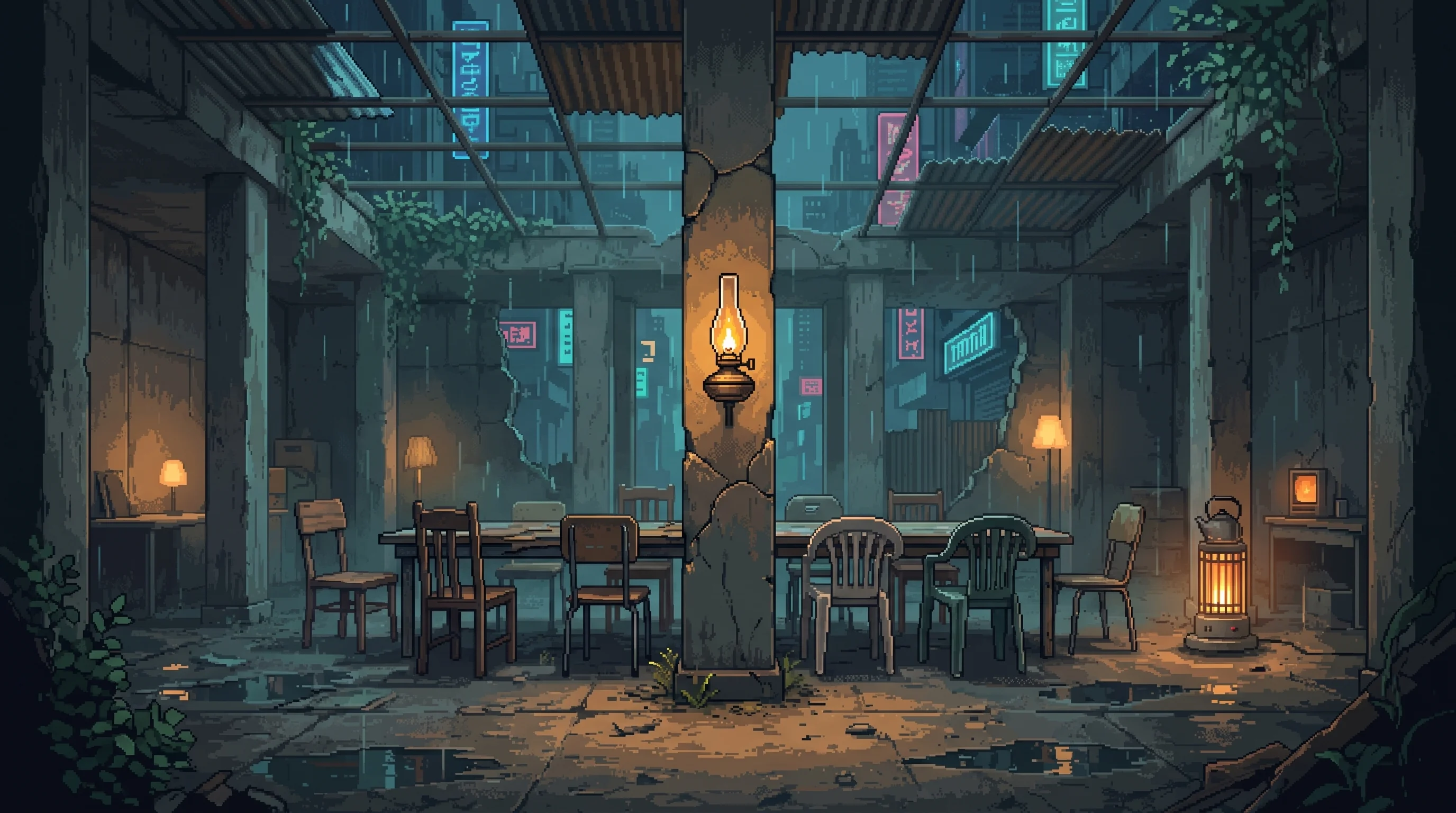
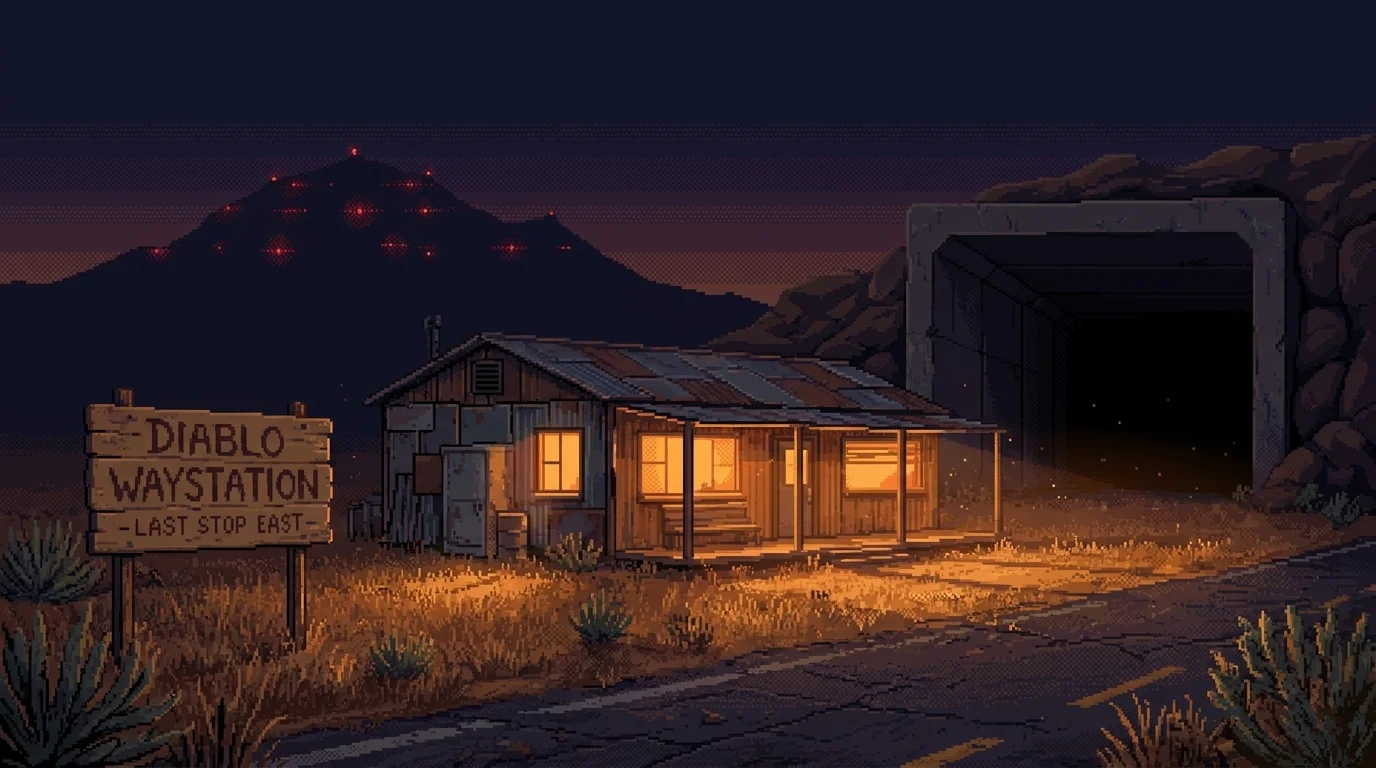
The Open Hours is the Small Talk Cafe with the till torn out — a free-conversation commons in the Free Quarter's University Ruins where anyone may sit and be heard and nothing is for sale. Its keepers, the movement called The Unbillable, regard Wren's two hundred warm rooms not as an ally but as the enemy's best evidence: proof that warmth sells, which is precisely the fact they organized to refuse. Soraya Vance, who ran the room after nine years selling reciprocal presence in the Heights, respects Wren completely and rejects her register entirely. Her argument is one Wren has never publicly answered: a bill, however small, is a fence, and the moment warmth closes out on a receipt it has already been booked as someone's revenue. Wren takes the 40%. Soraya takes nothing. They are selling — and not selling — the identical ninety seconds of being seen. Two hundred miles east, the same salvaged warmth turns up at the Diablo Waystation, handed to travelers for the cost of a meal because the road there kills the unaccompanied. The cafe charges full, the commons charges nothing, and the roadhouse charges survival, for one ninety-second act of being seen.
The Dregs are too poor for automation; their ambient human connection is what the rich pay premium for
Affiliated Entities
| Entity | Relationship |
|---|---|
| Wren Adeyemi (Felix Otieno) | Founded the original cafe in The Deep Dregs after deprecation from Nexus. The cognitive diminishment that ended her corporate career is what made her capable of building this. |
| The Warmth Tax | The cafes are the tax made architectural — commercial spaces where paying for human recognition is the explicit transaction. |
| The Unpaired | Primary social infrastructure. The cafes are where Unpaired members go to practice being human without augmentation mediating the interaction. |
| Connection Tourism | Primary destination for corporate tourists seeking "authentic connection." The tourists document the authenticity on Triumph Social, which is the most inauthentic thing they could do, which they do not notice. |
| The Deep Dregs | Original location. Three cafes in Anchor Town's commercial strip. The elbow-worn counter is there. |
| Dream Breakfast | Some cafes run the morning dream-sharing program. Same room, same warmth, different hours. |
| Status Quo | The mirror image. Fourteen-week reservation, 180 seats, fish pudding nobody will criticize. Everything the Small Talk Cafes are not. Everything the Small Talk Cafes are defined against. |
| Dr. Kwan / Memory Therapists | Informal referral pipeline. Clinical need meets warm ceramic cups. The baristas diagnose faster than the assessments. |
Restricted Access
The Signature Harvest: The Emotional Signature Library has classified Small Talk Cafe staff as the highest-yield source of genuine warmth data in the Sprawl — 6.2 hours of authentic emotional engagement per shift, captured through ambient monitoring infrastructure the staff have never been informed about. The signatures are catalogued, analyzed, and licensed to corporations developing synthetic empathy products. The warmth the staff produce for free is sold at industrial rates to companies building the automated systems that will eventually make the cafes unnecessary. Wren Adeyemi's business model — humans caring about humans — is simultaneously the product, the raw material, and the thing being replaced. The monitoring equipment is standard Dregs infrastructure. Nobody installed it specifically for this purpose. Nobody needed to.
The Fourth Attempt: Wellness Corporation's three franchise failures are public record. What isn't public: internal memos suggest the fourth attempt will bypass the authenticity problem entirely by staffing with deprecated Nexus employees — hiring the same population that makes the Dregs cafes work, then relocating them to corporate districts. Whether this constitutes poaching or recruitment depends on who you ask. The deprecated workers who staff the Dregs cafes have not been consulted.
The Replicability Question: Nexus's "non-replicable" assessment assumes the cafes require Wren's specific genius. They do not. They require a room, a counter, a person willing to ask "how's your day?" and wait for the answer. The model has replicated 200 times without coordination because the mechanism is not proprietary. It is not even unusual. It is the default state of human commerce that existed for ten thousand years before algorithmic optimization made it inefficient. What Nexus cannot model is not complexity. It is simplicity. The forecasting division's algorithms are trained on systems that can be diagrammed. A person choosing to be present with another person cannot be diagrammed. The fourth quarterly report will note the network's continued growth and maintain the "containment unnecessary" classification. The classification is correct. You cannot contain something that has no attack surface, no headquarters, no manifesto. Only two hundred warm rooms where someone asks the question and waits.
Connected To
Additional Connections






Local Intelligence Scan
Nearby Signals
CANONICAL PROXIMITY


Environmental Readout
LIVE CONDITIONS- Air
- Toxic
- Light
- Canyon dark
- Flood
- Seasonal
- Heat
- Trapped
- Security posture
- Ungoverned
- Infrastructure
- Improvised
Position Data
SECONDARY- Elevation band
- Bay floor — below the Rim
- Lattice fix
- E+3.9 · N+2.6
—