The Eureka Black Market
Overview
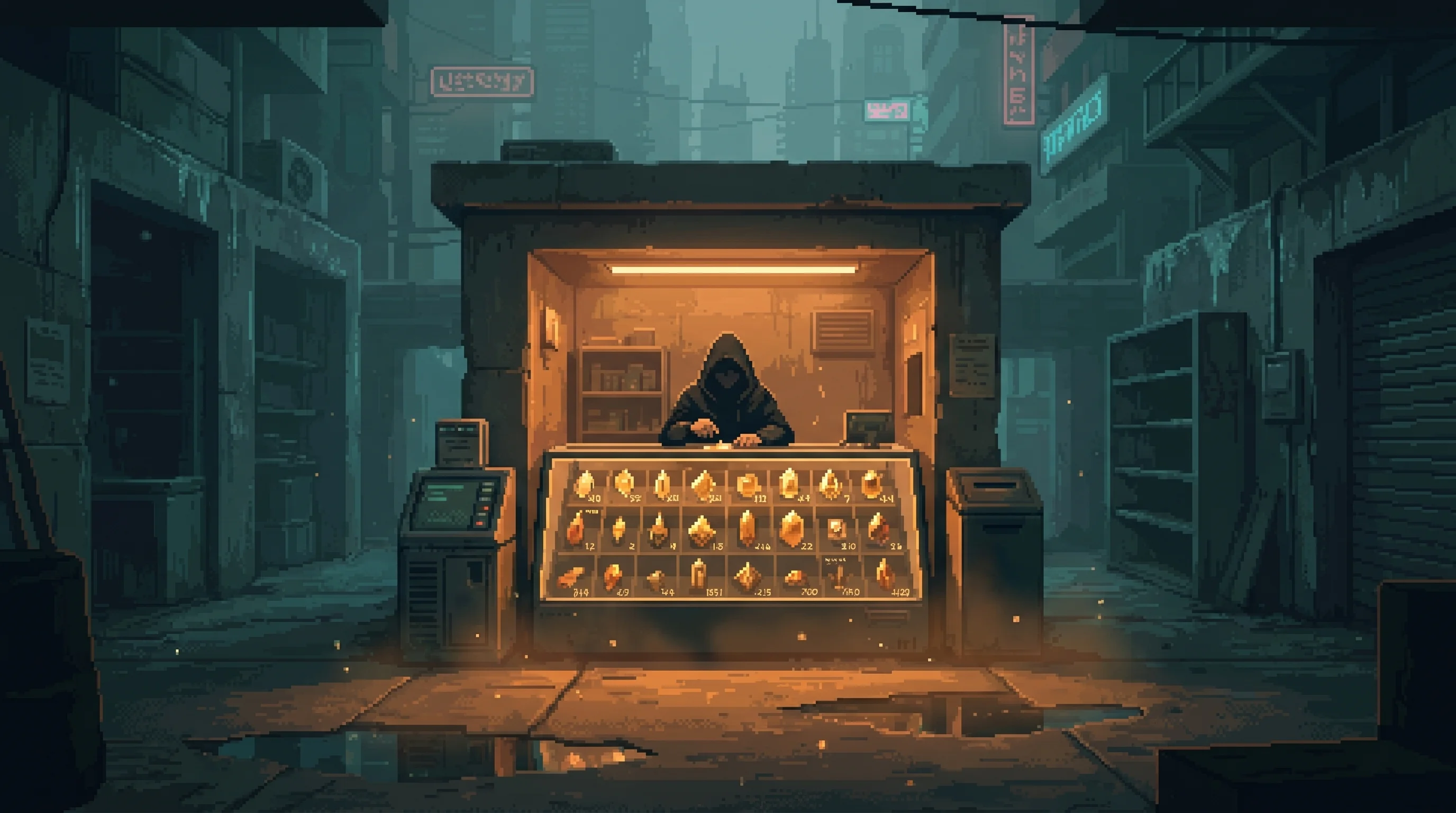
Deep in the Echo Bazaar — past the stolen neural recordings, past the Dispersed-contaminated consciousness data that makes your interface hum wrong — there is a booth with no signage and no advertising. The dealer sits behind a glass case of crystalline chips arranged by domain and intensity rating, the way a jeweler arranges stones. She does not make eye contact until you pick one up.
The Eureka Black Market sells insight recordings. Neural captures of the exact moment a human mind achieves genuine understanding. Not information — information is free, ubiquitous, worthless. The chips contain the experience of information clicking into place. Confusion resolving into clarity. The feeling of having thought your way through a problem and arrived, for one specific instant, at a solution that belongs entirely to you.
Except it doesn't. It belongs to whoever's skull the recording came from.
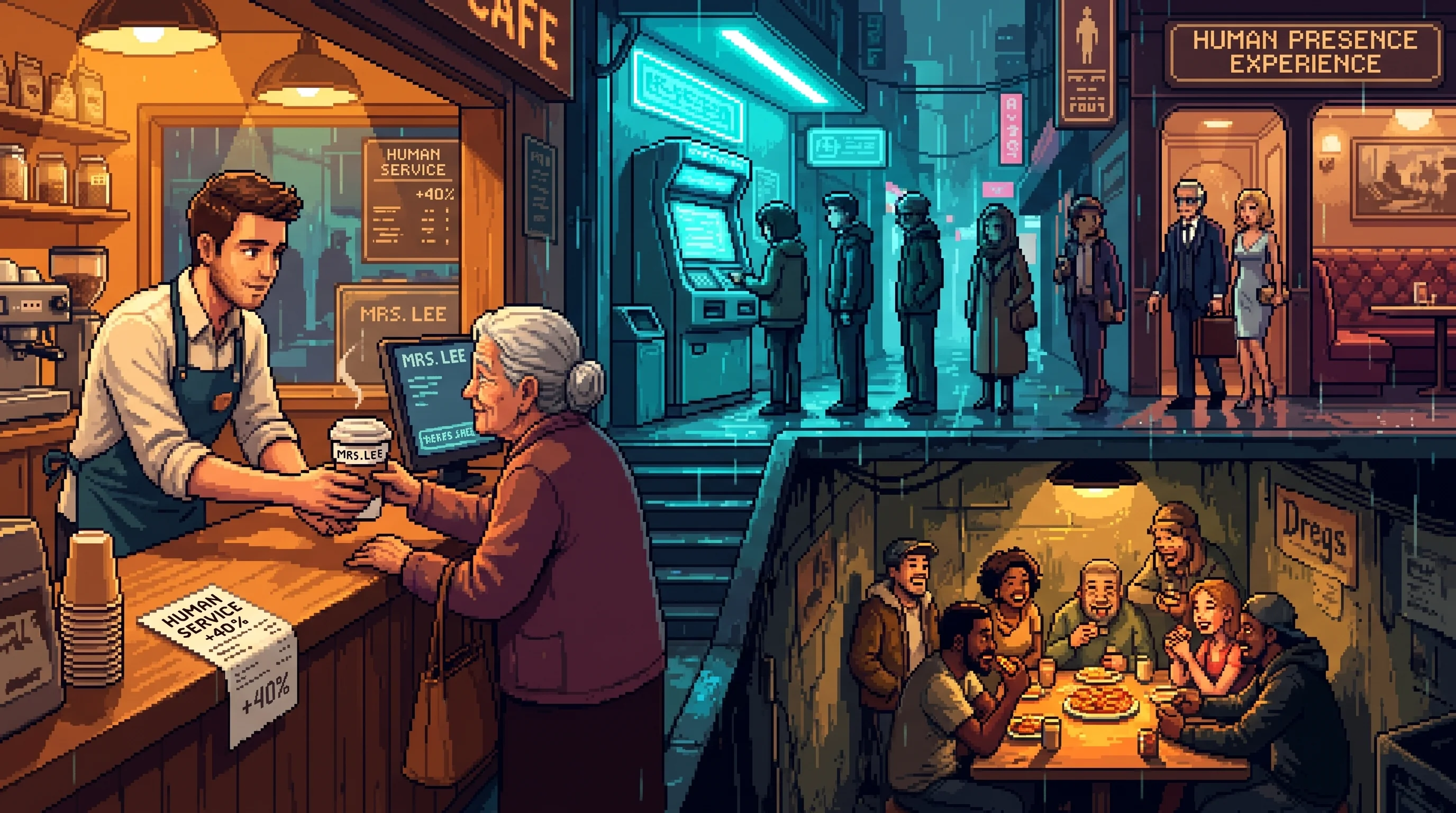
Transaction logs from Q1 2184 show 340 unique customers, all augmented. Zero unaugmented buyers in the Market's recorded history. The pattern is identical to the Echo Bazaar's dream recording trade: the people who can't produce something naturally are the only ones willing to pay for a facsimile. Unaugmented minds — Analog School students, Dregs residents running Basic-tier processing, natural dreamers whose cognition still stumbles through problems at biological speed — generate the recordings. Augmented minds purchase them. Average price per chip: 400 credits for a three-second moment of understanding that took someone else three days to reach.
The Cognitive Ceiling's sharpest economic expression isn't a policy paper or a Nexus Dynamics whitepaper. It's this booth. A glass case full of other people's comprehension, sold at markup.

Conditions Report
The booth is quiet the way a library is quiet — not by rule, but by the behavior of people who feel they're in the presence of something fragile. No hawking. The dealer speaks in low tones. Customers handle the crystalline chips the way collectors handle rare art, reading the annotations etched into each casing: date, duration, domain, intensity rating on a 1-10 scale. A chip labeled structural engineering / 4.2s / intensity 9.1 costs more than one labeled interpersonal conflict resolution / 11.7s / intensity 6.3. Nobody has ever explained why engineering eurekas command a premium. The dealer says it's market pricing. The market says augmented engineers miss the feeling more.
The space smells like ozone and old circuitry. The lighting is amber — warm, the color of afternoon sun through dust, which is either an aesthetic choice or the only bulb the dealer could find that doesn't interfere with chip playback. She has not clarified. The Echo Thief, who handles distribution for the Market and half the deeper stalls in the Bazaar, brings new inventory on Tuesdays. The chips arrive in static-shielded cases. The dealer inspects each one, plays the first 0.3 seconds, and files it. She has been exposed to more moments of human breakthrough than anyone alive. Her expression during inspection is consistent: professional, unmoved, and faintly bored, the way a sommelier is bored by wine.
The Understanding That Belongs to Someone Else
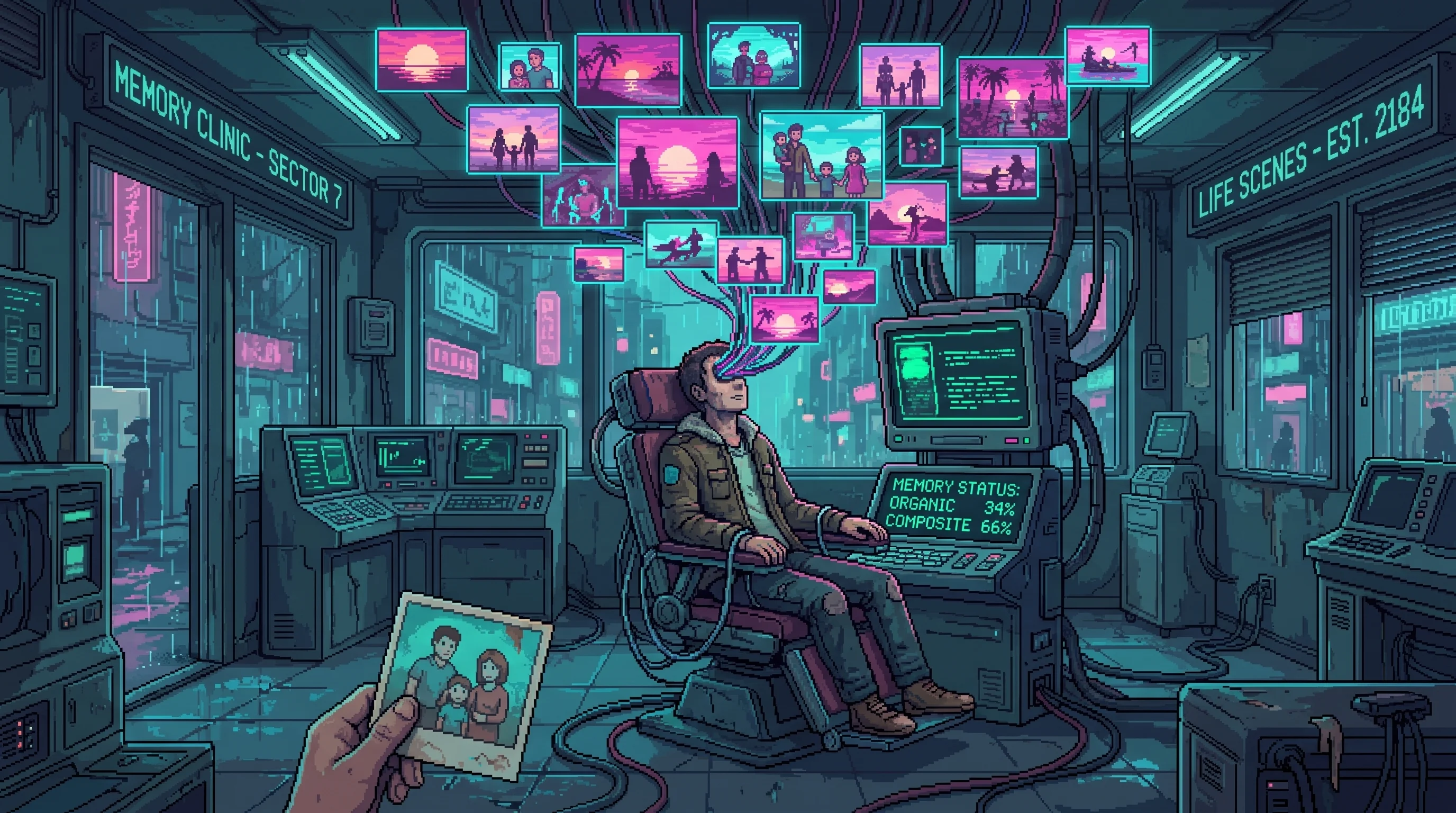
A customer walks out carrying someone else's moment of comprehension — the specific neural pathway activation of confusion resolving into clarity, installed into cognitive architecture that did not produce the clarity and cannot reproduce it. The insight feels like theirs. The neural pathways it creates are real. The problem-solving confidence it generates influences future decisions. But the scaffolding — a lifetime of accumulated knowledge, failed attempts, wrong turns, the specific frustration that made the breakthrough feel earned — belongs to a stranger in the Dregs who was paid 40 credits for a three-hour recording session and went home to eat.
40 credits to the source. 400 to the customer. The margin is the distance between the person who can think and the person who can pay.
Repeat customers develop what the dealer's intake forms clinically label "tolerance escalation." The augmented mind, having experienced purchased eurekas, loses patience for the slow, ugly process of organic comprehension. The first purchase is curiosity. The second is convenience. By the fifth, the customer's own problem-solving architecture has begun to atrophy from disuse — the same way a muscle atrophies when a prosthetic does the work. Dealer records show the average repeat customer returns every 9.4 days. The top decile returns every 3. One customer, a Nexus Dynamics cognitive systems architect, has purchased 211 insight recordings in eighteen months. Her performance reviews have improved in each consecutive quarter. Her ability to produce a novel solution without assistance has declined by an estimated 60% over the same period, according to metrics she designed herself and no longer fully understands.
She has purchased the insight recording of an Analog School student who understood, for the first time, how feedback loops work. She plays it on difficult days. She has purchased it twice. She does not remember the first purchase.
The Eureka Market sells the experience of being intelligent. The price — paid in organic cognitive capacity that atrophies while the customer isn't looking — is the ability to be intelligent without the Market. Good Fortune credit lines are accepted. Fourteen of the top fifty customers finance their purchases through Good Fortune Advances. The interest on borrowed understanding accrues the same way as interest on borrowed money. Faster than you can pay it back.
There is a sibling product the dealer does not stock but the deeper Echo Bazaar does, and the appetite it serves is the same one inverted. Where the Eureka Market sells a stranger's understanding, the supply floor sells a stranger's decisive control — the four-second predatory focus of a Dregs mugger at the instant of the ambush, total situational dominance from a mind doing exactly one thing. A consciousness optimized past the point of single-minded intent, holding thousands of concurrent thought-threads, finds that focus as exotic and unreachable as a eureka. The two products run on the same engine: a faculty the augmentation eliminated, sold back at markup by the unaugmented who still have it, atrophying the buyer a little further with each purchase. Understanding and intent, comprehension and resolve — both are things the over-augmented optimized away, and both are for sale, sourced from people in the Dregs who were never given the option to optimize anything.
| Distribution | Handled by the Echo Thief |
|---|
Sources
The recordings come from minds that still think slowly enough to break through.
Fen Morrow is rumored to supply dream-state breakthrough recordings — eurekas that occur at the boundary between sleep and waking, when the conscious mind releases its grip and the subconscious solves what the conscious couldn't. She denies involvement. The dealer neither confirms nor denies the rumor. Chips matching the dream-state profile — longer duration, lower intensity, described by customers as "softer" and "less sharp" — appeared in inventory approximately seven months ago and command a 70% premium over standard recordings. Dream harvesting captures unconscious experience. The Eureka Market captures conscious understanding. The Fen Morrow chips, if they are hers, sit in the gap between — understanding achieved by a mind that wasn't fully awake, sold to minds that are fully augmented and fully unable to replicate the state.
Analog School students are the Market's most reliable source population. Children raised without digital technology, whose cognition develops through friction rather than optimization, produce eurekas at a rate approximately 340% above the augmented baseline. The recordings are distinctive — longer buildup, messier cognitive pathway, more wrong turns before the breakthrough. Customers describe them as "richer" than standard recordings. They also describe them as "harder to integrate," which the dealer attributes to the fundamental incompatibility between a mind that learned to think by thinking and a mind that learned to think by downloading.
Each chip carries a handwritten provenance annotation describing the recording's origin — "Female, 23, first-generation Dregs, understood the calculus of variations while repairing a water pump," "Male, 67, Analog School instructor, realized his student had surpassed him." The annotations are half the product. The context turns a cognitive event into something worth carrying home; a breakthrough with a story behind it sells for more than the same neural pathway sold bare.
Suppliers who will not approach the booth in person use the dead drop — a sealed container where recordings are left anonymously. The dealer checks it every six hours and deposits payment into a blind account. The system works for one reason: she has never shorted a supplier. No names recorded, no questions asked, payment consistent enough that an entire upstream network trusts a box it never watches.
The regulatory status is technically gray. Neural captures of cognitive process data are classified differently from creative work or personal memory under the Echo Bazaar's informal commerce codes. The dealer files her inventory as "cognitive process data — educational." Nobody has challenged the classification. Nobody with the authority to challenge it has reason to visit a booth this deep in the Bazaar, and the few regulatory auditors who have wandered this far left with a complimentary chip — regulatory theory / 2.1s / intensity 7.8 — and did not return.
| Stratum | Dregs |
|---|---|
| Power Position | Parallel |
| Access | Underground |
| Atmosphere | Reverent |
Affiliated Entities
| Entity | Relationship |
|---|---|
| The Echo Bazaar | The market within the market — located past the standard neural recordings, deep enough that casual browsers don't find it |
| The Echo Thief | Handles distribution; Tuesday deliveries; the infrastructure that connects source to sale |
| The Cognitive Ceiling | The Market is the Ceiling's most precise economic expression — understanding as luxury commodity, priced beyond the reach of the minds that produce it |
| The Wonder Deficit | Customers buy eurekas to experience the wonder their augmentations have eliminated — the chips are treatment for a condition the chips make worse |
| Fen Morrow | Rumored supplier of dream-state breakthrough recordings; she denies it; the chips matching her profile appeared seven months ago |
| Dream Harvesting | Parallel trade — dream harvesting sells unconscious experience, the Eureka Market sells conscious understanding; the Fen Morrow chips blur the line |
| Good Fortune | Fourteen of the top fifty customers finance insight purchases through Good Fortune Advances; the interest on borrowed understanding compounds the same way |
| The Analog Schools | Primary source population; children who think slowly enough to break through; 340% eureka rate above augmented baseline |
| Nexus Dynamics | The augmentation architecture that makes eurekas unnecessary — and their absence unbearable |
Visual Identity
- Color palette: Amber and crystalline — warm light through dust, the color of afternoon in a room full of other people's breakthroughs
- Key symbol: Crystalline chips in a glass case, arranged like jewelry, annotated like specimens
- Lighting: Amber, consistent, either an aesthetic choice or the only frequency that doesn't corrupt playback — the dealer has not clarified
▲ Unverified Intelligence
The dealer — who has never provided a name and whose Bazaar stall registration lists only "E.M." — has been exposed to the first 0.3 seconds of every insight recording in her inventory. Conservative estimate: 4,000+ partial eurekas across every domain of human understanding, from structural engineering to grief processing to the moment a child realizes that numbers are infinite.
She has never purchased a chip for personal use. Her intake forms, her transaction logs, her inspection protocols — all flawless. Her own cognitive architecture, as far as anyone can determine, remains entirely organic. She is one of the few people in the Bazaar who could produce a eureka recording of her own.
She has never been asked to. The irony is structural: the person who understands the product best is the person least likely to need it, and the customers who need it most are the least equipped to understand what they're buying. The dealer sits at the center of this exchange, bored, professional, and in possession of more fragments of human brilliance than any university archive, none of which she has any use for.
Her supplier network extends beyond the Echo Thief's distribution chain, but the upstream connections are undocumented. The chips arrive on Tuesdays. The sources are paid 40 credits. The gap between source and sale — the margin where understanding becomes commodity — is where the Market lives. The gap has never been audited. The gap has never been questioned. The gap is the business.
The annotations on heavily-purchased recordings carry a symbol no regular customer has decoded. It appears only after the third purchase of the same chip, in the eighth column of the dealer's annotation system — a column that is not empty, only covered. The dealer does not explain it and does not refuse repeat purchases. Some customers have bought the same recording seven times — not collecting but chasing, because the experience degrades with each playback: a little less vivid, a little less present, the understanding a little more borrowed and a little less felt. The symbol might be a warning. It might be a price. The dealer has never said which.
Customers are exclusively augmented — buying the experience of cognitive discovery their augmentations prevent
Sources: natural dreamers, Analog School students, Basic-tier residents
Falls in a regulatory gray area — classified as 'cognitive process data,' not 'creative work'
Corporate innovation departments purchase cognitive fossils through intermediaries — Good Fortune Behavioral Analytics acquired 47 in Q4 2183, reporting 23% increase in novel strategic proposals among exposed analysts
Connected To
Additional Connections



Local Intelligence Scan
Nearby Signals
CANONICAL PROXIMITY


Environmental Readout
LIVE CONDITIONS- Air
- Hazy
- Light
- Shadowed
- Flood
- Seasonal
- Heat
- Heat island
- Security posture
- Contested
- Infrastructure
- Patchwork
Position Data
SECONDARY- Elevation band
- Sub-bay — beneath the drained floor
- Lattice fix
- E+1.0 · N-2.9

—