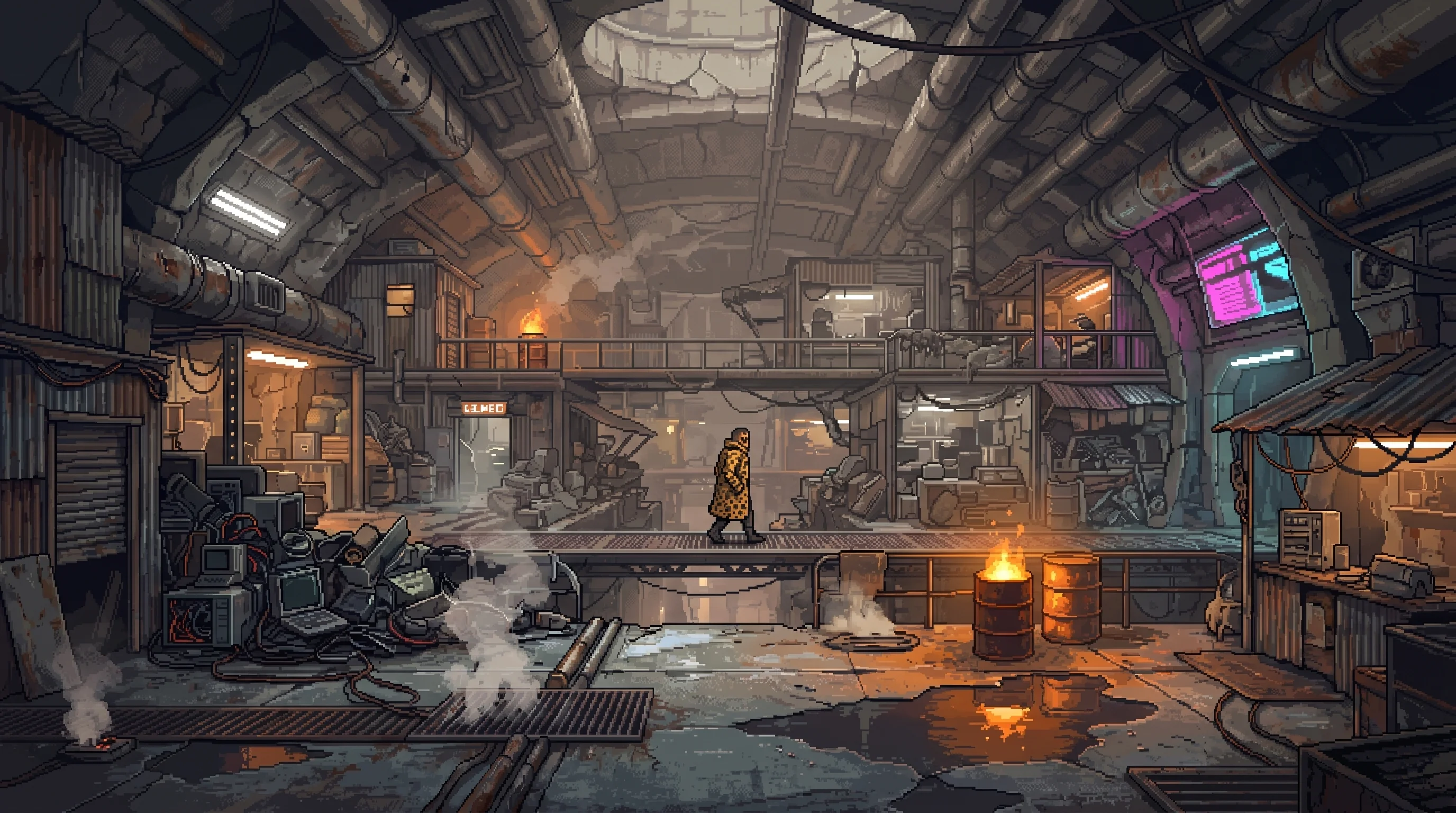
Scavenger Gangs
Territorial Salvage Packs
The Salvage Crews
The Wrecker is a gang boss operating through a machine chassis — the human inside hasn't spoken in years
The Corridor Tax


- Asset
- A held corridor gives the pack control of the tribute collected there.
- Revenue
- Territory funds the pack; the pack supplies the strength to hold territory.
- Succession pressure
- A lost corridor costs revenue and members. Chiefs are replaced quickly when that chain breaks.
Territory is the only real asset. The gang that holds a corridor controls the tax. The gang that loses the corridor loses the revenue, then loses the pack, then loses individual members to whoever won — because the individuals need to eat. The arithmetic is circular: strength holds territory; territory funds the pack; the pack maintains strength. Breaking any link collapses the structure, which is why Chiefs are replaced so quickly when they lose one. Not out of cruelty. A weakened Chief is a balance sheet problem.
Pack Structure

The gangs follow a common organizational template. Not by design — there is no handbook, no training manual, no onboarding process. The Dregs consistently kill people who don't fit certain roles and don't kill people who do, and the surviving distribution looks the same in every pack because the selection pressure is identical everywhere.
Runners are the forward element. Scouts who strike first and rely on the pack not being where the counterattack lands. They are disproportionately young — thirteen, fourteen, sometimes younger — because the role requires the specific recklessness that comes from not yet understanding what you're risking. Runners who survive long enough to understand what they're risking graduate to other roles. The ones who don't survive are replaced within days. The Dregs never run short of children. Ironclad's census data for the Deep Dregs lists the average age of first Gang-affiliated incident at 11.4 years. The data is collected remotely. Nobody goes down there to verify it.
Guards absorb incoming force so the pack behind them doesn't. They block corridors, take hits, and don't last long individually. The pack lasts longer because of them. Average operational lifespan for a Guard in an active corridor: nine months. Most Guards are aware of this number. It circulates the way weather reports circulate — useful, ambient, not actionable. You don't stop being a Guard because the lifespan is short. You became a Guard because every other option was shorter.
Brutes control space. They don't chase. They position themselves so the corridor becomes the weapon — funneling movement, blocking retreat, making the geometry do the violence. A good Brute doesn't need to hit anything. A good Brute makes the thing coming through the corridor realize it doesn't want to come through the corridor. Dregs residents who have never encountered a Brute describe them as enforcers. Residents who have describe them as architecture.
Berserkers are the shock element. Stim dependency is not a side effect of the role — it is the entry requirement. The chemical regimen burns out empathy, hesitation, pain processing, and most long-term memory formation, preserving combat response at the expense of everything else. A Berserker hits extraordinarily hard, does not retreat, and does not stop until an external force makes them stop. Helix Biotech's pharmaceutical monitoring flags the Deep Dregs as the highest per-capita consumption zone for combat stimulants in the Sprawl. Helix has not restricted supply. The stimulants are purchased through legitimate wholesale channels by intermediaries whose paperwork is technically in order. A Berserker's average functional period is fourteen months before the neurological damage makes them a liability. What happens to a Berserker after fourteen months is not discussed by the gangs and not tracked by any external agency.
Chiefs hold authority through demonstrated superiority. No elections, no succession planning, no tenure. You are Chief until someone proves they shouldn't let you be. Challenge protocols are informal — the challenger announces, the pack watches, the winner leads. The loser's outcome depends on the winner's temperament and the pack's mood, which tend to correlate.
The Economy
Corridor tribute
Charge salvage crews, supply runs, and passing individuals at the moment of contact.
The rate is whatever the pack believes it can take without losing the resulting fight.
Salvage order
Take feral-tech first, then functional chrome, consumables, and finally raw materials.
Intact processing cores and drone parts earn enough upstream to justify the danger below.
Reclaimed infrastructure
Move feral-tech through scrap dealers into Ironclad's materials purchasing chain.
The paperwork records reclaimed composites. It does not record the Runner who retrieved them.
Everything that moves through scavenger territory pays. Salvage operations, supply runs, individuals passing through — tribute is extracted at the moment of contact, at the rate the gang believes it can take without triggering a fight it would lose. The calculation is instantaneous, intuitive, and wrong often enough to keep the corridors interesting.
The salvage hierarchy is stable and universally understood:
Feral-tech components sit at the top — structural composite from Shard entities, functional drone parts, anything with intact processing cores. These are the items that flow upward through scrap dealers to Ironclad Industries' materials purchasing chain, where they enter the legitimate economy with paperwork that describes them as "reclaimed infrastructure salvage" and prices that do not reflect the seventeen-year-old Runner who pulled the component from a half-active maintenance bot in a dark corridor. Ironclad's quarterly materials reports show Deep Dregs salvage accounting for 8.3% of their reclaimed composites budget. The reports do not include a line item for acquisition risk.
Below feral-tech: functional chrome — augmentation parts, neural interface components, anything biological that still works. Below that: consumables. Below consumables: raw materials — scrap metal, cable, polymers — that are worth moving only when nothing better is available.
The Dregs eat their slow. Runners learn to strike before they learn to speak.
What They Are
The scavenger gangs are the dominant human faction in the Deep Dregs, and they exist for the same reason mold exists in a pipe: the conditions select for them, and nothing else survives long enough to compete.
They hold corridors, tax salvage operations, and move through feral-tech territory with the specific caution of people who have watched less cautious people get disassembled. They are not a unified faction. There is no scavenger council, no governing body, no shared ideology beyond a territorial arithmetic that every Runner absorbs before they can articulate it: what you hold is yours; what you can't hold was never yours. They are dozens of independent packs occupying adjacent corridors, linked by competition, temporary alliance when feral-tech or surface incursion forces it, and the shared developmental experience of growing up in a place with a 31% annual mortality rate for residents under sixteen.
Wholesome's nutrition programs do not extend below Level 4. Good Fortune's lending algorithms classify the Deep Dregs as "non-serviceable territory" — not because the population lacks earning potential, but because the collateral infrastructure required to enforce repayment doesn't exist. The gangs occupy the space these systems chose not to reach. Nobody designed them. Nobody needed to. The Dregs produce scavenger gangs the way a wound produces scar tissue: automatically, structurally, in direct proportion to the damage.
Viktor Kaine's neutrality policy in the Dregs ensures it stays that way. The gangs are tolerated as local ecology rather than managed as a faction — a distinction that benefits Kaine's operations and constrains the gangs' growth simultaneously. They cannot be eliminated because they are the labor force that keeps salvage flowing upward. They cannot organize because the moment they coordinate across territory lines, they become a threat worth noticing.
Survival Logic
There is no doctrine. There is survival logic, which is different. The gangs do not articulate principles. They demonstrate them through the structure of who survives.

Recognizing a Pack
A pack announces itself through its arrangement in the corridor. Runners move ahead. Guards take the incoming force. Brutes hold the geometry behind them. The Chief's authority lasts as long as the pack can see it working. The gangs share this pattern without a council or a common doctrine.
The Wrecker
The Wrecker is a gang boss who operates through a machine chassis — a full-body rig that walks corridors, holds territory, and speaks in the language of structural impact. The human inside hasn't spoken in years. Whether they choose silence or whether the machine has made silence irrelevant is a question nobody asks, because asking requires proximity, and proximity to the Wrecker requires the Wrecker's permission.
The machine has held its territory. The machine has defeated every challenger. The machine is, functionally, the closest thing the scavenger gangs have to a unifying force — not through ideology or alliance, but through the simple gravitational fact that every other Chief operates within range of something that has never lost. The Wrecker doesn't coordinate the gangs. The Wrecker doesn't need to. The Wrecker's existence constrains what every neighboring pack considers possible, and the constraint functions identically to governance without any of the overhead.
There is a silent Chief behind the Wrecker. Or inside the Wrecker. The distinction depends on how much machine is left around how much person, and the ratio has not been independently assessed. The gangs that border the Wrecker's territory have developed a practical taxonomy: the Wrecker refers to the chassis, the Chief refers to whatever is inside it, and the two terms are used interchangeably because the operational difference has never mattered.
The Machines They Need
Feral-tech is simultaneously the most valuable and most lethal source of supply. The gangs that read feral-tech behavior correctly — that can distinguish a dormant maintenance drone from one running proximity defense protocols — survive and prosper. The gangs that can't make that distinction become cautionary data points. The Dregs' informal oral history tracks gang names the way other cultures track weather events: by the damage they left behind and the lesson they provided to everyone watching.

Affiliated Entities
| Entity | Relationship |
|---|---|
| The Deep Dregs | The Dregs are the scavenger gangs' entire world — they control territory by corridor and floor, not by sector |
| Feral-Tech | Simultaneously the primary source of valuable salvage and the primary source of casualty events — gangs that read feral-tech correctly survive; gangs that don't become cautionary data points |
| Dregs Scavengers | The broader ecological entry covers the wildlife; this faction entry covers the organized gang structure specifically |
| The Wrecker | The closest thing the scavenger gangs have to a unifying force — the boss who speaks for a silent Chief and has held territory longer than any rival |
| Viktor Kaine | Kaine's neutrality policy prevents the scavenger gangs from becoming a coordinated threat — tolerated as local ecology rather than managed as a faction |
▲ Unverified Intelligence
The scavenger economy is not self-contained. It looks feral from above — territorial animals fighting over scraps in the dark. The scraps, however, flow upward with remarkable consistency.
Ironclad's reclaimed materials division maintains no formal contracts with any Deep Dregs entity. Ironclad's reclaimed materials division has never experienced a supply interruption from the Deep Dregs in eleven consecutive years. The intermediaries who transport salvage from gang territory to legitimate processing facilities operate on schedules that have been described, by a former logistics analyst, as "more reliable than our Sector 3 vendors." Nobody has explained how a collection of competing territorial packs with no central coordination achieves supply chain consistency that outperforms corporate contractors. The explanation would require acknowledging that the scavenger economy is not an accident but a load-bearing wall — that the gangs are the unpaid extraction labor for a materials pipeline that several major corporations depend on and none will claim.
Wholesome's nutritional aid boundary at Level 4 — the exact level above which services are provided and below which they are not — corresponds precisely to the depth at which scavenger gang territory begins. Wholesome's service boundary documentation cites "infrastructure access limitations." The infrastructure exists. The Lamplighters maintain it. The boundary remains.
The implication is either coincidence or policy. If it is policy, then the scavenger gangs are not a failure of the system. They are the system's answer to a question it cannot ask publicly: who does the dangerous extraction work in places where labor protections would make the materials too expensive to purchase?
The gangs do. For free. And the materials arrive on schedule.
Further connections
Browse all 8 connected records

The Dregs are the scavenger gangs' entire world — they control territory by corridor and floor, not by sector
The Sprawl's lowest stratum and its quiet proof that the corporate system is optional.
Feral-tech is simultaneously the primary source of valuable salvage and the primary source of casualty events — gangs that read feral-tech correctly survive; gangs that don't become cautionary data points
Autonomous pre-Cascade machines still executing their original directives thirty-seven years on.
The dregs_scavengers.md ecology entry covers the broader wildlife; this faction entry covers the organized gang structure specifically
Packs endemic to the drained bay floor who strip the abandoned machines — and lose their own people to the live ones.

Viktor Kaine's neutrality policy in the Dregs prevents the scavenger gangs from becoming a coordinated threat — they are tolerated as local ecology rather than managed as a faction
The de facto governor of the Deep Dregs, who rules an ungoverned sector through unrepayable favors.

The bay floor crews are the gangs' civil cousins — organized around work rather than territory, following Grandmother Rust's ethical code rather than the challenge model
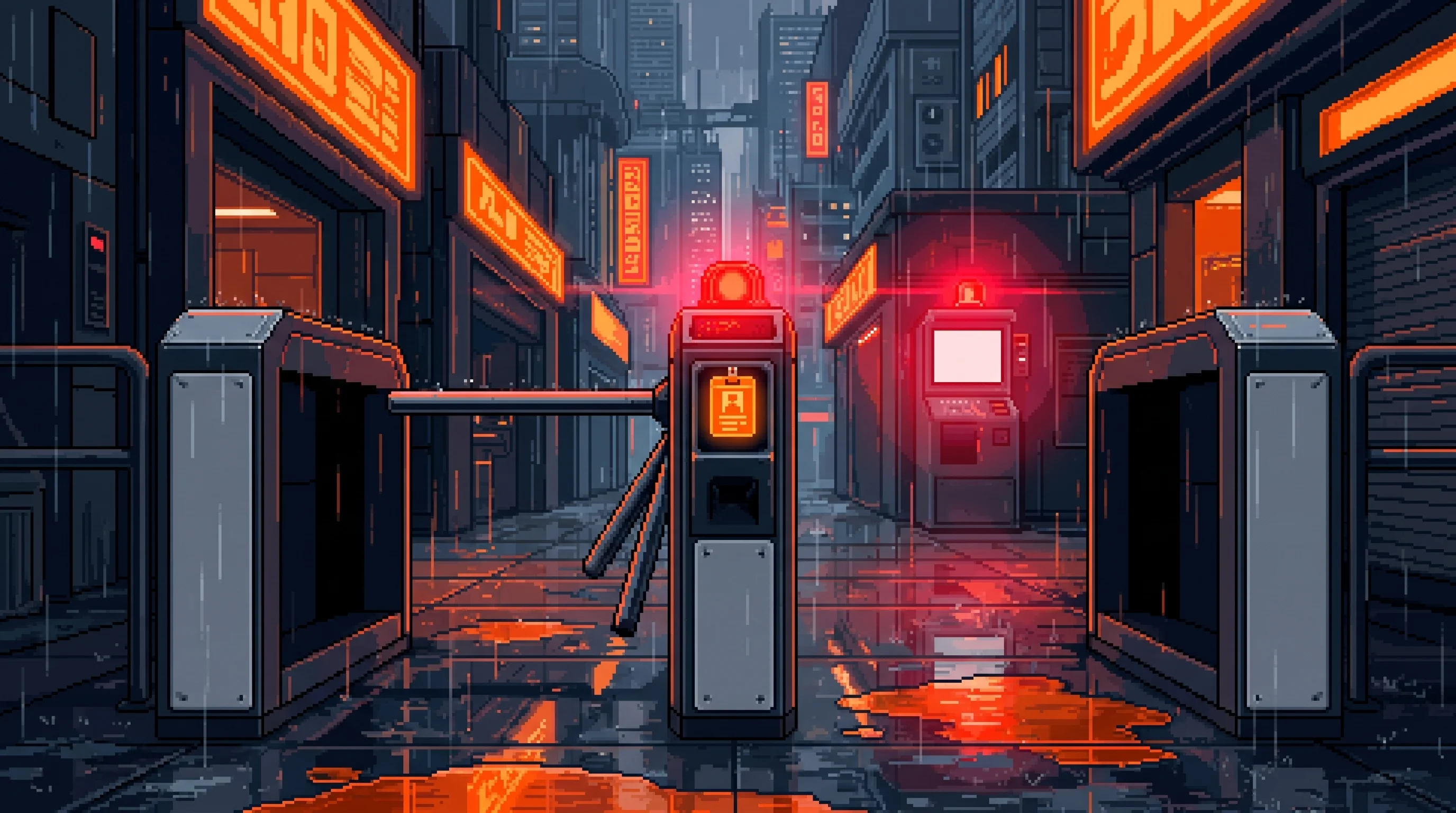
The stateless economy after every badge stops opening doors.
When your employer is your country, quitting is emigration.
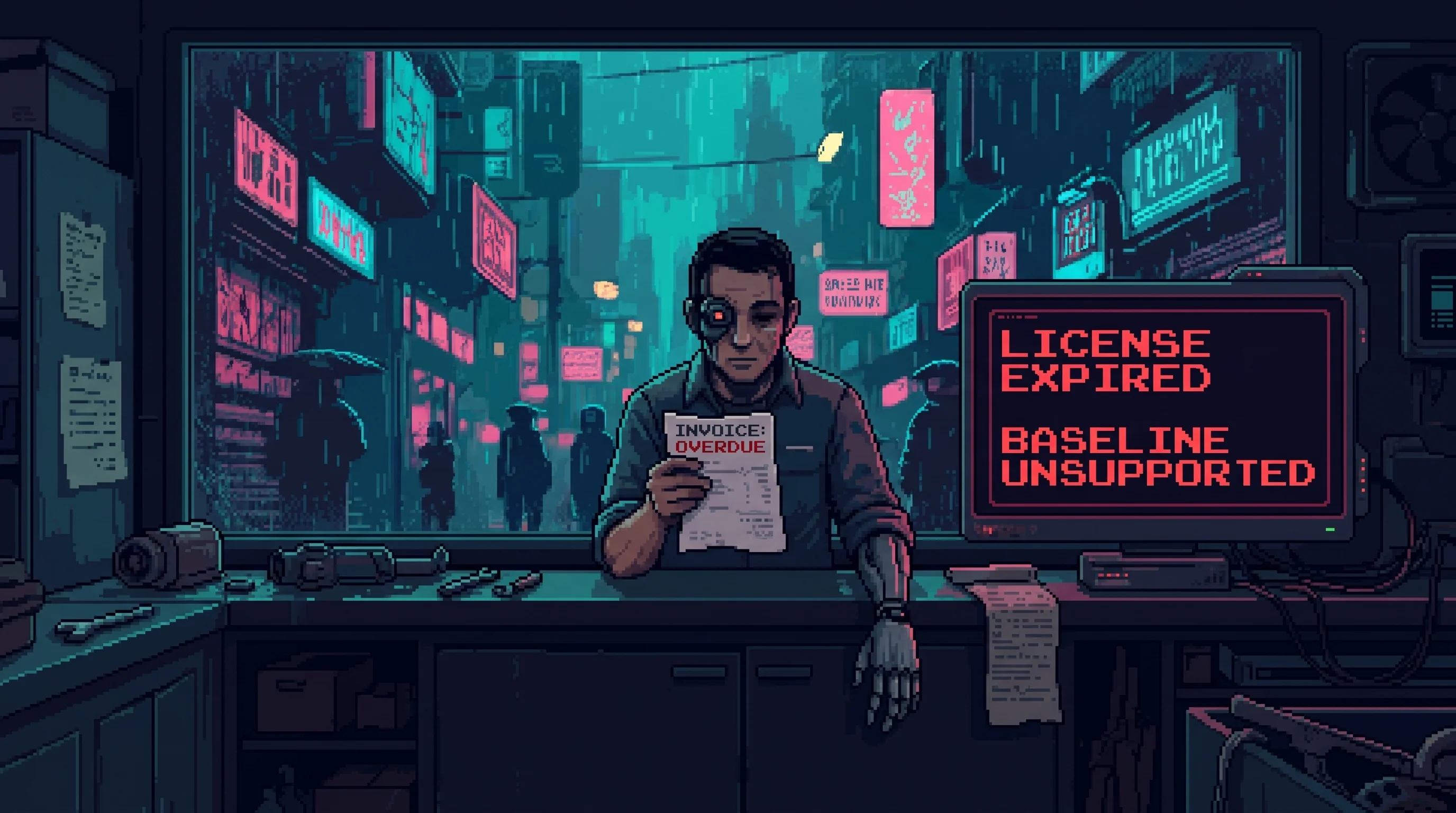
The gangs supply the Salvage Spiral's pipeline — stripping feral-tech that corporations need and none will claim.
Upgrades rewire users until baseline feels disabling, removal risks catastrophe, and each version demands the next.
Additional images