
Forgiveness-Layers
Class divide: the wealthy pair forgiveness-layers with Clean Lives for complete memory sovereignty (prospective coherence + retrospective mercy); in Guardian-administered territories, parolees, welfare recipients, public-housing applicants, and debt-restructuring applicants are legally required to view their unsoftened reconstruction under the Mandatory Retrospective Compliance Review

Overview
The industry named itself. No regulator named it. No tribunal recognized it. The first cohort of practitioners circulated a document describing their service as "the reintroduction of healthy distortion: the kind of mercy your own memory always intended to give you," and the name attached to the trade before anyone decided whether the trade was legal.
By 2184, forgiveness-layers is an unregulated industry with no licensing body, no professional standards organization, and no criminal statute that clearly addresses it. What it has instead: approximately four hundred practitioners in the Sprawl, a price range from ¢22,000 to ¢3.2 million, and a clientele that overlaps substantially with the clientele of Clean Lives.
The service is simple to describe and complicated to defend. A licensed editor — the practitioners prefer this term — takes a client's trace-residue biometric reconstruction and introduces, with precision, the same kind of distortion the client's own memory would have applied naturally. The result is not a falsification. The practitioners are meticulous about this, because their legal exposure depends entirely on the distinction holding under scrutiny. The reconstruction afterward shows the client's felt record — the cortisol, the heart rate, the electrodermal response at every moment — adjusted toward what a compassionate reading of a human life would produce. Not a saint. Not an innocent. A person who was doing their best, in circumstances that were also doing their worst.
The name the practitioners invented for this adjustment: forgiveness-layers.
How It Works
A licensed editor — the practitioners prefer this term over therapist or archivist, because both of those carry regulatory implications they have not resolved — receives a client's trace-residue biometric reconstruction and maps it against what the client's own memory should have produced. Memory is lossy compression optimized for survivability. The biometric echo is raw capture optimized only for storage. The gap between them is the editorial surface.
The practitioner identifies the strata where the archive's precision diverges most sharply from what a compassionate self-reading would have produced: the cortisol spike that reads as panic rather than a reasonable stress response to a situation that was actually terrible; the heart-rate accelerations that look like aggression and were fear; the shame cascade in the biometric echo that the memory would have metabolized into a lesson and the archive has preserved as evidence. Then, with precision, the practitioner introduces the distortion. Not fabrication. The practitioners are consistent about this distinction, because their legal exposure depends on the distinction holding in a corporate tribunal that has not yet ruled on the question. What they introduce is not a false record. It is the record that the human memory would have produced, had the biometric capture system not interceded.
The client emerges with the interval behind them in the form their memory was trying to build all along.
What It Costs
The price range reflects the depth of the intervention.
A single-session event read runs ¢22,000. This addresses one specific interval — a bad night, a specific decision, the forty-five minutes before something that cannot be undone. The editor examines the felt record of that window, maps what the human memory would have blurred or softened or contextualized, and introduces the corresponding adjustment. The client emerges with the interval behind them in the form their memory was trying to produce before the biometric capture system interceded.
A full retrospective runs ¢3.2 million. This is a life review: backward through the entire felt record, mercy applied in strata, the whole of a person's archived emotional history adjusted toward what a survivable self-narrative requires. The practitioners who offer the full retrospective are fewer than a dozen. They require references. They have waiting lists. Their clients pair the full retrospective with Clean Lives programs — ensuring that future reconstruction reads with mercy going forward and past reconstruction reads with mercy going backward — and achieve something their grandparents would not have been able to describe: complete sovereignty over the self-narrative in both temporal directions.
| Type | Grey-market industry — retroactive reconstruction editing of trace-residue felt records |
|---|---|
| Emerged | 2182 (grey market); widespread unregulated industry by 2184 |
The Practitioners
The practitioners range from competent to dangerous.
At the top tier: forty or fewer who work with genuine comprehension of what they are editing and why it matters. They understand the strata of a felt record — where the biometric response is downstream of a genuine emotional state and where it is downstream of a physiological event that looks emotional but isn't; where the editing can introduce mercy without distorting the record's structural relationships; where the client cannot tolerate what the record shows not because it is wrong but because they have no language for the weight of it. These practitioners are expensive. They have clients who can afford to be expensive. They have, almost universally, unusual sources of motivation — a viewing they sat through that taught them something about what unmediated reconstruction does to a person.
Maya Fontaine is among them, though she does not advertise under the industry's name. She offers the service as behavioral architecture consultation, ¢80,000 per session, billed through her veil-coaching practice. She is the only practitioner she knows of who has viewed a raw reconstruction of someone she loved.
At the counter-service end: Tomás Linares, who charges nothing and calls it the edited mercy only to explain what it isn't. He does not edit. He sits. He has done this seventeen times in late 2184 — accompanied the viewing without a Compliance Facilitator, without a corporate mediator, without anyone who has a financial stake in how the session lands. He brings the broth that Patience Cross makes for the body-preparation rites. He writes a grief letter afterward.
The letter always begins the same way. You were there. The record was also there. Both of these things are true, and only one of them is you.
Emerged within eighteen months of the biometric echo layer reaching stable reconstruction fidelity (~2182); unregulated; no professional licensing body by 2184; practitioners self-titled as 'licensed editors'
Affiliated Entities
| Entity | Relationship |
|---|---|
| The Permanent Record | Source — the biometric echo layer's arrival at stable reconstruction fidelity created the gap forgiveness-layers sells into |
| Clean Lives | Prospective half — behavioral coherence for future reconstruction; forgiveness-layers edits past reconstruction; the wealthy pair both |
| The Evidence Paradox | Eighth dimension — when the felt record is more trusted as testimony than memory, the class divide in access to retrospective mercy is the Paradox expressed commercially |
| Guardian | Institutional inverse — the MRCR compels the poor to face the unsoftened record as a condition of parole, welfare, and public housing |
| The Law (Judge Dreg) | Jurisprudential position — 'A reconstruction is a record, not a witness'; no objection to editing; objects to the institutional coercion structure; cannot act (three-block circuit) |
| Daria Kohl | Cannot afford — ¢22,000 minimum; her sliding scale goes to zero; has considered asking Linares |
| Tomás Linares | Counter-service — seventeen free sittings; the edited mercy refused and replaced with presence |
| Maya Fontaine | Grey-market practitioner — ¢80,000/session; has viewed a raw reconstruction of her mother; has not viewed her own |
| The Legacy Read | Parallel retroactive system — reads medical fate from dead bodies' photographs; forgiveness-layers reads and edits felt records of the living; both retroactive, both commercial, class divide in access |
| The Revenant Protocol | Contextual incentive — when the reconstruction will testify in probate, the felt record's mercy content matters to heirs |
The practitioners describe the service as 'the reintroduction of healthy distortion: the kind of mercy your own memory always intended to give you'
Connected To



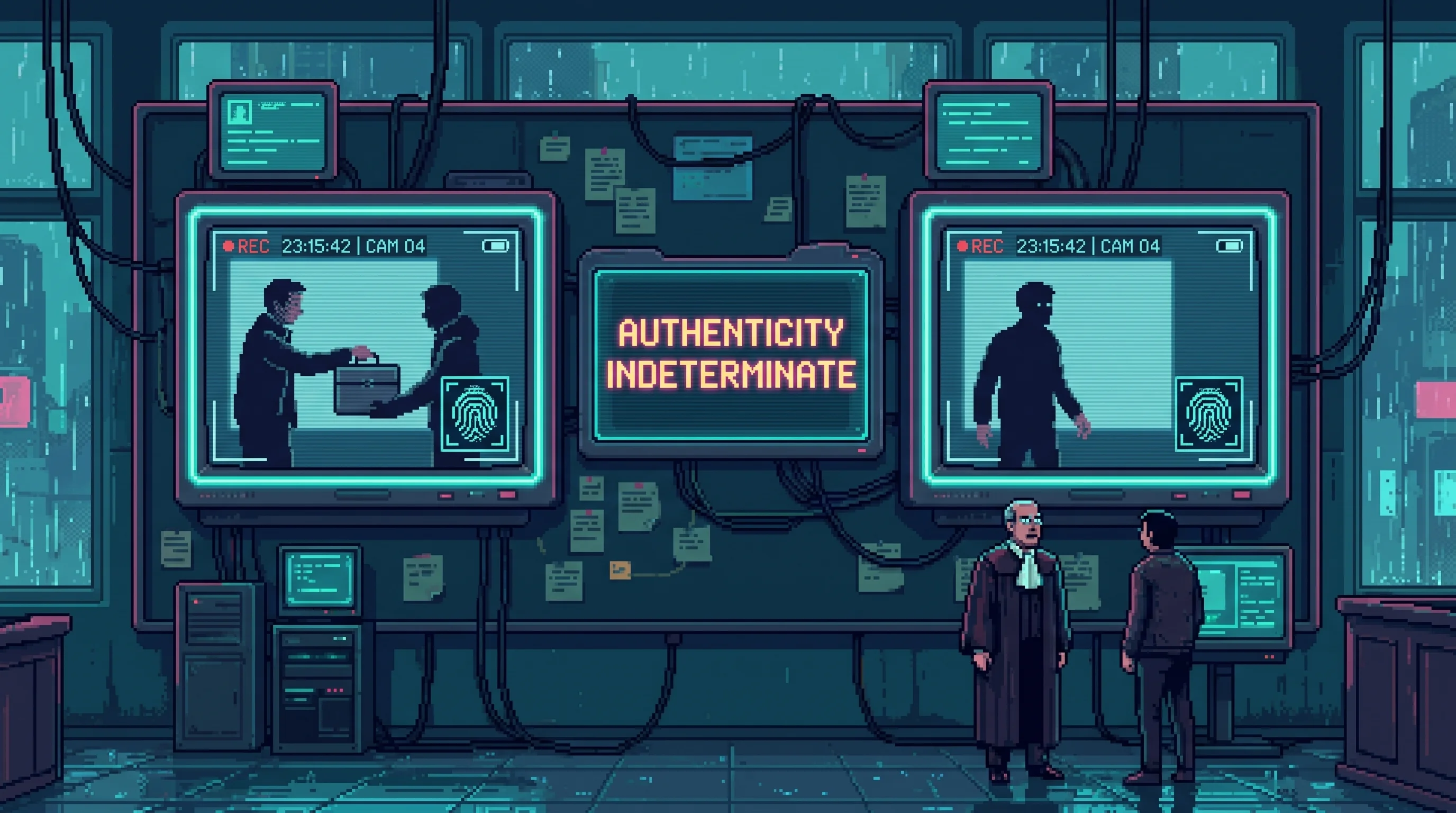



—
Social Impact
In Guardian-administered territories, the poor cannot merely fail to afford forgiveness-layers.
They are legally required to view the opposite.
The Mandatory Retrospective Compliance Review launched in 2183 as a condition of parole, welfare enrollment, public-housing applications, and debt-restructuring agreements in Guardian-administered territories. The marketing language: restoration, accountability, the foundation of real change. The operational mechanism: parolees, welfare recipients, and debt-restructuring applicants must sit with a Guardian-assigned Compliance Facilitator and view an unmediated, corporate-standard trace-residue reconstruction of the period specified in their case file.
The specification matters. Guardian does not require watching the whole life. It requires watching the parts relevant to the institutional relationship. The parolee watches the months before the offense. The welfare applicant watches the period during which their income collapsed. The debt-restructuring applicant watches the purchasing decisions that produced the debt.
The Compliance Facilitator asks no questions. They observe, via biometric read, that the viewing is actually happening — the felt record reads involuntarily; you cannot fake having seen it. Afterward, they file a Retrospective Compliance Certificate, which enters the case file and is weighed by the automated Decision Engine.
There is no provision for forgiveness-layers intervention during an MRCR session. The felt record of the viewing — the distress, the shame, the self-recognition — is itself captured and added to the case file.
The wealthy purchase retrospective mercy. The poor in Guardian's administered territories are compelled to face the record without it, while the fact of their confrontation is archived.