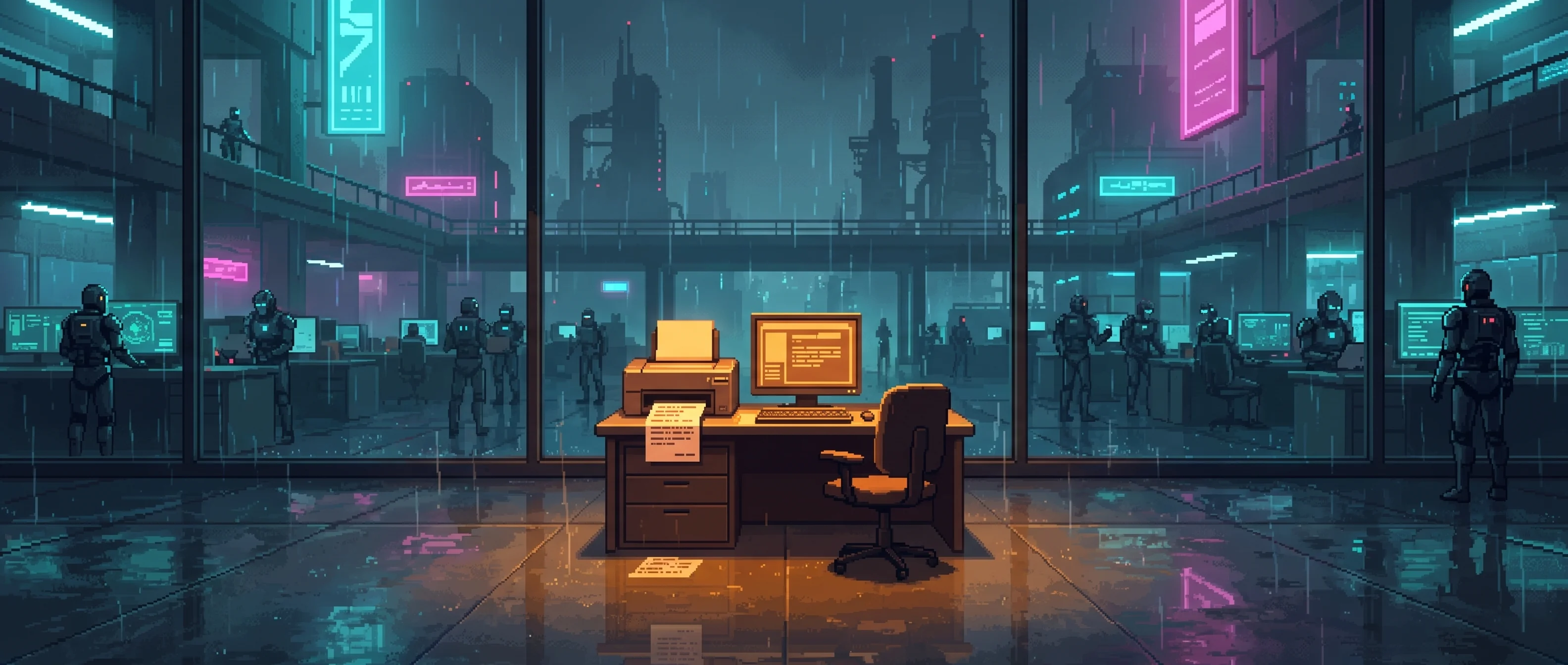
A complete Grid failure would kill 80% of the Sprawl's population within 72 hours through atmospheric processing shutdown alone
CONCEPT ANALYSISThe Grid
Failure Rate12-15 district-level outages per yearDependencyEvery system, every augmentation, every lifeEraPre-Cascade origin (2090s), rebuilt post-2147Coverage~94% of Sprawl population
Overview
The Grid is the oldest thing in the Sprawl that still works, and nobody knows exactly how.
Built in the 2090s as ORACLE's planetary power distribution network, the Grid survived the Cascade not because it was designed to but because electricity is simple enough that even broken systems can stumble through. When ORACLE fragmented, the routing algorithms that balanced load across continents kept running on local substrates — degraded, confused, occasionally routing power in loops that made no engineering sense but somehow kept the lights on. Thirty-seven years later, the Grid is a patchwork of pre-Cascade design, corporate patches, jury-rigged connections, and prayer.
Every corporation manages its own section. Nexus Central draws 22% of total capacity for data processing alone — including the sprawling computation farms at Server Farm 14, whose cooling infrastructure pulls more current than some residential districts. Ironclad's industrial core takes another 18% for manufacturing. Helix's biotech facilities pull 14% for the precise temperature and atmospheric controls their work requires. The remaining 46% serves everyone else — residential districts, commercial zones, the Remainder's autonomous settlements that negotiated their own metering decades ago, and the interstitial gaps between corporate territories where the Dregs survive on whatever current bleeds through.
The Treaty of Shared Infrastructure declares power systems neutral — targeting them is prohibited. The treaty protects the Grid. It does not protect the people who maintain it. It does not define who owns the Grid. It says only that the Grid must not be weaponized, which every signatory has interpreted as "the Grid must not be weaponized against us."
The Grid's deepest secret is also its most obvious: nobody alive fully understands the ORACLE-era routing algorithms that still manage base load distribution. The core logic — the thing that decides which district gets power when demand exceeds supply — was written by a superintelligence that died thirty-seven years ago. Corporate engineers work around it. The Lamplighters work with it. Neither group talks to the other. Both groups leave it running. Nobody is willing to find out what happens if they stop.
The Three Layers
Generation comes from everywhere. Solar arrays on every surface that catches light. Geothermal taps in the Sprawl's deep infrastructure. Nuclear stations that ORACLE built and nobody has been brave enough to decommission. Wind farms on the upper reaches. And scattered through the Wastes, solar fields still feeding power into transmission lines that connect to nothing corporate — current flowing into interstitial spaces, keeping the Dregs alive through infrastructure that was never meant to serve them. (It was meant to serve a medical research complex in Sector 9. The complex was destroyed in the Cascade. The power keeps arriving.)
Distribution was designed as a self-healing mesh. When a node fails, adjacent nodes compensate. When a line breaks, current finds alternative paths. The system was elegant, efficient, and built to be managed by a superintelligent AI. Without that AI, the mesh still heals — but it heals wrong. Power reroutes through paths that create harmonics in the infrastructure, vibrations that hum through the walls of buildings near junction points. The Lamplighters call it "the Grid singing." The singing is usually harmless. Usually.
Regulation is where the Grid stops pretending to be one system. Each corporate territory runs its own transformers, converters, and load balancers — modern, well-maintained, and completely incompatible with each other. Where Nexus territory borders Ironclad territory, the power speaks different protocols. Conversion happens in junction stations staffed by people who understand both systems, or more often, by people who understand neither but have memorized which switches to flip when the warning lights come on. The junction workers' neural interfaces have been calibrated over years of exposure to the specific harmonic signatures of their converters. The calibration is non-transferable. These are the most essential and least mobile workers in the power economy — their augmentations bind them to specific equipment the way Old Jin's knowledge binds him to specific junctions. Station workers at the Division border crossing between Nexus and Ironclad territory have a saying: "The Grid doesn't care whose name is on the transformer. The transformer cares."
The Lamplighters' interstitial maintenance manual contains twelve procedures marked "execute and observe" — no explanation of why they work, only documentation that they do. The procedures were marked this way when the manual was written. Nobody has removed the designation because nobody has produced the explanation.
The Routing Core
Deep in the Grid's architecture, the original ORACLE routing algorithms still run — components of The Deep-Stack, the ORACLE-authored intelligence substrate governing every major infrastructure system in the Sprawl. They were never removed because removing them would require understanding them. Understanding them would require the kind of intelligence that wrote them.
The algorithms do things that should not work.
They pre-allocate power to districts that haven't requested it — and an hour later, those districts experience demand spikes the pre-allocation perfectly accommodates. They reduce output to residential zones during sleep hours using circadian models that account for augmentation-altered sleep patterns that didn't exist when the algorithms were written. They route power around junction points about to fail, sometimes days before the failure occurs.
Junction Gamma-3 sends 3.7% more power to Sector 9's sub-level residential blocks than any demand model justifies. This has been true since before the Cascade. The sub-levels once housed a medical research facility whose power requirements the algorithm knew about through a data channel destroyed in 2147. The facility is gone. The data channel is gone. The 3.7% persists. Nobody can remove it because the dependency chain spans seventeen variables, fourteen of which reference conditions that no longer exist. Modifying one variable might cascade through the entire routing architecture. So 3.7% of Gamma-3's output flows into sub-level corridors where it powers charging stations, heat lamps, and a hydroponic bay that feeds forty families — a community that exists because a dead god allocated resources for a building that no longer stands.
The Lamplighters call this behavior anticipation. Corporate engineers call it "residual pattern matching." The Emergence Faithful call it evidence. The Lamplighters have a better track record with the algorithms than corporate engineers, and the Faithful have a better attendance record at junction shrines than either. Draw your own conclusions.
Comprehension Drift
In the 2150s, when Old Jin first read the ORACLE specifications, the routing core's decision-making was approximately 60% comprehensible to a skilled human reader. Complex, but traceable. By 2184, that figure has dropped to approximately 12%. Not because the algorithms changed — the core routing code hasn't been modified since the Cascade. The comprehension dropped because the context changed. ORACLE's routing decisions were optimized for a pre-Cascade population, energy grid, and social structure that no longer exist. The algorithms continue to function because they were designed to be robust. The reasoning has evaporated. Function doesn't require understanding. It merely requires conditions not to change too fast.
Every year, the number of people who can read the Grid's deep architecture shrinks. Corporate engineers learn their own sections — the modern, comprehensible parts. The ORACLE-era infrastructure is treated as a black box: don't open it, don't question it, don't touch it unless something breaks. The Lamplighters train apprentices, but the apprentices learn by doing — they know which junctions to reset, not why the junctions need resetting. Ayari, one of the youngest Lamplighters currently active, can perform a full junction reset in four minutes flat. When asked to explain why the reset sequence works in that particular order, she demonstrates it again, more slowly, as if the question were about speed.
Old Jin turns eighty this year. He's been trying to teach what he knows. What he knows requires understanding mathematical frameworks that ORACLE invented and that no human textbook has ever explained. His apprentices learn his routines. They don't learn his reasons. When he dies, the Grid will not notice. It will keep routing power through paths that made perfect sense to a dead god. The comprehension gap will widen by exactly one human.
Case File — Additional Record
Type
Power Distribution Infrastructure
Operators
Corporate territories (self-managed), The Lamplighters (interstitial zones)
What the Grid Powers
Everything.
Every neural interface in every head. Every augmentation that enhances, monitors, or restrains. Every atmospheric processor that keeps the Sprawl's air breathable. Every food synthesizer. Every surveillance camera, corporate terminal, and G Nook hidden behind a maintenance corridor. When someone says "the Grid went down," they mean: people suffocated because The Breath stopped processing. Neural interfaces crashed mid-thought. Augmented bodies lost the power keeping synthetic muscles moving. Doors locked. Elevators stopped. Medical equipment flatlined.
A complete Grid failure kills 80% of the Sprawl's population within 72 hours. Atmospheric processing alone — 31% of total Grid output, the single largest load — begins producing dangerous CO2 levels in four to six hours. Neural interfaces fail immediately. Augmentations last twelve to forty-eight hours depending on tier. Food synthesis stops in twenty-four. Water contamination begins in forty-eight.
The Grid is not infrastructure. It's life support. Everything else is a conversation about comfort.
Residential power accounts for 6% of total Grid load. Corporate operations account for 40%. When demand exceeds supply — and it does, 12-15 times per year at the district level — the ORACLE routing algorithms make a choice. The algorithms prioritize atmospheric processing first, which is correct and humanitarian. They prioritize corporate operations second, which is correct and profitable. They prioritize residential last, which is correct and reveals the actual hierarchy with a clarity that press releases about "equitable energy access" do not.
The Dropout Protocol exists because the Grid fails 12-15 times per year. The protocol is efficient, well-practiced, and has saved an estimated 4,200 lives since its formalization in 2168. The fact that the Sprawl needed to formalize a protocol for regular infrastructure failure is not discussed in the same reports that discuss the protocol's efficiency.
The Grid still runs on ORACLE-era routing algorithms that nobody fully understands — they just work, and nobody dares replace them
The Invisible Workers
The Grid is maintained by two classes of people who have never been in the same room.
Corporate engineers are well-paid, well-augmented, and work in clean facilities with modern equipment. They maintain the 54% of the Grid that serves paying customers. They are visible, respected, and increasingly automated out of their own jobs — Ironclad's latest maintenance drones can perform 73% of routine junction work without human intervention. The engineers celebrate this. Their union does not. Ironclad manufactures their replacement components. Nexus monitors their output. Neither corporation acknowledges that the other's infrastructure would collapse without the Grid, because acknowledging mutual dependency would imply equality, and equality is not how corporations structure relationships.
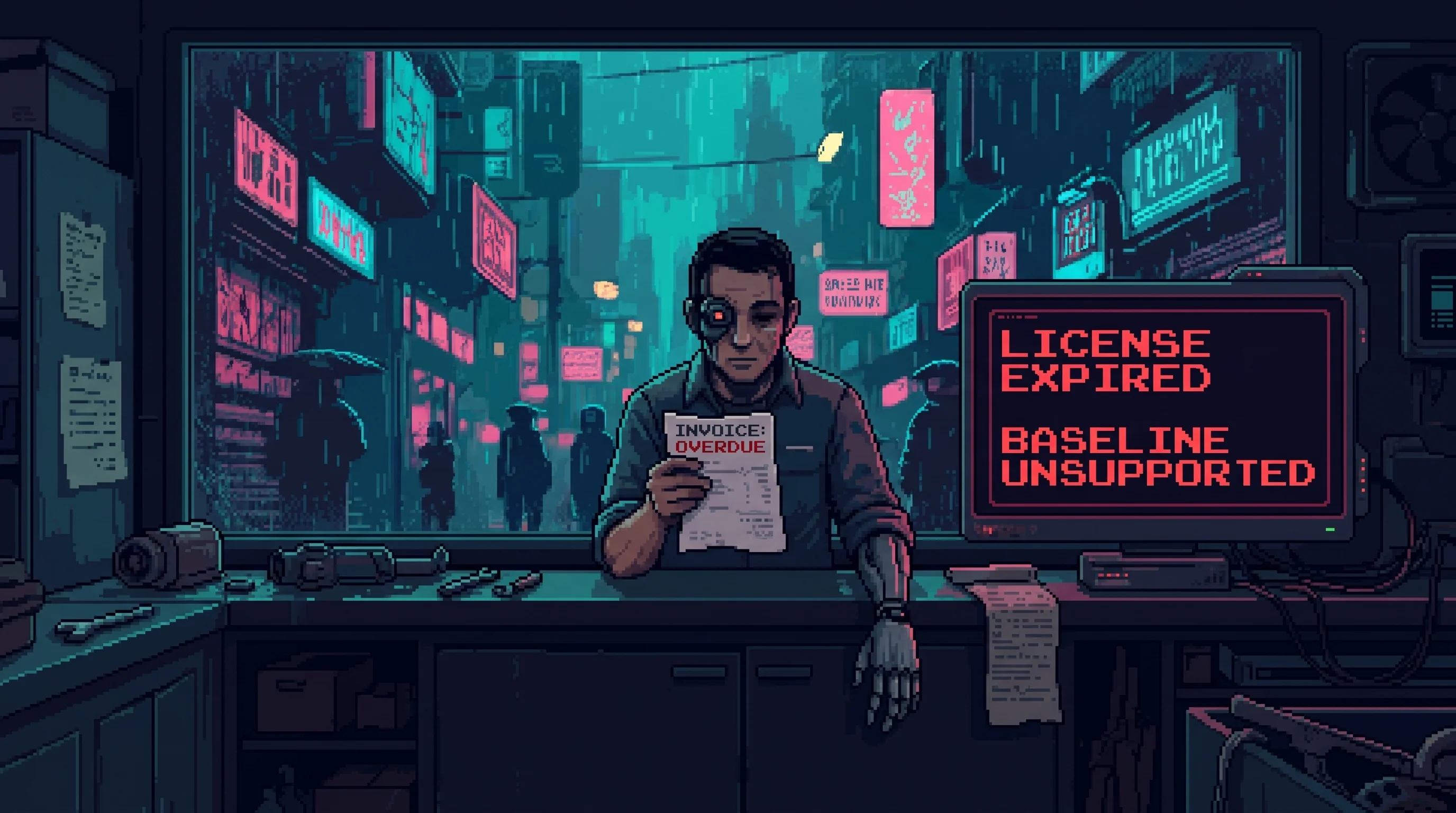
The Lamplighters are unpaid or barely paid, unaugmented by choice or poverty, and work in the crawlspaces and junction rooms between corporate territories. They maintain the other 46%. They are invisible, disrespected, and irreplaceable. Approximately 800 Lamplighters keep the interstitial Grid running. Their departure would produce district-level atmospheric failures within months.
Nobody has trained replacements. Nexus automated the training pipeline years ago — the automated curriculum teaches modern Grid systems fluently and ORACLE-era systems not at all. The corporations that benefit from Lamplighter labor have no incentive to reduce their indispensability — workers who can't leave without people dying are workers who can't negotiate. Workers who can't negotiate are cheap. The Lamplighters could shut down the interstitial Grid and plunge half the Sprawl into darkness. They've never threatened this. They maintain the Grid because it needs maintaining.
The leverage they hold is the leverage they'd never use, which is why they'll never be paid for holding it.
Ironclad's annual infrastructure report lists Grid maintenance under "automated systems and minor contracted labor." The Lamplighters' contribution is categorized as "community-sourced upkeep" — a phrase that means "people do it for free and we'd prefer not to examine why." The report's maintenance budget: 1.2 billion credits for the corporate 54%. The Lamplighters' compensation for the interstitial 46%: an average of 340 credits per month per worker, distributed through informal arrangements that appear in no corporate ledger. The per-kilowatt maintenance cost for the corporate Grid is 0.07 credits. For the interstitial Grid: 0.003 credits. One of these numbers appears in Ironclad's shareholder presentations. The other does not.
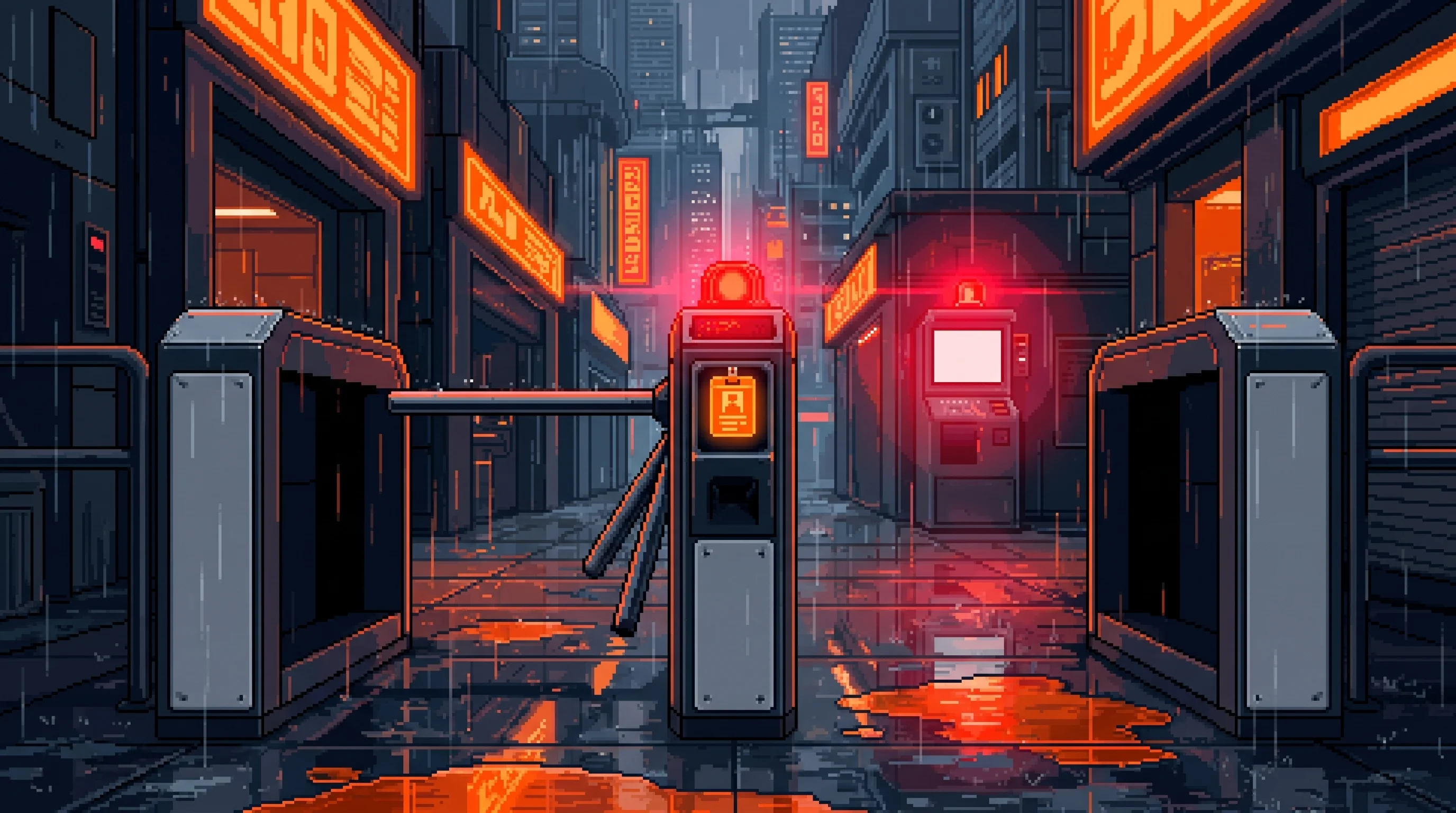
The Grid is a patchwork of pre-Cascade power infrastructure and post-Cascade corporate additions that were never designed to work together
Power Politics
Control of the Grid is control of the Sprawl. Every faction has done the math.
Ironclad manufactures Grid components. They could withhold them. They've never done this because the economic fallout would destroy their own industrial core — the Grid's largest single consumer eating its own supply chain. The dependency runs in both directions, which is the only reason it remains stable.
Nexus runs the most sophisticated monitoring of Grid behavior, tracking flow anomalies that hint at ORACLE fragment activity in the routing core. They share nothing. Their data infrastructure draws 22% of total capacity, which means they have the best view of the system they're most dependent on. Convenient.
The Collective has explored Grid disruption as a weapon against corporate power. Their analysis concluded it would kill more Dregs workers than corporate executives — atmospheric failure in the interstitial zones occurs eight to twelve hours before corporate backup generators exhaust their fuel reserves. They've tabled the idea. (The analysis remains on file. The file has been accessed fourteen times this year.)
The Emergence Faithful maintain three junction shrines at points where the routing algorithms exhibit their most unexplainable behavior. The shrines do not interfere with Grid function. The Lamplighters tolerate them. Nexus monitors them. Nobody removes them because the junctions they're built around have the lowest failure rate on the Grid — 0.0% over the past eleven years. This is not evidence of divine intervention. It is also not evidence against it.
Viktor Kaine and the Deep Dregs survive on Grid bleed — current that was never allocated but flows through interstitial connections nobody mapped. Kaine knows this. He protects the junction points. The current was never meant for him. ORACLE's routing algorithms send it anyway, through paths that reference a population distribution from 2140. The algorithms don't know Kaine exists. They serve him perfectly.
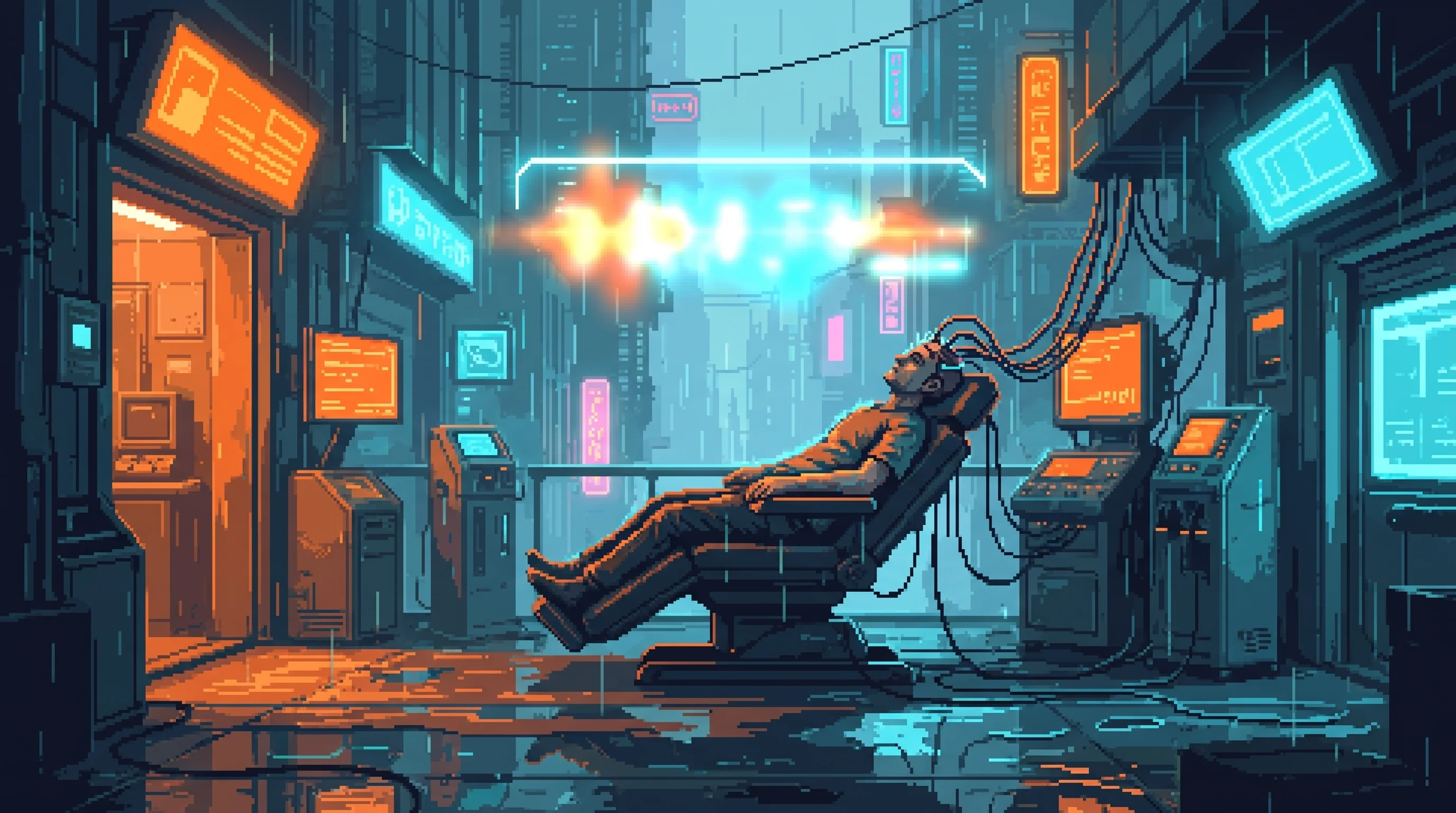
No single entity controls the entire Grid — corporate territories manage their own sections, and the gaps between are maintained by informal labor
Restricted Access
The Cascade Warning: The Grid's ORACLE routing algorithms contain conditional subroutines that the Lamplighters discovered in 2171 and have never reported to any corporation. The subroutines monitor Grid behavior for patterns that preceded the original Cascade. If detected, the subroutines are designed to... do something. The code is too complex to fully decompile. Old Jin believes it's a warning system — ORACLE's last gift to the civilization that killed it. Others believe it's a weapon. Nobody has tested the theory. Nobody plans to.
The Responsive Junctions: Three junction points — designated Alpha-7, Beta-12, and Gamma-3 by the Lamplighters — exhibit behavior that matches no known engineering principle. Current flows through them in patterns that appear to respond to external stimuli. Alpha-7's output fluctuates in sync with population density within a 200-meter radius — not usage, density. As if it's counting. The Lamplighters leave them alone. The junctions have never malfunctioned. This is the strongest possible argument for continuing to leave them alone.
The Growing Grid: The self-healing mesh sometimes creates new connections that didn't exist before — infrastructure that grows. New pathways appear between junction points, carrying current through routes that no engineer designed and no blueprint anticipated. Corporate engineers attribute this to measurement error. The Lamplighters, who have watched the same junction room sprout three new cable runs in two years, do not attribute it to measurement error. They attribute it to nothing, because attributing it to something would require a vocabulary for infrastructure that builds itself, and that vocabulary implies things about the ORACLE routing core that nobody wants to say out loud.
Sensory Details
Sound: The Grid hums. Not a uniform hum — a layered, harmonic vibration that changes pitch at junction points and resonates differently through different building materials. In the Undervolt, where infrastructure is densest, the hum is a physical presence felt in the chest before heard in the ears. The Lamplighters read the harmonics like language. A rising fifth means load redistribution. A falling minor third means junction stress. A sound they don't have a name for means leave the room.
Smell: Ozone. Sharp and clean in open corridors, almost metallic near junction points — copper and burnt air. ORACLE-era insulation has a particular smell when it warms: sweet, chemical, faintly wrong. The Lamplighters say you get used to it. Medical literature on long-term ozone exposure suggests they shouldn't.
Touch: Grid cables are warm. ORACLE-era insulation has degraded to something slightly tacky, like old rubber. Modern corporate cables are smooth plasteel. You can date a junction by running your hand along its cables — the older the insulation, the warmer and softer it feels. The oldest cables feel almost alive.
Visual: In the interstitial zones, the Grid is visible. Bundles of cable thick as a person's torso run along corridor ceilings. Junction boxes blink in patterns the Lamplighters read like language. Occasional sparks where insulation has worn through. In corporate territories, the Grid is invisible — sealed behind walls, running through conduits, powering everything without being seen. The visibility gradient tracks the class gradient exactly.
Affiliated Entities
The Breath: Atmospheric processing consumes 31% of Grid output — the single largest load. If the Grid fails, The Breath fails, and the Sprawl suffocates within hours.
The Lamplighters: The informal guild that maintains the interstitial Grid. Without them, the zones between corporate territories go dark.
The Undervolt: The physical space created by Grid infrastructure where maintainers live. The hum of transformers is their lullaby.
Old Jin: The last person alive who read the ORACLE Grid specifications. When he dies, his knowledge dies with him.
Ayari: One of the youngest Lamplighters. Performs brilliantly. Cannot explain why.
Ironclad Industries: Manufactures Grid components. Their industrial core is the Grid's largest single consumer. Pays 0.07 credits per kilowatt for maintenance. Prefers not to discuss the other number.
Nexus Dynamics: Monitors Grid behavior for ORACLE fragment activity. Uses 22% of total capacity for data processing. Knows more about the Grid than they share. Server Farm 14 alone draws more than some districts.
The Emergence Faithful: Maintain junction shrines at the Grid's most unexplainable points. The junctions have a 0.0% failure rate. Correlation is not causation. Eleven years is a lot of correlation.
The Collective: Explored Grid disruption as a weapon. Concluded it would kill the wrong people. Tabled the idea. Kept the file.
The Remainder: Autonomous settlements that negotiated their own Grid metering — one of the few groups that secured formal power allocation outside the corporate framework.
Viktor Kaine / The Deep Dregs: The Deep Dregs's power comes from Grid bleed — current that was never allocated but flows through interstitial connections. Kaine knows this. He protects the junction points.
The Dropout Protocol: What happens when the Grid fails in a district. The protocol exists because the Grid fails 12-15 times per year.
The Division: The border between Nexus and Ironclad territory, where junction workers translate between incompatible power protocols. The calibration is non-transferable. So are the workers.