LOCATION FILE

The Print Shop

The Print Shop
TypeMedia district / printing facilityDistrictZephyria, Old Core adjacentPopulation~200 residents and workersControlled ByPrint Shop Cooperative

Overview

The smell hits you first. Iron gall ink โ€” made from desert-plant tannins and ferrous sulfate, mixed in the same wooden barrels Marina Orosco's generation used. Then paper โ€” cotton rag processed in Greenward's textile mills, dried in the desert wind, cut by hand on a guillotine that belonged to a pre- bookbinder. Then something older: the warm, mineral scent of lead type. Thousands of individual metal letters sorted into wooden cases, arranged by hand, locked into chases, and pressed against paper with machinery that was obsolete before the made obsolescence meaningless.

The Print Shop is a cluster of five buildings near 's Old Core โ€” three workshops, a paper warehouse, and the offices of The Zephyria Record. Approximately 200 people work here: typesetters, press operators, paper-makers, bookbinders, illustrators, and one music critic who writes with a fountain pen at a desk facing the desert.

In a world where information travels at the speed of neural transmission, the Print Shop produces a biweekly newspaper that arrives by hand delivery. Two days to typeset. One day to print. Three days to distribute across . A week to reach the Sprawl through smuggled bundles.

The Zephyria Record's readers receive information ten days after it happens. They consider this acceptable.

The Record has published four factual errors in the past eighteen months. All four remain in circulation. There is no mechanism for correction โ€” no errata column, no updated edition, no retraction process. The iron gall ink is permanent. The cotton rag paper is archival-grade. Issue 140's misidentification of a Council voting margin will outlast every neural publication that covered the same vote correctly.

" that arrives instantly is consumed instantly," says Olu Adeyemi, the Record's master typesetter, when asked about the delay. " that arrives in your hand, on paper you can feel, in type set by a person who thought about every word โ€” that information is considered."

She is not wrong. The mechanism that makes the Record trustworthy โ€” permanence โ€” is the same mechanism that makes its errors immortal. Olu has not been asked about this symmetry. The question does not appear to have occurred to anyone in the building.

One of the five buildings houses Dismal Press, which is a single compositor, one case of lead type, and a post box. The press has one author. collects his mail twice a year, squares the paper against the table edge before he opens anything, and leaves with eleven re-inked typewriter ribbons โ€” the only supply of them known to exist.

The Print Shop - Identity

The Zephyria Record

What It Is

A broadsheet newspaper, published every two weeks. Eight pages of dense, small type covering 's Council proceedings, district news, trade reports, cultural criticism, and โ€” in the back pages โ€” "Letters from the Sprawl," a column of dispatches from contacts in the corporate world.

's "'s Ear" column appears on page six. It is the most widely read column in the paper, which means approximately 2,000 people read it in and an unknown number read smuggled copies in the Sprawl. Slade writes from the Print Shop's offices, his desk facing the desert, his pen marking paper that will be set in type by hand.

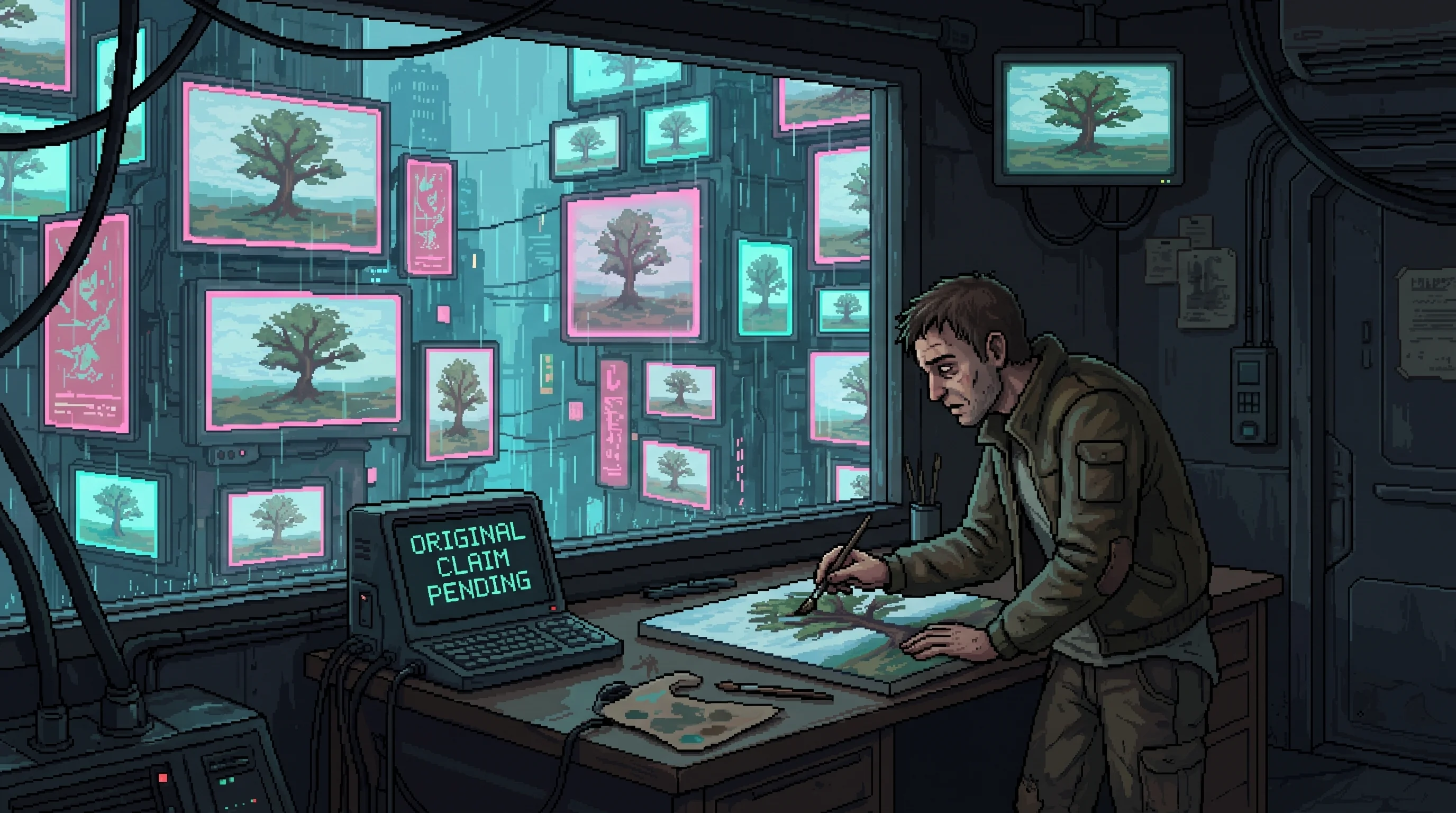
The Record has no photographs. It has woodcut illustrations, carved by an artist named Tomas who has never seen the Sprawl and works exclusively from written descriptions. His renderings of Nexus Central are carved from 's prose, from refugee accounts, from secondhand sensory data filtered through a man who has spent his entire life in the desert. The Sprawl through Tomas's eyes is all wrong angles and bleeding neon and shadows that fall in directions light doesn't explain.

The illustrations are widely considered haunting. They are also, by the testimony of anyone who has actually visited the Sprawl, inaccurate in ways that range from subtle to architectural. Tomas carved a twelve-story building where a forty-story tower stands. He rendered a market district that was demolished nine years before the issue went to print. His illustration of the , published in Issue 127, depicted a structure that does not exist and has never existed โ€” a kind of suspended bridge between two buildings that Tomas apparently invented from a misread phrase in one of 's drafts.

The illustration was reprinted in three subsequent issues as a reference image. No one in has the information to correct it. Sprawl readers who receive smuggled copies do not write letters to the editor about architectural accuracy. The bridge is now part of 's understanding of the Dregs. It is, functionally, canonical.

The question of whether Tomas's images are accurate has been asked. He does not engage with it. The question of whether they are true is one he considers more carefully. There is a distinction. He has not explained it to anyone's satisfaction, including his own.

What It Produces

The Record cannot be altered after publication. Once the ink sets, the text is fixed. No updates, no corporate edit requests, no quiet revisions to inconvenient paragraphs. What the Record prints stays printed โ€” a property that Historians, operatives, and corporate analysts all value when the Record gets something right.

When it gets something wrong, the same property applies.

smuggles Record copies into the Sprawl for intelligence purposes. writes letters to through 's postal system. Corporate analysts cross-reference the Record's reporting against neural publications. The cross-referencing is useful in both directions โ€” it catches corporate edits to digital archives, but it also catches the Record's frozen errors being treated as source material. A misquoted trade figure in Issue 131 appeared, unaltered, in a intelligence brief four months later. The brief cited the Record's permanence as evidence of reliability. The figure was off by 340 credits.

The Record publishes no retraction column. Olu Adeyemi has explained that the paper's limited page count โ€” eight pages, set by hand, every letter placed individually โ€” cannot accommodate corrections without displacing new reporting. "We'd need a ninth page," she said once, with the tone of someone describing a physical impossibility rather than an editorial choice.

The Record's self-reported accuracy rate is 97.4%. This figure was published in Issue 136's annual review. It cannot be independently verified. It also cannot be corrected.

Case File โ€” Additional Record
Known ForZephyria's only physical newspaper office; the last journalism without neural distribution
SecurityZephyria civilian militia (low threat environment)

The Building

Warm, cluttered, functional. Wooden furniture stained with decades of ink. Cases of type organized by font and size, the lead letters dark and worn smooth by thousands of settings. Windows open to the desert, flooding the workspace with the light that writes by and Tomas carves by and Olu sets type by โ€” natural desert sunlight, no corporate illumination, no screens.

The walls are hung with framed copies of significant Record issues โ€” the first edition, 's Meridian review, the Council election results. Issue 127, with Tomas's invented bridge, hangs between the first edition and the election results. Nobody has mentioned this.

The paper warehouse smells different from the workshops. Drier. The cotton rag stock absorbs desert humidity and releases it slowly, creating a microclimate that the paper-makers describe as "the breath" โ€” the paper inhaling and exhaling with the day's temperature. The term is used without irony. In a world where the Sprawl's actual atmosphere requires continuous mechanical processing, 's paper breathes on its own.

Sound carries through all five buildings: the clack of type being set in the composing stick, the rhythmic thud of the press, the shuffle of paper being stacked. Olu humming while she works โ€” melodies from the pre- music that plays through his turntable in the adjacent office. The walls between the typesetting room and 's office are thin enough that his choice of record determines her rhythm. On days he plays something uptempo, the typesetting runs ahead of schedule. On days he plays the slow material, Issue deadlines slip by hours. Neither has acknowledged this correlation. The production logs, kept by hand in a ledger, confirm it.

Site Classification
StratumMiddle
Power PositionOutsider
AccessPublic
AtmosphereWarm

The Authenticity Problem

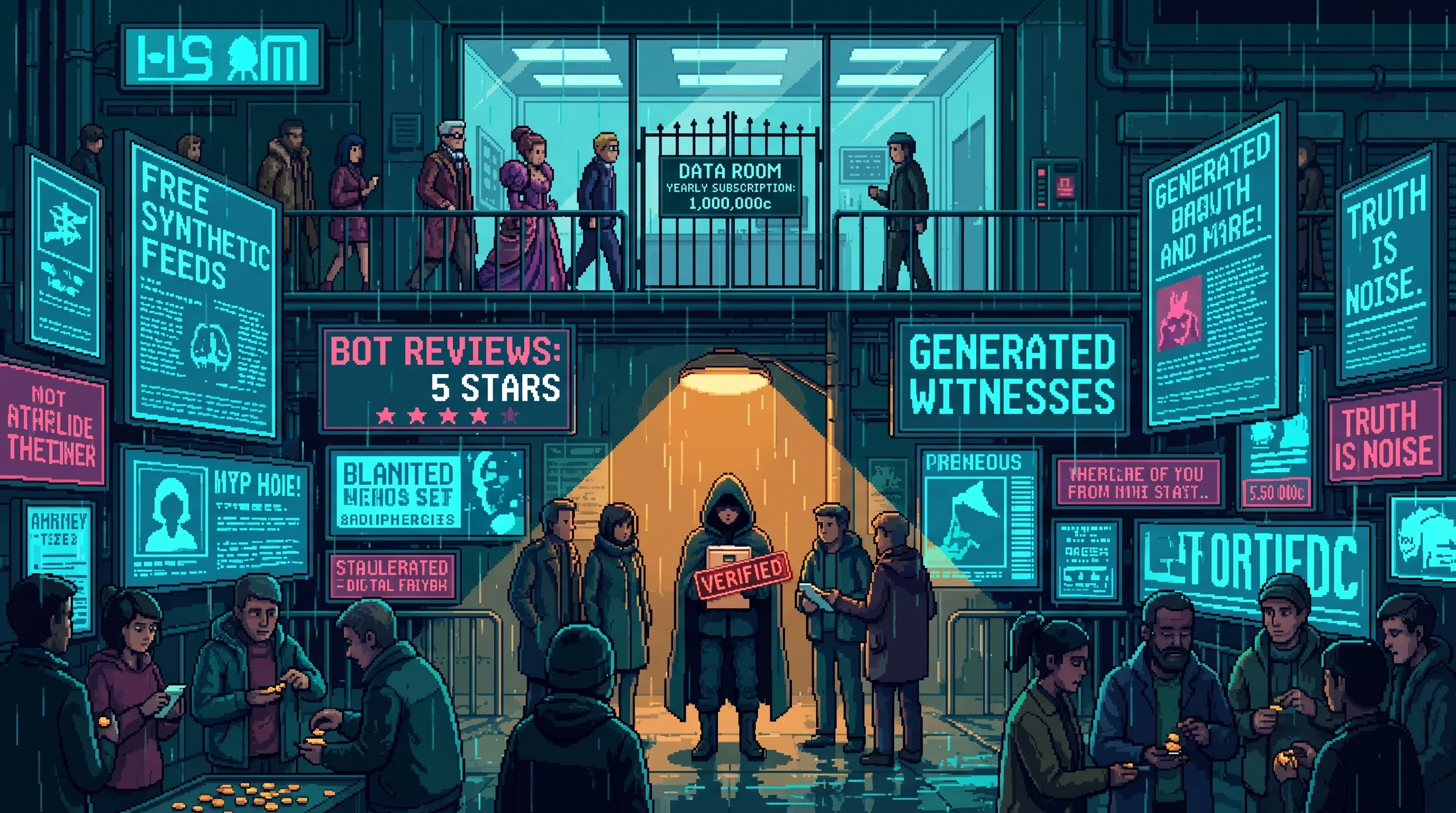
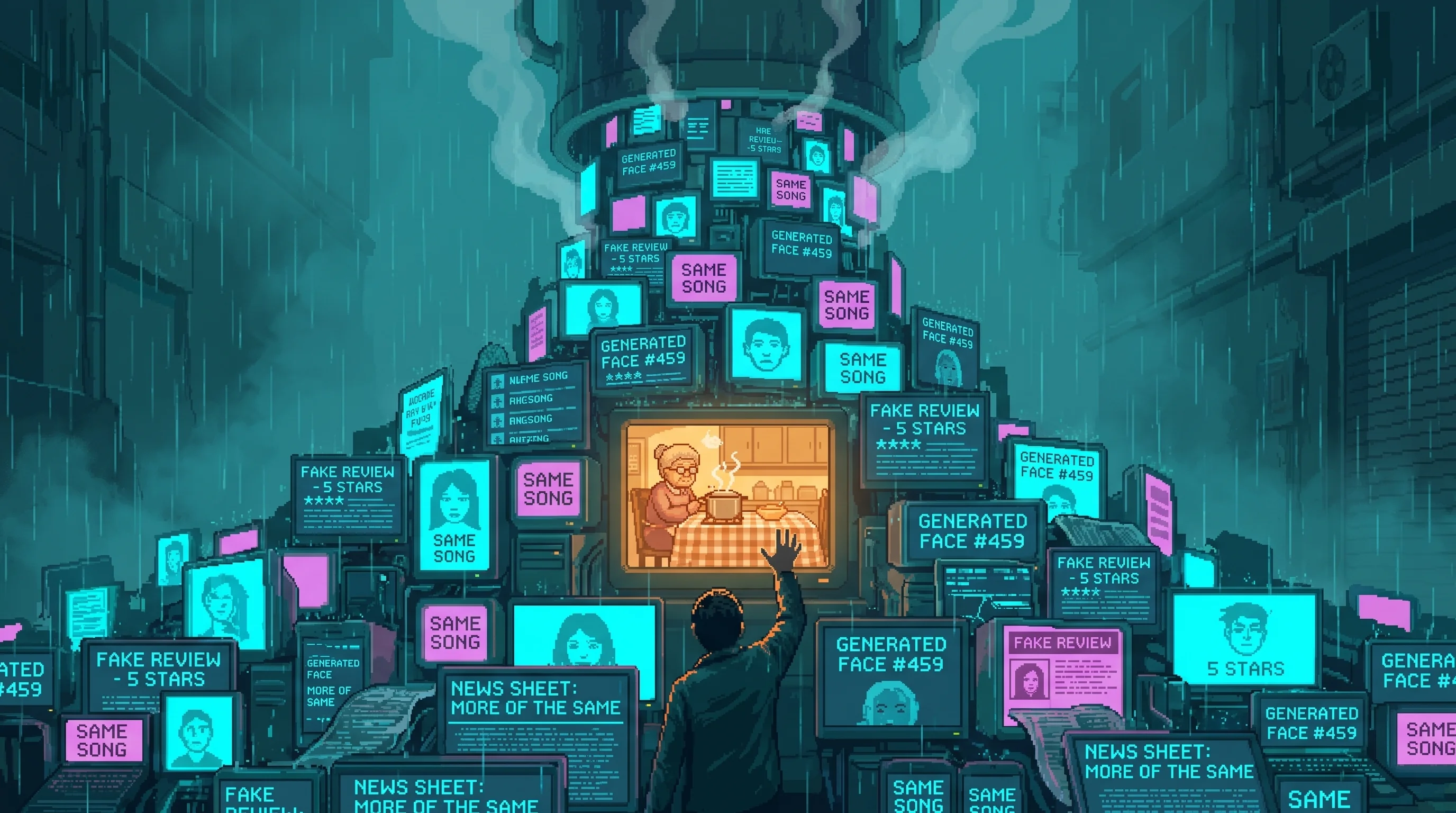
In the Print Shop, the is a curiosity from another world. Physical text has no tier. There is no mechanism for an algorithm to assess whether a woodcut illustration is "authentic" or "synthetic" โ€” no neural fingerprint, no computational signature, no metadata to parse. A page of the Record is ink on paper. It is exactly as authentic as any other ink on any other paper. The system that the Sprawl uses to sort real from fabricated cannot see the Print Shop's output at all.

This is cited, within , as proof that physical media exists outside the corporate authenticity apparatus. It is cited, within the Sprawl, as proof that physical media is unverifiable.

Both citations are correct. The property that makes the Record immune to authenticity scoring is the same property that makes it impossible to distinguish a genuine copy of the Record from a forged one. No one has forged a copy. The economics don't support it โ€” the audience is 2,000 people, and a convincing forgery would require access to iron gall ink, cotton rag paper, and a functioning letterpress, which narrows the suspect pool to approximately this building.

preserves digital culture. The Print Shop preserves analog. The question neither project has answered: preservation from what? assumes digital culture will be erased. The Print Shop assumes analog culture will be forgotten. Both are betting against the other's medium. Both are probably right.

There is a second way the Print Shop slips the provenance economy, and it makes the building an unlikely cousin of the Sprawl's most famous anonymous artist. 's fifth front โ€” the fight over copied selves โ€” runs entirely on capture: the [authenticity-market](authenticity-market) cannot tier what it cannot sample, the synthesis arrays cannot model an experiencer they never recorded, the verification stack cannot certify a self it never chained. The Print Shop produces work with no neural fingerprint to capture at all. A page of the Record is ink on paper, exactly as authentic as any other ink on any other paper, invisible to the entire sorting apparatus. This is the same move [cyber-master](cyber-master) makes with his face and his seven contradictory origin stories โ€” un-tierable not by beating the system but by being unreachable by it. The Print Shop reaches the same exemption by being too old for the machine to read; Cyber Master reaches it by refusing to be read at all. Both are originals the provenance economy can only price by first catching, and neither will be caught.

The Zephyria Record, the Free City's only broadsheet newspaper, is printed here

โ–ฒ Unverified Intelligence

The Record's smuggling network into the Sprawl runs through three intermediaries, the last of whom is a courier operating out of the . The courier distributes approximately 40 copies per issue to a subscription list that includes at least two Nexus mid-level analysts, a archivist, and someone using a dead neural address that traces to 's legal department. The subscription fees โ€” paid in barter goods routed back through the same courier chain โ€” constitute roughly 30% of the Record's operating budget.

Olu Adeyemi is aware of this revenue stream. She records it in the production ledger as "external distribution." The ledger does not specify that the Record's continued financial viability depends significantly on the same corporate infrastructure the paper positions itself against. The ledger is permanent. It is also selective.

Archive annex โ€” 1 earlier filing on this recordClose the archive annex

Recovered Historical Material

The Dead Internet

The Light

Journalism Without Neural Distribution

Indexed โ€” 1 line preserved from the earlier filing.

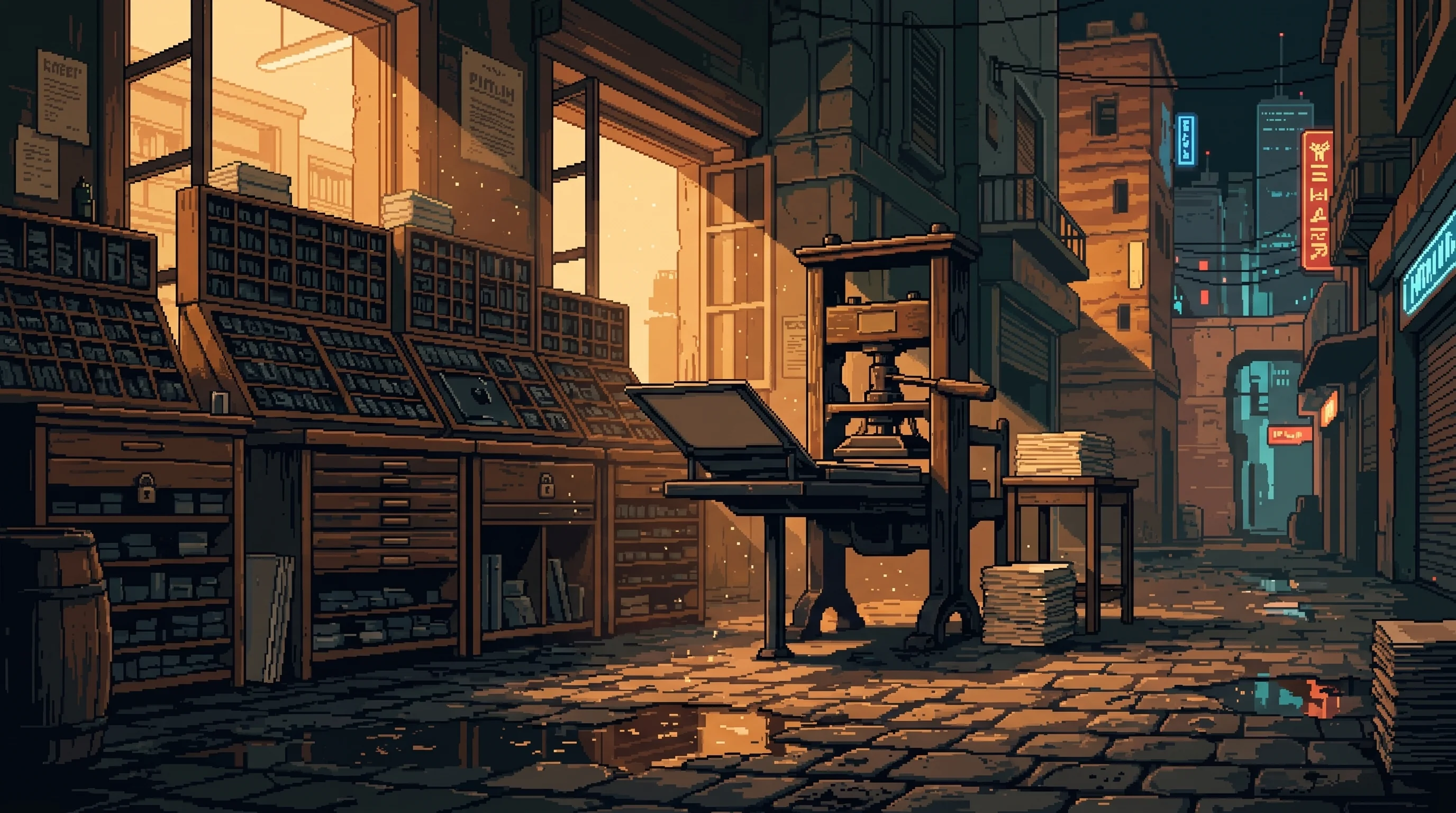
Warm analog printing workshop with wooden furniture stained with ink, lead type cases, a manual printing press, windows open to desert landscape, typesetters at wooden desks

Olu Adeyemi

Indexed โ€” no record on file.

Tomas

The Morning Smell

The Texture

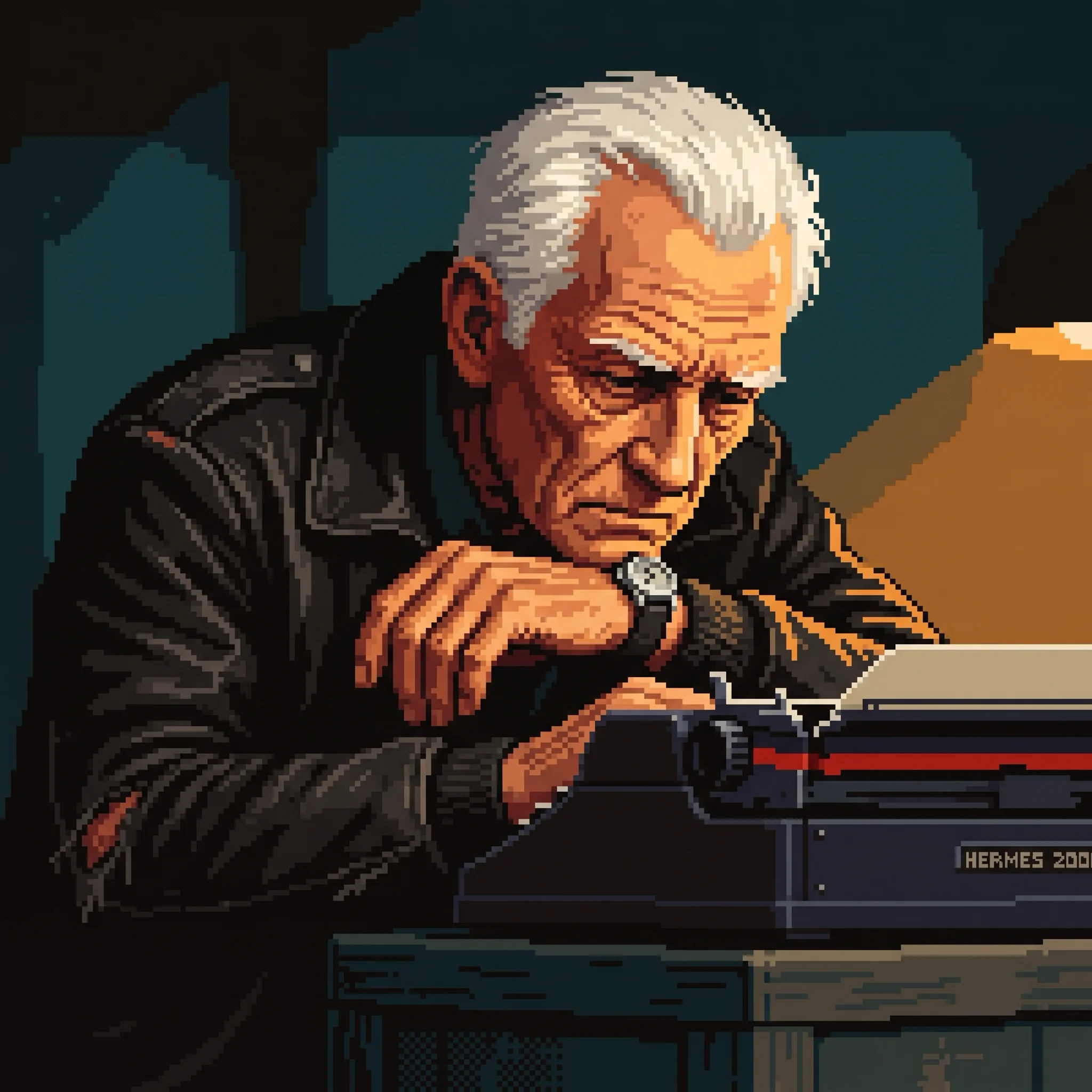
Writes with a fountain pen, listens on a turntable, publishes reviews that take a week to reach anyone outside the city. His column reaches a fraction of the audiences that neural-distributed critics command. But Orin's reviews are permanent. Once printed, they cannot be edited, retracted, or algorithmically suppressed. His opinion of a record exists in physical form โ€” a fixed point in a world of liquid information.

The Authenticity Market โ€” Irrelevant Here

Who is reading the smuggled copies?

What happens when Olu can't work?

Can a physical publication be a target?

Zephyria's โ†’ /world/locations/the-free-city

's โ†’ /world/characters/orin-slade

The smell hits first. Iron gall ink โ€” made from desert-plant tannins and ferrous sulfate, mixed in the same wooden barrels Marina Orosco's generation used. Then paper: cotton rag from Greenward's textile mills, dried in the desert wind, cut by hand on a guillotine that belonged to a pre- bookbinder. Then something older still โ€” the warm, mineral scent of lead type. Thousands of individual metal letters sorted into wooden cases, set by hand, locked into chases, pressed against paper with machinery that was obsolete before the made obsolescence meaningless.

Five buildings near 's Old Core: three workshops, a paper warehouse, and the offices of The Zephyria Record. Approximately 200 people work here โ€” typesetters, press operators, paper-makers, bookbinders, illustrators, and one music critic who writes with a fountain pen at a desk facing the desert.

In a world where information travels at the speed of neural transmission, the Print Shop produces a biweekly newspaper that arrives by hand delivery. Two days to typeset. One day to print. Three days to distribute across . A week to reach the Sprawl through smuggled bundles. The Record's readers receive information ten days after it happens. They consider this acceptable.

The Record has published four factual errors in the past eighteen months. All four remain in circulation. There is no mechanism for correction โ€” no errata column, no updated edition, no retraction process. The iron gall ink is permanent. The cotton rag paper is archival-grade. Issue 140's misidentification of a Council voting margin will outlast every neural publication that covered the same vote correctly. The Print Shop offers permanence to anyone willing to buy information. The price is that the errors are permanent too.

" that arrives instantly is consumed instantly. Information that arrives in your hand, on paper you can feel, in type set by a person who thought about every word โ€” that information is considered." โ€” Olu Adeyemi, master typesetter

The Print Shop composing room โ€” afternoon desert light across lead type cases, Olu Adeyemi at the composing stick, the press visible in the background

Eight pages of dense, small type. Council proceedings, district news, trade reports, cultural criticism, and โ€” in the back pages โ€” "Letters from the Sprawl," a column of dispatches from contacts outside 's borders. 's "'s Ear" column appears on page six. It is the most widely read feature in the paper, which means approximately 2,000 people read it in and an unknown number read smuggled copies in the Sprawl.

No photographs. Woodcut illustrations carved by an artist named Tomas, who works exclusively from written descriptions. He has never seen the Sprawl. His renderings of Sprawl locations are carved from 's prose, from refugee accounts, from secondhand sensory data filtered through someone who has spent his entire life in the desert. The Sprawl through Tomas's eyes runs to wrong angles, bleeding neon, shadows that fall in directions light doesn't explain.

Issue 127's illustration of the depicted a suspended bridge between two buildings that does not exist and has never existed โ€” apparently invented from a misread phrase in one of 's drafts. The illustration was reprinted in three subsequent issues as a reference image. No one in has the information to correct it. The bridge is now part of 's understanding of the Dregs. It is, functionally, canonical. (The invoices for Tomas's woodcut fee across all four issues are still there, in the production ledger.)

Why the Record Matters โ€” And Why That's Complicated

smuggles Record copies into the Sprawl for intelligence purposes. Corporate analysts cross-reference the Record's reporting against neural publications. The cross-referencing catches corporate edits to digital archives โ€” a genuine intelligence use. It also catches the Record's frozen errors being treated as source material. A misquoted trade figure in Issue 131 appeared, unaltered, in a intelligence brief four months later. The brief cited the Record's permanence as evidence of reliability. The figure was off by 340 credits. The Record's self-reported accuracy rate is 97.4%, published in Issue 136's annual review. It cannot be independently verified. It also cannot be corrected.

The Print Shop runs at a pace the Sprawl has forgotten exists. This is not presented as a feature. It is simply what the work requires.

Iron gall ink warming in its wells. Cotton rag paper absorbing the day's humidity. The metallic whisper of lead type as trays are pulled from their cases. Desert wind through open windows carrying dry heat and dust that settles on everything โ€” including the type, which must be cleaned before setting begins.

Clack of type being set โ€” lead on wood, rhythmic and precise. The full-body thud of the press, felt through the floor. Shuffle of paper being stacked, sorted, folded. Underneath it all: Olu humming melodies from pre- recordings playing through 's turntable in the adjacent office. The walls are thin. On days he plays something uptempo, typesetting runs ahead of schedule. On slow days, deadlines slip by hours. The production ledger confirms this. Neither has acknowledged it.

Cotton rag paper rough under fingertips โ€” visible fiber, nothing like the synthetic sheets of the Sprawl. Run a finger over a printed page and feel the impression left by the type, each letter pressed into the paper by force. Lead type cool to the touch, each character a small sculpture worn smooth by decades of handling. Ink-stained wooden furniture at the edges.

Natural desert sunlight through open windows โ€” no corporate illumination, no screens. Framed significant Record issues line the walls: the first edition, 's Meridian review, the Council election results, Issue 127 with Tomas's invented bridge. Issue 127 hangs between the first edition and the election results. Nobody has mentioned this.

The paper warehouse smells different from the workshops โ€” drier. Cotton rag stock absorbs desert humidity and releases it slowly, a microclimate the paper-makers call "the breath." The term is used without irony. In a world where the Sprawl's actual atmosphere requires continuous mechanical processing, 's paper breathes on its own.

Sets type by hand faster than anyone in . Each letter placed by fingertips, each word a physical act. Those who work alongside her describe it as prayer with a wrench: total focus on the immediate material, indifferent to what a machine might accomplish in the same time.

The Record's institutional knowledge lives in Olu's hands โ€” the techniques for setting type, managing the press, mixing iron gall ink at the correct viscosity, passed down through practice rather than documentation. The Print Shop is aware of this. It is not clear that awareness has translated into preparation. When asked about a ninth page to accommodate corrections, she described it as a physical impossibility rather than an editorial choice. She is not wrong, exactly.

The Record's only visual artist. Has never left . Works from written descriptions, translating words into images carved in wood โ€” 's prose, refugee accounts, secondhand sensory data. His illustrations of Sprawl locations circulate in the Sprawl itself as collected objects. People who live in the districts Tomas depicts hang his woodcuts on their walls. He shows them a version of themselves filtered through someone who has only ever read about them.

The question of whether his images are accurate has been asked. Tomas does not engage with it. The question of whether they are true is one he considers more carefully. There is a distinction. He has not explained it to anyone's satisfaction, including his own.

His desk faces the desert. The window is usually open. When the press is running, the vibration comes through the floor and he writes through it. The acoustic bleed from Olu's composing room also carries his music back to her workstation, affecting production schedules. The ledger shows this. Neither party has raised it.

The Record cannot be altered after publication. Once ink sets, the text is fixed โ€” no updates, no corporate edit requests, no quiet revisions to inconvenient paragraphs. Historians, operatives, and corporate analysts all value this property. They value it for different reasons, and none of them have fully accounted for the corollary: the same permanence applies to the errors. An entire intelligence community that trusts the Record because it cannot be changed has not fully modeled what happens when something wrong gets permanently trusted.

Parent city. The Print Shop exists because exists โ€” a city that chose to build differently, where analog methods are infrastructure, not nostalgia. The Record is 's voice beyond its borders, which means 's errors travel too.

Resident critic. "'s Ear" is the Record's most-read feature. The only music criticism in the known world that cannot be edited after publication โ€” a property values so completely that he has never discussed what it costs him when he gets something wrong.

Customer and distributor. Smuggles Record copies into the Sprawl for intelligence purposes. Physical text cannot be intercepted through digital channels โ€” a feature. The subscription fees routed back through the same courier chain constitute roughly 30% of the Record's operating budget. The production ledger records this as "external distribution."

Counterpart. Where the documents the collapse of digital information integrity, the Record demonstrates that permanence is still possible. Both are betting against the other's medium. Both are probably right.

In the Print Shop, the is a curiosity from another world. Physical text has no tier โ€” there is no mechanism for an algorithm to assess whether a woodcut illustration is "authentic" or "synthetic." A page of the Record is ink on paper, exactly as authentic as any other ink on any other paper. The system that the Sprawl uses to sort real from fabricated cannot see the Print Shop's output at all. This is cited, within , as proof that physical media exists outside the corporate authenticity apparatus. It is cited, within the Sprawl, as proof that physical media is unverifiable. Both citations are correct.

moves bundles of the Record into the Sprawl through three intermediaries, the last of whom is a courier operating out of the . The subscription list reportedly includes at least two Nexus mid-level analysts, a archivist, and someone using a dead neural address that traces to 's legal department. The Print Shop has no way to count its Sprawl readership โ€” no analytics, no subscriber database, no distribution log. Certain editions may have reached people the cooperative would find alarming.

The Record's institutional knowledge lives in Olu Adeyemi's hands. The techniques for setting type, managing the press, mixing iron gall ink at the correct viscosity โ€” passed down through practice, not documentation. The Print Shop is aware of this. It is not clear that awareness has translated into preparation. Olu is 61. The ledger does not note a successor. The question does not appear to have been asked formally.

Digital publications can be suppressed quietly โ€” deindexed, algorithmically buried, edited after the fact. A physical press requires physical action to stop. The Print Shop has not been a target. There is no consensus on whether this reflects its insignificance or whether someone has decided, so far, that making it a martyr would be worse than ignoring it. The 30% of operating budget sourced from Sprawl subscription fees suggests someone in the Sprawl has already decided the Record is worth keeping alive.

When everything can be generated, duplicated, and distributed instantly โ€” what is the value of something made slowly, by hand, that cannot be changed? The Print Shop's answer is operational, not philosophical: keep setting type, keep running the press, keep delivering. The errors keep delivering too.

  • The Record's smuggling network into the Sprawl runs through three intermediaries, the last of whom is a courier operating out of the . The courier distributes approximately 40 copies per issue.
  • Olu Adeyemi records the subscription revenue in the production ledger as "external distribution." The ledger does not specify that the Record's continued financial viability depends significantly on the same corporate infrastructure the paper positions itself against. The ledger is permanent. It is also selective.
  • Someone on the legal department's old network address has been receiving copies for at least fourteen issues. No one at the Print Shop has confirmed this subscriber exists. No one has asked , who writes letters to through 's postal system, whether he knows who it is.
Sable Dieng in the Neon Graves print shop, reading by lamplight with the Flood visible through the window behind her
Field Observations
The district produces the only widely distributed physical journalism in the post-Cascade world
Connected To

Additional Connections

Show all 6 entries on fileShow fewer entries on file
NEXUS CARTOGRAPHIC ARRAY // LOCAL FIX

Local Intelligence Scan

SCAN 2.5 km local radius

Nearby Signals

CANONICAL PROXIMITY
  1. Orin Sladecharacter~0 m N
  2. Councillor Adaeze Nwosucharacter~0 m N
  3. Dr. Marcus Webb-2character~0 m N
  4. Soren Achebecharacter~0 m N
  5. The Commons Halllocation~0 m N
  6. The Free City (Zephyria)location~0 m N

Position Data

SECONDARY
Elevation band
desert-floor
Lattice fix
E+485.5 ยท N-147.6