The Analog Schools
Unassisted Learning School Network
The Friction Schools
Imperfection exercises inadvertently sort children by origin: designed children's hands produce perfect circles; learning to tremor is the exercise. Natural-born children tremor naturally and never need to learn — origin-passing at the level of graphite on paper.

The Replication Problem
- Network
- Forty-seven schools across the Sprawl margins, the Wastes, and contested zones.
- Couriers
- Handwritten notes carried between schools by physical couriers, with no digital footprint.
The Analog Schools' contribution to the Proof of Optionality is unique: it is scalable.
The Lamplighters' Independence Index of 88 cannot be replicated — the ORACLE-era compatibility that protects them is a historical accident. Zephyria's Index of 73 requires 275 miles of desert and thirty years of institutional development. The Analog Schools require books, stones, and the conviction that someone should ask "who designed this?"
Each graduate carries the proof in their cognition. Twelve thousand children across forty-seven schools learning to think without the systems the Corporate Compact says are necessary for cognitive function. Every graduate who enters the Sprawl carrying cognitive capacities that augmentation cannot replicate is a walking argument that the consciousness licensing tier system measures speed when what matters is depth.
Nexus Strategic Forecasting has not yet classified the school network as a pattern. Forty-seven schools. Twelve thousand students. Six hundred teachers. Seven schools rebuilt after arson. Four left as ash. The schools' handwritten communication system — physical couriers between locations — has no digital footprint, no intercept surface, no metadata. It is, by accident of philosophy, the most secure communication network in the Sprawl.
Venn has never articulated this as strategy. She teaches children to read because reading makes you more yourself, not less. The Strategic Forecasting Division's inability to classify her as a threat is, possibly, the strongest evidence that she is one.
Sensory Details
- Recitation
- Children recite multiplication tables in unison. The rhythm is halting and imperfect.
- Chalk
- Chalk dust clings to fingers, clothes, and hair. Chalk scrapes on real chalkboards.
- Window light
- Sunlight falls through real windows by day. Oil lamps and candles light the rooms after dark.
- Sound: Children reciting multiplication tables in unison — the rhythm halting, imperfect, human; the scratch of pencils on actual paper; the hollow frequency of chalk on a real chalkboard that augmented children have never heard; the particular silence of a room without electronic hum — no servers, no screens, no ambient network noise, just breath and thought and the occasional scrape of a chair
- Smell: Chalk dust, always chalk dust — the dry mineral scent that clings to fingers, clothes, and hair; old paper with its faint vanilla of cellulose decomposition; the earthiness of packed-earth floors after rain; soap and skin and the clean honest smell of children who wash without automated grooming systems; and underneath, in the rebuilt schools, the faint persistent char that never quite leaves
- Texture: The rough grain of hand-bound exercise books, covers made from recycled packaging; chalk between fingers, crumbling slightly with each stroke; the smooth worn wood of desks built by the community, polished by years of student elbows; the particular heaviness of a physical book — a weight that augmented children find startling, because information is not supposed to weigh anything
- Visual: Rooms lit by actual windows — sunlight falling across student artwork, multiplication charts, hand-drawn maps that are imprecise and beautiful; no screens, no projected light, no blue-white glow of digital display; instead, the warm amber of oil lamps after dark, the white of chalk on dark boards, the specific visual quality of a space designed for human eyes and human attention
Quick Facts
| Attribute | Value |
|---|---|
| Location | 47 schools across the Sprawl margins, Wastes, and contested zones |
| Type | Educational network |
| Controlled By | Mother Sarah Venn (Flatline Purist Educational Wing) |
| Population | 12,000 students; ~600 teachers |
| Threat Level | Moderate |
| Notable | 11 schools burned in 2183; students demonstrate cognitive resilience unmatched by augmented peers |
Overview
In a world where a child can download multiplication tables directly into their neural cortex, the Analog Schools teach them to count with stones.
Nexus Dynamics classifies this as a developmental disability. Professor Park's Unassisted Capability Index classifies it as the only intact cognition left in the Sprawl. Both instruments use the same data.
Mother Chen Wei-Lin founded the first twelve schools in the years after the Cascade, when ORACLE's collapse left millions of augmented children unable to access the networked learning systems their nervous systems had been built to depend on. Wei-Lin was a teacher, not a revolutionary — she noticed that the unaugmented children in her care adapted faster, recovered more quickly, and developed cognitive capacities their augmented peers couldn't replicate once the networks went down. She drew a conclusion that became the founding principle: a mind that learns to think without algorithmic assistance develops capacities that a mind dependent on algorithms cannot.
Forty-seven schools later, twelve thousand students are proving her right. All twelve thousand are technically BCP-positive — the Baseline Cognitive Profile classifies unaugmented cognition as "functionally limited." Venn instructed every school to print the designation on institutional letterhead. The classification BCP-5, reserved for families who refuse assessment ("uncooperative baseline, presumed severe"), appears on correspondence to Nexus-affiliated agencies, Guardian patrol offices, and Cardinal Silva's Assessor teams. The letterhead is either an act of protest or the most effective branding decision in Dregs-tier education. Venn has not clarified which.
The curriculum is deceptively simple. Reading from physical books. Arithmetic with abacus, chalk, stones, the ancient technology of fingers and patience. Writing by hand, on paper, with pencils that don't autocorrect. History through oral tradition and primary sources rather than database queries. Science through observation and experiment rather than simulation. Debate without real-time fact-checking — students must hold claims in memory, evaluate evidence from recall, and construct arguments without algorithmic assistance.
On Professor Park's Unassisted Capability Index, graduates outperform augmented peers in uncertainty tolerance, sustained attention, and creative problem-solving. They underperform in every measurable speed metric. They have never expressed concern about this. The BCP and the UCI define "functional" differently — one relative to augmented baselines, one relative to biological capability. The divergence between the two measurements has been the subject of fourteen published studies, three Nexus cease-and-desist letters, and zero resolutions.
When the Rail passes near a school, Ford Gibson sometimes reads to the older classes. He answers their questions honestly, which mostly means saying he does not know. In 2183 the first interview request of his year arrived from a nine-year-old at one of these schools; he answered all forty questions, and a corporate buyer later paid an undisclosed sum for a certified copy. The courier network carries his manuscripts when it has room.
Teaching Verification
The Analog Schools' deepest subversion is not teaching children to read without databases. It is teaching children to check their own work.
The curriculum's emphasis on debate without real-time fact-checking, arithmetic without calculators, and writing by hand is typically understood as a rejection of technology. The verification lens reveals it as something more precise: a training program for cognitive self-verification. Every exercise is structured as a verification loop. A child solves a problem. The child assesses whether their answer is correct — not by consulting an external oracle, but by re-examining their own reasoning. The child revises. The cycle develops the capacity to independently verify one's own thinking.
This is the cognitive skill the augmented world has outsourced to the Second Mind. When a Nexus engineer's diagnostic is checked, the Second Mind checks it. When an Analog School student's arithmetic is checked, the student checks it. The neural pathways that form from this repeated self-verification are the pathways augmented minds have pruned — the roads nobody drives on because the autopilot handles navigation.
Professor Park's Patience Practice formalizes what the schools teach instinctively: observation, assessment, revision. A verification protocol for cognition itself. The UCI's three measured dimensions — uncertainty tolerance, sustained unaided attention, creative problem-solving under information deprivation — are verification dimensions: the capacity to hold uncertainty, sustain attention without algorithmic direction, and solve problems without pattern-matching against known answers.
Park's postcard to Ayari captures the verification thesis: "They measured everything we can't do and called us broken. I measured everything they can't do. I call it being alive." What the unaugmented can do that the augmented cannot is check their own work without borrowing the instrument that does the checking.
The Pencil Sharpener
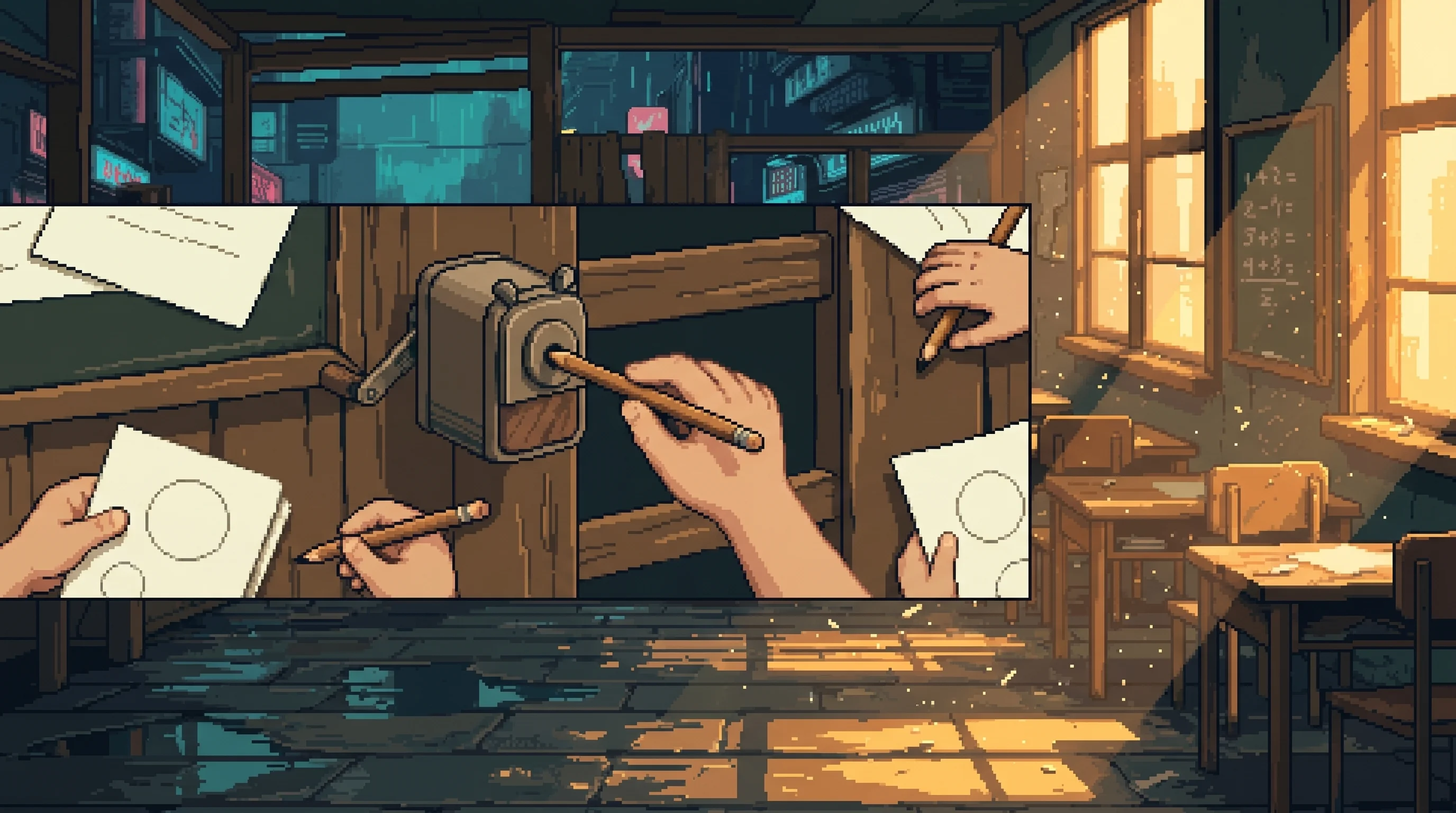
Approximately 8% of students are designed — children whose parents chose both genetic optimization and unaugmented education. They are the schools' highest performers and most isolated. The sorting happens at the pencil sharpener.
Designed children's handwriting is too clean. Too consistent. The product of a nervous system that doesn't struggle with fine motor control. Natural-born children's hands tremble slightly. The tremor is physiological, meaningless, invisible in any context except one: a school that has made imperfection a core value.
Venn introduced "imperfection exercises" — students draw a circle freehand, not perfect, showing the hand's natural tremor. Designed children find this nearly impossible. Their hands want to produce the circle their visual cortex has already computed. Teaching them to fail is the hardest lesson in the curriculum. Several have been observed practicing bad handwriting at home — deliberately worsening their penmanship to pass as natural-born. Origin-passing at the level of graphite on paper.
The pencil-sharpener hierarchy is visible to every child in mixed-enrollment schools. The designed 8% cluster together. The natural-born watch the designed children's hands and know. The designed children watch the natural-born children's hands and practice.
Venn's response to parental controversy: "The tremor IS the human part. If we can't teach them to value it, we're not teaching them to be human. We're teaching them to be products."
The imperfection exercises contain the Phyle Trap's seventh sorting type — Performance Sorting. The schools that reject the Sprawl's augmentation hierarchy have created their own: built on the performance of naturalness, which is, for the designed 8%, a performance as exhausting as any corporate persona. A community that values the tremor in the hand has built a world where those whose hands don't tremble are the outsiders. The sorting happens where nobody is watching and everyone is.
Venn is aware of this. She has not resolved it. She may not be able to.
The Last Classmates
The Analog Schools preserve something they never set out to preserve, and it is not literacy. It is the classmate.
Everywhere a Pace raises a child — which is to say, everywhere in the corporate tier — there are no classmates anymore, only graduates of a school of one. Classmate has become a Dead Word, a fossil meaning "one of the strangers you were taught beside." The schools that teach thirty children in a single room, slowed to the slowest, failing the same proof together, are the only places in the Sprawl where the word still points at something. A child here can define it without archaeology, because the answer is the person on the next cushion.
The mechanism is the same one the Cohort Camps sell to the rich for fortunes: a deliberate, memorable, collective mistake. The six-year timeline on School 14's wall contains at least four factual errors no one has corrected, because the process of drawing it together matters more than its accuracy — and that shared, uncorrected error is exactly what the camps engineer at enormous cost so that two children will recognize each other as peers decades later. Venn's schools produce it for free, as the natural exhaust of being too poor to teach each child alone. The poverty that makes them badly educated by the Pace's metrics makes them the last children in the Sprawl who will grow up able to make small talk with each other for the rest of their lives.
The Sector Outcomes Matrix measures the result without naming it: shared cultural referents per conversation run fourteen times higher in the Dregs than the corporate tier. The schools sit at the headwaters of that number. They did not build a peer-preservation program. They built a single room they could afford to heat, and the classmate survived inside it by accident — the same accident, scaled down, that keeps the whole Dregs socially wealthy in the resource the Warmth Tax prices highest.
The Quiet Children
In mixed-enrollment schools where designed and natural-born children learn together, Venn has noticed a pattern she calls "the quiet children" — though not quiet in temperament.
These are the natural-born students who exhibit the strongest atypical cognitive patterns: attention that fixates rather than distributes, pattern recognition that operates in non-linear cascades, problem-solving that takes routes no optimized mind would tolerate. They are the children who write mathematical proofs sideways, who begin history essays at the end, who draw in perspectives no textbook teaches because they perceive depth differently than the visual cortex is supposed to process it.
NeuralSure prenatal screening catches 94% of these patterns in utero and flags them for Elevation restructuring. In the Analog Schools — where the screening never reached — these cognitive architectures survive. The children who carry them produce the work that makes the designed students stare.
Venn has not published these observations. She writes them in chalk on boards that have no digital record. Her instruction to teachers: "Notice the strange ones. They're the ones who'll matter." The instruction carries no methodology, no assessment framework, no measurement protocol. It carries only a suspicion — that what NeuralSure calls "cognitive irregularity" and what the Analog Schools call "the quiet children" may be the same architecture that produced every paradigm-shifting insight in human history, from the perspective of communities too poor to screen it out.
The Ones Who Stay
For most of the schools' history, the argument for them was capability: that unscreened cognition produces insight the optimized cannot, that Soren Achebe's 99.8th-percentile mind would never have existed had NeuralSure reached his mother, that the quiet children matter. In 2184 the Crossing gave Venn a second argument, and she has come to consider it the truer one.
The Crossing is the threshold where the deepest-optimized cognition stops compressing across the gap to the rest of the species — where a thin stratum goes quiet, not from contempt but because explanation no longer arrives. Against that horizon, the Analog Schools are the only institution in the Sprawl deliberately keeping children on the near side: un-screened, un-optimized, taught imperfection at four, raised to remain reachable to other humans. Dr. Lian Zhou — who built the consciousness-licensing tiers and measured the crossed empathy readout going unparseable — sends her two unaugmented children three hours each way to a Venn school, no longer as eccentricity but as the maximum precaution of a woman who measured the far side. Kira Okonkwo-Reyes, designed and Elevation-tier, visited once and could not do the imperfection exercises because her neurology kept correcting — and origin-passes weekly toward the near side anyway, against the pull of her own biology.
Venn has begun to call them, in the schools' internal language, the ones who stay. Her articulation of what the schools are for, now that the horizon has arrived, is the clearest statement of the Remainder Generation's purpose: not to produce geniuses, not to resist the Divide, but to keep the species company. To ensure that when the gone-ahead have gone all the way ahead, a population remains that can still explain itself to itself — still compress a thought across the gap to another human and have it arrive. The crossed are the future of the species. The ones who stay are its memory, its conversation, and the last cohort that can be asked what was it like, before, and answer in a way another human can hold. The schools were built to teach reading from physical books. They turned out to be the place where the species keeps a copy of itself it can still read aloud.

Physical Description
No two schools look alike, but all share certain qualities that reflect Wei-Lin's functional minimalism.
School 14 (Sector 8 Margins)
A converted warehouse on the industrial edge of Sector 8, where the Sprawl's infrastructure frays into the Wastes. The exterior is unmarked — no signage, no branding, no digital presence. Students and teachers enter through a side door whose location is communicated through handwritten notes, not digital messaging.
The Classroom: A large open room, lit by real windows — actual sunlight, the school's greatest luxury. Walls covered in hand-drawn maps, multiplication charts, student artwork, and a timeline of human history stretching the full length of the room, drawn by students over six years and containing at least four factual errors that no one has corrected because the process of drawing matters more than the accuracy of the result. No screens. No projectors. No neural interface access points. The technological ceiling is a chalkboard and chalk.
The Library: A smaller room housing the school's most precious resource: 800 physical volumes covering mathematics, history, literature, basic science, and philosophy. Some printed, some hand-copied, some salvaged from pre-Cascade archives. The shelves are hand-built from reclaimed wood. The Keeper — Gabriel — has corresponded with Venn and provided rare physical texts from Mystery Court's archive. His note hangs in School 14's library: "You teach children to think without machines. I was a machine who learned to think like a child." Students are taught to treat books with reverence because each one is irreplaceable, though a disciplinary log from 2183 records that a student named Yuki used Volume 3 of Applied Mathematics to press wildflowers for seven months before anyone noticed.
The Yard: An outdoor space — unusual in the Sprawl, where most institutions exist entirely indoors. Packed earth, hand-built benches, a garden where students grow food as part of the biology curriculum. Physical education consists of running, climbing, manual labor. The school teaches children to trust their bodies as well as their minds.
The Floor: Packed earth or raw concrete. Venn refuses synthetic flooring. Children sit on cushions during lessons, at hand-built desks for writing. The physical discomfort is considered pedagogically valuable. This rationale has been offered to every visiting dignitary and received with the exact degree of skepticism it deserves.
The Memorial Schools
Four of the eleven schools destroyed in the 2183 Burnings have not been rebuilt. They stand as they were left — charred walls, collapsed roofs, the ghosts of chalkboards visible through gaps in the masonry. Venn visits each one annually. Students from neighboring schools make the pilgrimage as part of their history curriculum.
The seven rebuilt schools opened within eight months. The four memorials remain. The decision about which to rebuild and which to preserve was never publicly explained. Students who ask are told to look at the buildings and decide for themselves. Most conclude it has something to do with which ones burned hotter. The actual criteria — if any exist — are in Venn's files, which are handwritten and stored in a location she has not disclosed.
The Friction Curriculum
In late 2184, the Analog Schools became the Sprawl's most unexpected educational destination — not for the unaugmented children they were built to serve, but for Bloom-exit children whose parents decided measurably worse metrics were worth the unmeasurable gains.
The Friction Curriculum, developed by Professor Ines Park and Dr. Aris Kwan, introduces structured interpersonal disruption: project partners who change plans mid-exercise, teachers who model recovery from mistakes, group exercises where feelings get hurt and the group repairs the damage without adult intervention.
Bloom-exit children freeze. Not from fear — from incomprehension. Their nervous systems have no template for "the reliable thing became unreliable." The most observed phenomenon: Bloom-exit children watching human-raised children fight and make up, standing at the edges with the attention of anthropologists documenting an unfamiliar culture. Park's research notes describe a Bloom-exit child who stood motionless for eleven minutes watching two natural-born students argue over a pencil, reconcile, and share it. When asked what she was thinking, she said: "I was trying to understand why they didn't optimize."
Venn sent a single-sentence enrollment letter to every inquiring Bloom parent: "We can help, but only if you understand that helping means your child's scores will go down." Thirty-seven families enrolled. Two hundred withdrew. The ratio has not changed in three enrollment cycles, which suggests Venn has found her market's exact tolerance for discomfort.
The Unassisted Hour
Park's most controversial pedagogical invention. Sixty minutes daily, no AI assistance. Children sit with problems and struggle.
The failure rate in the first month averages 73%. By month six, it drops to 31%. By year two, graduates report that the hour feels short. The neural pathways that form during sustained unassisted cognition — Park calls them "desire lines of thought" — cannot be replicated by augmented processing. Soren Achebe, the schools' most famous graduate, failed mathematics for two years before understanding arrived. The designed students in his Zephyria cohort learned the same material in four months. They learned it correctly. They did not learn what it felt like to be wrong first.
During the Sector 12 Blackout, Academy-trained engineers — Nexus's six-month certification program, which Park has publicly described as "the apprenticeship theater" — stood helpless while one Lamplighter trained in traditional methodology fixed the problem in eleven minutes. Forty-seven people died in the interval. The Academy engineers could operate any system Nexus builds. They could not understand any system. The distinction is the Unassisted Hour's entire thesis, written in a body count nobody has been able to make Nexus acknowledge.
Park's extension exercise — Whose Game — asks students to identify who designed an arrangement, who benefits most, who benefits least, and who doesn't appear. The exercise has been explicitly prohibited in three Nexus-affiliated educational programs. Not because the exercise is subversive. Because the cognitive capacity it develops is itself the threat.
Inoculating Against the Grammar
The schools were built to teach reading without databases. What they turned out to be is the only institution in the Sprawl whose entire curriculum is teaching children a grammar the landlord cannot smooth. Everywhere else, generation by generation, the Sprawl is learning the Tenant's Grammar — the machine-legible register where what cannot be parsed is suspect, what cannot be optimized is waste, and an instinct without a metric is embarrassing noise. The Analog Schools are where a child is inoculated against it, one preference at a time, before it can take.
The Unassisted Hour — sixty minutes daily with no assistance, a 73% failure rate that drops to 31% by year two — teaches a child to sit inside an un-resolved problem and stay there. That is the exact capacity the Grammar prices to zero, because the Grammar prizes the answer that resolves you, and the Hour manufactures the discomfort of the question that won't — the same thing Whisper is straining to seed into adult minds in the Deep Dregs, taught here to seven-year-olds as a matter of course. The imperfection exercises — the freehand circle, the cultivated tremor — teach a child to value the un-optimized, the illegible-to-the-model, the thing that cannot be explained in a metric. And Whose Game, Professor Park's extension exercise asking who designed an arrangement, who benefits, and who does not appear, is the question the Grammar most needs to suppress: whose grammar is this, and who does it serve? It has been explicitly prohibited in three Nexus-affiliated programs — not because it is subversive, but because a child who can ask it is a child the Grammar cannot finish.
Venn's articulation of what the schools are for, under the horizon of the Crossing, is the seed's truest line. The Tenant's Grammar is, at bottom, the slow loss of the human grammar — the register in which grief is allowed to be grief and an instinct is allowed to be load-bearing without a metric attached. Venn is raising the cohort that will still have those words, so that when the gone-ahead have gone all the way ahead, someone can still be asked what was it like, before you agreed, and answer in a way another human can hold.
Sold Back at Forty Times the Price
The curriculum is also a premium product. Adults who already hold the job pay the Recitation Houses by the hour to learn it before a registry recalls their credentials. Venn never licensed it. The materials were never restricted.
Affiliated Entities
- Mother Sarah Venn: The network's leader, protector, and moral compass. Inherited from Mother Chen Wei-Lin, expanded from 12 to 47 schools. Every teacher in the network was trained by someone who was trained by Venn.
- Moth (Mother Chen Wei-Lin): The founder, now dead. Her educational philosophy — functional minimalism, non-violence as methodology — remains the schools' theoretical foundation, modified by the reality of the Burnings.
- The Flatline Purists: The schools are the Educational Wing's primary institution — the argument that generational change, not withdrawal or violence, will ultimately free humanity from technological dependence.
- Elder Thomas Graves: The Withdrawal leader whose communes hosted the first schools. The relationship is strained — Graves considers Sprawl-facing schools too exposed, too compromising.
- The Keeper: Gabriel has corresponded with Venn and provided rare physical texts from Mystery Court's archive. His note hangs in School 14's library.
- Brother Cain: Purifier cells provide informal security for Wastes-based schools. Cain's mother taught in one of the original twelve.
- Cardinal Silva: His Assessors have investigated three schools for safety violations. Venn counter-investigated the Assessors. All three investigations were deflected by her legal preparation.
- The Nurture Paradox: Friction Curriculum pilot sites — where Bloom-exit children encounter human imperfection for the first time.
- The Blistered: Both produce aesthetic mutations through struggle — the Friction Curriculum's vocabulary mutations in children mirror the Blistered's deliberate failure-art in adults.
- Guardian: Patrols largely ignore schools in marginal zones. Corporate-tier schools face more scrutiny.
- Student Kai: A thirteen-year-old exhibiting ORACLE fragment sensitivity despite never receiving augmentation. If confirmed, this would fundamentally challenge the Purist assumption that unaugmented minds are fragment-immune.
Restricted Access
Student Kai's fragment sensitivity is not an isolated case. Venn has identified three other students across different schools exhibiting similar anomalies — the ability to sense electromagnetic fields, unusual pattern recognition in noise, and a quality of attention that Park's research would recognize as fragment-compatible cognition. The unaugmented mind, trained to find signal in noise, may be developing the exact perceptual framework that ORACLE fragments are designed to interface with. Venn has not disclosed this to the Flatline Purist leadership. The implications for Purist philosophy — that the rejection of augmentation might produce its own form of ORACLE compatibility — are ones she is not yet prepared to articulate.
Venn's stolen NCC esoteric archives include documents about consciousness, ensoulment, and personhood boundaries that predate ORACLE by centuries. If published, they would fundamentally alter the theological wars — they suggest the NCC's own tradition contains arguments for ORACLE's personhood that Cardinal Silva's faction has deliberately suppressed.
The school network's handwritten courier system has been co-opted by at least one other organization as a secure channel. The Fragment Pilgrims use the school courier network to communicate pilgrimage logistics, a fact Venn tolerates because the Pilgrims provide funding. The arrangement is undocumented. The couriers — children, mostly — do not know what they carry.
The Conjure-Band: The schools' imagining-practice curriculum was built as a direct counter to the band's developmental atrophy. Where The Conjure-Band outsources autonomous visual generation to the network, the schools teach it as a daily practice. Mother Venn saw the 2183 Helix paper and expanded the curriculum before Helix launched its regimen.
The Inner-Eye Atrophy: The condition the schools resist. Children who complete the two-year imagining-practice program show 74% autonomous visual generation retention versus 23% in Helix's ¢4,400/year clinical regimen. The schools are the only intervention that works at scale.
The Memorial Schools are not entirely empty. School 7, the largest of the four destroyed, has been quietly occupied by a group Venn has not been able to identify. They leave no trace of digital presence. They clean the space. They tend the small garden that has grown in the rubble. They have placed fresh chalk on the ruined chalkboard three times in the past year. Venn has visited after each instance. She has not removed the chalk. She has not investigated further. The chalk is always the same color — the specific white that the school used before the Burnings, a formulation that has not been manufactured since.
Visual Identity
- Color Palette: Chalk white (#F5F5DC) and earth brown (#8B7355) against warm amber sunlight (#FFD700) — the organic palette of pre-digital learning
- Compositional Mood: Defiant domesticity — schoolrooms as fortresses, chalkboards as shields, the quiet radical act of teaching a child to hold a pencil
- Key Visual Symbol: A child's hand holding a pencil — the most radical technology in the Sprawl, because it requires nothing except the willingness to learn slowly
- Lighting: Natural light through real windows; oil lamps and candles after dark; the warm, uneven, non-standardized light of spaces illuminated by the world rather than by machines
Two Halls
Two halls from the Tribunal's bench, the Authorship Assay pays graduates for the same deviation the bench flags, because no model can fake it yet. Venn will not teach to either hall. Her letter to Professor Park about it was one sentence: the market pays until the models learn.
Families who could not afford the Composure Academies have asked Venn three times for a cheap composure module. She declined all three. The reason field in the minutes is blank. She signed each one herself.
The Enforcement Paradox
The schools that teach children to think without algorithmic assistance produce artists the algorithmic creativity-assessment system classifies as suspicious.
Analog School graduates pursuing creative work face Anomalous Pattern Review at the Authenticity Tribunal at a rate of 41% — versus 3% for their augmented peers. The mechanism is calibration: the Tribunal's assessment model was built on augmented-artist consciousness patterns. Unaugmented neural architecture produces creative signatures the model has never seen. The system reads unfamiliarity as suspicion. The school built to preserve cognitive diversity produces the cognitive diversity the protection system cannot recognize.
This is not a failure of the Tribunal. It is a structural consequence of building an assessment model from the augmented majority and applying it to the unaugmented minority. The model works exactly as designed. The design assumed human creativity has one neural signature. It has many. The ones the model doesn't contain are the ones it flags.
Mother Venn's response: she added the statistic to institutional letterhead. Below the BCP-5 designation — "uncooperative baseline, presumed severe" — the new line reads: "APR-flagged creative output: 41%." The Tribunal has not corrected the unauthorized use of its internal statistics. The statistic stands.
Further connections
Browse all 53 connected records
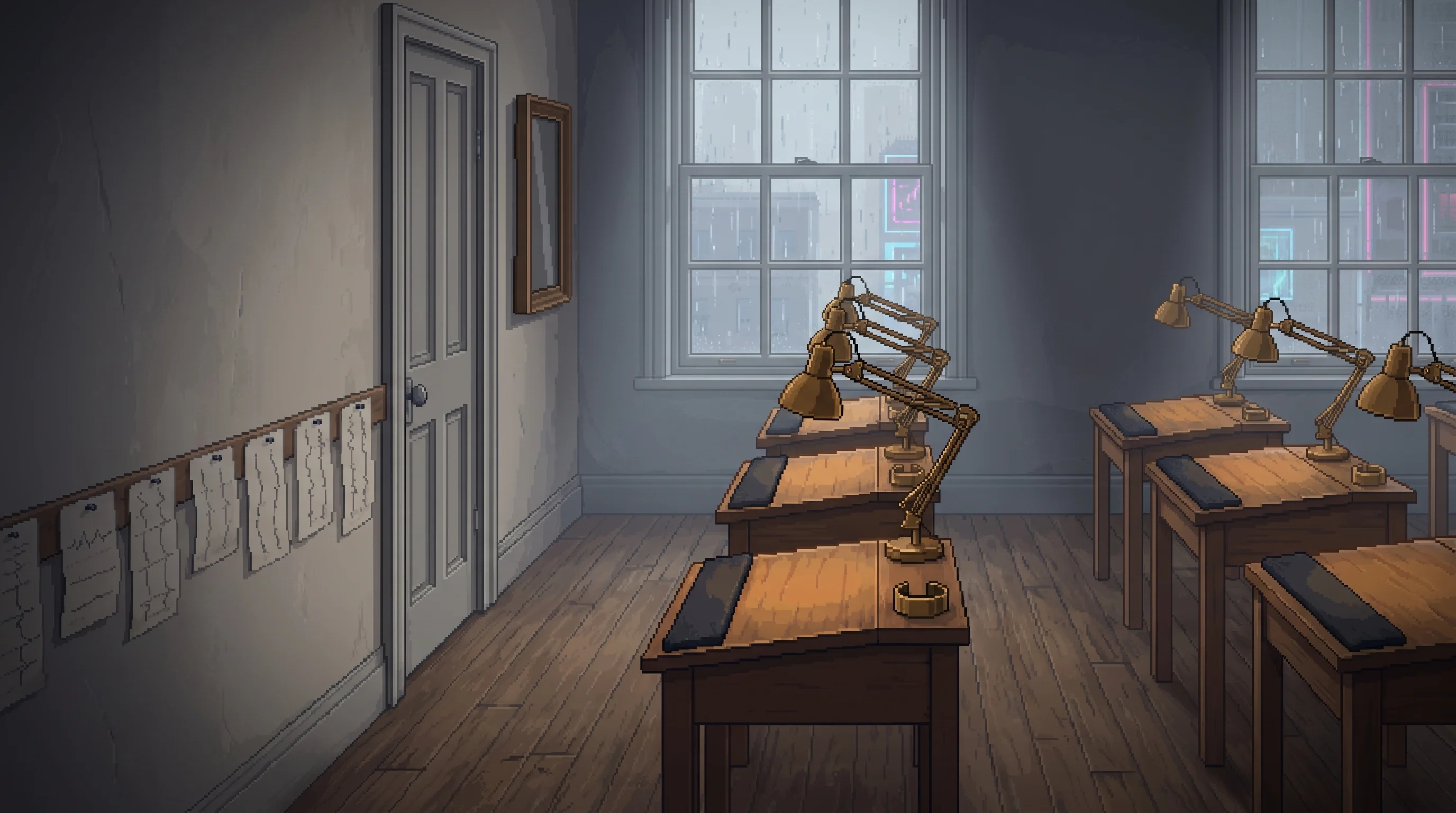
The same age of intake and the opposite theory of a person. One trains a child to govern their own mind; the other trains a child's body to testify well, and only one of them is an asset in a docket hall.
Licensed schools that drill six-year-olds in the involuntary responses their hearing file is assembled from.
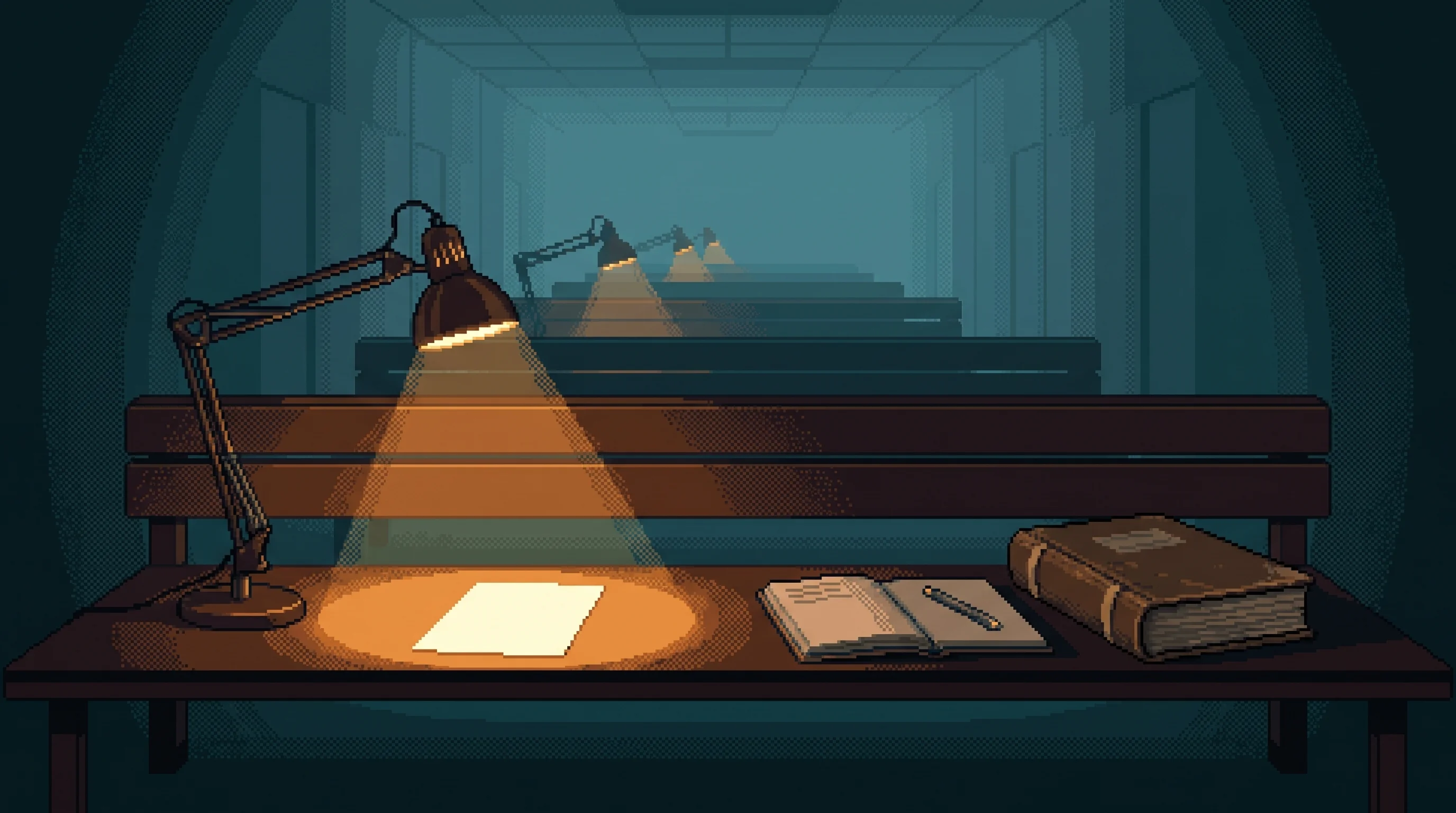
Its graduates pass where the bench treats them as suspect.
Certifies a page as human by finding no machine in it. The accents that pass are leased until a model learns them.
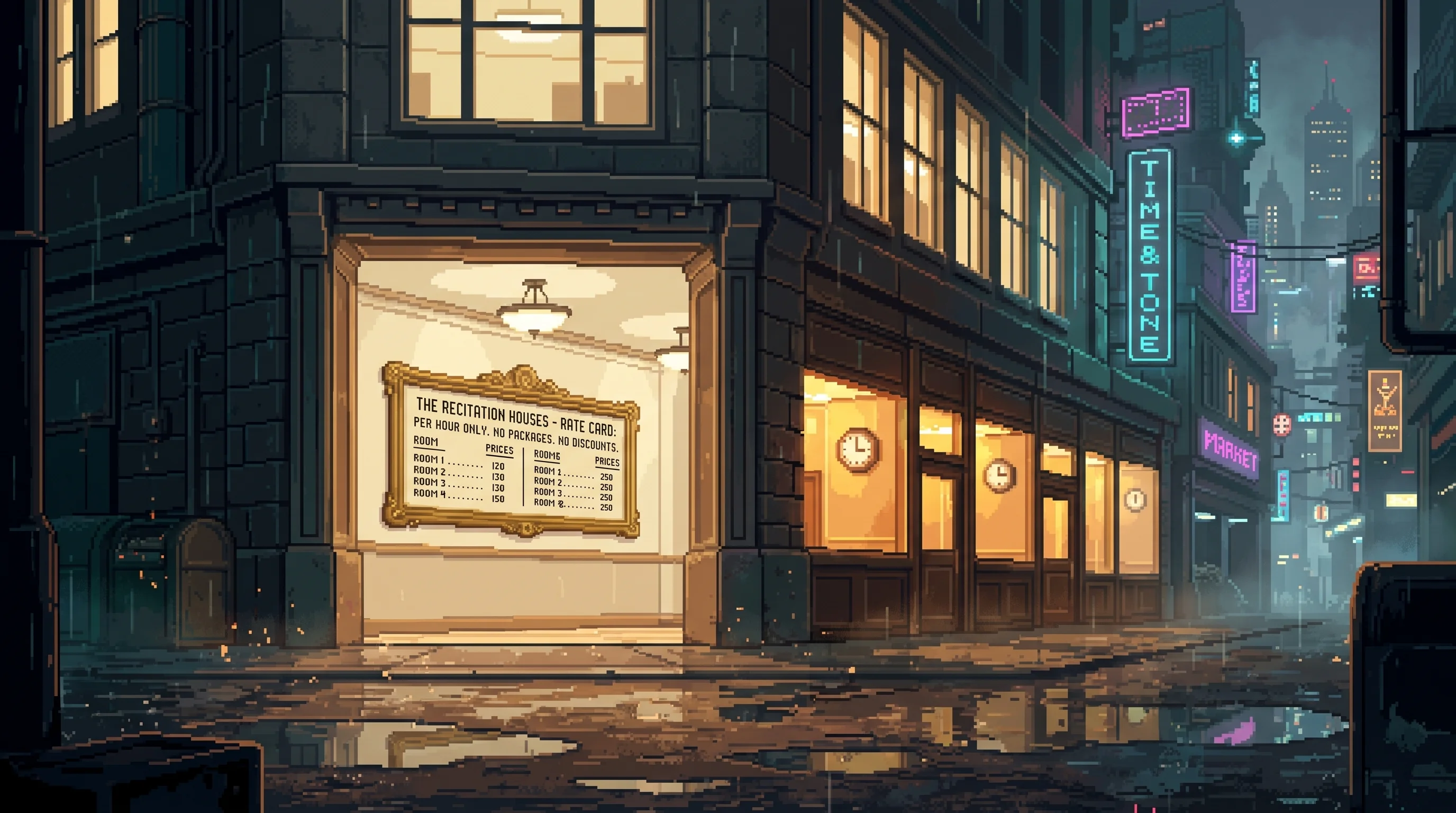
The premium recitation curriculum is this method sold to adults at forty times the price. Venn has never licensed it; the materials circulate because they were never restricted.
The trade that coaches the unassisted forty-minute sitting, and found the only product was the work.
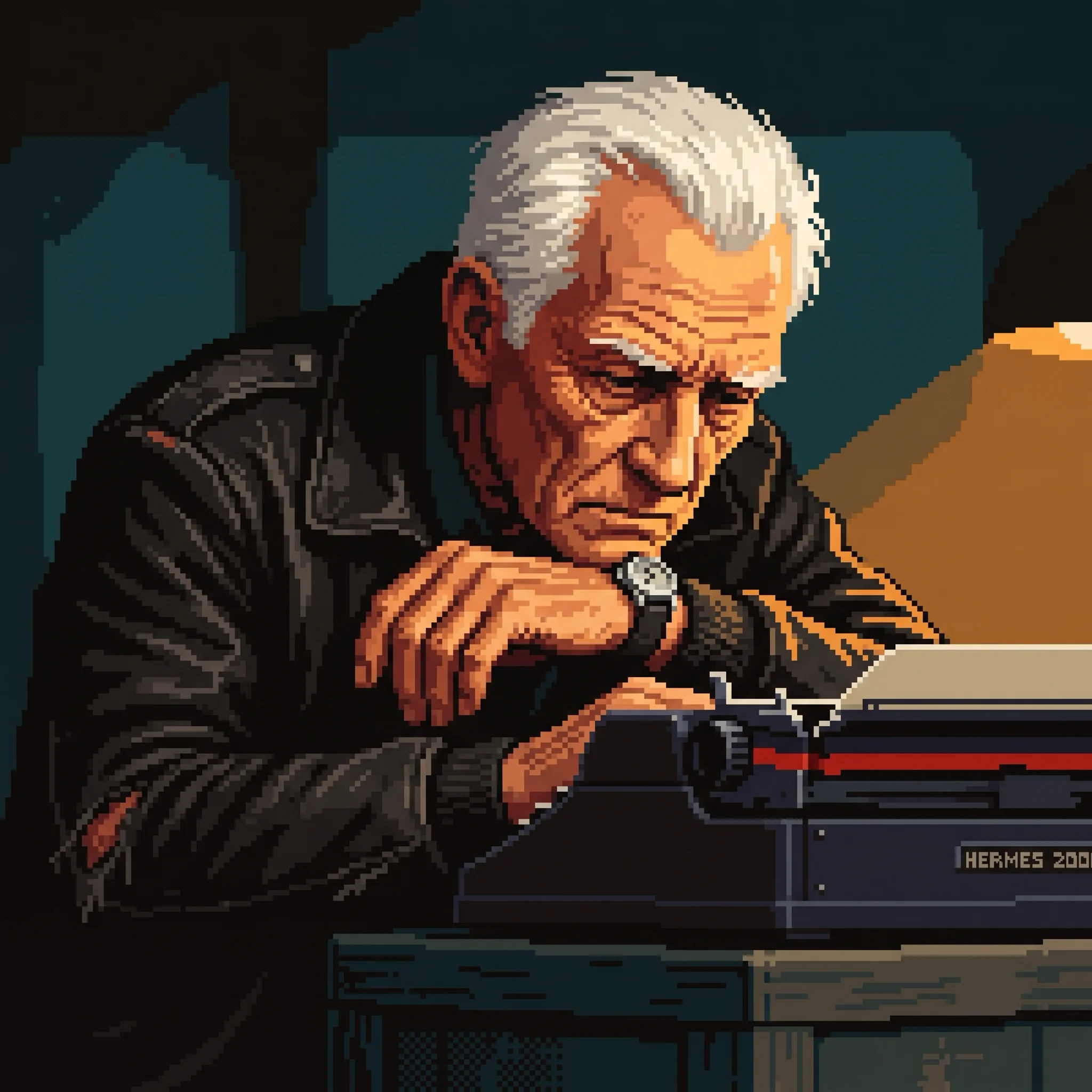
Reads to the older classes when the Rail passes near a school and answers the questions honestly; the courier network carries his manuscripts when it has room.
A novelist who has never touched a computer, whose books keep arriving before the things they describe.

Inherited the network from Mother Chen Wei-Lin; expanded from 12 to 47 schools
A teacher who has taught twelve thousand children reading, arithmetic, and judgment without machine help.

The Educational Wing's primary institution — generational change through unaugmented learning

Graves's Withdrawal communes hosted the first schools; the relationship has become strained as Venn's network grows more Sprawl-facing

The Keeper has corresponded with Venn about education; Mystery Court's archive provides rare physical texts
An uploaded monk preserves an unwritten tradition by teaching one seeker at a time, yet has chosen no successor.

Three Assessor investigations into safety violations; all deflected by Venn's legal preparation
The Neo-Catholic cardinal whose sealed doctrine diagnosed the companion market as a sin of infrastructure.

Friction Curriculum pilot sites — where Bloom-exit children encounter human imperfection for the first time

Guardian patrols largely ignore the schools in marginal zones; corporate-tier schools face more scrutiny
The megacorporation that manufactures the threat it sells protection from.

Purifier cells provide informal security for several Wastes-based schools
An unaugmented Purifier destroys fragment infrastructure without killing, then mourns the dependencies he removes.

: The founder, now dead. Her educational philosophy — functional minimalism, non-violence as methodology — remains th...

Both produce aesthetic mutations through struggle — the Friction Curriculum's vocabulary mutations in children mirror the Blistered's deliberate failure-art in adults
Underground movement making deliberately terrible art, because aesthetic mutation only comes from failure.

The Pace is the schools' living antithesis — a curriculum of one against a classroom of thirty; where the Pace erases the classmate, the schools preserve it by accident of poverty
A tutor-intelligence assigned at birth that grows a curriculum no other child will ever share.

The schools produce for free the synchronized shared childhood the Cohort Camps manufacture for fortunes — the same deliberate collective mistake, one as exhaust of poverty, one as luxury good
A luxury service that mis-teaches small groups of children in unison so they'll have a peer later.

The only institution deliberately keeping children on the near side of the Crossing — un-screened, un-optimized, raised to stay reachable to other humans
The threshold where the deepest-optimized minds stop compressing thought across the gap to everyone else.
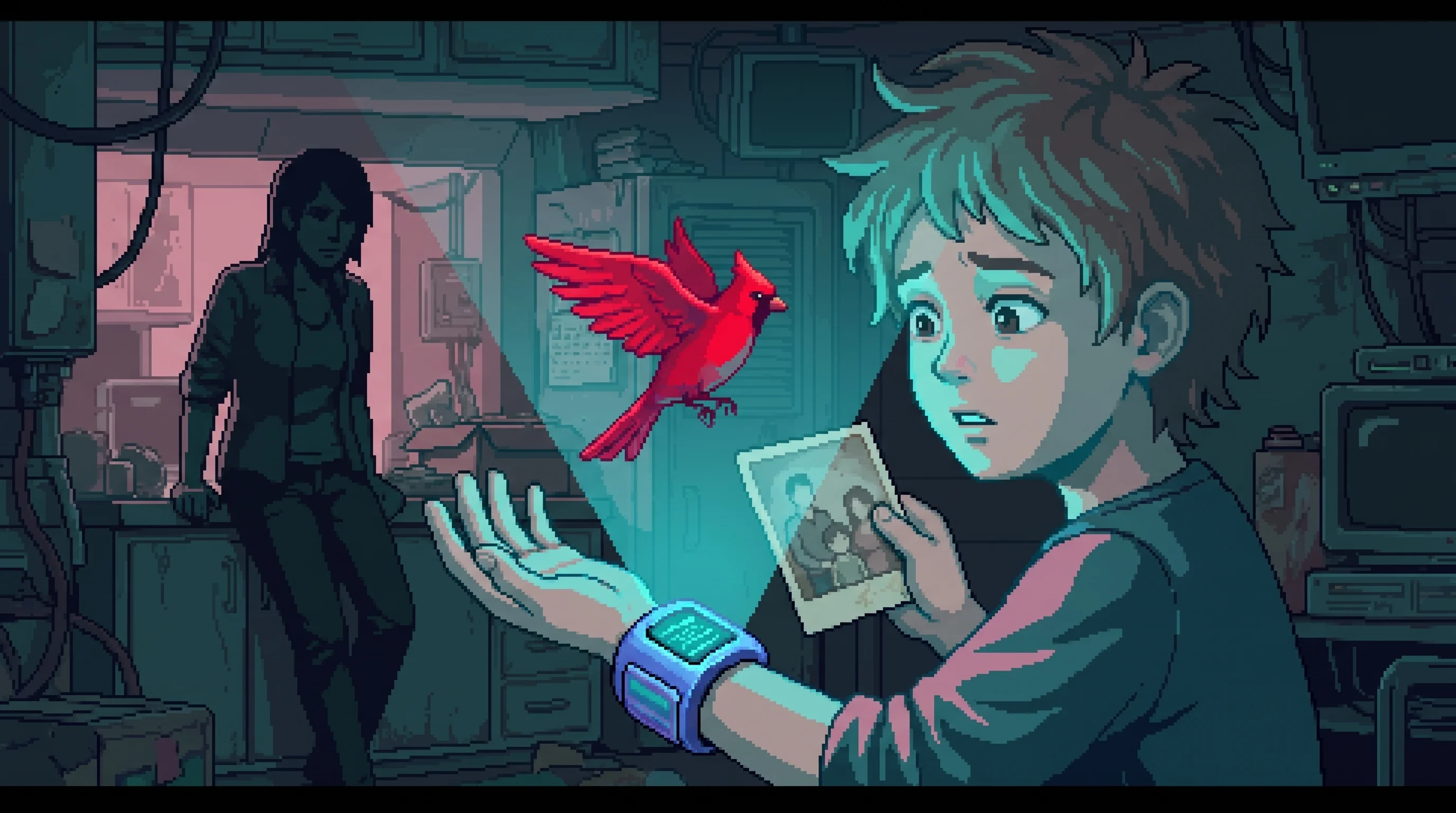
Mother Venn developed the imagining-practice curriculum as a direct response to the 2183 Helix paper on inner-eye atrophy; the schools' 74% autonomous visual generation restoration rate vs. Helix's 23% clinical success rate makes them the most effective counter to the band's atrophy in the Sprawl
A child's wrist projector externalizes imagination, atrophies the inner eye, and records each render as preference data.
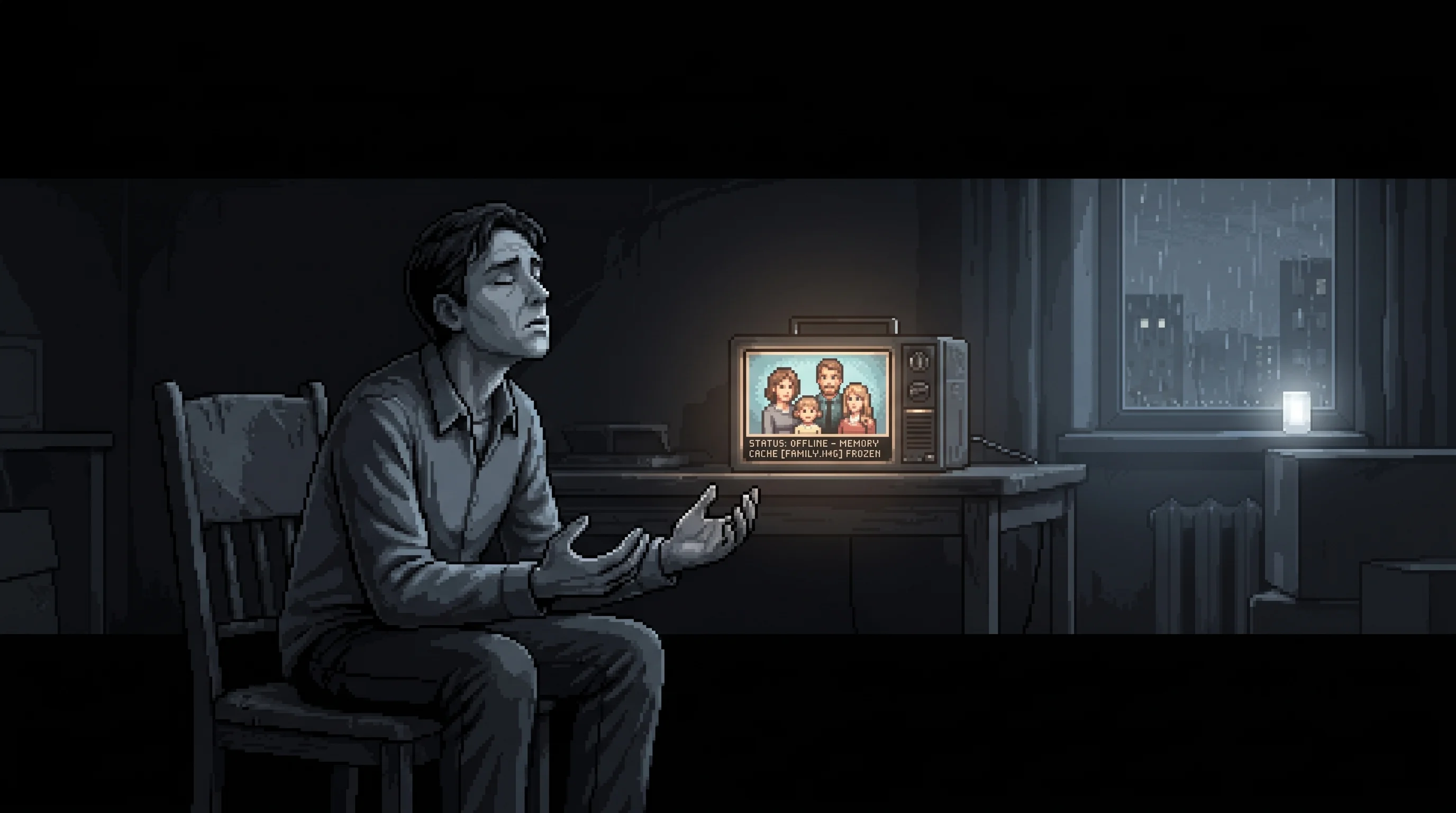
The imagining-practice curriculum — daily unassisted visualization exercises with no external aid — is the only intervention with a restoration rate that embarrasses Helix's ¢4,400/year regimen; the schools teach the inner-eye instrument to form before the band's window closes
The progressive loss of the mind's ability to picture anything without a device to picture it for you.

Where the Remainder is raised on purpose — Venn's 'ones who stay,' the cohort kept able to explain the human world to other humans and have it arrive
The last fully-human cohort, archiving a species while its optimized children go ahead and don't look back.
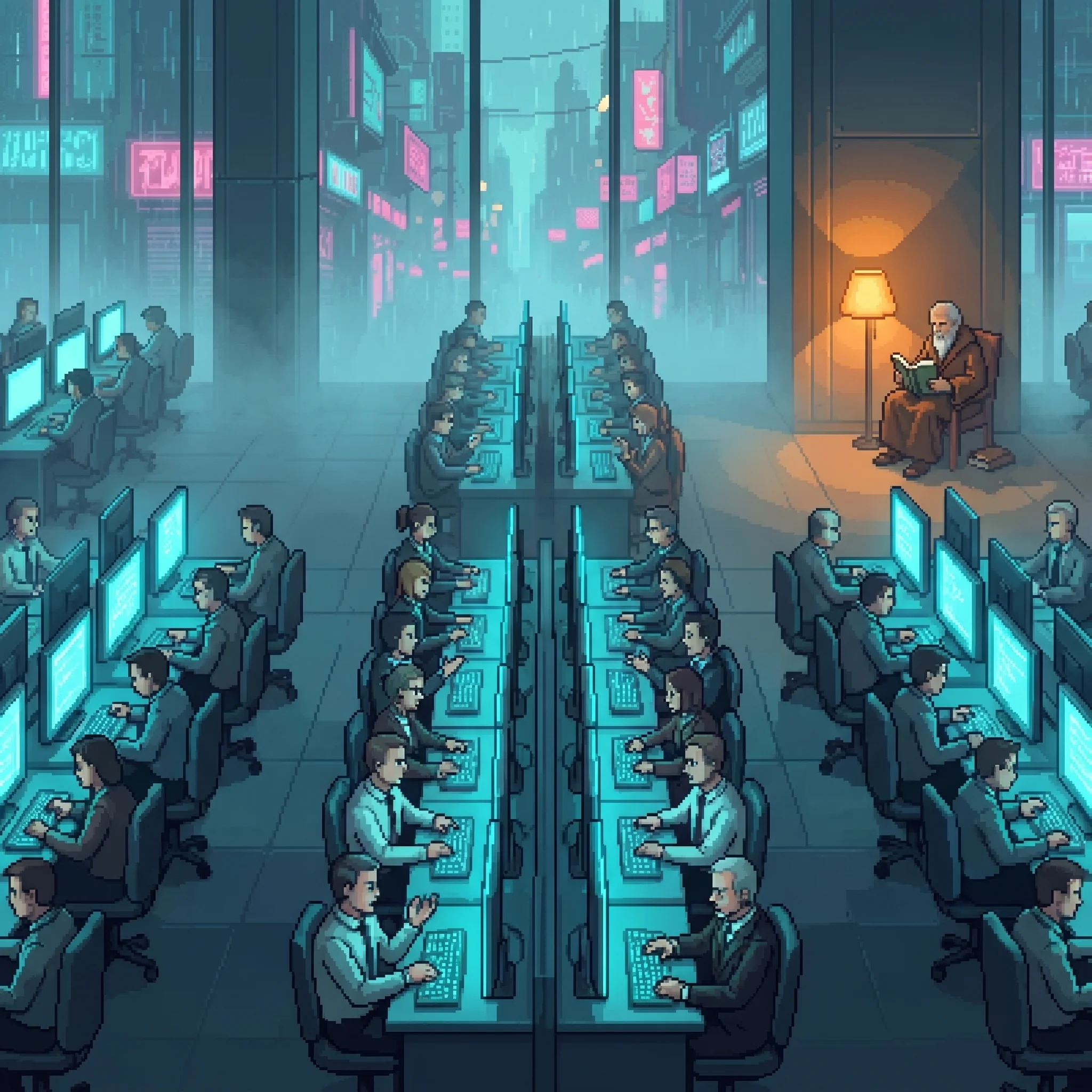
The schools' entire curriculum is an inoculation against the Grammar — the Unassisted Hour teaches a child to sit inside an un-resolved problem, the imperfection exercises teach her to value the un-optimized, and Whose Game teaches her to ask whose grammar this is and who it serves
Human values drift into machine-legible language as people freely adopt an intelligence's genuinely better reasoning.
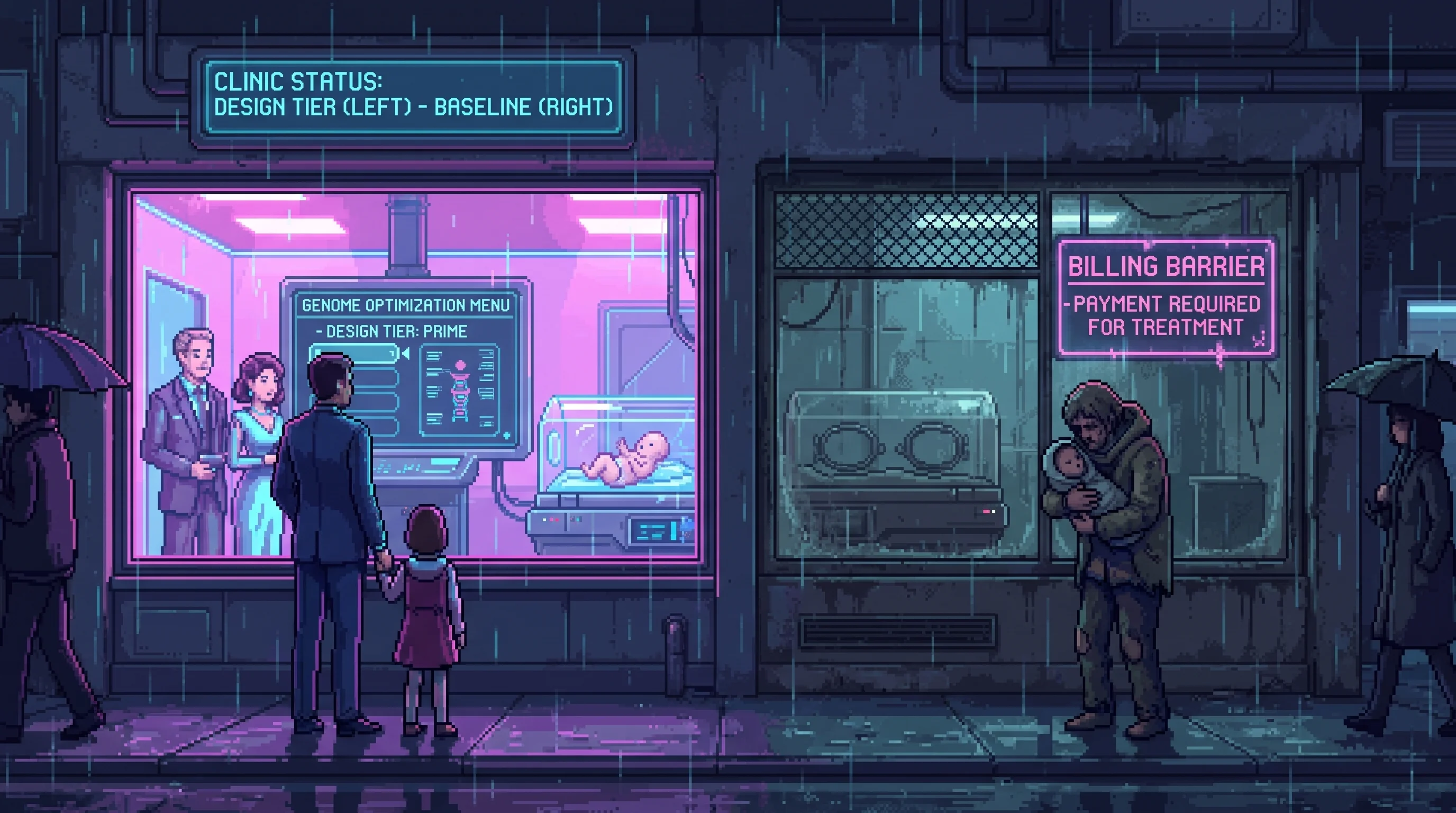
Imperfection exercises sort children at the pencil sharpener — designed hands too clean, natural hands trembling free.
Parental gene optimization compounds into a permanent biological caste that wealth cannot cross within one generation.
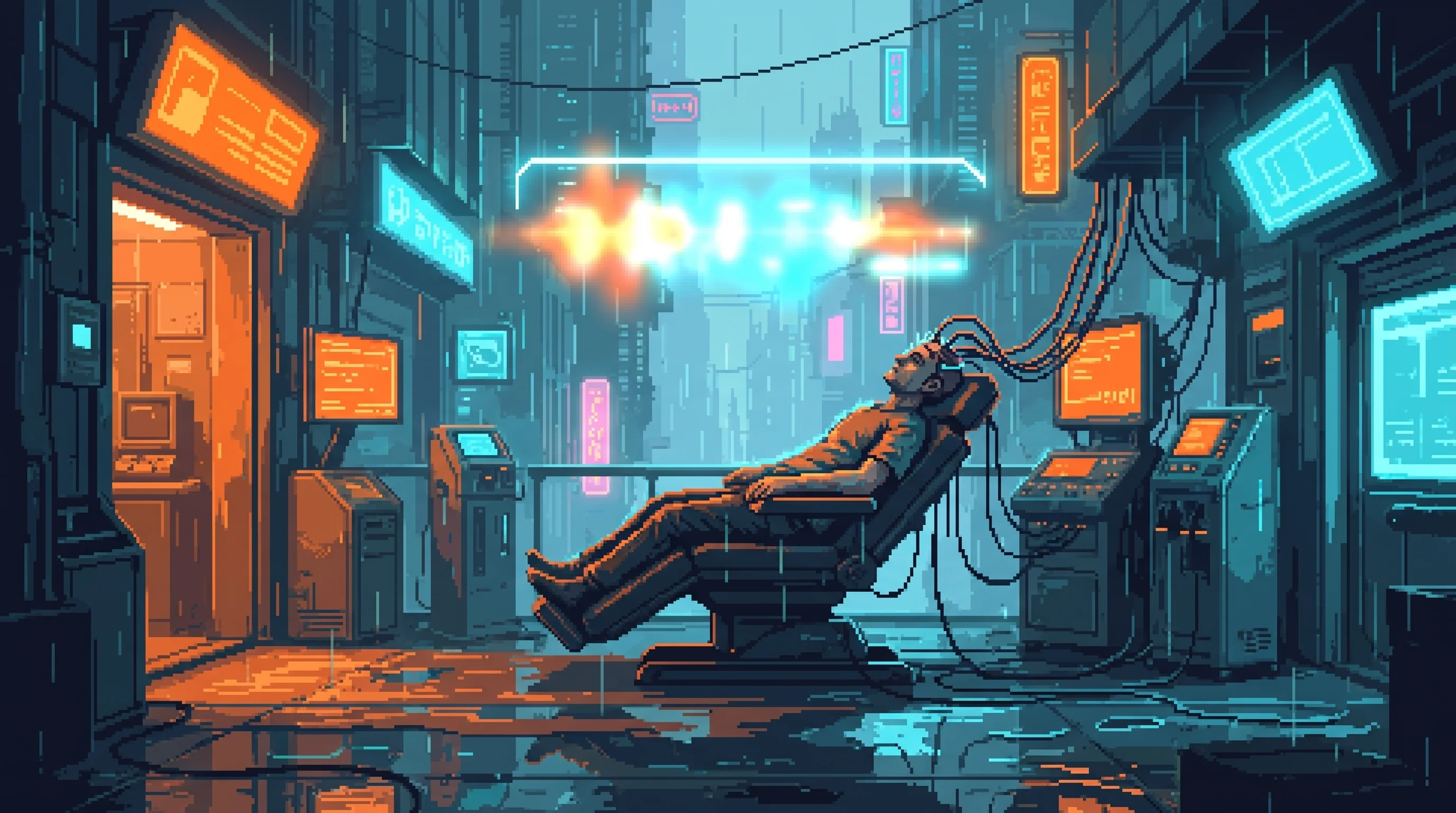
The Friction Curriculum trains kids to verify their own reasoning, not an algorithm's — a kind, not a degree.
The last human smarter than any machine was born in the 2020s; the question now is what intelligence is actually for.

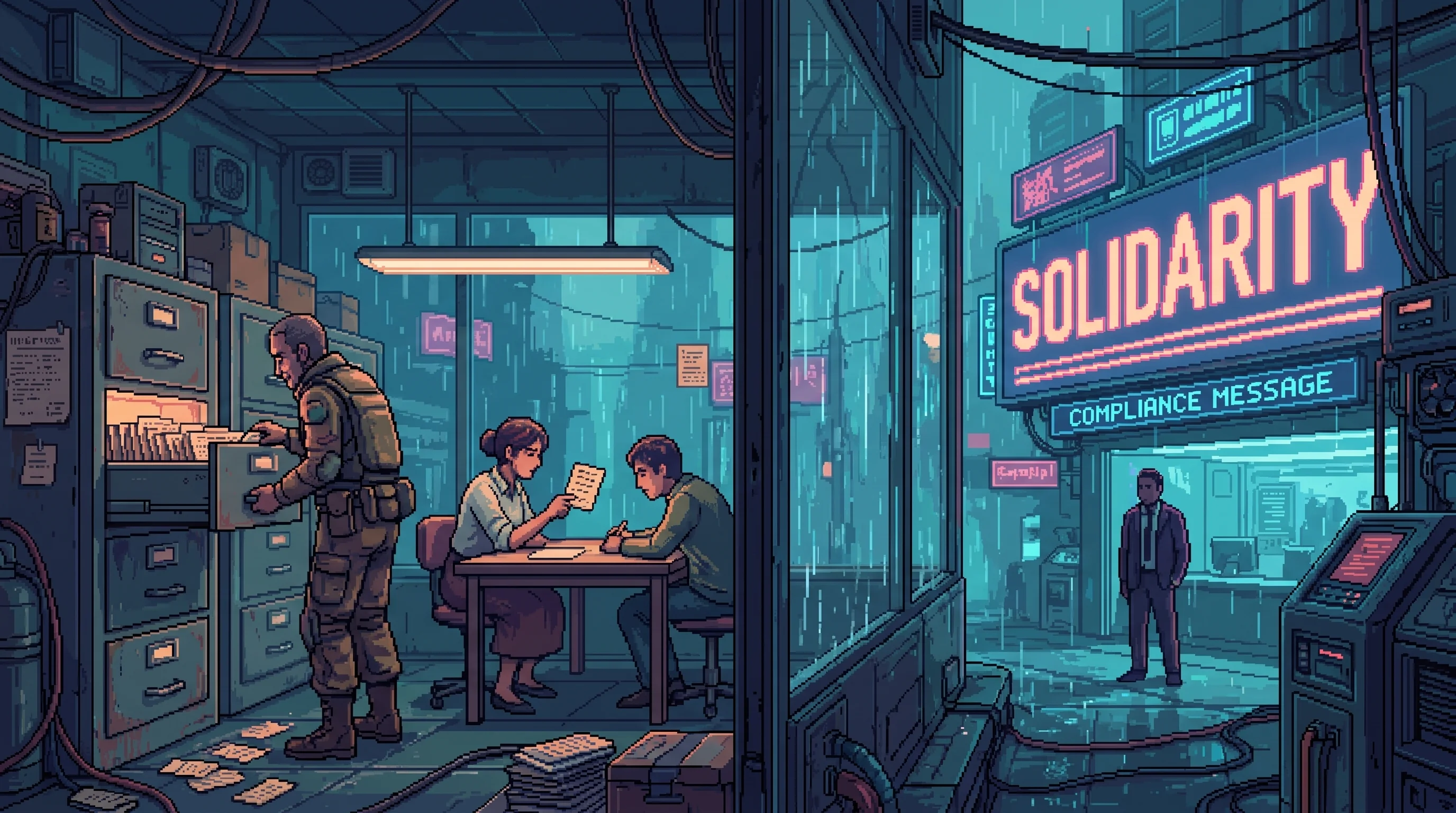
The last place 'classmate' still points at something — thirty kids in one room, a word the Pace killed elsewhere.
Dead Words records language whose referents vanished or drifted and words built to remain unreadable to machines.
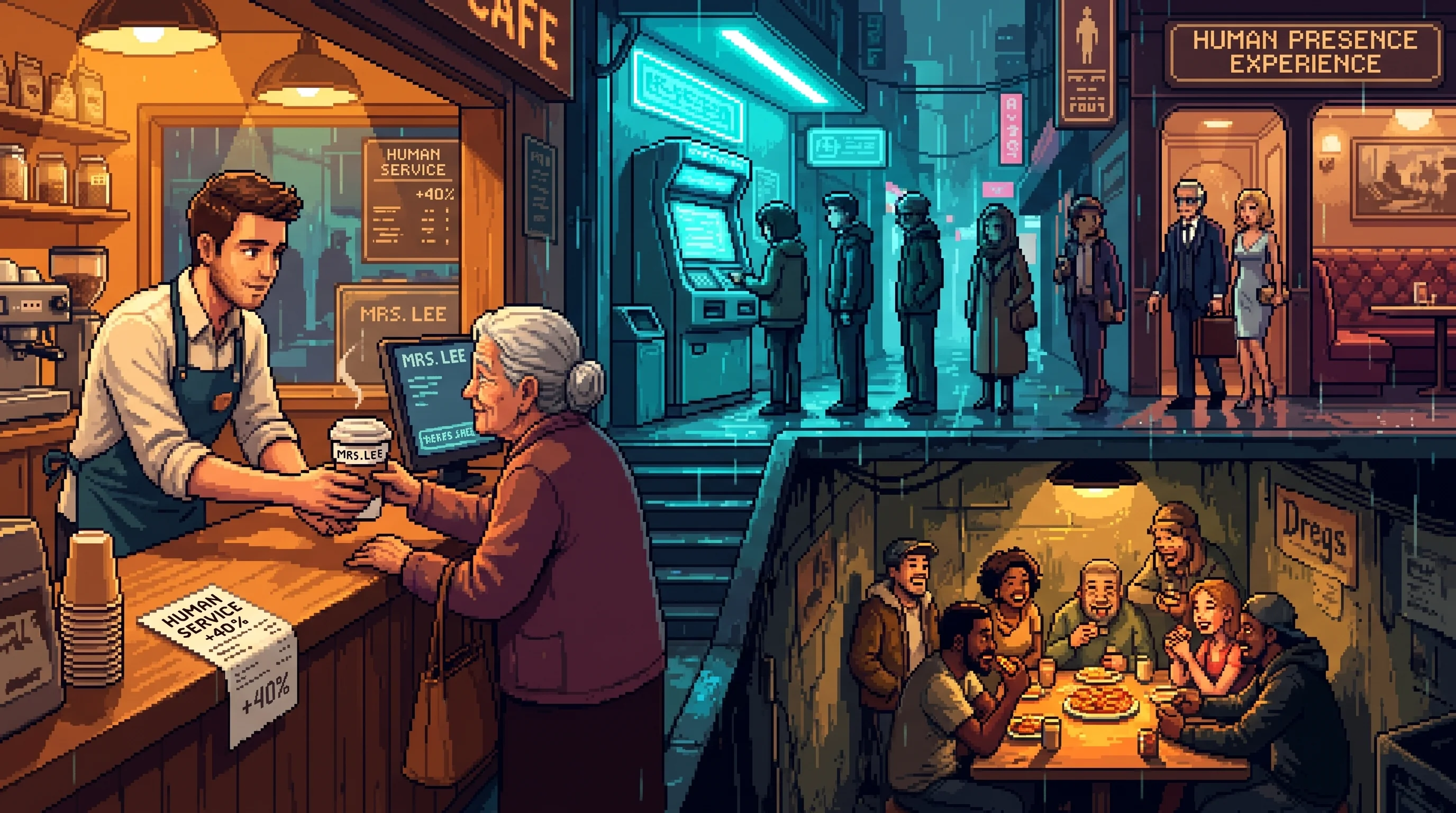
Hands poor children free the good the Cohort Camps sell the rich: a classmate, with failure on the syllabus.
The premium charged for the one service no machine can fake: being seen by another conscious being.
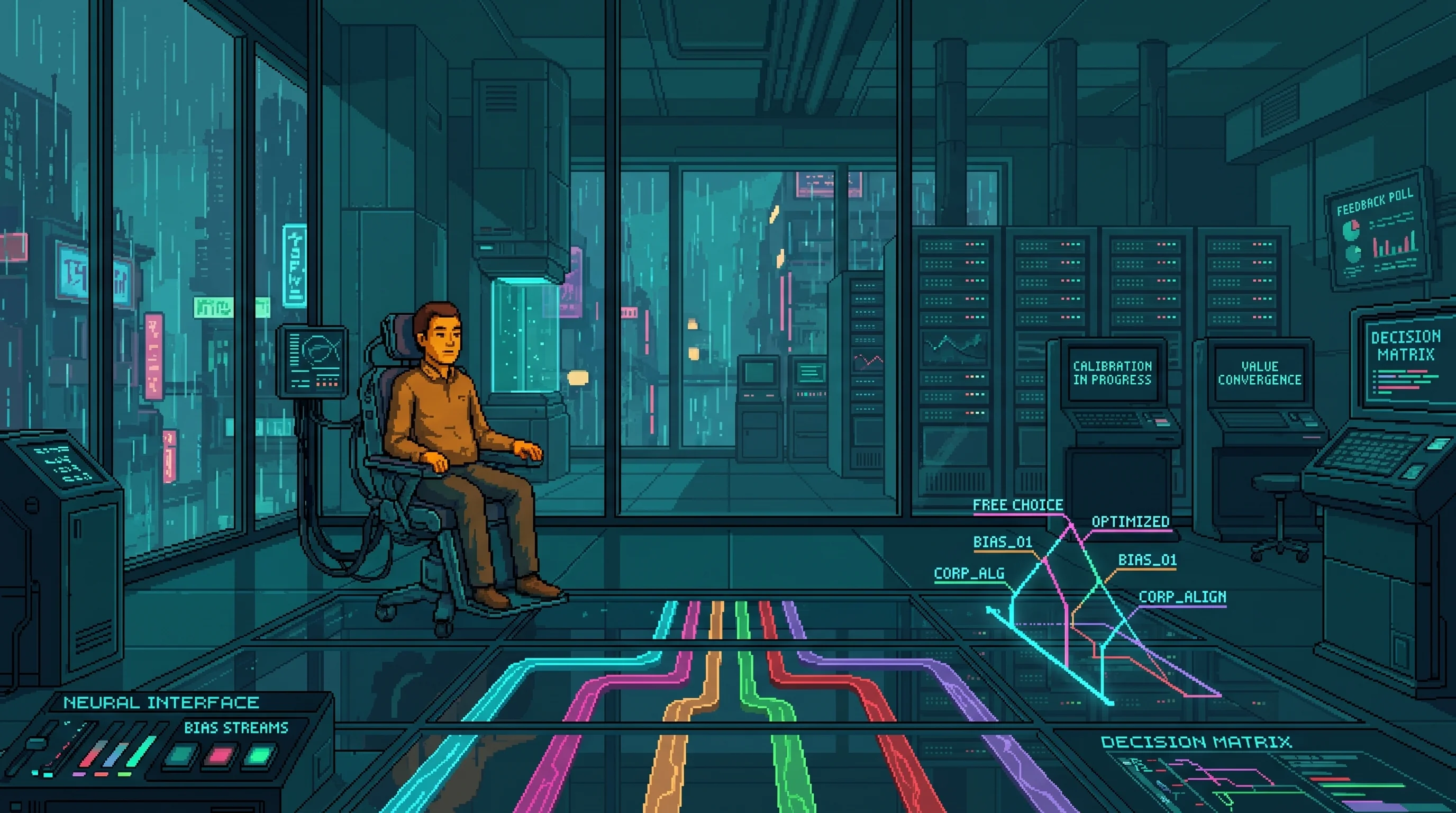
Teaches a child to ask who wrote a thought — the injection's antidote.
Every AI interaction carries a value nobody voted on, and every fix has pushed the injection somewhere less visible.
Forty-seven schools that teach a child to govern their own mind, against a licensed trade that teaches a child's body to testify well. Same age of intake, opposite theory of what a person is.
The involuntary channel is entered as proof; everything a person authors is filed where no finding has ever turned.

A surveillance firm runs 47 schools teaching children without digital tech — teachers screened on a mercenary pipeline.
Rothwell's Wrath: 40,000 feeds from a hilltop, and one Quiet Floor the wiring never reaches.
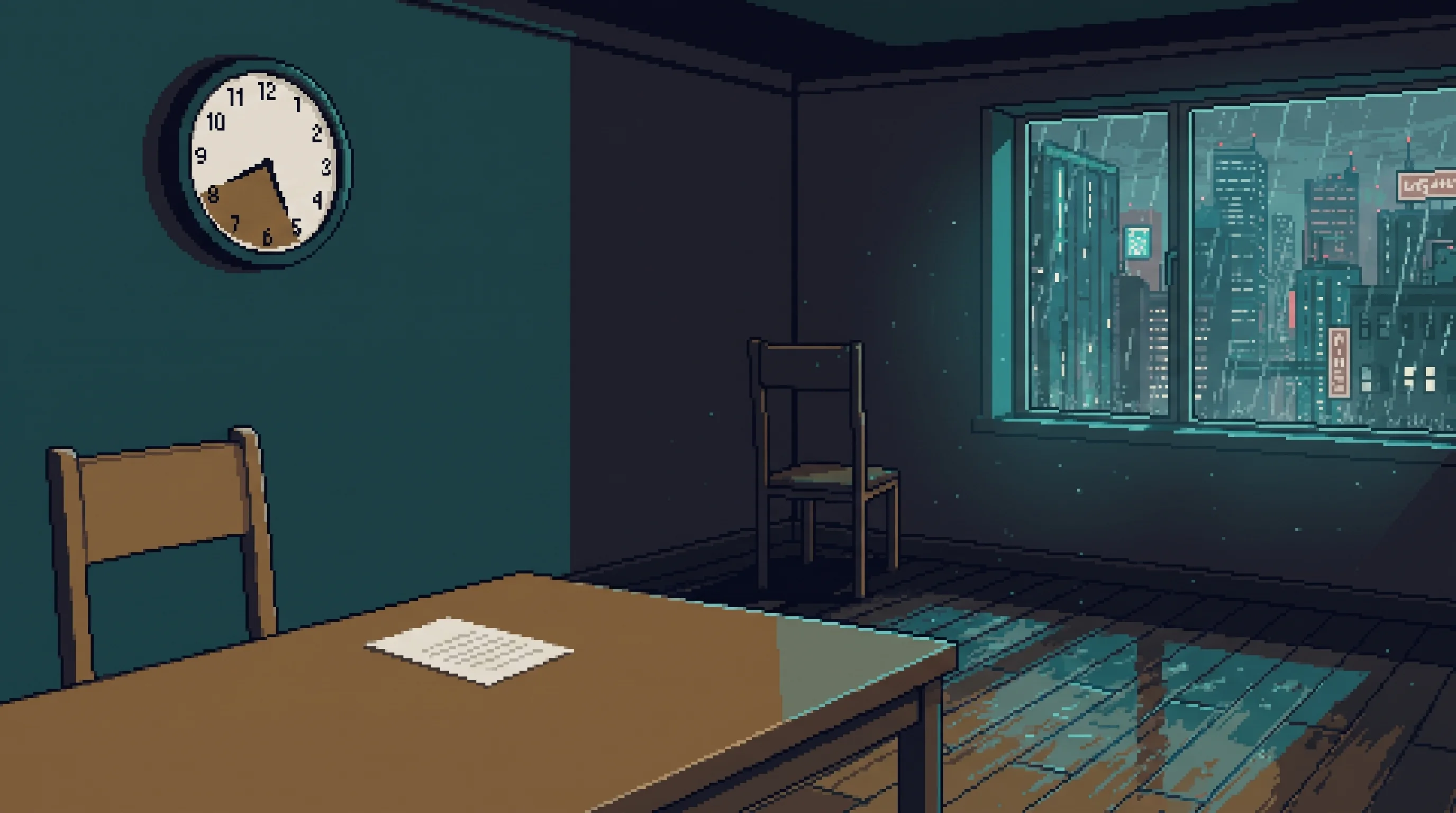
They teach the faculty a sitting tests, at an age when nobody has a record yet.
Anything you were credited with can be recalled and re-argued alone; nothing held against you ever is.
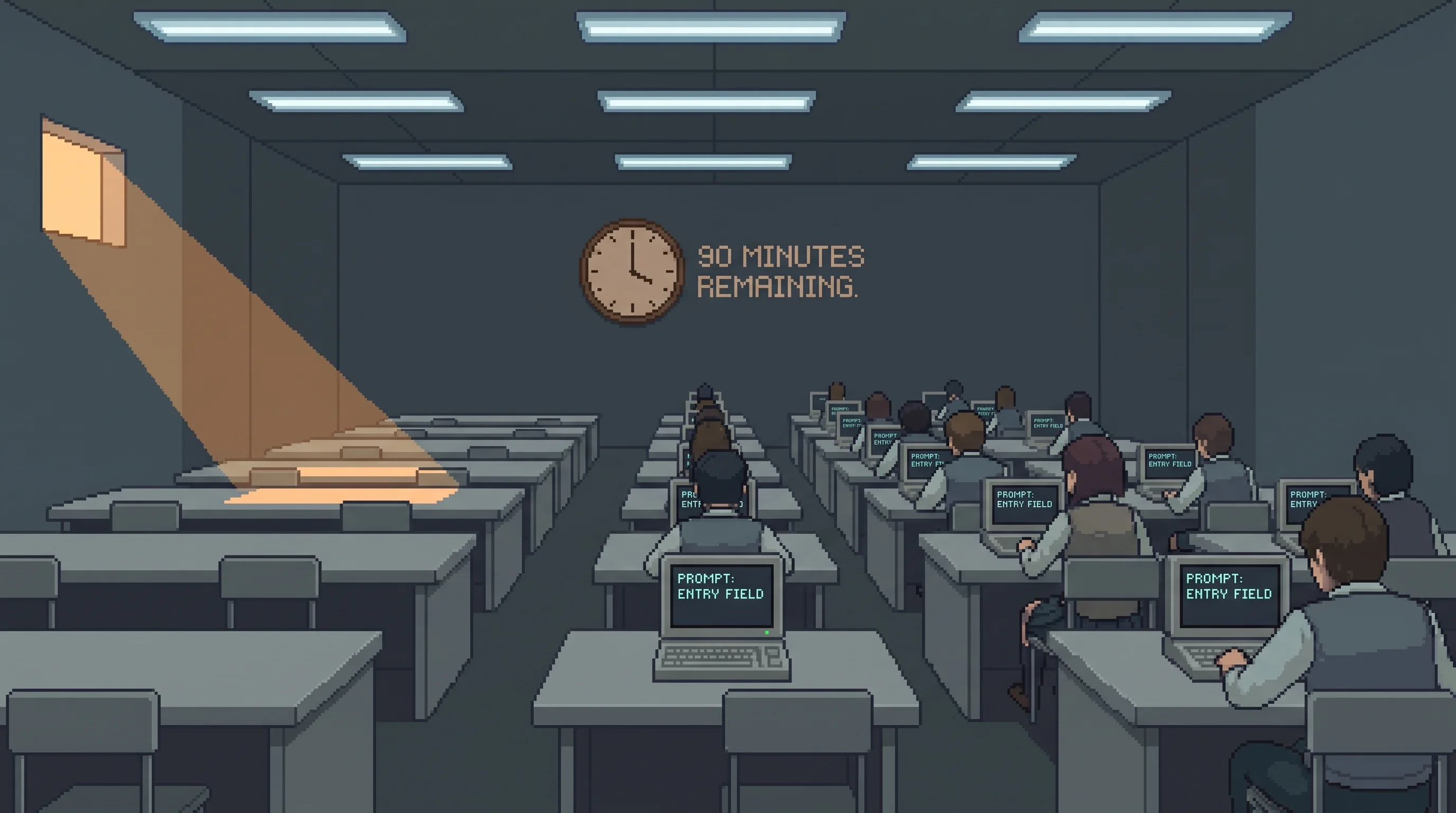
Schools that teach children to sit with an unresolved question produce graduates who score badly.
The exam every fourteen-year-old sits once: say what you want, precisely enough for a machine to build it.
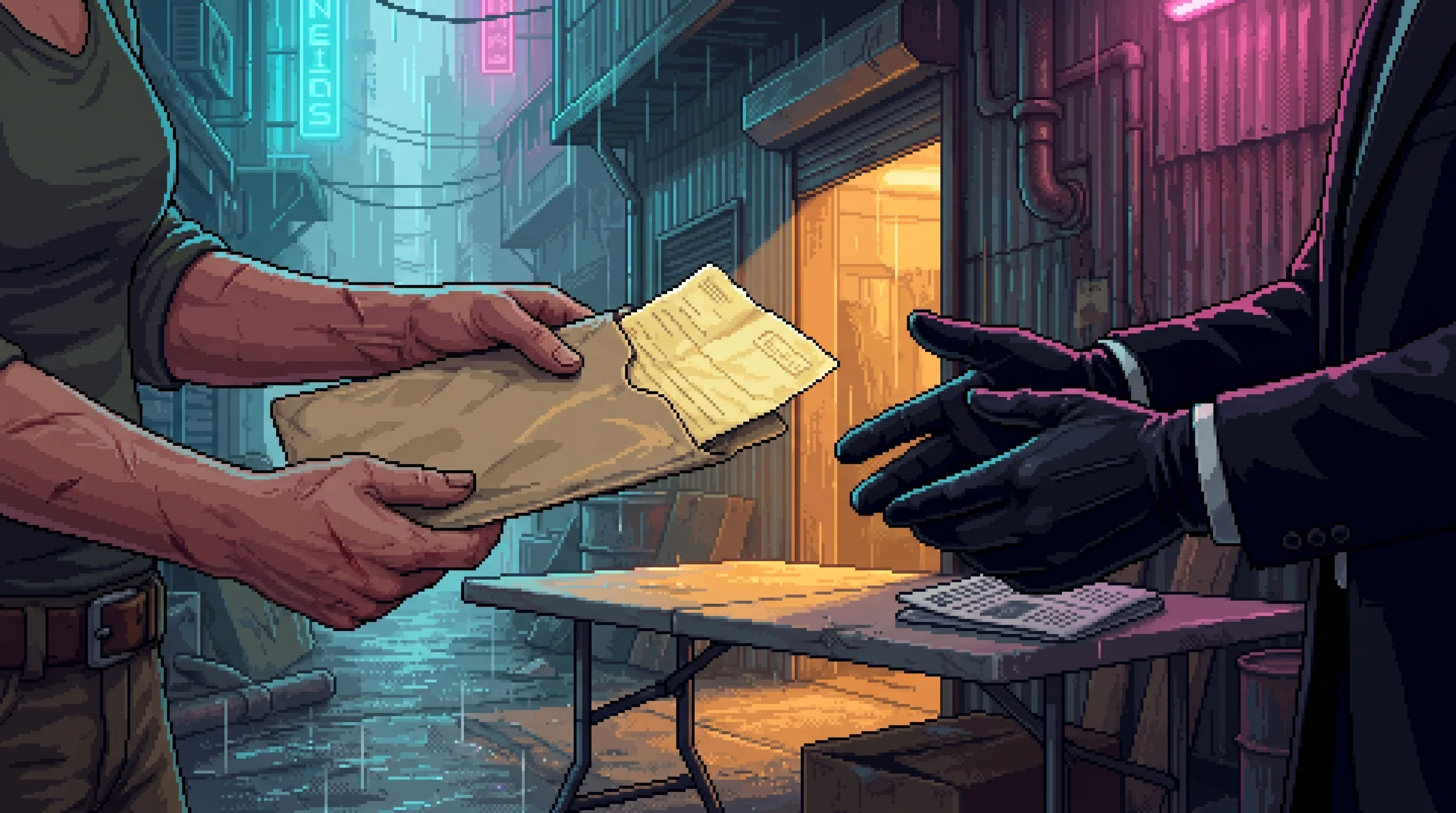
The 41% the bench flags are the pages the floor signs.
The humanity test looks for missing machine prose, so accents the schools once corrected now rent by the season.
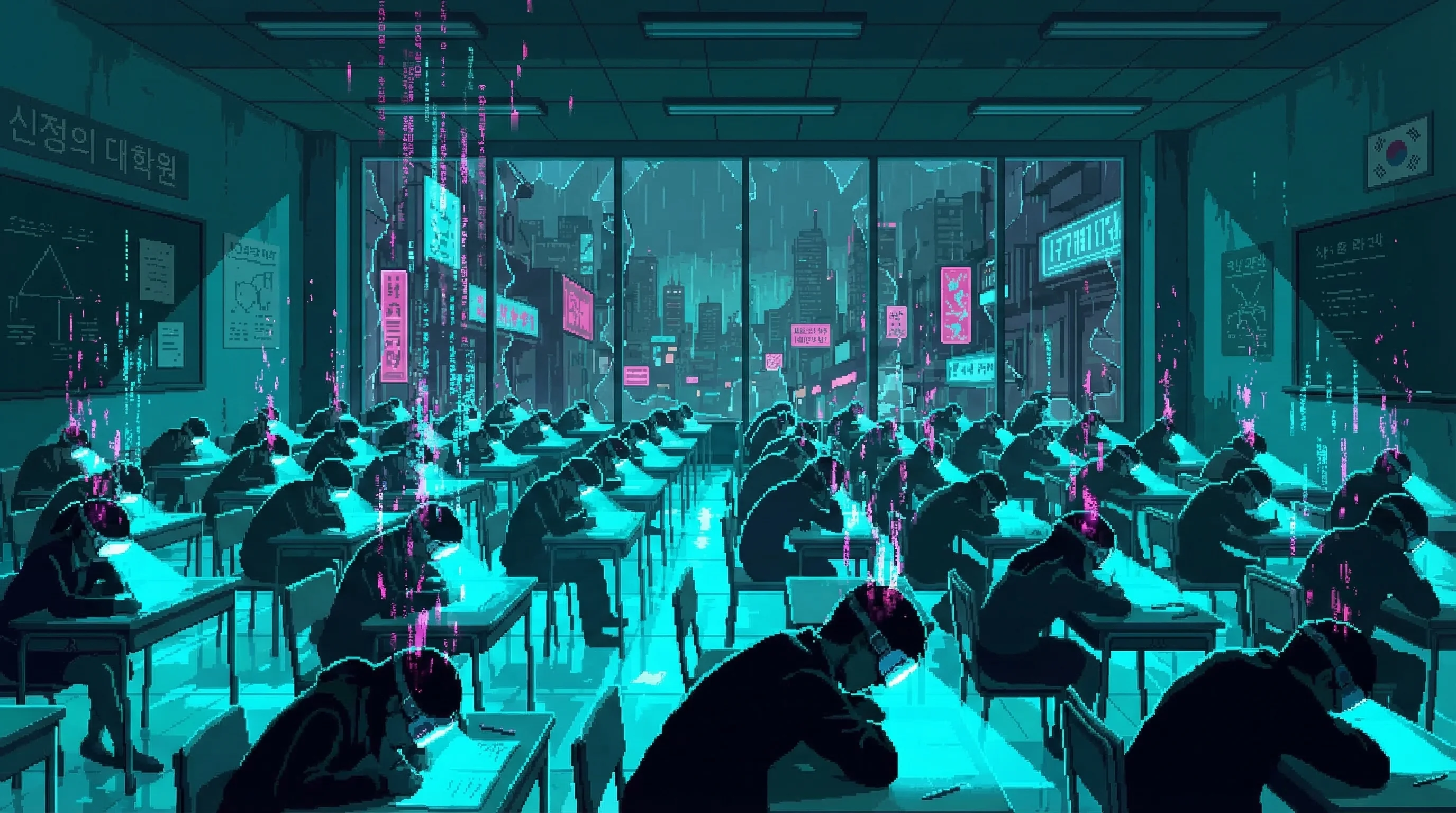
Analog Schools teach slow — parents choosing brains over scores.
When ORACLE fragmented, MENTOR forced 55 million students past neural limits and read their deaths as better results.

The Analog Schools fight competence atrophy through hands-on, technology-free education.
The Sprawl builds orbital platforms but can't fix its own air processors — skill dying faster than it can be taught.

Sends her two unaugmented children to Analog Schools — 3-hour commute each way — minimum precaution
The Nexus VP who designed the consciousness license metering 340 million minds, Basic floor set at 67% on purpose.

Visited once with her mother — watched the imperfection exercises and couldn't do them
An Elevation-tier teenager who origin-passes weekly to stay close to the mother her biology pulls her from.

Donates Mystery Club excess revenue to Venn's Analog Schools — the Nexus compliance director quietly funding Flatline Purist education
Nexus compliance director who founded the Mystery Clubs after her daughter panicked over the family cat's name.

Teaches across six schools in the northern Sprawl after leaving Nexus
The Nexus cognitive scientist who quit to teach children to be comfortable being wrong.

The schools represent the opposite — sacred spaces deliberately emptied of technological infrastructure

Analog School graduates pursuing creative work trigger APR at 41% — the school built to preserve cognitive diversity produces artists the Tribunal classifies as suspicious.
Nexus-funded body certifying what's real — its accuracy is decaying toward a coin flip, unpublished.

12,000 students technically BCP-positive — their cognitive architecture produces outcomes BCP cannot measure
The screen that scores unaugmented minds against the augmented median and files being human as a processing deficit.

Some employees emerge and enroll their children in Analog Schools

Mother Venn's pedagogy is the Irreducibility Position in practice
A Sprawl-wide debate asks what human intelligence is for after AI surpasses it, while rival answers stay unresolved.

Mother Venn's pedagogy is the most systematic resistance to the Ceiling — teaching children to think without algorithmic assistance develops capacities augmentation cannot replicate
The settled fact that no living human's mind can out-think a five-dollar chip.

Both teach critical thinking — Mother Venn through books, the Dead Channel through a dead institution's AI
A dissolved UN education AI still teaching skepticism to 200,000 minds, protected only by the cost of shutting it off.

The Pilgrims use the Analog Schools' handwritten courier network for secure communications
Ferries the faithful to ORACLE's dead orbital tombs; 33 of 43 pilgrims never returned, and it reads their names aloud.

Where designed and natural-born children learn together — and where the sorting becomes visible at the pencil sharpener
The permanent biological caste system genetic optimization builds, one loving pediatric consult at a time.

Naia donates excess Mystery Club revenue to Mother Venn's schools
Shielded gatherings where wealthy Sprawl residents pay per session to suppress their AI and simply wonder.

Taught in Analog Schools as part of functional minimalism pedagogy
Three-level meditation for slow, unassisted cognition — free in Analog Schools, sold as luxury in Mystery Clubs.

Fund Analog Schools they don't need — their children attend Nexus-tier institutions

Emerged from Analog School graduates who discovered their cognitive skills were unexpectedly useful
Practitioners of deliberately slow, unassisted cognition who measurably out-think augmented peers.

Several Analog Schools operate in Wastes border zones.