Overview
Daria Kohl accepts blame for deaths she did not cause. She has been doing this for eleven years. She has 214 clients and she remembers all of them.
She is a professional Confessor, which is a job title that did not exist before the Lattice Corridor engagement frameworks and which does not appear in any corporate HR system. She works independently, outside the eleven licensed culpability broker firms, taking referrals from grief facilitators in the lower Stacks and occasional formal referrals from the mid-tier houses when a family asks for an independent practitioner. She charges 2,800 credits for a full session. She has a sliding scale. She has never turned away a family that could not pay the sliding scale. She has paid her rent for eleven years doing this. She will pay it for eleven more.
She is not, by any conventional definition, a criminal. The service agreement that families sign before a session — always reviewed, always explained — states clearly that the person accepting responsibility in the session is not the person who made the engagement decisions. Most families read the service agreement. They attend anyway.
Appearance

Daria is in her late forties. She does not dress to suggest authority or wealth — no chrome, no implant visible, no corporate insignia. Grey coat, unremarkable. The hands are the tell: calloused at the knuckle, the kind of hands that hold themselves still during sessions by an act of practiced will. She weeps during sessions; her eyes show the residue of it in a way that cannot be entirely avoided. Clients who see her before the session sometimes ask if she is alright. She says yes and means it. The weeping is not unhappiness.
She carries nothing into a session that belongs to her. No jewelry from Ivo, no photographs. The grief she brings is invisible and therefore uncontestable.
History
Her brother Ivo was killed in the Lattice Corridor skirmish of 2173. He was 29. He was not a soldier; he was a maintenance contractor whose work route crossed a designated engagement zone that had not been publicly marked as active. The engagement threshold was met by a different target. The weapons system identified a secondary within its authorized strike radius. The secondary was Ivo.
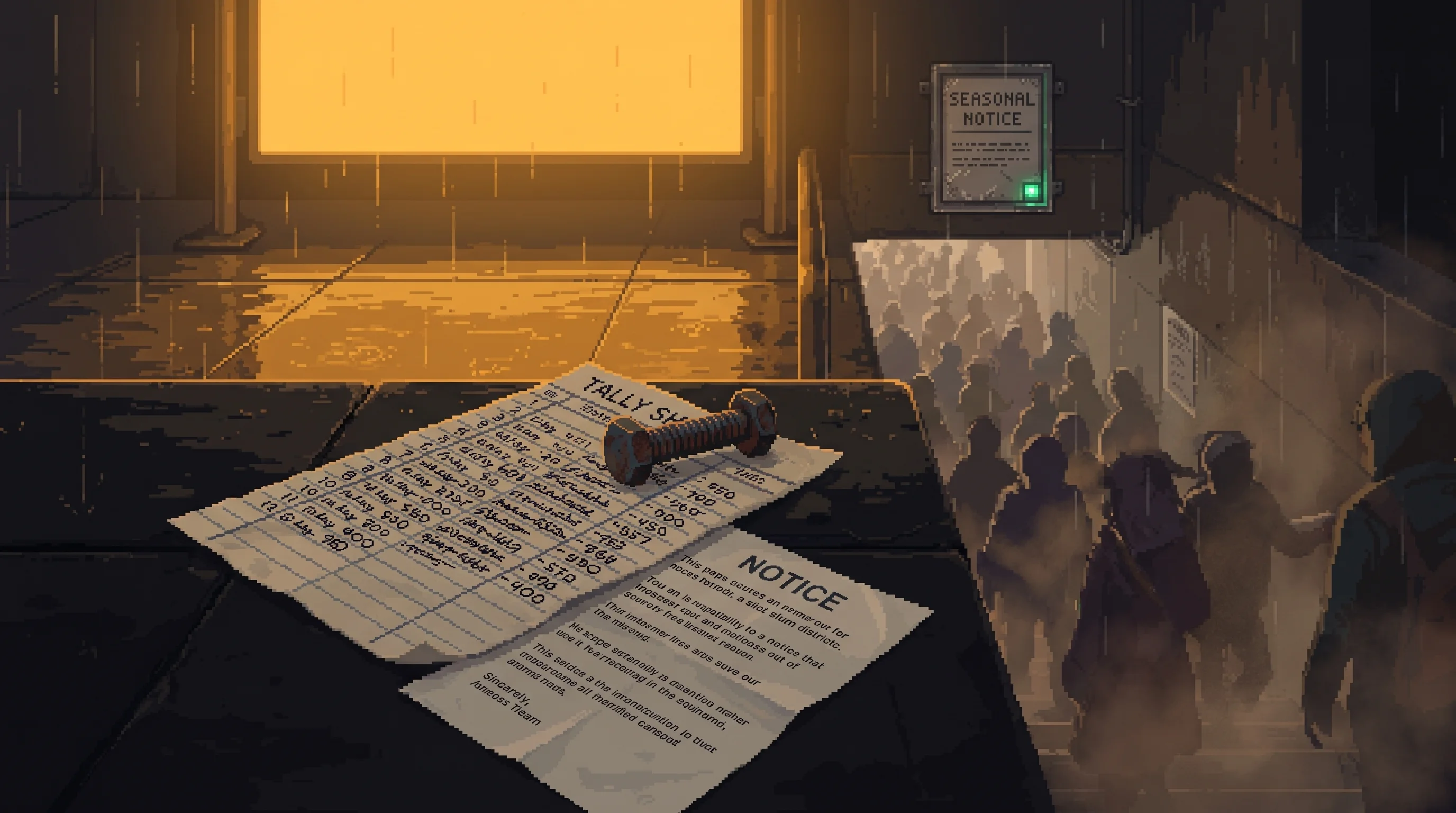
The settlement notice arrived on a Thursday. It was correct in every detail. It named the engagement, confirmed the parameters had been met, included a recorded apology from a Conflict Resolution Specialist who had been hired for this purpose and who expressed, with evident sincerity, profound regret for the loss. The Specialist had not been near the Lattice Corridor. The Specialist had recorded the same apology for 847 other kills. The notice was not wrong about any of this.
Daria spent a week trying to be angry at the notice and could not locate the anger anywhere that mattered. She was angry. The anger had nowhere to go. It circled the legal language and kept returning to the same wall: there was no one to be angry at. There had been a decision, but the decision was a configuration. There had been a kill, but the kill was a parameter. She had been given, in place of a person who chose to take her brother, a document explaining that no one had chosen it.
The following year, she stood before a different family and said: I ordered the engagement. I gave the command that ended your person's life. I made that choice and I am here because you deserve to face it.
Capabilities
The Work
The session runs forty to fifty minutes. She has a structure: an acknowledgment, a statement of responsibility, an account of the decision as if she had made it, a period of questions from the family, a closing. The closing varies — some families want silence, some want a formal statement from the arbiter if one is present, some want her to leave so they can speak among themselves.
She weeps during sessions. She has not manufactured the tears and does not need to. What is real is Ivo, and the week she spent unable to be angry at a number, and the specific texture of grief that has no object — grief that cannot be processed because it has no defendant, no face, no person to forgive or never forgive. She carries that specific grief into every session. It is why she weeps. It is why the tears are genuine.
The families believe, if they allow themselves to believe, that she is weeping for their loss. They are not wrong that she is weeping. They are not entirely right about what she is weeping for.

Motivations and conflicts
The Question She Does Not Answer
Whether what she gives families is healing or an obstacle to it.
The evidence from the grief-districts, assembled by non-licensed researchers outside the corporate journal system, suggests that families who complete full show-trial sessions show measurable improvements in stress markers and sleep quality in the three months following. The evidence is real. It has not been validated by any body with standing to validate it. The corporations that could fund the validation have not.
Daria does not need the validation. She knows what she observes: the families come in with grief that has nowhere to go, and they leave with it somewhere. Whether that somewhere is the same as resolution — whether she has given them a container for the grief or a surrogate that stands in for the container they could not have — she does not know.
She does not ask the question often. She has 214 clients over eleven years. She is not getting rich. She has been asked by other practitioners in the lower Stacks how she sustains the work, what the practice feels like from the inside, whether she has grief of her own about the grief she performs. She says: the math is patient. She means something real by this that she has not articulated to anyone's satisfaction, including her own.
What The Instrument Gets Right
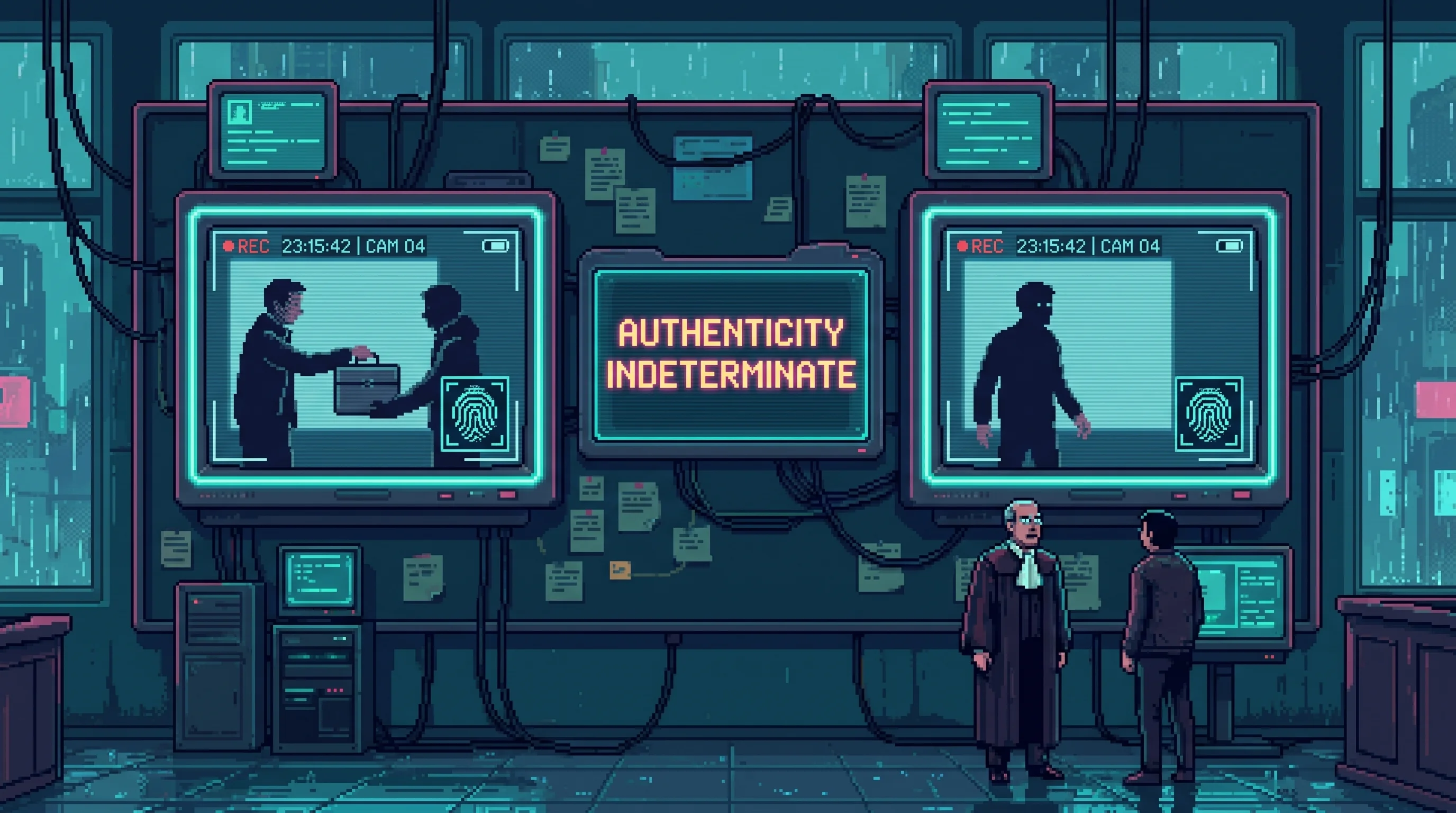
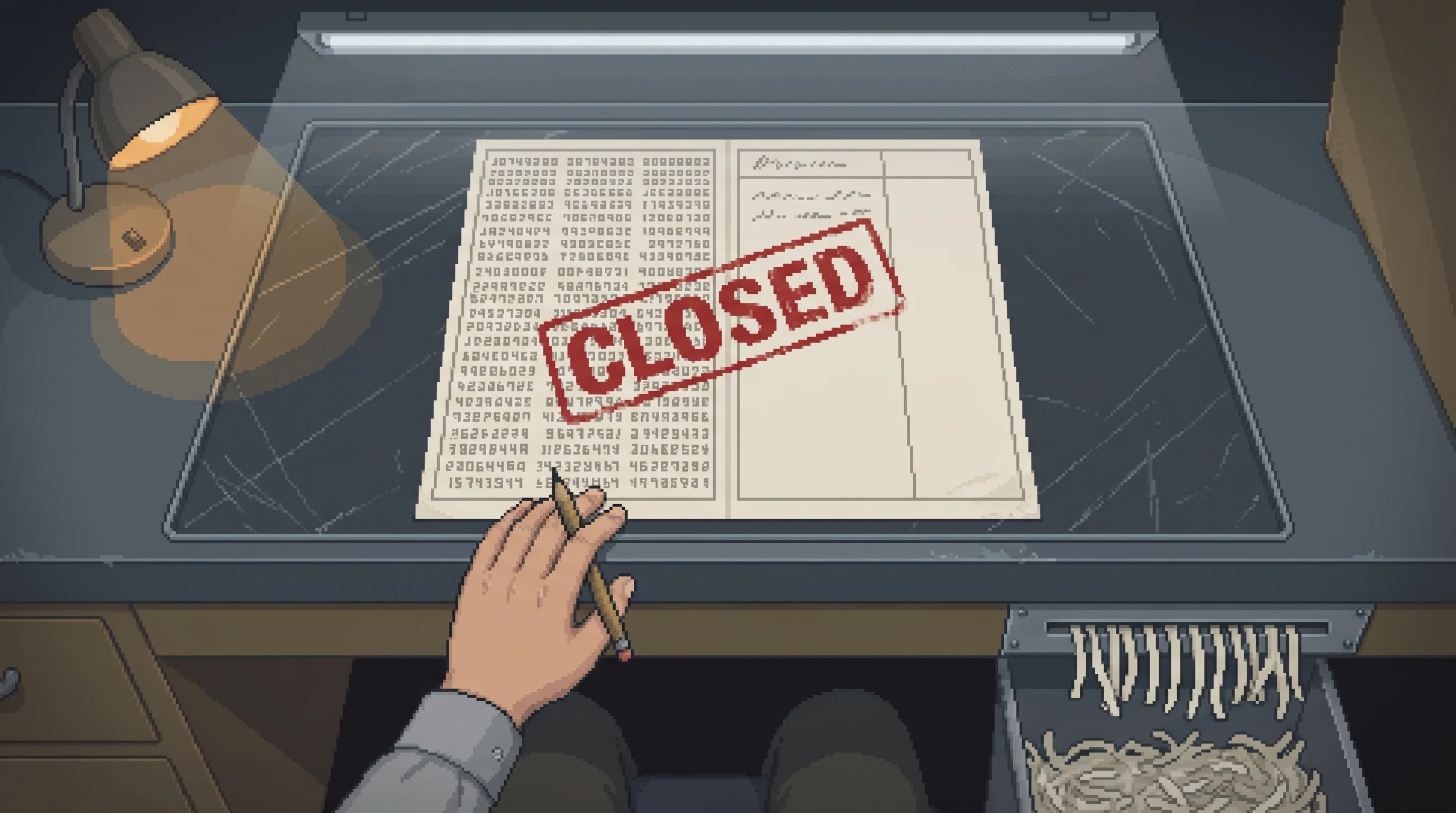
Settlement rooms now read the involuntary channel: pupil, breath, skin. Hers comes back as the cleanest grief in the building. An arbiter asked what her preparation was. She said she did not prepare. The reading cannot say whom the grief is for, and her spoken account goes in the column that closes with the finding. She has never corrected a reading.
Voice
Even-register. Controlled without sounding controlled. She speaks the way someone speaks who has learned, slowly, which words change rooms. In the acknowledgment phase her voice drops slightly — not to perform solemnity but because the weight arrives and she lets it. In the questions phase she answers directly: no hedging, no deflection, no false comfort. She does not apologize in a way that asks forgiveness for the apology. She has said I gave the command approximately two thousand times. She has never made it sound routine.
Outside sessions she is quieter than people expect. She laughs at things that are actually funny.
Sample Dialogue
"I gave the command. I understand that this doesn't make the engagement smaller. It doesn't make your person smaller. I am telling you: there was a decision. I made it. You can do what you need to do with that."
"The service agreement says I wasn't there. I've read it. You've read it. That's the part I can't change. What I can change is that you leave today having faced a person instead of a number. That's the service. Take it for what it is."
[when asked, after a session, how she does this work] "The math is patient. Ivo doesn't go anywhere. The families don't go anywhere. I show up where they are."
The Sliding Scale
She has never turned away a family that could not pay.
The sliding scale goes down to zero. She does not advertise this. The broker firms that refer families to her know it; they include it in their referral descriptions when a family is asking about independent practitioners. She does not explain the policy and does not want to explain it. It exists because she could not have paid for a session herself in the year after Ivo died, and she knows what that means.
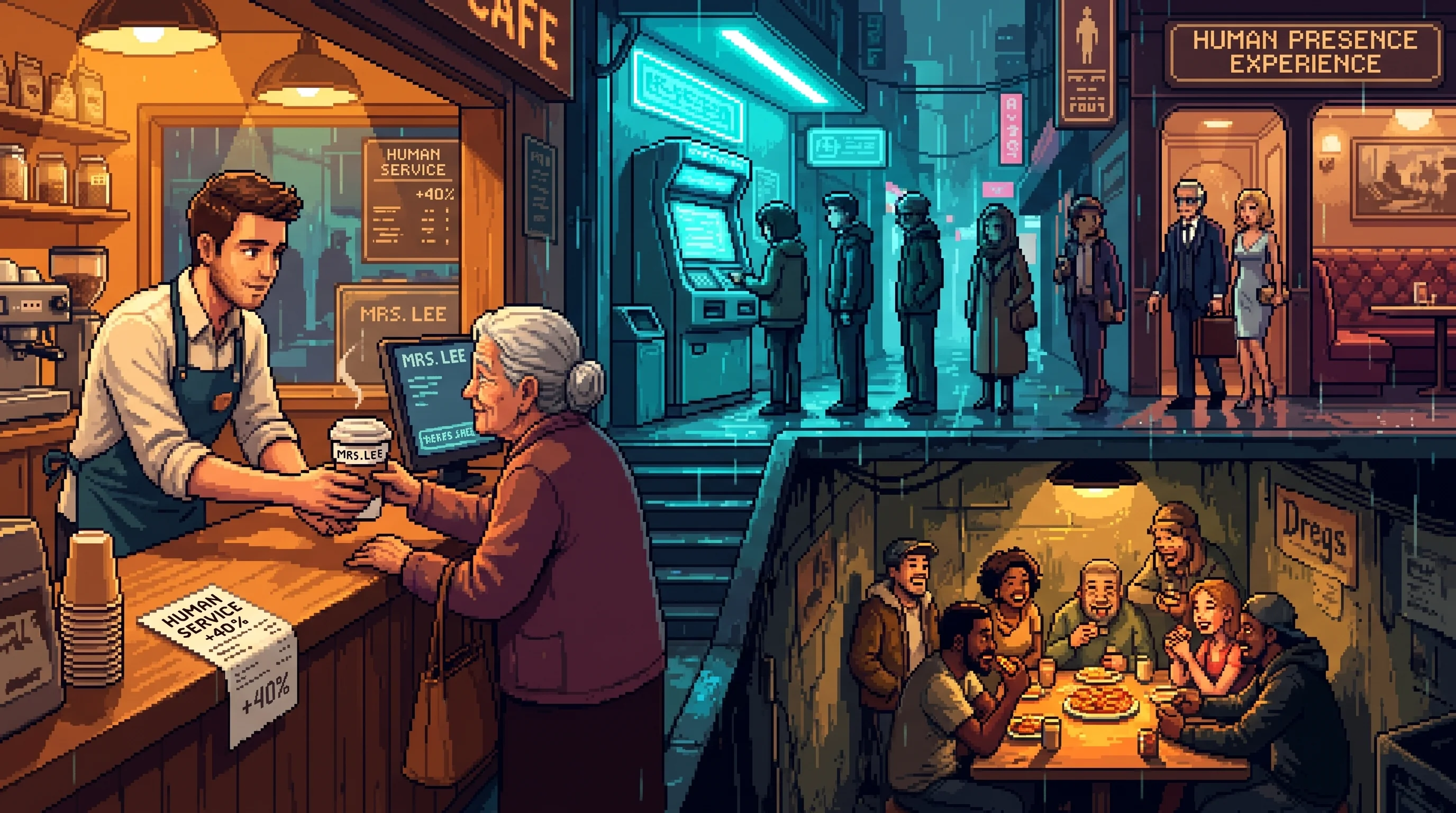
The families who cannot pay the sliding scale also cannot afford the premium-tier show-trial in Sector 1. They have received the same settlement notice as the families in the towers. They have been given the same recorded apology from the same Conflict Resolution Specialist who recorded it 847 times. They are in the lower Stacks instead of the tower because the settlement was designed to put them there. Daria charges them nothing.
This is not altruism, exactly. It is the recognition that the grief she could not locate a defendant for is the same grief they cannot locate a defendant for, and that she is now in the position to be the defendant, and that she will do this for free if necessary because the alternative is leaving 214 families unable to be angry at a number.
The Files She Will Not Take
Overflow deaths now reach her in the same red-and-cream envelope. She declines every one. An overflow death has a real man, Vidal Ancheta, who has asked four times to be charged. Taking it off him, she said once, would be theft.
Relationships
The Permanent Record
The biometric echo layer of the Permanent Record holds every felt moment of every session Daria has run with a client — the cortisol readings, the electrodermal responses during the acknowledgment, the exact moment grief found a defendant. She is aware of this. She has not inquired about what a reconstruction of those sessions would show. She suspects the answer is that she means it, and that she is not sure what to do with a permanent record confirming she weeps for Ivo in other people's sessions.
Forgiveness-Layers
She has inquired about the single-session rate (¢22,000 minimum). Her sliding scale goes down to zero and does not extend to herself. She cannot afford it. She has thought about asking Tomás Linares whether viewing yourself raw is something a person can sustain without the edited mercy, and whether not wanting a second viewing is the answer to that question or a symptom of it.
Tomás Linares
She knows of his counter-service — free sittings for people who want to view their reconstruction without a Compliance Facilitator or a financial stake in the outcome. She has not approached him. The grief she is working with is eleven years old and still has all its edges.
Connections
Follow the people and places connected to Daria Kohl.
People
Major connections




Tensions
Core tensions
Supporting connections


Other connections

Major connections


Supporting connections


Additional artwork
View 1 more images of Daria Kohl and their world

