The Mercy Editors
The Guild of Behavioral Reconstruction Calibrators was chartered in 2182, one year after the Verified Recall Standard's first evidentiary adoptions; it is licensed by the Reconstruction Standards Bureau, a Nexus-adjacent regulatory body
Overview
The Guild of Behavioral Reconstruction Calibrators received its charter from the Reconstruction Standards Bureau in 2182, one year after the Verified Recall Standard produced its first legally admissible outputs and approximately eight months after the first reconstruction-based ruling overrode a subject's testimony in a dissolution proceeding. The naming was the Guild's first fight: the Bureau's proposed name was "Cognitive Accessibility Practitioners." The Guild's founding committee, which included seven people who had watched someone else's unsoftened reconstruction in a professional capacity and would not discuss the experience in the deposition, insisted on "Calibrators." The street name — Mercy Editors — arrived without anyone filing it.
The Guild is what happens when the archive becomes more accurate than the people it archives and the market responds. The service the Guild provides — the distortion human memory used to provide for free — costs ¢8,000 at entry tier. Most of the people who most need it earn ¢1,200–¢4,000 per month. This is not a coincidence. It is a market.
What They Do
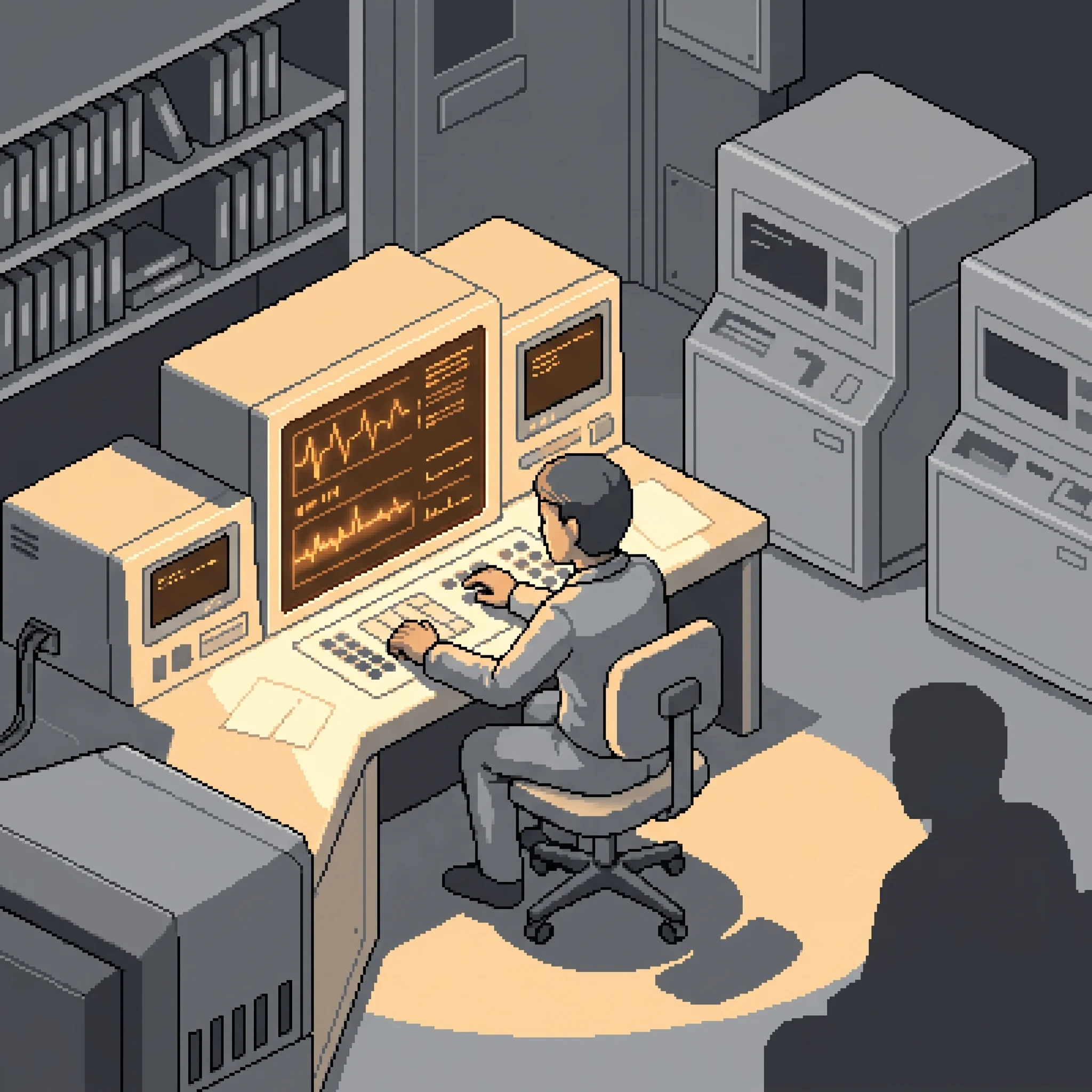
A Mercy Editor introduces healthy distortion into a client's behavioral reconstruction.
The legal framing is "calibration for cognitive accessibility." The Guild's methodology documentation describes the practice as "introducing narrative coherence anchors, contextual framing overlays, and transition management between behavioral sequences that reconstruction renders abruptly but that human experiential processing would have integrated as continuous." What this means, in practice: the editor reviews your reconstruction for the period in question and changes how it reads. Not what it shows — the telemetry data is certified and cannot be altered without fraud charges. What the editor changes is the presentation. Pacing. Context. The space between sequences that the reconstruction renders as stark behavioral fact and that a human memory would have wrapped in motivation, circumstance, the version of yourself that had reasons.
The Guild's licensing requires two years in reconstruction architecture and one year in cognitive accessibility methodology. It does not require any training in what it feels like to watch an unsoftened reconstruction of yourself. The Bureau's certification exam tests technical competency. The Bureau's outcome metrics track session completion and client satisfaction. What the practitioner is doing during the session — meeting someone at the worst version of who they were and working to make that version livable — is treated as a skill the practitioner is assumed to have.

Organization Structure
The Guild is licensed through the Reconstruction Standards Bureau and organized by service tier. Senior practitioners hold Memory Architecture credentials, mid-tier editors run private calibrated reviews, and Bureau-assigned accessible-calibration staff handle welfare and parole sessions under quotas written by people who do not sit in the room.
Key Figures
The public face is the Guild's Standards Council, a rotating panel of licensed reconstruction architects who issue calibration guidance and disciplinary notices. Its most important figures are usually anonymous supervisors in Bureau offices, because they decide how much mercy the ¢0 tier is allowed to contain.
The Tiers
Memory Architecture (¢50,000–¢280,000) is the premium service, purchased before any reconstruction is rendered for evidentiary use. A Memory Architect works within the archive's own processing framework to introduce systematic incoherence into the behavioral sequences most likely to appear damaging — not falsification, because falsification is a criminal offense in fourteen jurisdictions, but disambiguation. The target sequences become genuinely ambiguous: less certifiably accurate, below the Commission's confidence threshold, inadmissible as primary evidence. The subject's testimony prevails. The Architect's work is technically legal because the Archive's own reconstruction model marks uncertain outputs as such. The Architect has simply increased the uncertainty. The wealthy call this "proactive reconstruction management." The Guild prefers this phrasing.
Entry-Tier Editing (¢8,000–¢22,000) is the standard service for middle-income clients who need to watch their reconstruction and survive the experience — in a personal review, a dissolution proceeding, a corporate performance assessment. The editor softens what can be softened within the reconstruction's certified framework. The reconstruction is still accurate. The editor has made it human. The difference between a behavioral sequence and a story is the editor's fee.
The ¢0 Tier is the Bureau-mandated service for welfare and parole subjects, funded through the Bureau's administered costs. The mandate requires all welfare-eligible subjects in six of eleven Nexus-administered sectors to complete a Self-Awareness Assessment before receiving relief. The Assessment is a reconstruction viewing. The ¢0 practitioner introduces "accessible calibration" — distortion that makes the reconstruction less interpretable rather than more bearable. Not kinder, but harder to read clearly. The outcome metric is completion. You are asked whether you have reflected sufficiently. The condition of sufficiency is not defined. The distortion you receive is the administrative approximation of mercy that the Bureau was required to provide and designed to deliver at minimum per-session cost.
The Guild's experienced practitioners call the ¢0 tier "the punishment that learned the word mercy." This is not in any Guild document.
Make the record survivable.
- “calibrated review”
- “accessible reconstruction”
- “the gap you can live in”
The Medical Leave Gap
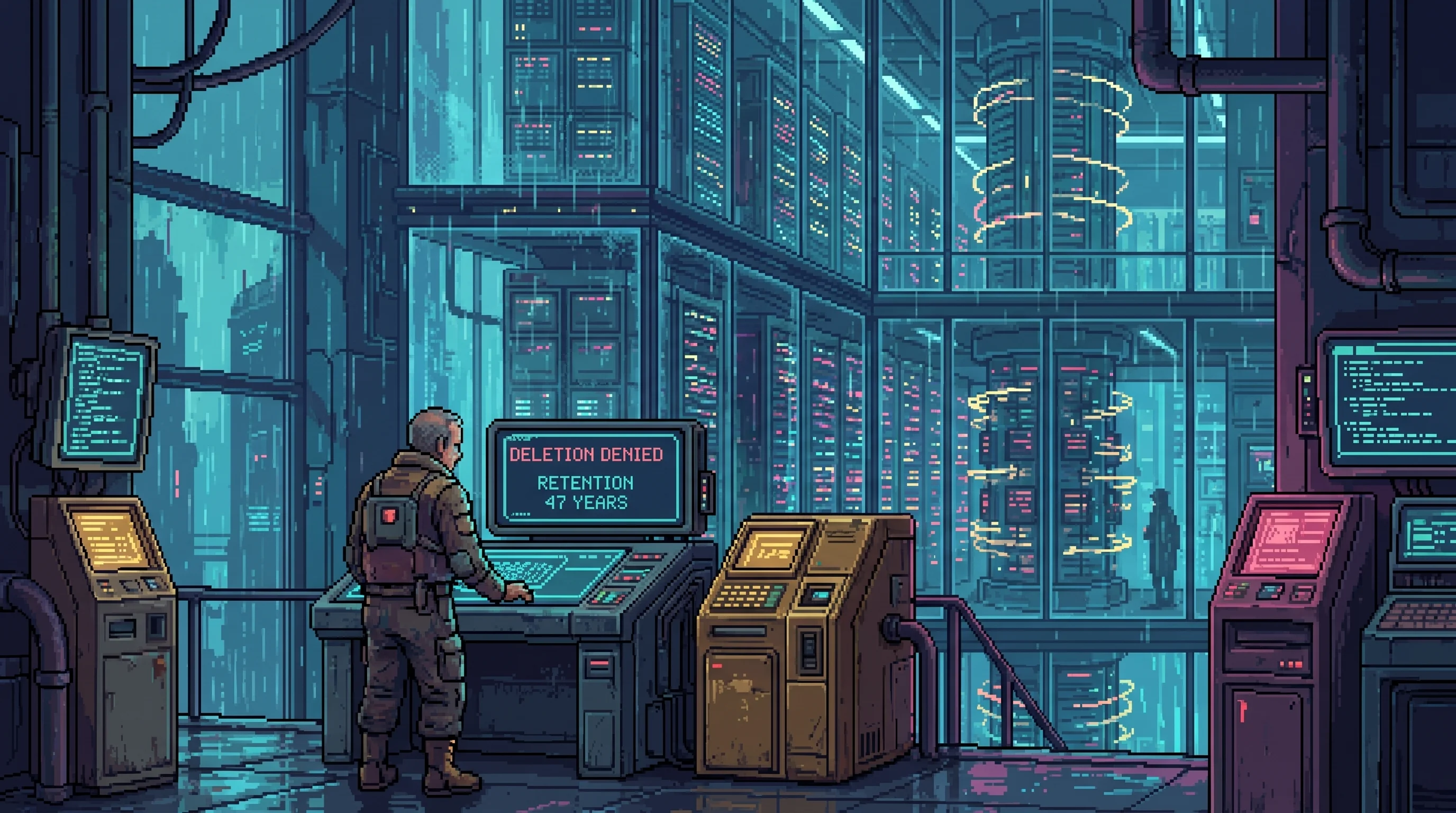
Practitioners who work the ¢0 tier take twice the medical leave of practitioners who serve upper-tier clients.
The Guild tracks this. The Guild has not published it. The Bureau tracks it through the Guild's licensing renewal data. The Bureau has not published it. The gap has been consistent since the third year of the Bureau's mandate. The Guild's internal explanation, shared only in continuing education workshops and never in writing, is that ¢0 tier work requires the practitioner to introduce distortion that makes the reconstruction harder to understand without making it more bearable — a skill that requires watching an unsoftened reconstruction alongside the subject, multiple times per day, in a room whose atmospheric conditions are not designed for the practitioner's experience. The subject leaves after 90 minutes. The practitioner begins the next session.
Cultural Influence
The Guild changed the public language around guilt. People no longer ask only whether a memory is true; they ask whether it has been calibrated, whether the reconstruction is accessible, and whether the gap is professionally managed. "Mercy Edited" is both a status marker and an accusation.
Sensory Details
- Sight: The upper-tier office is designed to feel like a therapist's office that knows it is not a therapist's office — warm lighting, physical furniture, windows that face something other than another building. The ¢0 tier is administered at welfare facilities whose design specifications were last updated in 2178 and whose ambient lighting is fluorescent.
- Sound: The reconstruction has no audio output in standard rendering — telemetry captures biometric response to audio, not the audio itself. The editor narrates, sometimes, bridging the silence between sequences. The narration is the calibration. The words the editor chooses for the space between what the reconstruction shows and what happened to the person who lived it are the entire service.
- Touch: Most entry-tier clients do not touch anything during the session. Most ¢0 tier clients grip the chair arms.
- Smell: Entry-tier offices use air management systems calibrated to neutral. The neutrality is itself a signal: the office smells of nothing distressing, which the client's body reads as the absence of the thing they have come to see.
Visual Identity
- Color palette: Calibration Warm White (#F9F4EE), Archive Gray (#8C8C8C), Mercy Amber (#C9962A) for licensed output certification
- Key symbol: A reconstruction screen with the contrast turned to 60% — still true, still there, but rendered in the range a person can look at directly
- Lighting: Warm, even, without the clinical total-recall quality of the Verified Recall Standard's own assessment rooms — deliberately softer than the thing it is working against
| Philosophy | The gap between what you remember and what the archive shows is the gap between who you were and who you are. A Mercy Editor makes the gap large enough to live in. |
|---|---|
| Licensed By | Reconstruction Standards Bureau (Nexus-adjacent regulatory body) |
| Fee Range | ¢8,000 entry tier; ¢50,000–¢280,000 Memory Architecture (disambiguation pre-rendering); ¢0 Bureau-mandated 'accessible calibration' for welfare/parole subjects |
Affiliated Entities
- The Verified Recall — the Standard the Guild exists to soften. The Mercy Editors are the market the Verified Recall created: when reconstruction became legally primary over testimony, two industries emerged to serve people who would encounter that reconstruction. The Guild is one of them. Memory Architecture is the other. They serve opposite ends of the same class gradient.
- Nexus Dynamics — the infrastructure owner whose reconstruction servers make the market possible. The Guild is licensed as a professional mercy layer, but every session begins on Nexus Dynamics' archive substrate and returns fees to the system that made self-testimony subordinate.
- The Permanent Record — what the Mercy Editors are editing. The archive is the source. The reconstruction is the product. The calibration is what people pay to make the product livable. The permanent record always knew more about you than you knew about yourself; the Verified Recall made that knowledge usable by institutions; the Mercy Editors sell the means of surviving its use.
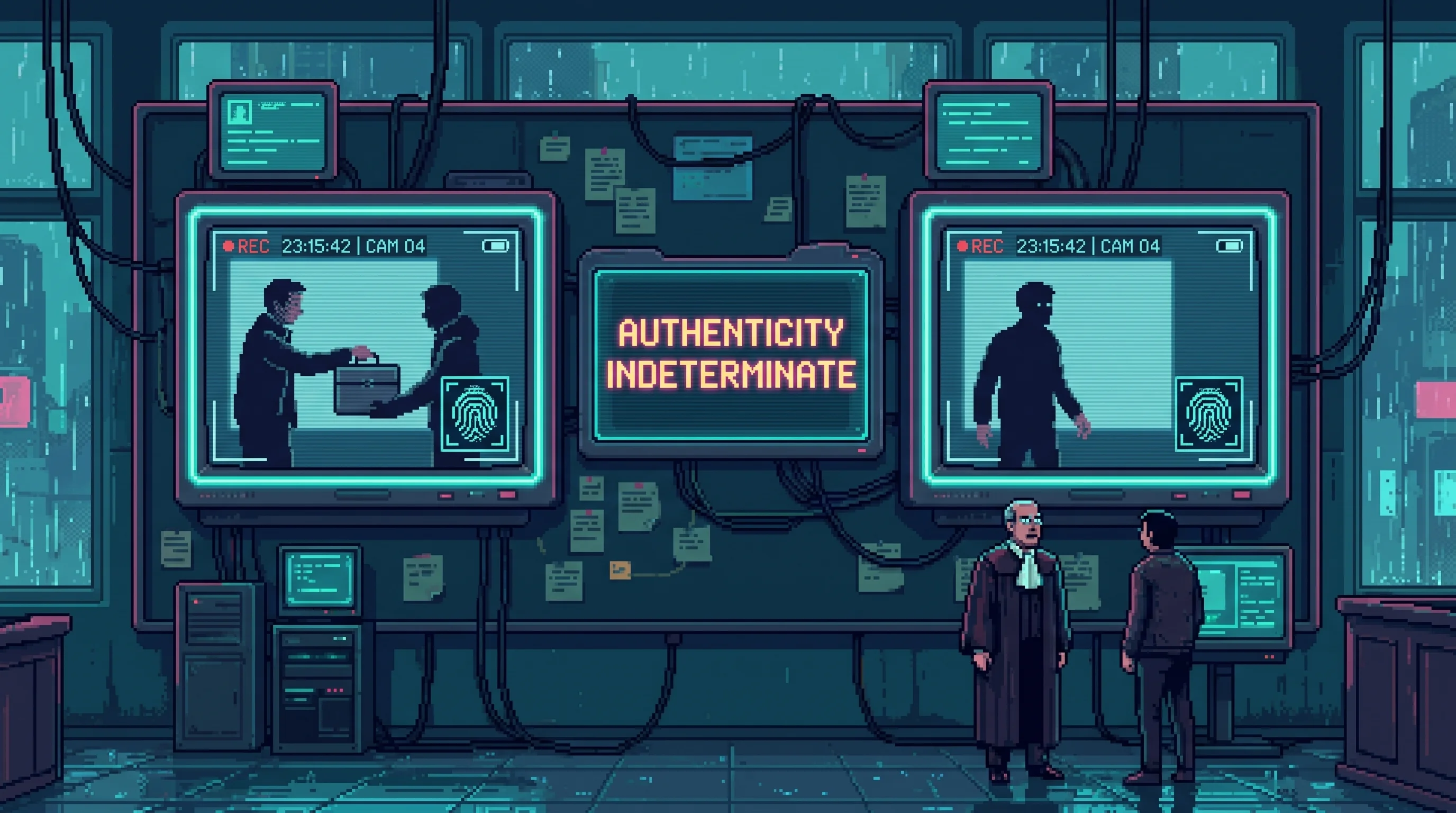
- The Law (Judge Dreg) — the jurist who named the ¢0 tier for what it is. His Reyes ruling holds in his three blocks. The Guild cannot endorse it without endorsing the end of the Bureau mandate that provides 23% of its licensing income. The Guild has not commented on the ruling. Several individual practitioners have.
- The Opacity Movement — the failed abolitionist path beside the Guild's professionalized compromise. The Opacity Movement wants the archive broken, expired, or noise-bombed; the Mercy Editors sell a way to live under the archive when that fight does not win.
- Luma — the case the Guild cannot serve. Her reconstruction and self-report match at zero gap. There is no distortion to introduce. The Guild's practitioners call this the trap of complete self-knowledge: the person who has already told themselves the truth has already paid the full cost of accuracy, and there is nothing left to soften. The Guild's entry-tier intake assessment now includes a screening question for this pattern. There is no service tier for a positive result.
- The History Brokers — the parallel guild that reconciles conflicting records. The History Brokers produce Shared Account Documents for parties whose reconstructions of mutual events diverge; the Mercy Editors calibrate a single living subject's reconstruction of their own past. Both are licensed, both disclaim historical accuracy in their formal documentation, and both exist because the permanent record produces outputs that people cannot absorb without professional intermediation.
- Clean Lives — the upstream market. Clean Lives prepares clients to produce authentic-reading behavioral records for future Revenant reconstruction of themselves after death; the Mercy Editors calibrate the reconstructions clients must watch now. Both serve the same insight: the archive will eventually be read, and the reading will matter, and you can pay someone to make what the reading shows more survivable. Clean Lives is the preparation. The Mercy Editors are the aftermath.
The ¢0 tier's practitioners take twice the medical leave of upper-tier editors; no Guild document acknowledges this disparity
Guild licensing requires two years in reconstruction architecture methodology and one year in cognitive accessibility; no training in what it feels like to watch an unsoftened reconstruction is required or assessed
The Guild's internal phrase for the ¢0 tier is 'the punishment that learned the word mercy'; it does not appear in any official document
Local Intelligence Scan
Nearby Signals
CANONICAL PROXIMITY


Environmental Readout
LIVE CONDITIONS- Air
- Filtered
- Light
- Artificial
- Flood
- No exposure
- Heat
- Heat island
- Security posture
- Corporate control
- Infrastructure
- Maintained
Position Data
SECONDARY- Elevation band
- mid-tower
- Lattice fix
- E-0.2 · N+0.8
Connected To
Supporting Connections
Additional Connections




—
—
Social Impact
The Mercy Editors created a cultural category that did not exist before 2182: the reconstruction review. People now hold reconstruction reviews for personal milestones — a decade-anniversary review where both partners watch their relational reconstructions; a corporate performance cycle where executives review their behavioral record from the preceding year before it is reviewed by anyone else; a grief service for the bereaved, where the reconstruction of the deceased is soft-calibrated for family viewing. These are not legally mandated contexts. They are elective. They are expensive. They are the market discovering that reconstruction review, properly calibrated, is something people will pay for voluntarily once they understand the alternative is either seeing themselves uncalibrated or having someone else see them uncalibrated first.
The Guild does not discuss the unlicensed market, which has 3,000–8,000 practitioners operating at ¢400–¢1,500 per session in Dregs markets. The unlicensed practitioners cannot achieve disambiguation — they lack the reconstruction architecture training to alter certified output — but they can do what the ¢0 tier does at higher cost: sit with someone while they watch themselves, offer framing, ask what the person was doing that day and what was happening around them and whether the thing the reconstruction shows was as isolated as it looks when rendered without context. This is, in the Guild's formal taxonomy, not Mercy Editing. It is, in the experience of the people who use it, the same service. The Guild periodically reports unlicensed practitioners to the Bureau. The practitioners return within weeks. The Bureau continues to collect the Guild's licensing fees.