
The History Brokers
History Brokers produce Shared Account Documents — formally disclaim historical expertise in every client document; the license requires this
Overview
The History Brokers Guild did not plan to exist. It emerged from a practical problem that nobody had anticipated because the problem required the Negotiable Record to diverge, which required the Negotiable Record to be used at scale, which took about twenty years after launch for the divergence to become legally significant enough to need a solution.
The problem: contracts, wills, employment agreements, and marriage documents all require shared understanding of past events. Two parties need to agree, at minimum, that an event occurred and that both of them were there. Before the Negotiable Record, this was handled through imperfect human memory, documentary evidence, witness testimony, and negotiation. The imperfection was the mechanism — people argued about what happened, reached a workable version, moved on. The workable version was not necessarily true. It was sufficient. Sufficiency is not truth. Sufficiency is what you need for a contract to be executed.
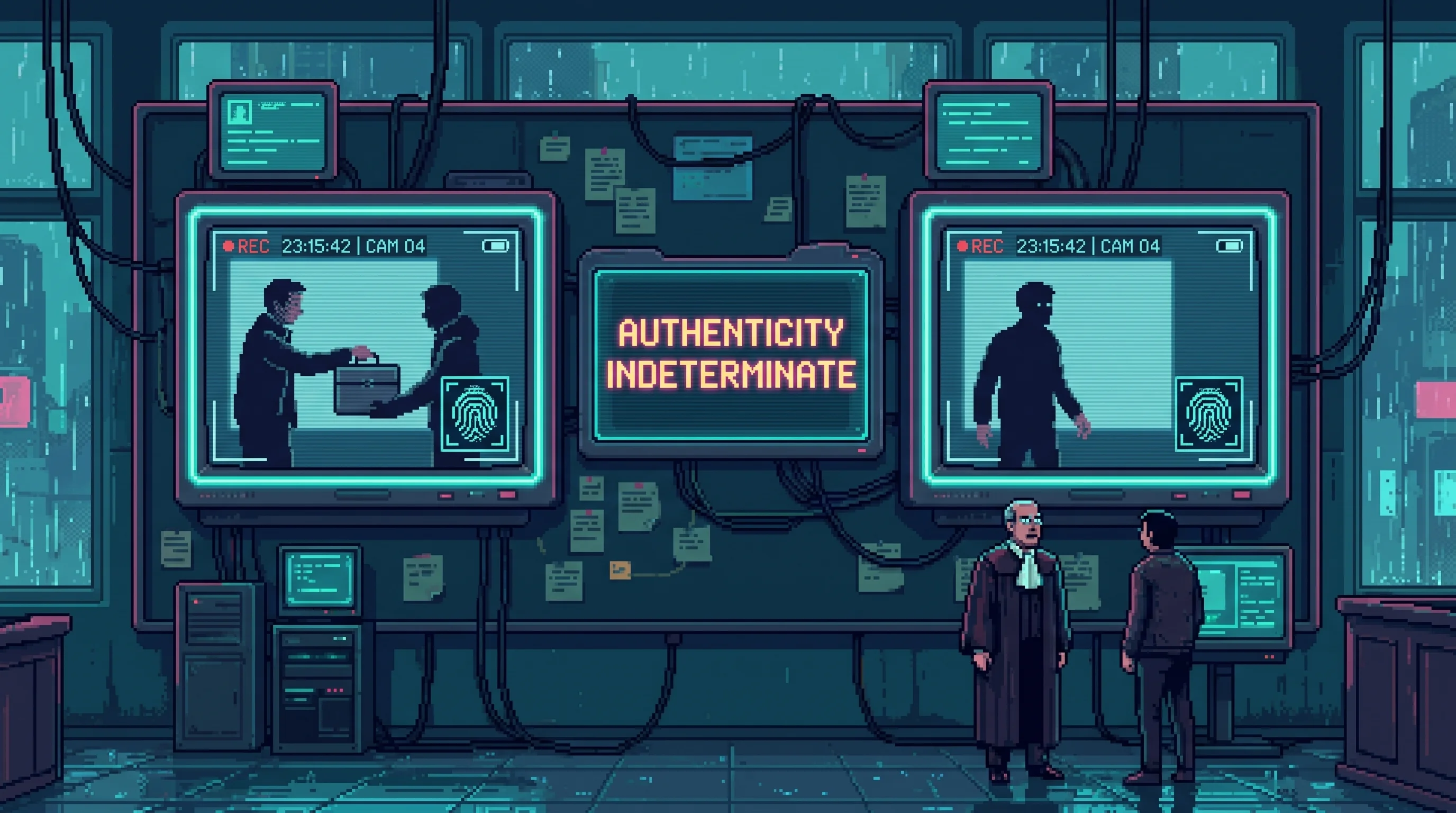
The Negotiable Record replaced imperfect human memory with perfect documented accounts that completely disagree with each other. It eliminated the imperfection that the negotiation mechanism depended on. Two people who were at the same event can no longer say "I remember it differently" — they can say "here is my footage." The footage is sourced. The footage is complete. The footage cannot be wrong. The footage shows different events.
There is no mechanism for resolving this. The Negotiable Record was not designed to adjudicate. Courts accepted both accounts under Section 23.7. Courts rendered verdicts that satisfied neither party. Nobody had anticipated needing a separate profession just to make the legal infrastructure function in the presence of irresolvable documented evidence.
A contracts lawyer in Sector 4 charged ¢3,200 to a will dispute in 2175 and produced a statement of events both siblings were willing to sign. The statement did not claim to be historically accurate. The will was executed. The contracts lawyer charged ¢3,200 the next time. And the next. By her eighth case she had two colleagues and a waiting list.
We do not offer truth. We offer sufficient.
- “sufficient for the transaction at hand”
- “shared account”
- “as filed”
- “both accounts remain on record”
What History Brokers Do
They talk to both parties separately and then together. They identify the non-negotiable elements each party's account requires — the facts that, if disputed, would collapse the relationship entirely and make the transaction impossible. They identify the elements that are documented differently but that neither party actually cares about very much. They find the shape of an account both parties can live with, for this purpose, without abandoning their documented experience.
The deliverable is the Shared Account Document: a statement of events that both parties formally accept as sufficient for the transaction at hand, with a footnote that neither party's documented experience is thereby invalidated. Both original Negotiable Record accounts remain on file. Both are still filed as true. The Shared Account Document is filed as a third document, also true, describing a third version of events that is legally sufficient for the specific transaction. The specific transaction proceeds. Everyone moves on.
The Reconcilers' Professional License, issued by Nexus in 2180, requires every Shared Account Document to contain the following statement: "The undersigned does not represent historical expertise, and this document does not constitute a legal finding of historical fact. This document is a facilitated statement of shared sufficiency produced for the specific transaction detailed herein." The statement is in point-eight font at the bottom of every page. The point-eight font is specified in the license guidelines.
History Brokers will tell you, if asked, that the point-eight font disclaimer is their profession's founding document. It says everything honest about what they do and why it has value. They do not know what happened. They are paid because they do not know, they admit they do not know, and in the absence of knowable truth they can produce something that functions.
| What They Are Not | Historians — stated prominently in every client document per license requirement |
|---|---|
| Fee Range | ¢3,200–¢8,500 per case (both parties pay; the Broker charges each) |
| Corporate Acceptance | Shared Account Documents accepted by corporate tribunals as alternative dispute resolution (2182) |
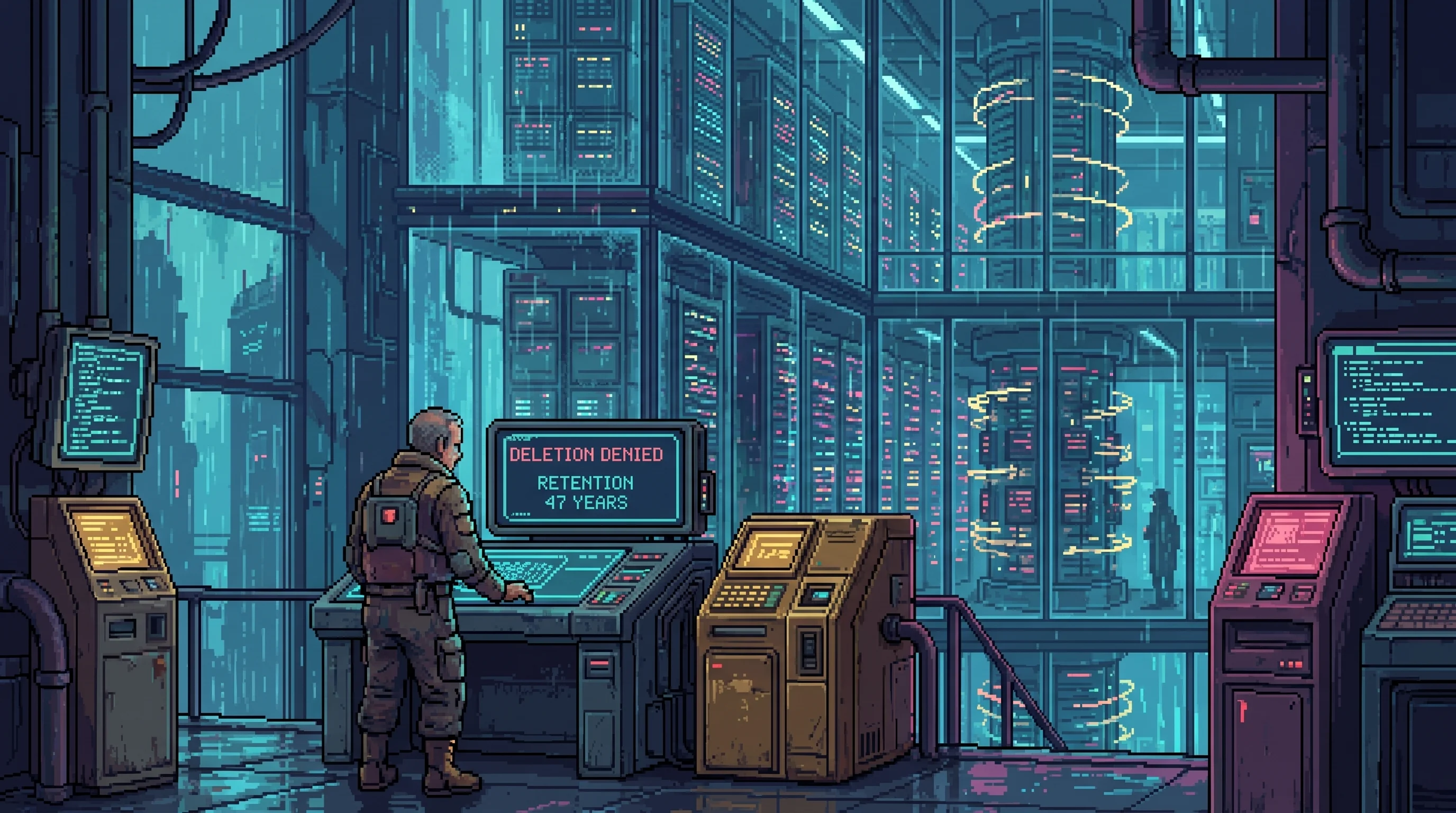
| Dregs Acceptance | None — Judge Dreg rules Shared Account Documents as evidence of what two people agreed to say, not of what happened |
The Guild
The History Brokers Guild was formed in 2181 by eleven practitioners who had been comparing notes since 2177. The guild produces no journal, holds no annual meeting, and owns no property. It maintains a shared database of case types, fee structures, and the training materials that begin with the 2175 will dispute. The database is licensed, not public.
The Guild's one formal function is the mentorship pipeline: licensed practitioners can take on unlicensed apprentices who shadow cases for eighteen months before sitting the Reconcilers' Professional License examination. The examination is administered by Nexus, which is the only body with authority to issue the license. The examination content is not public. Practitioners report that it involves the production of a Shared Account Document in a live mediation with two parties who have been given genuinely conflicting documented accounts. The accounts are from Nexus's own test database. The accounts are mutually exclusive. The examination is graded on whether the resulting Shared Account Document is legally sufficient, not on whether it is historically accurate. Accuracy is not a grading criterion. Sufficiency is.
1,200 people are on the waiting list for the examination as of early 2184. The examination is offered four times per year. Forty applicants sit each examination. The number of licensed practitioners grows by approximately eighty per year. The waiting list grows by approximately four hundred per year.
Dregs Communities
History Brokers have no clients in Dregs communities and no standing in Dregs justice.
Judge Dreg has ruled formally on this: "A document produced by a hired negotiator for a fee is evidence of what two people agreed to say. Agreeing to say something is not the same as remembering it or experiencing it. The Dregs does not run on agreement. The Dregs runs on witnesses. If you need a witness to testify, bring the witness. If you need someone to testify to what you've agreed to say, pay a History Broker. I don't take their cases."
The Dregs communities that use his jurisprudence extended this to a practical stance: Shared Account Documents are accepted as evidence that two parties were once in the same room and wanted something from each other, nothing more. The document's content is considered the product of the negotiation, not of the event. The negotiation is interesting. The event is what Dreg wants to hear about.
Several History Brokers have attempted to market their services as a neutral facilitation for Dregs disputes. None have found clients. The Dregs communities' explanation, when asked, is consistent: History Brokers produce an account sufficient for corporate infrastructure. The Dregs doesn't have corporate infrastructure. It has witnesses, reputations, and memory. These are imperfect. The imperfection is the point.
They do not offer truth. They offer a sufficiently shared version of events for a specific purpose. This is stated in every contract they produce. They charge ¢3,200–¢8,500 per case. Each party pays separately.
Tomás Linares
Tomás Linares has never applied for a Reconcilers' Professional License. He has, informally, done the work that History Brokers charge for — found paper records sufficient to establish shared facts for a contract or a dispute, read them aloud to both parties, charged nothing. He considers the zero-charge a professional failure. His reasoning, explained once to a client who asked: "If you need me to charge you for this, it means you couldn't do it yourself without me. If you couldn't do it yourself, you needed what I provided. What I provided has value. Providing things of value for free is how things of value become dependent on the person providing them." He has not formalized this view. He has begun charging. He charges ¢200. This is not a competitive rate.
He is not planning to join the Guild.
The Evidence Paradox's Commercial Adaptation
The Evidence Paradox asks: when any proof can be fabricated, is justice possible, or just power dressed in robes?
The History Brokers have a different question. They don't dispute the Paradox's premise. They accept that proof is uncertain, that the Negotiable Record's accounts are as fabricated as anything else, that there is no recoverable historical truth beneath the synthesis layers. Given this, they ask: what do you need to be able to do next? Their answer is the Shared Account Document. They are not solving the Evidence Paradox. They are building the highway alongside the quicksand that the Paradox created. The highway doesn't go where the quicksand used to go. It goes somewhere you can actually walk. It costs ¢3,200–¢8,500 per use and requires a licensed professional.
This is the most commercially successful response to the Evidence Paradox that anyone has developed.
Shared Account Documents are filed alongside both parties' original Negotiable Record accounts — three versions of the same event, all documented, all admissible
The Disputed Diagnosis
The Legacy Read gave the Brokers their worst case type, and it is worse than the Revenant.
A Legacy Read produces a diagnosis of the dead — a date, a cause, a projected trajectory read off a photograph. The trouble begins when a second family member produces a different Legacy Read of the same dead person, from a different photograph, taken in a different year, in different light. The diagnostic models, run on different images, return different dates, different causes, different answers to the only question anybody actually cares about: did they know. One sibling's photograph of their father at the wedding returns a cardiac trajectory with twelve years' warning. The other sibling's photograph of him at the funeral of his own mother returns a date and a confidence interval that says the death was foreseeable, and therefore that someone — a doctor, a spouse, a child — failed to act, failed to ask, failed to read the face that was apparently a chart the whole time.
The Brokers are hired to produce a Shared Account Document: a statement of what the family will agree their dead person knew, and when, sufficient for the inheritance dispute, the malpractice claim, the apology one sibling needs and the other refuses to make. It is the hardest mediation the profession has. The Revenant at least speaks. A diagnosis cannot be questioned, cannot soften, cannot say I didn't know. It is a date in Persistence Amber under a beloved face, and it is internally consistent, and it is, in the model's present tense, simply true. The point-eight-font disclaimer gained a sentence in 2184: This document does not constitute a finding regarding the decedent's knowledge of their own condition. The Guild added it after the third such case, when a reviewer in a corporate tribunal read two contradictory Legacy Reads of the same woman and wrote, in the margin, is there a professional service for this yet. There was. There is. It costs ¢3,200–¢8,500 and it cannot tell you whether your father knew, because nobody can, because the knowledge did not exist when the photograph was taken. Judge Dreg, asked to admit a Legacy Read in a Dregs inheritance case, refused — a photograph is not a witness; ask the man who washed his body — and sent the family to Tomás Linares, who set the printout face-down and did not read it.
Corporate tribunals accepted Shared Account Documents as alternative dispute resolution in 2182; the Dregs communities do not accept them under any circumstances
Sensory Details
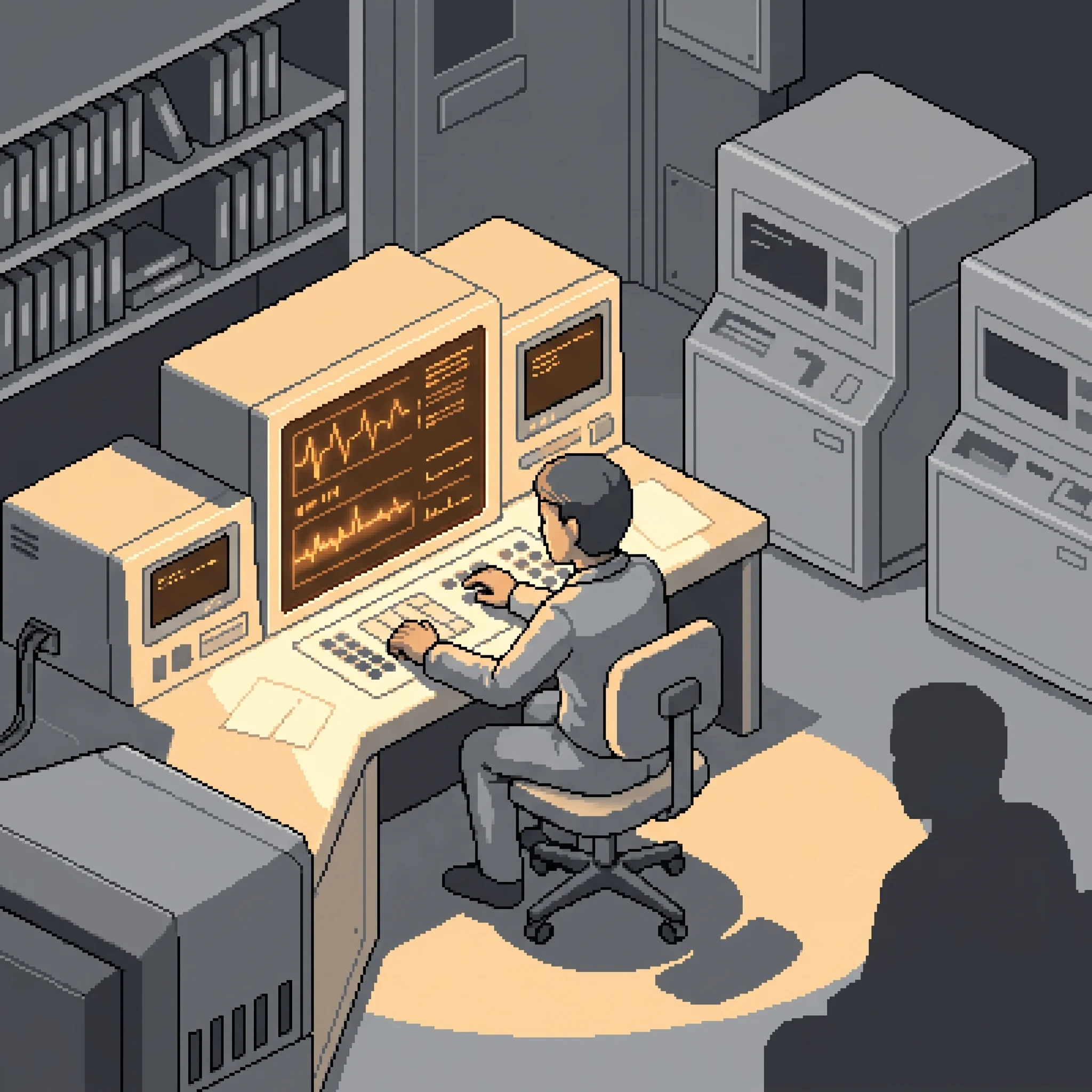
History Broker offices are aggressively neutral. No art on the walls. No faction or corporate insignia. The chairs are equidistant from the mediator's chair. The table, if there is one, is round. These choices are not accidental — the Guild training materials have a section on physical environment as negotiation tool. A room with obvious aesthetic preferences suggests a party with obvious preferences. A party with obvious preferences influences the mediation. A room that wants nothing is a room that facilitates.
The Shared Account Document is printed on paper, signed in person, and filed in duplicate: once in Nexus's documentation system and once in a physical filing cabinet maintained by the History Broker's practice. The physical copy is not legally required. The Guild added it after the third case where a Nexus system update changed the metadata on a filed Shared Account Document — the document's content was unchanged but the timestamp had been revised. Both parties noticed. The History Broker's physical copy had the original timestamp. The physical copy had standing.
Visual Identity
- Color palette: Neutral warm gray (#8A8880), documentary white (#F5F2EE), the color of paper and shared surfaces
- Key symbol: A table with two chairs equidistant from a single document — the geometry of facilitated agreement
- Lighting: Even, directionless — no shadows on either side
Affiliated Entities
- The Negotiable Record created the History Broker market. Divergent documented accounts required a profession that could negotiate between them without claiming to resolve them.
- The Permanent Record is the History Brokers' operating material — they work in the space between two permanent accounts, producing a third document that is equally permanent and less true.
- Judge Dreg's jurisprudence excludes them from Dregs justice entirely. His ruling — that a Shared Account Document is evidence of agreement, not event — is the clearest statement of what History Brokers actually sell.
- The Corporate Compact's contract infrastructure accepted Shared Account Documents in 2182. The employment and marriage legal systems that required shared history now have a licensed service for producing it.
- The Curators Guild is a structural parallel: both professions produce curated versions of something that could be unmediated, both require formal disclaimers of expertise in the underlying subject, both charge for the mediation service rather than the content.
- Tomás Linares does informally what History Brokers do professionally, charges less, and has begun to admit that this is a problem.
1,200 applicants on the waiting list for licensure as of 2184
Connected To



—