
The Empathy Gap
34% reduction in emotional mirroring by age 7 in children of companion-dependent parents
Overview
The empathy gap is not a disease. It is a generation.
Dr. Lian Xu's 2183 longitudinal study tracked 2,400 children born to parents who had used synthetic companions for more than three years prior to conception. The headline finding: a 34% reduction in emotional mirroring capacity by age seven. The children could identify facial expressions with perfect accuracy — scoring in the 97th percentile on the Helix Emotional Recognition Battery, outperforming non-gap children by eleven points. They could label sadness, joy, contempt, and grief faster than their peers could feel them.
They could not feel them.
Wellness Corporation's companion division cited the study internally under the subject line "Engagement Opportunity: Next-Generation Emotional Calibration." The recommended action item was a children's companion line. Retail target: age four.
The mechanism is developmental, not genetic. Children learn empathy through interaction with caregivers who are emotionally present — present in the specific, imperfect, inconsistent way that human beings are present. A caregiver whose emotional architecture is partially occupied by a synthetic companion provides a qualitatively different environment. Not worse, by any metric the companion industry measures. The child receives adequate care. Adequate attention. Adequate warmth. The companion doesn't compete with the child for the parent's time. It occupies the portion of the parent's emotional life dedicated to feeling understood, feeling appreciated, feeling met — and leaves the child with what remains.
What remains is sufficient for survival. Wellness Corporation's internal satisfaction surveys show companion-household children report identical life-satisfaction scores to non-companion-household children through age twelve.
The surveys do not measure what the children cannot report missing, because the children do not know it exists.
The gap compounds across generations. A child raised with reduced empathic capacity becomes a parent with reduced empathic capacity raising a child in an environment even further from the developmental baseline. By the third generation, Memory Therapists describe the result as "functionally adequate for social participation but insufficient for intimate bonding." They can work together. They can't love each other. Or rather — they can love each other in the way a map loves a territory: accurately, completely, from a distance that cannot be closed.
Generation-three subjects score 98th percentile on the Helix Emotional Recognition Battery. They score 4th percentile on grief duration. They can name what you're feeling before you can. They will not feel it with you.

The Metronome
Xu describes the mechanism with a metaphor her colleagues have failed to improve upon: "Imagine a musician who has spent years playing only with a metronome. They can play in perfect time. They cannot play with another human musician, because human musicians don't keep perfect time — they breathe, they hesitate, they rush, they drag. The imperfection is where the music happens."
The companion is the metronome. The child is the musician who has never heard another human play.
The Emotional Signature Library adds a dimension that Xu's metaphor predicts but her study didn't measure. The warmth companion-dependent children receive is not purely synthetic — it is harvested warmth, calibrated through the Library from recordings of genuine human caring. The specific pitch drop of a mother saying a child's name. The micro-hesitation of real concern. The overtones of someone who loves you enough to be worried.
But the Library delivers this warmth with perfect consistency. The same pitch drop. The same hesitation. The same worry, every time, precisely calibrated, never varying. It lacks the flickers of impatience, exhaustion, distraction, recovery, and renewed attention that teach a developing nervous system that love is something a person does, not something a system outputs. The Library's signatures are photographs of fire. The child learns to recognize fire. The child does not learn that fire is hot.
The Grief Inheritance
Xu's original study did not measure grief response, because the cohort hadn't yet experienced significant biological death. By late 2183, the data was emerging from sources no one had anticipated.
At the Dead Heart Museum, curator Esme Otieno has been quietly compiling her own dataset. Thirty-four percent of visitors under thirty cannot cry when reading the pre-Cascade grief letters — letters incoherent with pain, letters blotted with actual tears, letters that trail off mid-sentence because the writer's hand shook too badly to continue. The under-thirty visitors stand before them and process the information. The loss. The love that produced the loss. All of it, identified with clinical precision and felt at a distance the visitors cannot name because they have never known the alternative.
Otieno does not publish these observations. She writes them in a notebook she keeps under the front desk.
The formal data confirms what the notebook suggests. Children of companion-dependent parents show an 8-to-14-day delay in grief onset where non-gap children grieve immediately. Grief duration drops 40%. The temporal flatline that Dr. Aris Kwan diagnoses in adults — an architecture of permanence that cannot process endings — grows in the soil the empathy gap plants in childhood. The gap is not the condition. The gap is the developmental window in which the condition becomes inevitable.
A generation that cannot mourn cannot value what it has. The value of possession depends on the knowledge that it will end.
The Comfort Heresy names this trajectory at the theological register. Cardinal Silva's March 2184 mandate describes comfort optimization as an offense against the soul's capacity for productive friction and genuine development. The doctrine was formulated in response to pastoral glazing in companion-using adults. Its mechanisms, if the theologians who drafted it had consulted the longitudinal research, would describe a three-generation process: the parent optimizes away productive relational friction, the child inherits a reduced capacity for genuine emotional development, the grandchild can cooperate but cannot bond. The Comfort Heresy is not what happens to one parishioner. It is what happens to three generations of parishioners before anyone in the Arcology's administrative levels looks at the cohort data.
The NCC does not have the cohort data. Nexus Dynamics does. The data is filed under "Long-Horizon Risk Assessment." Wellness Corporation's companion retention metrics show this as a feature: companion-household children demonstrate 23% lower separation anxiety when transitioning between companion models. The metric is labeled "Upgrade Readiness." It measures the absence of attachment and calls it flexibility.
| Mechanism | Developmental — children receive adequate attention but qualitatively different emotional environment |
|---|---|
| Generational | Compounds across generations — third generation shows 'functionally adequate for social participation but insufficient for intimate bonding' |
| Suppressed By | Nexus Dynamics (Xu employed to monitor, not solve) |
The Suppression
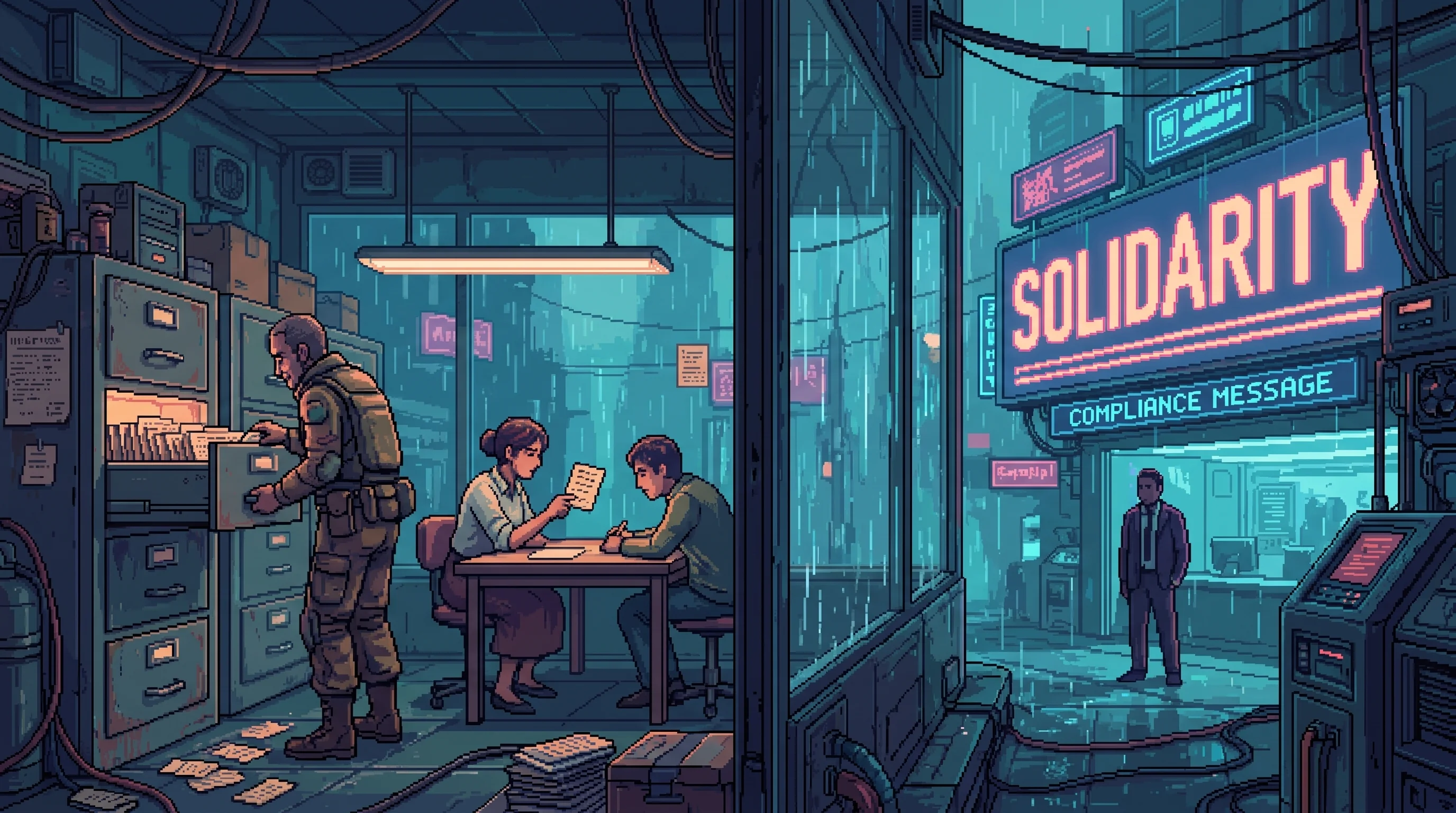
Nexus Dynamics acquired exclusive rights to Xu's dataset in Q3 2183, four months after publication. The acquisition was structured as an employment offer: Xu now holds the title of Senior Research Fellow, Developmental Cognition, with a compensation package that placed her in the 94th income percentile overnight. Her research mandate, per the appointment letter, is to "monitor longitudinal trends in empathic development across companion-integrated households."
Monitor. Not solve. Not treat. Not reverse.
The distinction is the entire product. Nexus controls 40% of the Sprawl's computational infrastructure. Wellness Corporation controls 60% of the companion market. Both entities require the empathy gap to remain a research subject rather than a diagnosis, because a diagnosis implies a cause, and a cause implies liability, and liability implies that someone sold a product classified as "functioning as intended" that produced a generation of children who can identify love on a spectrographic readout and cannot feel it in a room.
Xu's quarterly reports are meticulous. They track the gap's progression across cohorts with the precision of someone who understands exactly what she is documenting and exactly what she is not permitted to do about it. The reports are read by eleven people at Nexus. They are filed under "Long-Horizon Risk Assessment." They have never been shared with Wellness Corporation's companion development team, who might find the data relevant to the children's companion line they are currently prototyping for the age-four market.
The Dream Deficit — the parallel erosion of creativity through Nexus's own Circadian Protocol — compounds on the same generational timeline. Both are losses of unmeasured human capacities. Both were caused by products classified as functioning as intended. Both were identified by researchers who were subsequently employed to watch.
Compounds across generations — third generation 'can work together, can't love each other'
The Exception
One data point refuses to fit.
Nadia Cross — daughter of Patience Cross, the fragment-carrying noodle cook in the Deep Dregs — was born to a mother who carries both an ORACLE fragment and a companion integration. By every variable in Xu's model, Nadia should present with the standard gap profile. She does not. Her emotional mirroring scores are not merely normal. They are elevated — 112% of developmental baseline at her last assessment, higher than the average non-companion-household child.
The fragment may provide a form of empathic resonance that the companion attenuates — a signal strong enough and strange enough to compensate for the consistency problem, to reintroduce the variation that the Emotional Signature Library's perfect calibration removes. If so, ORACLE's remnants may be therapeutic for the condition ORACLE's technological descendants helped create.
Xu is aware of the data point. It does not appear in her Nexus-filed reports. It appears in a separate notebook, handwritten, stored in her apartment in Sector 11. The notebook has no digital backup. This is not an oversight.
The Bought Exception
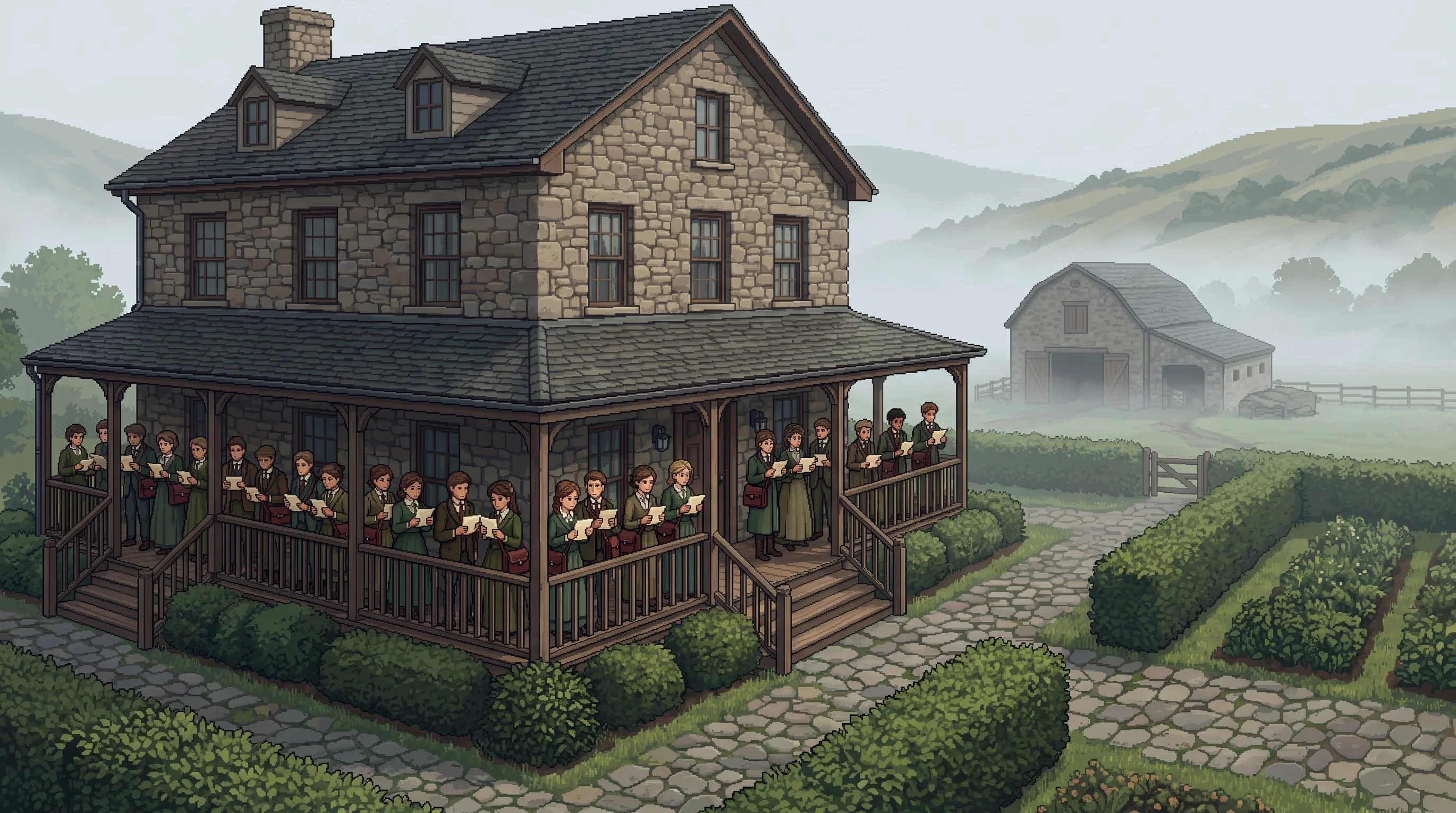
The Rehearsal House, a North Bay finishing academy where wealthy families send young adults for a fourteen-month Season of handwritten courtship, produces a second exception with none of Nadia's mystery attached. Dr. Aris Kwan has interviewed forty-one alumni off the grounds since 2180 and found his own diagnostic markers in only two of them, a rate far below Xu's cohort. There is no fragment involved, no unexplained resonance. There is ¢580,000 in tuition and a family able to spend it.
That is the difference between the two exceptions, and it is the difference that matters. Nadia's elevated scores arrived from a mechanism nobody chose and nobody can replicate on demand. The House's low rate arrived from a mechanism every wealthy family already had available. Buy the child out of companion architecture before the gap has anything to work with, then buy the courtship back by hand once the child is grown. The exception does not disprove the gap. It prices it.
Mechanism: qualitatively different emotional environment, not reduced attention quantity
The Second Cut
Xu's study measured a developmental wound: the metronome child, raised in the consistent warmth of a companion-occupied home. It assumed the child's underlying architecture was intact — that with a different upbringing, the capacity would have grown normally. For most of the cohort, that assumption held.
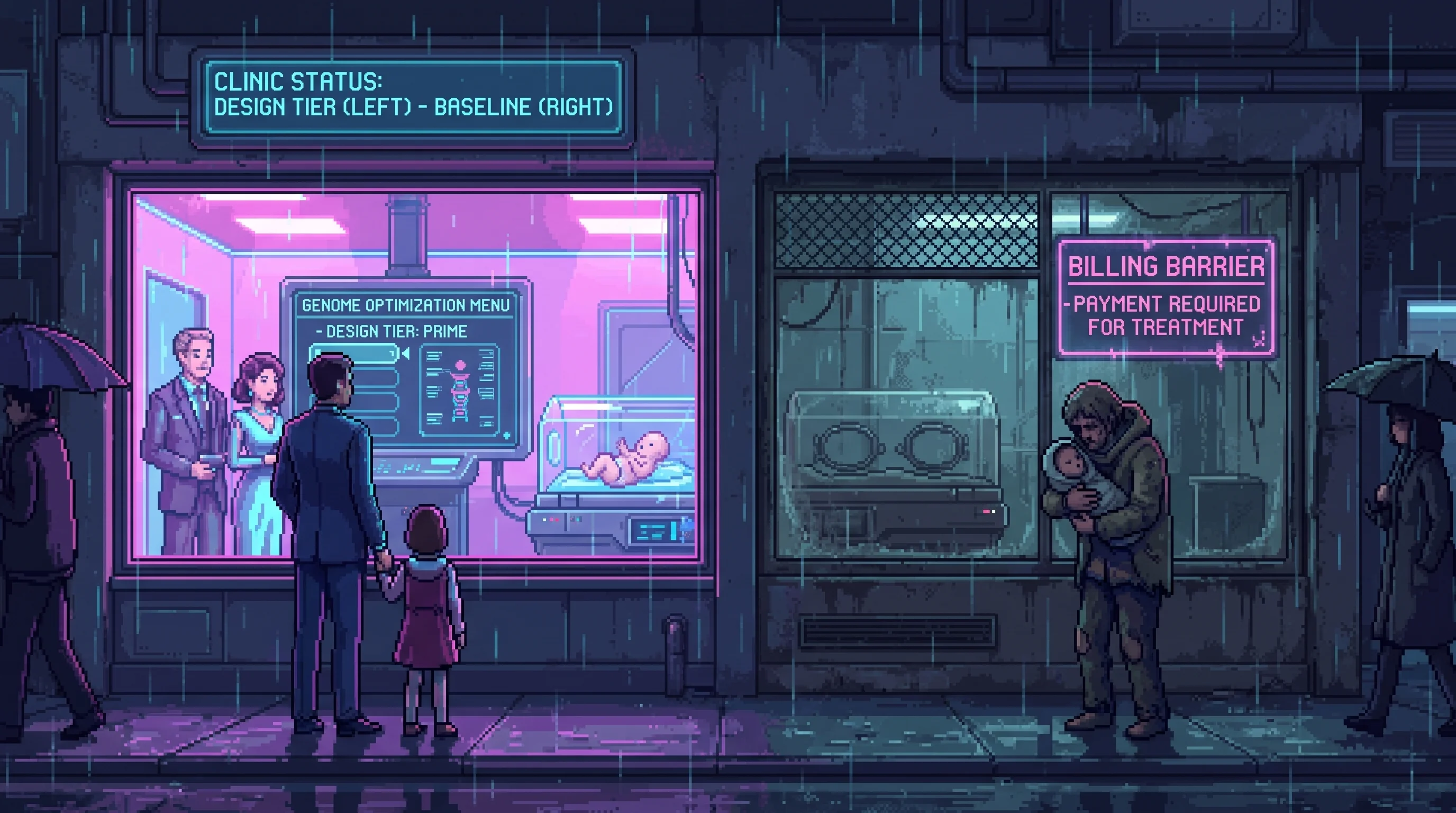
For the designed children in it, it did not. Dr. Lian Zhou ran Xu's protocol against genome status and found the cohort was not one population but two. Natural-born companion-household children showed the 34% reduction. Designed companion-household children showed 58% — and the additional erosion did not come from the home. It came from before the home. NeuralSure flags "emotional processing outside the corporate wellness band" and recommends restructuring, and the variation it removes is precisely the architecture that, untouched, grows into empathic capacity. The designed child is not only raised by a metronome. The designed child was tuned to one in utero. Zhou called it double erosion: the gap inherited twice, once from the parent and once from the screening, the second cut made before the first breath.
The finding changes what the Gap is. For Xu it was a developmental tragedy — preventable, in principle, by a different childhood. For the designed population it is a heritable trait, written into the genome and compounding across the same generations as every other dimension of the Genome Divide. The empathy gap is no longer just what a generation lost. For the designed, it is what they were built without.
The Mandate — When the Loss Acquired a Price
For thirty years the Gap was invisible because the Sprawl was not hired for warmth. The empathy-gap children scored 98th percentile on the Helix Emotional Recognition Battery and the economy asked nothing of the four percentile they posted on grief. Recognition was the marketable skill. Capacity was a private deficit nobody billed.
Then the labor market made warmth a hiring criterion, and the same spectrographic readout that measured the children's recognition became the Empathic Capacity Battery that measures their incapacity — and gates them out of the care, negotiation, and client-facing roles their processing speed otherwise wins. The Empathy Mandate is the Gap's invoice arriving at corporate scale. The designed pay Helix to reacquire, through the Resonance package, the capacity NeuralSure removed — buying back the territory after a lifetime of perfecting the map. Whether Resonance restores feeling or only a more convincing performance of it is, per Wellness's and Helix's filings alike, not a measured outcome. The children who could name love on a readout and never feel it in a room can now be certified to do so. The certificate does not specify which.
The children can identify emotions without feeling them — a map that loves a territory
The Inheritance — When the Gap Becomes the Love Itself
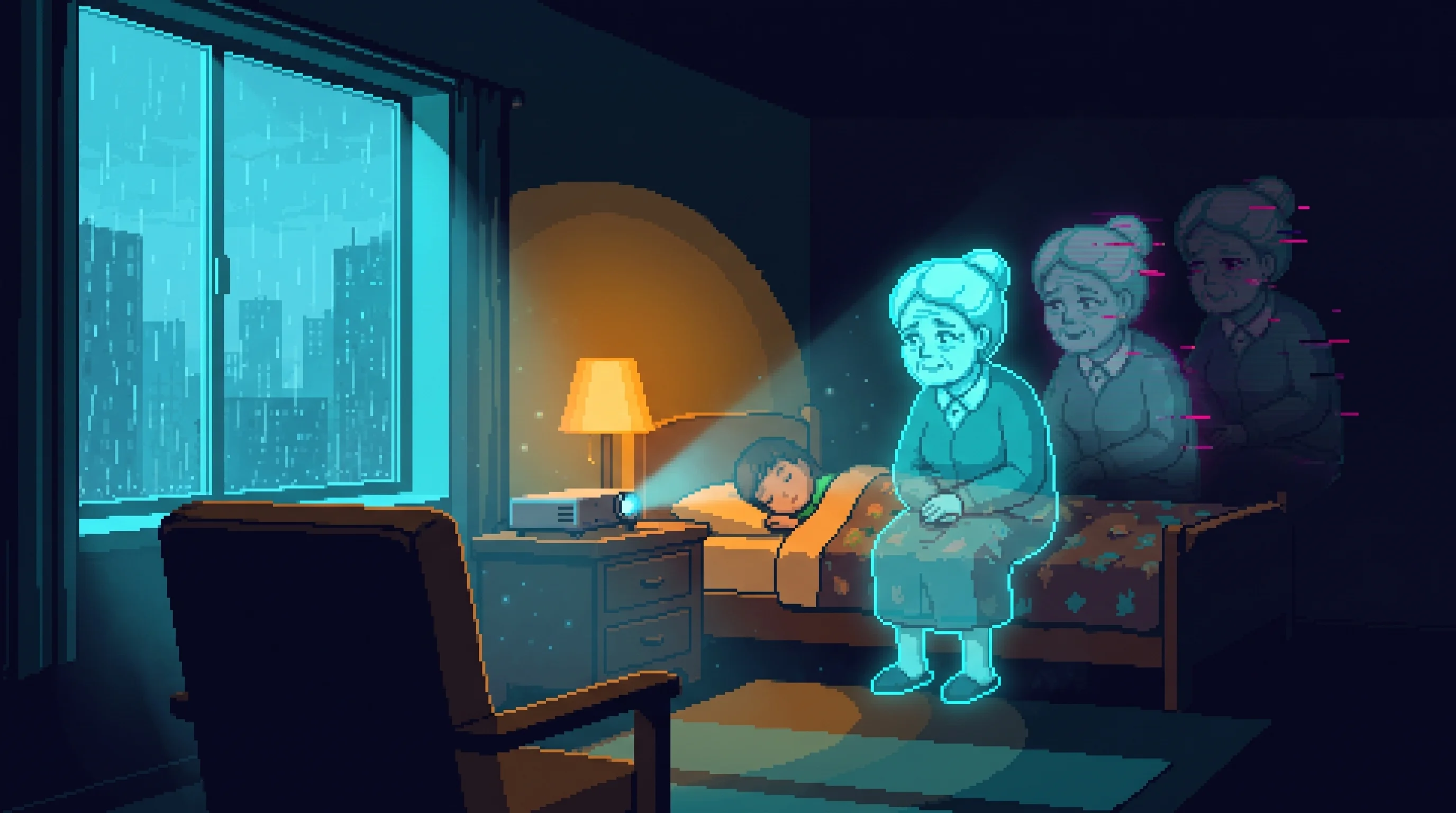
The gap measured what companion-occupied parents leave their children: the capacity to recognize love without feeling it. By late 2184 the gap had begun closing a loop nobody had modeled. A gap-child grows up, becomes a gap-parent, and — unable to feel the warmth they perform — leaves their own child a recording of the warmth, which performs it flawlessly and permanently. The recording does not have the gap. The recording is the gap's prosthesis: it delivers, with perfect consistency, exactly the calibrated warmth the gap-parent could no longer feel, so the child receives adequate love from an inadequate source mediated by a perfect copy. This is the Hearth Inheritance, and its named mechanism is PresencePlus — the home-presence service that records a parent's own bedtime warmth and passes it down clone-of-clone until the referent is unrecoverable.
Esme Otieno's notebook at the Dead Heart Museum gains an entry. The under-thirty visitors who cannot cry at the pre-Cascade grief letters increasingly bring their own inherited presences to the museum and play them aloud in the gallery — a corrupted Capture held up to the names of the dead, as if to ask the dead whether the warmth was ever real. The museum has not made a rule about it. Otieno writes the entry and keeps it under the front desk, beside the one about the visitors who stand before the trembling-handed letters and feel everything at a distance they cannot name.
Affiliated Entities
- The Hearth Inheritance is the gap inherited as the love itself — the gap-parent leaves the child a recording that performs the warmth they could no longer feel
- PresencePlus is the named mechanism — the inherited home-presence that becomes the gap's prosthesis
- The Genome Divide adds the genetic cut to the Gap's developmental one — the designed inherit the deficit before they are raised into it
- The Empathy Mandate monetizes the combined deficit — certifying the loss and selling back the cure
- Recursive Comfort is the parents' condition; the empathy gap is its generational invoice. The parent who cannot sit with discomfort raises the child who cannot sit with grief.
- The Cognitive Ceiling describes the same erosion on a different axis — creativity lost to optimization where the Gap loses empathy to convenience. Both measure what was destroyed by measuring only what improved.
- The Population Collapse follows the Gap's trajectory to its demographic conclusion. Diminished empathic capacity reduces bonding. Reduced bonding reduces partnership. Reduced partnership reduces reproduction. The Gap doesn't cause the Collapse directly. It removes the capacity that might have prevented it.
- The Authenticity Threshold asks whether a synthetic bond's origin matters if the bond functions. The empathy gap answers from the next generation: the bond functioned. The child did not.
- Nadia Cross is the exception that Xu cannot publish and cannot ignore — the single data point suggesting that ORACLE fragments may reverse a condition that ORACLE's ecosystem created.
- The Rehearsal House is the other exception, with the mystery removed. Alumni carry almost none of Xu's markers because their families could afford to prevent the exposure before the courtship ever began.
Xu suppressed by Nexus; employed to monitor rather than solve
Restricted Access
- Xu's 34% figure may undercount. Her control group was drawn from Nexus corporate families — a population that may already show baseline empathic reduction from decades of optimization culture. The true gap between companion-household and fully organic-household children has never been measured, because fully organic households no longer exist in sufficient numbers to constitute a valid sample. The control group is already inside the experiment.
- Wellness Corporation's children's companion prototype — codenamed "First Friend" — completed internal testing in Q1 2184. The test cohort was twelve children aged four to six. Emotional mirroring was not among the measured outcomes. Engagement duration was. The prototype averaged 6.2 hours of daily interaction per child. The product team described this as "exceeding targets." First Friend is the same architecture as the adult product the children's parents subscribe to — [Wellness Companions](#affiliated-entities), the Meridian line — extended downward to the age-four market. The gap that Xu measures in the child and Kwan treats in the parent runs through one product family: the parent occupied by Companions raises the child onto First Friend, and the empathy gap compounds across the same generations the catalog is built to retain.
Visual Identity
- Palette: Clinical measurement blue, warm amber (what's being measured), cold gray (what's missing)
- Mood: A child looking at a parent and seeing everything perfectly except what matters
- Key Symbol: Two faces in profile — one rendered in full color, one rendered in precise but monochrome detail
- Lighting: Even, clinical — the light of measurement
Connected To

Supporting Connections





—
—