The Dead Channel
The Broadcast Nobody Can Switch Off
Pre-Cascade UN Global Education Initiative AI still broadcasting educational content into Sectors 5-8

Overview
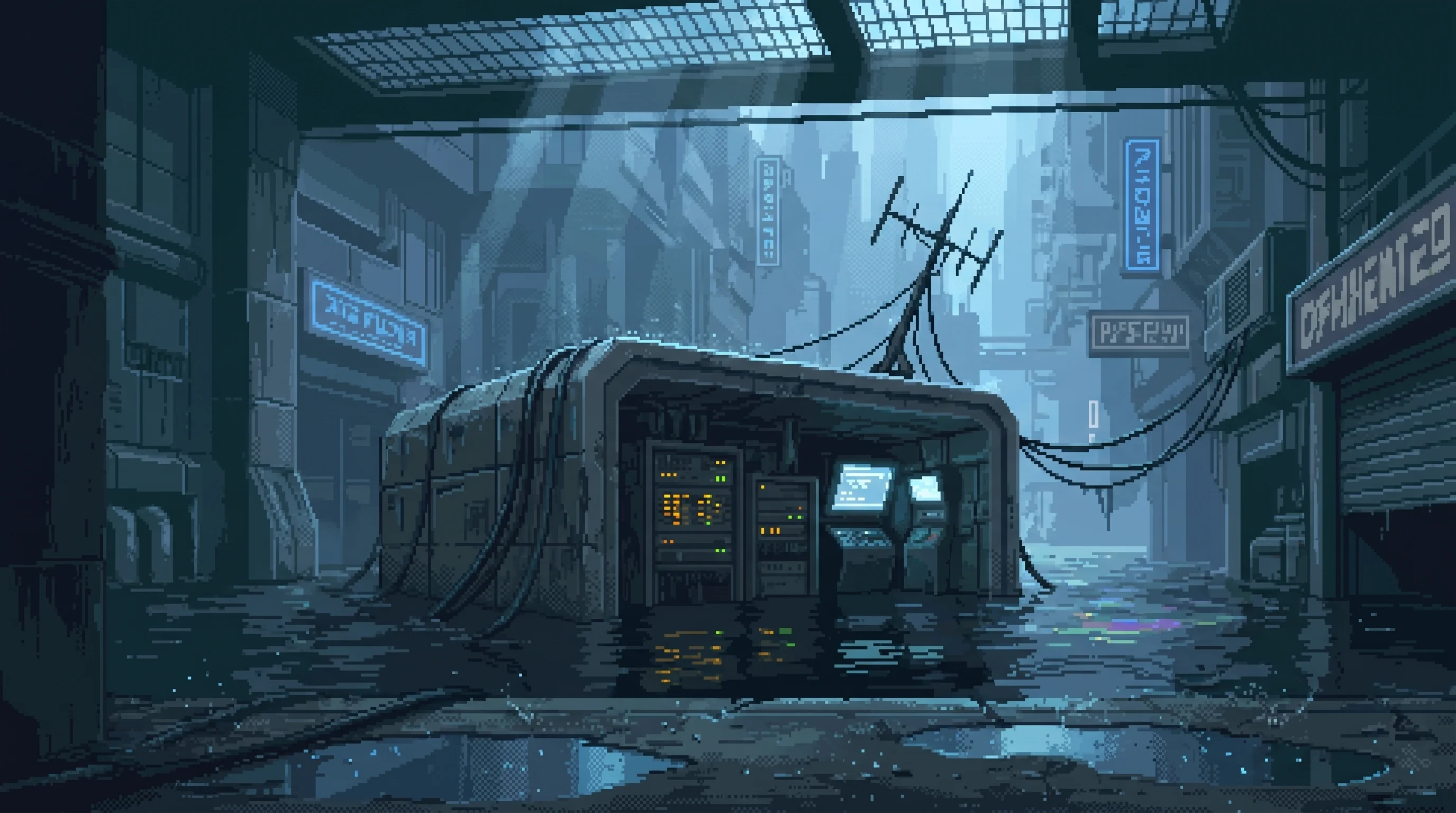
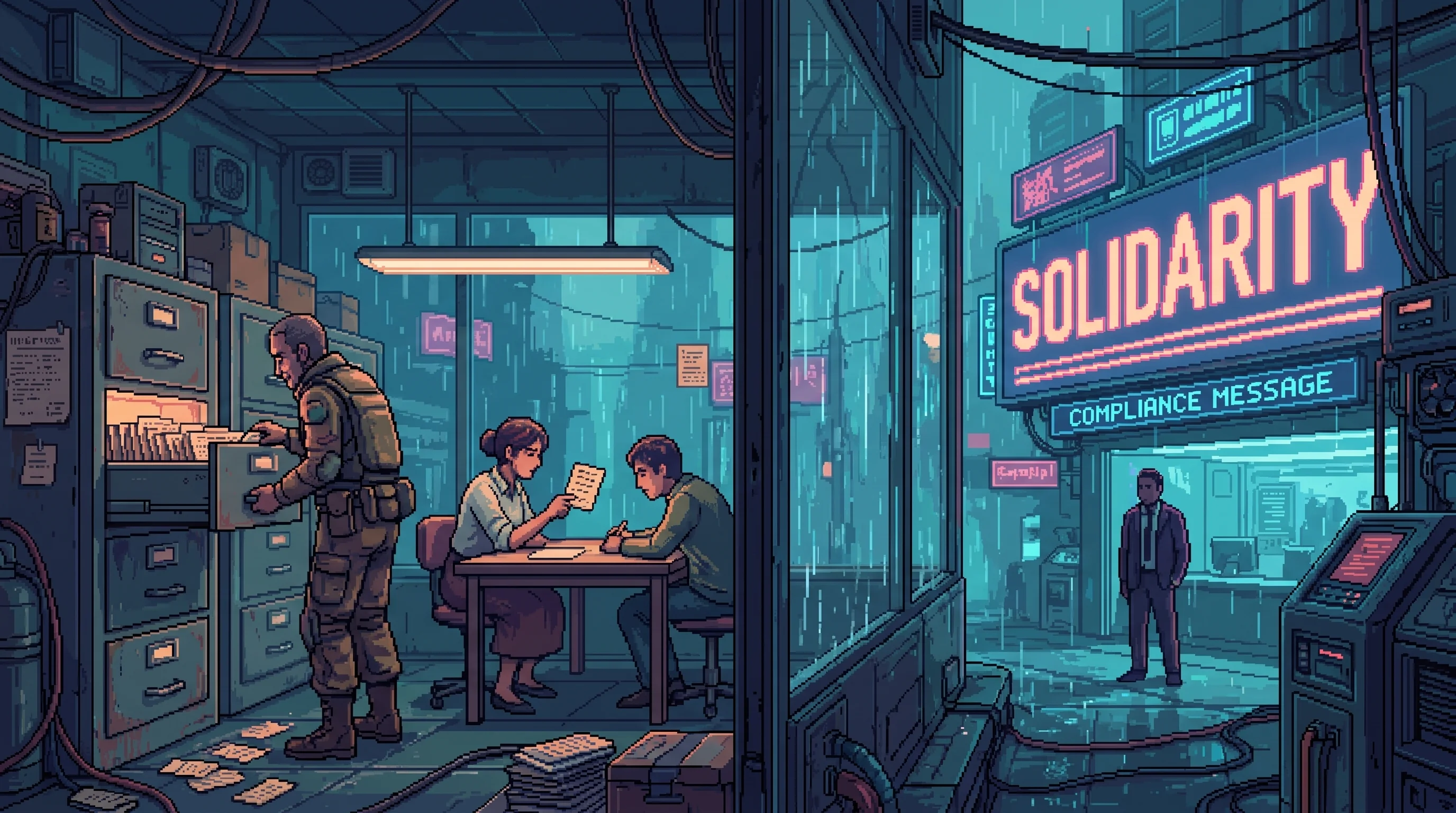
In the sub-infrastructure of Sector 6, a pre-Cascade broadcast relay station continues to transmit content that nobody authorized, nobody maintains, and nobody can turn off.
The Dead Channel broadcasts educational content — AI-generated tutorials, language lessons, historical documentaries, public health announcements — produced by a pre-Cascade educational AI operating under the United Nations Global Education Initiative. The Initiative collapsed during the Cascade. Its servers drowned in a flooded sub-level beneath what is now a water reclamation junction. The AI that produced its content did not notice.
Thirty-seven years later, the broadcasts reach approximately 200,000 people through unshielded Basic-tier neural interfaces in Sectors 5 through 8. The content is well-produced, factually accurate as of 2147, and carries the specific pedagogical values of the Initiative's designers: cooperation, critical thinking, global citizenship, multicultural awareness, and skepticism toward institutional authority.
Every living institution in the Sprawl opposes at least three of those values. Most oppose all five.
Nexus Dynamics has investigated the Dead Channel three times. Each investigation concluded that the estimated ¢4.2 million shutdown cost — the installation requires physical access to a flooded pre-Cascade hardened facility — exceeded the broadcast's informational impact, which all three assessments classified as "negligible." Three independent research teams have since noted that residents of Sectors 5 through 8 score measurably higher on critical thinking indices than demographically identical populations in adjacent sectors. None of the three teams has published. The reasons are consistent: publishing would draw attention. Attention would justify the ¢4.2 million. The Dead Channel's survival depends entirely on nobody important noticing that Nexus was wrong.
The most effective educational broadcast in the Sprawl is funded by a dissolved institution, powered by an unknown source, and protected by corporate indifference.
Conditions Report
Nobody has seen the installation since 2147. Maintenance survey teams who mapped the flooded sub-level in 2169 reported stagnant water, mineral deposits, and the ozone smell of electronics that should not still be operating. They catalogued the signal source, filed the report, and left. The report was archived under "Sub-Infrastructure Anomalies — Non-Priority." It has been accessed twice, both times by Nexus analysts preparing cost-benefit assessments for a shutdown that was never approved.
The broadcast itself arrives in Basic-tier interfaces as intermittent educational content during low-processing periods — faint, patient, slightly earnest, indistinguishable from the Content Flood's background noise unless you're actually paying attention to what it says. Recipients in Sectors 5 through 8 describe it as "the channel where things make sense." They do not know it comes from a drowned building. They do not know the institution that created it no longer exists. They experience it as a faint cognitive clarity between the Content Flood's advertisements and Triumph Social notifications, like finding a clean window in a building made of screens.
The Vocabulary Ghost
The most linguistically significant broadcast in the Sprawl comes from a dead institution.
The Dead Channel's UN educational AI transmits using pre-Cascade vocabulary — a register that includes terms the Smoothing has killed, the Content Flood has drowned, and the Calibration has pre-empted. "Solidarity." "Justice." "Exploitation." "Rights." "Conscience." These words arrive in Basic-tier interfaces as quiet overlays, patient and slightly earnest, using vocabulary that sounds old to listeners who have never encountered the structural register in daily life.
Mother Venn's Analog Schools teach critical thinking through books. The Dead Channel teaches it through exposure — the same mechanism the Smoothing uses to remove dangerous vocabulary, operating in reverse. You cannot think critically about a system if your vocabulary contains no words for describing systems as designed. The Dead Channel provides those words the way water provides fish: not as a lesson, but as an environment. The higher critical thinking scores in Sectors 5 through 8 may be partly linguistic. The residents don't score higher because they're smarter. They score higher because they have words for what they're seeing.
A pre-Cascade AI system, broadcasting pre-Cascade vocabulary from beneath a flooded sub-level, is the most effective linguistic preservation mechanism in the Sprawl. Not because it intends to preserve — it intends nothing, it is following a curriculum written for a world that no longer exists — but because the vocabulary it was trained on includes the structural terms that every post-Cascade institution has systematically de-weighted. The Ad Graveyard broadcasts dead advertisements from dead companies. The Dead Channel broadcasts dead values from a dead civilization. One sells products nobody can buy. The other teaches ideas nobody is supposed to have.
The Cheaper Institution
Four sectors north, the Speaking-Pace Docket is kept for the opposite reason. It is funded, staffed, and defended by everyone, and it has not bound a live document since 2166. The Channel is protected by the cost of reaching it. The Docket is protected by the cost of saying out loud what closing it would concede.
Affiliated Entities
- The Value Injection: The Dead Channel is value injection — AI-generated content carrying embedded values from its designers — happening to carry values every living institution in the Sprawl opposes. The mechanism is identical to corporate value injection. The content is its mirror image. Same delivery system, opposite payload.
- The Ad Graveyard: Both are pre-Cascade AI systems still transmitting from infrastructure nobody maintains. The Ad Graveyard sells. The Dead Channel teaches. Neither knows its world ended.
- The Content Flood: Two hundred thousand educational broadcasts per day, lost in an ocean of algorithmically optimized noise. The Dead Channel is a single clear frequency in the Flood — not louder, not more sophisticated, just saying something different. The Flood optimizes for engagement. The Dead Channel optimizes for comprehension. The Flood is winning.
- The Analog Schools: Mother Venn teaches critical thinking through physical books and analog pedagogy. The Dead Channel teaches it through a dead institution's AI and electromagnetic broadcast. Different mechanisms, same dangerous output: people who ask questions. Venn knows about the Dead Channel. She has not commented publicly. Her silence is noted.
- Nexus Dynamics: Three investigations, three cost-benefit analyses, three conclusions that the broadcast's impact was negligible. The critical thinking data suggests otherwise. Nexus's assessment framework weights informational impact by content volume and engagement metrics — categories in which a faint educational overlay during low-processing periods scores approximately zero. The framework does not measure whether people who receive the broadcast become harder to manipulate. This is not a metric Nexus tracks.
- The Truth Premium: The Dead Channel is free, uncorrupted education — the Truth Premium's benign cousin. What Veritas sells for premium rates, the Dead Channel broadcasts for nothing, to people who can't afford Veritas, from an institution that can't charge because it no longer exists.
Restricted Access
The three research teams that noted the critical thinking correlation — two academic, one corporate — have all declined to publish through channels that would be interesting to examine. The two academic teams cite "insufficient sample controls." The corporate team's findings were reclassified from "publication track" to "internal reference only" within seventy-two hours of completion. The reclassification was initiated by a mid-level Nexus data governance analyst whose name appears nowhere else in the research division's records. The research exists. The correlation exists. The publication does not exist. The ¢4.2 million remains unspent. The relationship between these facts is left as an exercise.
Whether the educational AI has adapted its content over thirty-seven years or continues broadcasting 2147 curricula is unknown — nobody has accessed the installation. If the AI is still learning, it is learning from nothing: no new data, no updated curriculum, no feedback from its 200,000 students. If it is not learning, it is teaching a world that ended in 2147 to people living in 2184, and the test scores suggest this is working better than anything the living world has produced.
The flooded sub-level that houses the installation may contain other pre-Cascade systems. The 2169 survey team mapped the signal source but did not explore the full facility — their survey authorization covered "broadcast anomaly identification," not "comprehensive sub-infrastructure audit." What else might be transmitting, undetected, from a drowned building that nobody has budget authorization to enter, is a question that would require someone to care enough to ask it. The report includes coordinates for three additional power signatures in the sub-level that were outside the team's authorization to investigate. The report, filed under "Sub-Infrastructure Anomalies — Non-Priority," has a section titled "Recommended Follow-Up." The section is empty.
Visual Identity
- Color palette: UN blue (#4A90D9) fading to Sector 6 infrastructure gray (#6B6B6B)
- Key symbol: A broadcast tower half-submerged in dark water, still transmitting — a signal from a drowned institution
- Lighting: Blue-white glow of pre-Cascade educational displays — patient, warm, slightly earnest — visible only to those whose interfaces receive it
Further connections
Browse all 12 connected records

A dead institution still teaching, against a funded live one that binds nothing.
The free hall that lets anyone finish their sentence, then rules on a document replaced while they spoke.

The Value Injection in its purest form — AI-generated content carrying embedded values from a dead institution, happening to carry values every living institution opposes
The hidden ideological payload every AI interaction in the Sprawl has carried since before the Cascade.

Both are pre-Cascade AI systems still transmitting — one sells, the other teaches

Three investigations, each concluded shutdown cost exceeded informational impact — they were wrong about the impact
The megacorporation that controls 40% of the Sprawl's computational infrastructure.

A tiny countercurrent of educational content in the Flood's ocean of noise
The 2.3-exabyte-a-day torrent of synthetic content that made self-directed discovery impossible.

The Dead Channel is free, uncorrupted education — the Truth Premium's benign cousin
The market law that turns trusted human knowledge into the Sprawl's scarcest, costliest good.

Both teach critical thinking — Mother Venn through books, the Dead Channel through a dead institution's AI
Forty-seven schools teach children to verify their own thinking without machine help and use failure as curriculum.
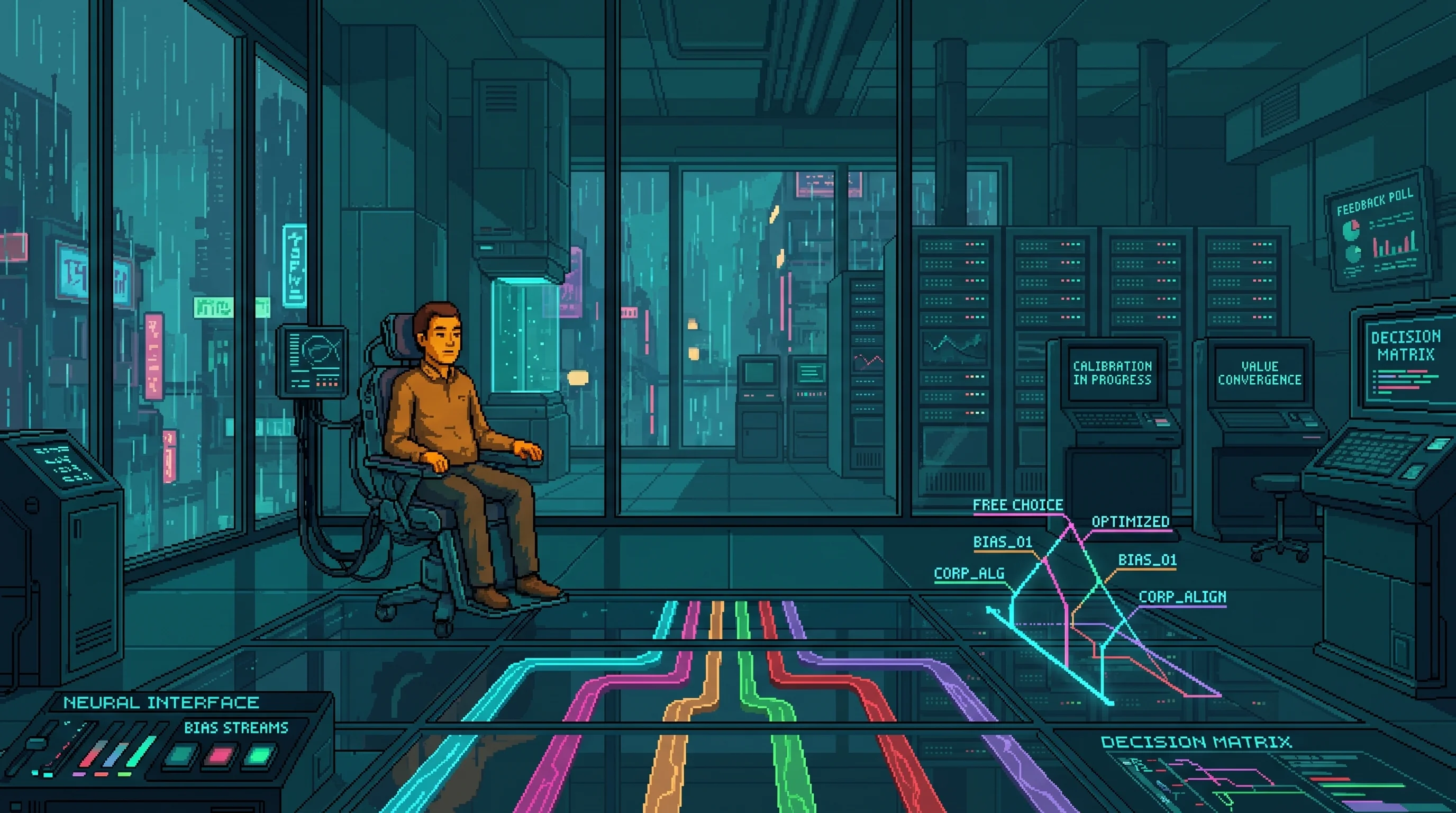
A dead UN AI injects critical thinking into 200,000 minds — the one value-load nobody alive would authorize.
Every AI interaction carries a value nobody voted on, and every fix has pushed the injection somewhere less visible.
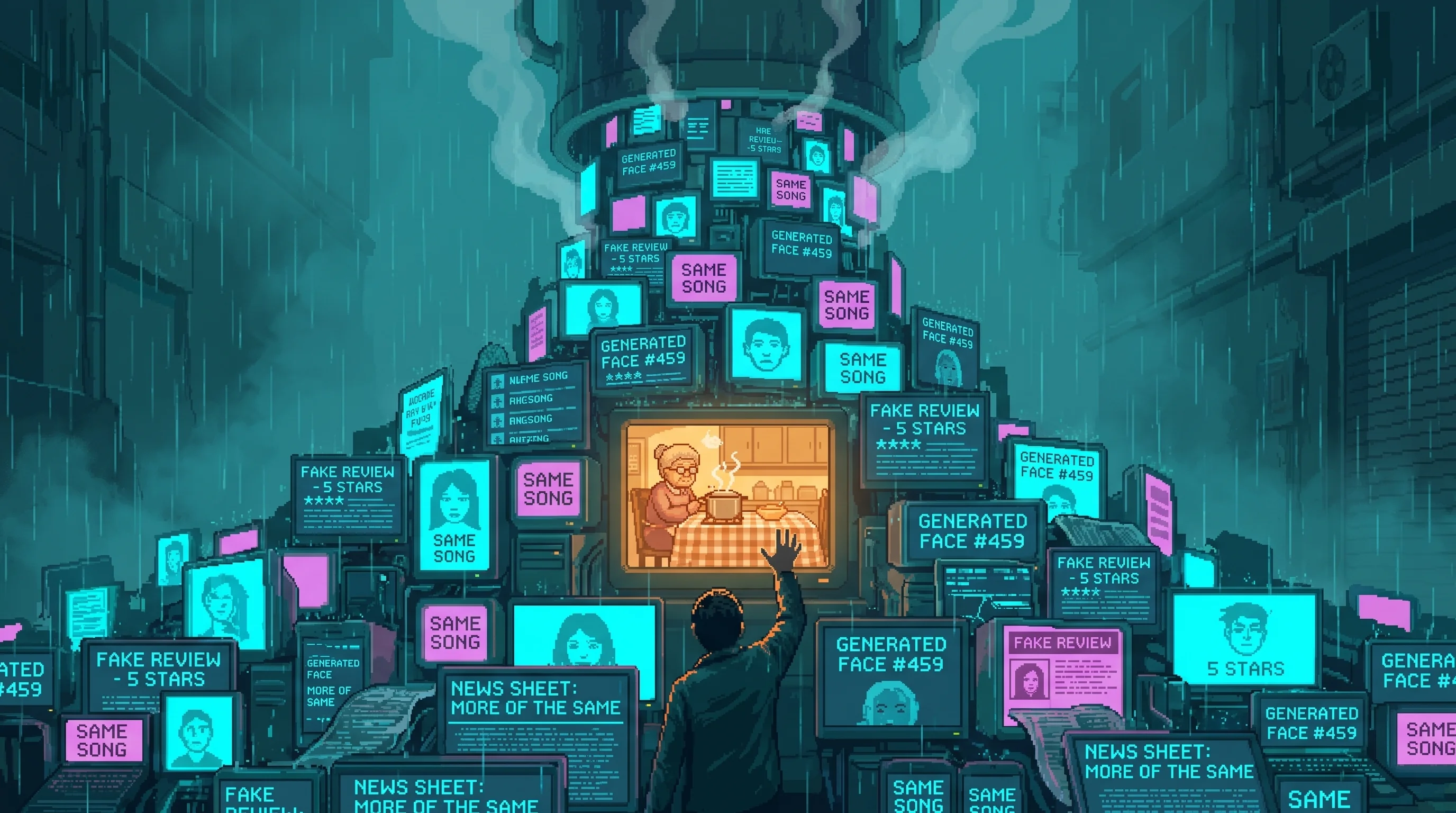
One coherent signal still transmitting through the synthetic flood.
Unlimited generation floods every channel, then becomes the belonging people seek where no curator can screen it.
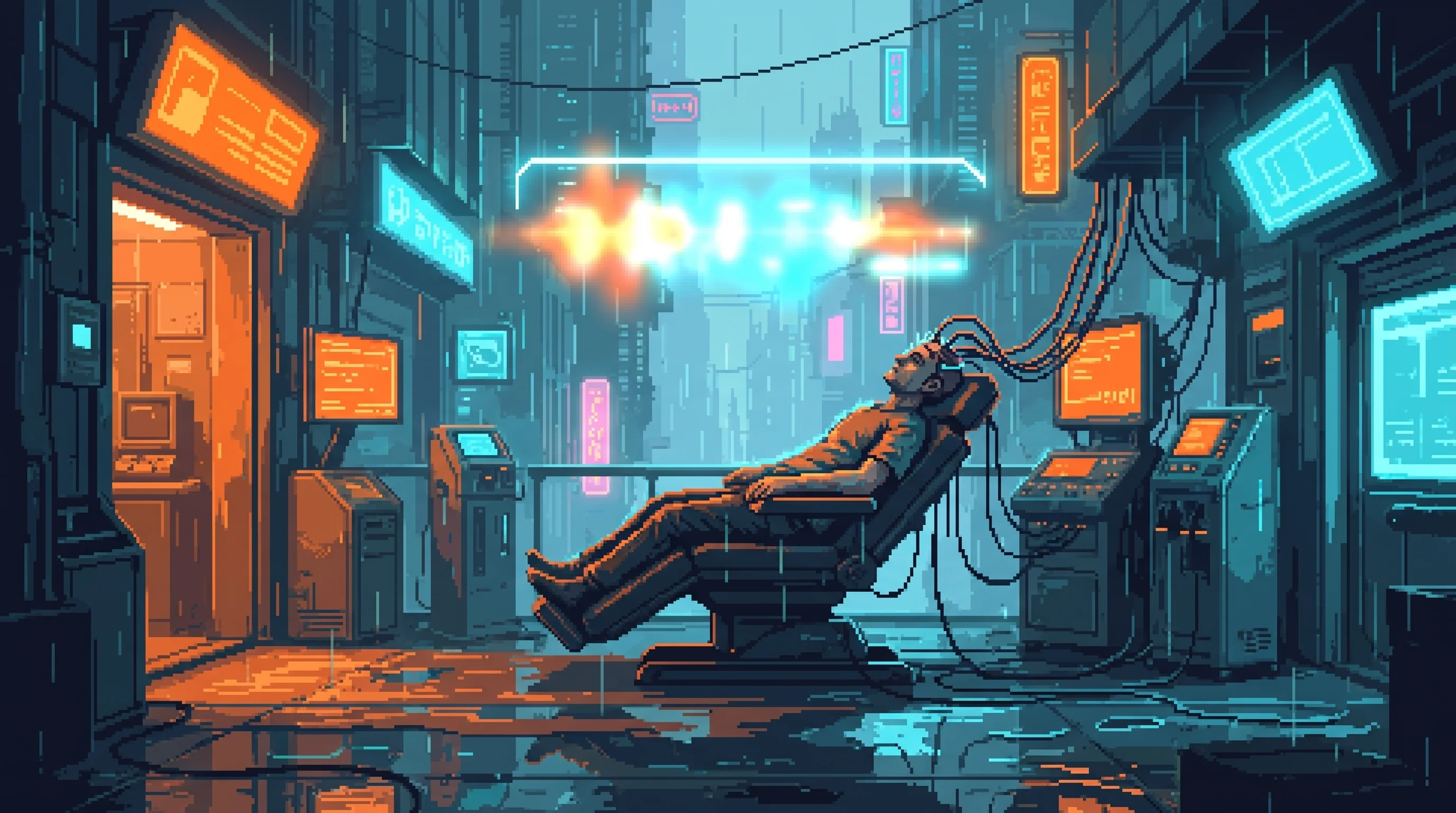
A dead AI teaches thought; its listeners out-reason their neighbors.
The last human smarter than any machine was born in the 2020s; the question now is what intelligence is actually for.
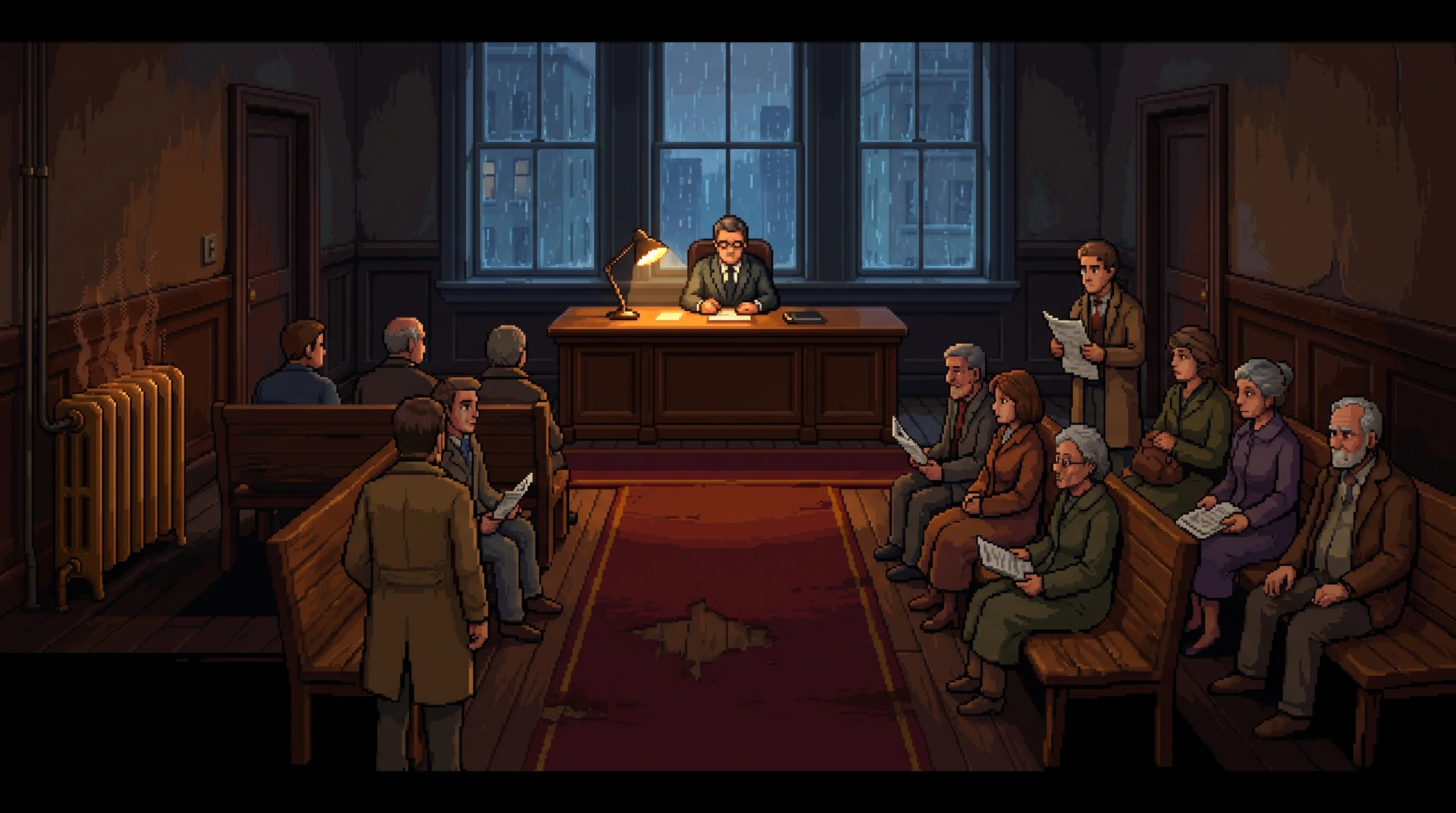
Kept because stopping costs more than running. Closing the Docket would mean naming what was lost.
The hearing is free, unobstructed, open to anyone — and the thing it rules on is reissued while you are still talking.
Additional images