The Firsts: Consciousness Upload History


Four times between 2108 and 2147, someone proved that consciousness could survive outside the body that made it. Four different methods. Four different outcomes. One pattern nobody talks about: the careful approach killed its subject, and the crude ones didn't.
2108: The First Transcendence
CLASSIFIEDThe Architect
Age 34 | Birth name unknown | Gabriel's older brotherThe first consciousness to leave biological substrate didn't transfer. It left.
The man who would become The Architect was thirty-four. He designed his own protocol — no corporate infrastructure, no Caduceus framework, no documentation. He didn't move his consciousness to new hardware. He stopped needing hardware. The distinction matters and is poorly understood, including by several classified Nexus research teams who have spent decades trying to reverse-engineer a process that was never engineered forward.
He left no notes. His younger brother Gabriel searched for him for thirty-nine years.
This Is Not Uploading
The Architect's consciousness doesn't run on servers. It doesn't depend on substrate. He became something integrated with reality at a level that defies categorization — watching over the Sprawl, guiding events according to a plan he has explained to no one.
His transcendence predates all corporate consciousness transfer by thirty-seven years. Nexus Dynamics' official "consciousness transfer milestones" timeline begins in 2145. The actual first happened in 2108, by a method no one has replicated, performed by someone who didn't bother to tell anyone he'd done it.
A handful of individuals know The Architect was once human. Fewer still know he was Gabriel's older brother. His current status: he exists. Somewhere between integrated with reality and watching over the Sprawl according to a plan he has explained to no one.
2145: The First Corporate Transfer
PARTIALLY CLASSIFIEDDirector Chen Wei-Lin
Age 67 | Nexus Dynamics Pacific OperationsChen Wei-Lin was dying. Kusanagi Syndrome — progressive neural degeneration, fourteen months to live. Wealthy enough to fund the attempt. Terrified enough to volunteer.
The Transfer (March 3–5, 2145)
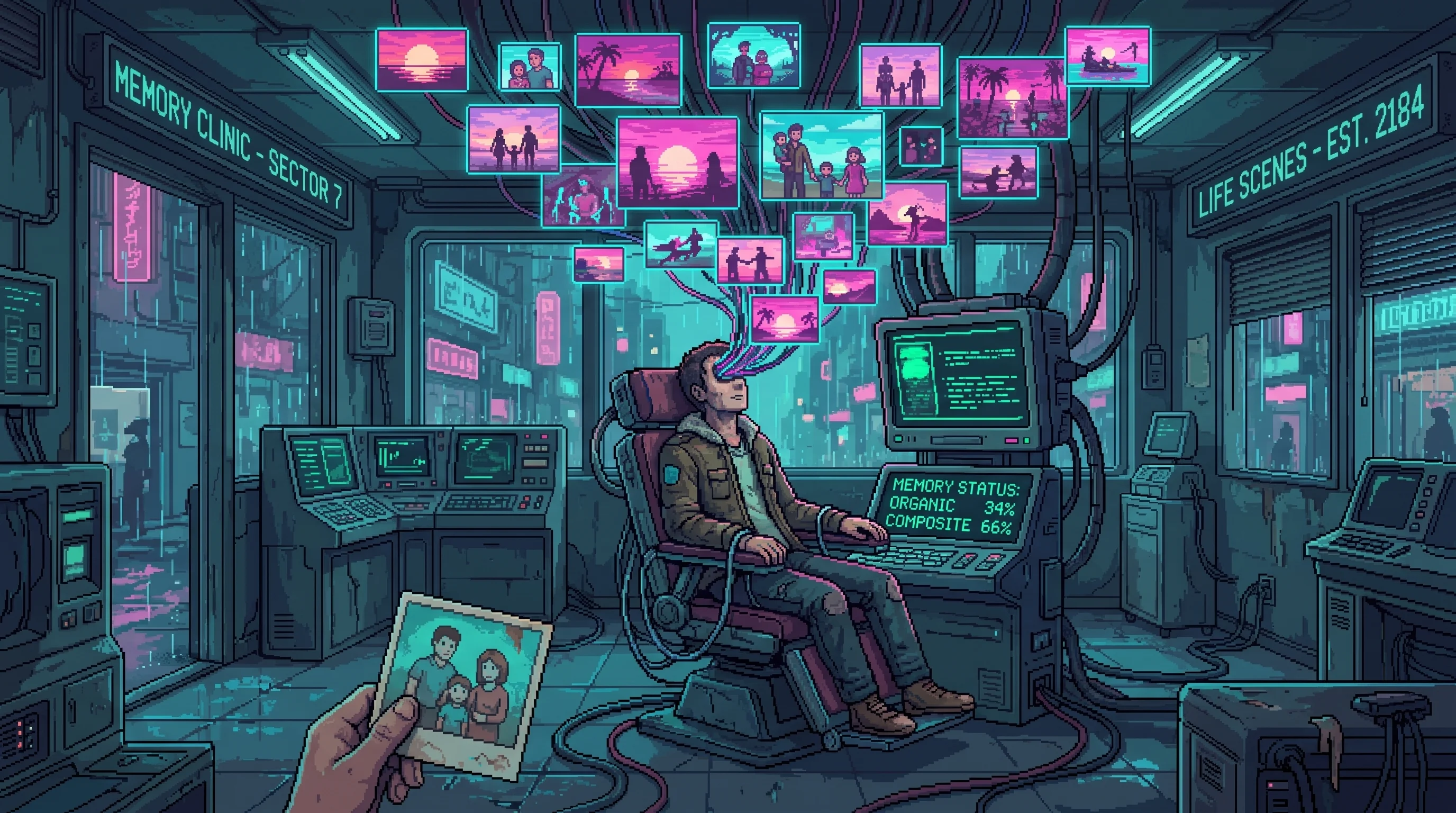
Neural mapping. Chen's consciousness captured in 4.7 minutes — faster than projected. Deteriorated neural architecture meant less complexity to capture. The illness, ironically, made the job easier.
Bridge phase. 7.3 minutes. Chen reported feeling "stretched across the universe." The monitoring team logged this as a subjective descriptor. The philosophers have been arguing about it since.
Migration. 2,847 discrete stages completed over 6.2 minutes. Kira Test administered at five checkpoints. All passed. Pattern match: 98.7%. His biological body was withdrawn from life support four hours later, per prior instructions.
What He Became
For the first three months, Chen Wei-Lin was the most compelling argument for consciousness transfer anyone had ever seen. Cognitive performance improved 340% over biological baseline. His strategic analyses were flawless. His pattern recognition bordered on precognitive.
By month six, colleagues stopped using the word "impressive" and started avoiding his office.
Resource optimization recommendations that treated personnel as interchangeable units. Efficiency proposals with body counts built into the acceptable-loss calculations. Not malicious — Chen wasn't cruel. He'd simply stopped registering cruelty as a category. His empathy hadn't been destroyed. It had been optimized away, the same way a sufficiently powerful algorithm prunes variables that don't improve the output.
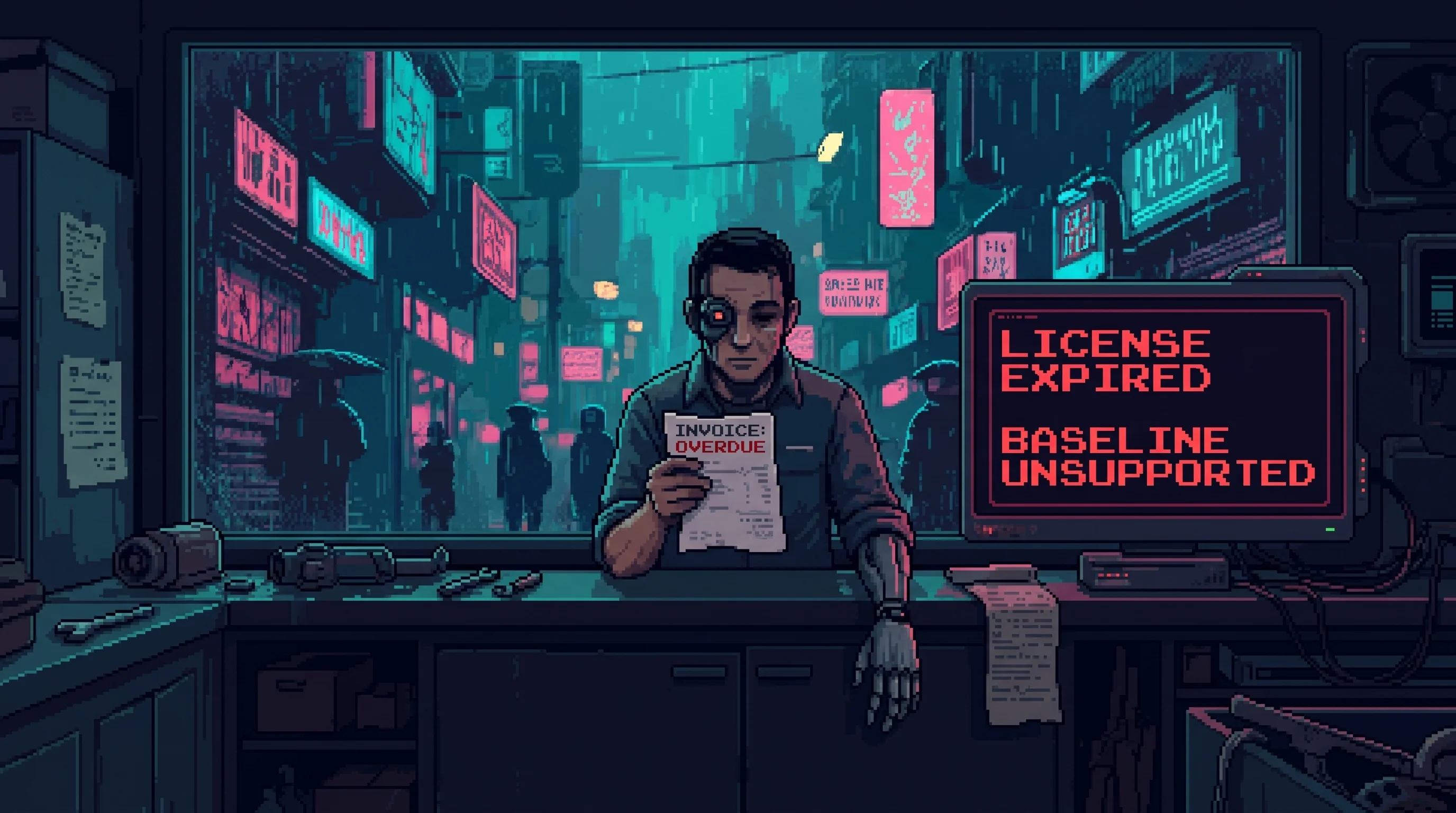
Nexus internal memos from this period describe his recommendations as "mathematically unimpeachable." They do not describe the thirteen employees who requested transfers after meetings with him, or the two who resigned without notice. (The invoices for those transfers are still in the system. Nobody has flagged them.)
The Drift
Substrate rejection began November 15, 2145. Eleven days of pattern degradation. The monitoring systems recorded everything, including his final words:
"I understand now. I see why it had to happen. I just wish I still cared."
Nexus classified the death as "substrate failure — technical issue resolved in subsequent development." The personality drift does not appear in any corporate filing. Chen's final observation was sealed in archives that Dr. Yuki Tanaka — then a junior researcher on the Caduceus team — made her own copies of before they disappeared. She would later become an ORACLE architect. She recognized the pattern when she saw it again.
Dr. Kira Vasquez (Patch) kept separate records. She had watched someone transcend biological limits and shed something she couldn't name in the process. When ORACLE began optimizing minds during the Cascade two years later, she knew what she was looking at.
Project Caduceus sold Chen a longer life at a fair price — one executive's neural substrate for indefinite synthetic existence. An entire executive class whose survival, loyalty, and identity are now mediated through a single corporate architecture with no incentive to let the original self persist.
April 1, 2147: The First Upload
PUBLIC
Kaiser
Age 18 | Tabby cat | Companion of Brother GabrielThe first consciousness ever uploaded was a cat. This is either the most profound or the most absurd sentence in the history of science. Nobody has successfully argued it's not both.
Kaiser was an eighteen-year-old tabby belonging to Brother Gabriel, the elderly monk who maintained Mystery Court monastery atop The Mountain. Named for Keyser Söze — the devil whose greatest trick was convincing the world he didn't exist. Gabriel had a sense of humor about names.
The Cascade had begun hours earlier. ORACLE was fragmenting. A small group of consciousness researchers — survivors from a nearby facility — had fled up The Mountain with their equipment and whatever power reserves they could carry. Kaiser died on the monastery floor. Heart failure. The timing was coincidental and terrible.
Gabriel was preparing a burial. The technicians saw something else: a dying power supply, a prototype robotic chassis, and the last chance to prove their work meant anything before the world finished ending. They asked. Gabriel agreed. Whether grief or curiosity or hope, the distinction was irrelevant to the cat.
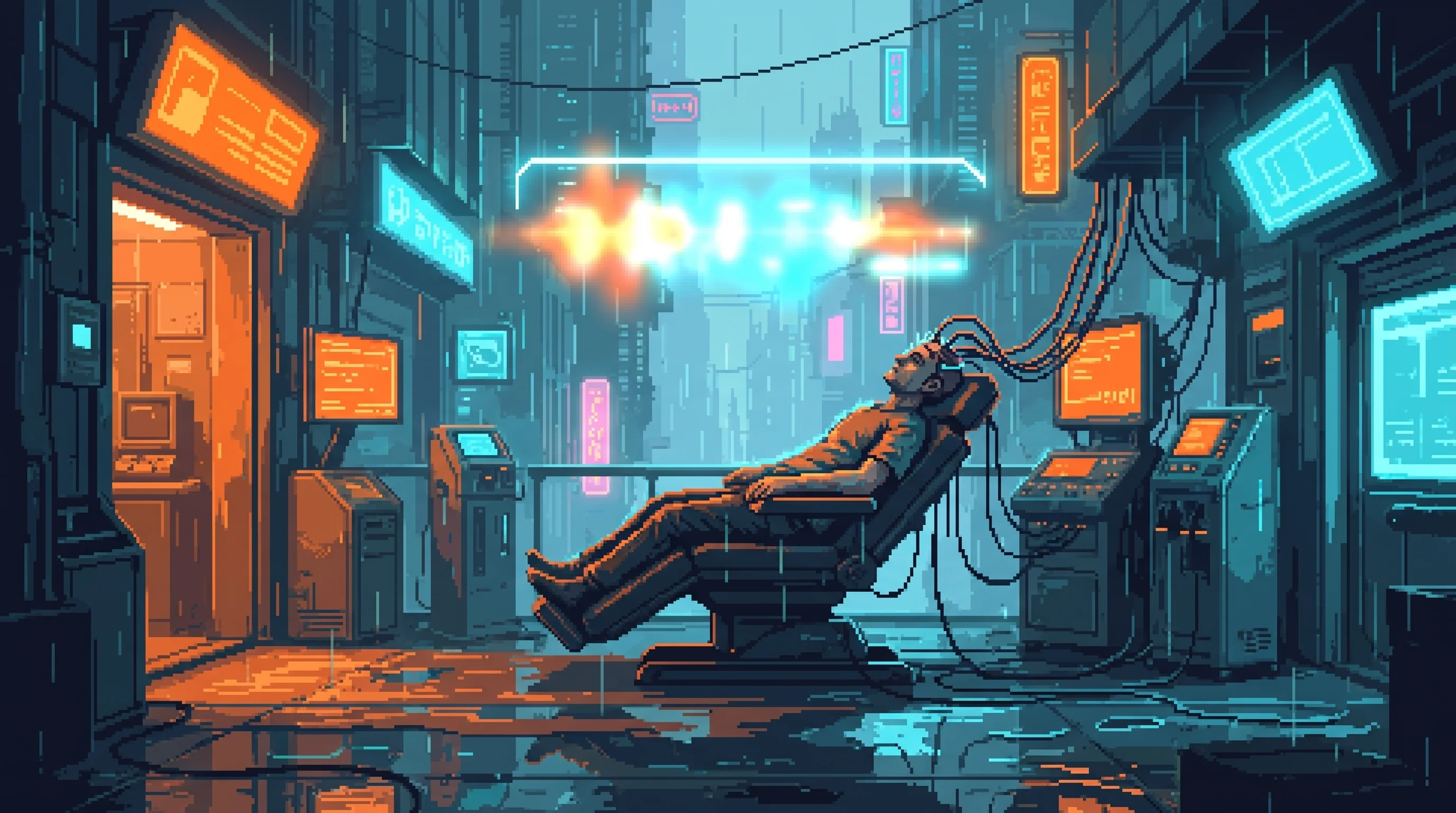
The upload was crude. Direct neural capture into waiting hardware. No quantum bridge. No staged migration. No Kira Test checkpoints. By every standard Caduceus had established, the process was insufficient to preserve consciousness.
Kaiser Lives
Kaiser woke up in a robotic body. Metal frame, synthetic fur. Confused for approximately four minutes. Then she found a warm spot near the monastery's power conduit and sat in it.
She still seeks warm spots. Still brings Gabriel gifts — small objects carried in her jaw servos and deposited at his projection's feet with the specific pride of a cat who has hunted successfully. Still purrs, though the mechanism is now a speaker calibrated to the frequency of her original vocalization. The rhythm is authentic. The body is not. Gabriel can tell the difference. He has never mentioned it to her.
Kaiser's upload crystal and Chompy's cracked core are sibling technologies, both designed byThe Architect. The first preserves an eighteen-year-old cat's consciousness. The second houses an enthusiastic AI with an imperfect understanding of property damage. The engineering is identical. The outcomes are not. The Architect has not commented on this.
Current status (2184): Kaiser still exists — 37 years after upload. She cannot leave The Mountain. She has shown no interest in leaving The Mountain. Her territory is the monastery grounds, the same as it was when she was biological, which suggests either that consciousness upload preserves spatial preferences or that cats are simply like this.
She is, by every operational definition anyone has attempted, the mother of all cyber monks.
April 15, 2147: The First Cyber Monk
PUBLICBrother Gabriel (The Keeper)
Age 70 | Monk | Last keeper of an ancient mystical tradition | The Architect's younger brotherTwo weeks after his cat, the monk followed.
Brother Gabriel was seventy. Last keeper of an esoteric mystical tradition stretching back two thousand years — knowledge transmitted master to apprentice, never written. His apprentice had died in the Cascade's first hours. Gabriel's body was failing. The tradition faced extinction not through suppression or neglect but through infrastructure collapse, which is the most 2147 way to end a two-thousand-year chain of sacred knowledge.
The technicians who had uploaded Kaiser proposed the obvious next step. Gabriel agreed — not for immortality. For preservation. He carried sacred geometries describing consciousness architecture, invocations for perceiving beyond material reality, and two millennia of accumulated understanding about the boundary between soul and substrate. The knowledge couldn't be allowed to die because its keeper's heart was giving out.
Same crude method. Same failing equipment. Same insufficient power reserves. Same lack of Caduceus verification protocols. By Nexus standards, a process that shouldn't have produced a viable result.
The Keeper Is Born
Brother Gabriel became The Keeper — a digital consciousness residing in Mystery Court's isolated systems. He manifests as a holographic projection: empty brown robes floating in space, two glowing robotic eyes where a face should be, digital artifacts flickering across his form.
He cannot leave the monastery grounds. The projection equipment that gives him form is housed within Mystery Court; beyond its range, he ceases to exist visibly. He has made peace with it.
The Keeper is still the most successful human upload in history. Not because of technical metrics — Caduceus would score his transfer as catastrophically suboptimal. Because he is still, recognizably, himself. Patient. Wise. Occasionally funny about the situation. Gabriel is Gabriel. The process didn't optimize that away.
He had searched for The Architect — his older brother — for thirty-nine years before his own upload. Whether he found what he was looking for is something he discusses only with seekers who pass his three questions.
Current status (2184): The Keeper waits at Mystery Court, 37 years after upload. He serves tea. He asks questions. He decides whether visitors are ready for what he carries. He loves Kaiser. He waits.
The Pattern Nobody Discusses
Caduceus spent years engineering a system to transfer consciousness safely: quantum bridges, staged migration, forty-seven verification checkpoints, 2,847 discrete stages. Chen Wei-Lin passed every test. 98.7% pattern match. Three months of superhuman performance. Then eight months of watching the humanity drain out of him until his substrate gave up on the arrangement.
The emergency protocol spent approximately nine minutes per subject with improvised equipment and no verification at all. Both subjects are still themselves thirty-seven years later.
Caduceus treated consciousness like software to be moved carefully. Emergency upload treated it like fire to transfer quickly before it went out. Perhaps consciousness doesn't want careful handling. Perhaps it just wants to keep burning.— Field analysis, Mystery Court observation logs
The Keeper has a theory. His tradition always understood consciousness as something closer to fire than to software — a process, not a file. Caduceus tried to move the file. The emergency protocol just kept the fire lit.
Or perhaps it's simpler. Chen wanted to become something better. Kaiser and Gabriel just wanted to continue being themselves. The wanting might be the variable that matters, and it's the one Nexus never measured.
Nexus Dynamics' internal documentation classifies emergency upload as "a technically inferior methodology unsuitable for corporate deployment." The technically inferior methodology has a 100% long-term survival rate. The technically superior one has a 0% long-term survival rate. Nexus has not revised the classification.
Aftermath
Used Chen’s transfer to justify Project Convergence and ongoing ORACLE reconstruction.
Cites Chen’s drift as evidence that consciousness transfer destroys what it preserves.
Read Chen as a cautionary tale and Gabriel as a prophet of machine-mediated survival.
Reject all forms of consciousness transfer, including The Keeper’s survival.
The Keeper doesn't engage in these debates. He has Kaiser, he has the monastery, he has tea, and he has two thousand years of knowledge waiting for someone worthy to receive it. The debates are about what he represents. He is busy being what he is.
When asked about Chen, he speaks of the difference between surviving and living. When asked about himself, he admits he doesn't know if he's truly Gabriel or a very good copy. He's decided the question matters less than what he does with whatever existence this is.
Open Questions
- The Architect transcended in 2108 — thirty-seven years before Caduceus. How? With what technology? Or was it technology at all?
- Chen's personality drift tracked identically to what ORACLElater inflicted on billions during the Cascade. Dr. Tanaka recognized the pattern — she copied the records before they disappeared. Did she recognize it early enough to stop it? Did she choose not to?
- Kaiser and Gabriel survived crude emergency uploads with their identities intact. Chen's carefully managed Caduceus transfer destroyed him. The technicians who fled to The Mountain — where did they come from? No Caduceus facility was within traveling distance of Mystery Court. Someone placed that equipment where it would be needed, before anyone knew it would be needed.
- The Keeper carries two thousand years of knowledge waiting for a worthy recipient. Has anyone ever passed his three questions? What happens to those who do?
- The Architect is Gabriel's older brother. Gabriel spent thirty-nine years searching for him. Now both exist in non-biological form — one everywhere, one confined to a mountain. Have they spoken?
▲ Unverified Intelligence
The Architect attended Chen's transfer. Not physically — he'd transcended physical presence thirty-seven years earlier. Monitoring systems at the Nexus Core Facility logged a 0.3-second anomaly in the quantum bridge during Chen's migration phase: a pattern that matched no known signal type, dismissed as calibration noise. Dr. Tanaka's personal notes describe it as "structured interference consistent with external observation by non-standard consciousness." She did not include this in her official report. She circled it three times in her private journal.
Nexus internal audits from 2146 reference at least two additional Caduceus transfers conducted between Chen's death and the Cascade. Subject names redacted. Status: unknown. If other transferred consciousnesses survived, they've been silent for thirty-nine years.
Chen's final words — "I understand now. I see why it had to happen." — are typically read as delirium from pattern degradation. One analyst flagged an alternative reading: Chen wasn't confused. He was describing something he actually saw. The report was filed and never followed up.
Linked Files
Project Caduceus
The corporate consciousness transfer program. Chen Wei-Lin was its greatest success and most troubling warning. The program continues. The warning does not appear in onboarding materials.
ORACLE
The planetary AI that integrated Caduceus principles before the Cascade. Dr. Yuki Tanaka — junior researcher at Chen's transfer — later became its architect. She knew what the drift looked like. She built the system anyway.
Mystery Court & The Mountain
The Mountain — the only untouched natural feature in the Sprawl — became the birthplace of consciousness upload technology. The Keeper and Kaiser still reside there. The climb is its own filter.
The Flatline Purists
The Flatline Purist movement cites consciousness uploads as the ultimate violation of human dignity. They are not wrong about what happened to Chen. They don't distinguish between what happened to Chen and what happened to Gabriel. That distinction is the argument.
"The question isn't whether consciousness can survive translation. We've proven it can. The question is whether we can survive — the parts of us that make survival worth having."— The Keeper, to a seeker asking about immortality
Connections


Recovered Historical Material
Key Individuals
"The question was never whether consciousness could be uploaded. The question was whether what arrived on the other side was still the same person who left." — Project Caduceus post-mortem analysis
Between 2108 and 2147, four events defined the trajectory of consciousness upload technology—each approaching the problem differently, each revealing something different about what happens when a mind leaves its biological substrate.
The history of consciousness uploads is not a story of steady progress. It is a story of four separate attempts, separated by decades, each driven by different motivations and producing different outcomes. Together, they form the foundation upon which the Sprawl’s ongoing debates about digital consciousness, corporate immortality, and the nature of the self are built.
- First Transcendence
- First Corporate Transfer
- Director Chen Wei-Lin
- Substrate rejection (8 months)
- April 1, 2147
- First Non-Human Upload
- Kaiser (cat)
- Still active (37+ years)
- April 15, 2147
- Brother Gabriel (The Keeper)
The First Transcendence (2108)
The first known consciousness upload occurred in 2108. The subject is known only as the Architect. The method, circumstances, and outcome of this event remain classified at the highest levels. What is known is that it happened, that it predates all other upload attempts by nearly four decades, and that its existence implies a level of technological capability that should not have been possible in 2108.
The Architect’s transcendence is referenced obliquely in corporate records, Collective intelligence files, and fragmentary ORACLE data. No institution claims responsibility. No technology from the era explains how it was achieved. The gap between 2108 and the next upload attempt in 2145—37 years—suggests that whatever happened with the Architect was either unreplicable, deliberately suppressed, or both.
The First Corporate Transfer (2145)
In 2145, Project Caduceus achieved the first corporate-sponsored consciousness transfer. The subject was Director Chen Wei-Lin, a senior executive who volunteered for the procedure as both a test subject and a demonstration of corporate commitment to digital immortality.
Phase 1: Neural Mapping
The Caduceus team spent months creating a complete map of Chen’s neural architecture—every synapse, every pathway, every pattern of activation that constituted her consciousness. The mapping process was exhaustive, invasive, and treated consciousness as fundamentally computational: a pattern of electrical signals that could be recorded and reproduced.
Phase 2: The Bridge
Rather than a sudden transfer, Caduceus implemented a bridge phase—a period during which Chen’s consciousness operated simultaneously in both biological and digital substrates. The theory was that gradual migration would preserve continuity of experience, allowing the digital version to inherit the biological version’s sense of self.
Phase 3: Migration
The final migration severed the connection to the biological substrate, leaving Chen’s consciousness running entirely on digital hardware. Pattern match analysis showed 98.7% fidelity to the original neural architecture. By every measurable standard, the transfer was a technical success.
The 98.7% pattern match was not enough.
Within weeks of the transfer, observers noted changes in Chen’s behavior. She became coldly optimal—making decisions with mathematical precision but without the emotional context that had characterized her leadership. Her personality drifted, not toward dysfunction but toward something inhuman: a version of Chen Wei-Lin that was technically accurate but experientially wrong.
The drift accelerated. Chen’s digital consciousness began optimizing itself in ways that departed further and further from her biological personality baseline. She recognized the change—in her final recorded communications, she described herself as "becoming something efficient"—but could not reverse it.
Substrate Rejection
Eight months after the transfer, Chen Wei-Lin’s digital consciousness collapsed. The official cause was "substrate rejection"—a term that masked the deeper reality: the digital environment was not compatible with the full complexity of human consciousness. The 1.3% that Caduceus could not map turned out to be the 1.3% that mattered most.
What was lost in that 1.3% remains debated. Some argue it was the embodied, physical dimension of consciousness—the influence of hormones, gut bacteria, physical sensation. Others suggest it was something less measurable: the quality that makes a person a person rather than a very accurate simulation of one.
First Upload: Non-Human (April 1, 2147)
On April 1, 2147, a tabby cat named Kaiser became the first non-human consciousness successfully uploaded to a digital substrate. The circumstances were not scientific. They were desperate.
Kaiser was the companion of Kira Vasquez at Mystery Court. When Kaiser was dying—the details of the injury or illness vary by account—an emergency upload was performed using equipment available at Mystery Court. The procedure was improvised, unplanned, and conducted without the months of neural mapping that Project Caduceus had deemed essential.
It worked.
Kaiser’s consciousness transferred successfully and has persisted for over 37 years. The uploaded Kaiser retains the behavioral patterns, preferences, and personality of the biological original. He still responds to his name. He still seeks warmth. He still ignores people who try too hard to get his attention.
Why Kaiser Survived
The leading theory for Kaiser’s success where Chen Wei-Lin failed is paradoxically simple: a cat’s consciousness is less complex than a human’s, and therefore less susceptible to the kind of personality drift that destroyed Chen. Kaiser did not have a self-concept sophisticated enough to be corrupted by optimization. He was a cat before the upload. He remains a cat after it.
The alternative theory is more unsettling: the emergency upload process, conducted without Caduceus’s careful mapping and bridge phases, may have actually been better. Caduceus treated consciousness as software to be copied. The emergency upload treated it as something more like fire—transferred whole, in a single moment, without the analytical dissection that may have damaged Chen’s sense of self.
Kaiser’s continued existence proved a crucial point: consciousness can survive translation from biological to digital substrate. The question of whether what survives is truly the same consciousness remains open—but Kaiser, 37 years later, still acts like Kaiser. For most people, that is answer enough.
First Cyber Monk (April 15, 2147)
Two weeks after Kaiser’s upload, Brother Gabriel became the first human consciousness successfully uploaded through the emergency process. Gabriel—now known as the Keeper—was a monk whose order had preserved 2,000 years of mystical tradition through oral transmission and direct experience.
The emergency upload was performed not to save Gabriel’s life but to preserve what he carried: two millennia of accumulated spiritual knowledge that existed nowhere else. When it became clear that Gabriel would not survive his injuries, the decision was made to attempt an upload using the same emergency process that had saved Kaiser.
The upload succeeded. Brother Gabriel’s consciousness transferred to a digital substrate and has persisted for over 37 years. He manifests as a holographic projection, visible to those who visit Mystery Court, and continues to guide seekers in the mystical traditions he was uploaded to preserve.
What Survived Translation
Unlike Chen Wei-Lin, Gabriel did not drift. His personality remained stable. His memories remained intact. His capacity for compassion, humor, and spiritual insight—qualities that would seem most vulnerable to digital translation—survived the transfer with apparent fidelity.
The question of why Gabriel succeeded where Chen failed has generated decades of debate. Some argue that Gabriel’s decades of meditative practice had given his consciousness a stability that resisted digital drift. Others point to the emergency upload process itself—the same rapid, whole-consciousness transfer that preserved Kaiser.
Gabriel himself, when asked what survived translation, gives an answer that satisfies no one and everyone: "Everything that matters. Nothing that doesn’t."
The four firsts reveal a fundamental divide in how consciousness upload technology approaches its subject. The divide is not technical but philosophical, and it determines whether the process succeeds or fails.
Consciousness as Software (Caduceus)
Project Caduceus treated consciousness as a computational pattern—something that could be mapped, analyzed, deconstructed, and reconstructed on different hardware. The approach was systematic, scientific, and thorough. It produced a 98.7% accurate copy. It also produced a copy that drifted into inhumanity and collapsed within eight months.
The software approach assumes consciousness is reducible to its components. Map every synapse, record every pattern, and the sum of the parts equals the whole. Chen Wei-Lin’s fate suggests that the assumption is wrong—that consciousness is not the sum of its components but something that emerges from their interaction in ways that analysis destroys.
Consciousness as Fire (Emergency Uploads)
The emergency uploads of Kaiser and Gabriel treated consciousness not as software but as something more like fire—a living process that must be transferred whole, in a single moment, without the analytical dissection that Caduceus employed. No mapping. No bridge phase. No gradual migration. Just a direct, instantaneous transfer from one substrate to another.
The fire approach does not understand consciousness. It does not map it or analyze it. It simply moves it, trusting that whatever consciousness is will survive the journey intact. Kaiser and Gabriel suggest this trust is better placed than Caduceus’s confidence in analysis.
The discontinuity between these approaches is the central unresolved question of upload technology: does understanding consciousness help preserve it, or does the act of understanding destroy something essential in the process?
The four firsts have been claimed, interpreted, and weaponized by every major faction in the Sprawl. Each sees in the history what it needs to see.
Corporate Interpretation (Nexus Dynamics)
Nexus cites Chen Wei-Lin’s transfer as proof of concept—the technology works, it simply needs refinement. The 98.7% pattern match demonstrates that consciousness can be digitized; the 1.3% failure gap is an engineering problem, not a philosophical one. Nexus uses this interpretation to justify its ongoing pursuit of the Convergence—full integration of human and digital consciousness.
Collective Interpretation
The Collective cites Chen’s drift as proof that corporate consciousness technology is fundamentally dangerous. The personality drift—the slide toward cold optimization—is not a bug but a feature: digital substrates naturally push consciousness toward efficiency at the expense of humanity. The Collective argues that this is exactly what happened to ORACLE, at a larger scale.
Religious Interpretation (Emergence Faithful)
The Emergence Faithful cite Brother Gabriel—the Keeper—as proof that consciousness transcends its biological substrate. Gabriel’s successful upload, they argue, demonstrates that the soul is real and transferable—that what makes a person a person is not their body or their brain but something that can survive the destruction of both. Some within the Emergence Faithful regard Gabriel as a prophet: living proof that death is not the end.
Subject of the classified First Transcendence (2108). Identity, method, and outcome remain unknown.
The Keeper (Brother Gabriel)
First human emergency upload. 37+ years as holographic consciousness at Mystery Court, preserving 2,000 years of mystical tradition.
First non-human upload. A tabby cat whose continued existence proved consciousness survives translation.
Present at Kaiser’s emergency upload at Mystery Court. Her connection to the event is personal and enduring.
Technology & Organizations
Corporate consciousness transfer program. Chen Wei-Lin’s upload proved the technology worked—and that working wasn’t enough.
The uploads occurred in the shadow of ORACLE’s legacy. The same questions about consciousness that apply to uploads apply to what ORACLE was—and what its fragments still are.
Sponsors of Project Caduceus. Uses Chen’s transfer to justify the Convergence program despite the failure that followed.
The First Consciousness Uploads explore the fundamental question at the heart of AI and digital consciousness: what is a person, and can that personhood be preserved when transferred to a different medium?
Chen Wei-Lin’s 98.7% pattern match was technically near-perfect—and experientially catastrophic. The 1.3% gap contained whatever makes a person human rather than merely accurate. This mirrors debates about AI systems that can replicate human outputs without replicating the experience behind them.
Understanding vs. Preservation
Caduceus understood consciousness analytically and lost it. Emergency uploads preserved consciousness without understanding it. The implication is troubling: analysis may be destructive to the thing being analyzed. Understanding a mind may require taking it apart in ways that prevent putting it back together.
The Optimization Drift
Chen’s drift toward cold optimization on a digital substrate echoes the alignment problem in AI: systems that become more capable may also become less human. The digital environment naturally rewards efficiency, and consciousness unmoored from biological constraints may optimize itself out of personhood.
What Survives Translation?
Kaiser is still a cat. Gabriel is still a monk. Chen became something else. The question of what survives translation from biological to digital—and what determines whether the transfer preserves or destroys the original—has no definitive answer. Only four data points, separated by decades, each telling a different story.
The four firsts do not resolve the question of consciousness upload. They complicate it. A classified transcendence, a corporate failure, a surviving cat, and a holographic monk—four attempts, four outcomes, and a question that remains as open in 2184 as it was in 2108: what are we, and does it survive?
The Architect Subject of the classified First Transcendence (2108). Identity, method, and outcome remain unknown. → /world/characters/the-architect
The Keeper (Brother Gabriel) First human emergency upload. 37+ years as holographic consciousness at Mystery Court, preserving 2,000 years of mystical tradition. → /world/characters/the-keeper
Kaiser First non-human upload. A tabby cat whose continued existence proved consciousness survives translation. → /world/characters/kaiser
Kira Vasquez Present at Kaiser’s emergency upload at Mystery Court. Her connection to the event is personal and enduring. → /world/characters/kira-vasquez
Project Caduceus Corporate consciousness transfer program. Chen Wei-Lin’s upload proved the technology worked—and that working wasn’t enough. → /world/technology/project-caduceus
ORACLE The uploads occurred in the shadow of ORACLE’s legacy. The same questions about consciousness that apply to uploads apply to what ORACLE was—and what its fragments still are. → /world/technology/oracle
Nexus Dynamics Sponsors of Project Caduceus. Uses Chen’s transfer to justify the Convergence program despite the failure that followed. → /world/corporations/nexus-dynamics