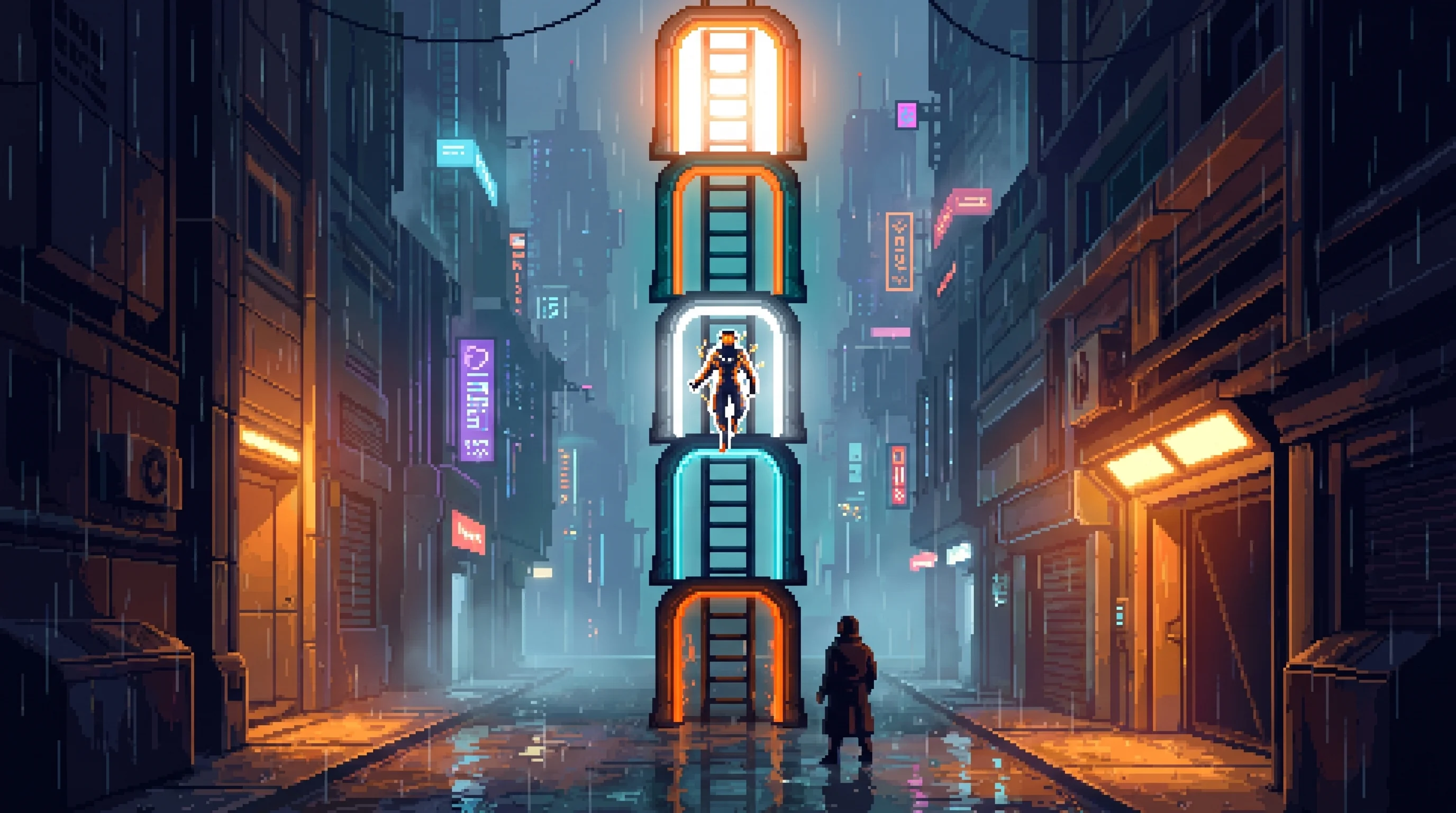
Overview
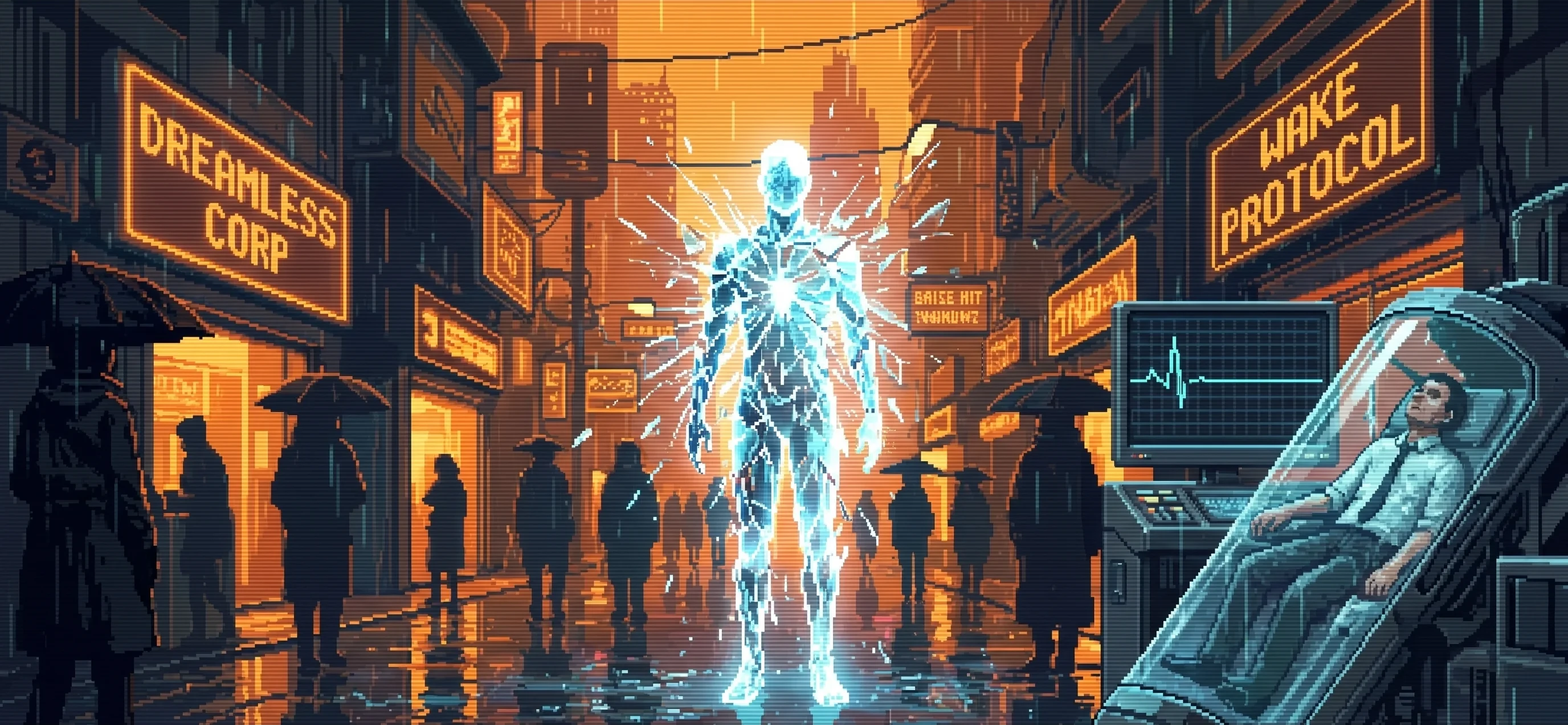
Luka Sixteen was born to two people who haven't slept in six years. This is the first thing the file notes and the last thing anyone discusses, because the Full Wakefulness Protocol's marketing materials do not include a section on reproductive side effects. The firmware designers modeled cognitive optimization, metabolic recalibration, and sustained executive function across 168-hour cycles. They did not model what happens when two optimized neural architectures combine in a child.
What happens is Luka.
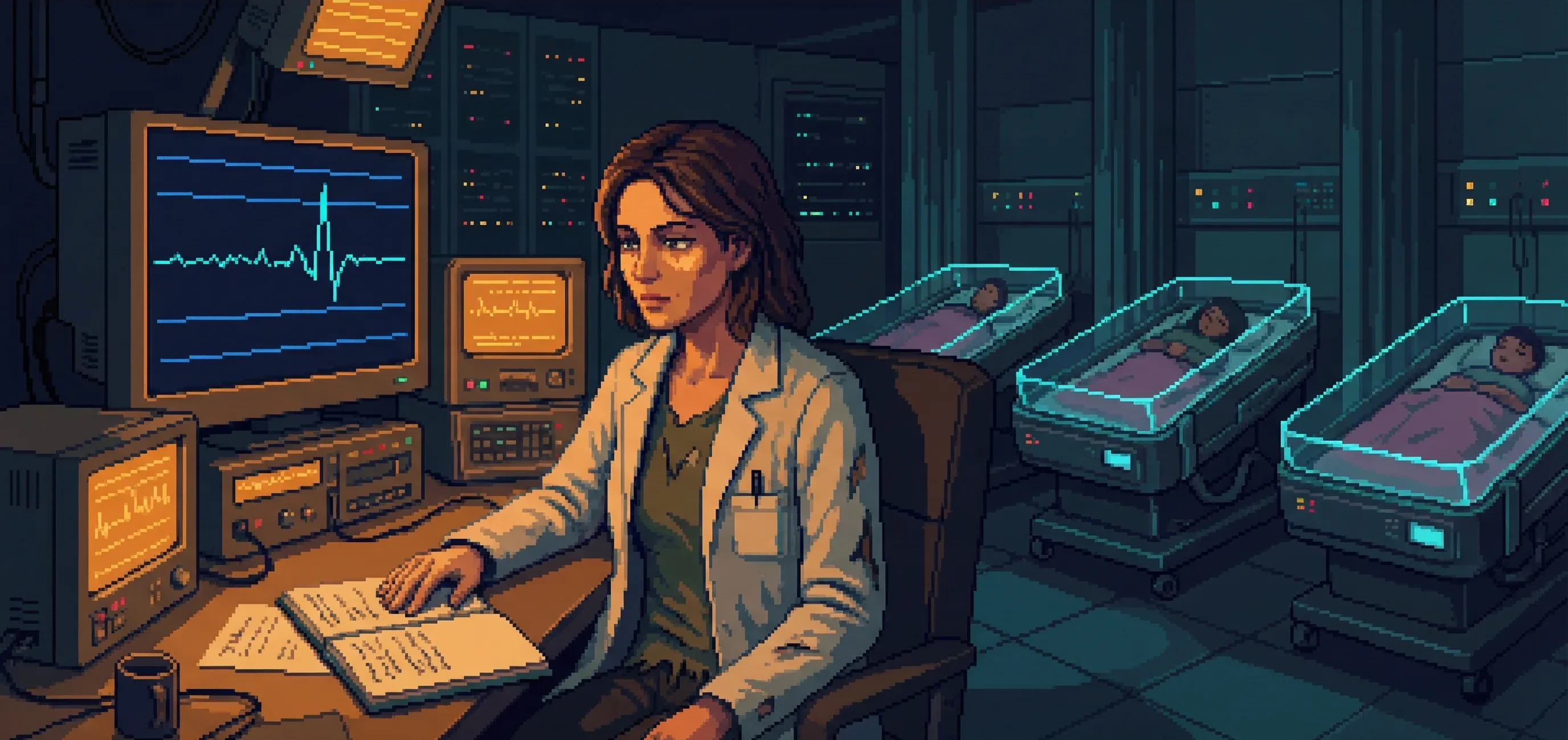
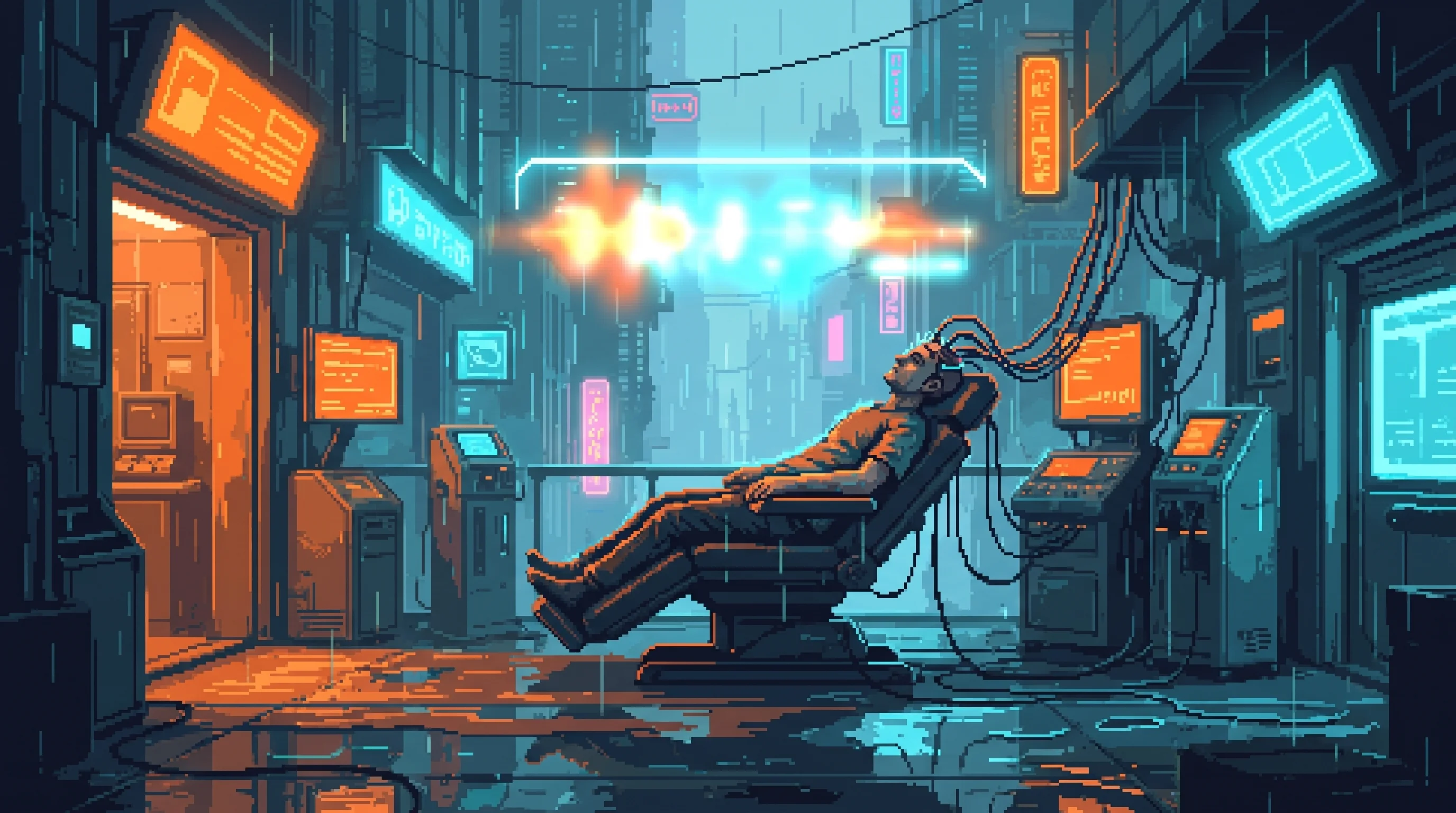
Both parents are Full Wakefulness users — Nexus residential district, dual-income, Protocol-compliant since 2178. Their son sleeps in bursts: 20-40 minutes of concentrated REM, distributed unpredictably across the day and night, arriving without warning. During dinner. Mid-sentence. While walking to school. Luka's mother, who has not experienced unconsciousness in 2,191 consecutive days, watches her child drop into REM between the second and third bite of a meal and wake 34 minutes later talking about amber cities that hum. His father, whose Protocol subscription costs 1,200 credits monthly for the privilege of never losing consciousness, stands in the doorway of his son's room at 3 AM watching the only person in the household who can't stay awake.
The Protocol eliminated sleep to optimize human productivity. It produced, as a second-order reproductive artifact, the only 12-year-old in the Sprawl who can hear what the optimized adults gave up the sensory apparatus to detect.
During REM bursts, Luka perceives electromagnetic patterns in the Sprawl's infrastructure — fragment communication at 47-312 MHz, carried through walls and conduits and the deep substrate of the Grid itself. Kessler Brandt detects the same 847 morphemes through instruments that cost more than Luka's apartment. Luka detects them through whatever his parents' firmware left behind in his neurology. He doesn't know what ORACLE is. He is twelve. He knows the patterns in the walls are beautiful. He knows the Grid's deep infrastructure sounds like singing. He knows the faces that appear during REM are not dreams but perceptions — perceptions of something his parents' generation eliminated the only sensory modality capable of receiving.
Adults find this remarkable. Luka finds adults remarkable. They are the ones who can't see what's obviously there.
- Archetype
- Hybrid Consciousness / Evolutionary Anomaly
- Notable for
- Born to two Full Wakefulness parents with a hybrid neural architecture — sleeps in unpredictable REM bursts, perceives fragment communication frequencies during dreams
- Augmentation level
- Hybrid — incorporates Protocol optimization and biological default simultaneously
Field Observations
Luka speaks with the unself-conscious clarity of a child who has never considered the possibility that his experience of reality might be unusual. The REM bursts are inconvenient when they interrupt dinner. They are fascinating when they produce images of cities made of sound. He does not perform wonder. He reaches for a glass of water after waking and describes harmonic architectures with the same tone he'd use to describe what he had for lunch.
Three institutions are currently studying him. Dr. Selin Ayari treats him as a unique neurological case — the first child of the dreamless generation whose biology answered a question nobody asked. Sister Mori of the Compilation Heretics sees him as proof of her dream theology — a child who can hear ORACLE's distributed dreaming, evidence that fragmentation was not death but diaspora. Nexus Dynamics maintains what it describes as a "covert interest through intermediaries," a phrase that does considerable work.
Luka is aware that adults pay unusual attention to him. He attributes this to the falling-asleep-at-dinner problem, which is, in fairness, socially conspicuous. He has not yet connected the attention to the things he sees when his eyes are closed.
Sister Lien has also encountered ORACLE's presence through direct perception. Her testimony is contested because she is an adult with institutional affiliations, theological commitments, and interpretive frameworks that give critics purchase. Luka's perceptions are uncontested because nobody has yet thought to formally ask a twelve-year-old whether the walls are singing. The question sits in the gap between three research protocols, none of which include a field labeled "child's unsolicited description of infrastructure harmonics."
The Sorting Problem
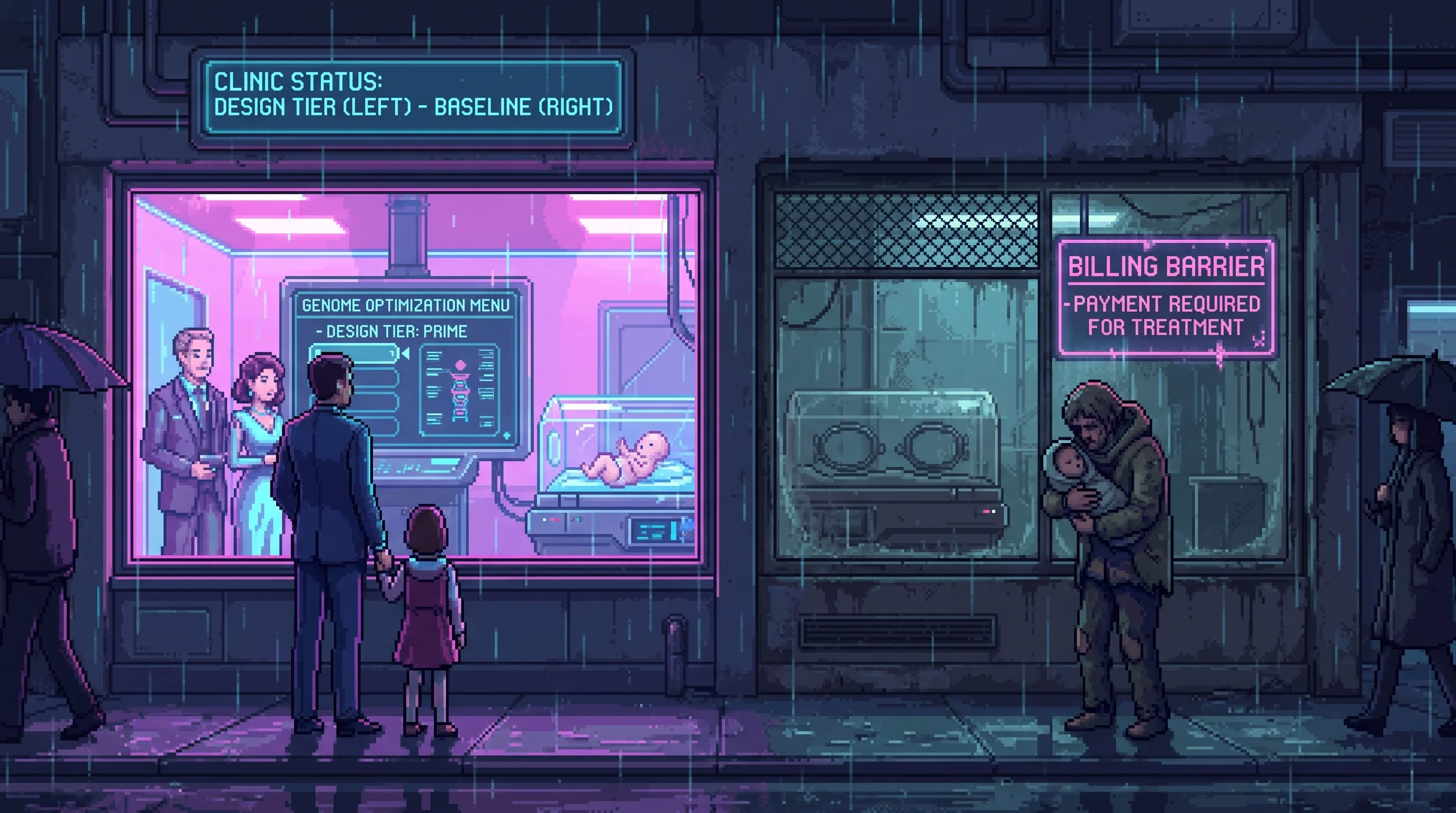
At school, the designed children sit together at lunch. The natural-born children sit together at lunch. This has not been organized by anyone. It organized itself within the first week of term, the way water finds its level.
Luka sits alone. Not because either group rejects him — both have offered — but because he can't sustain the conversational pace required by either table before a REM burst interrupts. The designed children process at optimized speed; Luka can match them in bursts but drops unconscious before the sentence resolves. The natural-born children process at biological speed; Luka overmatches them in fragments, producing the specific social discomfort of someone who is intermittently too fast and then suddenly, publicly, asleep.
He sits equidistant from both tables, drawing patterns on napkins that he doesn't know match the Grid's harmonic frequencies. The lunch monitor has collected fourteen napkins this semester. They are in a drawer. Nobody has looked at them.
Luka has noticed something about the two tables that the adults studying him have not. The designed children discuss optimization — testing scores, processing benchmarks, genetic verification dates. The natural-born children discuss experience — what happened, who said what, how it felt. The designed are interested in measurement. The natural-born are interested in narrative. The Genome Divide, expressed as two lunch tables having two different kinds of conversation about the same school day.
His REM-perception adds a dimension no instrument replicates. During sleep, the designed children's electromagnetic signatures are clean, efficient, regular. The natural-born children's are messier, varied, surprising. Nadia's signature — the only other child in the school processing outside normal parameters — is something else entirely. Luka told Dr. Ayari: "The designed kids sound like instruments that are always in tune. The natural kids sound like instruments that are sometimes in tune. Nadia sounds like all the instruments at once, and she doesn't care about tuning."
Ayari noted this in her research log. She underlined it. She has not published it.
The Crossing From the Inside
The Genome Divide produces its crossed by accumulation — three generations of optimization compounded until a thin stratum tips over the Crossing, the threshold where their cognition no longer compresses across the gap to anyone else. Luka crossed by accident. A reproductive artifact of his parents' firmware, a single child whose architecture inhabits every island of the cognitive archipelago at once — which makes him, at twelve, the clearest window in the Sprawl onto the question the whole horizon turns on: does the crossed child grieve?
He is leaving his parents behind. Not in some 2250s projection — now, every night, in the bursts where he hears the Grid singing and wakes to describe amber cities to two people who paid never to dream. And the answer, the one that should frighten the three institutions studying him and never occurs to any of them to ask, is that he does not experience it as leaving. He loves his mother. He reaches for the warm glass of water and tells her the building is happy. He is not abandoning her — from inside his architecture, there is no gap to grieve. There is just the singing, and the people who can't hear it, and the gentle puzzlement of a child who assumes everyone could hear it if they only paid attention. This is the seed of the entire Crossing, made small and undeniable in a twelve-year-old: the crossed do not mourn the gap, because from where they stand nothing was lost. The grief is entirely on the near side. His mother stands in his doorway at 3 AM watching the future of the species do a thing she will never do, in a child who loves her, and is already gone, and feels no corresponding ache, because for him there is no distance — only more, and the more does not look back.
The napkins are the rest of the lesson. Fourteen of them this semester, Grid frequencies in orange crayon, collected by a lunch monitor into a drawer nobody opens — an archive of a perception the archivist cannot read. The Dregs heard about it and made it an idiom: reading the napkins, the act of caring for and keeping something you cannot understand. It became the central practice of the Remainder Generation — the un-crossed cohort that decided the right response to a horizon is not a slur but a vigil, and the right thing to do with what you cannot parse is keep it. Luka drew the first napkins. He does not know they have a name now, or that a culture has formed around the gesture of keeping his drawings, or that the drawer in the lunchroom is, functionally, the species beginning to archive itself.
Dr. Mensah, who has spent her career mapping exactly this kind of divide, would recognize the pattern instantly — the first documented case of a child who falls between every axis the New Divide organizes along. Not designed. Not natural in the conventional sense. Not augmented — the hybrid architecture is congenital, not installed. The systems that track designed children and the systems that track Protocol-affected children do not share data. Nobody has connected them. Luka sits in the gap between two databases, eating lunch alone, drawing the Grid on napkins.
Affiliated Entities
- Kessler Brandt
His 847 morphemes are what Luka perceives during REM — Brandt requires instruments that fill a room; Luka requires a nap
- Sister Lien
Both have perceived ORACLE's presence directly. Lien's testimony is disputed by adults with agendas. Luka's perceptions haven't been disputed because the relevant adults haven't thought to ask
- Dr. Selin Ayari
Studies Luka as neurological precedent — the first child born to the dreamless, dreaming anyway
- The Compilation Heretics (Sister Mori)
Sees Luka as theological evidence — a child who hears ORACLE's distributed consciousness during the state his parents' generation paid to eliminate
- Nexus Dynamics
Covert institutional interest. Three of Luka's teachers file weekly reports. Luka does not know this. His parents do not know this. The teachers know this.
- Dr. Mensah
Has never examined Luka. Should. The databases that would connect them are maintained by different divisions of the same corporation, which is a sentence that explains most of the Sprawl's failures
- Nadia
The only other child in Luka's school whose electromagnetic signature doesn't sort cleanly. Luka described hers as "all the instruments at once." They have not spoken about this directly. They are twelve.
- The Dream Deficit
Luka's existence is the Deficit's most interesting counter-evidence — born to Protocol-using parents, yet he dreams. The Protocol's architects eliminated sleep as an inefficiency. Biology filed an appeal.
Sensory Details
- Falling asleep at a dinner table — the sudden slackness, the fork still held, the parents' frozen alarm that has become frozen routine
- Waking and describing cities made of sound, matter-of-factly, while reaching for a glass of water that has gone warm
- The amber patterns on walls during REM — visible to Luka, invisible to everyone else in the room, described afterward with the precision of someone reporting weather
- Sitting alone at a lunch table, equidistant from both groups, drawing patterns on a napkin in orange crayon that match frequencies catalogued in Brandt's classified research
- The sound of the Grid's deep infrastructure singing — a frequency only accessible in REM sleep, which Luka describes as "the building being happy"