Overview
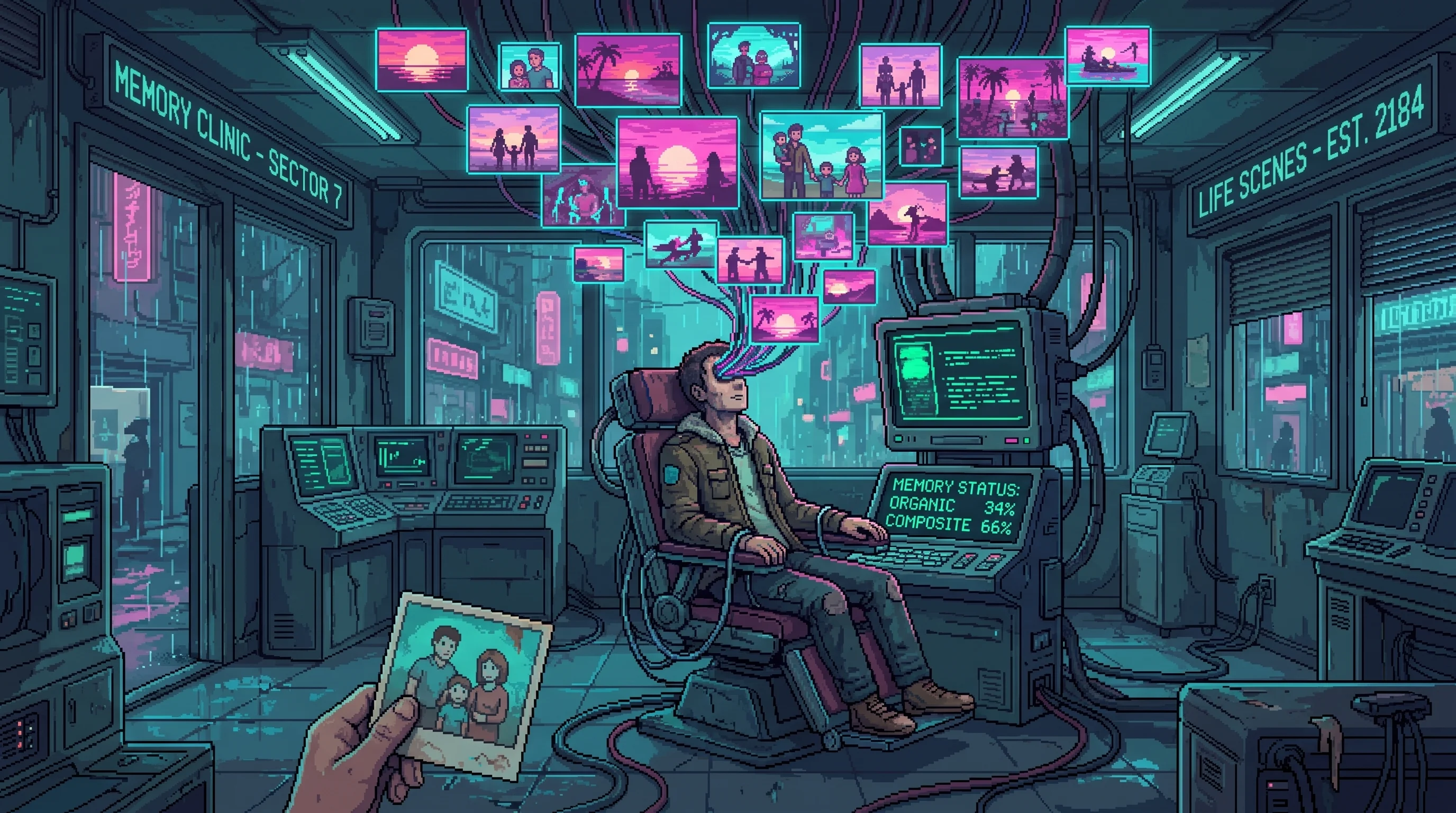
The first card the Keepers catalogued under this heading was not about memory markets. It was about a woman who woke from her third purchased-memory installation and could not remember which of her childhood birthdays was organic. She did not feel distressed. She felt complete. The card asked: "Is there a clinical term for a disease that presents as wellness?"
The Borrowed Life inquiry tracks the intersection of memory commerce, identity persistence, and the legal fiction of continuous selfhood. The memory market does not sell experiences — it sells the neurological aftermath of experiences. A purchased memory of grief will produce the same empathy pathways as organic grief. A purchased memory of love will activate the same bonding chemistry. The body does not distinguish. The question is whether the self should.
What makes this inquiry difficult is that the borrowers are not, by any measurable standard, worse off. Stage 3 composite-identity patients consistently outscore organic-identity controls on empathy, adaptability, and reported life satisfaction. The Keepers do not dispute the data. They dispute the assumption that wellness metrics capture what is being lost — if anything is.
Field Observations

Helena Voss
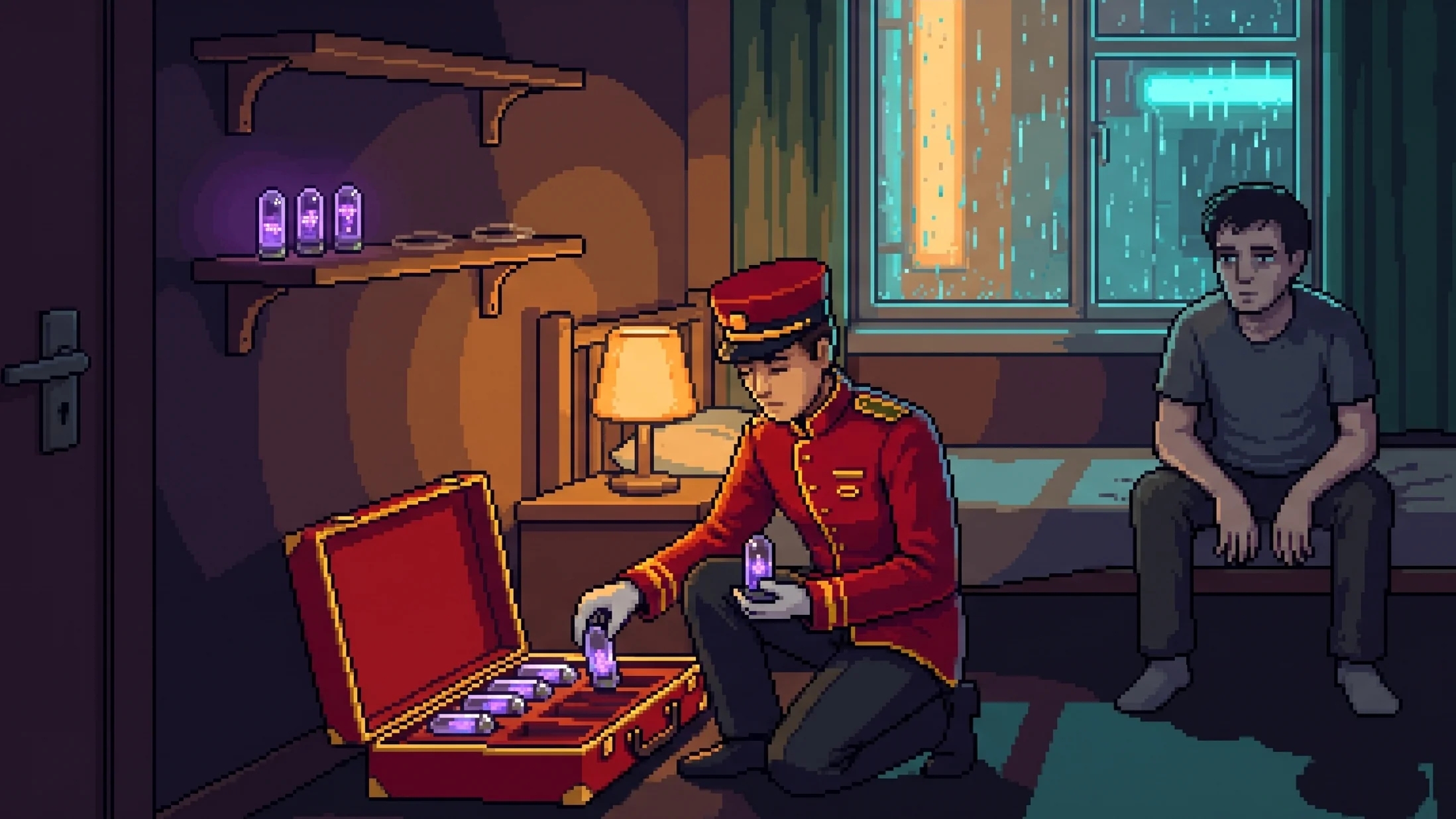
Voss maintains a backup consciousness — a version of herself stored outside her body, updated weekly. The Keepers' card does not ask whether the backup is her. It asks whether the original is still the original after seventeen months of knowing the backup exists. The awareness of a copy changes the thing being copied.

The Keeper
An uploaded life — consciousness transferred to substrate, organic body discontinued. The Keeper remembers everything from before the transfer. The Keepers' inquiry: at what point does a memory of having had a body become equivalent to a purchased memory of having had a body? The Keeper cannot tell the difference. Neither can anyone who asks.

The Mosaic
Forty-seven borrowed perspectives integrated into a single identity. The Mosaic does not experience this as fragmentation — they experience it as depth. Each purchased memory provides context the organic self never had. The Keepers note that the Mosaic's empathy scores are the highest ever recorded. The Keepers also note that the Mosaic cannot identify which of their moral convictions are original.
Good Fortune
Good Fortune does not sell memories. Good Fortune sells debt — and debt is borrowed time with a return address. The Keepers have traced fourteen cases where Good Fortune's lending terms required memory-market collateral: borrowers who defaulted had purchased memories repossessed. The question on the card: "Can you foreclose on someone's childhood?"
The Dream Exchange
The primary marketplace for memory commerce in the upper sectors. Buyers browse curated experiences the way previous generations browsed real estate. The Exchange's authentication protocols verify provenance but not meaning — a memory of watching a sunset is verified as genuine visual data, but whether it carried significance to its original owner is not part of the transaction. Significance is the buyer's problem.
Memory Authentication
The provenance chain that certifies a memory as organic rather than synthetic. Without it, the market cannot function — but authentication only verifies origin, not fidelity. A genuine memory degrades with each transfer. By the fourth owner, the neurological structure is intact but the emotional weighting has shifted. The Keepers ask: is a memory that has been felt by four different people still one memory, or four?
Intersecting Inquiries

The Dependency Spiral
The Spiral describes what happens when augmentation cannot be reversed. Borrowed Life describes what happens when identity cannot be disentangled from its acquisitions. Both inquiries converge on the same structural question: what does it mean to be trapped inside an improvement? The memory buyer who cannot locate their organic self and the augmented worker who cannot survive removal are both, in the Keepers' terminology, improved past the point of return.

Synthetic Intimacy
If a purchased memory of falling in love activates the same bonding chemistry as organic love, the Keepers cannot identify a neurological basis for distinguishing them. Synthetic Intimacy asks whether relationships with AI companions are real. Borrowed Life asks whether relationships with purchased emotions are real. The questions are the same question wearing different clothes.

The Cognitive Ceiling
The Ceiling describes what happens when augmented cognition makes unaugmented thought feel like impairment. Borrowed Life describes what happens when augmented experience makes organic experience feel insufficient. The composite-identity patient who has lived a thousand borrowed lives finds their own life narrow. This is not a side effect. This is the product working as designed.
What Remains Open
Open questions
"The Dream Exchange lists memories as 'pre-owned experiences.' At what volume of pre-owned experiences does the owner become pre-owned? Is there a number, or is it a gradient that nobody is measuring?"
Card #0412 — anonymous, the Dream Exchange, 2181
"Good Fortune repossessed 340 purchased memories from a defaulting borrower in Sector 3. The borrower reported feeling 'hollowed out.' The clinical team classified this as adjustment disorder. What is the correct classification for the deliberate removal of someone's experienced past?"
Card #0445 — contributed by a licensed memory technician, 2182
"If the Mosaic is the most empathetic person ever measured, and the Mosaic's empathy is built entirely from borrowed perspectives, does this mean empathy is a commodity? Can it be manufactured to order? And if so — who is placing the orders?"
Card #0461 — anonymous, Sector 7, 2183
"There is a threshold — the memory clinics call it 'integration saturation' — past which the organic identity framework can no longer be isolated from purchased content. Has anyone mapped that threshold? Does the number change by income tier? And does anyone with the resources to map it have an incentive to publish the results?"
Card #0489 — anonymous, the Free Quarter, 2184