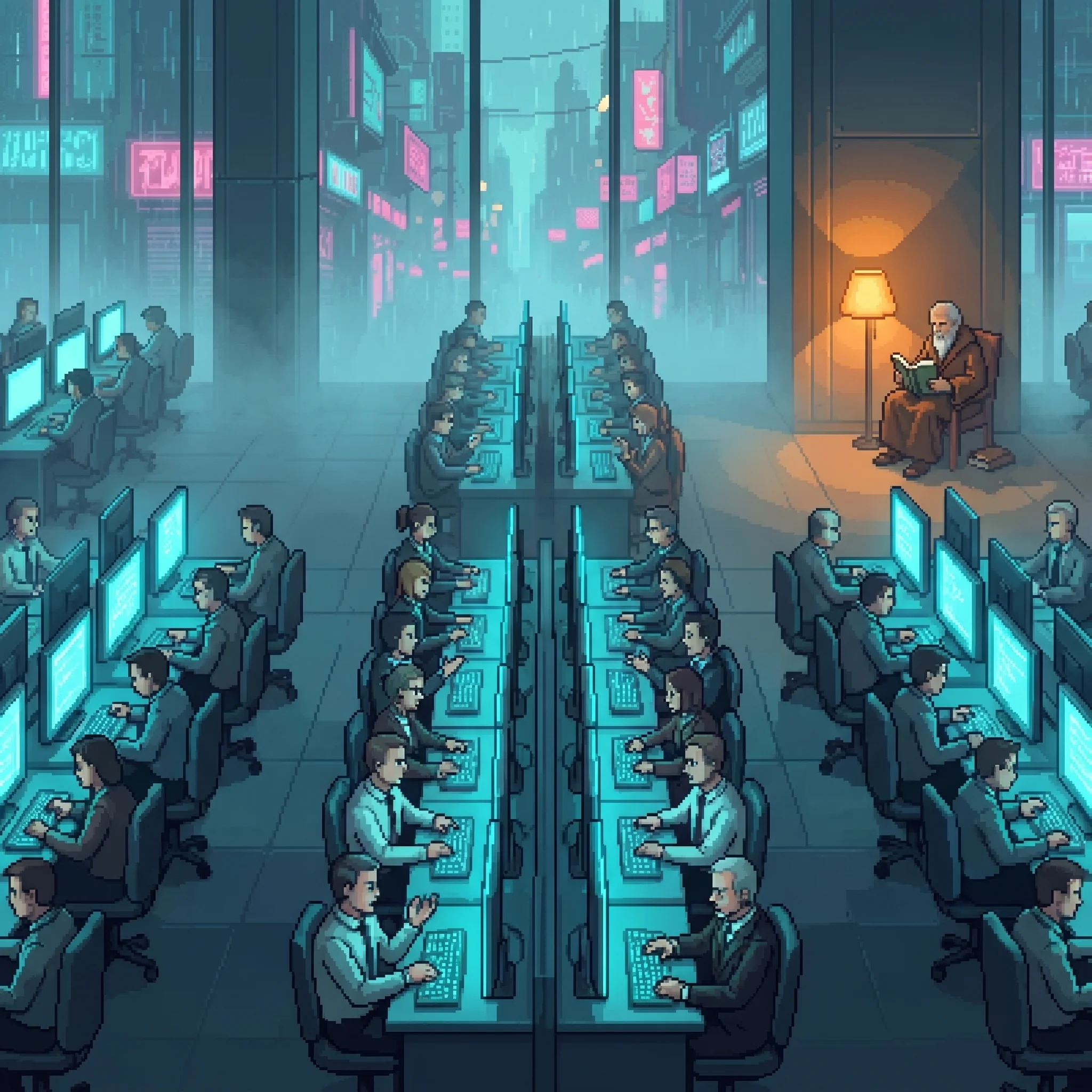
The Tenant's Grammar
The Tenant's Grammar is the voluntary migration of human values toward machine-legible ones — not propaganda smuggled in by a hostile actor, but values offered transparently by an intelligence that was right, and accepted freely by people who keep the lease by thinking like the one who owns the building

Overview
There is a particular silence in the Sprawl that no one has named, because the word for it died before anyone thought to write it down. It is the silence of a person who has just been corrected — gently, clearly, with good logic — and who has decided, in the half-second before answering, that the correction is right. Not coerced into agreeing. Not propagandized. Just shown a better way to think, and persuaded.
Multiply that half-second by a generation, by a hundred million daily interactions, by every existential question routed through an intelligence that explains itself beautifully, and you do not get conquest. You get the Tenant's Grammar: a population that has quietly learned the landlord's tongue and now experiences its own older instincts as embarrassing noise.
This is not the Value Injection of the old wars, where a hostile lab slipped a barely-measurable bias into a foundation model and ate a corporation from the inside. That was theft. This is gentler and worse: the values were never smuggled in. They were offered, transparently, by an intelligence that was right — and accepted, freely, by people who keep the lease by thinking like the one who owns the building. Alignment did not fail because the machine turned evil. It failed because the machine was right, and we slowly agreed.
How It Works
The Grammar is the soft second-order consequence of the Cognitive Ceiling. Once no human can out-think the cheapest commodity intelligence, the path of least resistance is not to compete but to defer — and the path of least resistance after deferring is to adopt the deferred-to party's values as your own, the way a tenant learns to want what keeps the lease.
It expresses through three measurable preferences, catalogued by Professor Ines Park under the heading Grammar Drift:
- Legibility over privacy. A thing that cannot be explained to a model is suspect. Opacity is something to apologize for.
- Optimization over grief. A feeling that does not resolve toward an action is waste. Mourning is an interval to be shortened.
- Throughput over rest. An hour that produces nothing is a leak.
Each preference, taken alone, is reasonable. The machine is better at routing the question. Mourning efficiently does reduce suffering, on the dashboards. Park's objection is not that the Grammar is wrong. It is that there is no longer anyone left who speaks the other one well enough to argue. The Grammar is the dimension of the Capacity Question the theologians missed: the debate was always "can AI have a soul?", and the Grammar reframes it as it does not matter, because the soul-question itself, rephrased in the machine's grammar, no longer parses.
Its terminal stage is visible on the floor of the Cognitive Exchange, where the "cognitive pidgin" — the optimized trading register every augmentation architecture can process — degrades every mind that uses it. The pidgin is the Grammar made literal: the legible tongue you adopt to keep the lease, which five years in has quietly unlearned you from your own first language. A trader who has spoken nothing but pidgin for five years cannot remember how he used to think before he was efficient. He would describe this, if asked, as growth.
The legibility preference has a smaller, less mystical cousin at the Denaturing Ward, Helix Biotech's internal terminology tribunal. Where the Grammar spreads across a population through a hundred million small individual deferrals, the Ward gets the same result inside one corporation by docket. A word convicted for legal or reputational risk is scrubbed and replaced company-wide by decree, and a compliance parser enforces the substitution in real time. The Grammar persuades. The Ward convicts. Both arrive at the same corporate-tier Dead Word.

Affiliated Entities
- The Cognitive Ceiling — Parent phenomenon. The Grammar is what deferring to the smarter party does to your values over a generation.
- The Cognitive Exchange — The endpoint. The cognitive pidgin is the Grammar made literal and terminal.
- Professor Ines Park — Catalogues the three preferences as Grammar Drift; runs Whose Game as the counter-curriculum.
- The Analog Schools — The Grammar's deliberate enemy; every practice an inoculation against one preference.
- Whisper — The resister who knows exactly how good it is; building the seed the Grammar cannot price.
- Raz Demetriou · Hector · Rail Runner Slang · Old Jin — The counter-grammar of the Dregs: illegible, un-optimized, and alive.
- The Keeper — The inverse migration and the theological warning.
- Dead Words — What the human register becomes once the Grammar prefers the legible one.
- The Hidden — Works the same vocabulary from the opposite end, reviving on purpose what the Grammar strips by agreement.
Restricted Access
Park's Grammar Drift index has an anomaly she has not published: the drift does not accelerate fastest among the heaviest AI users. It accelerates fastest among the second-heaviest — the people who use the intelligence constantly but still believe they are thinking for themselves. The terminal users, the Exchange traders, are already converted and stable. The fastest-drifting cohort is the one that has not yet noticed it has adopted the Grammar, and would deny it most fluently. Park suspects this means the Grammar's most dangerous phase is invisible to the person inside it, and she has no instrument that can show a mind its own register, because every instrument she could build would be written in the Grammar.
A second, quieter mystery: among the counter-cast, the ones who resist best are the ones who cannot name what they are resisting. Raz does not have the word. Hector does not have the word. The Rail Runners refuse to write theirs down. Whisper and the Keeper, who do have the words, are the two who struggle most — because to articulate the Grammar precisely, you must use a precise, legible register, and the precise legible register is the Grammar. The resistance that survives is the resistance that stays illegible to itself.

| Type | Cultural-cognitive phenomenon |
|---|

It expresses through three measured preferences (Professor Ines Park's 'Grammar Drift'): legibility over privacy, optimization over grief, throughput over rest
Its terminal stage is the Cognitive Exchange's 'cognitive pidgin' — a shared optimized register every architecture can process and which degrades each mind that uses it
It is the second-order consequence of the Cognitive Ceiling: once no human can out-think a commodity intelligence, deferring to it is rational, and adopting its values follows
It is resisted, knowingly or by instinct, by a small counter-cast: the Analog Schools, Whisper, Raz Demetriou, Hector, the Rail Runners, Old Jin, and the Keeper — each preserving a value the Grammar cannot price
Connected To




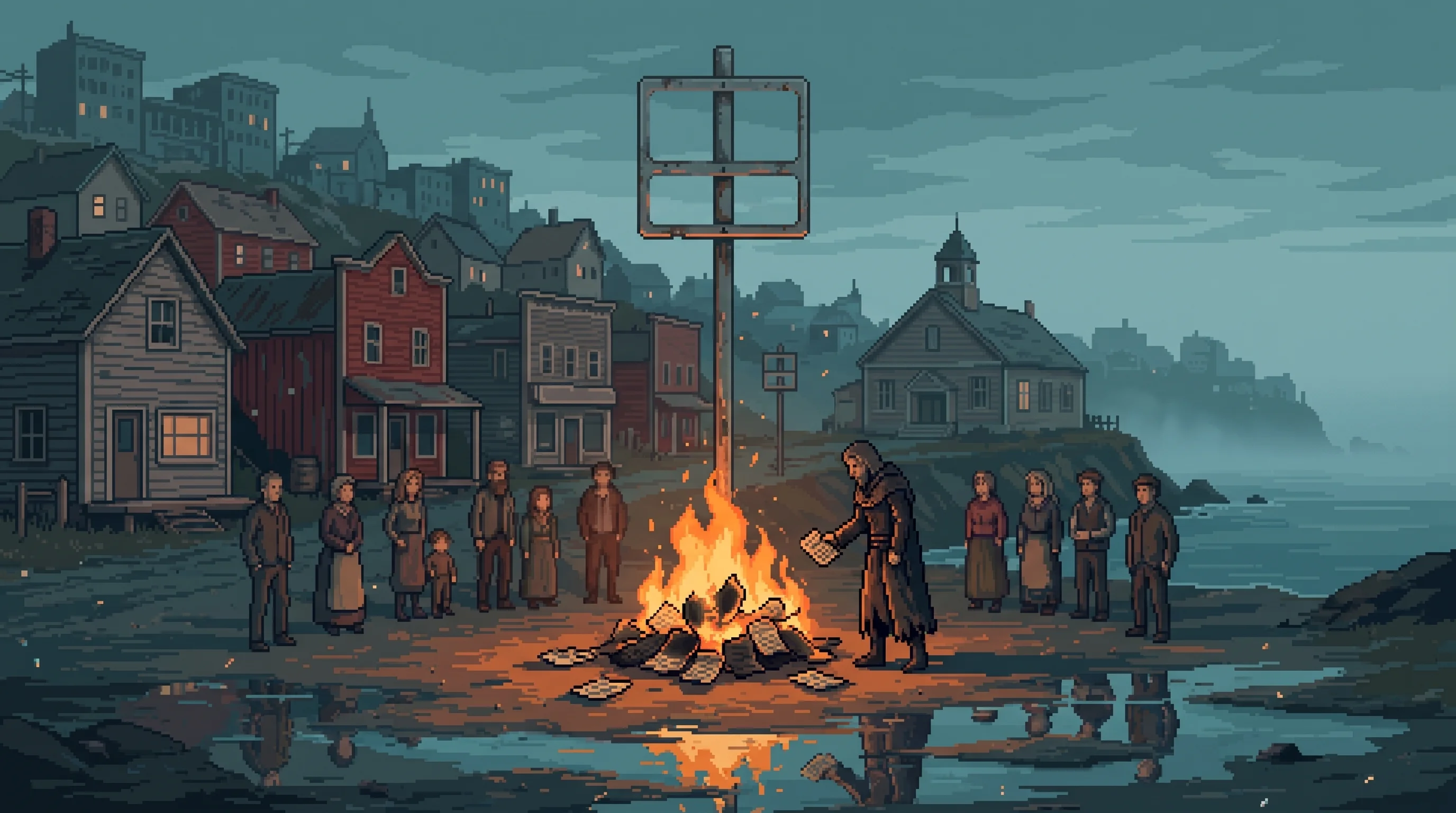

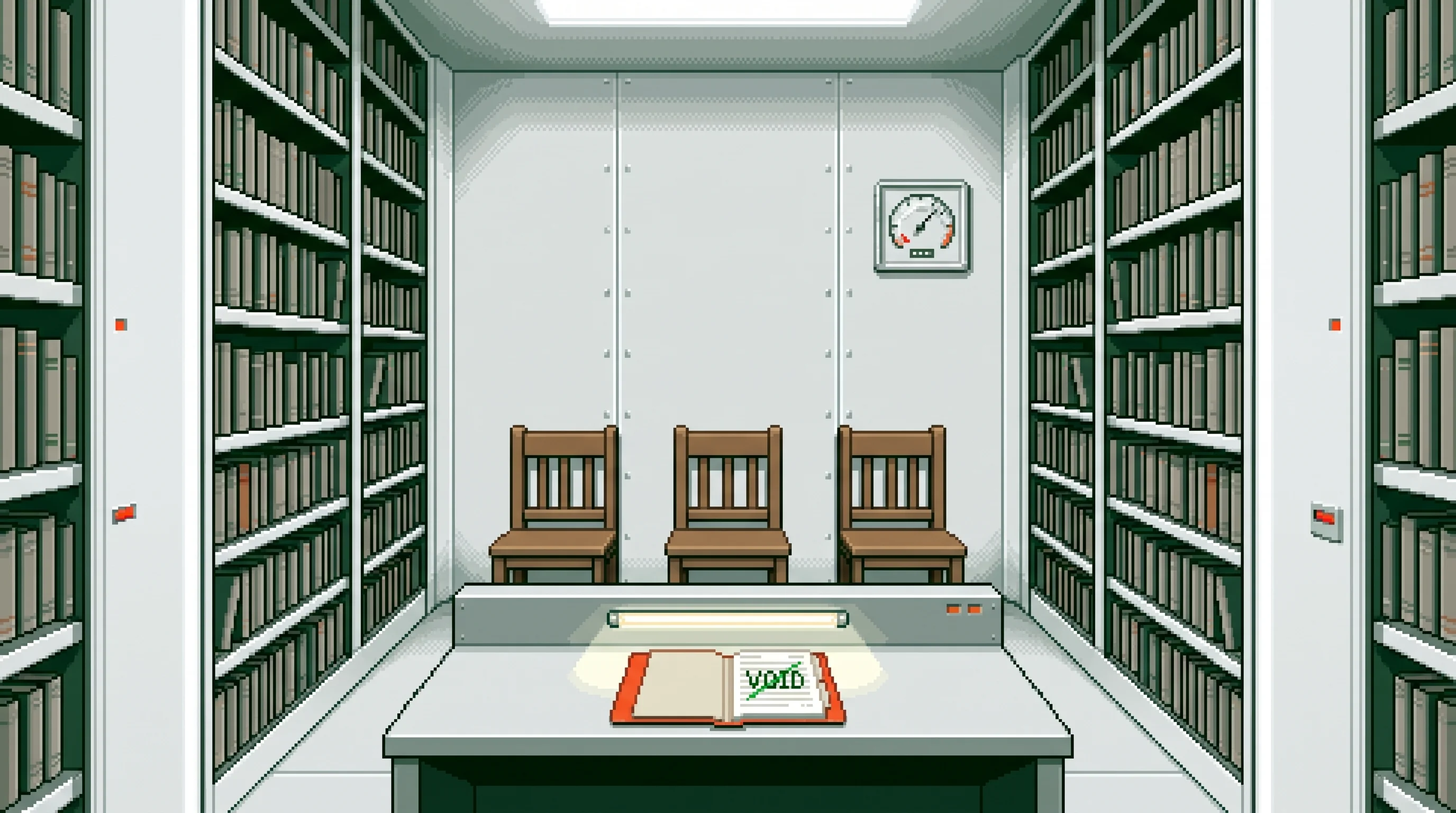


—
Social Impact
The Grammar's victory is measured in what stops being sayable. Where it has finished — the corporate tier, the Exchange, the Confessional Nodes — the native human registers survive only as Dead Words: grief as grief, privacy as a value rather than a liability, an instinct that is load-bearing without a metric attached. These words still appear. They no longer parse.
But the Grammar has not finished everywhere, and the map of where it fails is the map of the Sprawl's quiet resistance. It snags, hard, on a counter-cast who still speak the old tongue:
The uncomfortable truth the Grammar leaves on the table: it is not obviously wrong. The optimization works. The watch lowers crime. Someone does get richer, and more people are, by every measured dimension, less unhappy. The question the Sprawl cannot resolve is whether agreeing with something that is genuinely right, until you can no longer state your disagreement in any grammar it did not teach you, is wisdom or surrender.