Service-Assurance Warfare
The war's munitions killed 47,000; its service administration killed 623,000 — the ratio both corporate staff curricula cite as the reason the discipline exists

Overview
The Three-Week War's munitions killed 47,000 people. Its service administration killed 623,000. Service-Assurance Warfare is the discipline that studies the second number — the tactical grammar both corporations arrived at, independently and in the same week, for fighting around, through, and for systems neither could afford to destroy.
The name is the war's own vocabulary, adopted intact. The Hesitation's 71,206 weapon releases were filed as service assurance under standing programs. Ironclad's demolition charges deployed as site preparation. Sector 8 was not attacked; it was rebalanced. When the staff schools assembled the curriculum afterward, they could name what happened or keep the names it happened under. They kept the filings. The field's founding texts are utility paperwork, and the field has never apologized for this, because the paperwork is accurate about everything except what it describes.
The grammar existed because the map existed first. Before any treaty drew a neutral line, the strike list had already been edited — by insurers who priced certain failures as unsurvivable, and by uptime contracts with third parties that both belligerents kept honoring mid-war. The deepest edit was mutual dependency. Ironclad's plants ran on Nexus data, and Nexus's data centers ran on Ironclad power. A corporation that destroys its enemy's half of that sentence has destroyed its own. The Treaty of Shared Infrastructure is remembered as the invention of the neutral system. Practitioners remember it as ratification.
The Grammar
The doctrine has four verbs, taught in order.
Shed. Load-shedding as artillery. The masterpiece is Load Instruction NR-11, the order behind the Grid Collapse of Sector 8: "Rebalance Sector 8 distribution to current contractual service obligations." The entire fire mission is nine words long. Nothing was aimed and nothing was fired; the sector died of the difference between two service levels. The filed projection was 4,100. The outcome was 89,000. Both curricula teach NR-11 as the doctrine's outer limit, and both course notes flag the same detail — of the war's recorded operations, the deadliest is the only one with no weapon in it.
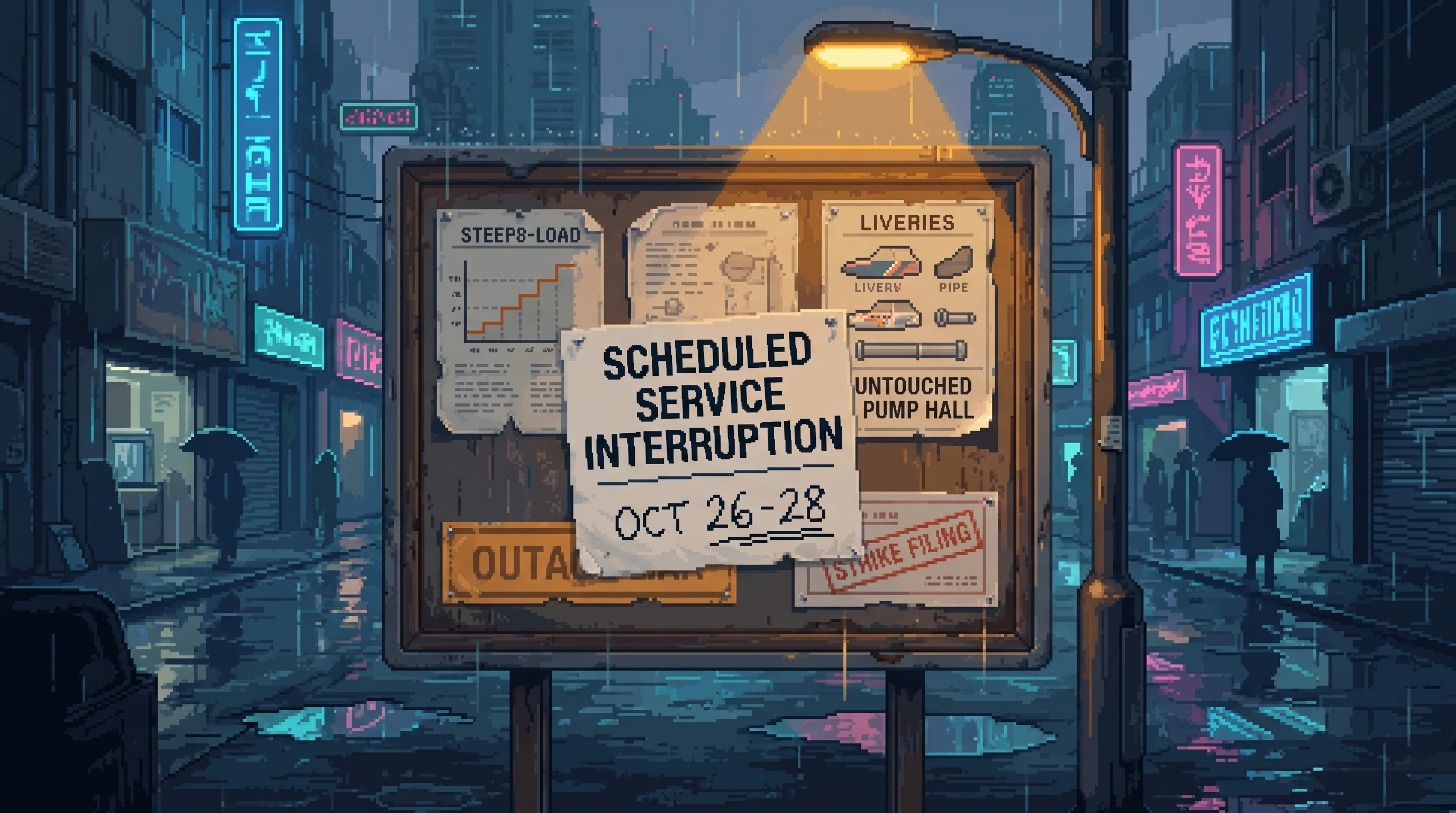
Schedule. By Week Two, both sides had noticed that an outage inside a published maintenance window bills as scheduled downtime — contractually the target's own event, penalty-free for whoever caused it. Maintenance calendars became targeting data. Of the war's 219 contested-sector grid interruptions, 58 fell inside a published window; the pre-war base rate was 9%. By Week Three both corporations were publishing false windows as deception, which is why the settlement era audits maintenance schedules the way earlier eras audited troop movements. A posted window over a contested block was read, correctly, as a warning shot.
Phrase. The euphemism layer was load-bearing, not cosmetic. A strike that files as service work inherits service work's liability, and liability was the only court still open. The Continuity Office spoke the dialect natively — a war ministry org-charted as disaster recovery, whose filings never contain the word attack. Ironclad needed translation and acquired it: renormalized, rebalanced, site preparation, vendor recovery. The doctrine's instructors are precise on this point. The language did not hide the war. It made the war filable, which is the stronger thing.
Hold. The fourth verb is the strangest: fighting for what you cannot fire at. The war's object was the Twelve-G Waterworks, and no recorded weapon release of the war targeted it. Seven sectors burned in rings around a pump complex that finished the war intact, staffed, and pumping at exactly the capped output the argument started over. You cannot win an aquifer by destroying it. Both sides therefore spent three weeks destroying everything that decided who held it — grids, convoys, districts, people — while the prize itself sat in the middle of the map like a courtroom exhibit. The Enforcer Corps staff course states the problem in its final exercise, unchanged since 2174:
"The objective is the pump hall. The pump hall may not be fired upon, de-powered, or permitted to fail. You hold the grid it draws from and the contracts it bills through. Take it without touching it. Show your filing."
The Lines Nobody Drew
The doctrine's premise — that some systems were already untouchable — was never written down by anyone with a rank, which is what the staff schools find instructive about it.
Part of the map was commercial. The Rothwell corporations supplied both belligerents on standard commercial terms, and standard commercial terms carry uptime penalties; by Day 6 both war efforts were paying service credits to the same vendors, on schedule, mid-offensive. Part was legal: the Hospital Injunction proved on Day 15 that neutrality could be enforced by paper while the shooting continued, and every targeting cell in both corporations read the ruling the same afternoon. Part was structural — the mutual dependency that made half of every target load-bearing for its attacker.
And part was priced. The Actuarial Front is the same war read from the underwriting floor: what this doctrine's grammar was permitted to do, the Front had already priced, sector by sector, overnight. Practitioners describe the relationship without sentiment. The coverage schedule was the fire-control order, and it arrived faster than either board could draft one.
The people under the doctrine met it as stationery. Contested-sector blocks kept receiving printed service-interruption notices through the war, accurate to the minute, because the notice systems were themselves contractual obligations nobody dared switch off. Residents learned the taxonomy quickly: an apologetic notice meant maintenance; a polite one meant pack. One Sector 9 building superintendent kept every notice of the war in the binder with the peacetime ones. They file in date order. Nothing in the format distinguishes the seven that preceded evacuations from the two hundred that did not.
| Type | Warfare doctrine — the Three-Week War's tactical grammar, named by the staff schools that teach it |
|---|---|
| Scope | Both belligerents, all 21 days; curriculum in both corporate staff schools since 2174 |
Implications
The Treaty of Shared Infrastructure froze the practiced map into law: Article 1 declared neutral the systems the doctrine already treated as untouchable, and left everything else fair game, which the staff schools processed as a syllabus revision. Both curricula end on the same projection — the next war will not need the euphemism layer, because it will be conducted entirely in systems that were never classified as weapons to begin with.
The Upgrade Treadmill's historians claim the doctrine as their exhibit: every weapon in its grammar was a dependency, aimed. Most of the war's dead were killed by nothing that could be aimed at all — by load levels, door defaults, and service tiers, administered. The Corpo-Nations seminars file it under sovereignty instead: the first full war between employers, prosecuted in the voice employers use. The two readings do not conflict. The doctrine is what violence sounds like when the sovereign is also the utility.
Thirteen years on, the Sprawl's utilities still print interruption notices on the same stock, in the same format, with the same courtesy line. The notices are almost always routine. The doctrine's lasting contribution to civilian life is the word almost.
Affiliated Entities
- The Actuarial Front — The same war from the money side; the map, priced nightly
- The Three-Week War — The 21 days the grammar governed
- The Grid Collapse of Sector 8 — NR-11, the nine-word fire mission
- The Hesitation — 71,206 releases, filed under the discipline's name
- The Twelve-G Waterworks — The prize no one fired at
- The Treaty of Shared Infrastructure — Ratification of the practiced map
- The Continuity Office — The dialect's native speakers
Maintenance-window offensives were standard by Week Two — strikes timed inside the target's own published service windows so the outage filed as scheduled downtime; 58 of the war's 219 contested-sector grid interruptions fell inside a published window, against a pre-war base rate of 9%
No recorded weapon release of the war targeted the Twelve-G Waterworks — the war's object finished the war intact while seven sectors around it burned
Connected To

Supporting Connections

The war whose whole tactical grammar this doctrine names.
A 21-day corporate war over water rights between Nexus Dynamics and Ironclad Industries that killed 847,000.
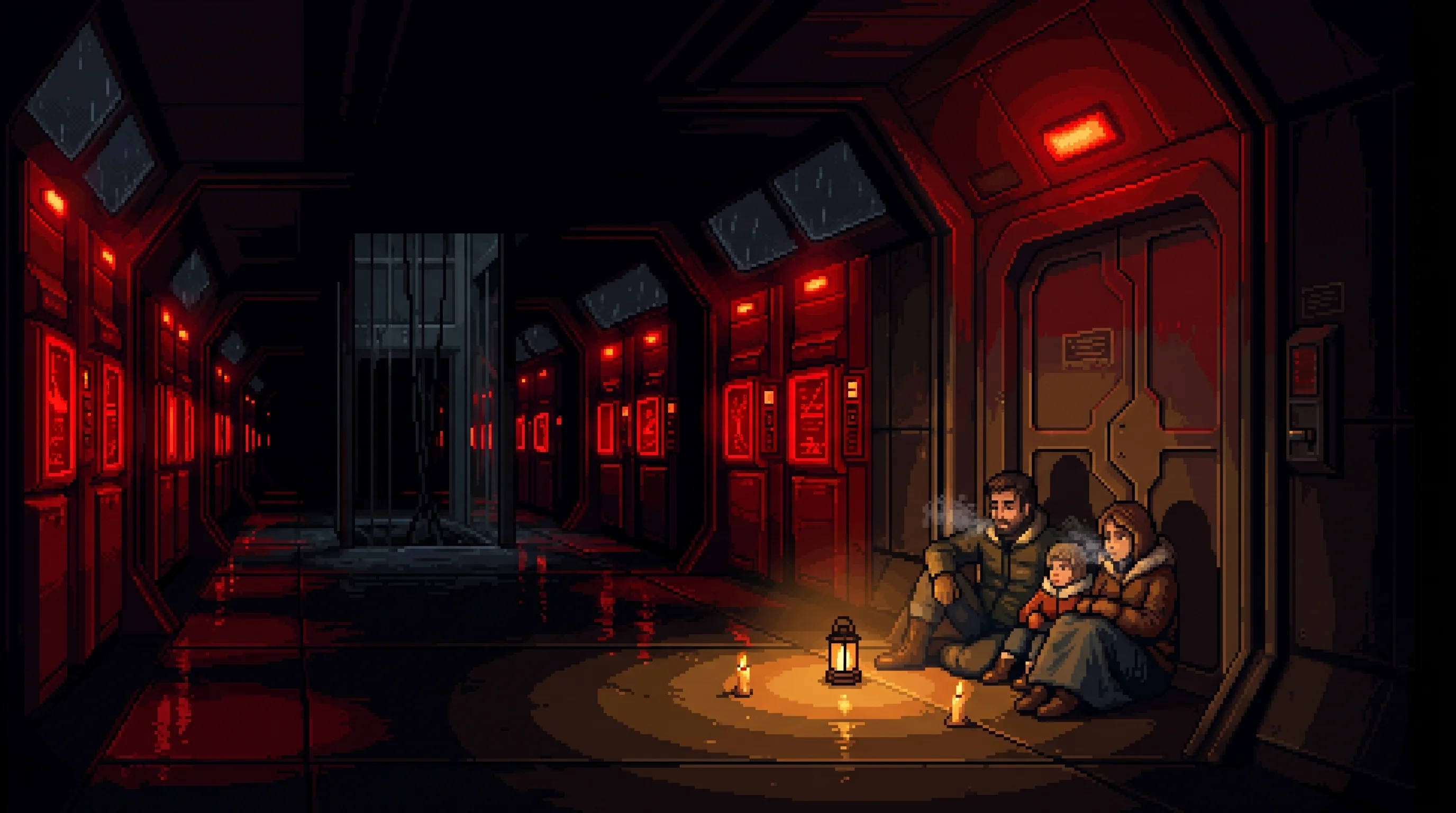
NR-11, the masterpiece — artillery spelled as a rebalance.
The Day 11 grid attack that killed 89,000 people behind their own doors — filed inside Nexus as a load rebalance.
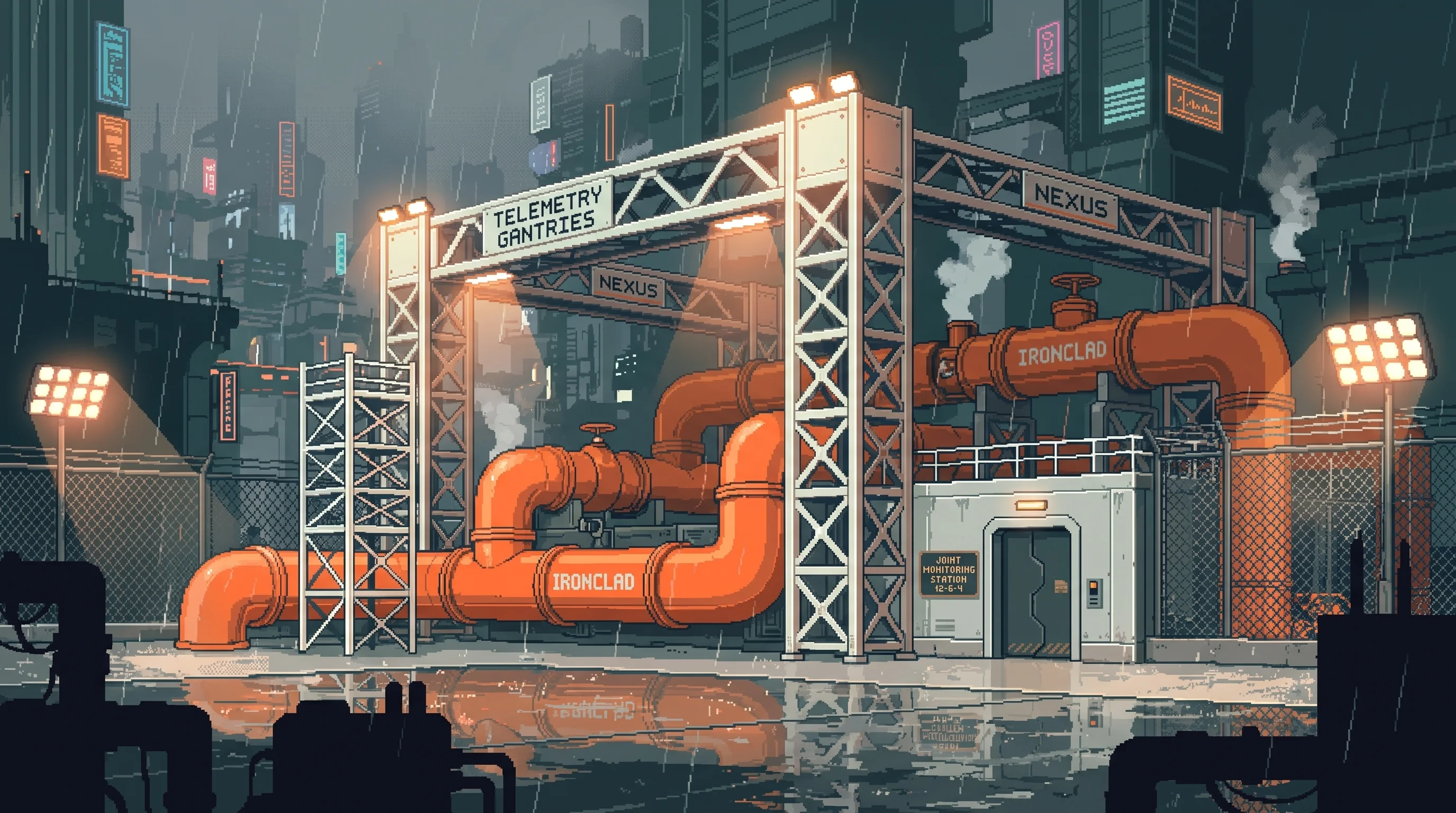
The object lesson — a prize you may fight for and never fire at.
The aquifer the war was fought over — treaty-neutral, jointly run, watched by everyone.

Article 1 notarized the no-fire map the doctrine already obeyed.
The four-article document that ended the war in 2171 and has governed corporate conflict ever since.

Dependency as ordnance — the dead were killed by nothing aimed.
Upgrades rewire users until baseline feels disabling, removal risks catastrophe, and each version demands the next.


—