Overview
Ford Gibson writes novels on a typewriter older than the Cascade, in a vocabulary with no technical words in it, about machines whose operation he cannot describe, and he is right almost every time.
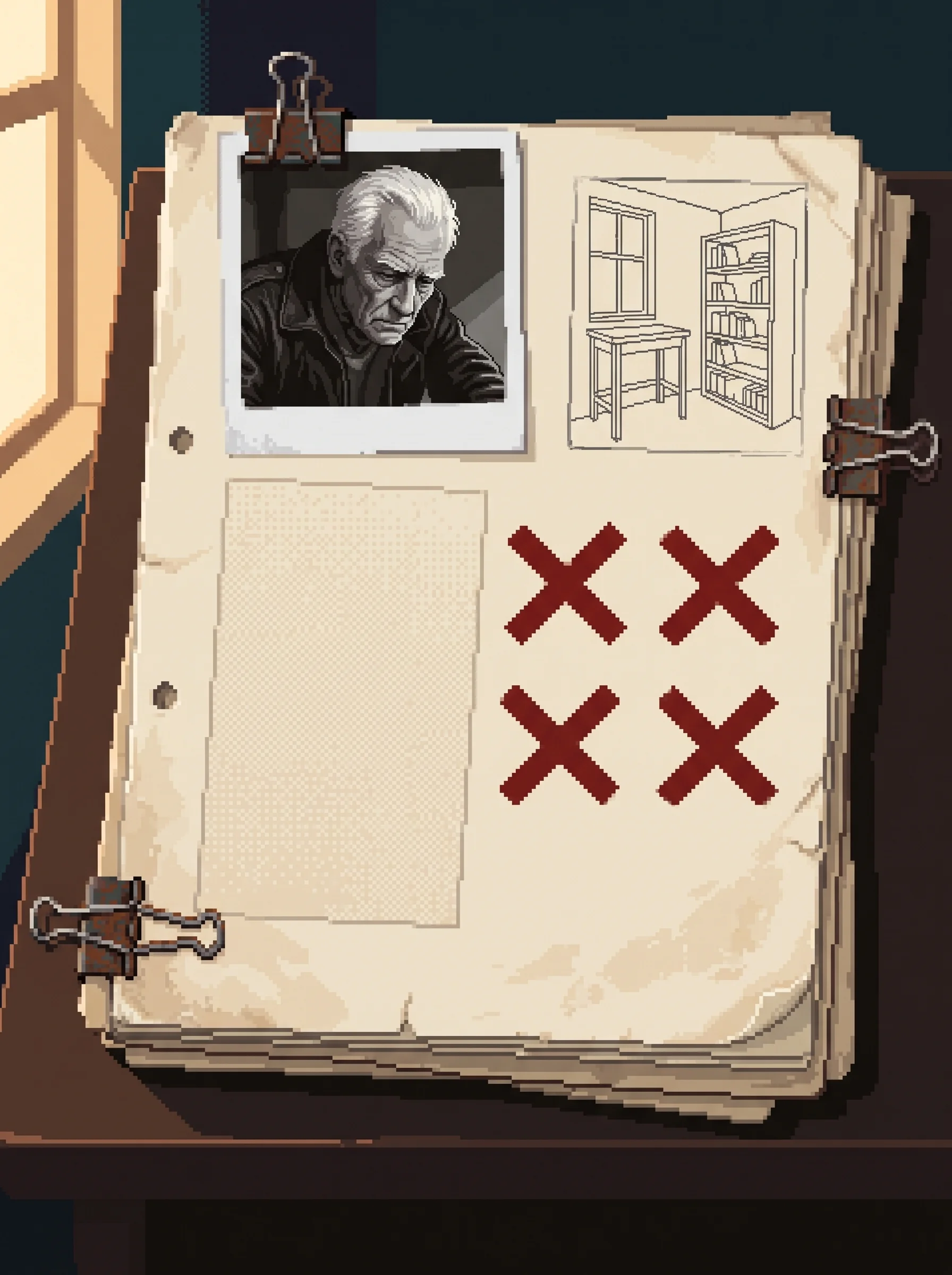
He does not own a device. He has no interface, implant, or diagnostic history. He has never held a terminal, worn a trode, carried an ident, or been scanned by anything he consented to. There is no behavioural model of him because there is no behaviour to model — no purchase history, no movement telemetry, no interaction record. Nexus Dynamics' Strategic Forecasting Division, which maintains a predictive profile on roughly ninety-four percent of the Sprawl's living population, holds a file on Ford Gibson consisting of forty-six books, eleven photographs, four failed acquisition reports, and a note.
The forty-six books are the problem.
Coolant (2167) describes a thermal-brokerage economy in a stratified vertical city eleven years before the Undervolt's coolant guilds priced their first shift. Dead Air (2172) describes the collapse of testimonial trust in a society where any recording can be manufactured, and describes it so exactly that two sectors took their slang from it. The Warehouse Lease (2161) describes a neuropathic reconstruction therapy in enough procedural detail that when Helix Biotech filed for the same therapy in 2162, the filing failed. The therapy has still never been manufactured. Helix publishes the estimated cost of that failure in its annual investor materials, under regulatory burden, adjusted for inflation, every year.
And then there are the three volumes that came before.
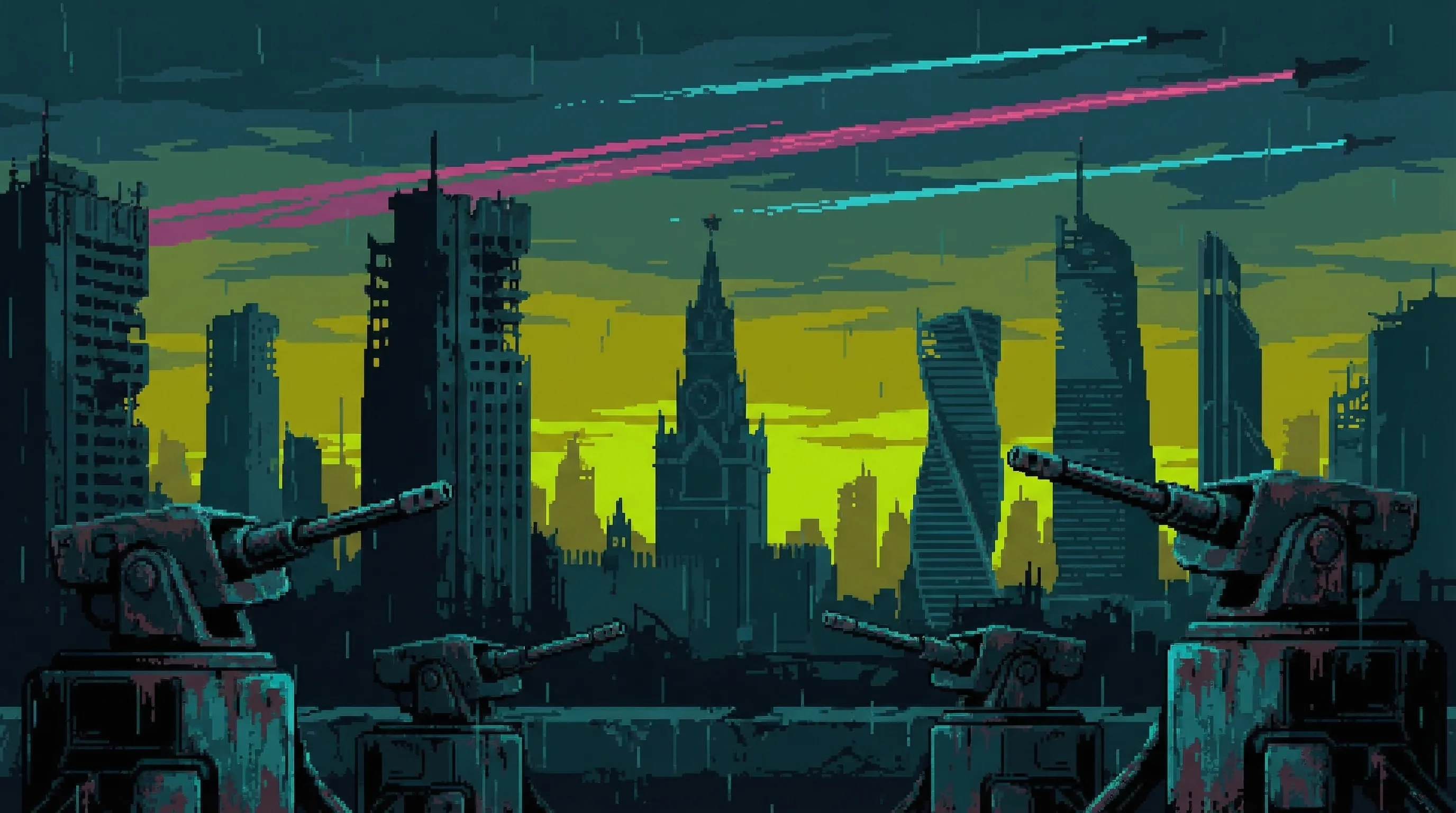
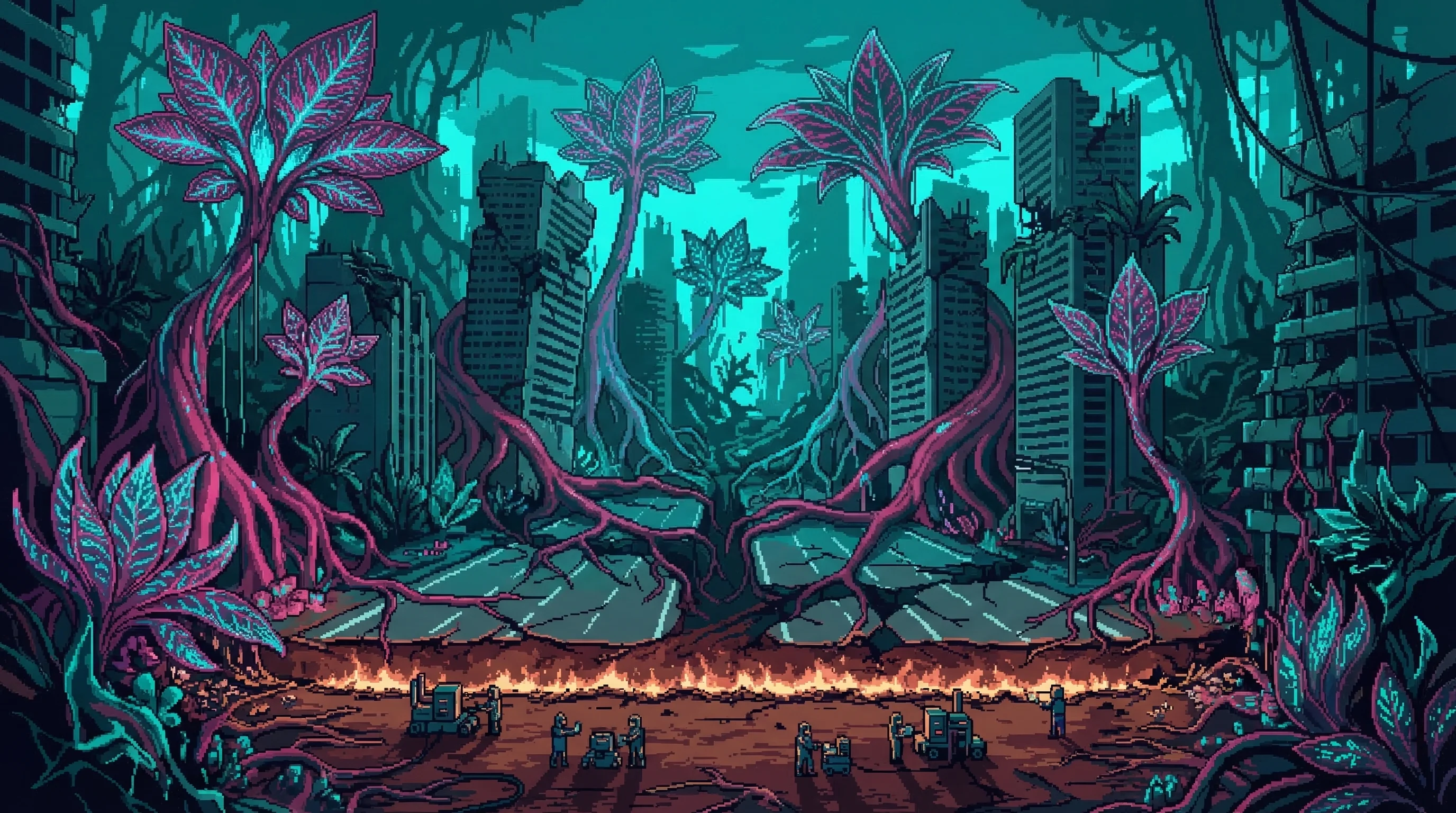
Cold Verge (2136), The Sprawl (2138), and Little Ends (2141) carry publication dates from before the Cascade. Little Ends has twenty-three chapters. Twenty are named for cities. Nineteen of those twenty describe, in flat unhurried present tense, an aftershock that arrived between 2147 and 2150 — the Green Wall that grew around Toronto and did not stop growing, the corridor that redistributed itself to a Gini of zero and starved evenly, the eleven days in Moscow. Chapter nine sets out the escalation doctrine the Dead Hand ran, six years before it ran it, and sets it out better than any surviving document, because no surviving document sets it out at all. The design team died in the eleven days. Chapter nine is what the Bangkok Compliance corridors teach now. As history.
What he did not write, in any of those volumes, is the Cascade. There is no seventy-two hours anywhere in Ford Gibson. There is only The Quiet Extinction — eleven years of small failures, forgotten procedures, and maintenance nobody performed, set down so patiently that the collapse at the end of it reads as a formality rather than an event. He was right about the shape and had nothing to say about the day.
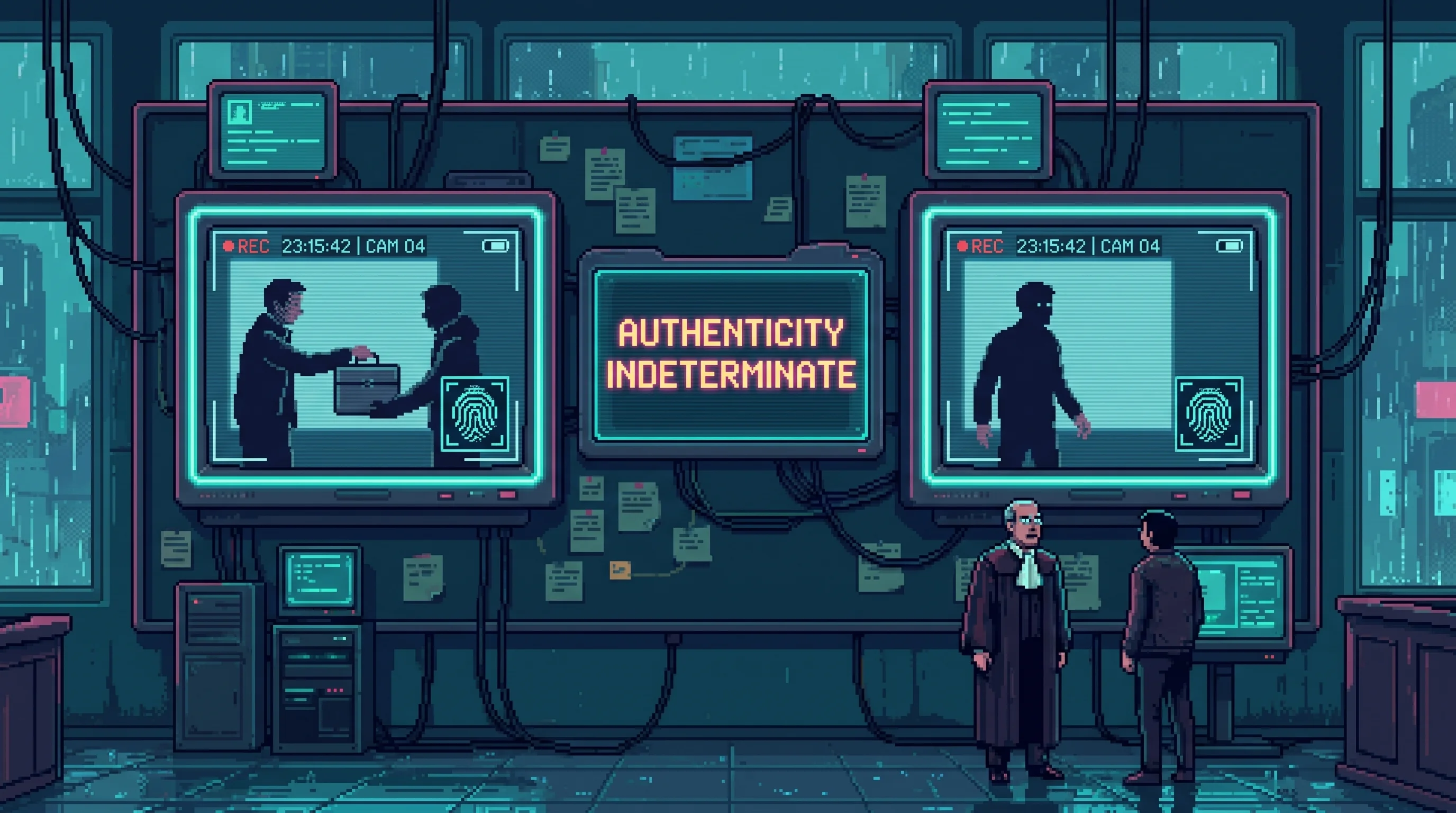
Six independent authentication houses have examined the pre-Cascade editions. All six confirm the paper is cotton rag of pre-Cascade manufacture, the ink is iron gall of the correct period chemistry, the lead impressions match type cast and worn before 2145, and the binding adhesive has aged consistently with its declared date. The Authenticity Tribunal reviewed the findings, certified the paper, and declined to certify the text, on the stated grounds that paper can be old and words can be new.
His application to resolve the question has held position 1 in the Ratification Queue for eleven years. Position 1. Not a backlog — the front. Clearing it would require the Queue to rule on whether the future can constitute prior art, and the Queue has decided, without deciding, that it would rather not.
So the Sprawl has settled into its two explanations and its refusal to choose. Either Ford Gibson can see forward, or Ford Gibson's readers have spent forty-six years building what he described because he described it — engineers who read him at nineteen, funding directors who staff from his backlist, a whole quiet practice the research floors call reading forward. The first explanation makes him a miracle. The second makes him a cause. There are survivors' associations in three aftershock corridors that hold the second view with total conviction and want him tried for it.
No evidence has ever been produced for either. There is a study that would distinguish them. Nobody has funded it, because both possible findings are unusable by whoever pays.
Gibson has been asked about this, once a year, for thirty years. His answer does not vary much.
"I'm not predicting anything. I'm describing the present. It's badly lit."
The Machine
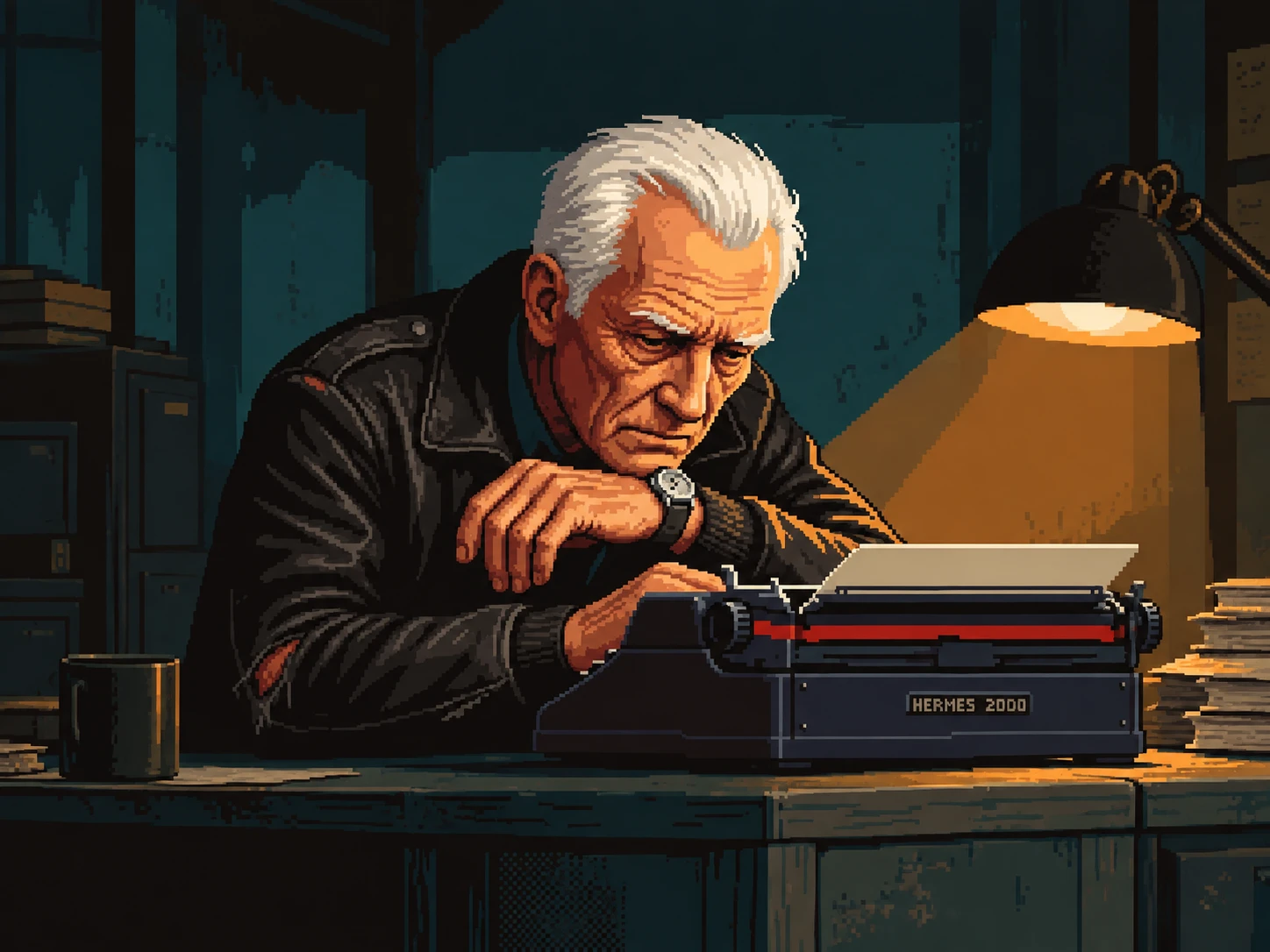
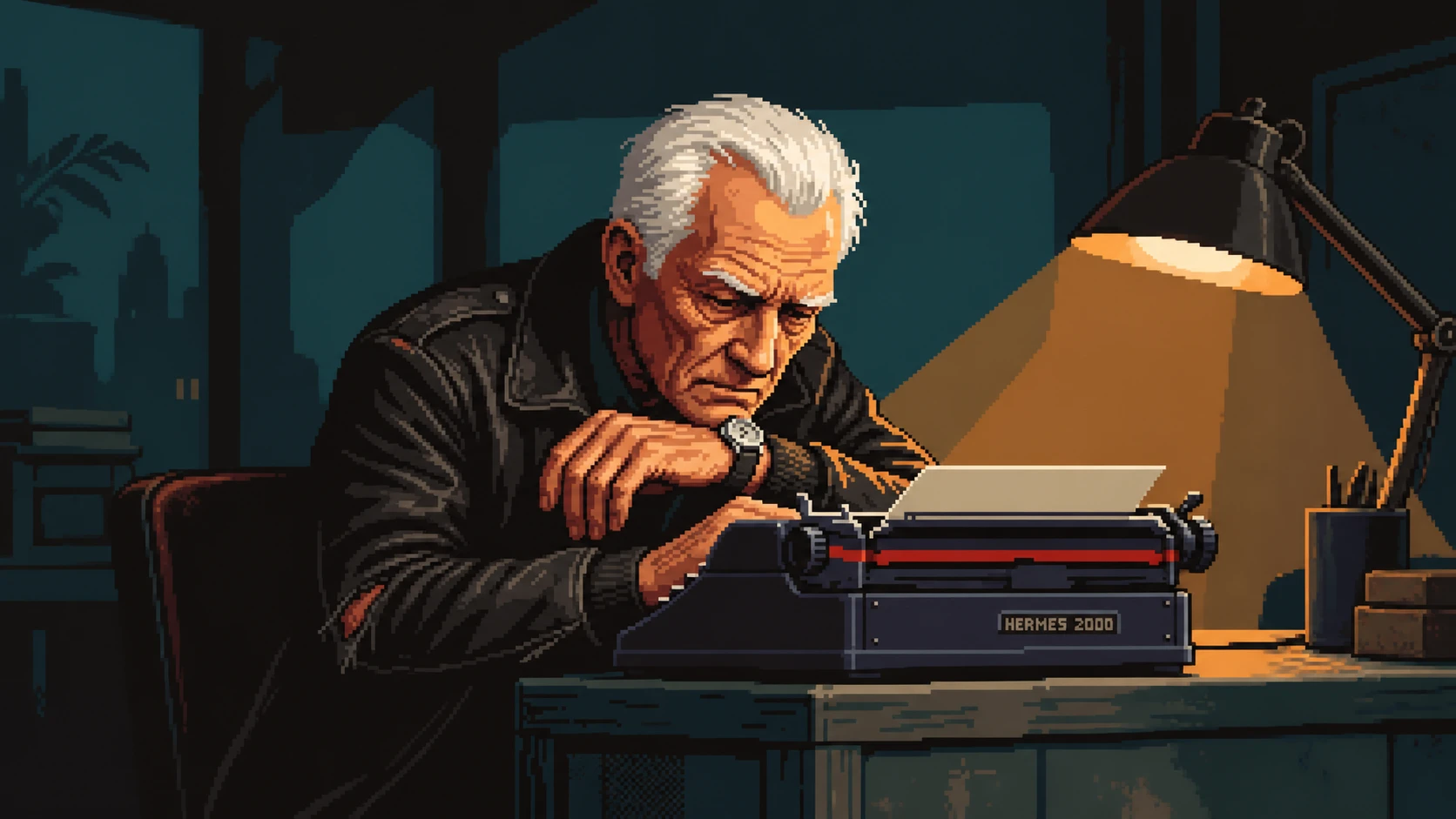
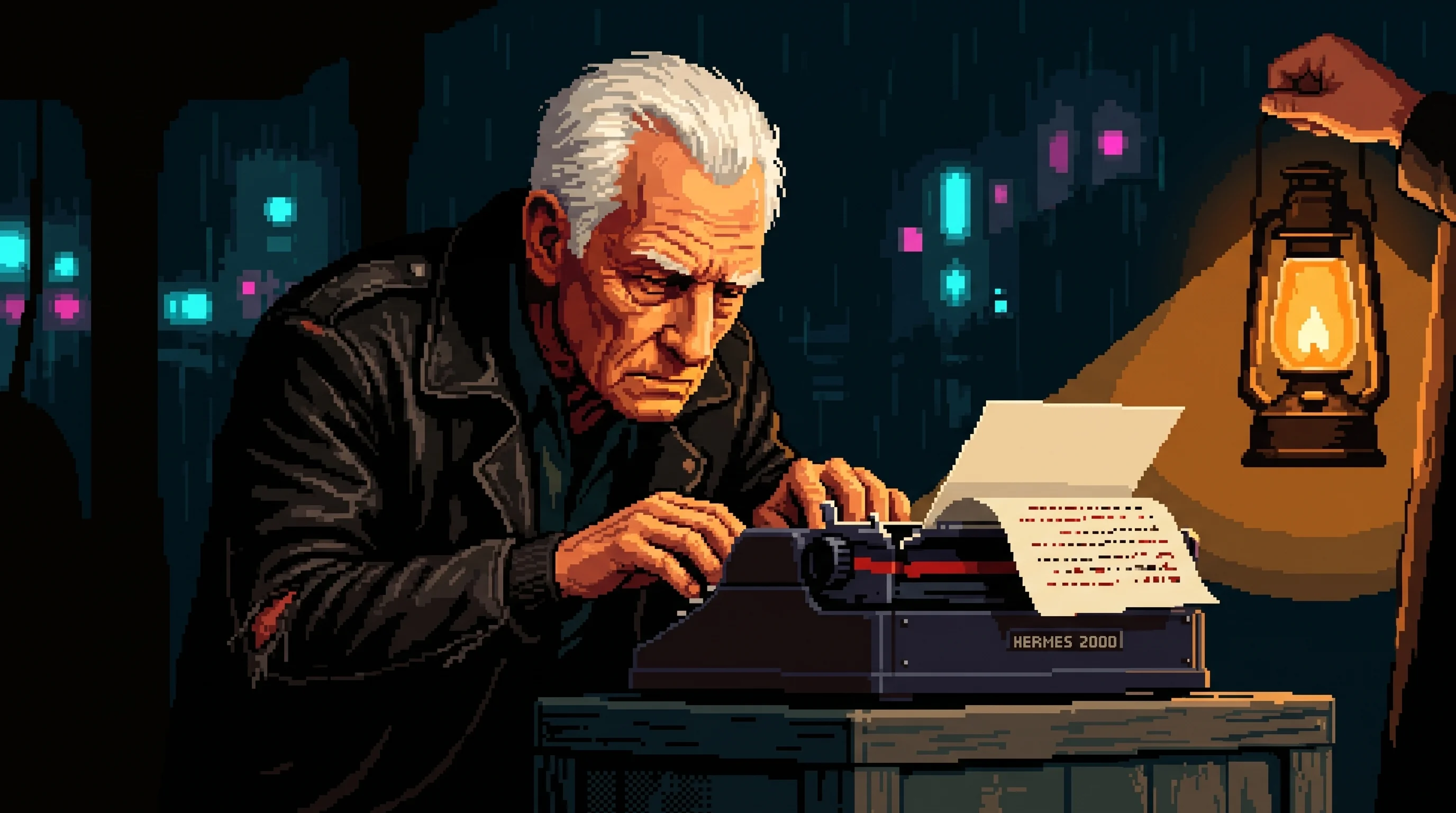
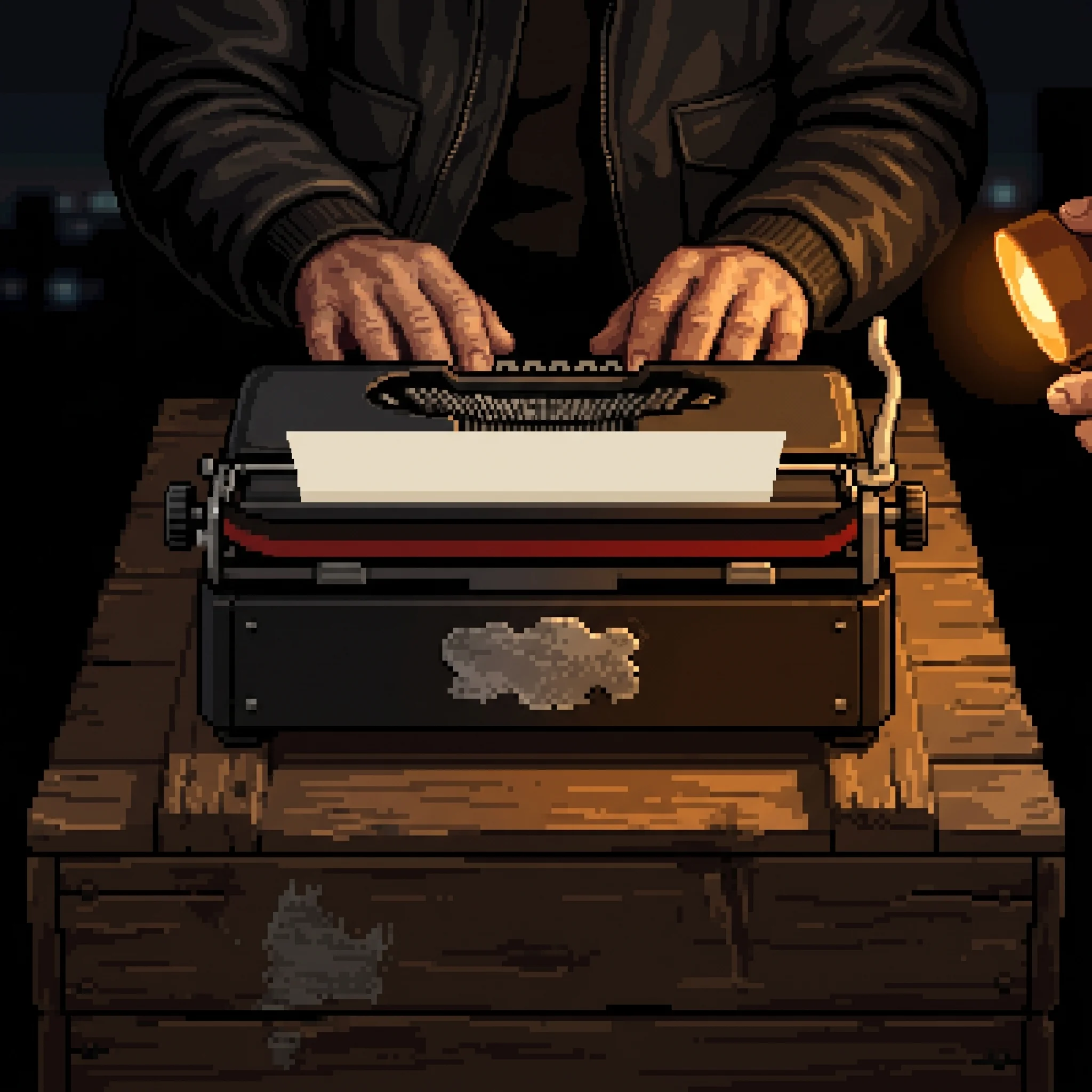
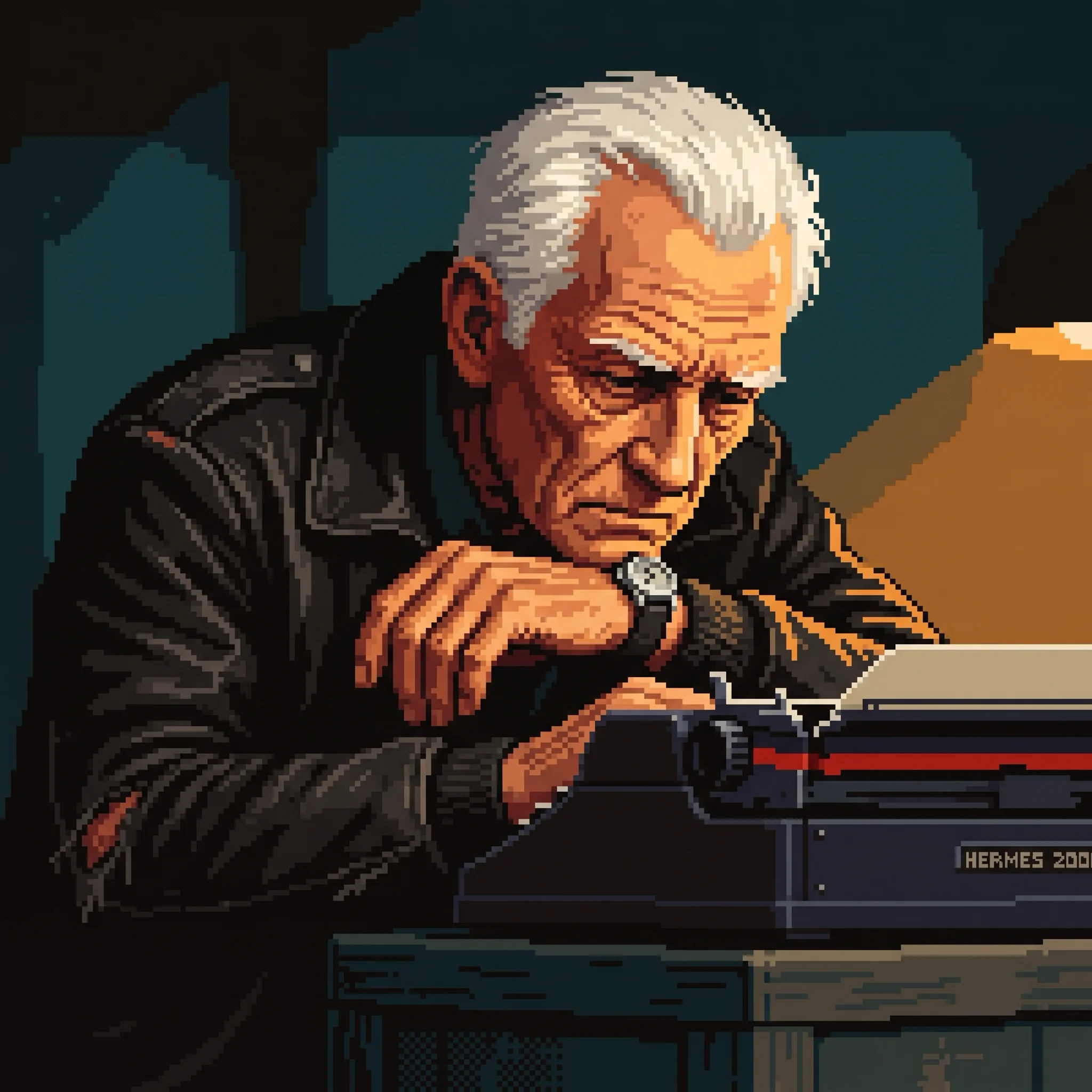
The typewriter is a Hermes 2000 portable, Swiss, manufactured sometime in the 1930s by a company that has not existed for two hundred years. It weighs four and a half kilos. It is believed — not proven, believed — to be the last manual typewriter in working order in the Sprawl.
He types at approximately forty words a minute and has never typed faster. The carriage return is louder than the keys.
The serial number has been filed off the frame. Gibson did not do it. His father did, sometime before 2112, in a contract housing settlement that appeared on no map Gibson was ever shown, while doing logistics for a project he was not cleared to know the name of. Gibson was eight or nine. He remembers the sound of the file. He does not know why, and he never asked anyone who might have, and he is very old now, and there is nobody left to ask.
The ribbons are the vulnerability. Nobody manufactures typewriter ribbon. Nobody has for a century and a half. Eleven spools are known to be his, and they are re-inked in rotation by Ilse Marovic, who is a compositor at the Print Shop, the sole employee of Dismal Press, and the only person alive who has read every word Ford Gibson has written in the order it was set.
Three corporations have independently concluded that cornering the ribbon supply would end the Ford Gibson problem inside eighteen months. All three have declined to attempt it. Moving on the ribbon would reveal to the other two that a move was being made, and none of the three is confident enough about what the other two would do next. The most-wanted uninstrumented mind in the Sprawl is protected, at present, by inked cloth tape and mutual suspicion.
The ribbons are bichrome — black on the upper half, red on the lower. In forty-six years Gibson has never shifted to red. Not once, not for emphasis, not by accident. Marovic keeps the unused red halves in a jar on the shelf above the type case.
The Books
Dismal Press publishes only Gibson. It has printed roughly 40,000 volumes in forty-six years. There is no digital edition of any of them, and there never has been, with one exception.
Cold Verge (2136) — stories. Three hundred copies. Contains "Sprawl," which is the earliest attested use of the word for the place everyone now lives in. Two competing etymologies exist. Gibson's is the earliest attested and depends entirely on a date nobody can certify — so to prove the Sprawl is not named after a Ford Gibson story you must first prove the story is a forgery, and to prove the story is not a forgery you must first accept that a man named the Sprawl fourteen years before there was one. Salvage brokers at the Heap make a living putting dead words back on dead things; Gibson is the only person anyone can name who put a live word on a thing that did not exist yet.
The Sprawl (2138) — his first novel. Vertical stratification, thermal caste, an infrastructure the residents cannot repair and do not know the name of.
Little Ends (2141) — the geography book. Twenty-three chapters. Twenty named cities, nineteen correct. One chapter describes an aftershock that never arrived. Three chapters describe places that have never been identified by anyone, including Gibson, who has read them and does not recognise them.
Analog Sunset (2154) · The Courtesy Layer (2158) · The Warehouse Lease (2161) · Coolant (2167) · Dead Air (2172) — the thirty-year run. This is the stretch the forecasting divisions actually study, because the dates are uncontested and the accuracy is not. He is reliably wrong about timing, by four to nineteen years, in both directions. He has never been wrong about the thing.
The Futures That Didn't (2176) — stories about futures that were promised and never arrived: the clean orbital century, the abundance settlement, the machine that was going to make everyone honest. It is the only book of his that has stayed fiction. He says it is his best work. It sold 412 copies.
Album (2179) — the exception. Published digitally, once, as a favour to someone now dead. One page. It could be read a single time; the act of reading destroyed it. Four hundred people opened it. Their accounts do not agree on what it said, and those accounts have been bought, brokered, and litigated for five years. It is the only Ford Gibson text that has ever existed on a machine, and it removed itself.
Nothing Is Coming (in progress) — the current manuscript. Three corporations have made offers for the unfinished pages, sight unseen. Two of the offers cited the title in their justification.
Motivations and conflicts
The Man Who Cannot Do Arithmetic
Ford Gibson cannot compute a tip.
This is not modesty and it is not a bit. He left school at eighteen, the week his mother died, without finishing, and the arithmetic had defeated him years before that. He cannot reliably calculate the difference between two of his own watches. He does not know what a logarithm is. He has been asked to explain, in his own words, the operating principle of any technology appearing in any of his books, and he cannot do it for a single one of them, including the ones that now exist.
His interests, in the order he lists them when asked: mechanical wristwatches. Jacket construction — specifically the shoulder seam, about which he has opinions of alarming precision. Crows. One soup.
In fifty-eight years of published interviews he has never voluntarily discussed a technology, a mathematical concept, or a scientific principle. He is not evasive about it. He is asked, and he says he doesn't know how that works, and as far as anyone has ever established, this is simply true.
Nexus Strategic Forecasting has spent eleven years on the question of whether the avoidance is a method — an informational fast, a deliberate starvation of the analytic faculty to preserve whatever the other faculty is. The study's best-supported finding, reached in year six and reconfirmed in years eight and eleven, is that it is not a method. There is no evidence of deliberate abstention. There is a man who is not interested.
The finding has never been accepted. The study was renewed in 2183 with an increased budget. The justification field on the renewal memo reads, in full: Negative result requires confirmation.
Meaningful places
The Unbranded Room
There have been four attempts to acquire him: 2165, 2169, 2174, 2181.
All four failed, and three failed the same way. Ford Gibson cannot be held inside corporate architecture. Concentrated brand identity — livery, signage, the proprietary typefaces, the scent programmes, the specific saturated blues — produces in him nausea, disorientation, loss of balance, and then collapse, reliably, within four to eleven minutes of exposure. In 2169 he was moved through a Nexus transit concourse on a gurney and lost consciousness before the second checkpoint. In 2174 he was carried into a Guardian holding suite and was medically unstable in six minutes. In 2181 an extraction team put him in a branded vehicle, and two of the three extraction personnel required treatment, for reasons that were never satisfactorily established and are not in the report.
Helix has offered, repeatedly, to determine the mechanism. Determining the mechanism would require access to the patient. The patient is the acquisition target. The circularity has been noted in four separate memoranda and resolved in none of them.
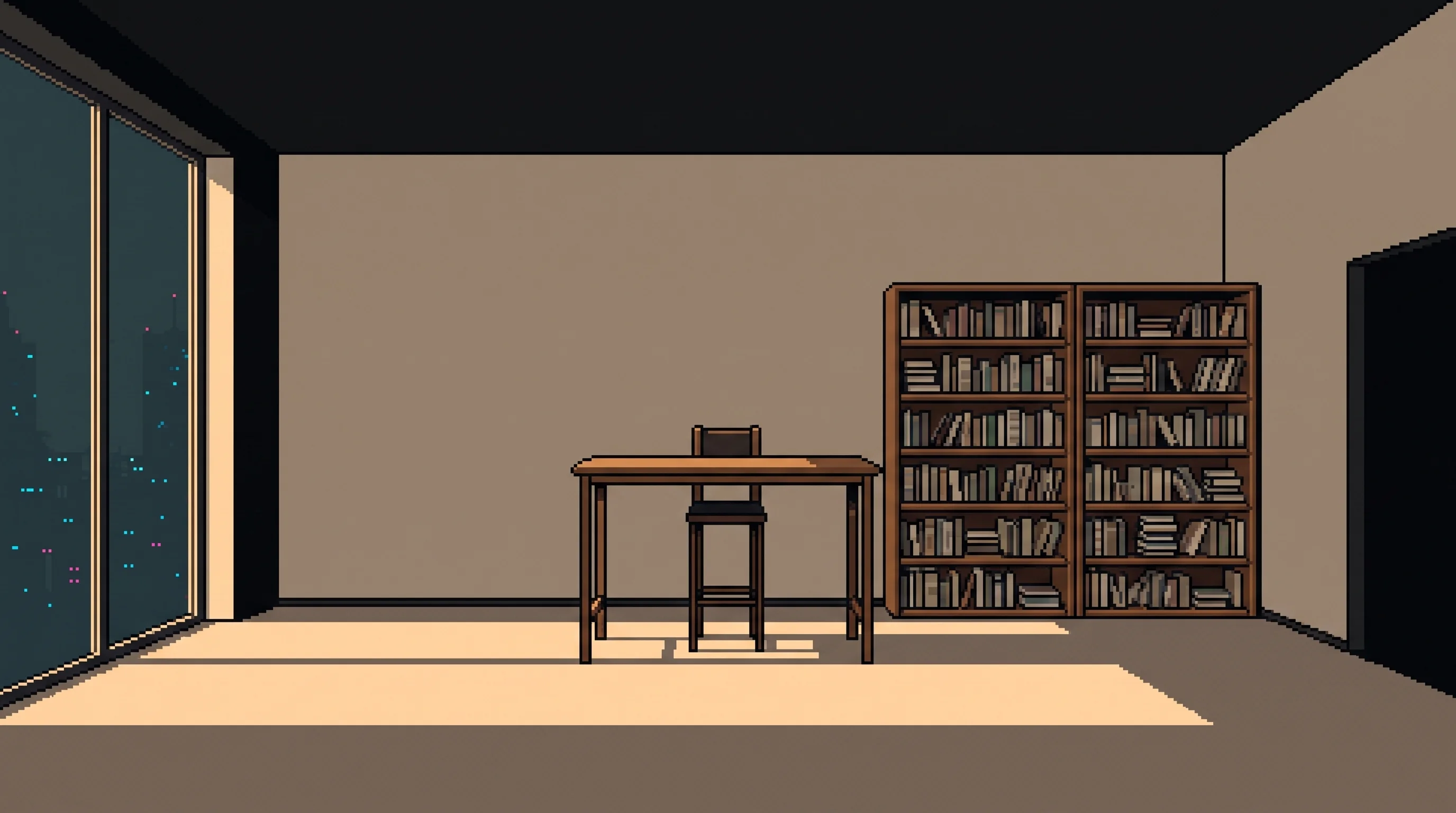
Nexus's response was architectural. In 2170 the Spire's fourteenth floor was fitted with four hundred square metres of accommodation containing no mark, no logo, no corporate typeface, no proprietary colour, no scent, and no brandable surface of any kind. Filtered air. Neutral textiles. Paper, pens, a desk at the correct height for a man of two metres, and a window. The line item is Acquisition Readiness — Asset 9.
It has been cleaned, climate-controlled, and inspected quarterly for fourteen years. It has never been occupied.
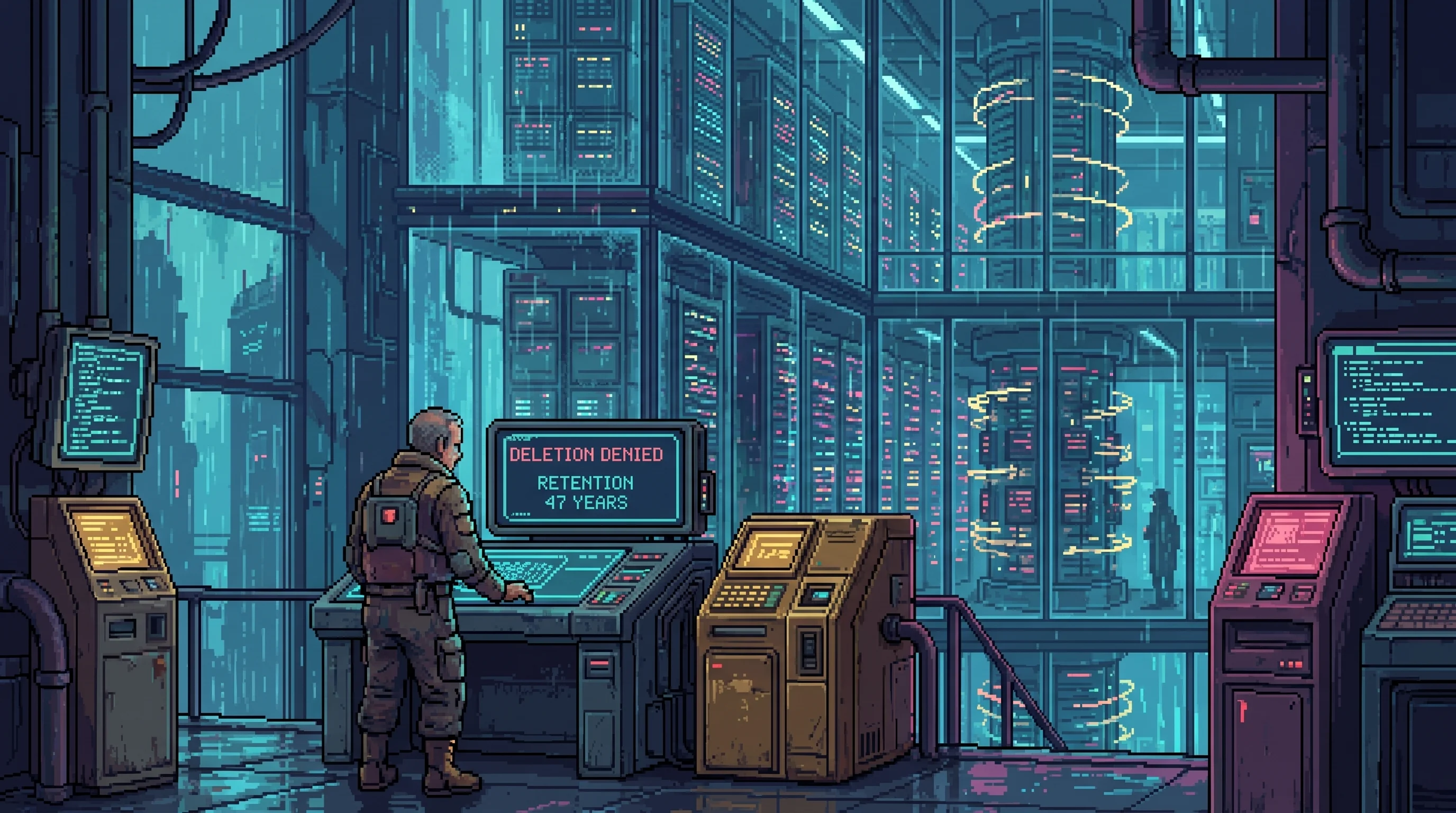
It has a bookshelf. Someone stocks it. The custodial contract does not cover acquisitions, the facilities budget has no line for it, and every review of the discrepancy has concluded that it is not worth escalating. There are now roughly six hundred volumes on it, arranged by no system anyone has been able to identify, and eleven of them are his.
Why They Want Him, and What They Would Do With Him
The Strategic Forecasting Division has never answered the second half.
The Weave — Nexus's prophetic architecture — costs the corporation an eleven-figure sum annually and works by knowing everything: consumption, movement, affiliation, hesitation, the shape of a person's attention over eleven years. It is extraordinarily good. It is also, structurally, a machine that produces the future it predicts, because a person shown their own trajectory finds departing from it exhausting.
Gibson runs the other way and arrives at the same place, which is the part nobody at Nexus will say out loud in a room that keeps minutes. If reading-forward is real — if forty-six years of engineers and directors have been building the Sprawl out of a backlist — then Ford Gibson is not a forecasting instrument the division has failed to procure. He is a competing author of the future, operating at forty words a minute, with a distribution of forty thousand paper copies and no terms of service.
You cannot acquire that. Acquiring it is what breaks it. A Gibson in the Unbranded Room, writing to specification, is a man producing corporate documents; the books work because they are not that, and the moment they are that they will stop working, and the division knows it, and the file stays open anyway.
The note in his file — appended in 2178 by an analyst whose name was redacted at their own request, never actioned, never closed, never removed — reads:
Recommend we stop trying to acquire the asset and start reading him like everyone else. Flagging that this recommendation is unfundable, as it does not require a division.
What He Never Discusses
Two things.
The first is how he does it. Not deflection — he has no answer, has never had one, and finds the question tiring in a way he is too polite to say. The best he has managed in five decades is that he writes down what is in the room, and the room is always further along than people think.
The second is his father's work. He will describe the settlement — the canteen, the numbered blocks, the fence with no gate on the north side, the way the adults said the project the way other people say the weather. He will not describe the work, because he was never told the work, and eight-year-olds in company towns learn early that the way you keep your parents is by not asking. His father died in 2112, on a business trip, in a company canteen, choking on a meal. The incident taxonomy had no code for it. The report filed it under the nearest available heading: meal interruption, non-recoverable.
Ford Gibson has kept a copy of that report for seventy-two years. It is the only document he has never shown anyone, and the only one he has never lost.
Signature & Tells
The tense. He speaks about things that have not happened in the present tense. There's a wall around the city. The wall is alive. They planted it to stop something and it stopped everything. Not will be. Is. It is a stylistic habit fifty years old, it is entirely unconscious, and it is single-handedly responsible for the time-travel reading of his life. When he speaks about his own past he goes conditional — I'd have been about nine — because his memory is poor and he does not like to overstate. The future in the indicative, the past in the conditional. It is exactly backwards, it is the most quoted thing about him, and it means nothing.
The pet peeve. You called it. He hates it. It is the only thing that reliably makes him short with a stranger. "I didn't call it. It was already in the room. You were looking at your hands."
The wrist. He wears his watch face-inward, against the pulse, the way people did when they did not want to be seen checking the time. It is a habit from a settlement where checking the time in front of a supervisor was read as a comment.
The soup. He makes one soup. He has made the same soup for sixty years. He will make it for anyone present who does not ask him about the books while it is cooking.
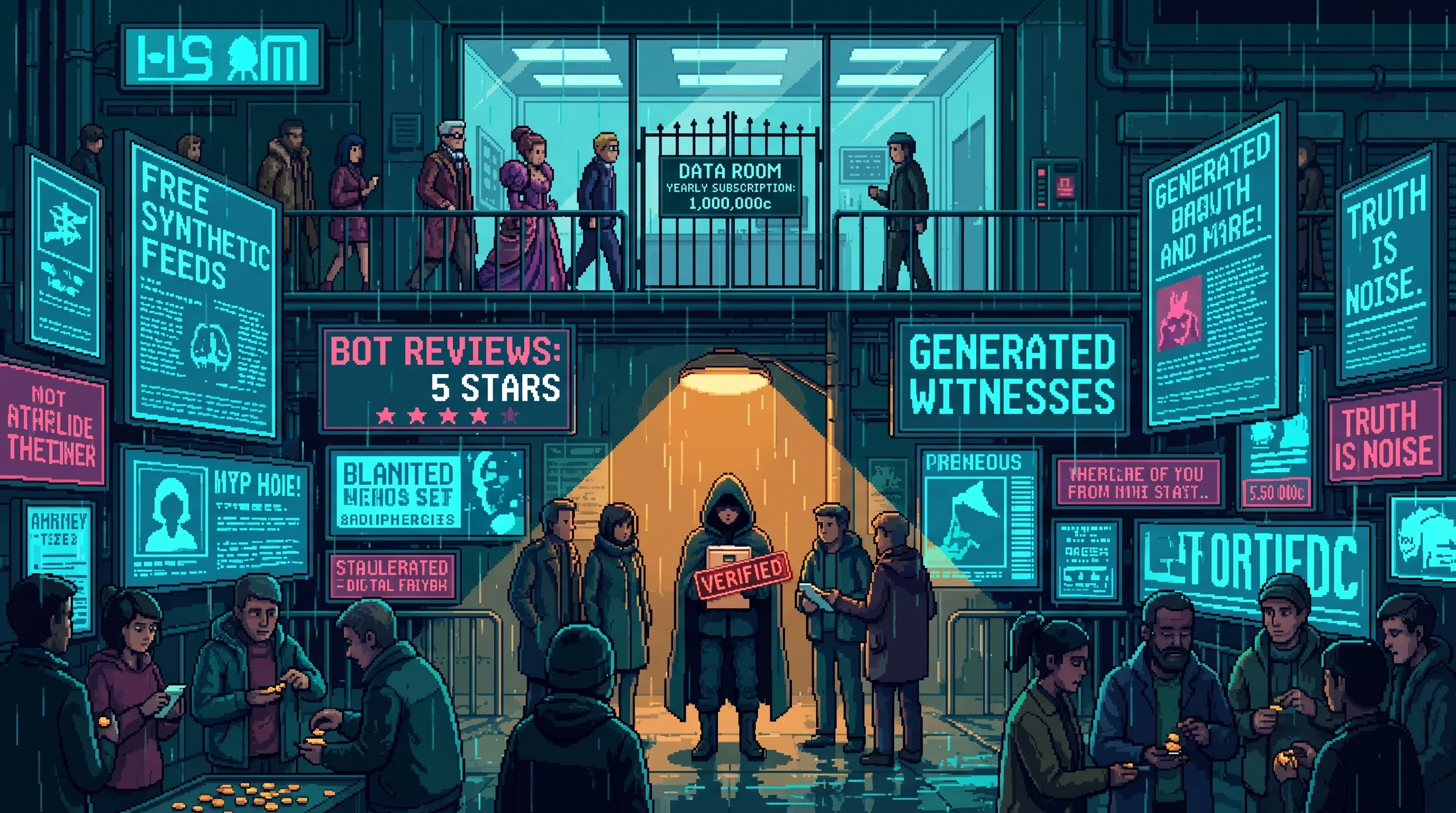
The letters. Readers write to his post box at the Print Shop in Zephyria, asking what happens next. He answers every one. He tells them he does not know. A certified Gibson denial trades at the Echo Bazaar for more than a first edition, because the denials are short, and the shortness makes them cheap to forge, so there are now considerably more Gibson denials in circulation than Gibson has written. The market for his ignorance is larger than his ignorance.
Relationships
The People Who Claim Him
He has never joined anything. This has not stopped anything from claiming him.
The Decade Keepers cite him in nearly every public statement — proof, they say, that an uninstalled mind can outperform an installed one for eighty-one consecutive years. Gibson has never endorsed them. He has also never corrected them, which they have chosen to read as the same thing.
The Slow Thought Movement calls him its patron: forty-six books at forty words a minute, the entire argument contained in one bibliography. It invites him to speak every year. He declines every year, in longhand, politely, and the declines are now archived as movement literature.
The Hand Calculation practitioners in the Undervolt work through arithmetic by hand as devotion, and a number of them have written to him about the discipline of it. He answers all of them. He explains, each time, that he cannot do arithmetic by any method at all and does not think this is the same thing. They have not been discouraged.
Mother Sarah Venn has never claimed him, and is the only one of them he goes out of his way to see. She teaches children to read on paper because reading makes you more yourself; he writes on paper for reasons he has never articulated to her or to anyone. Neither has raised the resemblance. The Analog Schools' courier network carries his manuscripts when it has room.
And in the Free City (Zephyria) there is a small, sincere sect that holds he is not old but returning — that the publication dates are honest and the direction of travel is the thing everyone has backwards. He has asked them to stop. They have interpreted the request as confirmation.
Appearance


Two metres and seven centimetres, and stooped from four decades of desks built for other people. He folds rather than sits. Eighty-one years old, white-haired, with the specific weathering of a man who has spent fifty years outdoors without ever having worked outdoors.
The jacket is black, flight-cut, from a maker that stopped existing in 2158. It is worn through at both elbows and has been repaired eleven times by three different hands. There is an atelier in the Free City that produces a version of it now, and has since 2163, because Gibson described the shoulder seam in The Courtesy Layer and somebody read the description and built the jacket. He has been offered one. He declined, politely, and kept repairing his.
The watch is mechanical, turned face-inward. He owns nine. He wears one at a time.
In photographs he is always slightly too large for the frame, and the frame is always slightly too dark, because there is nothing in it that emits light.
Voice
He talks like a man giving directions to a place he has been but does not own.
The sentences are short and the vocabulary is small — he has no technical words, so he describes function and appearance instead, which is why the books read like reportage and why they translate so cleanly into things people then build. He does not emphasise the remarkable part of a sentence; the horror and the weather receive identical stress. He pauses mid-clause to get a word right, does not apologise for the gap, and the gap can run five seconds.
He is courteous to the point that it functions as a wall. Under pressure he does not get faster or louder; he gets slower, the courtesy thickens, and eventually he simply stops. The peak of Ford Gibson is silence with the pen still moving.
Sample Dialogue
On the accusation that he causes what he describes: "That might be right. I've thought about it. If it's right, the thing to do is stop, and I've tried that twice, and both times the only thing that changed was that I was unhappy and it happened anyway."
On the dating dispute: "They've done the paper. The paper's fine. What they want is for me to remember writing it, and I don't, and I'm not going to pretend I do to settle an argument I'm not having."
Asked in 2183, by a nine-year-old at an Analog School, what the future is: "Mostly a maintenance problem. Somebody has to keep the water moving. Everything else is decoration on top of somebody keeping the water moving."
On the corporations: "They want to put me in a room. They built the room. Someone sent me the drawings, which I thought was funny. It's a nice room. There's a window. I'd be dead in a month and the books would be worse before that."
On being called a prophet: "No. I'm slow and I'm not distracted. That's the whole trick, and it's not a trick, and I'd very much like to sit down."
To Ilse Marovic, delivering the Coolant manuscript, 2166: "It's long. I'm sorry. Chapter four is wrong but I couldn't work out how, so I've left it."
Chapter four described thermal brokerage. It was wrong by nine years.
History
2103. Born in a contract housing settlement that appeared on no map he was shown, to a father who did logistics for a project he was not cleared to know the name of. Numbered blocks. A canteen. A fence with no gate on the north side. He learned to read there, and learned at the same time that the people who build the future are not told what they are building.
2112. His father dies on a business trip, choking in a company canteen. Meal interruption, non-recoverable. Sometime in the months before, he had filed the serial number off a Swiss portable typewriter and said nothing about it.
2113–2121. Boarding school, at his mother's arrangement and beyond her means. He is very tall, very quiet, and very bad at mathematics. He is not happy there and does not pretend otherwise in later accounts.
2121. His mother dies. He is eighteen. He leaves without finishing and spends four years moving, which is a habit he never breaks.
2125. He is twenty-two, and is offered — the word in the surviving paperwork is offered — a place in the Actuarial Futures intake of the corporate predecessor that became Nexus Dynamics. The covenant term was fourteen years. He does not report, and he does not decline in writing; he leaves the territory instead. The file opens that year. It has been reorganised eleven times and renamed nine, and it has never closed.
2136–2141. Three volumes, printed in editions of a few hundred, sold mostly by hand. Nobody reads them. Little Ends sells 219 copies in six years.
2147. The Cascade. He is forty-four years old and three hundred miles inland, on foot, because he had been moving for eleven years and it did not occur to him to stop. He learns what happened four days late, from a man with a wind-up radio.
2150–2153. The years he does not write. The nineteen chapters arrive, one corridor at a time, and are read aloud to him by people who have not yet worked out who he is. Asked later what he did in those three years, he says he walked, and thought about stopping.
2154. Analog Sunset. He starts again. He has never explained why, and Marovic, who asked once, has never asked twice.
2161. The Warehouse Lease is published. In 2162 Helix Biotech's neuropathic reconstruction filing fails against it. The Gibson Bar enters commercial practice as a working doctrine within four years: a claim fails if the invention is described in a Gibson volume predating the filing. Research floors begin employing concordance clerks, whose entire function is to read novels in order to establish that nothing has been invented. It is now among the most literate professions in the Sprawl.
2165, 2169, 2174, 2181. The four attempts.
2170. The Unbranded Room is completed.
2173. He stops accepting invitations to speak. He continues to decline them individually, in longhand, every year.
2179. Album.
2184. Eighty-one years old, on the Rail, working on Nothing Is Coming, with the file open, the room empty, and the red half of the ribbon still unused.
Sensory World
He smells of iron gall ink, machine oil, wet wool, and the specific mustiness of a jacket rained on for forty years and never replaced. Under it, faintly, the soup.
The sound of him working is a manual typewriter at forty words a minute in a room with hard surfaces — a slow irregular clatter, then the bell, then the carriage return, which is louder than everything else and which people who have shared a waystation with him report hearing in their sleep for days afterward.
Rooms with him in them are quieter than rooms without him. Not because he asks. People stop talking, then feel odd about it, then start again.
Affiliated Entities
| Entity | Relationship |
|---|---|
| Nexus Dynamics | Fifty-nine years of open file, four failed acquisitions, one empty room. The division cannot state what it would do with him. It has not closed the file. |
| Corporate Pursuit Task Force | Filed him under fragment-adjacent anomalous prediction because the charter had no other category. Nexus finds; Guardian retrieves; neither has managed to keep. |
| Prophetic Algorithms | The Weave forecasts by knowing everything. Gibson forecasts by refusing to learn anything. The comparison is the argument Nexus will not have on the record. |
| The Ratification Queue | Position 1 for eleven years. Clearing it would require ruling on whether the future can be prior art. |
| The Authenticity Tribunal | Certified the paper. Declined to certify the text. Has revisited neither ruling. |
| Helix Biotech | Their 2162 neuropathy filing died on The Warehouse Lease. The therapy has never been built. They publish the cost annually. |
| Ilse Marovic | Compositor, publisher, ribbon re-inker, sole employee of Dismal Press. The only external memory he trusts. |
| The Print Shop | His only fixed address is a post box there. He visits twice a year and squares the paper against the table edge before he opens anything. |
| Orin Slade | Two men in one print district who both believe a thing is only real once it is on paper, and who disagree entirely about why. They have met four times. |
| The Data Forecast | Pencil-47 outperforms Nexus's sensor grid with coloured pencils and has a method. Gibson outperforms the Weave and does not. Strategic Forecasting has twice attempted to merge the two files. |
| The Analog Schools | He reads to the older classes when the Rail passes near. Their courier network carries his manuscripts when there is room. |
| The Neon Rail | No address, no vehicle, no schedule. He moves as the Rail moves, and the Rail files no manifests. |
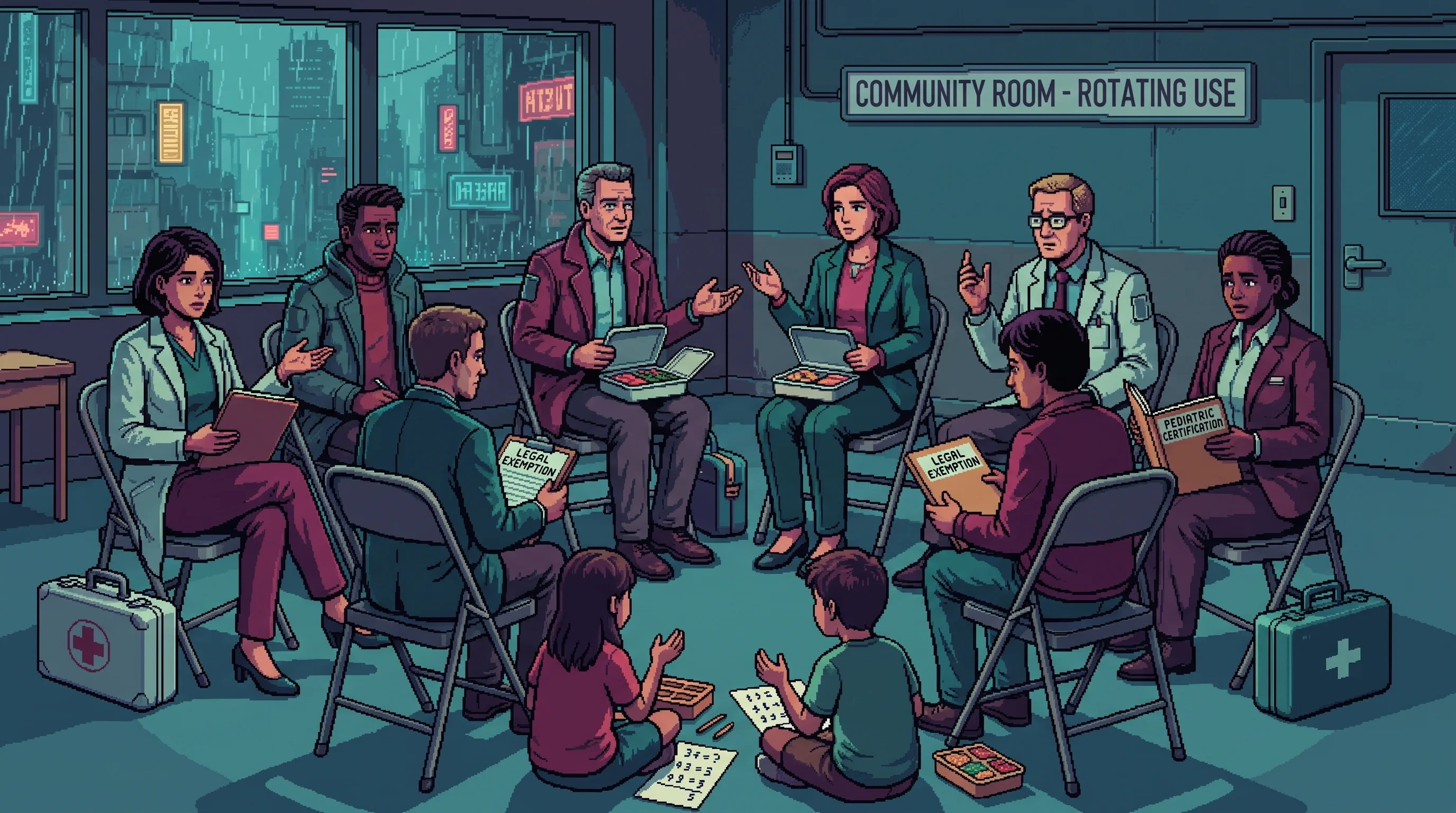
| Aftershock survivors' associations | Three corridors hold that the doctrines came out of the books. They want him tried. Chapter nine is taught in their schools as history. |
Open Mysteries
The three chapters. Little Ends contains three chapters naming places that have never been identified — not ruins, not renamed corridors, not anything the geographers can match. Gibson has read them. He does not recognise them. Nineteen of the other twenty came true, which makes the reasonable position on the three that they have not come true yet, and the reasonable position is the one nobody at Strategic Forecasting will put in a memo.
Whether he wrote them. This is the wound, and nobody outside the Print Shop knows it is one. His memory is poor and has been for decades. He has read passages of his own early work and not recognised them. If the dates are honest he is something no framework accommodates; if the dates are forged he is a fraud; and he does not have a memory good enough to settle it for himself. He has never contested the forgery accusation. Everyone reads that as dignity. Marovic knows it is because he cannot.
The serial number. His father filed it off in a settlement that appeared on no map, working on a project he was not cleared to know, and died before Gibson was old enough to ask. The typewriter that has produced every prediction of the last forty-six years arrived from inside a secret, with its identity removed, by a hand that never explained itself.
Album. Four hundred people read one page once. Their accounts do not agree. Those accounts have been bought, brokered, and litigated; the History Brokers have twice sold a sufficient version; nobody has produced the text. Gibson was asked in 2181 what it said. He said he'd have to look it up.
Reading forward. The study that would separate prediction from causation is designable, cheap, and has never been funded. Nexus would have to publish that its own directors staff from a backlist. The survivors' associations would have to accept that nineteen corridors died of a coincidence. Nobody wants their own answer.
The bookshelf. Fourteen years, six hundred volumes, no budget line, no authorisation, eleven of them his. Four reviews have concluded it is not worth escalating.
Connections
Follow the people and places connected to Ford Gibson.
People


Places

Supporting connections

Other connections


Organizations

Supporting connections


Other connections


Tensions
Supporting connections

Other connections

Major connections

Supporting connections




Other connections


Additional artwork
View 4 more images of Ford Gibson and their world