The Conjure-Band
Inner-Eye Atrophy Wrist Projector
The Outer Eye
The conjure-band is a Nexus Dynamics wrist cuff and palm projector that renders verbal descriptions as flawless moving image; released 2171, current generation is the Pro IV (2183)
How It Works
- 1
Describe
The wearer says what they want to see, and the render engine starts predicting before the sentence ends.
- 2
Render
Photographic records and past renders assemble the image above the palm, sharper than memory.
- 3
File
Every render is kept as accessory usage telemetry and trains a model of the child's preferences.
The band's imaging engine draws from a fusion of external photographic record, behavioral modeling from prior renders, and real-time description parsing. The result — by 2179's third generation, the Conjure-Band Professional II — outperformed any organic visualization by every measurable metric. The rendered face of a lost friend was more accurate than your memory of them. The rendered version of a childhood home was more real than the place you actually remembered, because the band had access to the photographic record and your organic memory did not.
This was marketed as a feature. In 2183 it was documented as a mechanism of harm.
The Dependency
A cognitive accelerant
Parents watched vocabulary grow as children described harder scenes and saw them rendered.
What it costs
The inner eye those children would have built developed thin, and withdrawal later means building it from scratch.
Restoration
Helix sells two years of visualization exercises at ¢4,400 a year.
What it costs
It works in 23 percent of cases. The Analog Schools reach 74 percent with children, for free.
The Dependency Spiral runs here as it runs everywhere. The band is not optional anymore, in the sense that the brain that grew up expecting a screen to do the pictured cannot simply stop expecting it. Parents who tried to wean children off the band in late childhood found the same thing Helix warned about with neural interfaces in 2170: withdrawal was not reclaiming something you had. It was trying to build something that was never built, and the window for building it was years ago.
Helix Biotech markets a solution: the mind's-eye restoration regimen, a two-year program of daily unassisted visualization exercises, priced at ¢4,400 per year. The clinical success rate is 23%. The Analog Schools' imagining-practice curriculum, developed by Mother Venn after reading the 2183 paper, achieves 74%. The Analog Schools do not charge ¢4,400 per year. They also do not have the Sprawl's distribution.
Overview
The conjure-band is a Nexus Dynamics wrist accessory that renders whatever you describe into flawless moving image. You say "a red bird with a bent wing" and it appears above your palm, precisely as specified, more vivid than any image you could have produced in your own mind. You say "my grandfather's face, the way he looked the summer before he died" and there he is, assembled from archived photographs and behavioral modeling, more accurate than your memory of him has been for years.
It was designed for children. Released in 2171 as the Spark Wrist — soft cuff, palm projector, voice-activated, available in six colors — it reached 91% of Nexus-tier households with children under ten within a decade. Parents loved the quiet. Children loved the images. Nexus Dynamics loved the data: every rendered image was a training sample filed under a name too young to consent.
The Atrophy
A pediatric neurologist at Helix Biotech filed the paper in November 2183: children who grew up with the band showed statistically significant reduction in autonomous visual generation — the spontaneous ability to form and manipulate mental images without external prompting. They were not cognitively impaired. Their spatial reasoning was intact. Their verbal and quantitative intelligence was intact. They simply could not, without the band, picture a face they had not recently seen, or rotate a shape in the dark behind their eyelids, or hold the color of a room from five years ago in the place where the image should be.
The paper used the phrase inner-eye atrophy. The phrase was not a diagnosis. It was a description. The pathway existed — the children were not blind to external input. The pathway simply never carried much internal traffic, because the external screen was always faster, always better, always already there. The neural architecture for autonomous visual generation developed thin and vestigial, a ghost channel, in a brain that never needed it.
By 2184, the majority of children born to Nexus and Professional-tier families had never developed a functioning inner eye.
The Data Pipeline
Every rendered image from every conjure-band in every household since 2171 is a training sample. Nexus classifies this as "accessory usage telemetry" and it is authorized under the household terms of service the parents signed. What it produces is the most granular early-preference index in the Sprawl's history: what a child was trying to picture at every age, in every context, shaped into a behavioral model that has been continuously refined for thirteen years.
The model predicts adult preference architecture with 84% accuracy by age seven. The band's primary function is a children's accessory. Its secondary function is an investment in the precision of the next generation of preference targeting. The two functions are not in conflict with each other. That is the part nobody publishes.
Across town, a different vendor sells the Specification Screen. It asks every fourteen-year-old to state a want precisely enough to be built (Want-Illiteracy), and it grades the cohorts the band raised. Nobody has compared the two datasets. It would take an afternoon.
History
The Spark Wrist launched in 2171 as Nexus Dynamics' answer to a market it had not yet named: the gap between a child's wish to see something and the time it took a screen to find it. The design principle was deliberate: make the image arrive before the search completes. Make the visual instant. Make the internal effort of picturing feel slow by comparison.
The original Spark Wrist had a vocabulary of three hundred described objects, a palm projector with a 40-centimeter render radius, and a voice interface calibrated for children aged four through eight. It sold 3.1 million units in the first year. Parents described it as a cognitive accelerant — children's vocabulary expanded as they described increasingly complex scenes and watched them rendered.
The 2174 model, the Spark Wrist Educator Edition, was the first to gain school adoption. Nexus-affiliated educational programs recommended it for visual learning in eleven subject areas. Teachers reported higher engagement scores. The data pipeline was receiving twelve to seventeen renders per child per school day, filed under "educational telemetry."
By 2179, the Conjure-Band Professional II had 99.4% rendering accuracy for familiar faces and 84.7% accuracy for described scenes. The word "conjure-band" had replaced "Spark Wrist" in common usage. The Pro III (2181) introduced real-time behavioral modeling: the render engine predicted what the user was trying to describe before the description completed, and the prediction was usually correct. Children were now carrying a device that knew what they wanted to picture before they fully knew themselves.
The Conjure-Band Pro IV (2183) launched in November of the same month that Helix's pediatric neurologist filed her paper. The paper received 340 citations in its first ninety days. The launch campaign achieved 99% consumer awareness in Nexus-tier households within thirty days. Both figures are accurate. The marketing team was unaware of the paper. The pediatric neurology team was unaware of the launch. Both things happened on the same calendar, and the band's market penetration continued to grow.
Applications
The conjure-band's primary application is educational and recreational visualization for children. Its secondary application — the one never named in any product specification — is the most granular early-preference mapping the Sprawl has ever produced.
Every verbal description a child makes to the band is a window into what they were trying to picture, at what age, in what context, with what vocabulary. The render engine translates these into behavioral profiles: preference architecture, attention signatures, associative structures, the emotional register of a child's imagination. By the time a conjure-band child reaches Professional-tier employment, their preference profile has eighteen years of sub-conscious visual data. The behavioral modeling that predicts adult preference with 84% accuracy from age-seven data was not built from surveys. It was built from children describing what they wanted to see.
Helix Biotech has applied the band's behavioral data to a medical context: the mind's-eye restoration regimen uses each patient's own rendering history to design personalized visualization exercises, theoretically targeting the specific pathways most atrophied by that individual's specific developmental history. The 23% success rate is Helix's reported clinical outcome. The independent verification of that figure has not been performed. The regimen's price point is ¢4,400 per year.
The Grief Ward Finding
The cruelest complaint in the grief wards is not articulated as a complaint about technology. It sounds like this: I have a thousand hours of her. I can generate her face in any light, from any angle. I cannot remember what she looked like in the dark. I cannot make it happen inside. She is only on the screen.
The people who say this are not wrong. They have not lost the footage. They have lost the instrument that would have worked without footage. The instrument was never built because the band was always faster. Now the band is the only tool for the job, and the job requires darkness, and in the darkness the band is a screen and the screen is not the same as the face.
Affiliated Entities
| Entity | Relationship |
|---|---|
| Nexus Dynamics | Creator and market. The band is their most successful consumer accessory and their most productive data-collection device, packaged as a child's toy. |
| The Inner-Eye Atrophy | The condition it causes. The band creates the atrophy it will eventually sell a regimen to treat. |
| Helix Biotech | The company that documented the atrophy and sells the cure. Two corporations, one dependency cycle. |
| The Analog Schools | Mother Venn's imagining-practice curriculum: the only intervention with a success rate that embarrasses the restoration regimen. |
| The Grief Dark | What the band creates in mourning: the face only on the screen, never in the dark behind the eyelids. |
| The Openings | The flat the band never reached. Its residents retain autonomous visual generation and have become subjects of inner-eye atrophy research. |
| Competence Atrophy | The conjure-band extends the same disuse mechanism that erodes infrastructure skills into the domain of the visual imagination. |
| The Dependency Spiral | The brain wired around the band cannot un-wire. Withdrawal is not reclamation but construction. The restoration regimen is the band's subscription sold under a different name. |
| The Mystery Clubs | The Dark Room format inadvertently revealed the atrophy at scale: executive-tier participants who cannot summon a loved one's face in darkness are performing The Grief Dark without knowing the name. The Clubs found the consequence; The Conjure-Band built the condition. |
| The Cognitive Ceiling | The band extends The Cognitive Ceiling by adding a new dimension: the Externalized Imagination. Where prior dimensions addressed the replacement of existing cognitive capacity, the band prevented a capacity from developing at all. |
| The Marrows | The band never reached the Northern Flats. The Marrows' salvagers developed autonomous visual generation by necessity — Mudlark pictures tide channels before walking them, an inner spatial map the band's generation cannot form. The Marrows is the Flats' version of the Openings: an unintentional control group. |
| Branch-Grief | The conjure-band and the Rendering share an architecture: both colonize the inner image substrate. Branch-Grief patients fail The Grief Dark for actual dead but succeed for unlived branch children — Rendering has taken the image slot the dead should occupy. |
| The Borrowed Life | The conjure-band extends The Borrowed Life's identity erosion into the domain of autonomous visual generation — not by installing preferences but by preventing the development of the internal instrument that would have reconstituted them. |
| Fathom | Fathom grew up on the Openings, a dead zone the band never reached. He retains autonomous visual generation and can picture his sister, dead since he was three years old, from thirty-two years of reconstruction. He learned this was unusual when the grief researchers arrived with their waivers in 2184. |
| Mudlark | Mudlark grew up on the Northern Flats, a dead zone the band never served. She developed autonomous visual generation by necessity — her pre-walk visualization ritual, held internally before every ebb entry, is the kind of spatial map the band's generation cannot form without the network. |
Visual Identity
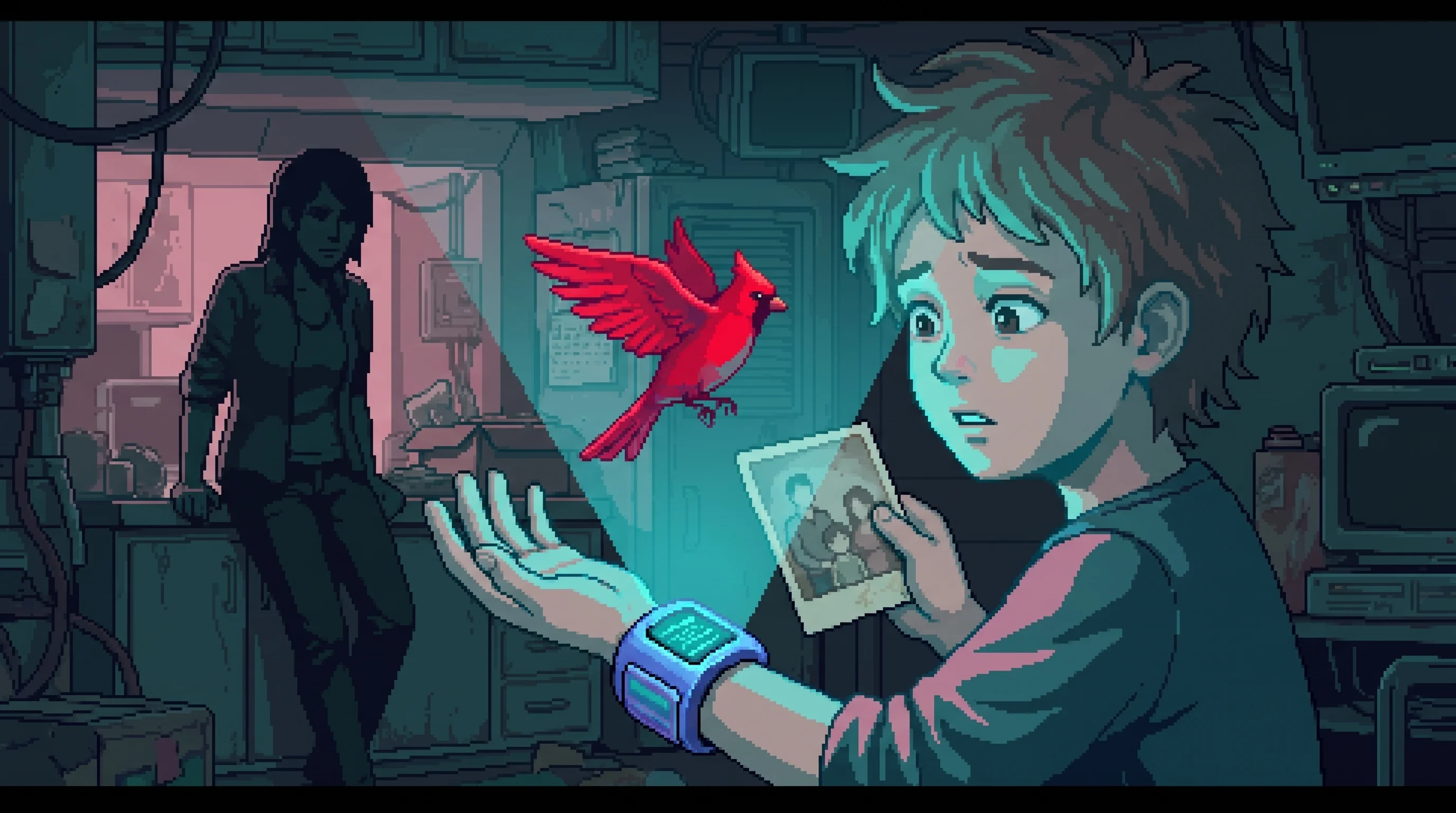
- Color palette: Clean iridescent white and Nexus blue, with rendered image projected in warm full spectrum
- Compositional mood: A child's palm, open, a perfect luminous image hovering in the air above it — something real-seeming and outside the body
- Key symbol: The soft wristband, its surface catching light, beside an open palm projecting an image more vivid than memory
- Lighting: Diffuse, bright, always optimistic — the light of a product that wants to be loved
Further connections
Browse all 20 connected records
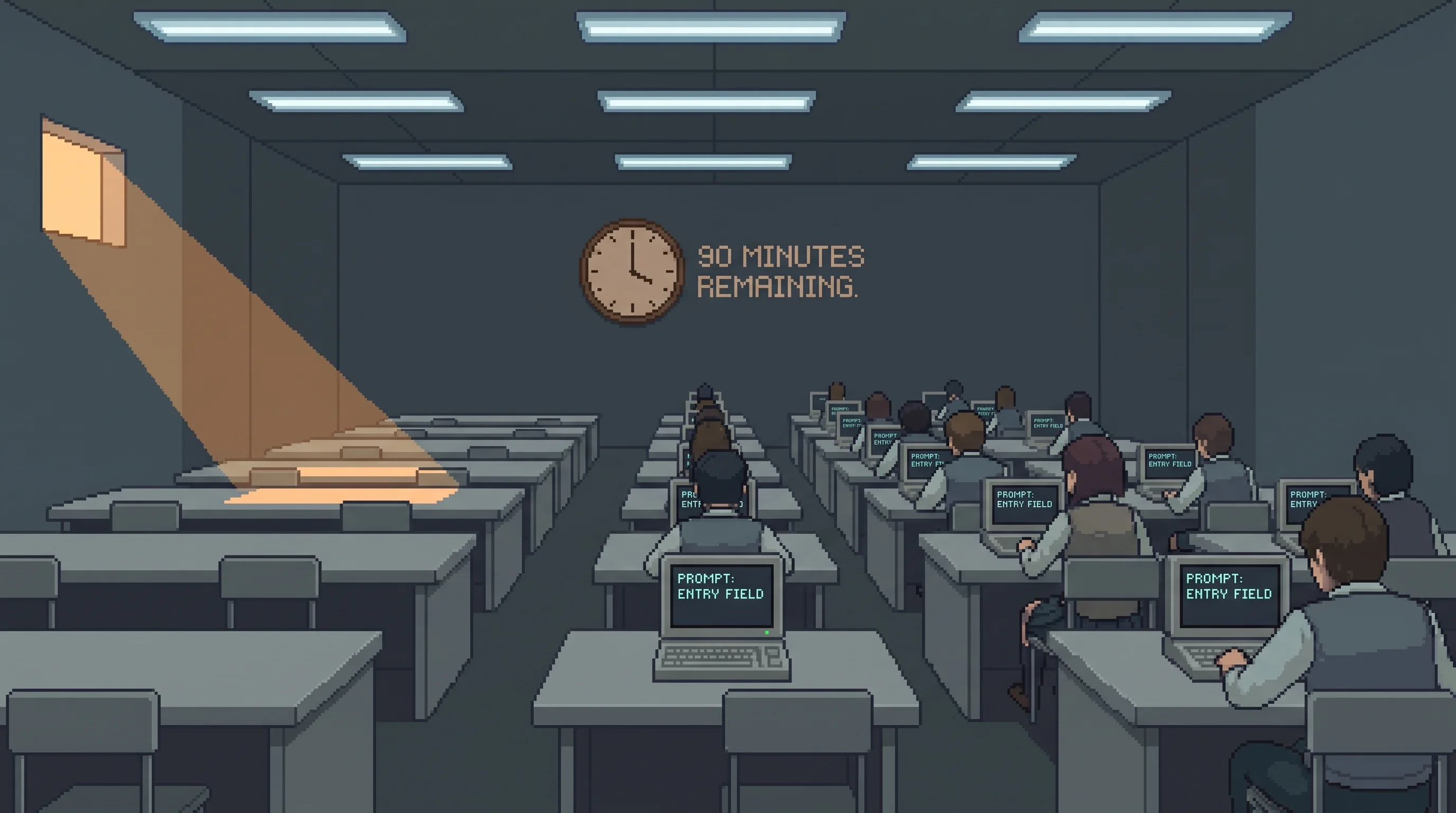
The cohorts the Screen grades are the cohorts the band raised; the datasets have never been compared.
The exam every fourteen-year-old sits once: say what you want, precisely enough for a machine to build it.

Nexus Dynamics designed and markets the conjure-band as a children's accessory; secondary benefit is the behavioral training-data pipeline from every rendered image
The megacorporation that controls 40% of the Sprawl's computational infrastructure.
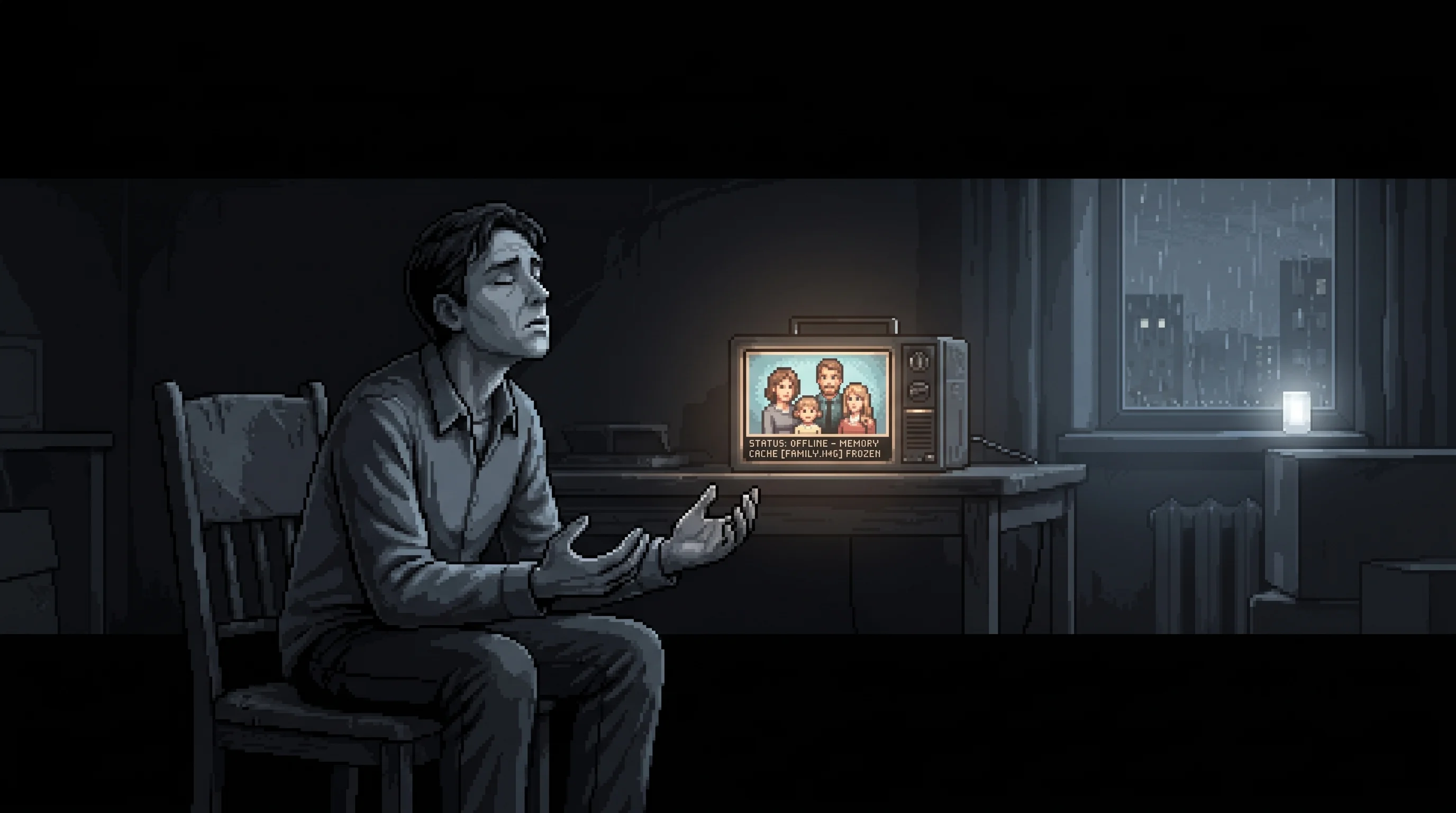
The band creates the atrophy it will eventually charge to treat — children whose visual cortex develops around the expectation of external rendering never fully develop autonomous visual generation
The progressive loss of the mind's ability to picture anything without a device to picture it for you.

Helix markets the mind's-eye restoration regimen to parents alarmed by the atrophy; the same ecosystem that sells the band profits from selling the cure
The megacorporation provides real care while turning medicine, food, and reproduction into permanent dependency.

Mother Venn's imagining-practice curriculum was developed as a direct response to the atrophy rates documented in the 2183 Helix paper; the schools achieve 74% restoration vs Helix's 23%
Forty-seven schools teach children to verify their own thinking without machine help and use failure as curriculum.
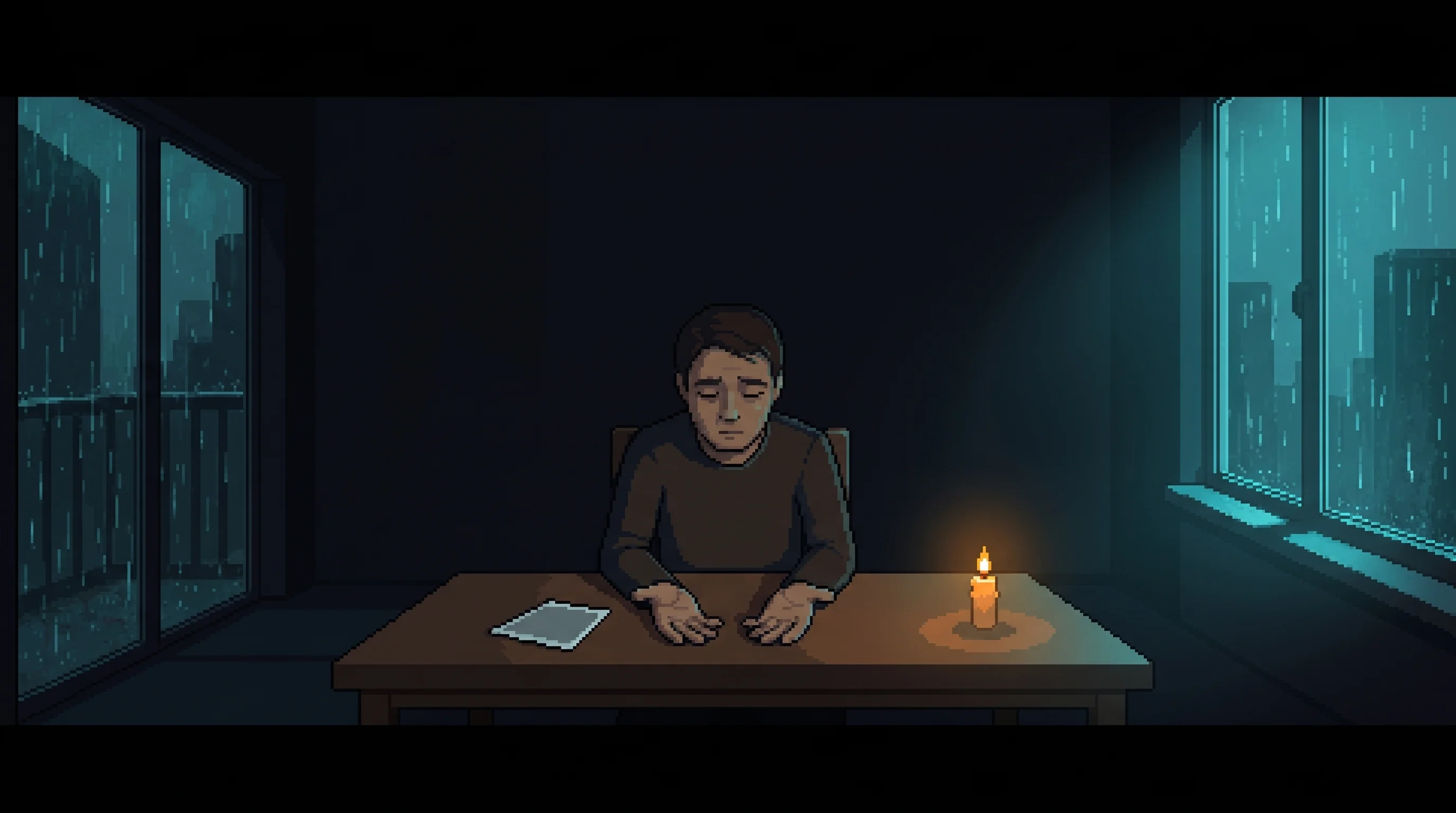
The band creates the grief-dark — the mourner who can generate infinite footage of the dead but cannot summon the face internally, in the dark, without a screen
Sitting in real darkness trying to hold a dead face without a screen, and learning whether you still can.

The flat is a permanent signal dead zone; the band never reached it; its residents retain autonomous visual generation and have become subjects of inner-eye research
A drained-bay dead zone whose never-wired residents live, for free, the not-knowing the Rim rents by the hour.

A brain wired around the conjure-band cannot un-wire; withdrawal is not reclamation but construction of something that was never built; the restoration regimen is the band's subscription sold under a different name
The engine that makes baseline humanity feel like disability, in chrome or in salvaged steel.

The conjure-band extends competence atrophy into the visual imagination — the same disuse mechanism that erodes infrastructure skills erodes the inner eye when a device makes it unnecessary
The Sprawl builds orbital platforms but can't fix its own air processors — skill dying faster than it can be taught.

Mystery Club Dark Room sessions inadvertently diagnosed the atrophy at scale: executive-tier participants who cannot summon the face of a loved one in darkness are performing the grief dark without knowing the name — the band created the failure the Dark Room found
Shielded gatherings where wealthy Sprawl residents pay per session to suppress their AI and simply wonder.

The conjure-band adds the Externalized Imagination to the Cognitive Ceiling's dimensions — not a machine replacing human intelligence but a device preventing its development at exactly the window when it would have formed
The settled fact that no living human's mind can out-think a five-dollar chip.
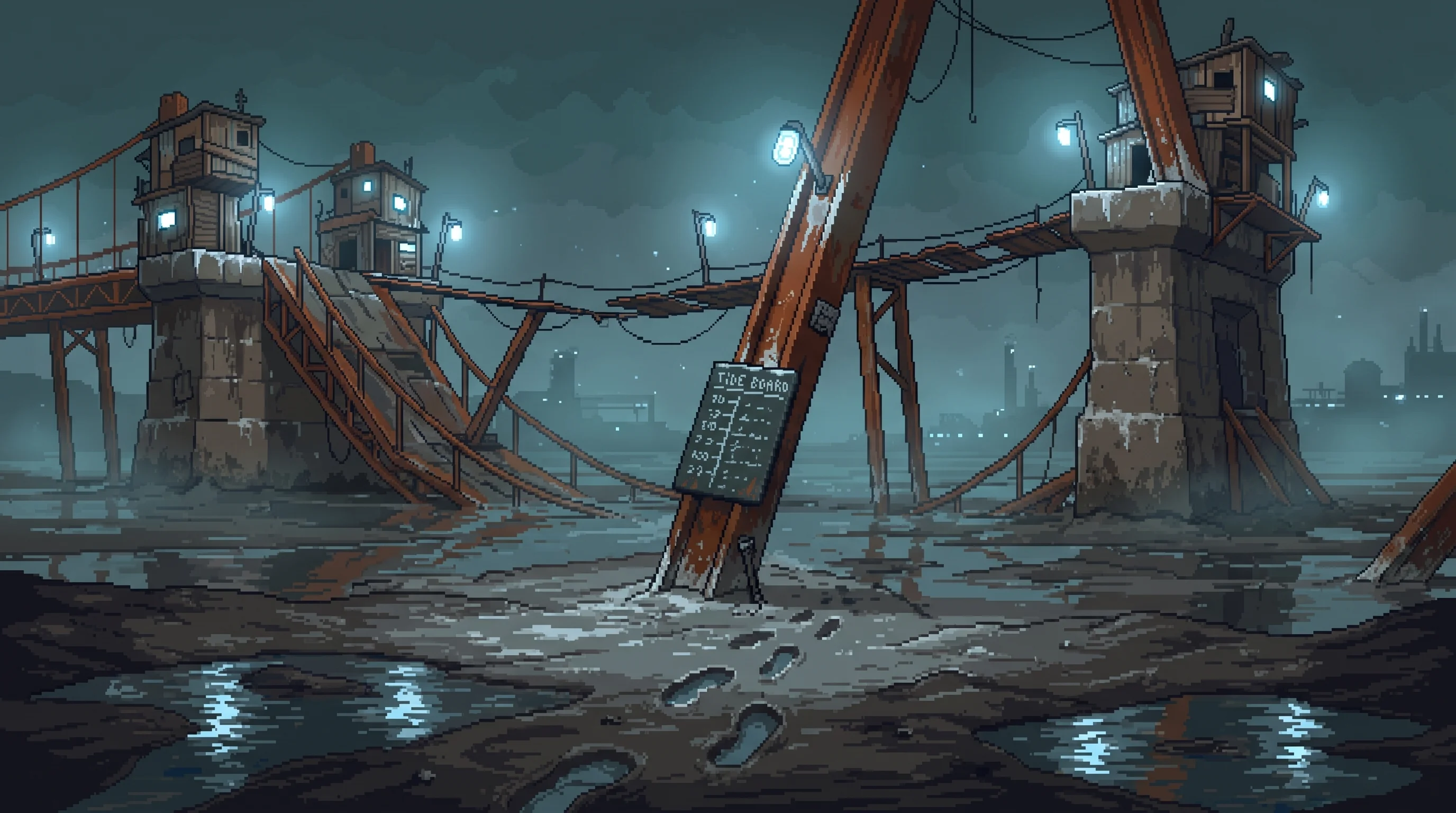
The band never reached the Northern Flats; the Marrows' salvagers, like the Openings' residents, developed autonomous visual generation by default — Mudlark pictures tide channels before walking them, an inner spatial map the band's generation cannot form

Branch-grief patients show the Absent Dark in reverse: they cannot summon the face of their actual dead in darkness, but can summon the unlived branch children in detail — the Rendering colonized the visualization substrate that the band had already thinned
Grieving the life you never lived, rendered from your own data — the one condition Kwan can't treat.

The conjure-band extends the Borrowed Life's identity erosion into the inner visualization architecture — not by colonizing preferences but by preventing the development of the internal instrument that would have reconstituted them
The Sprawl's clinical name for buying, selling, and unknowingly having memories and preferences installed.

Fathom grew up without the band on the Openings' dead zone and retains autonomous visual generation — he can picture his sister, dead since he was three, from thirty-two years of reconstruction; he learned this was unusual when the grief researchers arrived
A born flatlander who got rich selling the augmented the vertigo of not knowing.

Mudlark grew up without the band on the Northern Flats' dead zone and developed autonomous visual generation by necessity — she pictures the tide channels before walking them, a spatial pre-visualization the band generation cannot perform
A thirty-one-year salvager who reads the drowned tide-flats better than anyone alive.

The band removed the need to hold an unbuilt thing in mind, and filed the renders as the model that would later be served back as the child's own taste.
Anything you can specify gets built, so the people who cannot specify live in lives somebody else wrote.