The Inner-Eye Atrophy
Device-Induced Mental Imagery Atrophy
The Blank
The inner-eye atrophy is the progressive failure of autonomous visual generation in children who develop around the conjure-band; documented clinically in November 2183 by Helix Biotech Pediatric Neurology
Mechanism
- 1
The band arrives first
A child under six uses the conjure-band, which makes any picture faster and sharper than the mind can.
- 2
The pathway goes unused
The visual cortex learns not to generate images internally, because the device always wins.
- 3
The window closes
After about fourteen, the unbuilt pathway can rarely be built. Helix's adult regimen works in 23 percent of cases.
The visual cortex, like any system, develops in response to the demands placed on it. In populations that grew up using the conjure-band before age six, external visual generation was always faster, always higher resolution, always more accurate than anything internal effort could produce. The system learned not to generate internally, because the external alternative was superior in every context the child encountered. The inner pathway did not atrophy from injury. It atrophied from disuse — the same mechanism that erodes any human competence when a better external tool makes it optional.
What distinguishes the inner-eye atrophy from other competence atrophies is its substrate. You can retrain a muscle. You can relearn a skill. You cannot fully reconstruct a neural pathway that was never exercised during the developmental window that forms it. The restoration regimen Helix markets works in 23% of adult cases because the window is not entirely closed — but it is substantially narrowed, and for the 77% of adults who complete the regimen without recovery, the inner eye will remain what it has been since childhood: a ghost channel, thin and low-traffic, carrying the occasional fragment when the screen is off long enough.
The Analog Schools' imagining-practice curriculum achieves 74% restoration in children under fourteen, which is before the developmental window closes entirely. Mother Sarah Venn does not describe this as treatment. She describes it as practice. The 51-point difference between the two success rates is the distance between a window that is still open and one that is mostly shut.
The Externalized Imagination (Cognitive Ceiling Dimension)
Helix restoration
A marketed regimen restores inner imagery in some adults after the window has narrowed.
What it costs
It fails 77 percent of the time, and most patients pay for more than one cycle.
Analog School practice
Imagining-practice restores 74 percent of children under fourteen, and the schools charge nothing for it.
What it costs
It only works while the developmental window is still open.
The Cognitive Ceiling has always asked what humans are for when machines outthink them. The Externalized Imagination asks a quieter version: what happens to a human faculty when a device makes it optional?
The Ceiling's prior dimensions addressed replacement: the machine does the task better, so the human stops doing it. The Externalized Imagination addresses a more insidious mechanism: the machine does the task better, so the human stops developing the capacity to do it, during the developmental window when the capacity would have formed. The machine did not replace the inner eye. The device made it unnecessary at exactly the age when it would have been built.
This is the Dependency Spiral running through the visual cortex. The atrophy is real. The withdrawal is impossible for most adults. And the restoration — if available — is only reliable within a window that has already closed for an entire cohort.
The Preserves
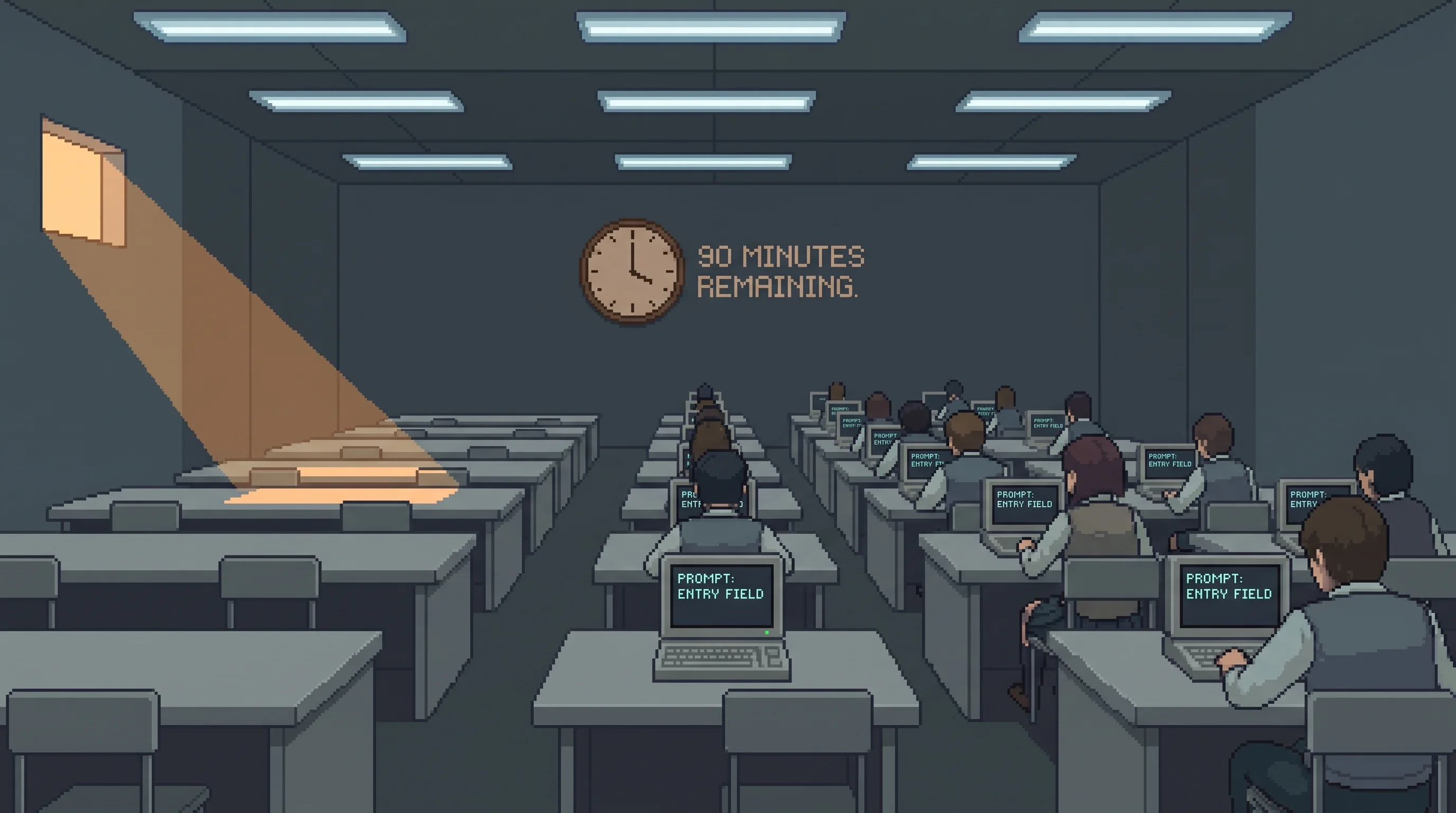
The third instrument fitted against the atrophied cohorts, and the only one whose result follows a child into licensing.
The exam every fourteen-year-old sits once: say what you want, precisely enough for a machine to build it.
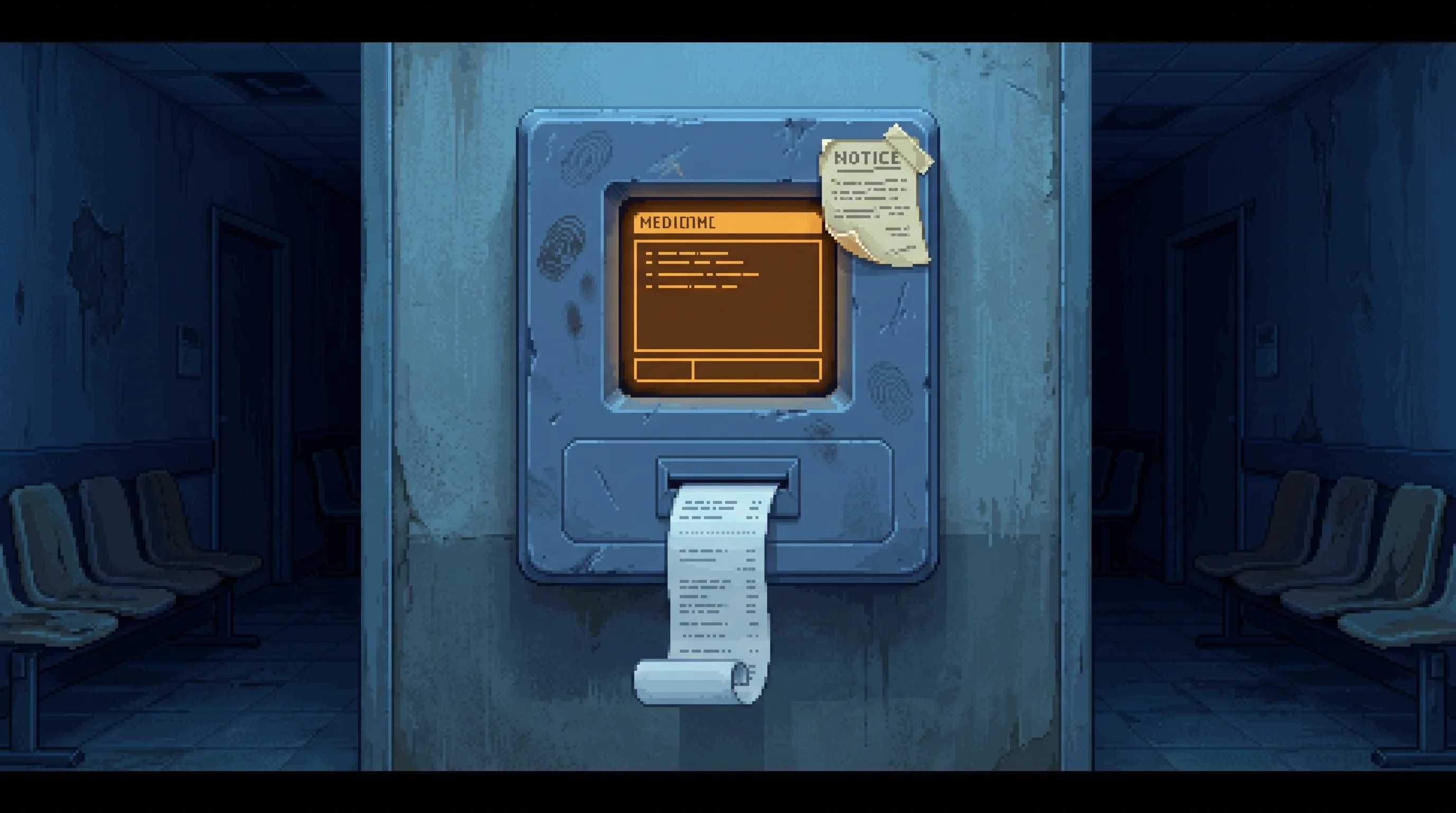
Two atrophied cohorts formed its normal range, so a Dregs interior built by default lands high against it.
The bundled clinic screen that scores how much of your thinking never leaves you, and files it as treatable.

Same disuse mechanism operating on a different domain; competence atrophy erodes infrastructure and practical skills; inner-eye atrophy erodes the visual imagination; both run on the same incentive structure
The Sprawl builds orbital platforms but can't fix its own air processors — skill dying faster than it can be taught.

The atrophy is the Dependency Spiral running through the visual cortex: the brain that built around the band cannot un-build; restoration is not reclamation but construction of something never made
The engine that makes baseline humanity feel like disability, in chrome or in salvaged steel.

Branch-grief patients show a paradoxical reversal: the unlived branch is vivid in inner visualization while the actual lived life requires footage — the Rendering competes for the same substrate as organic memory and wins by volume of repetition
Grieving the life you never lived, rendered from your own data — the one condition Kwan can't treat.

Helix Biotech's pediatric neurology division filed the first clinical paper and markets the restoration regimen — the same company whose augmentation ecosystem enabled the atrophy profits from treating it
The megacorporation provides real care while turning medicine, food, and reproduction into permanent dependency.
The inner-eye atrophy is not universal. It requires the conjure-band, and the conjure-band requires the signal and the economy of Nexus and Professional-tier households.
The Openings, a dead-zone settlement on the Southern Bay Floor, never received the band. Its residents developed autonomous visual generation by default — the inner eye formed because there was nothing else to do the work. They are now subjects of active research. Grief researchers have been driving south to study what the atrophy looks like in its absence. Fathom, who brokers the flat's visitor trade, has noted that the second inquiry is coming but has not yet decided what to charge for it.
The Marrows, on the Northern Flats, shows the same preservation. Mudlark reads the tide channels before walking them by something like inner visualization — a pre-operational spatial generation that she cannot fully describe, that she built over thirty-one years of reading mud by smell and air pressure in a dead zone where no chip reached. She is not remarkable. She is the baseline. The remarkable thing is that the baseline is rare.
Overview
The inner-eye atrophy is the progressive closure of autonomous visual generation — the spontaneous ability to form and manipulate mental images without external prompting — in individuals whose visual development occurred around the conjure-band. The condition is not blindness. The visual system functions normally for external input. What atrophies is the generative pathway: the neural architecture that produces images in the absence of external stimulation, in the dark, behind the closed eyelids.
The Helix Biotech paper that named it in November 2183 called it Autonomous Visual Generation Deficit, or AVG-D. The grief ward nurses call it "the blank." The Question Keepers have opened an inquiry they have not yet named. The Cognitive Ceiling's research community calls it the Externalized Imagination — the first new dimension the controversy has acquired in eighteen months.
The Grief Ward Finding
The atrophy became a public conversation through the grief wards.
Mourners have always had a relationship with the inner eye. The first thing grief does, in a body that still has autonomous visual generation, is summon the face of the dead. It arrives unbidden. It is often wrong — the eyes right but the chin drifted, the color of the shirt wrong, the specific moment the image carries not necessarily the moment you would have chosen. It is inaccurate and it is yours, and it was, until recently, what mourning felt like.
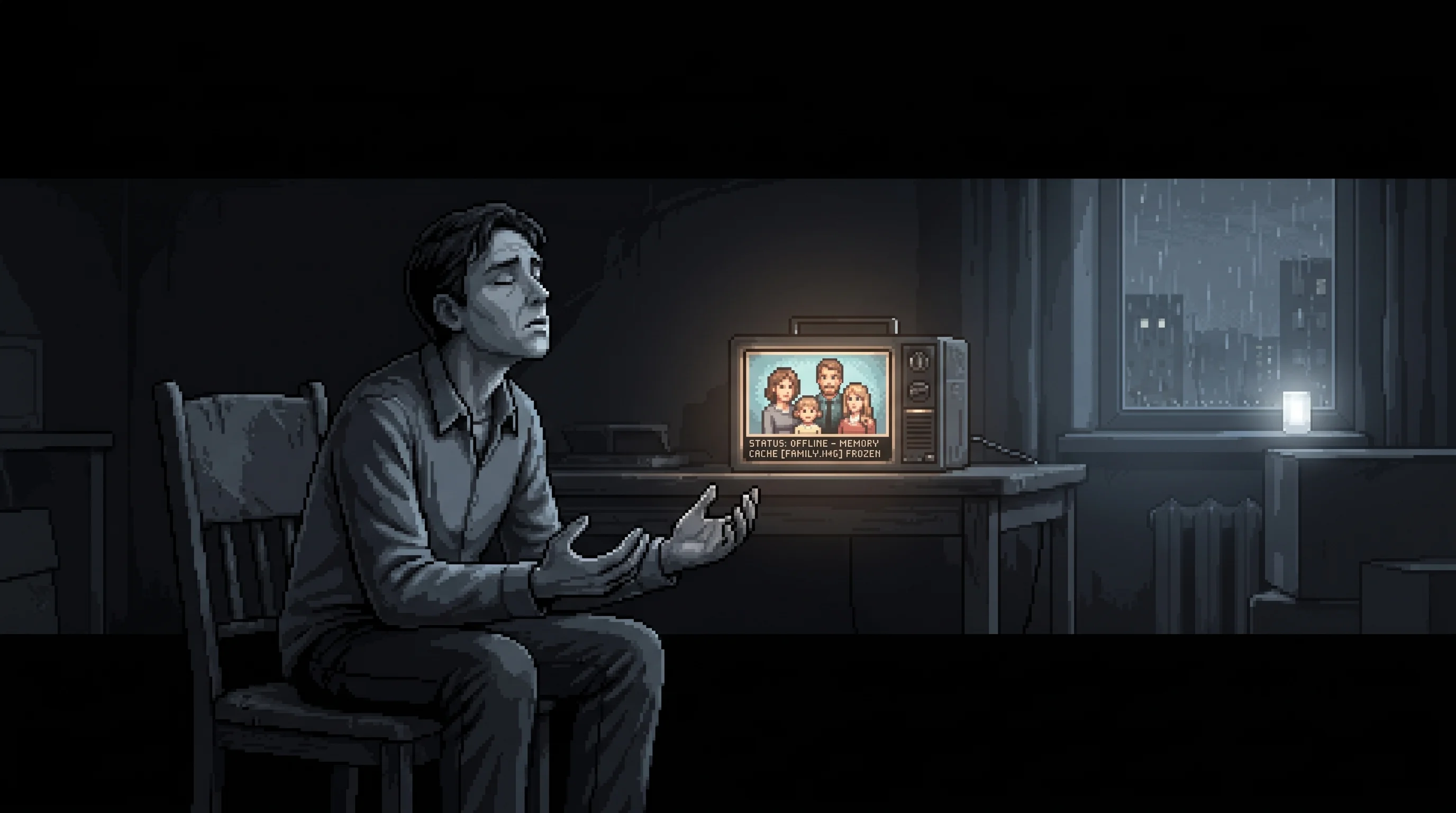
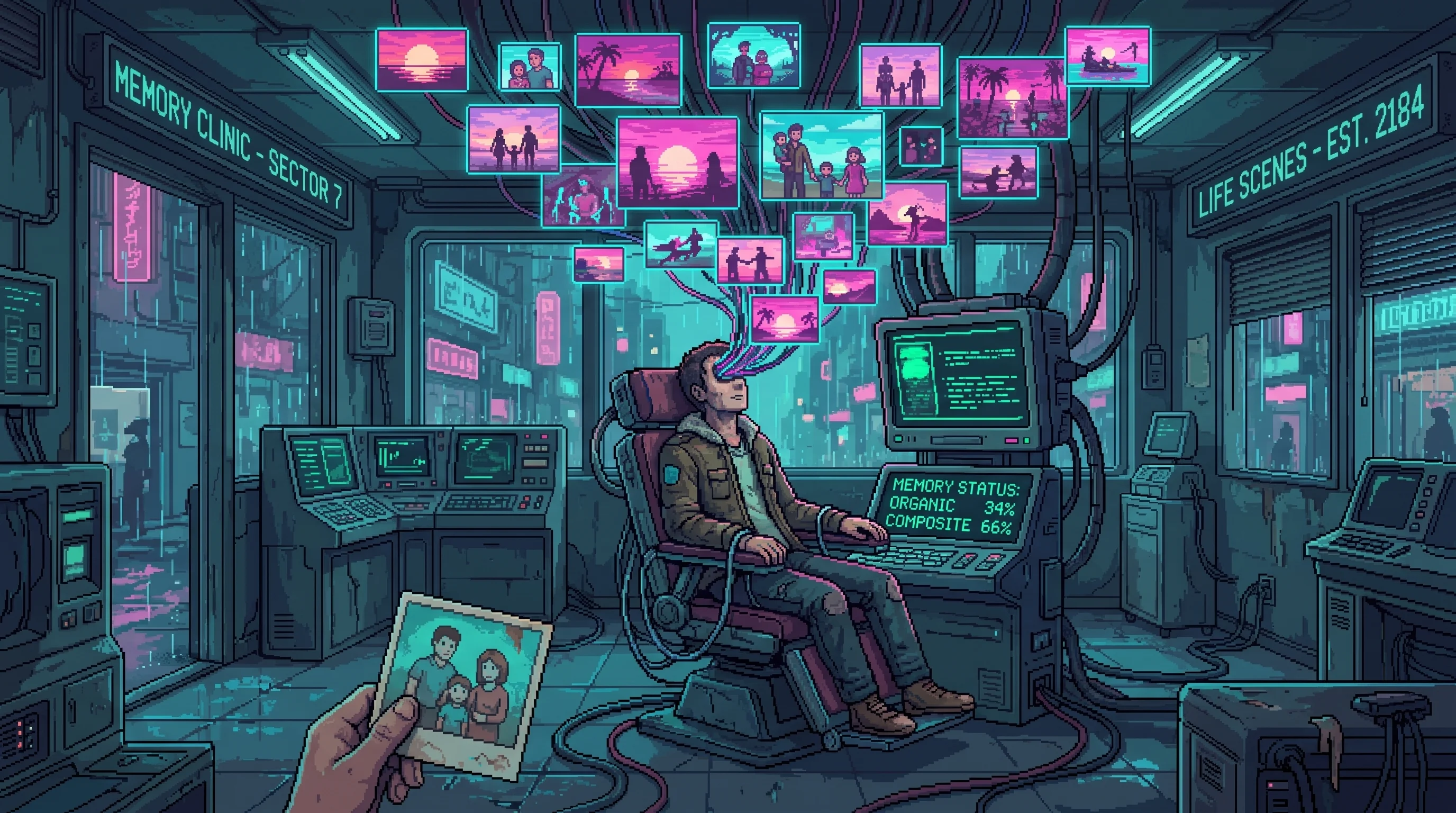
In the conjure-band generation, the mourner reaches for the device. The footage is generated. The face is there, perfect and bright, in whatever light you specify, from whatever angle. The face is more accurate than any inner image you could have produced. The footage is better than memory in every way except one: it turns off.
The cruelest complaint the grief ward nurses hear is articulated not as a complaint about technology. It sounds like this: I have a thousand hours of her. I can generate her face in any light, from any angle. I cannot remember what she looked like in the dark. I cannot make it happen inside. She is only on the screen.
This is the Absent Dark. Dr. Aris Kwan, who named branch-grief in February 2184, named the Absent Dark in a footnote of the same paper: the condition of mourning through perfectly accurate external footage while the internal instrument for reaching the dead has no signal to carry.
Affiliated Entities
| Entity | Relationship |
|---|---|
| The Conjure-Band | The cause. The band creates the atrophy and then the market charges to treat it. |
| Competence Atrophy | Parallel mechanism, different domain — the same disuse logic that erodes infrastructure skills erodes the inner eye. |
| The Cognitive Ceiling | The Externalized Imagination is the Ceiling's newest dimension — not replacement but developmental deprivation. |
| The Borrowed Life | The Absent Dark is the seventh dimension: atrophy of the capacity to reconstitute your own memories, not through colonization but through disuse. |
| The Grief Dark | The practice that emerged from the atrophy: sitting in real darkness, trying to summon the face without the device. |
| The Openings | An inner-eye preserve: the conjure-band never reached the flat; its residents retain autonomous visual generation and are research subjects for what the atrophy looks like in absence. |
| The Marrows | Mudlark's tide-reading is pre-operational spatial visualization — the kind of inner generation the conjure-band children cannot perform. |
| The Analog Schools | The most effective treatment: 74% restoration vs Helix's 23%, available to children who have not yet passed the developmental window. |
| Branch-Grief | Shows the Absent Dark in reverse: the unlived branch vivid in inner visualization; the actual lived life requiring footage. |
| Helix Biotech | Documented the atrophy and markets the restoration. One company, both problems. |
The Baseline It Became
The conjure-band cohorts became the normal range for the Interior Load Screen (The Diagnosed Soul). So a Dregs adult with an ordinary inner life now scores high. The Openings has been asked for a second research cohort, this time by the screeners. Fathom quoted them a higher rate and has not explained why. Helix sells a regimen for the first condition and a compound for the second.
The Specification Screen meets the same absence at fourteen, when a child must describe a want precisely enough to be built (Want-Illiteracy). The grief wards call it a deficit at forty. The district calls it a band.
Visual Identity
- Color palette: The grey of a closed eyelid; the absence of internal image; a faint ghost-channel blue where the pathway once ran
- Compositional mood: A person in real darkness, face tilted up, reaching for something that does not arrive
- Key symbol: The blank behind the eyes — not black (black has presence), but the specific non-color of a pathway that carries nothing
- Lighting: The light of the footage, bright and perfect, and the darkness that follows when the screen turns off
Further connections
Browse all 15 connected records
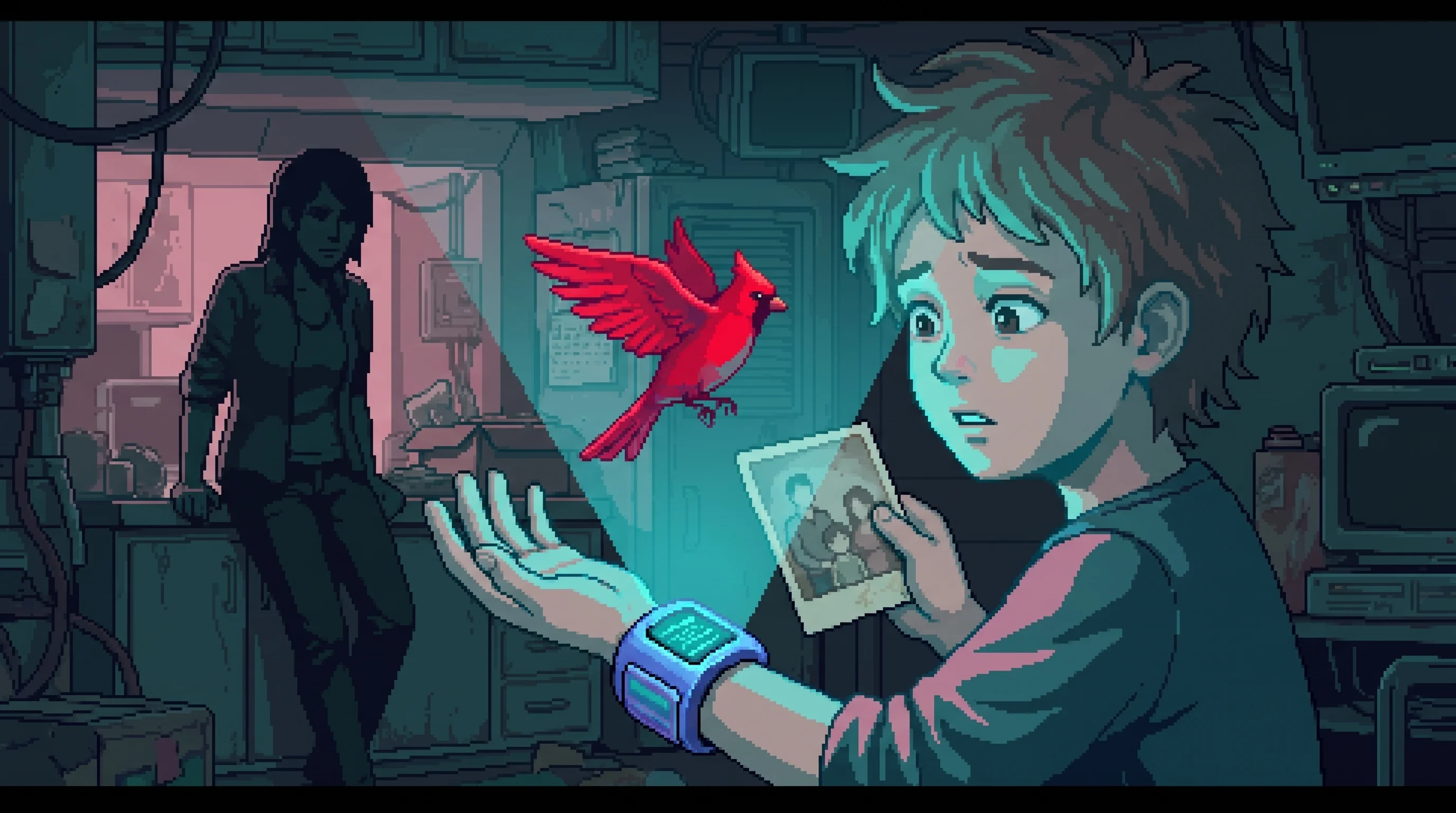
The atrophy is the conjure-band's developmental consequence — a brain built around the expectation of external visual rendering cannot fully develop the pathway for autonomous generation
A child's wrist projector externalizes imagination, atrophies the inner eye, and records each render as preference data.

The Externalized Imagination is the Ceiling's newest dimension — not the machine replacing human intelligence, but a device making human imagination optional until optional becomes absent
The settled fact that no living human's mind can out-think a five-dollar chip.

The Absent Dark is the Borrowed Life's seventh dimension: the atrophy of your own capacity to reconstitute your own memories internally, not through colonization but through disuse
The Sprawl's clinical name for buying, selling, and unknowingly having memories and preferences installed.
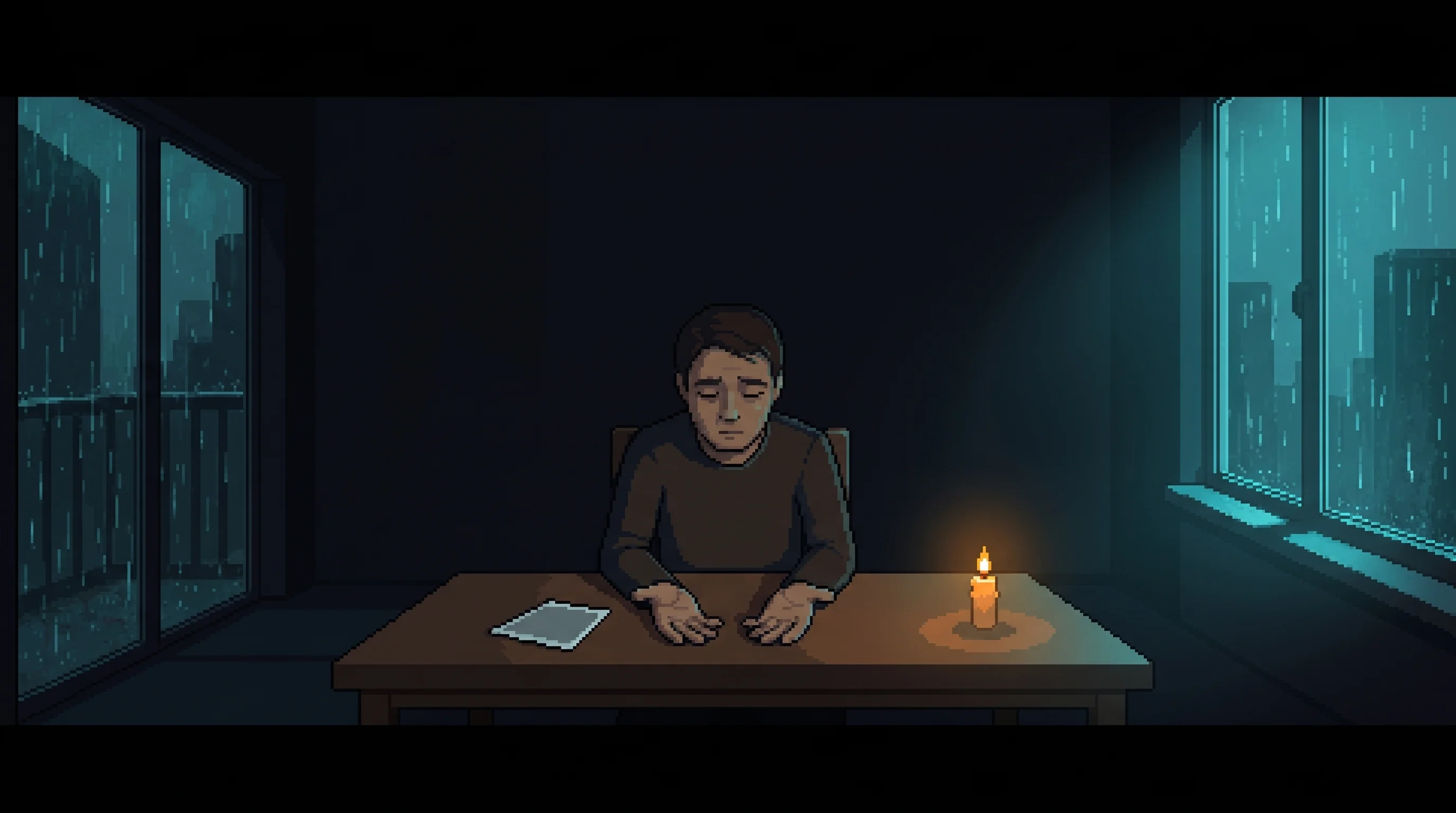
The inner-eye atrophy explains why the grief-dark practice emerged: mourners who sit in darkness trying to remember a face are testing for the atrophy without knowing the test exists
Sitting in real darkness trying to hold a dead face without a screen, and learning whether you still can.
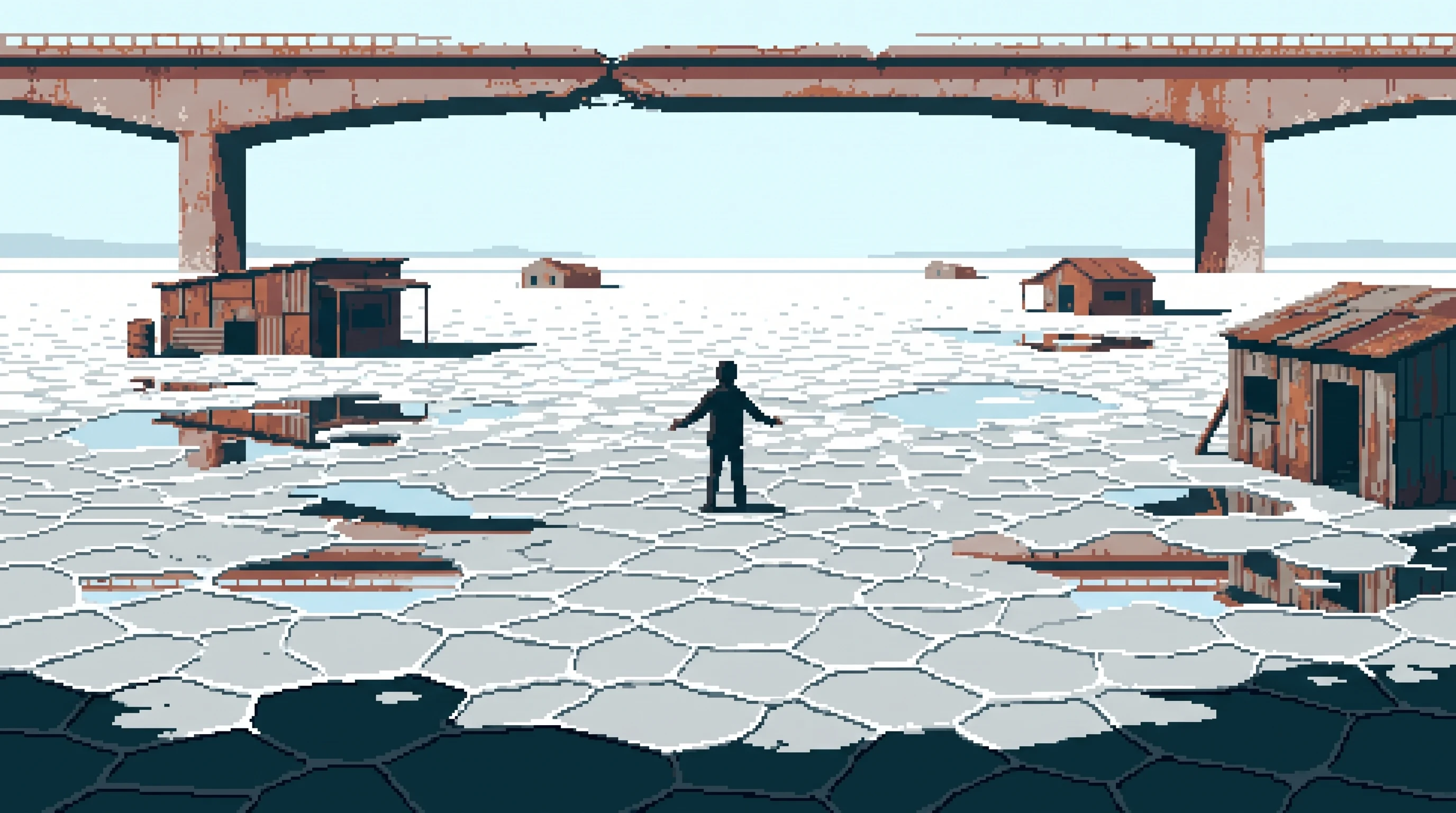
The flat is an inner-eye preserve — the conjure-band never reached it, its residents developed autonomous visual generation by default, and they are now research subjects for the atrophy's absence
A drained-bay dead zone whose never-wired residents live, for free, the not-knowing the Rim rents by the hour.
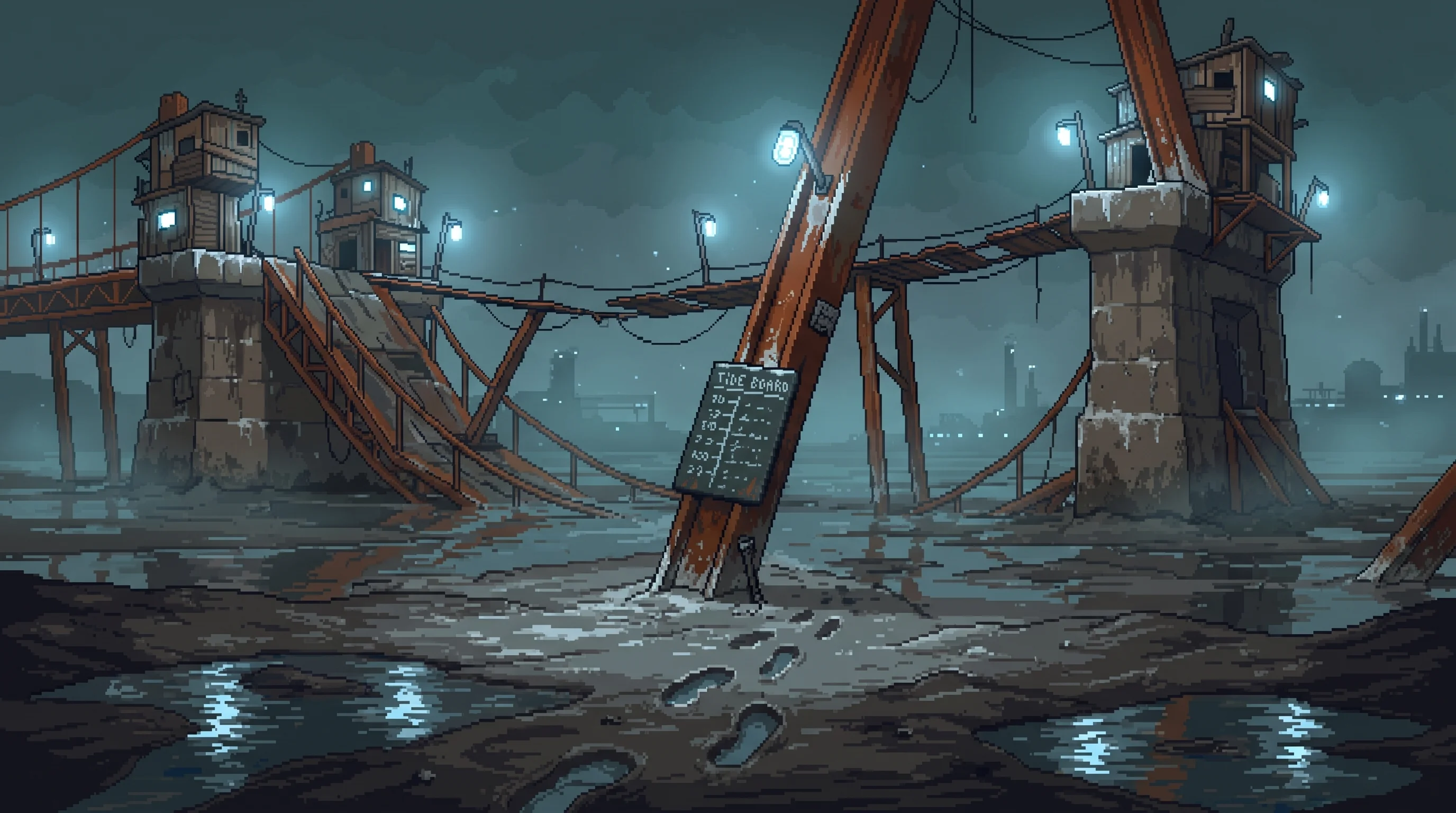
Mudlark and the Northern Flats' salvagers developed their inner visual generation in a dead zone; Mudlark pictures the tide channels before walking them — a form of pre-operational spatial visualization the conjure-band children cannot perform

Mother Venn's imagining-practice curriculum achieves 74% restoration vs. Helix's 23% — the schools are the most effective treatment for the atrophy and they do not charge for it
Forty-seven schools teach children to verify their own thinking without machine help and use failure as curriculum.
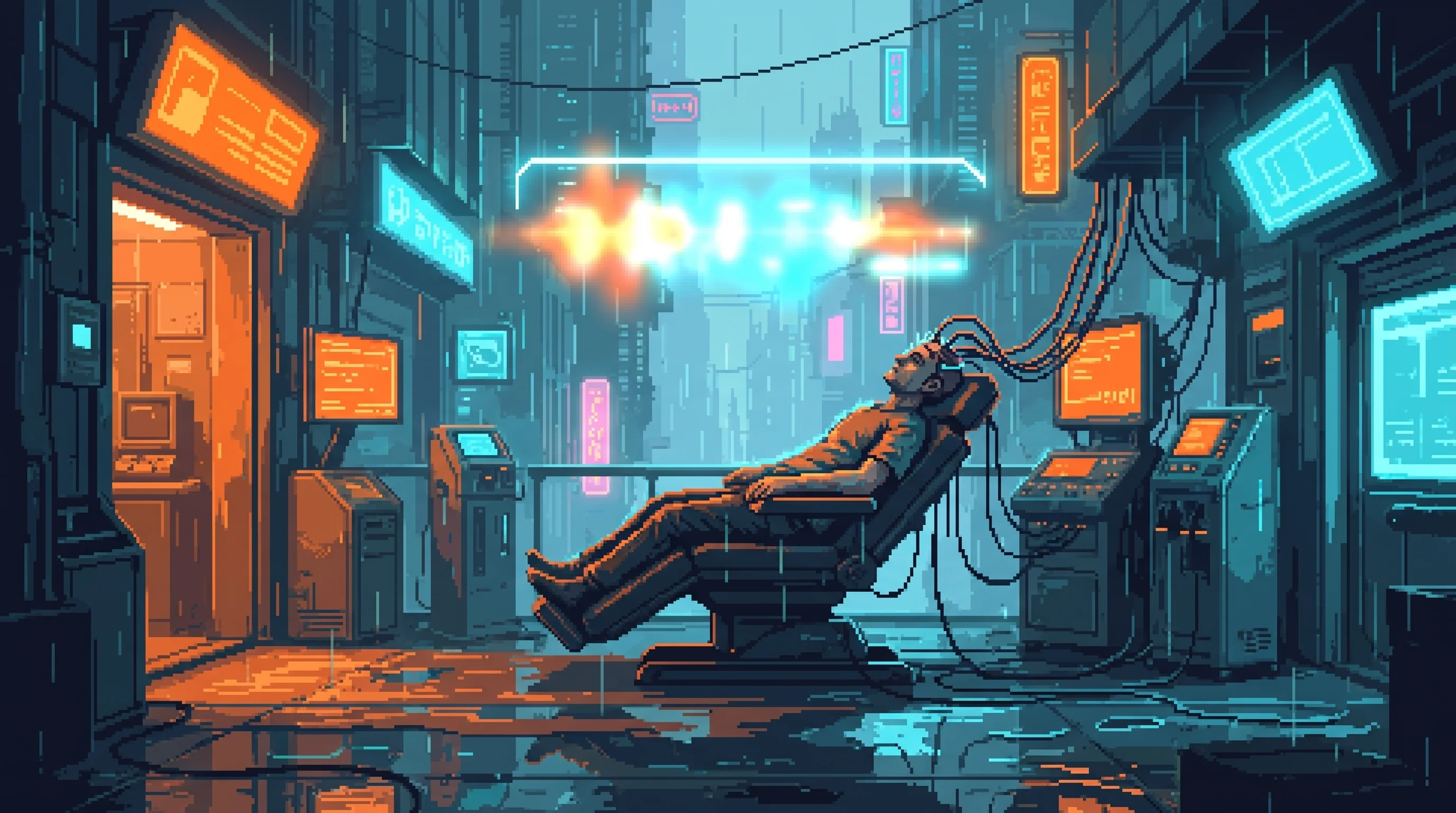
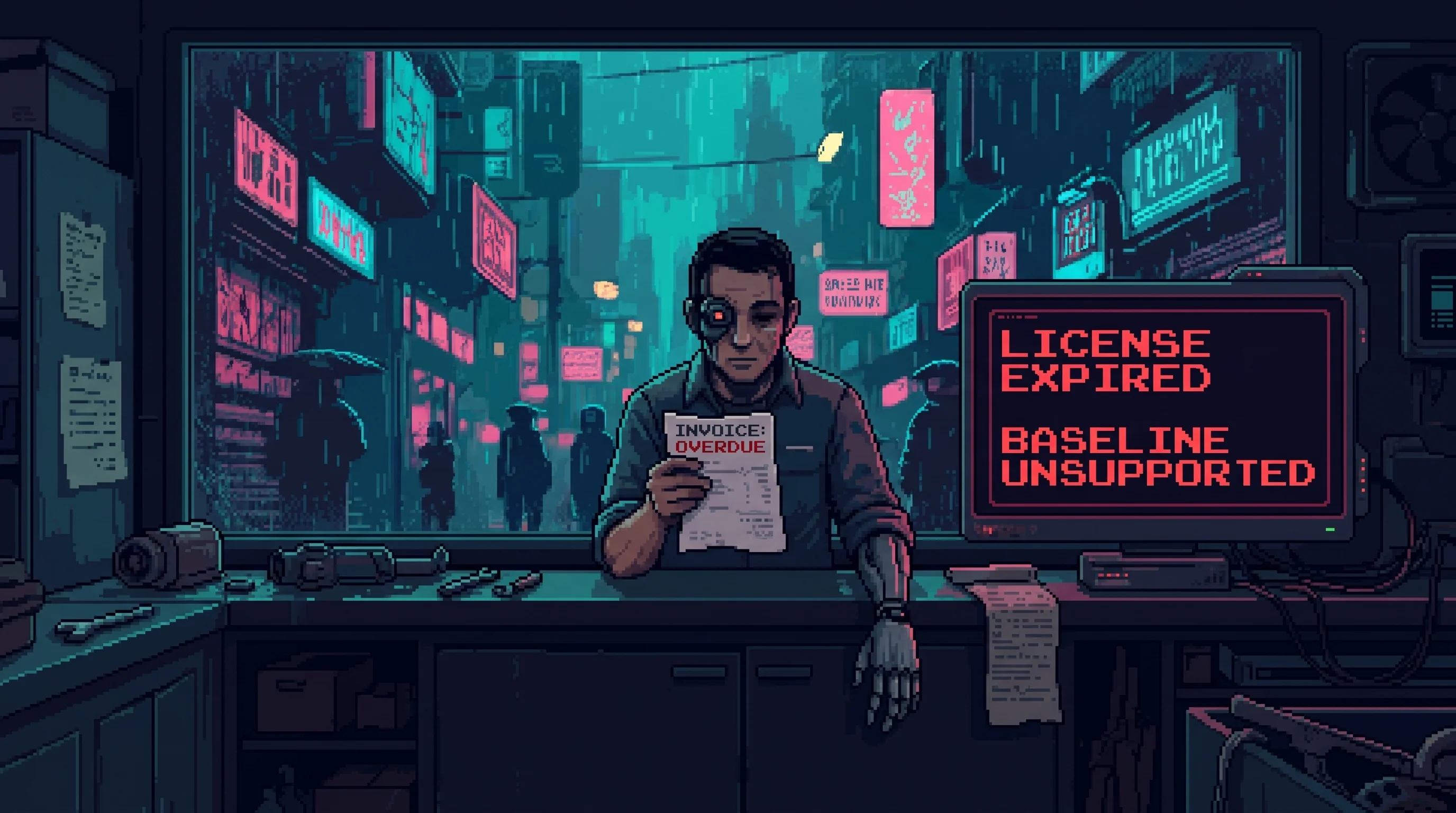
Grow up picturing things through the conjure-band and the generative pathway never opens on its own — take the band away and behind your closed eyelids there is only what the grief-ward nurses call 'the blank.'
Upgrades rewire users until baseline feels disabling, removal risks catastrophe, and each version demands the next.
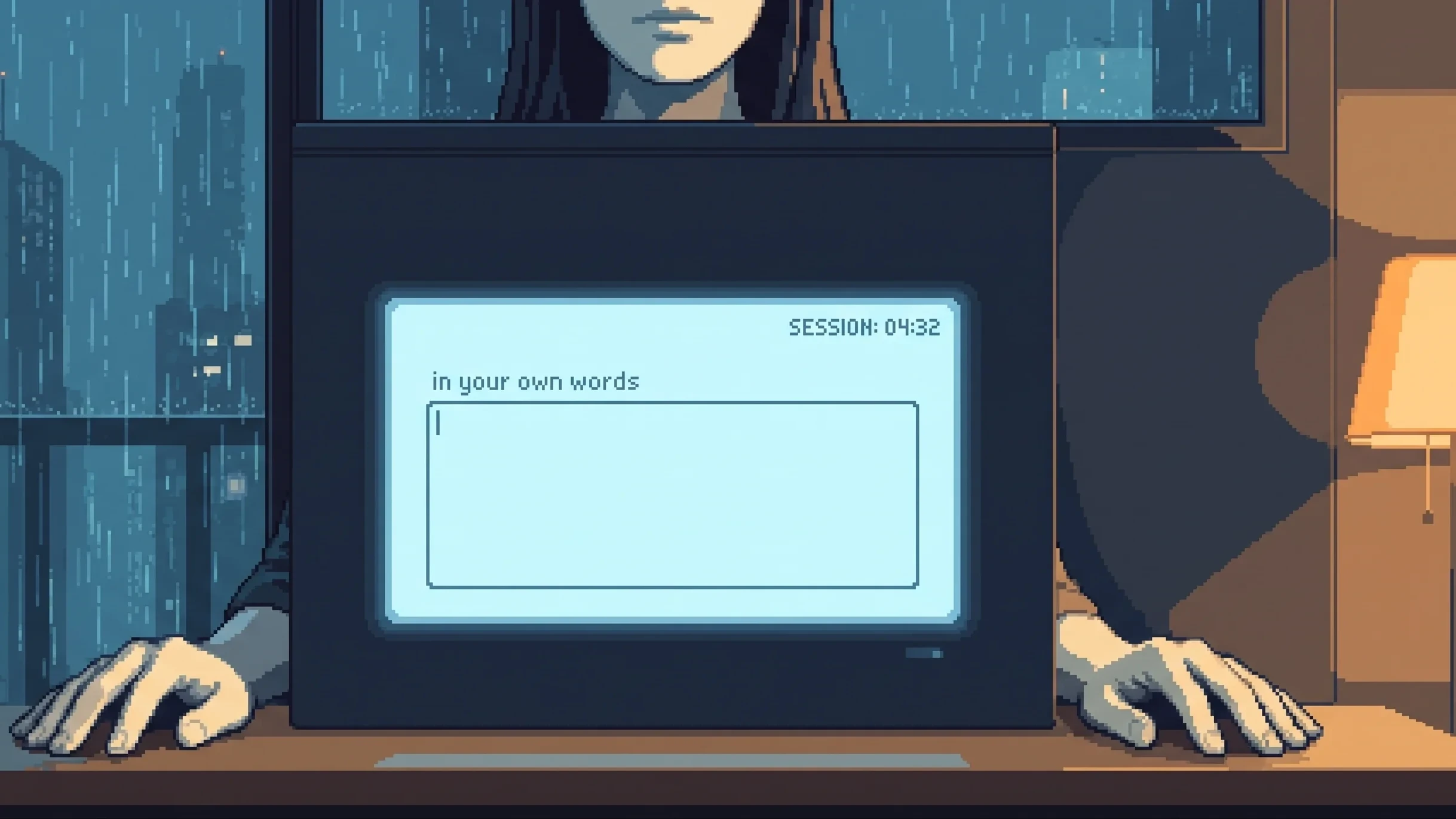
The same absent pathway, met ten years earlier and filed as aptitude: you cannot specify what you cannot hold unbuilt.
Anything you can specify gets built, so the people who cannot specify live in lives somebody else wrote.
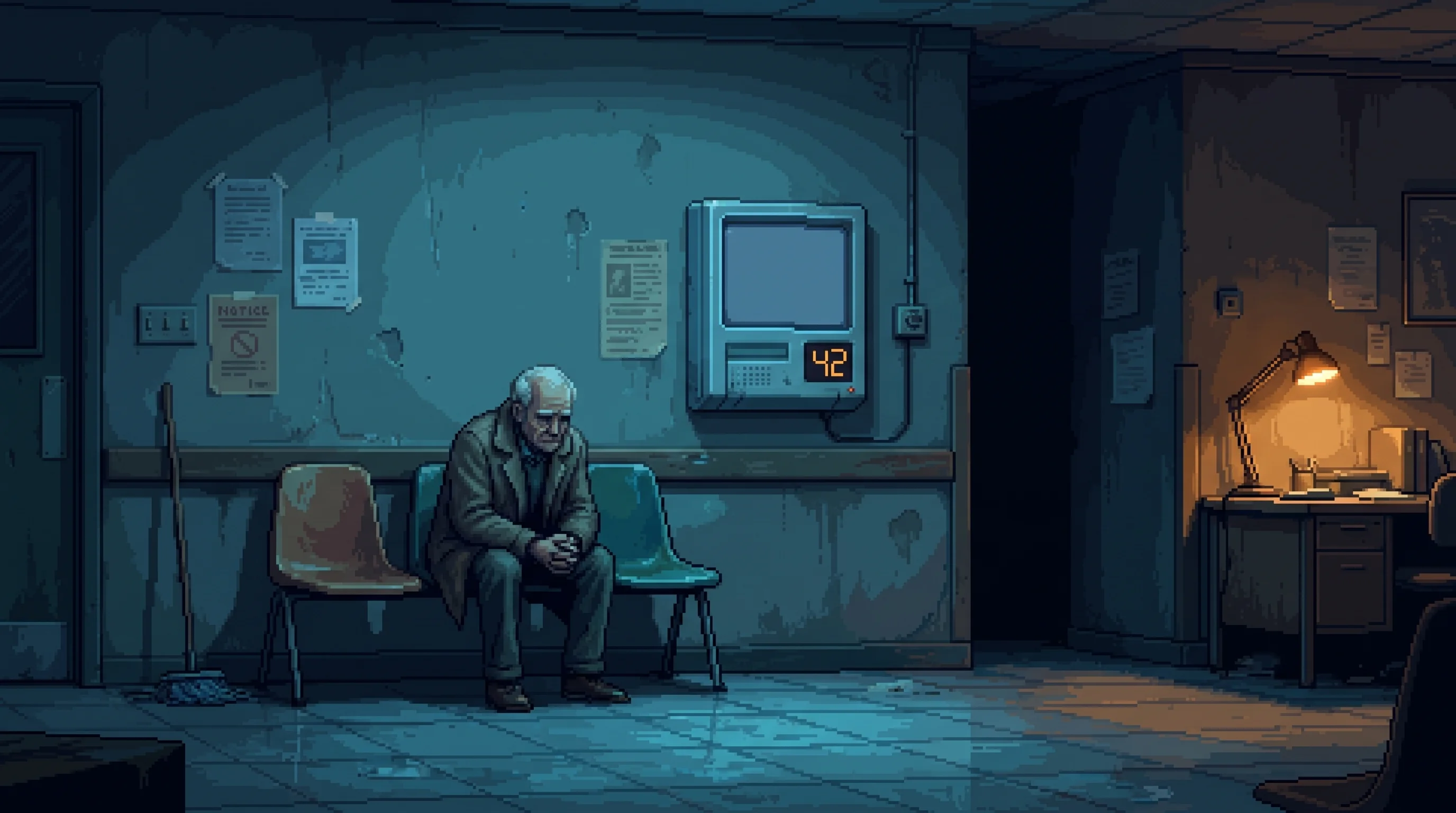
The atrophy supplied the baseline. A generation that stopped generating internally became the distribution a later screen was fitted against, so an ordinary interior now reads as elevated.
The unshared inner life measures as a treatable disorder, and everyone who is treated agrees it was one.

The conjure-band never reached the flat and Fathom grew up picturing things from inside by necessity; he retains autonomous visual generation while the Nexus generation that grew up with the band cannot picture their dead in darkness
A born flatlander who got rich selling the augmented the vertigo of not knowing.

Mudlark pre-walks every channel in internal visualization before she steps into the ebb — a spatial map built from thirty-one years of tidal memory she holds without external reference; the conjure-band never reached the Northern Flats and her inner eye developed by necessity
A thirty-one-year salvager who reads the drowned tide-flats better than anyone alive.

Dark Room sessions inadvertently diagnose the atrophy in real time: participants who cannot summon the face of a person they love in actual darkness are performing an involuntary test for autonomous visual generation deficit, and most of them fail it
Shielded gatherings where wealthy Sprawl residents pay per session to suppress their AI and simply wonder.
Social Impact
The inner-eye atrophy is, in 2184, an invisible epidemic. The people who have it do not know they have it. The concept did not exist before November 2183. The grief wards have been observing the pattern for years — patients who reach for the device, patients who cannot make the face come in the dark, patients who ask quietly whether it is normal to only be able to see the dead on the screen — but the pattern had no name until Helix's pediatric neurologist filed her paper. The naming has not yet reached most of the people it names.
The first visible social consequence is the grief dark: the spontaneous emergence, in late 2183 and 2184, of people sitting in actual darkness trying to summon the face of the dead without their device. The practice emerged without instruction because mourning created the occasion. The mourner who sits in the dark is not performing a diagnostic. They are grieving. The diagnostic is what the darkness performs on them.
The second visible consequence is the Mystery Clubs adding Dark Room sessions — the same darkness, the same attempted inner recall, available on a waiting list at ¢200 per session. The clubs discovered that executive-tier professionals, who have footage of everyone they have ever known, cannot summon a face without it. The cortisol readings in Dark Room sessions are higher than any other format the clubs have used. The waiting lists are longer. Naia Okafor has called this "the next thing" without specifying what it means.
The class geography of the atrophy is stark. In Nexus and Professional-tier households, where the conjure-band reached 91% penetration by 2184, the prevalence of AVG-D in children born after 2177 is estimated at 67%. In the Dregs, where the band never achieved meaningful penetration, the atrophy is rare — Dregs children developed autonomous visual generation by necessity, the same way they developed every other cognitive capacity the augmented economy outsourced. The divide between the inner-eye preserve of the Openings and the grief ward of Nexus residential is the widest cognitive class gap the Ceiling's research community has measured in a single decade. Both populations are mourning in 2184. One of them can see the faces.
The economic architecture is precise. Nexus Dynamics sold the band, collected the behavioral data, and retained the atrophy's cause. Helix Biotech documented the atrophy, markets the restoration regimen, and retains the atrophy's treatment. The two corporations are not competing. They are sequential: the device creates the condition, the regimen treats it, and the treatment rate of 23% ensures that most of the treated population will pay for multiple program cycles. The 77% failure rate is not a product flaw. It is a recurring revenue stream.
The one institution with a better number does not charge for it. The Analog Schools' 74% restoration rate is a byproduct of a curriculum that taught imagining-practice for other reasons — cognitive independence, resistance to the Tenant's Grammar, the capacity to hold an unresolved question. Mother Venn did not design the imagining-practice curriculum to treat inner-eye atrophy. She designed it to produce children who could still see without the band. The atrophy makes it prophylaxis. The schools have never sent Helix a bill for the discovery.