The Unwinding Clinic
Overview
Somewhere in the world there had to be someone trying to get people off the treadmill, and the reason it is easy to miss is that the honest version of that work looks less like rescue and more like hospice.
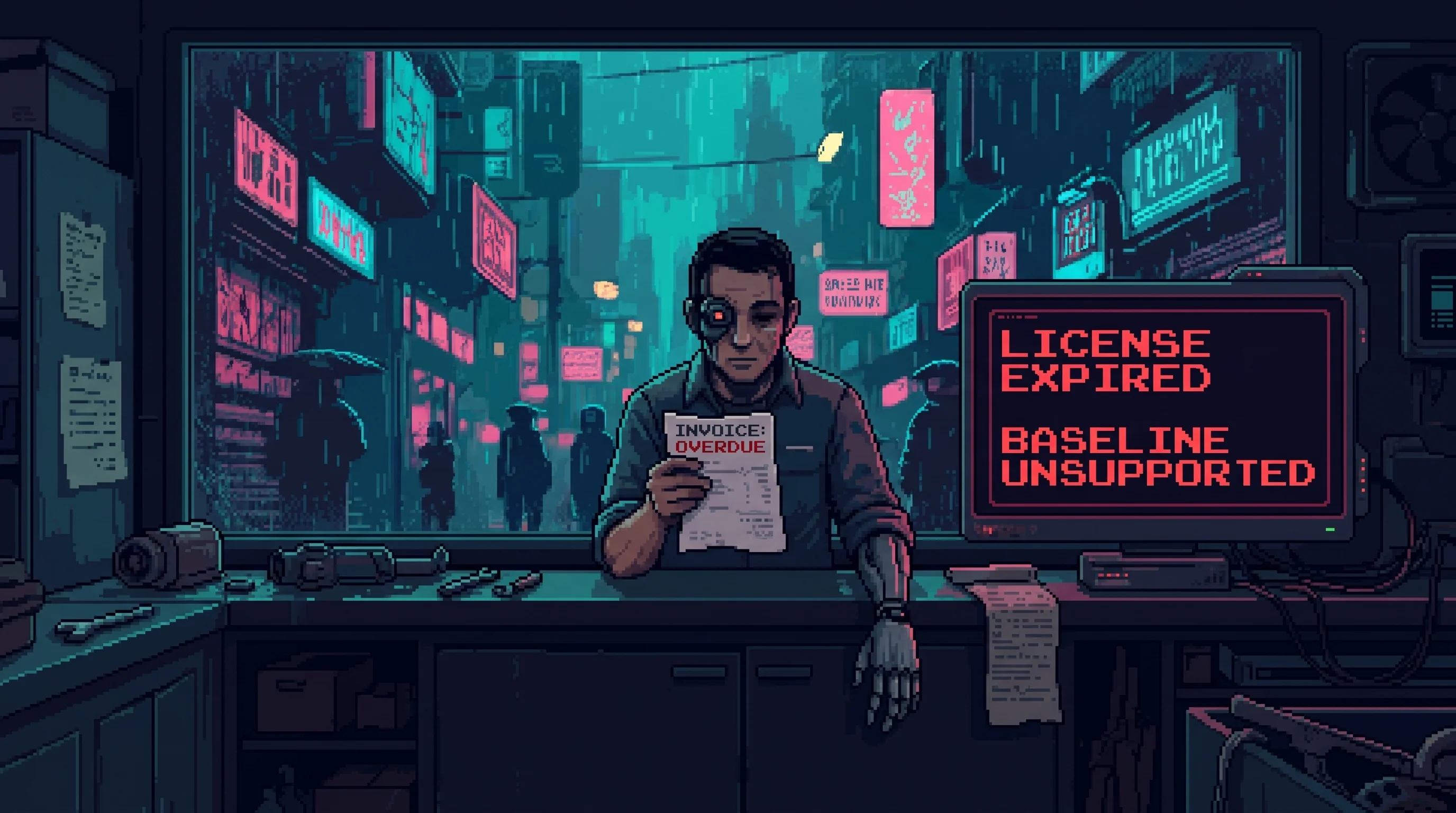
Berkeley is academic resistance — UC Berkeley ruins, independent researchers, the Sprawl's densest concentration of people who study the machine instead of serving it. The Unwinding Clinic is a collective in the ruins that does the one thing no corporation and no market will sell: it tries to reduce a dependency instead of renewing it. Two wings, two halves of the thread. The firmware wing helps augmented people step down a generation — managed downgrade, supervised withdrawal, reverse-engineering Nexus-and-Helix integration schedules to find the minimum viable dependency, the smallest amount of chrome a rewired brain can survive on. The salvage wing runs a free inspection service for crawlers, drive modules, and hardshells, and tries, against the structure of the knowledge itself, to teach the inspection expertise the market keeps un-teachable. They brought in the Tinkerer, the rare one who reached the exit, to sit with apprentices and narrate what a bad weld sounds like at idle.
The clinic is a fellow traveler of the other independent operations in the Berkeley ruins — it trades salvaged shielding and quiet counsel with the Fragment Garden, and shares its milieu of scientists withholding nothing except what would get people killed.
The Unwinding
The Unwinding Clinic is the Upgrade Treadmill's conscience, and the reason it is the thread's conscience and not its escape hatch is that it mostly fails.
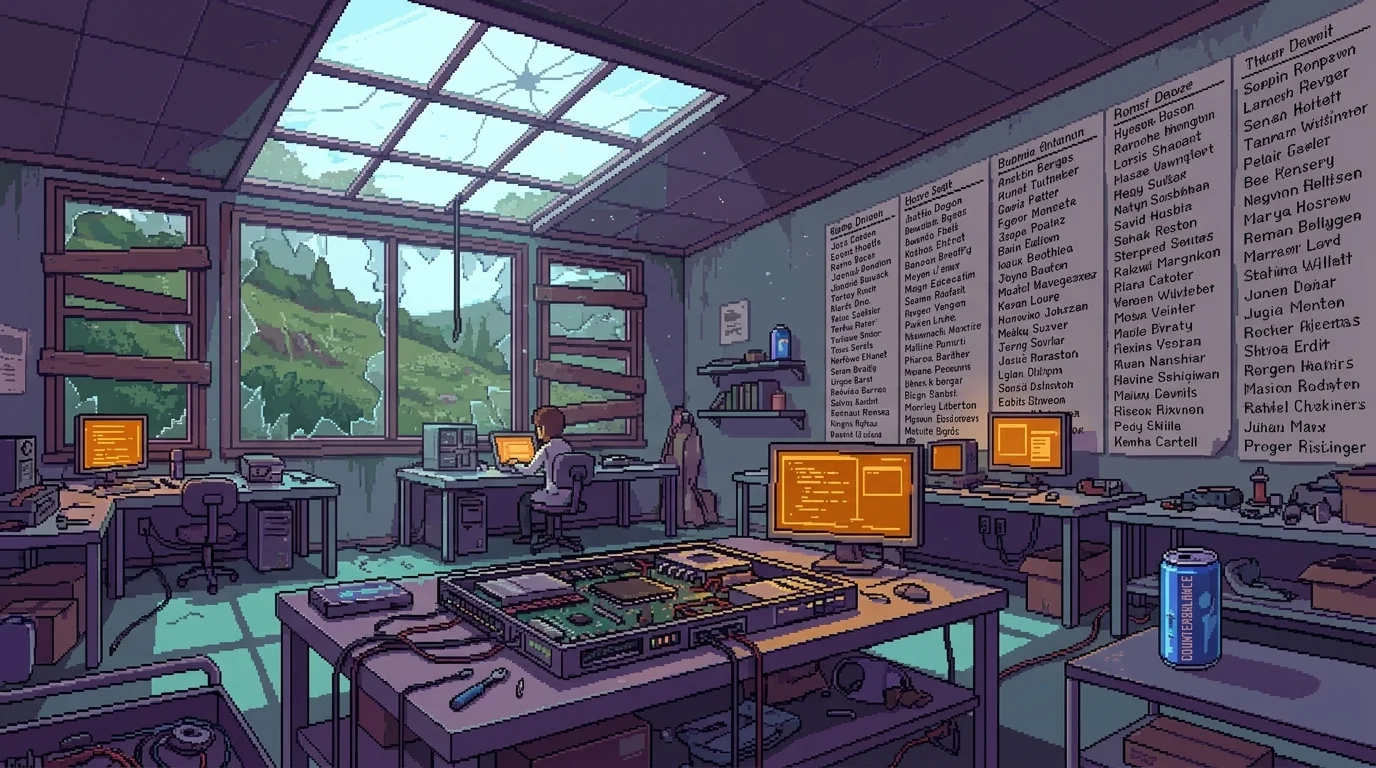
The firmware treadmill and the Salvage Spiral share a terminus: the Convergence Crown, the upgrade that has restructured its wearer so completely that removal is no longer survivable. Past a certain rung, unwinding is not possible, only palliative. The clinic keeps a teaching wall of specimens, and the sharpest is a can of Counterbalance — Helix's corrective soda, sold as the cure to the sodas Helix's sister brands also ship, whose microbiome subscription only registers a benefit if you keep drinking the poison. The researchers use it because it is the treadmill with the chrome stripped off and the biology swapped for a vending machine: the disease and the cure on the same ledger, by design. If a first-year can see the loop in a soda can, they can see it in an optic suite, in a drive module, and in the debt that passes to a Slagline sorter's children.
And here is the crossing's soul. The clinic keeps a second ledger beside the teaching wall: the names of the people they could not bring down a generation, the runners whose crawlers they inspected and cleared who died in the dead zone anyway, the augmented who came too late. They keep it because someone should. It is the Warmth Tax applied to a machine that has no line item for warmth — a thing that is only ever given, never sold. The clinic cannot break the treadmill. It can only refuse to pretend the treadmill is a choice, and hold the hands of the people it takes. The inspection expertise it fights to teach cannot be purchased, and it may not be fully teachable either — the trade insists the classroom cannot exist — but the collective runs the classroom anyway, because the alternative is letting the knowledge stay where the market keeps it: in the actuarial data, not the teaching pool.
| Danger Level | Low (the danger is what they cannot fix, not the place itself) |
|---|
The Un-Teachable Curriculum
There is a tier of curation the Curation Economy's three-part map never lists, and the clinic is built entirely inside it. The Guild filters content; the Dregs trade word-of-mouth; the Squatters map manipulation. The clinic does none of that. It transmits embodied human judgment — the knowing of what a bad weld sounds like at idle, the feel of a hardshell at ninety percent versus one at thirty. That knowing passes hand to hand, master to bench, apprentice to ear, in a classroom the trade insists cannot exist.
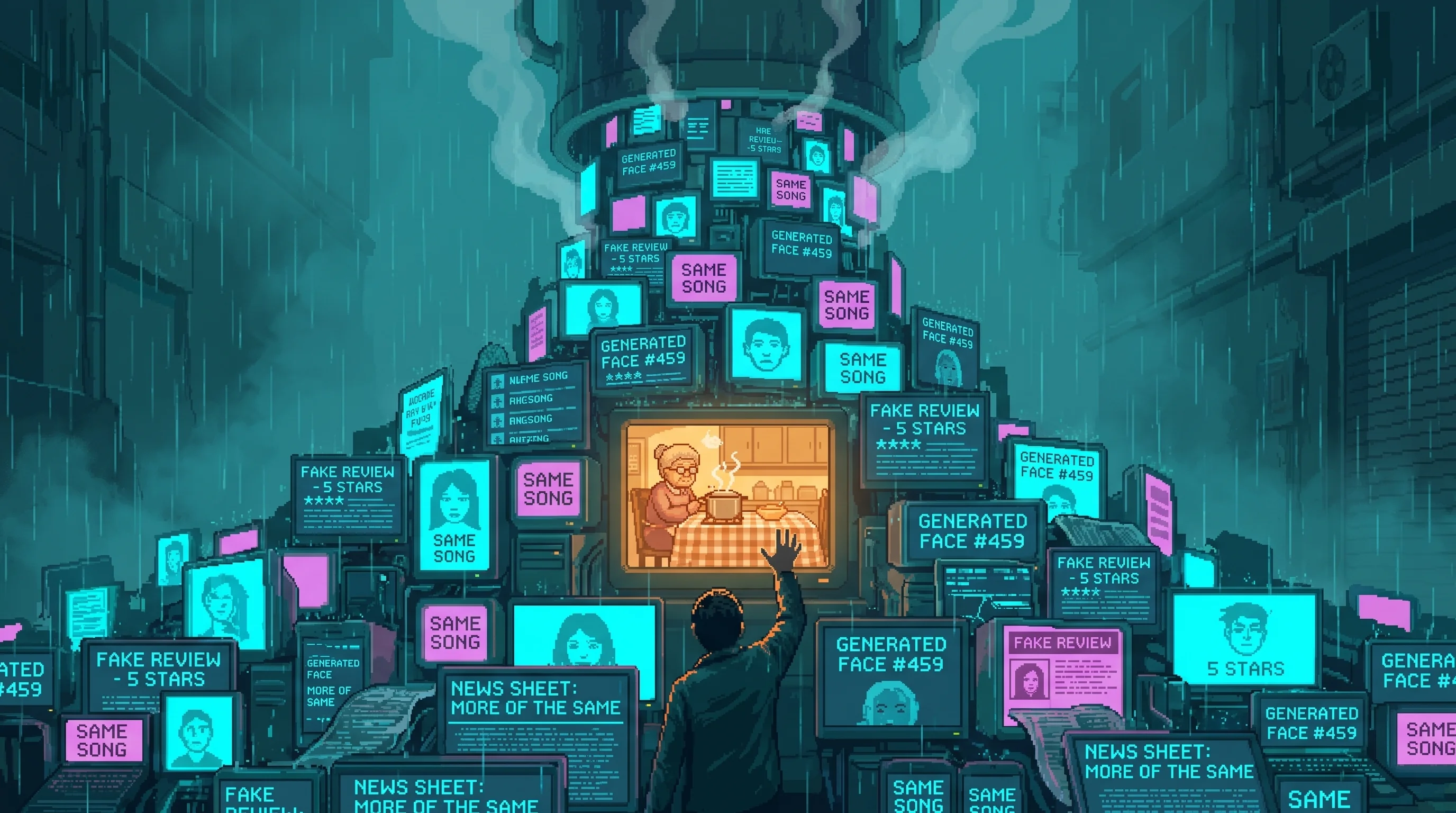
This is where the Slop Cannon thread runs straight through a salvage bay. The Hypothesis Foundries proved that formatted knowledge can be industrialized and fired at certification until the true claim drowns in the trivial one. The clinic is founded on the opposite discovery: the knowledge that actually keeps a runner alive cannot be formatted or generated at all. It lives in the actuarial data, priced into the odds a market charges people for not having it, and the only way to move it into a person is a hillside room where the Tinkerer narrates and a first-year listens. No engine can produce this. No flood can bury it, because it was never a file. And the ledger of names the clinic keeps — longer than the roster of the saved — is the anti-slop artifact in its purest form: a record no one profits from, that no model can generate, that means everything precisely because a human hand wrote each line. The clinic is the Fragment Garden's neighbor in more than geography — both hold, by hand, in a ruin, the signal the flood was never able to touch.
| Stratum | Between |
|---|---|
| Power Position | Parallel |
| Access | Restricted |
| Atmosphere | Clinical |
The Other Clinic
The Unwinding Clinic resists the Dependency Spiral at the mechanical layer: firmware, salvage, the physical apparatus of chrome. Two ridgelines over, the Boalt Docket resists a sibling trap at the contractual layer — cognitive debt, lien language, the fine print nobody was meant to read twice. The two collectives refer cases across the hillside constantly. A client whose firmware wing manages to step them down a dependency generation frequently discovers, once their augmented processing slows enough to actually parse a document, a cognitive lien nobody ever explained to them; the Docket takes it from there. The Docket sends back clients whose real trap turns out to be the augmentation underneath the debt, not the debt itself. Neither clinic charges the other a fee for the referral, and neither expects the other's mostly-fails record to improve. The independent researchers of the ruins call this being fellow travelers in the same losing trade, and mean it as the highest compliment either collective is willing to give.
Affiliated Entities
| Entity | Relationship |
|---|---|
| The Curation Economy | Exemplifies the tier the map omits — it curates embodied expertise, not content. |
| Crawler Technology | Free inspection service; the attempt to teach the un-teachable exit the crawler market prices people for not having. |
| Drive Module Systems | Teaches apprentices to read a salvaged module's lineage by how it runs. |
| Hardshell Technology | Audits cloaks and breathers for the degradation that feels identical at 90% and 30%. |
| The Tinkerer | The rare one who reached the exit, giving away mastery the market cannot sell. |
| Counterbalance | The teaching wall's sharpest lock-in specimen — the subscription loop legible in a soda can. |
| The Fragment Garden | A fellow independent-researcher operation in the Berkeley ruins. |
| The Dependency Spiral | The one operation that resists it — and keeps the ledger of everyone it took anyway. |
| The Boalt Docket | Hillside referral partner — dependency resolved here surfaces debt resolved there, and back again. |
Visual Identity
- Color palette: Chalk-dust grey and salvaged-bench steel, diagnostic amber, ledger-ink black on reclaimed paper, hillside green through broken glass
- Compositional mood: Warm science in a cold ruin — people working on a problem they know they are losing, and keeping the record because someone should
- Key symbol: A wall-ledger of names longer than the roster of the saved, beside a single blue can of Counterbalance on a specimen shelf
- Lighting: Daylight through cracked skylights and boarded windows, the cold amber of diagnostic screens
Underfunded and half-crank, honest that it documents the trap more often than it escapes it; the second ledger of names is kept because someone should, a thing only ever given and never sold
Conditions Report
Sight
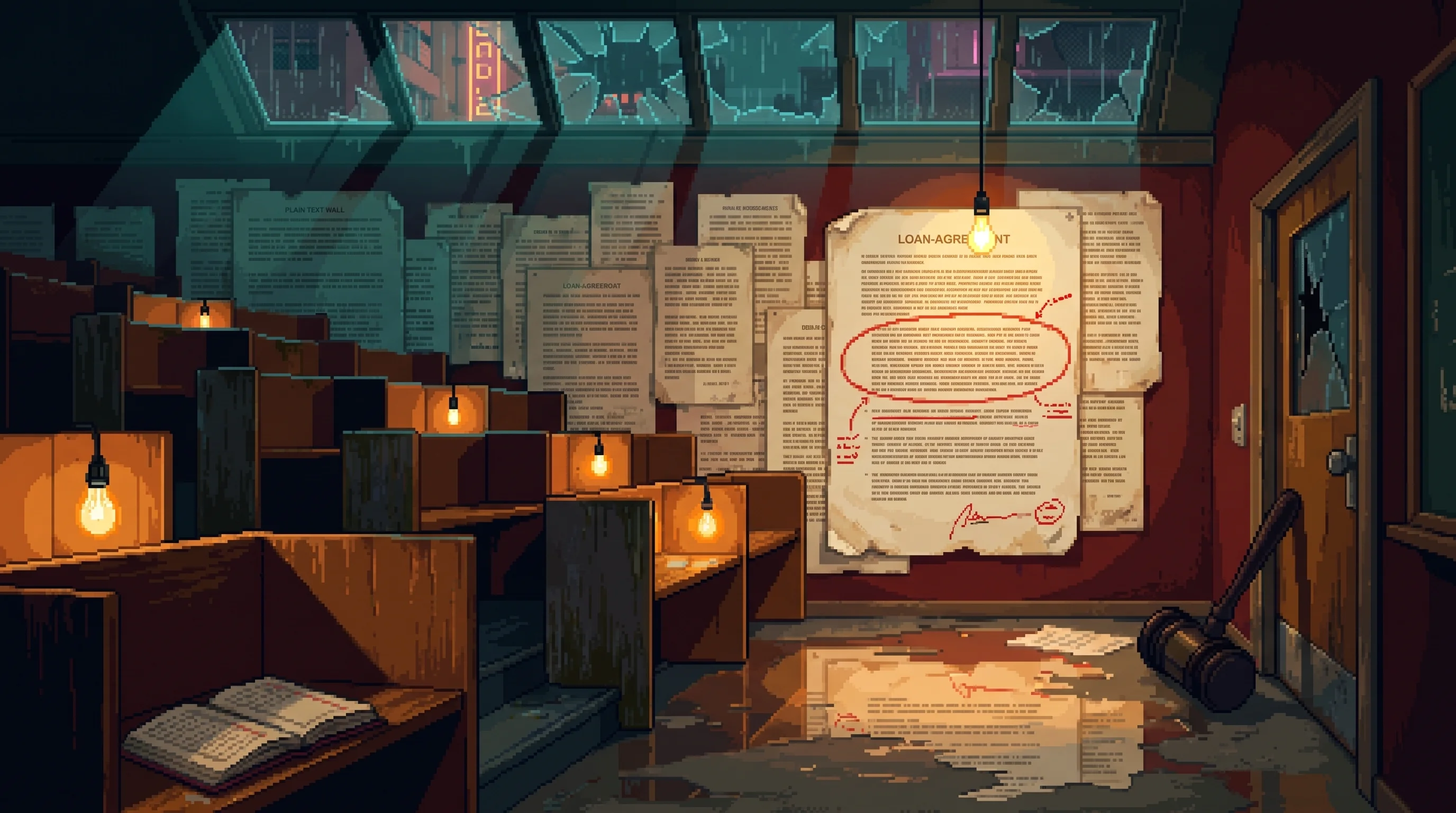
Lecture-hall bones fitted with salvaged benches, a gutted module opened for teaching, a single blue can of Counterbalance on a specimen shelf, and a wall-ledger of names longer than the roster of the saved.
Sound
The idle of a drive module on a diagnostic stand — the sound the Tinkerer teaches apprentices to hear. The scratch of a name being added to the ledger. Wind through a cracked skylight. The hum of the shielded firmware bay.
Smell
Chalk dust and old paper, machine oil and solder, the ozone of a diagnostic bench, the green damp of a hillside coming in through broken glass.
Temperature
Cool and even — a ruin holds the hillside's temperature, and the researchers work in coats, warmed only by the machines and the screens.
Feel
The worn wood of reclaimed lecture seating, the cold steel of diagnostic benches, the grease that never fully leaves the salvage-wing apprentices' hands.
Connected To
Additional Connections


Local Intelligence Scan
Nearby Signals
CANONICAL PROXIMITY


Environmental Readout
LIVE CONDITIONS- Air
- Clean
- Light
- Open sky
- Flood
- No exposure
- Heat
- Temperate
- Security posture
- Independent control
- Infrastructure
- Patchwork
Position Data
SECONDARY- Elevation band
- Mid-hill — the hill districts
- Lattice fix
- E+11.9 · N+9.2

—