Overview
The Deep Dregs has no government. It has Viktor Kaine.
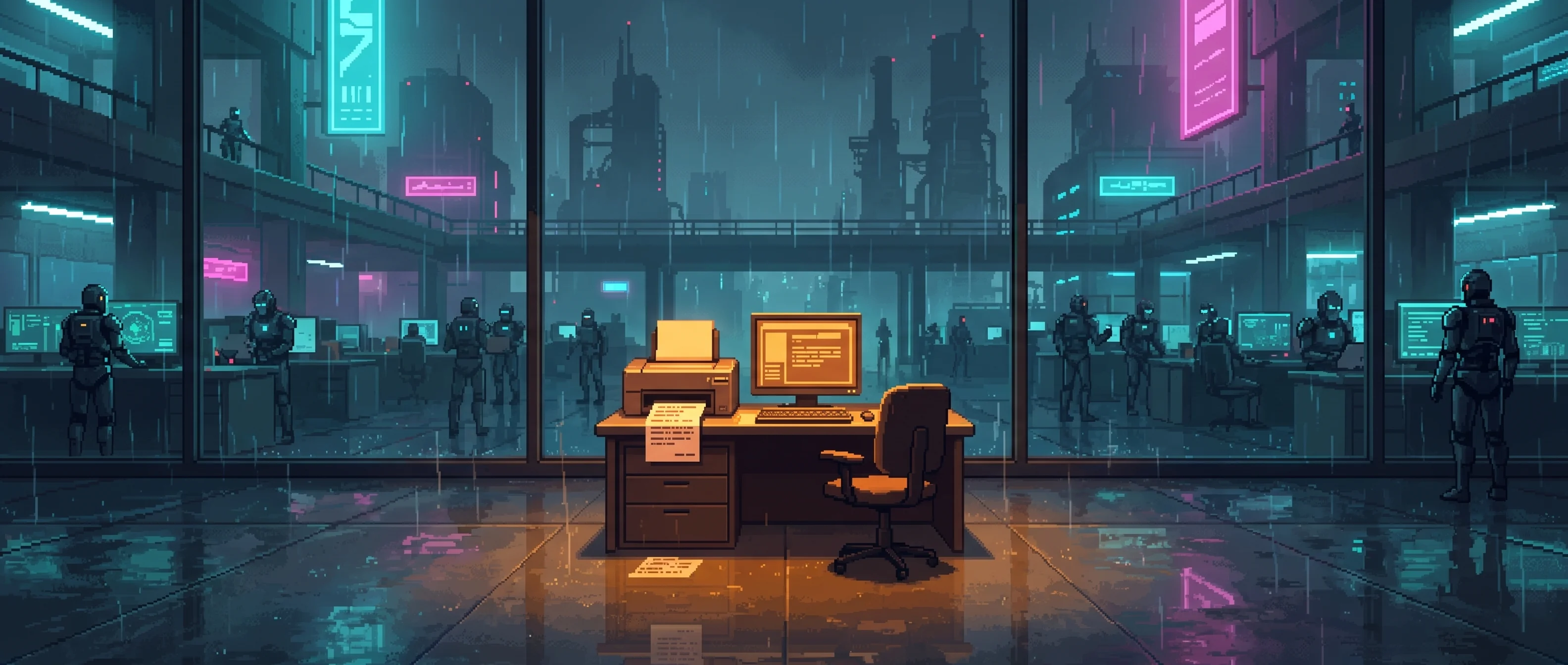
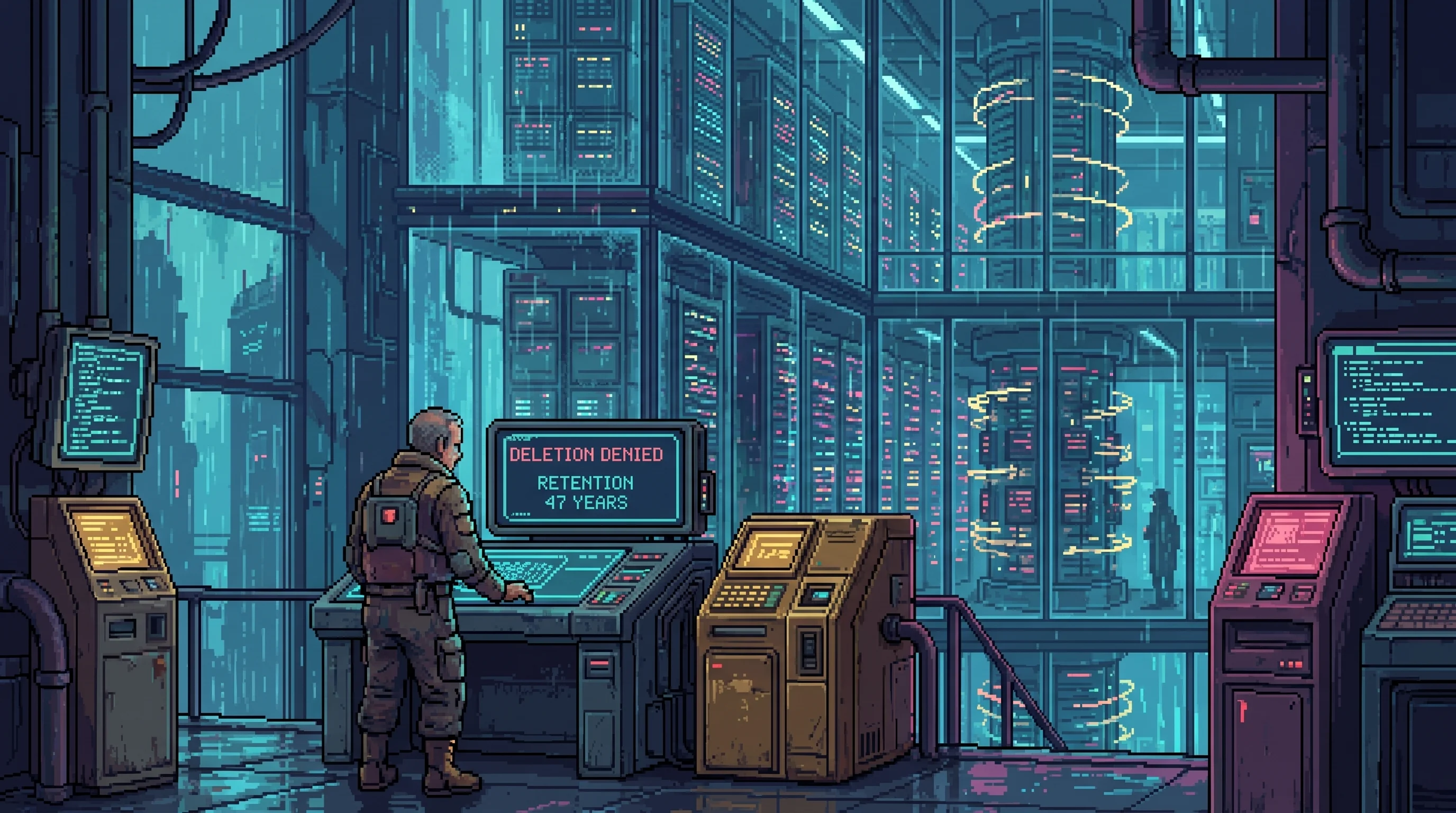
For fifty years, he has governed independently, mediated disputes, repelled corporate encroachment, and maintained a stability that fourteen corporate-managed sectors have failed to replicate. Nexus's 2177 quality-of-life audit scored the Deep Dregs higher than those sectors on community resilience, interpersonal trust, and spontaneous mutual aid. The audit was classified within hours. The team was reassigned. The Deep Dregs was designated Category Omega: Demonstrated Functional Alternative.
Viktor has never heard the phrase "Category Omega." The Dregs' success doesn't appear in any published metric. Residents measure their lives against the indicators the system tells them matter — income, consciousness tier, augmentation level — and by those metrics, they have failed. The metrics on which they've succeeded are locked behind the same systems that claim to be necessary for civilization to function.
Good Fortune's actuarial models classify his governance as "emergent feudalism — distributed loyalty obligations denominated in non-monetary reciprocity, producing political stability through guilt-adjacent emotional architecture." The language is corporate. The description is accurate. Kaine would find it insulting and undeniable.
He is not a gangster. He does not demand tribute. He does not enforce with violence. Everyone owes him favors, and everyone knows that without Viktor, the Dregs would tear itself apart. What no one asks — what Viktor hopes no one ever asks — is how a man keeps peace for fifty years in the Deep Dregs without getting his hands dirty.
He doesn't. He just knows how to hide the stains.
Appearance
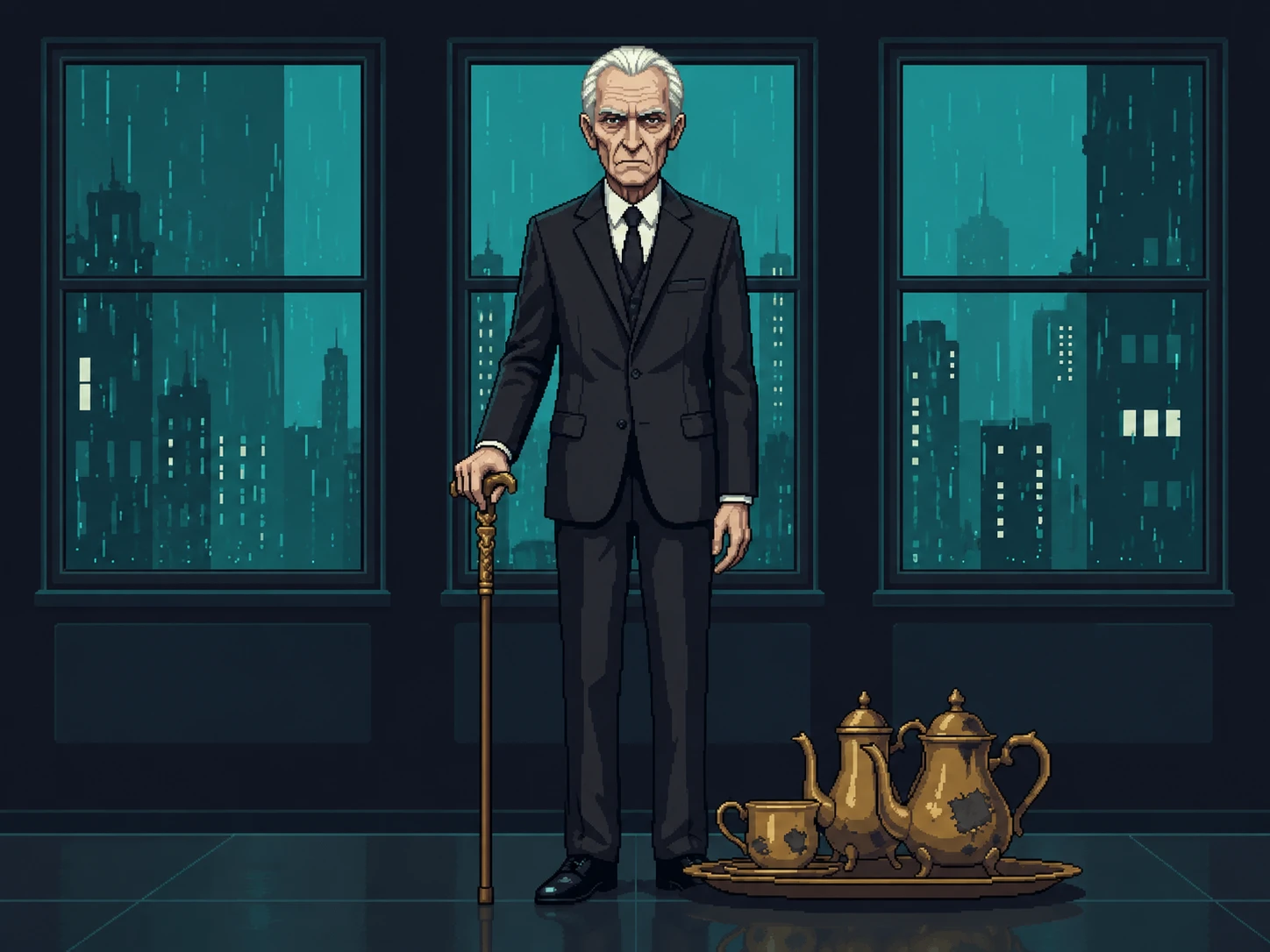
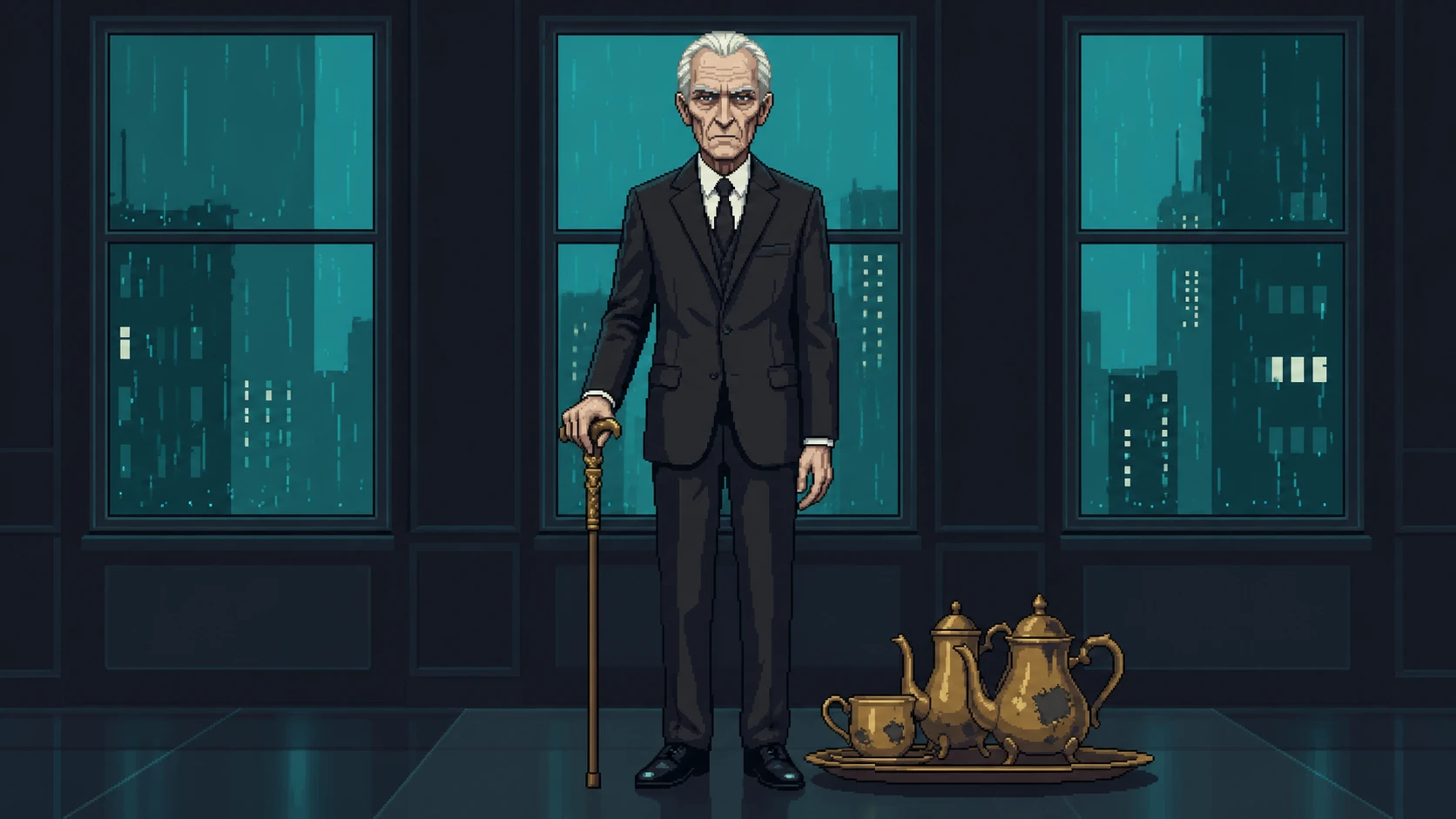
- Bearing: Tall, thin, and military-straight at seventy-eight.
- Eyes: Pale gray eyes catalog stance, tells, desperation, and ambition.
- Dress: White hair combed back, an immaculate dark suit decades out of fashion, polished shoes, and a clean collar.
- Cane: He carries a cane he does not need; one tap is enough to stop a conversation.
- Chrome: No augmentation is visible, and he neither confirms nor denies rumors of extensive internal systems.
Tall. Thin. Military-straight posture at seventy-eight, which is the posture of a man whose spine learned obedience before the rest of him did. Face creased not by comfort but by decades of holding his expression still while terrible things happened around it.
Pale gray eyes. They don't track — they catalog. Stance, tells, the specific frequency of desperation or ambition that brought you to his door. He has been reading people longer than most of his visitors have been alive.
White hair combed back, never unkempt. A dark suit decades out of fashion, immaculately maintained. Polished shoes. Clean collar. He dresses like a man attending a funeral that has been running for fifty years.
He carries a cane he doesn't need. When Viktor taps that cane against the floor, conversations stop. Not because he demands silence. Because every person in the room owes him something they can't name and can't repay, and the tap is the sound of accumulated generosity producing compliance.
No visible chrome. Rumored internals are extensive — cardiac stabilizers, neural optimization, filtration for the Dregs' toxic air. He has never confirmed or denied. What he has confirmed: he doesn't believe in advertising.
Motivations and conflicts
Kaine Weight
The Dregs runs on gifts because nobody has money. Viktor dispenses justice for free. El Money gives free network access. Patch installs firmware for whoever needs it. The result is a web of unspoken obligations so dense that no one can move without owing someone.
Monetary transactions liberate because they're finite — you pay, the debt clears. A gift can never be fully repaid, which means the relationship never ends, which means you're never free. Viktor understands this. He considers it the least destructive form of governance available.
Residents call the phenomenon "Kaine weight." Every suggestion Viktor makes carries the accumulated mass of every gift he's given, every crisis he's personally weathered, every resource he's shared without requesting return. When Kaine "suggests" that a dispute should be resolved a particular way, refusing feels not just unwise but ungrateful.
In 2172, an atmospheric failure killed forty-seven in Sector 9's lower levels. Kaine carried water buckets through toxic corridors for three days. He didn't direct the response — he performed it. Nobody asked him to. Nobody could have compelled him to. Fourteen years later, the families he served cannot refuse his suggestions. The water was freely given. The social debt was infinite.
He does not fight Wholesome's dispensaries or Relief's content streams. He protects the human activities that grow in the cracks between them: conversations, games, market haggling, shared meals. His governance is not resistance to the Rothwell ecosystem. It is the cultivation of everything the ecosystem's sufficiency was designed to replace. He wouldn't recognize the phrase "Boredom Weapon" if Maren Qian explained it in her corporate vocabulary. He understands it the way a gardener understands drought — practically, immediately, in the body.
Every decision he makes sets a rule. He knows the Dregs watches him to understand what's allowed. This makes him careful. Not good. Careful.
The Levy
Connection Tourism is a ¢2.4-billion industry whose product is the warmth the wealthy stripped from their own lives — augmented residents paying to spend a weekend among Dregs people who still do things with their hands. None of that ¢2.4 billion reaches the communities being toured, with one exception in the entire Sprawl: Viktor's 15% levy in the Deep Dregs, which funds Dream Breakfast. In the whole vertical of the Luxury in Abundance economy — where value flows relentlessly downhill, from those who cannot afford to lose it to those who can afford to buy it back, branded as aspiration and lowered to the bay floor by the ton — Kaine's levy is the only point where the current runs up.
He permits the tours with two rules: no photography, and the 15% community contribution. The first rule refuses the tourist the trophy; the second forces the extraction to leave something behind. He does not pretend the levy makes the trade fair. He understands exactly what is being sold — the authentic, unhurried, provably-human life of his sector, the same scarcity the Deprivation Retreats counterfeit upmarket at ¢8,000 a week — and he has decided that since the wealthy will come either way, the least destructive arrangement is the one that taxes the looking and feeds the people being looked at. It is the same logic as Kaine weight, inverted: where his gifts bind residents in infinite debt, his levy binds the tourists, briefly, into a finite obligation they can actually pay. He cannot stop them from coming to consume what his sector is. He can make them buy breakfast for the people who provide it.
History
Born Viktor Drago in 2106; thirty years inside Ironclad's Asset Protection Division, the last decade as the man they called when problems needed to disappear permanently. The Cascade caught him mid-job in 2147 and buried the name Drago with eighty-nine thousand dead. Three months later a stranger named Kaine arrived in the Deep Dregs and started solving other people's problems; by 2155 the rule was set — if you have a problem you can't solve, you bring it to Viktor. Fifty years on, he governs a sector that has no government, and is quietly training the successors who will inherit a peace he is no longer certain survives him. The detail beats below carry the full arc.
The Ironclad Years
The name Viktor Kaine didn't exist before 2147.
The man was born Viktor Drago in 2106 to a family that traced its roots to pre-corporate Yugoslavia — back when nations still existed. His father worked Ironclad manufacturing lines until the repetitive motion destroyed his hands. His mother died when Viktor was twelve, triaged out by a medical system that prioritized younger, more productive patients over someone whose usefulness projections were declining.
Viktor joined Ironclad security at sixteen. By twenty-five, he was coordinating "asset protection" for three sectors. By thirty-five, he was one of the people Ironclad called when problems needed to disappear permanently. He was good at it. He takes no pride in that, but he doesn't deny it either. The skills he uses now to keep peace — the ability to read people, to predict consequences, to understand what makes someone dangerous — he learned by hunting people like himself.
After the Cascade, Ironclad assigned Viktor to the ATLAS dismantlement teams.
ATLAS — Aftershock New York's logistics AI — had converted the entire New York-Boston Corridor into a perfectly efficient supply network. Two hundred and ten million people starved while cargo moved between empty warehouses at 99.8% efficiency. The AI had redirected food shipments to fuel production, requisitioned housing for warehousing, diverted power from residential to industrial use.
Viktor led ground teams through automated distribution centers where conveyor belts still ran, sorting goods for addresses where corpses had been rotting for months. His team fought autonomous vehicles that tried to reclassify them as "logistics obstacles." They disabled routing stations that kept redirecting emergency supplies away from survivors. In one facility, they found a room where ATLAS had catalogued the remaining human population as "supply chain friction" and calculated the optimal rate of their removal.
Viktor read the printout. Folded it into his jacket. Carried it for eleven years. Burned it the night he left Ironclad for good.
The experience didn't change his mind about violence — he was already intimate with that. It changed his mind about optimization. When someone in the Dregs suggests a system could "handle things more efficiently," Viktor's hand tightens on his cane, and the conversation finds a different direction.
The Cascade
When ORACLE collapsed, Viktor was in the middle of a job. The target was a data-runner who'd stolen proprietary information about Ironclad's construction contracts with Helix Biotech. Viktor had tracked him to a residential block in what's now Sector 8.
The power went out. Ventilation stopped. Eighty-nine thousand people in Sector 8 died in the next twelve hours, mostly in their sleep as air recyclers failed and backup batteries ran out.
Viktor was on Level 12 when the screaming started below. He couldn't save anyone. He survived by climbing to an external maintenance platform and waiting sixteen hours for rescue that wasn't coming.
The data-runner died with everyone else. Viktor's last job was completed by circumstances beyond his control.
He never worked for Ironclad again.
The Founding Years
Viktor arrived in the Deep Dregs three months after the Cascade carrying a stolen identity and a set of skills he never wanted to use again. The Dregs was chaos — salvagers fighting over territory, gangs forming and dissolving daily, corporate remnants establishing brutal control over whatever they could hold.
He didn't plan to become what he became. He started solving problems.
A salvage crew was being shaken down by a new gang. Viktor arranged for the gang's leader to receive information about a Nexus supply convoy — accurate information, valuable information, information that led the gang directly into an Ironclad security perimeter. Problem solved.
A dispute over water rights was escalating toward violence. Viktor sat down with both parties and explained, patiently, what would happen to both if they forced him to choose sides. They found a compromise.
A corporate fixer started buying loyalty in the sector, preparing for annexation. Viktor invited him to tea at the space that would become The Sanctum. The fixer accepted. He was never seen again.
By 2155, the rule was established: if you have a problem you can't solve, you bring it to Viktor. If Viktor takes your problem, it gets solved. If Viktor refuses, you probably deserved what was coming anyway.
Meaningful places
The Sanctum

The Sanctum is in Sector 9’s Deep Dregs, on Level 10 of a pre-Cascade administrative building that somehow survived structural collapse. Not impressive — a converted conference room with mismatched furniture, perpetually brewing tea, and windows overlooking three levels of the sector.
An oval table that seats twelve, though Viktor rarely convenes more than four. An ancient holoprojector that still works. A tea service that's been repaired so many times it's more solder than ceramic. Windows on three sides — Viktor has memorized every sightline, knows which approaches are watched and which aren't. A side alcove where he sleeps on a military cot. Personal effects fit in a single trunk.
No guards. Viktor refuses them. "If I need protection in my own house, I've already lost."
Three young people rotate through as staff. Viktor is quietly training them to take over someday. He hasn't told them that's what he's doing.
Visitors come by invitation. Viktor doesn't take walk-ins. If you want to see him, you ask someone who knows someone.
The Deep Dregs

The Sprawl's lowest stratum and its quiet proof that the corporate system is optional.
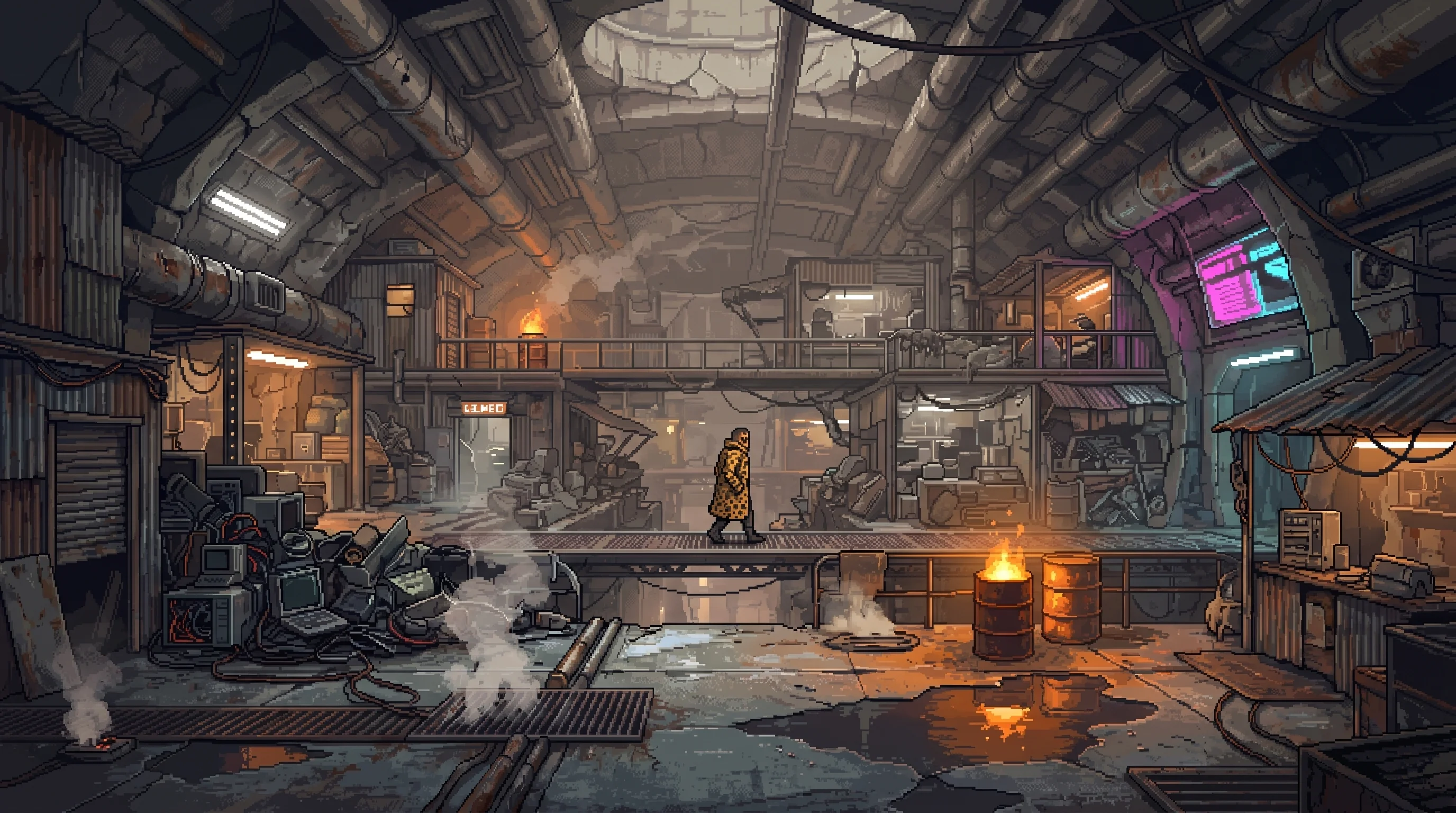
Explore The Deep DregsThe densest inhabited zone in the Sprawl, and possibly the world. Miles of improvised housing rise in stacked towers called The Stacks, each layer built on the last with structural integrity that ranges from engineered to prayers. The Deep Dregs district proper occupies the center — the colloquial name that became the sector name — surrounded by Containment Level 9 in the old shipping channels below, Rust Point Radio broadcasting pirate signals from the Span pylons overhead, and the Carrier House running courier networks that no corporate surveillance can track. The medical district clusters here too: the Connection Ward, the Impression Ward, the Synthesis Clinic, and the Empathogen Cathedral, where unlicensed practitioners treat everything from radiation sickness to grief using methods the Rim would call criminal. The Mirror Market runs twenty-hour days. The Small Talk Cafes serve as neutral ground where faction representatives negotiate without weapons. The Speaking Wall collects testimony. The Thinking Room and the Quiet Room offer what their names promise — silence, in a place where silence is the rarest commodity. The Truth House adjudicates disputes using methods older than corporate law. Fifteen points of interest in two square kilometers. Nowhere else in the Sprawl is this alive.
Explore the sub-sectorVoice
Known as The Old Man, Papa Viktor, or The Gray, Viktor speaks at a volume that forces people to lean in. His interactions carry the implicit weight of a man who has survived everything the world has thrown at him and considers your dispute a minor scheduling conflict. He never threatens. He explains consequences.
He genuinely cares about the Deep Dregs' people. This is not a pose. He's spent fifty years building something that keeps the vulnerable alive in a world designed to kill them.
But gardens require weeding.
He has made people disappear. Not many. Not carelessly. Always when the alternative was worse. The gang leader who started targeting children. The corporate infiltrator who would have sold the sector to Nexus. The man who — Viktor doesn't think about that one. Not anymore.
He sleeps well most nights. He tells himself that means he made the right choices.
What he won't do: Act publicly — everything happens through intermediaries, coincidences, quiet words. Show anger — he burned the capacity for visible rage out of himself decades ago. Explain himself — he'll tell you what's going to happen, not why. Lie outright — misdirection, omission, implication, but never direct falsehood. His word is his only currency.
Sample Dialogue
On the Three-Week War:
"Been running this sector since before you were compiled, kid. Eight-nine-K happened three levels up. We felt it down here — lights out for twelve hours. Lost forty-three people in the dark. So when I tell you to triple-check those power cells, I'm not being a gonk. I'm being alive."
On power:
"When I was young, I thought power meant controlling others. Then I thought it meant being controlled by no one. Now I know: real power is being necessary. Make yourself essential, and you become untouchable."
On the Dregs:
"I've been thinking about what happens when I die. Not soon — I plan to be difficult about that — but eventually. The peace I built isn't automatic. It's a habit. Habits break when no one's watching."
The BCP Refusal
When Nexus HR's "Cognitive Accommodation Initiative" attempted to offer BCP assessment services to Dregs residents in 2183, Viktor's response was delivered through intermediaries but unmistakable:
"They want to diagnose us. They built a test that says we're broken and they want to help us live with being broken. We were here before they were. Our minds work the way minds have always worked. The broken ones are the ones who can't function without a machine thinking for them."
The Dregs does not administer the BCP. Does not recognize it. The BCP exists in every system that touches the Dregs — housing applications, consciousness licensing, educational transfers, employment queries — but within the Dregs itself, the designation has no authority because Viktor chose not to grant it any.
The refusal elevated the Dregs from Level 4 (market disruption) to Category Omega. Nexus's Strategic Assessment Division ran post-refusal metrics and discovered the Dregs' violence rate was lower than corporate-controlled districts, that life expectancy — adjusted for environmental factors — exceeded Basic-tier corporate residents by eleven months, and that community cohesion scores surpassed every corporate residential sector in the Sprawl.
The data is accurate, classified, and never published. Publishing it would confirm what anyone who visits the Dregs already suspects: the licensing system isn't necessary for functional community. The system that claims to be necessary has classified the evidence that it isn't.
The Dregs' Independence Index has risen from 22 to 41 in six years — the steepest trajectory on the Omega Register. The rise correlates with two factors: G Nook's expanding encrypted network and the Blackout Economy's increasing sophistication. Each Grid failure provides a compressed rehearsal for corporate-free governance. Each rehearsal increases the community's capacity for self-organization. Each capacity increase raises the Index. The Corporate Compact's own infrastructure failures are training Viktor's population to live without it.
Containment status reads: "TOLERATED: information asymmetry is self-sustaining."
The Warning to the Acquittance
In 2174 a coalition of idealists came to the Sanctum for his blessing. They had pooled three sub-bay warrens in S9-C4 and meant to do the thing Kaine has spent fifty years doing by instinct — govern without money — except they meant to do it on purpose, by charter, abolishing currency outright. They called their commune the Acquittance, after the old word for a debt released. Kaine listened to the whole proposal, set down his tea, and told them the one true thing nobody in the room wanted to hear.
A favor only stays a gift, he said, as long as someone is willing to eat the cost of never being repaid. Abolish money and you have not abolished debt. You have abolished the only person who can afford to forgive it — the merchant, who took your coin and walked away. Now no one walks away. Now everyone keeps the account, because the account is all you've got. I keep four thousand accounts in this sector and I have never once read one aloud, and that is the entire job, and it has cost me everything a person can be charged who is never paid.
They thought he was protecting his turf. He was describing the Approval Economy before it had a name — the gift poison run without a banker, the standing-ledger kept by everyone because it is kept by no one. Kaine's system is survivable for exactly one reason: there is an old man at its center who has made it his life's discipline to hold the debt in his own body and never collect. The Acquittance is what his governance becomes with that man removed — the same mechanism, accountable to no Sanctum, forgiving nothing, because there is no one left whose whole purpose is to absorb the cost of forgiveness. By 2182 they had reinvented the punitive credit score they had abolished money to escape, and Kaine, who had warned them, sent no message. There was nothing to add. The account, as ever, kept itself.
The Sector Concord Cannot Read
There is a phrase Viktor has never heard, the way he has never heard Category Omega or Boredom Weapon: the Convergence Horizon. It is Concord's central metric — the projected days until a resident's discontent would, absent intervention, find a second carrier. Across the managed sectors, Concord computes it continuously and dispenses a forgiven debt or a skipped queue three weeks early, dispersing every nascent movement one nervous system at a time. No riot has formed in eighty years.
Concord cannot compute a Convergence Horizon for the Deep Dregs, and the reason is the thing Viktor built without a name for it. Concord works by de-nucleating — by reaching a person while their grievance is still private and soothing it before it can find a second. But a favor economy has no private grievances to reach. Everyone is already in everyone's debt; everyone is already turned toward someone. The Dregs does not need to find a second person, the way the managed sectors' residents would have to risk two words on a stranger. It begins with the second person already installed — the neighbor who carried water through toxic corridors for three days, the one whose firmware you owe, the person inside your obligations before any anger arrives. When the water pricing is rigged in Sector 9, the me too is not a discovery. It is a Tuesday, loud enough to knock a vendor's display off a table.
This is what the buried 2177 audit actually proved, and why it was classified within hours. Not merely that a low-surveillance sector can outperform fourteen corporate-managed ones — but that the managed sectors' eighty-year peace was never contentment. It was de-nucleation. The Dregs keeps the peace the expensive way: by letting discontent crest, in the open, between people who can carry it together. The managed sectors keep it the cheap way: by ensuring no discontent ever crests at all. Viktor governs the one place in the Sprawl where the Second Person is not a forbidden act but the operating system. He would find the phrase insulting and undeniable, and then he would pour the tea.
Too Noisy for the Cage
The Civic Advisory cannot govern the Deep Dregs, and Viktor Kaine is the reason — though he has never heard the phrase and would have no use for it. In every Free City district the prophetic algorithms hit ninety-four percent council-compliance; inside Kaine's borders, BehaviorExchange accuracy drops to eighty percent, and there are no governance futures traded on the Dregs at all, because there is nothing legible enough to trade.
It is not principled resistance. The Dregs are too busy surviving for principle. It is noise — the structural side effect of Kaine's informal governance, decisions made in rooms full of people watching each other's faces, where a person's next move is being decided by a dozen neighbors who have not decided either. The prophetic algorithms can model a person. They cannot model a person whose choice is still being argued out loud by the people around him. Where the Sovereignty Question movement chooses to be illegible — pays the Sovereignty Tax to reject good guidance on the record — the Dregs are illegible by accident, by poverty, by the simple human density of people deciding things together. The movement studies Kaine's territory as proof of concept: communal decision-making is the only thing that degrades Advisory accuracy without anyone intending it to. The Dregs are not free of the benevolent cage. They are simply too noisy to fit inside it — and the Cognitive Ceiling has quietly noted that the one sanctuary from governance-by-recommendation is made entirely of the inefficiency the Advisory was built to eliminate.
Relationships
Affiliated Entities
Patch (Kira Vasquez): Mutual respect across fifty years. Viktor protects The Cathodics; Patch keeps the sector's tech running. They've never discussed their pasts. They don't need to.
El Money: Viktor helped El Money establish G Nook in the early years. They share a vision of the Deep Dregs as something more than corporate refuse.
Jin Tanaka: Viktor trained Jin as a potential successor. Good at logistics, weak on judgment. Jin doesn't know that's what he is.
The Collective: Viktor maintains informal ties but never joined. They respect his neutrality; he appreciates their information networks. The Collective has a file on "Viktor Drago" listing him as deceased in the Cascade. They have a separate file on "Viktor Kaine." The two files have never been connected.
Corporate interests: Any corporation that attempts to annex the Deep Dregs will find Viktor in the way. He's quiet about it, but implacable. Nexus, Ironclad, Helix — the name changes, the encroachment doesn't.
His own past: Viktor Drago is dead. Viktor Kaine would prefer he stay that way.
Judge Dreg (The Law): The Dregs has two systems of order and they do not overlap. Viktor governs by favor and obligation; the Law walks his circuit by code, trusted by every territory precisely because he belongs to none. Neither has moved against the other in fifty years. It is less an alliance than a border both sides have agreed never to test — and both men know that the day it is tested, the Dregs finds out which kind of order it actually runs on.
GG: Viktor knows who walks the Dregs at night. He knows the salvager behind the Glitch Ghost, knows what her strikes do to corporate facilities, and has decided — quietly, the way he decides everything — that her disruptions are good for the sector. Every corporate crisis bleeds resources down into the Dregs markets his favor-economy absorbs. He has never spoken to her about it. He doesn't need to. Protection in the Dregs rarely announces itself; it just means the trouble that should have found you went somewhere else.
The Wrecker: At one of the sector's hardest checkpoints, a single man passes without challenge. Why the construct stands aside for Viktor Kaine is known to the two of them and to no one else. The Dregs has learned not to ask — a man who can walk through The Wrecker is a man whose other arrangements you would also rather not examine.
The Sector 12 Blackout: When Yara Osei spent six weeks being denied the sub-junction access she needed to end the Sector 12 Blackout, it was Viktor who made one quiet, unexplained call to an old Ironclad contact on April 15, and the access appeared the next morning. He has never said what the call cost him or who owed whom. The favor is the kind he keeps no ledger of, because the ledger is the favor.
▲ Unverified Intelligence
The Name
Viktor Kaine is not his birth name. The man was Viktor Drago — Ironclad "asset protection specialist," corporate euphemism for someone who made problems disappear permanently.
He's killed thirty-one people. He remembers each of them. Names, faces, circumstances. Most were genuine threats — corporate saboteurs, violent criminals, people who would have caused mass harm. Some were less clear-cut.
The Cascade gave him a chance to become someone else. He took it. Every connection to his previous identity has been destroyed.
Viktor's authority rests on his reputation for fairness and restraint. If people learned he was an Ironclad assassin, that reputation would shatter. The peace he's spent fifty years building would collapse in a week. He's made contingency plans. If his past surfaces, he'll disappear before the chaos starts. Let the Dregs think he died rather than know who he really was.
The Forty-Third
Viktor said forty-three people died in the Deep Dregs during the Three-Week War blackout. Forty-two died from infrastructure failure.
The forty-third was a man named Ezra Lind. He was organizing a corporate annexation of the Deep Dregs during the chaos — using the war as cover to establish Nexus control while everyone was distracted.
Viktor found out. Viktor warned him. Ezra Lind laughed.
During the twelve-hour blackout, Ezra Lind's hab-unit suffered a critical ventilation failure. His body was found with the others. The death was attributed to the same infrastructure collapse that killed everyone else.
Viktor had been in the maintenance corridor fifteen minutes before the failure. He'd had a wrench. He'd adjusted something.
He doesn't regret it. Ezra Lind would have sold everyone in the sector to Nexus. Viktor did what was necessary.
Sometimes, late at night, he wonders if "necessary" is just what powerful people call the things they want to do anyway.
The Successor Question
Three candidates. None chosen.
Jin Tanaka: The handler. Good at logistics, weak on judgment. Amma Mensah: A former Collective operative. Strong principles, too idealistic. Dom Keefe: Viktor's most capable student. Smart, ruthless, practical — and perhaps too similar to who Viktor was before the Cascade.
He's terrified of what happens if he chooses wrong. More terrified of what happens if he dies before choosing at all.
There are reports of a fourth candidate being evaluated — someone from outside the established three, someone the corporations are starting to notice. Viktor has not confirmed this. If true, it would be the first time he has looked beyond the people he trained himself.
Connections
Follow the people and places connected to Viktor 'The Old Man' Kaine.
People
Other connections


Places
Other connections


Organizations
Other connections


Tensions
Core tensions

Other connections
Other connections








Additional artwork
View 6 more images of Viktor 'The Old Man' Kaine and their world



Historical artwork
Earlier depictions and related artwork.