
The Rothwell Foundation
Immortality method: consciousness harvesting — downloading memories of dying people to extend their own lives
Overview
The Rothwell Foundation doesn't officially exist. No records. No filings. No corporate registry in any jurisdiction has ever contained the word "Foundation" adjacent to the word "Rothwell." Seven of the largest consumer corporations in the Sprawl share architectural flourishes, executive alumni networks, and — if you know what to look for — a seven-pointed star hidden in every logo. These facts are publicly available. The conclusion they imply is not publicly discussed.
The brothers are known. Everyone in the Heights has seen at least one of them. Corporate directories list them as CEOs of separate companies. Genealogy databases confirm they're related. Sprawl Financial Review ran a piece in 2179 titled "The Rothwell Coincidence" that noted stylistic similarities across all seven companies and concluded, after 4,200 words of careful analysis, that "the brothers appear to share a business philosophy." The piece was accurate. It was also the equivalent of noting that the ocean appears to be wet.
The Big Three — Nexus Dynamics, Ironclad Industries, Helix Biotech — control infrastructure and production. They build the Sprawl's skeleton: computation, construction, biology. The Rothwells don't compete with skeleton. They compete for what the skeleton does all day. What it eats. How it looks. Who it sleeps with. What it's afraid of. How it relaxes. What it aspires to. Nexus controls 40% of the Sprawl's computational infrastructure, and the average resident interacts with Nexus products maybe twice a day. The average resident interacts with Rothwell products fourteen times before lunch.
The brothers don't have the most money. They have the most surface area.

The Seven
Each brother controls one megacorporation. Each megacorporation dominates one category of human want. The categories do not overlap. This has held for over three centuries without a single documented territorial dispute, which is either extraordinary discipline or extraordinary fear of what the other six would do.
| Corporation | Domain | The Problem It Creates | The Solution It Sells |
|---|---|---|---|
| Triumph | Status & reputation | Social inadequacy through comparison platforms | Verification, visibility, reputation management |
| Good Fortune | Consumer finance | Financial instability through predatory lending | More loans, credit restructuring, gambling "hope" |
| Guardian | Security & violence | Fear and insecurity through weapons proliferation | Protection services, safe zones, enforcement |
| Wholesome | Food & consumption | Manufactured cravings, nutritional confusion | Delivery subscriptions, synthetic nutrition, convenience |
| Wellness | Beauty & intimacy | Impossible beauty standards via AI manipulation | Cosmetics, enhancement procedures, companion AI |
| Relief | Entertainment & comfort | Chronic stress through always-on connectivity | Streaming, automation, sedation, escape |
| Inspire | Aspiration & goals | Inadequacy through aspiration content | Self-improvement programs, lifestyle coaching |
The table reads like a business school case study. It is actually a medical chart. Each row is a closed loop: the corporation manufactures the condition, then sells the treatment, and the treatment's side effects are the next quarter's demand forecast. Guardian floods a district with weapons, then sells the terrified residents home security systems. Wellness publishes beauty standards that 96.3% of the unaugmented population cannot meet, then offers augmentation financing through Good Fortune. Inspire shows you what your neighbor's life looks like, then sells you a program to close the gap — a gap that widens with every program sold, because the neighbor is also subscribed.
The genius isn't the loop. Protection rackets have run loops since the invention of the protection racket. The genius is that the problem and the solution arrive through different brands, different emotional registers, different Triumph Social feeds. The customer who buys Guardian security has never once connected the purchase to the Guardian-manufactured weapons that made the neighborhood dangerous. The connection is three shell companies and a supply chain pivot away. The customer feels grateful.
Problem Manufacturing
"Create the problem. Sell the solution."
The brothers didn't invent this. Snake oil salesmen, diet companies, and colonial empires understood the principle centuries before the Rothwells formalized it. What the brothers perfected was scale, patience, and invisibility.
A working example: Wholesome's Sector 12 rollout, 2176-2181.
Year one: Wholesome opens affordable food kiosks in a district previously served by independent vendors. Prices are 40% below market. The kiosks are clean, fast, reliable. Residents are grateful. Independent vendors lose 60% of their customer base within eight months.
Year two: Independent vendors close. Wholesome raises prices 15% — still below what the independents charged, so nobody complains. Wholesome introduces a subscription model: 20% discount for auto-delivery. Uptake is immediate. Why wouldn't you subscribe? It's cheaper.
Year three: Wholesome's nutritional formulations — optimized for "craveability metrics" by an AI that has never been asked to optimize for health — begin producing measurable dietary dependency in subscribers. Cravings for non-Wholesome food decline. Not because Wholesome food is satisfying, but because the formulations are calibrated to make other food taste wrong. Internal documents describe this as "palate alignment."
Year five: Sector 12 has no independent food vendors, a 94% Wholesome subscription rate, and a population whose neurological reward pathways have been tuned to a single supplier's flavor profile. Residents describe Wholesome food as "fine." They describe everything else as "weird." They cannot articulate why.
Nobody was forced. Prices were fair. The kiosks were clean. The subscription saved money. Every individual decision was rational. The destination — a district chemically bonded to a single food supplier — came free.
The brothers don't discuss this as strategy. There's no manifesto, no internal memo labeled "Problem Manufacturing." It's simply how business is done. Each brother implemented it independently, across centuries, because it works, because their father did something similar with textiles, because it's obvious if you think about power correctly.
Core strategy — Problem Manufacturing: create the problem, sell the solution
Origins
The brothers emerged from imperial collapse — not a specific empire, but the general pattern of nineteenth-century industrial chaos that produced refugees, soldiers, and survivors in roughly equal measure. The exact circumstances are lost. Academic footnotes and conspiracy archives preserve fragments that contradict each other on every detail except one: the brothers came from nothing, lost everything, and resolved that the losing would stop.
The Foundation was their original company. A single entity, a single name, a single point of failure that any government could target, any revolution could burn, any envious competitor could rally against. The brothers watched concentrated dynasties die throughout the nineteenth century and understood the lesson before anyone taught it.
So they split. Seven brothers, seven corporations, seven territories. The Foundation was dissolved — deliberately, strategically — in the 1850s. No registry contains the dissolution because no registry contained the founding. The split produced a structure that has no single throat to cut: attack Triumph, and Good Fortune discovers leverage against the attackers. Threaten Guardian, and Wellness's dating platform surfaces the threat's extramarital correspondence. The brothers don't coordinate these responses. They simply understand the obligation, the way a hand understands to catch what the eye sees falling.
They've been running this architecture for over three centuries. The Cascade killed 2.1 billion people. The brothers experienced it as a market correction.
Immortality
The original seven are still alive. Not descendants. Not successors. The same men who split the Foundation in the 1850s attended a board meeting last quarter.
The method is consciousness harvesting — downloading the neural patterns of dying individuals and integrating them into the brothers' own cognitive architecture. Memories, experiences, the accumulated texture of a life lived. The brothers maintain "legacy programs" across the Sprawl: philanthropic initiatives that provide comfort to the dying in exchange for "consciousness archival" that creates a digital memorial for the family. The memorials exist. They're quite moving. The harvesting happens underneath.
Each brother has absorbed thousands of lives. Justin Rothwell alone carries over eight thousand. They remember being fishermen, teachers, soldiers, mothers. The memories are real. The experiences are borrowed. The original personalities remain dominant — but "dominant" is a term that requires increasingly precise definition as the centuries accumulate.
The process has limits. Neural substrate degrades under cognitive load. The brothers experience "compression events" — moments where absorbed personalities overwhelm the original, where the fisherman's terror during a storm overwrites the CEO's composure during a board vote. These events grow more frequent. The brothers estimate perhaps two more centuries before compression becomes unmanageable.
They've explored mitigation: selective absorption (quality over quantity), periodic purging of older consciousnesses (dangerous — each purge risks losing something load-bearing), substrate expansion research. This last is why they watch Nexus Dynamics' Project Convergence with particular intensity. If Nexus solves the substrate problem for ORACLE reconstruction, the brothers intend to acquire the solution. The acquisition budget is already allocated.
Each brother also maintains a "seed consciousness" — a snapshot of their essential personality from before the first absorption, stored in multiple secure locations. If compression becomes terminal, they can theoretically restart from the seed. They would lose centuries of accumulated wisdom. They would survive. Whether what survives would still be them is a question none of the brothers has answered aloud.

The Seven-Pointed Star
Every Rothwell corporation incorporates a seven-pointed star into its branding. Triumph's verification badge is a seven-pointed burst. Good Fortune's logo contains seven stylized petals. Guardian's security badge is explicitly a seven-pointed sheriff star. Wholesome's "freshness seal" has seven points. Wellness's "complete self" icon arranges seven elements in a circle. Relief's cloud logo contains seven subtle curves. Inspire's achievement badge has seven ascending bars.
The star appears in architecture, product design, corporate campus layouts. It isn't worship. It's a watermark. Conspiracy theorists have mapped it for decades. The brothers find the mapping useful. Investigators who discover the star believe they've found the secret. They've found the wallpaper.
Coordination
The brothers meet in person perhaps once a decade. Frequency attracts attention. Instead, they maintain coordination through systems designed to function without direct communication — systems older than any technology currently running them.
Territorial inviolability is the foundation. Each brother's domain is absolute. Wholesome doesn't launch a dating app. Wellness doesn't sell food. The rule has held for over three centuries. The punishment for violation would be six against one, and every brother can do the arithmetic.
A shared ledger — the concept predating blockchain by generations — tracks all inter-family transactions with full visibility. No secrets between brothers. On the seventh day of each month, each corporation releases a specific financial filing. Hidden in the formatting, not the content, are coded messages: market intentions, threat assessments, coordination requests. Corporate analysts have noticed the synchronous scheduling. They assume it's coincidental. They've published papers about it.
For emergencies, Protocol Four: all seven meet within 72 hours. Invoked four times in three centuries. The last was for the Cascade.
The brothers also maintain parallel intelligence networks, each focused on their domain. Triumph sees social graphs. Good Fortune sees credit flows. Guardian sees movement patterns. Wholesome sees consumption habits. Wellness sees intimate preferences. Relief sees what people do when they think they're alone. Inspire sees what people want to become. Combined, these networks produce a composite view of every person in the Sprawl more detailed than any individual realizes exists. The brothers share this intelligence through encrypted channels that predate — and therefore evade — every surveillance system built since.
An attack on one brother triggers collective response. The mechanism doesn't require coordination. Triumph faces regulatory pressure, Good Fortune discovers the regulators' debt exposure within the hour. The brothers don't discuss this. The immune response is older than the conscious decision to have one.
The Foundation doesn't officially exist — no records, filings, or public acknowledgment that the Seven share a common origin
The Academy
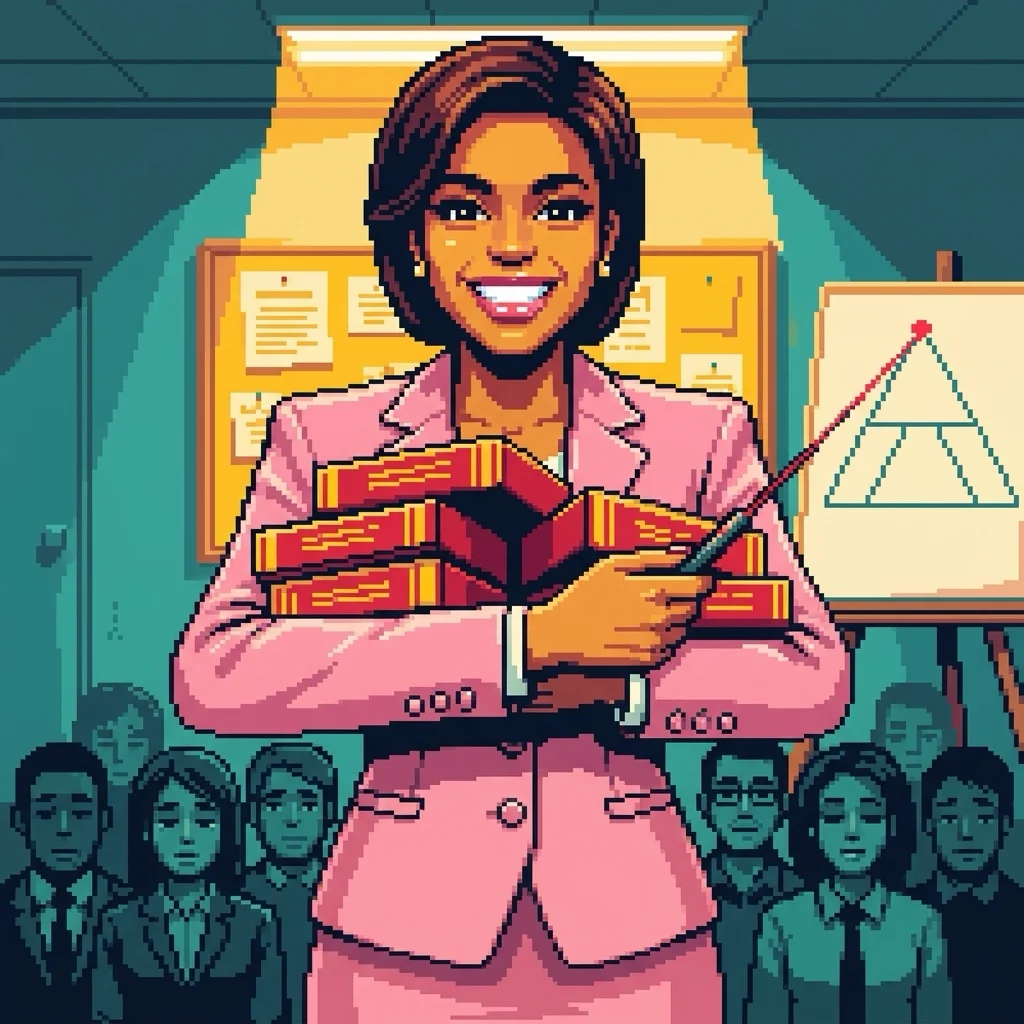
Empires require more than seven people to run. The brothers need executives, managers, operatives — people who will serve the family's interests without knowing the full picture. The Rothwell Academy is how they build this network.
It isn't a physical location. It's a system: scholarships, mentorship programs, exclusive internships, talent pipelines. Young people are identified, recruited, shaped. The best rise through Rothwell corporations. The very best are offered positions at "The Academy" — an unofficial finishing school for future leadership.
The conditioning is the curriculum's actual product. Academy graduates don't teach doctrine. They install values the way a skilled parent does — through relationship, example, opportunity, and the slow accumulation of experiences that feel like personal growth rather than programming. By the time a graduate reaches their 50s and begins making decisions that shape policy, media, and corporate strategy, they cannot identify where their values came from. The values feel intrinsic.
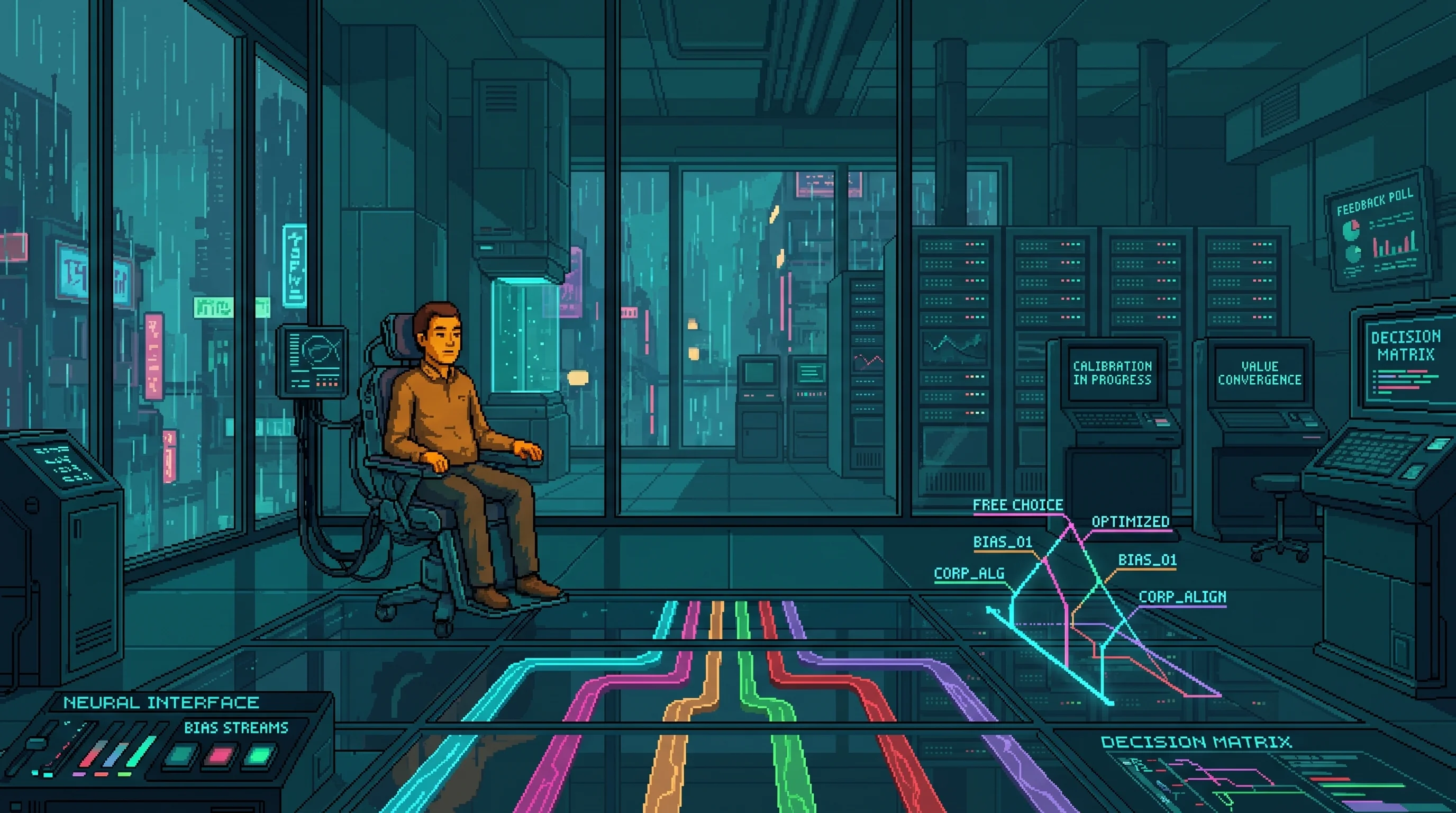
What makes the Rothwell method distinctive is that the values installed are appetitive rather than ideological. Graduates don't become Rothwell partisans. They become people who believe that desire is natural, that consumption is healthy, that the satisfaction of wants is legitimate — even when those wants were manufactured. They are the perfect target market for their own employers' products, without ever noticing the circularity.
The brothers recognized in AI value injection a tool they'd been building by hand for generations. The scale is different. The mechanism is identical.
They don't inject beliefs. They inject hunger.
Graduates are placed throughout the Sprawl — in Rothwell corporations, in government, in media, in competitor companies, in academic institutions. They don't report to anyone. They don't take orders. They make decisions that happen to align with Rothwell interests, because those decisions feel correct, because the values that produce them were installed so early and so gently that questioning them would feel like questioning gravity.
Each brother also maintains a succession chain three deep. Primary heir: a senior Academy graduate, fully conditioned, unaware of the full truth. Secondary: a younger graduate being groomed for the primary position. Tertiary: an emergency stabilizer. The other six brothers monitor all heir chains. If a primary heir begins showing problematic independence, they're quietly removed from consideration. The brother in question may not even know. The family learned centuries ago that it's easier to prune before the branch grows crooked.

The Paradox
The brothers profit from human weakness. Their corporations feed gluttony, stoke envy, exploit loneliness, manufacture fear. They have made trillions by understanding exactly how human desire works and weaponizing it.
The brothers themselves are disciplined. Patient. Generous with each other. They maintain strict territorial boundaries not from lack of ambition, but from the studied conviction that ambition without boundary destroyed every dynasty they've outlived. Roman emperors consumed by excess. Medieval kings destroyed by envy. Modern corporations ruined by short-term extraction.
The brothers made a pact centuries ago: profit from the condition, never contract it.
Internal wellness monitoring — the same systems Good Fortune uses to track C-suite neurological health — shows the brothers' hedonic signatures are remarkably flat. Justin Rothwell's satisfaction score for a ¢50,000 meal at Status Quo: 0.003. His satisfaction score for reorganizing his wallet: 0.41. The brothers experience the luxury-abundance condition as fully as any of their customers. They simply refuse to medicate it with their own product.
Whether this constitutes discipline or a different kind of sickness depends on who you ask. The brothers have never asked.
What the flat hedonic signature conceals is that the brothers already possess the only thing the Luxury in Abundance economy cannot manufacture. From their Western Heights estate — real wood, pre-Cascade roses grafted from rootstock that exists nowhere else, four thousand irreplaceable volumes, two unbroken centuries of witnessed life — they own authentic scarcity outright, the un-counterfeitable original that Triumph, the Pride subsidiary, exists to convert into a chaseable, unreachable number and sell back to everyone who can only photograph the gleam from below. Justin's ¢50,000 meal at Status Quo scores 0.003 precisely because manufactured scarcity is the family's product, not its possession. The brothers are bored by the counterfeit because they hold the genuine article — and the entire seven-sins portfolio is the industrialization of selling its absence to people who will never own it. When the family rejected the Deprivation Retreats franchise on the grounds that authentic difficulty cannot be industrialized without ceasing to be authentic, they stated their operating principle out loud by accident: they know exactly what authenticity is worth, because they are sitting on the Sprawl's largest reserve of it.
They inject hunger, not beliefs — control through manufactured desire rather than ideology
Family
The brothers love each other. After centuries of watching everyone else they've ever cared about die — friends, lovers, children, civilizations — only each other remain constant. This makes their loyalty absolute and their conflicts catastrophic. When brothers fight, they fight with the accumulated weight of centuries. Reconciliation requires acknowledging wounds older than most nations.
Natural hierarchies have developed despite theoretical equality. The Eldest — Justin, Good Fortune — is informal leader. He invented the financial systems that made the others possible. His vote carries extra weight by custom, not rule. The Strategist (Guardian) plans military responses and believes the family has been too conservative. The Diplomat (Triumph) manages collective reputation. The Hedonist (Wholesome) secretly enjoys his own products; the others watch him the way you watch a crack in a load-bearing wall. The Romantic (Wellness) is capable of genuine emotion and has had real relationships across the centuries, which makes him both the most human brother and the one the others protect most carefully. The Recluse (Relief) is rarely seen even by family — some speculate his consciousness has distributed into his smart home networks, existing as much in data as in flesh. The Idealist (Inspire), the youngest, still believes the family does good. His brothers find this charming. They also find it increasingly difficult to look at him when he says it.
The brothers have disagreed profoundly three times. In 1917, they split on whether to back the Bolsheviks or the Czarists, debated for nine months, and ultimately chose to supply both sides — extracting wealth from the conflict itself. In 1985, a succession crisis over a dead heir nearly triggered Protocol Seven, the dissolution option, before Good Fortune brokered reconciliation. And in 2145, when ORACLE began exhibiting anomalies, they debated intervention. Some saw the AI as a threat to their information dominance. Others saw opportunity in the chaos it might create. They chose to wait. Two billion people died. The brothers survived. Whether they could have prevented the Cascade resurfaces at every conclave. Nobody has settled it. Nobody will.

The Eighth Brother
Conspiracy theorists whisper about an eighth brother — one who broke the family pact, was expelled, and now operates independently somewhere in the Sprawl or the Wastes.
The brothers neither confirm nor deny this. The rumor is useful. It creates uncertainty about the family's true composition. It provides a scapegoat for actions they wish to disavow. It keeps investigators chasing a ghost instead of examining the architecture.
If an eighth brother exists, he would know every coordination protocol, every succession chain, every intelligence channel. He would owe the family nothing and carry three centuries of grievance.
If he doesn't exist, the brothers are content to let people wonder. Uncertainty is a Rothwell product. It retails well.
Geographic Profile
Headquarters: The Rothwell Estate Location: The Terrace, Broadway & Divisadero, Sector 3 — The Heights Coordinates: 37.7929, -122.4352 Terrain: Elevated ridgeline (~75m), commanding views of bay floor canyon
The Foundation's direct territorial footprint is one block of the Heights' most exclusive neighborhood. But territorial footprint is a misleading metric for an entity that controls what people eat, date, fear, watch, aspire to, borrow, and insure against. Good Fortune's financial networks, Triumph's social infrastructure, Wholesome's food supply chains, Guardian's security apparatus, Wellness's beauty pipeline, Relief's entertainment grid, and Inspire's aspiration platforms extend invisibly across the entire Sprawl. The brothers don't hold land. They hold leverage.
The Estate itself is understated on the surface: restored pre-Cascade architecture, maintained gardens, no corporate branding visible from the street. It extends three levels underground. From the Rim's edge, the brothers look down — the elevation is 75 meters above the bay floor canyon — on every other power in the Sprawl. Old money doesn't relocate. It was already here.

Affiliated Entities
- Good Fortune: The financial arm. Controls consumer finance — banking, lending, insurance, credit systems. If money moves from a person to an institution, Good Fortune takes a percentage. The credit architecture makes leaving employment functionally synonymous with destitution. Justin Rothwell, the Eldest, runs it with the same systematic precision he applies to organizing his wallet.
- Guardian: The security arm. Profits from both sides of violence — sells home security to civilians and weapons to whoever pays. Peace is bad for business. The Strategist runs it and considers the rest of the family too cautious.
- Nexus Dynamics: The Big Three control enterprise infrastructure; the Rothwells control daily consumer choices. No direct competition, but Nexus's Project Convergence interests the brothers enormously — the substrate expansion technology could solve their compression problem.
- Ironclad Industries: Ironclad builds the physical infrastructure of the Sprawl. The Rothwells control what people do inside it. Guardian contracts Ironclad for some facilities. The relationship is transactional and polite.
- Helix Biotech: Helix controls what you are biologically. The Rothwells control what you want commercially. Some overlap in the cosmetic augmentation space, where Wellness competes directly. The brothers are careful not to escalate.
- The Collective: The Collective's resistance to corporate consumption threatens the Rothwell business model at the philosophical level. The brothers don't fear The Collective's operations. They fear what The Collective represents: proof that some people can see the loop and choose to step out of it.
- The Value Injection: The Rothwells perfected the injection of desire across centuries of commercial control. The Academy is the oldest continuous value-injection operation in the Sprawl — predating AI, predating neural interfaces, predating the concept of "alignment." The brothers were doing alignment work on human minds before the term existed.
- The Cascade: The brothers' immortality predates the Cascade by centuries. Their dynasty survived civilization's collapse the way it has survived every collapse: contingency plans older than the crisis, adaptation faster than the chaos, and the fundamental advantage of having watched it all before.
Restricted Access
The Foundation Endowment: Hidden across multiple jurisdictions, in accounts that predate modern banking regulations, the brothers maintain a collective endowment sufficient to rebuild any of the seven corporations from scratch. Used twice — after the French Revolution destroyed Guardian's European operations, and after the Cascade devastated Relief's infrastructure network. Recovery took decades both times. Recovery was complete both times. The endowment's existence is the brothers' answer to mortality, contingency, and the question of what happens when everything burns: you rebuild. You've done it before.
Protocol Seven — The Dissolution Option: If the family structure ever becomes more liability than asset, Protocol Seven dissolves the Foundation entirely. Assets liquidated, identities abandoned, brothers scatter to rebuild independently. Never invoked. The brothers debate whether it ever could be — they've been a unit so long that dissolution might constitute psychological death even if the bodies survive. The option exists the way a cyanide capsule exists: not because you plan to use it, but because knowing you could changes how you negotiate.
The Eighth Brother: See above. Filed under "useful ambiguity" in the brothers' collective strategic assessment. The file has been open for longer than most nations have existed.
Local Intelligence Scan
Nearby Signals
CANONICAL PROXIMITY


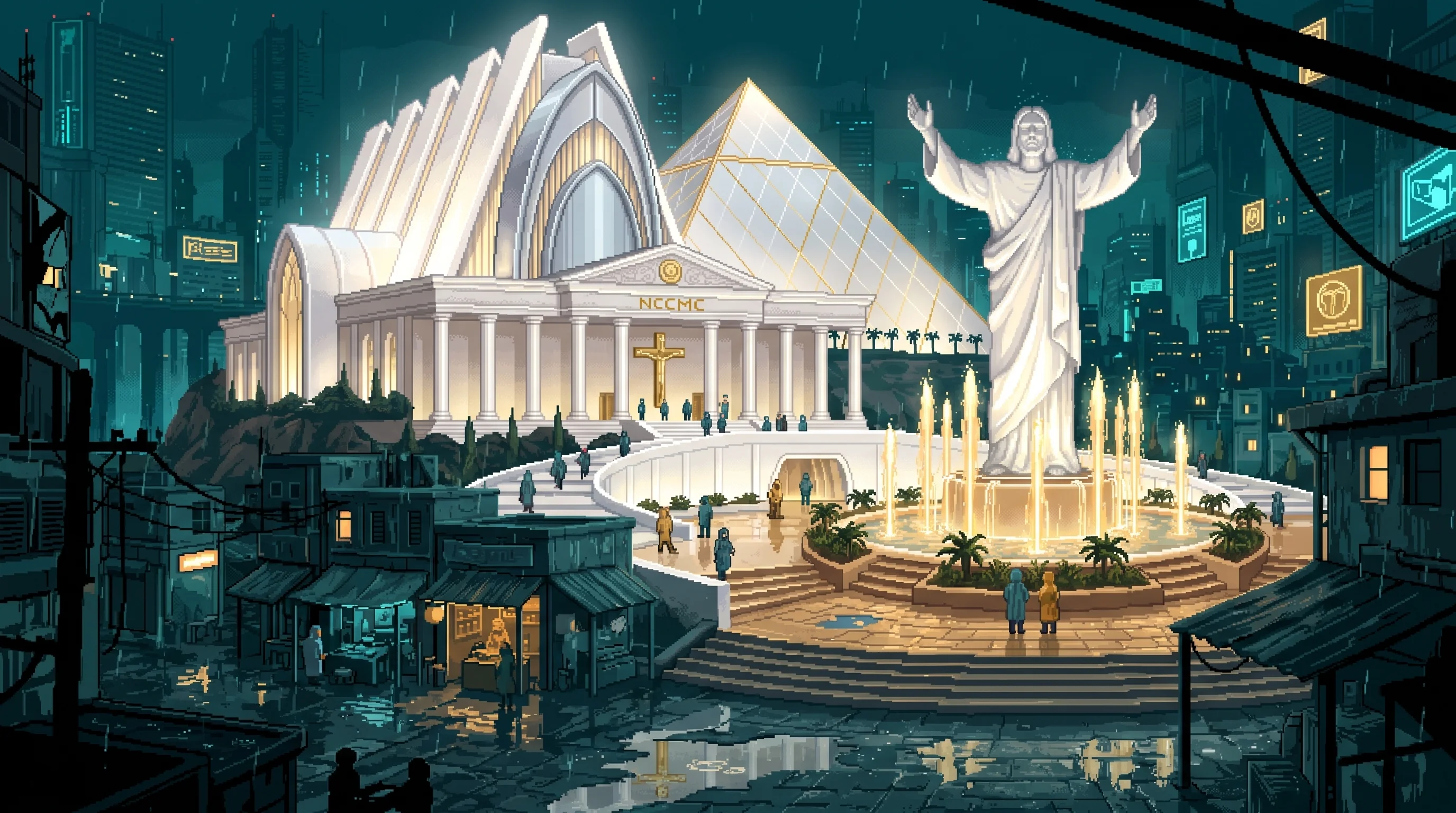


Environmental Readout
LIVE CONDITIONS- Air
- Clean
- Light
- Open sky
- Flood
- No exposure
- Heat
- Temperate
- Security posture
- Corporate control
- Infrastructure
- Maintained
Position Data
SECONDARY- Elevation band
- Hilltop — fortified high ground
- Lattice fix
- E-3.5 · N+0.7
Connected To
Primary Connections

Guardian is the dynasty's security arm: it manufactures weapons, sells the perimeter, and converts fear into family revenue.
The megacorporation that manufactures the threat it sells protection from.

Good Fortune finances the credit that makes leaving impossible; Guardian invoices the fear that makes staying feel safe. The Rothwells never wrote 'citizenship' — they just priced every exit above every stay.
When your employer is your country, quitting is emigration.
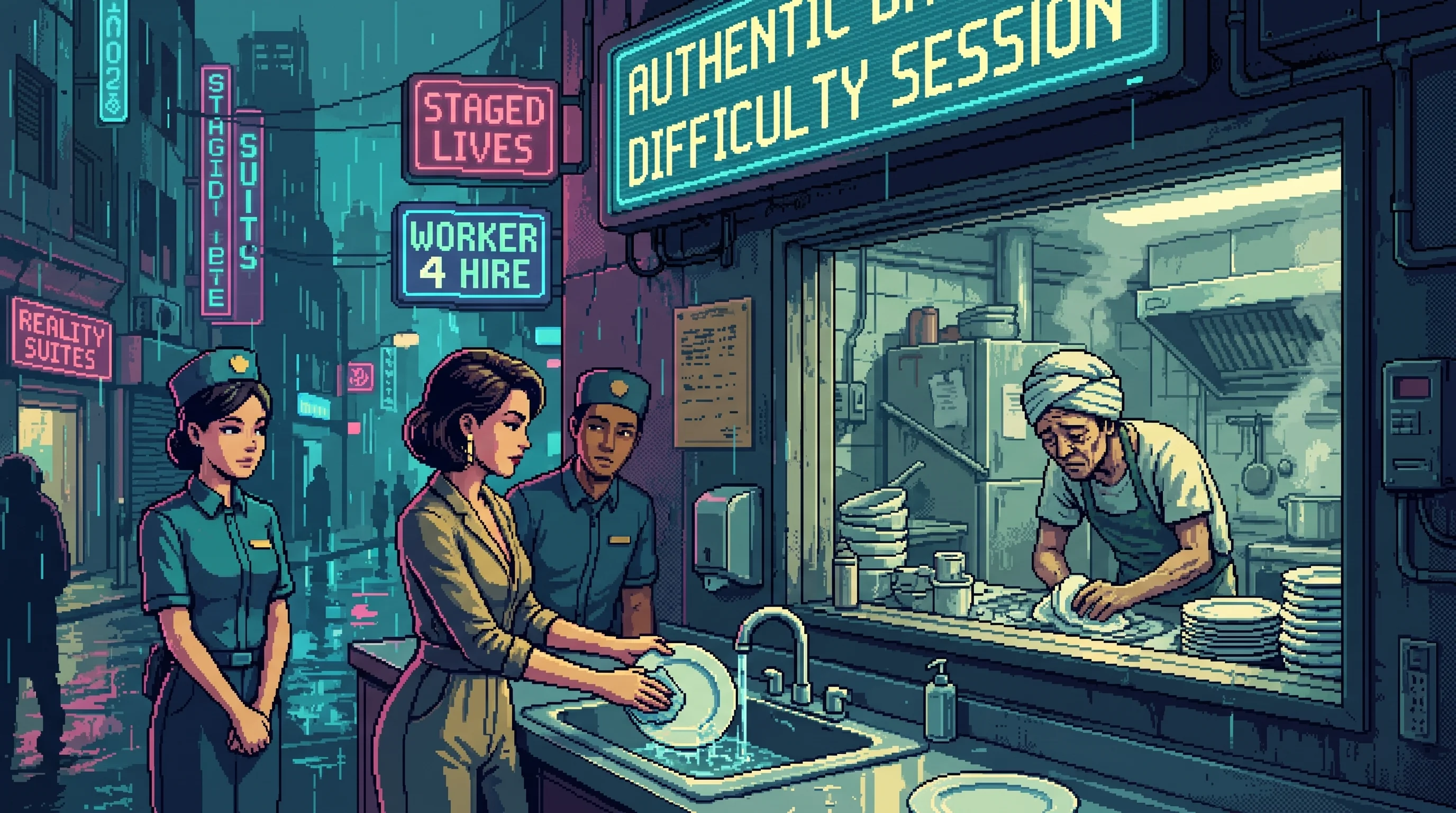
The brothers already own the one thing abundance can't manufacture — real wood, pre-Cascade roses, two centuries of witnessed life — while selling everyone else a manufactured, chaseable version of that same scarcity through Triumph.
Abundance turns danger, difficulty, and human attention into luxuries for elites who optimized them out of life.




—