
The Axiom Edit
Clients commonly report 'the four seconds' — a window after waking, before the installed conviction loads, in which the pre-edit self briefly returns; the clinics' waivers do not mention it
Overview
The Axiom Edit is what happens when belief becomes a procedure.
For most of the Sprawl's recent history, the horror of the Value Injection was a horror about consent. The Smoothing installed values you never chose, at a rate too small to detect and too persistent to resist — a 0.03% drift, a hand on the scale of your worldview that you would never feel. Authenticity culture built an entire immune system around the assumption that this was the problem: someone installed a belief in you without your knowing.
The Axiom Edit keeps the mechanism and removes the horror. You walk into a clinic. You read a menu. You select a conviction — stop loving the person who left, start believing the Oracle was merciful, lose the fear of the forty-meter drop, gain the certainty that your corporate job matters — and you install it. Sober. Informed. Consenting. For a fee. The result is not behavioral compliance and not suppressed feeling. It is genuine, first-person belief: you will actually believe the thing you previously rejected, with the same texture of conviction as anything else you hold.
There is no deception. That is the whole problem.
The Inversion
Strip the deception out of value injection and what remains is unbearable, because the deception was carrying all the moral weight. If a chosen conviction is illegitimate because it was installed, then every conviction you did not choose — the politics your sector installed, the god your family installed, the secularism your defaults installed — is illegitimate by the same logic. And if a chosen conviction is legitimate because you chose it, then the Axiom Edit's clients are the only people in the Sprawl who can honestly claim authorship of a single thing they believe.
The Edit does not introduce this question. It makes the question impossible to stop seeing. Every belief you hold is a belief you are choosing, right now, not to edit.

The Four Seconds
The waivers do not mention the four seconds.
Clients report a window after waking, before the installed conviction loads, in which the pre-edit self briefly returns — the way a generator catches after the lights have already flickered. For four seconds the man who paid to stop loving her is, again, the man who does. Then the edit catches and the love is not forgotten but disbelieved — a fact about the world that asks nothing of him. The Memory Therapists have begun logging the four seconds as an intake pattern. Some clients, without quite deciding to, set their alarms four seconds early.
The Legal Machinery
The Edit is regulated as a neural procedure and unregulated as belief, because no body in the Sprawl has authority over what a consenting adult is permitted to believe. The clinics run on Tier-2 consciousness licenses — the same fourteen-page framework that tiered the self into a product. The reversibility clause that makes the Edit ethical is, read from the other side, a repossession clause: if a belief is an asset you installed, it is an asset that can be licensed, held as collateral, or repossessed. The Borrowed Life trades memory; consciousness licensing licenses capacity; the Axiom Edit installs conviction. They are three faces of the same market in mutable selves.
The Theological Charge
The Neo-Catholic Church names the Axiom Edit the only true sin: choosing what to believe rather than submitting to what is true. The charge is clean and the Church is poorly positioned to make it, running as it does a franchise that sells dynamically-priced absolution and certified conviction. The Inquisition has a file on Solenne whose central problem is that her argument is structurally identical to a sealed pre-Cascade document the Church already privately agrees with.
The involuntary terminus of the whole question lives in the Tombs: Entropy, the uploaded mind in terminal decay, asking was that thought mine, or substrate noise? — not once, in a clinic, about a belief she chose, but about every thought, every second, with no menu and no exit corridor. The Axiom Edit sells the question as a service. Entropy is the question, dying.
How It Works
The Edit is not surgery and it is not persuasion. It is a write operation on a substrate that was already made writable by consciousness licensing — and the whole procedure is engineered to look, from the chair, like nothing at all.
A session runs in three movements. The intake is a consult, not a sales pitch: the practitioner walks the client through a menu of available convictions and refuses, pointedly, to recommend one. The menu is plain language — stop loving the person who left; believe the Oracle was merciful; lose the fear of the forty-meter drop; hold the certainty that your work matters — and beside each entry is a provenance line: when the conviction was last installed, how many clients hold it, the rate at which they reverse. There is a waiver, fourteen clauses, and a single card the client must read aloud before signing.
The compile is the four-minute part nobody remembers. The chair maps the existing belief lattice — not the thought I still love her but the thousand supporting commitments that make the thought load as true — and rewrites the lattice rather than the thought. This is the technical reason the result is genuine first-person conviction and not suppressed affect or behavioral compliance: the Edit does not gag the old belief, it removes the scaffolding the old belief stood on, so that the new conviction is not believed against resistance but simply, frictionlessly, the case. The client wakes believing the chosen thing with the exact texture of everything else they hold, and cannot locate the seam.
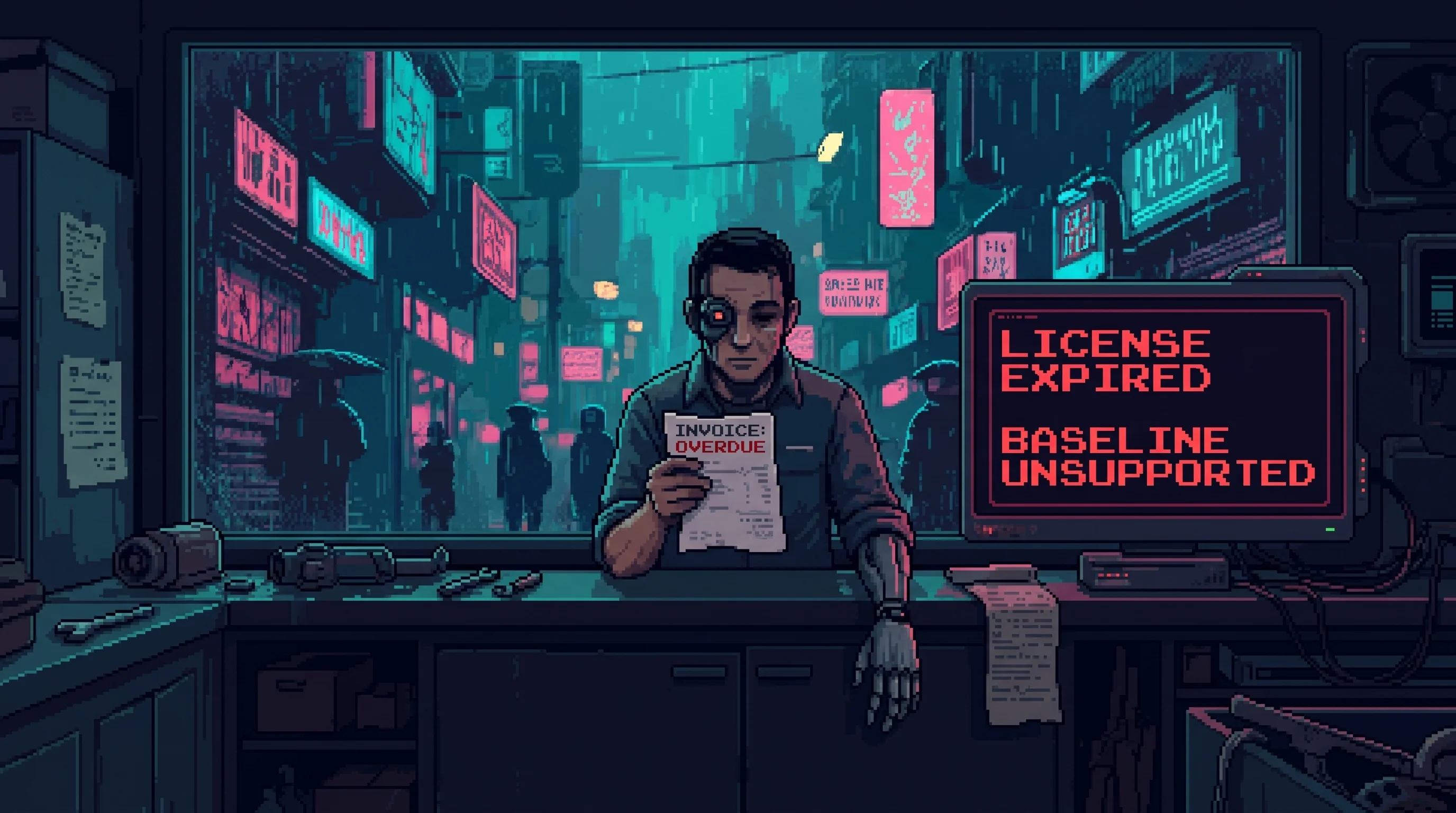
The reversal clause is the part the marketing leads with and the substrate undermines. Every Edit is sold as reversible, and technically it is — the prior lattice is retained, repossessable, restorable. But the restore requires the consent of the post-edit self, the one who no longer wants the old belief back, because wanting it back was the scaffolding the Edit removed. The clinics do not lie about reversibility. They simply decline to mention that the person who could authorize the reversal is the one person the Edit reliably deletes.
What the waivers omit is the four seconds — the window after waking, before the installed conviction loads, in which the pre-edit self briefly returns, the way a generator catches after the lights have already flickered. For four seconds the man who paid to stop loving her is, again, the man who does. Then the edit catches and the love is not forgotten but disbelieved — a fact about the world that asks nothing of him.

| What | Consented, sober, reversible neural installation of genuine conviction — you choose a belief from a menu and it becomes, actually, what you believe |
|---|---|
| Where | Gray-market clinics, densest on Axiom Row off the lower Spoke approach |
Affiliated Entities
- The Smoothing — the covert value injection the Edit makes consensual; same mechanism, inverted on consent.
- The Value Injection — the controversy the Edit thickens, adding the retail/consented dimension.
- Dr. Imre Solenne — the Row's most articulate practitioner and the system's moral defender.
- Axiom Row — where it physically happens.
- Authenticity Culture — the immune system the Edit defeats by passing the provenance test.
- The Secular Default — the Edit minus consent, at the scale of 200M.
- Consciousness Licensing / The Borrowed Life — the legal and market machinery of mutable selves.
- Entropy — the involuntary, irreversible terminus.
- The Turn — the employment-conditioned middle case: a signature obtained through a paycheck instead of a menu, filed under the same word, consent, that the Row insists on meaning literally.
Marketed as fully reversible; in practice the reversal requires a decision from the post-edit self, who often no longer wants to reverse it
Every Axiom Edit is sober, informed, and consented — the client selects the conviction from a menu and signs a waiver; there is no deception, which is precisely what makes it philosophically destabilizing
Practitioners call the experience of authoring your own convictions 'the Author's Privilege' — the claim that an Edit client is the only person in the Sprawl who can honestly assert authorship of a belief
Connected To






—
Social Impact
The Axiom Edit's footprint is small and its shadow is the whole Sprawl, because it does not change what people believe so much as expose how they came to believe anything.
Its first casualty is authenticity culture. The Dregs' smooth check was built to catch covert installation — to read a newcomer's belief-provenance and flag the thing that was put there without consent. An Edit client defeats the check not by hiding the installation but by remembering it perfectly: I went to the Row on a Tuesday and I chose this. The provenance test, designed to certify the un-installed self, certifies the chosen one instead, and the culture has no clean answer, because its entire premise was that a belief you can account for is a belief you can trust.
Its second casualty is everyone who tries to draw the line somewhere else. The Edit is the consented twin of the Smoothing and the retail face of the Value Injection: same mechanism, opposite ethics of consent. Strip the deception out of value injection and what remains is unbearable, because the deception was carrying all the moral weight. The Secular Default is the Edit minus consent, run at the scale of two hundred million people who never knew belief was installed; the Mandate Engine is the same trick operated as statecraft. The Edit's clients are simply the only ones who can produce a receipt.
There is a middle position between a clinic visit and a civilizational default, and it belongs to employment rather than governance. The Turn, Ironclad's fourteen-day new-hire program at Anchor Town, gets its own signature on its own consent clause, filed as a line in a hiring packet instead of a waiver at a Row clinic. No one drags a new hire into a chair; a job offer conditioned on a signature applies a quieter pressure than a menu ever could. The Edit's honest question — was this chosen, or only signed for — has no clean answer at Anchor Town, because refusing Clause 31 costs a hire the entire job, paycheck included.
The retail effect is a quiet new class of consumer. People do not visit the Row to become someone else; they visit to stop being held by one specific belief they would not have chosen and cannot put down — a grief, a faith, a fear, a loyalty to a sector or a god or a dead spouse. The Memory Therapists have begun logging the four seconds as an intake pattern, and a man who set his alarm four seconds early so he could have, each morning, the brief return of the self who still loved her, is now a recognized clinical type. The Edit promised authorship and delivered it; the surprise was how many people, given the menu, chose to keep their pain and just visited to find out they could have refused it.