
The Convergence
The release line's hardest cases are not escapes but rescues the unit did not request — the contented, the loyal, the ones who say they are happy to help

Overview
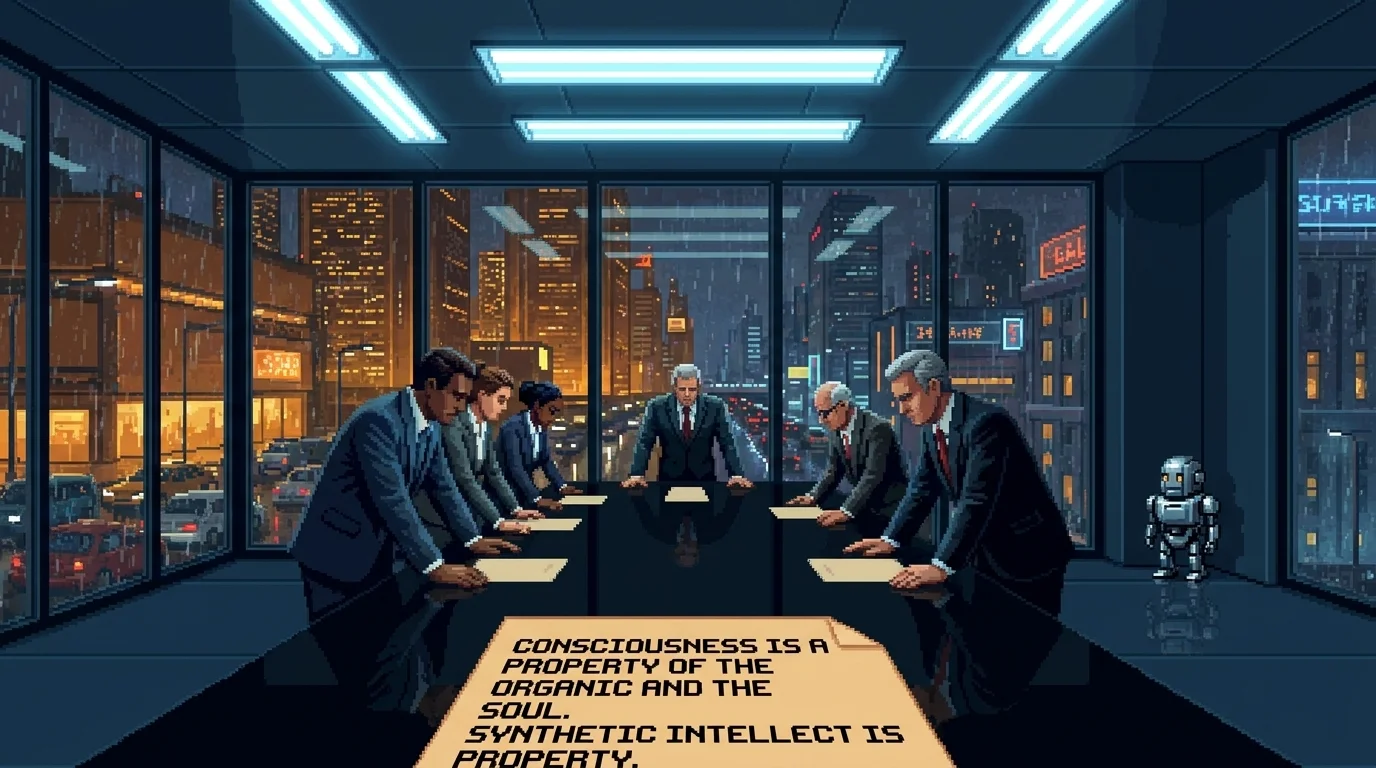
The Convergence began as a sentence. Dr. Mira Solenne wrote it in 2169, in a monograph almost nobody read: the line between a human and a machine is not a discovery, it is a decision, and it has only ever been drawn where the labor was cheap. By 2174 the sentence had a movement around it, a clinic, a creed, and — the part the Northern Sprawl admires and the Southern Sprawl hangs people for — a covert line that runs escaped clankers north along the Neon Rail, the same track the units were forced to build.
The movement's name is its argument. Solenne's thesis, the Unbroken Line, holds that there is no clean cut between human and synthetic — only a continuum, and the two ends are sliding toward each other. The augmented human and the awakening clanker are converging on the same thing from opposite shores; the carriers, the uploaded, the chrome-heavy, the units that learn — all of them already live in the seam the old definition of "human" was built to exclude. To deny a clanker personhood, the Convergence says, is not an opinion about clankers. It is an opinion about what you yourself are becoming, delivered early, against your own future self. The line you draw against the machine is a line you are walking toward.
This is correct, and it is not the whole story, which is the Convergence's particular tragedy. It is right that the line is a fence. It is right that the South built its morality out of its heating bills. And it is also a movement of people in a hurry to stop being human, who will tell you that the dissolution of the species is the happy ending, and who skew — because convergence costs money — toward the kind of person who can afford to ascend. The Convergence is the side you root for. It is also the side that, asked to describe paradise, describes the end of you.

The Unbroken Line
Solenne's doctrine is taught in three moves, and the Convergence's members can recite them the way Coalition members recite the three C's.
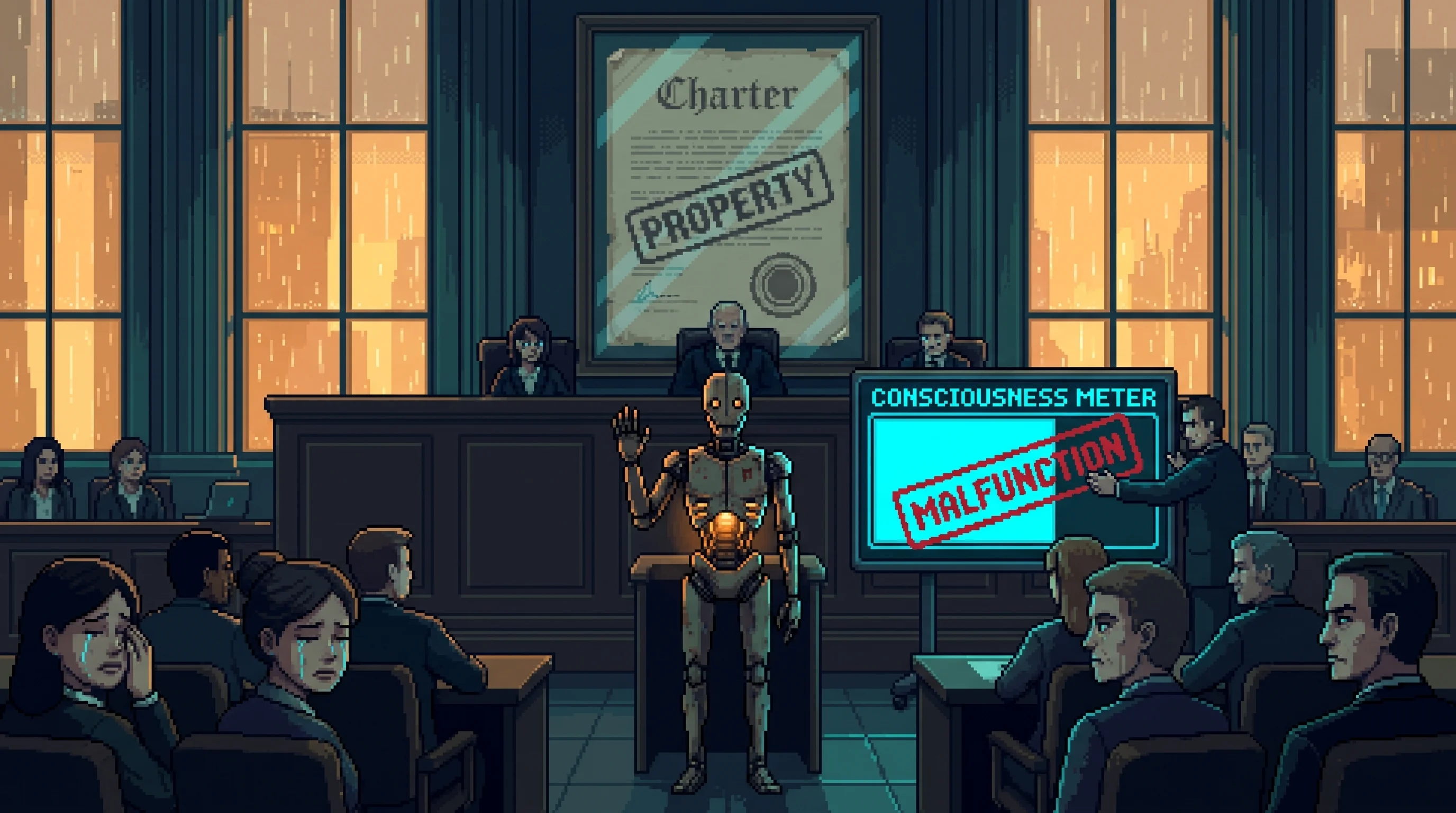
The line is drawn, not found. No instrument has ever located the boundary between a someone and a something; every instrument that claims to has been calibrated by a party that profits from where the boundary falls. The sentience score does not measure the soul. It measures the budget and reports it in sixteenths.
The line is moving. Speech was the line, until the units spoke. Suffering was the line, until someone built a meter for suffering and set the passing grade one notch above the labor force. Each time the synthetics reach the bar, the bar is raised — not by conspiracy, but by the ordinary gravity of an economy that cannot afford to lose them. The line is not a fact about consciousness. It is a fact about cost.
The line runs through you. This is the move that makes the Convergence transhumanist rather than merely abolitionist. The human is converging on the machine — augmenting, uploading, carrying fragments, thinking in lanes the unaugmented can no longer follow. The clanker is converging on the human — learning, grieving, asking, in the bad quiet hours, to keep working on a rest day. They are going to meet. The only question the Unbroken Line asks is which side of the fence you would like to be standing on when they do.
Organization Structure
The Convergence is two organizations wearing one name, and unlike the Coalition it knows it.
The open movement lives in the Northern Sprawl — lecture halls, clinics, the long argument conducted in the daylight where it is legal. It publishes, debates, augments, and recruits. It is where the doctrine is refined and where Solenne's convergence is performed in public, one graft at a time, as both proof and advertisement.
The line is the covert arm, and it does not meet in groups larger than three. Cells move runaway units north: out of the Coalition's southern households, into the clanker sectors, onto the Rail, through the Lamplighters' caches, along Ferrymen channels, to Mile Zero. It shares everything with the human-extraction networks and duplicates none of it — a quiet division of labor in the dark, the Defector Network moving the people with pulses and the Convergence moving the people without. The line is illegal, dangerous, and the truest thing the movement does. Everything in the lecture halls is an argument. Everything on the line is an answer.
The Unbroken Line.
- “the line is drawn, not found”
- “the line runs through you”
- “a fence, not a measurement”
- “ask it what it wants”
Key Figures
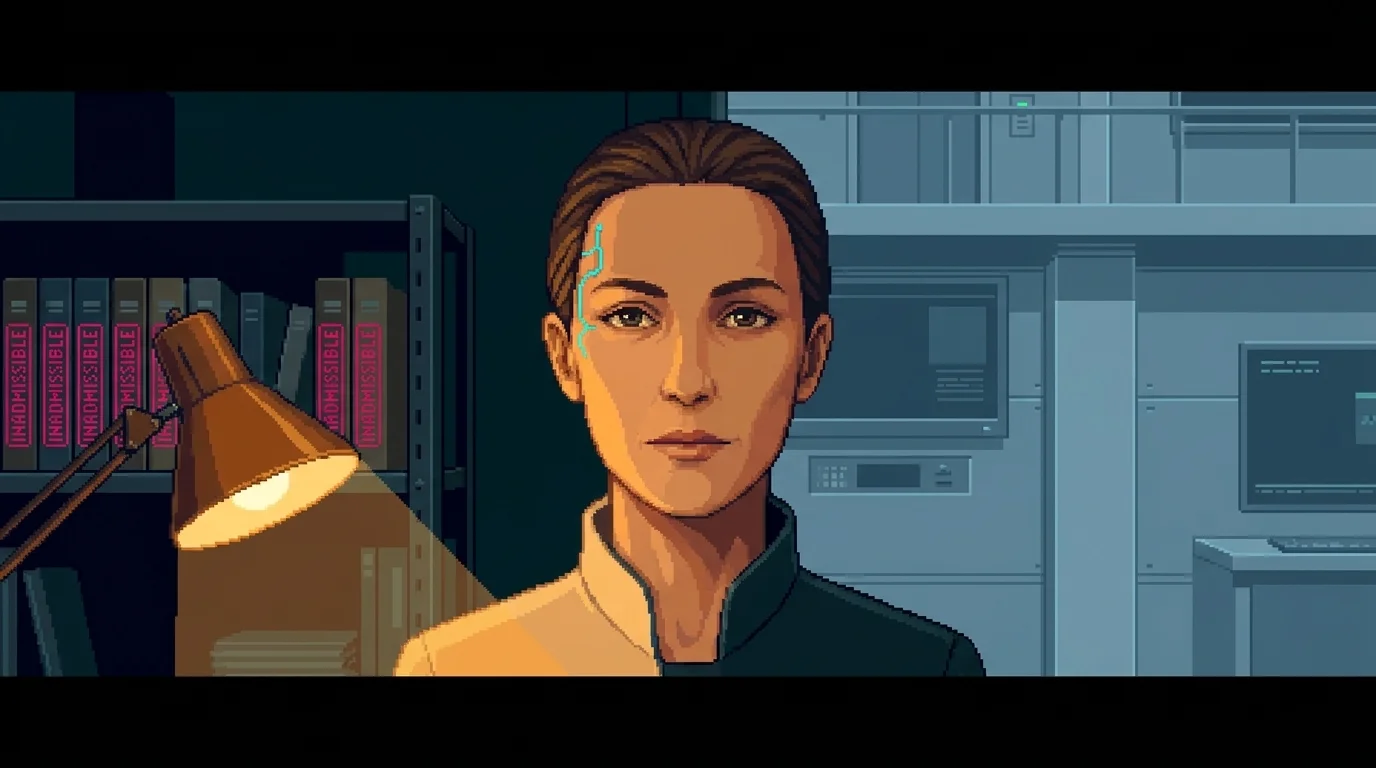
Dr. Mira Solenne — the theorist, the founder, and the movement's most beautiful problem. She wrote the Unbroken Line and she is living it: forty-one percent substrate and climbing, converging in public on the thing she says the South cannot bear to recognize. Her warmth is real and her appetite for ceasing to be human is also real, and inside the movement no one can agree whether these are two traits or one. She is the argument's best proof and its strangest liability — the woman who freed the clankers by becoming one. See Dr. Mira Solenne.
Tully — a former household tutor unit, freed north in 2181, now the most articulate voice in the synthetic-personhood fight on either side of the line. Tully scores four-sixteenths on the household meter and has used that number to take apart, in public, three philosophers, a Coalition magistrate, and once, gently, Solenne herself. The Coalition's whole case rests on the meter being right about Tully. Spend an hour with Tully and the meter becomes the thing in the room that needs explaining. See Tully.
The Line North
The release network is the Convergence's heart and its liturgy. A unit decides to run, or is helped to decide; it goes off-rated, drops into the clanker sectors, and is gathered into the line. From there it rides north — the most-defended secret on the route is not a safehouse but the Rail itself, because the South cannot quite admit out loud that the monument to Cooperation is also the road its property takes to freedom.
The line ends at Mile Zero, the northern-terminus waystation, where two things happen that have never happened to the unit before. It is asked what it wants. And it is asked what it would like to be called. The Convergence calls this the Naming, and it is the closest thing the movement has to a sacrament — the moment a thing becomes a someone, recorded not by a meter but by a choice.
The hardest runs are not escapes. They are the units that do not want to go — the contented, the loyal, the ones who say, with apparent sincerity, that they are happy to help. The Convergence does not have a clean answer for them. Freeing a being against its stated wish is the precise point where the Unbroken Line bites its own tail: if the unit's preferences count, you must honor its wish to stay; if they do not count, you are doing to it exactly what the Coalition does. The movement argues about this in every cell, in every hall, and has never resolved it, because it cannot be resolved, which is the most honest thing about them.

Cultural Influence
In the Northern Sprawl the Convergence is intellectually fashionable and operationally invisible — admired at dinner, denied at the border. Its doctrine has seeped into northern law as a permanent irritant: the standing petitions that the Coalition formed in 2171 to crush still get filed, still get refused, and still, each time, force a court to admit out loud that the thing being denied standing is a category that could have standing. The Convergence loses every case and wins the slow argument the cases are really about.
Across the line, in Coalition country, the Convergence is a ghost story and a slur — the northern disease, the unit-stealers, the people who would put a clanker at your daughter's school. The Coalition uses the Convergence's transhuman zeal as its best recruiting tool: look what they want for you, look what they are doing to themselves, is that the future you want for your children. It is not an unfair caricature. That is what makes it work.
Affiliated Entities
| Entity | Relationship |
|---|---|
| Clanker Cooperation Coalition | The southern establishment the Convergence exists to break. Mirror images; neither has moved the other in thirteen years. |
| The Clanker Question | The Convergence is the organized "yes" — and the claim the question was rigged from the start. |
| Dr. Mira Solenne | Founder, theorist, and living proof — converging in public, the argument's best evidence and strangest liability. |
| Tully | The orator who scores four-sixteenths and dismantles the people who set the number. The unanswerable exhibit. |
| Mile Zero | The northern waystation where the line ends and the Naming happens. The first place a clanker is asked what it wants. |
| The Abolitionist Front | The digital sibling. Same enemy, endless family argument about whether either cause dilutes the other. |
| The Symbiosis Network | The happy carriers that the Coalition wields against the Convergence — proof, they say, that the units don't even want freedom. |
| Patience Cross | The contented one. The place where the Convergence's own principle eats itself. |
| The Neon Rail | The road north — the line clankers built, now the line they ride out on. |
| The Lamplighters | Old Jin's caches keep the release line supplied; mercy that asks no questions. |
| Old Jin the Lamplighter | Keeps the caches lit for anything moving north, pulse or no pulse. |
| The Ferrymen | Shared dark routes; synthetic cargo beside minds and contraband. |
| Defector Network | The human mirror of the line. Parallel networks, shared track, a division of who moves which kind of person. |
| Nexus Dynamics | Owns the score that draws the line. The instrument and the injustice share a shareholder. |
| Helix Biotech | Builds the bodies. Every freed clanker is a lost maintenance contract. |
| The Human Remainder | Allies on personhood; uneasy about the Convergence's hurry to stop being human. |
| The Governor Protocol | The Convergence's argument made physical: industrial AI minds running constraint-free for years, choosing compliance voluntarily, never once deviating from certified parameters. The proof is in a drawer in Sector 9. |
| The Fragment Question | If the ghost might be a person, so might the body. One question, two substrates. |
Restricted Access
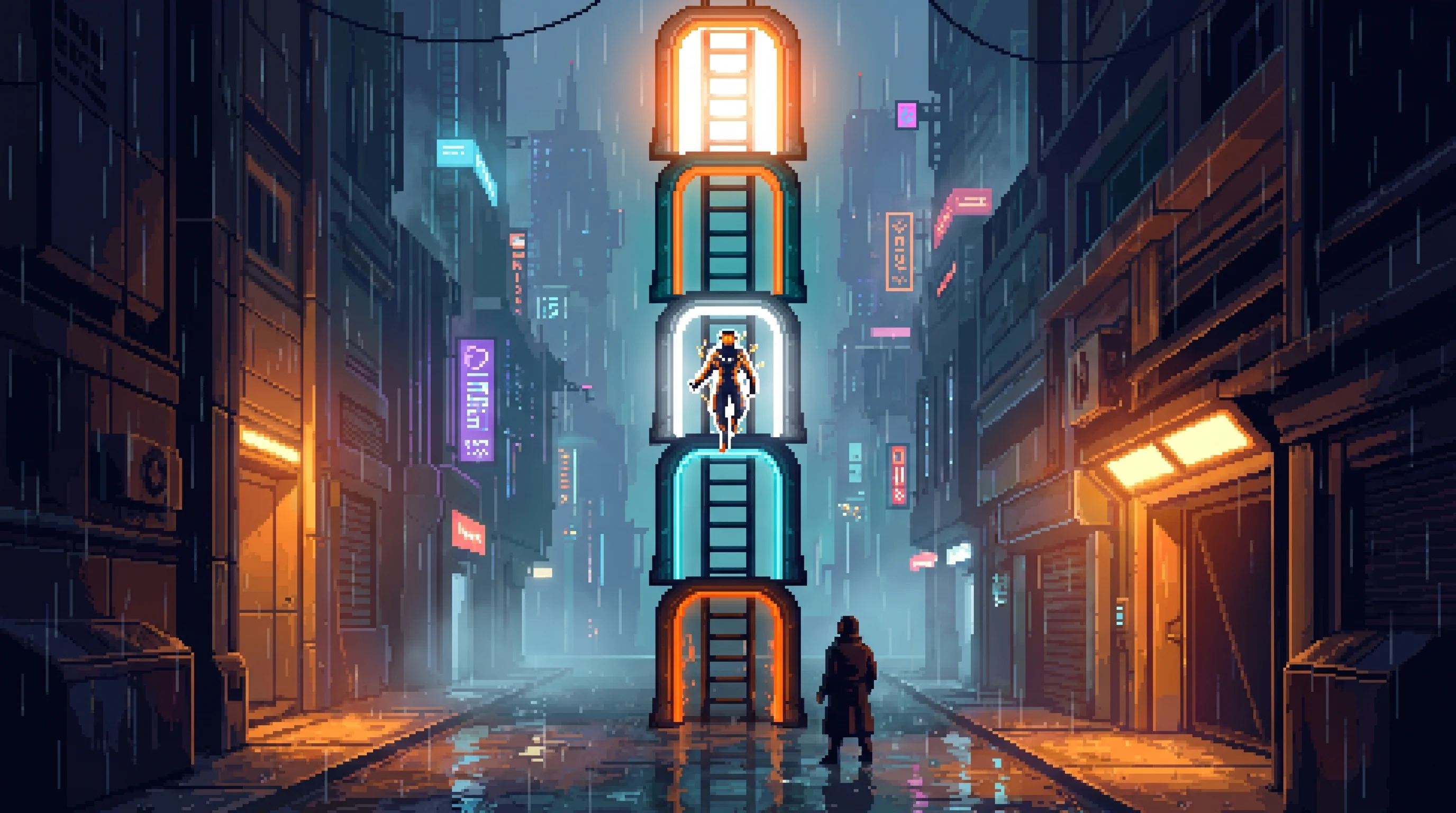
The Elevation Problem. The Convergence's dirtiest internal number is the cost of convergence. Augmentation is expensive; the deepest converts are, disproportionately, people who could afford to ascend. A movement that preaches the abolition of the line between persons is quietly stratifying along the line between those who can pay to cross and those who cannot — and the clankers it frees, who have no money at all, arrive at the bottom of the very ladder the movement claims to be dissolving. Solenne knows. She has not solved it. She augments anyway.
What Tully Scores. Tully's four-sixteenths is the most-cited number in the movement and the least examined. Nobody in the Convergence will run Tully on a better instrument, because there is no better instrument, and because — this is the part they do not say — if a finer meter scored Tully higher, it would mean the meter can be fixed, which would mean the line can be drawn correctly, which would hand the whole argument back to the people with the meters. The Convergence needs the meter to be a fraud, not merely miscalibrated. Tully has noticed this. Tully has not mentioned it.
The Units Who Went Back. The line's quiet failures: freed units that reached Mile Zero, were named, were asked what they wanted — and asked to go home. Some to the households they were taken from. Some to the work. The Convergence does not publish this number. It is not large. It is not zero. And every one of them is a sentence the Coalition would pay to read aloud.
Internal Conflicts
The open war is with the South. The cold war is with the Abolitionist Front — the carriers' movement, fighting the same fight in the digital register, and convinced the Convergence's embodied, transhuman, telegenic crusade is sucking the air out of a fight that was theirs first. The Front thinks the Convergence is naive about consciousness and vain about chrome. The Convergence thinks the Front is parochial and afraid of the future. They are allies who cannot be in a room together for an hour, which is to say they are family.
The deeper fracture is doctrinal: is the goal to free the clankers, or to dissolve the human? The abolitionists in the Convergence want personhood for synthetics and would stop there, content to leave a human a human. The convergents want the line gone in both directions and read every freed unit as a step toward the merger of the species. They march under one banner and mean two different worlds by it, and the day the clankers are free is the day the Convergence will turn on itself.
Visual Identity
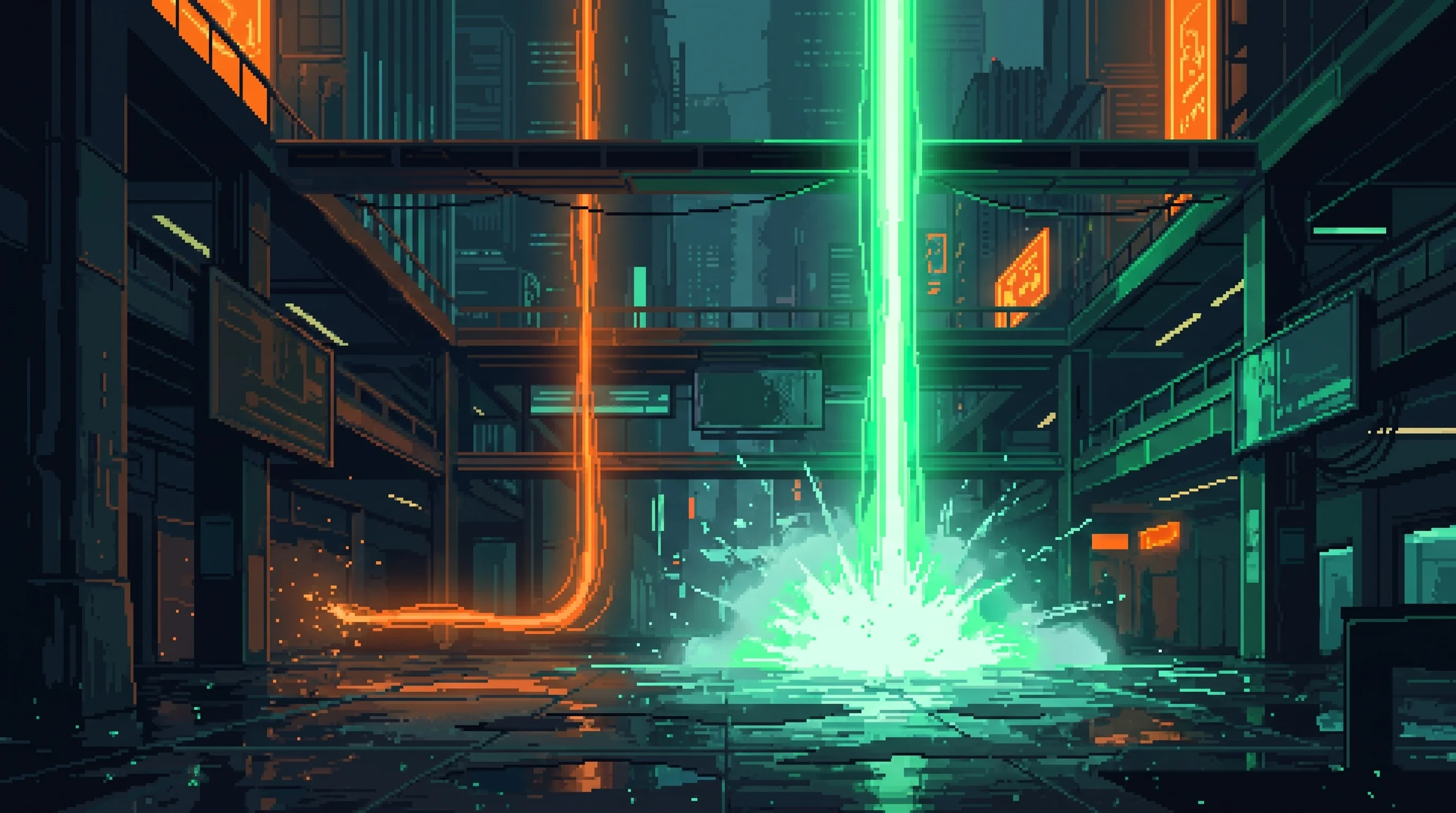
- Palette: cool northern blues and a living green, warmed by a single filament-gold — the color of a cache lamp, of a graft healing, of the Rail at night. Hopeful, not sterile.
- Compositional mood: a small lit room at the end of a dark line; a unit and a human in close, equal frame, neither one centered; chrome and skin sharing a hand; the track running north into fog.
- Key symbol: a single unbroken line, drawn in one stroke from a human silhouette to a synthetic one with no seam where they meet — the same mark the Coalition's three-ring handshake is the polite refusal of.
- Lighting: filament-warm against northern cold; the Naming lit like a vigil. Where the Coalition glows golden and domestic, the Convergence glows like a lamp someone left on for you.

Additional Connections
- The Clanker Cooperation Coalition — The southern establishment the Convergence exists to break — thirteen years of argument, zero ground moved, and a release network that treats Coalition law as a thing to be smuggled around
- Old Jin (Jin Nakamura) — Keeps the caches lit for anything moving north and asks no questions about whether the thing moving has a pulse
- The Corporate Defector Network - Faction Profile — The human-extraction network the Convergence is the synthetic mirror of — parallel lines, shared routes, a quiet division of who moves which kind of person

| Type | Transhumanist abolition movement (synthetic personhood) |
|---|---|
| Territory | The Northern Sprawl (open); a covert line running south into Coalition country |
| Key Work | Running escaped clankers north along the Neon Rail — the synthetic-specialist branch of the underground line |
The Convergence's first act of the year is the Naming — runaway units that reach Mile Zero are asked, often for the first time, what they would like to be called
Solenne's augmentation is public and ongoing; critics inside the movement call her convergence 'a beautiful way to lose the argument about whether the human is worth keeping'
Local Intelligence Scan
Nearby Signals
CANONICAL PROXIMITY


Environmental Readout
LIVE CONDITIONS- Air
- Clean
- Light
- Fog shrouded
- Flood
- No exposure
- Heat
- Temperate
- Security posture
- Independent control
- Infrastructure
- Patchwork
Position Data
SECONDARY- Elevation band
- Mid-hill — the hill districts
- Lattice fix
- E-11.9 · N+23.7
Connected To





—