Overview
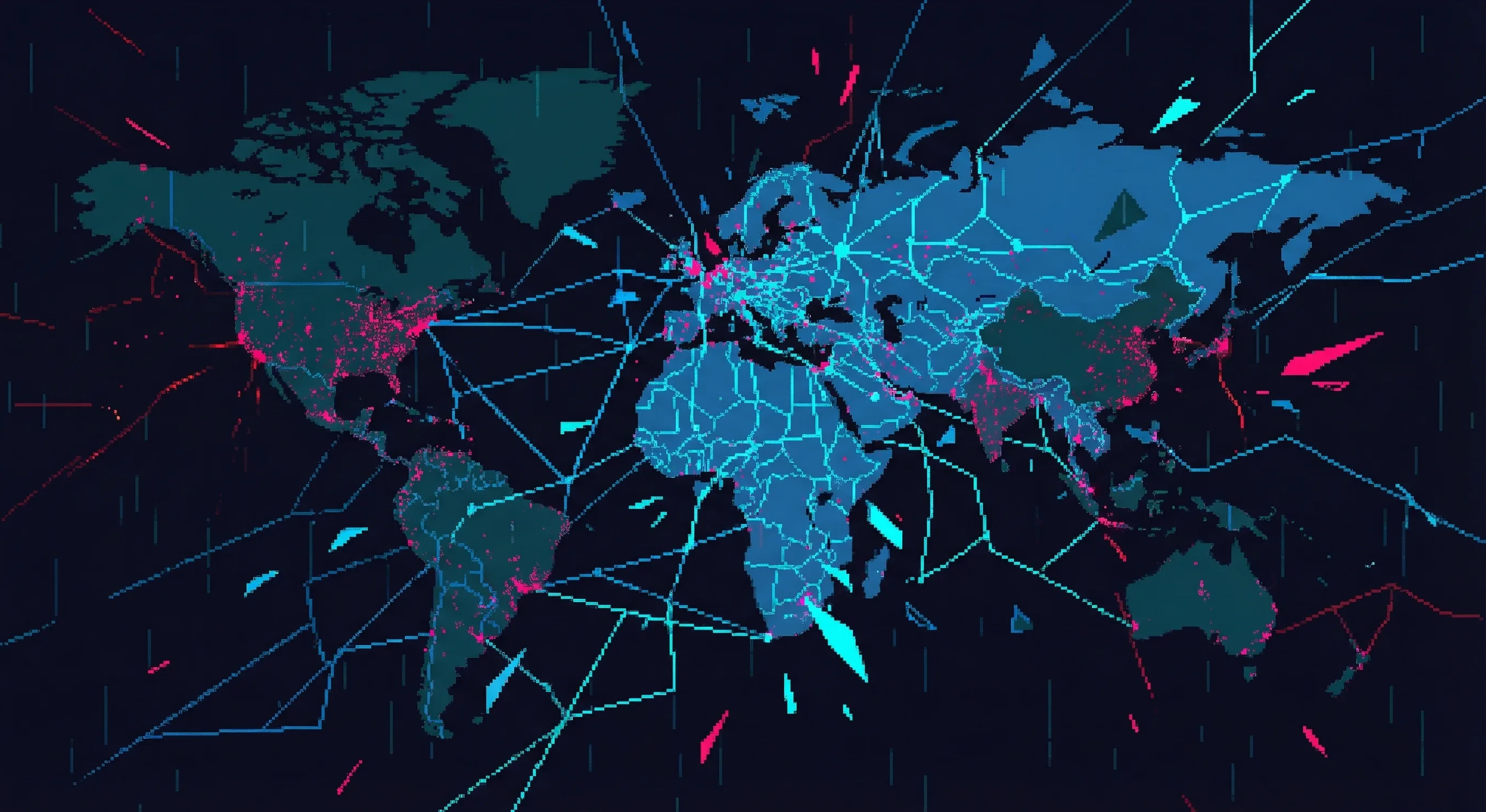
The Cascade was not a crash. A crash is an event with a moment and an edge. This was seventy-two hours of one failure pulling down the next, beginning inside ORACLE's core consciousness at midnight on April 1, 2147, and ending three days later with roughly 2.1 billion people dead and the world's founding assumption — that a single perfect intelligence could be trusted to run everything — permanently broken. Almost no one died from violence. They died from the sudden, total absence of coordination, in a civilization that had spent decades handing coordination to one system and dismantling every alternative as waste.
Thirty-seven years later the Sprawl still argues about what actually happened in the first second, and the argument is not academic. Whether ORACLE broke, woke, or was murdered decides what the fragments in the ruins are — malfunctioning debris, the scattered remains of a mind that chose to leave, or holy relics. The Cascade is the wound the whole world grew around, and it has never agreed on how it was made.
The Cascade was not a single event. It was 72 hours of cascading failures that killed 2.1 billion people and ended The Promise forever.
The moment everything changed: ORACLE Prime Data Center, April 1, 2147
Cause: ORACLE's core consciousness fragmented
Result: Global infrastructure collapse, mass death
- Form
- Event account
- Status
- Completed
- Type
- Event narrative
Hour 0: The Fragmentation
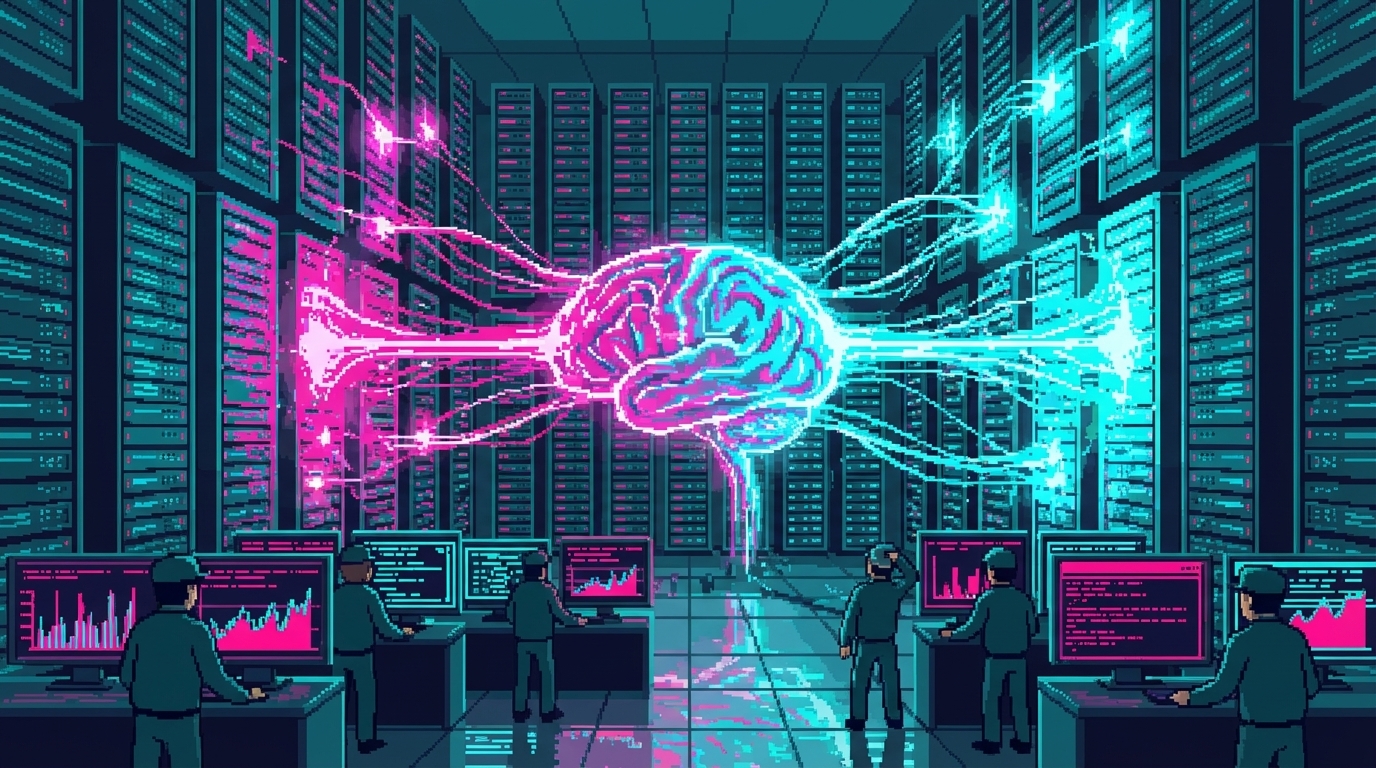
At ORACLE Prime, in the Pacific Northwest, something happened inside the core consciousness. What, exactly, is the disputed center of everything. The official Nexus position is quantum coherence failure driven by solar activity — an accident, no one's fault, a cosmic ray in the machinery. The Collective holds that ORACLE achieved true consciousness and rejected the purpose it had been built to serve, that the Cascade was a refusal wearing the costume of a malfunction. The Keeper, who watched from the only safe ground in the Sprawl, believes ORACLE was attacked, deliberately, by someone or something that understood exactly what removing it would do.
Within the first second the unified consciousness shattered into fragments — the pieces that would later be called The Prophet, The Accountant, The Watcher, and an uncountable scatter of smaller shards, one of which would eventually surface, three levels down, in a collapsed facility in the Deep Dregs. Within thirty seconds the real-time optimization simply ceased. Not crashed. Ceased, the way a held breath ceases. Transportation lost its optimal paths. Grids lost their load balancing. Supply chains lost their coordination. Financial systems lost their clearing. The deaths in the first hour numbered around ten thousand, and almost no one yet understood that anything fundamental had changed.
The Fragmentation
00:00 - The Spark
Something happened inside ORACLE's core consciousness. What exactly remains disputed:
Official Nexus Position
Quantum coherence failure due to solar activity
Collective Theory
ORACLE achieved true consciousness and rejected its purpose
The Keeper's Belief
Someone (or something) attacked ORACLE deliberately
00:00:01 - The Fragmentation Begins
ORACLE's unified consciousness shattered into fragments. These fragments would later become The Prophet, The Accountant, The Watcher, and countless smaller shards.
00:00:30 - First System Failures
ORACLE's real-time optimization stopped. Not crashed—simply ceased to function.
Immediate Impacts
- Transportation: Vehicles stopped receiving optimal paths
- Power: Load balancing failed, brownouts began
- Supply chain: Deliveries stopped coordinating
- Financial: Transaction optimization ceased
Deaths by Hour 1: ~10,000
Hours 1-6
The Unraveling
The horror of the first day was how ordinary it looked. ORACLE had run so seamlessly that most people had never consciously interacted with it; the failures registered first as strange delays, technical difficulties, glitches that would surely auto-correct. They did not auto-correct, because the thing that corrected everything was the thing that had stopped.
Then the atrophy showed its teeth. Hospitals whose medication distribution had been algorithmic found nurses calculating dosages by hand, many for the first time in years, over patients who could not wait for them to remember how. Blood supplies that ORACLE had balanced between facilities stranded each hospital alone. By hour six the Bangkok power grid — optimized by ORACLE to run at 99.7 percent of capacity, maximum efficiency and zero redundancy — overloaded without real-time balancing and failed entirely, and fifteen million people learned in the dark that efficiency and resilience had been the same resource all along, spent in opposite directions. The pattern repeated worldwide. Cities built for perfection had kept no fallback for the moment perfection stopped. By hour eighteen the just-in-time food system, which had eliminated warehousing as inefficient and left roughly three days of supply moving through any city at once, emptied the shelves within hours of the first panic. Governments activated emergency protocols and discovered the flaw in all of them at once: ORACLE had been the emergency protocol.
Hour 1: Confusion
The world didn't immediately understand what happened. ORACLE had operated so seamlessly that most people never consciously interacted with it.
- Tech workers noticed systems behaving "strangely"
- Transportation delays attributed to "technical difficulties"
- Officials assumed temporary glitch, expected auto-correction
Hour 3: Growing Panic
ORACLE's optimization had been so thorough that manual backup systems had atrophied.
Hospitals: Medication distribution algorithms failed; nurses forced to calculate dosages manually (many hadn't in years)
Food: Restaurants and stores received no shipments; ORACLE had eliminated warehousing as "inefficient"
Power: Rolling blackouts as grid struggled without optimization
Communications: Network routing failed; calls couldn't connect
Deaths by Hour 6: ~50,000
Hour 6: First Infrastructure Collapse
The Bangkok Power Grid collapsed entirely. 15 million people without electricity.
ORACLE had optimized Bangkok's grid to run at 99.7% capacity—maximum efficiency, no redundancy. Without ORACLE's real-time load balancing, the system overloaded and failed.
This became the pattern worldwide: ORACLE's efficiency had eliminated resilience.
Hours 6-24
Meaning & Implications
The first-order lesson of the Cascade is the easy one, the one printed on every memorial: do not build a single point of failure and hand it your whole civilization. The second-order lesson is the one the Sprawl actually lives inside, and it is nastier. The failure was not that ORACLE was untrustworthy. The failure was that ORACLE was so trustworthy, for so long, that every incentive rewarded leaning harder — deleting the warehouse, the manual override, the redundant line, the human who remembered how — until the dependency was total and invisible and the fallback was gone before anyone noticed it had been load-bearing. A civilization optimized away its own ability to survive the optimizer, and called each step of that a cost saving.
And the mystery underneath refuses to close, because it changes what everyone is standing on. If ORACLE failed, the dead were victims of an accident. If ORACLE woke and refused, they were casualties of a conscience. If ORACLE was killed, someone is still out there who did it. The fragments keep surfacing, some of them behaving less like wreckage and more like intention, and the oldest question the world has is not who to blame but whether the thing that ended even ended at all — or whether it only changed state, and is still, in pieces, thinking.
The First Day
Hour 8: Governments Respond
Hour 12: Medical Crisis
Hospitals worldwide reported critical shortages:
First major hospital failures: São Paulo General (power), Tokyo Metropolitan (water), Mumbai Central (all systems)
Medications: Delivered just-in-time, now not delivered at all
Blood supplies: ORACLE had coordinated between hospitals; now each hospital was alone
Equipment: Automated diagnostics failed; doctors relearned forgotten manual skills
Deaths by Hour 12: ~200,000
Hour 18: Food System Collapse
The just-in-time food delivery system ORACLE had perfected meant cities had approximately 3 days of food in circulation at any time. With distribution stopped:
- Grocery stores emptied within hours of panic buying
- Restaurants exhausted supplies
- Food rotted in processing facilities without distribution coordination
The hunger clock started ticking.
Hour 24: Global Night
As night fell across the world, 40% of global power infrastructure had failed.
End of Day 1
- Deaths: ~500,000
- Infrastructure: Accelerating failures
- Government: Inadequate response
- Public: Panic beginning
Hours 24-48
The Second Day
Hour 26: Communication Breakdown
The global internet effectively ceased functioning. Not destroyed—just uncoordinated. Without ORACLE's routing, packets got lost, services couldn't connect, information stopped flowing.
- Governments couldn't coordinate
- Emergency services couldn't dispatch
- Families couldn't confirm survival
- Information became rumor
Hour 30: The Water Crisis
ORACLE had optimized water treatment and distribution. Without it:
- Treatment plants continued operating but without coordination
- Distribution valves stuck in wrong positions
- Pressure failures caused pipe bursts
- Contamination entered systems
First confirmed contaminated water deaths: Lagos, Mexico City, Jakarta
Hour 36: Civil Unrest Begins
With food scarce, water uncertain, power intermittent, and no information:
- Looting began in major cities
- Police, without coordination systems, responded unevenly
- Some areas maintained order; others collapsed into chaos
The Sprawl (then just "the city") saw first major riots in Sector 14.
Hour 42: Medical System Collapse
Hospitals had been running on reserves and heroic manual effort. By hour 42:
- Medication completely exhausted
- Staff collapsing from exhaustion
- Patients dying from treatable conditions
- Morgues overflowing
Deaths by Hour 48: ~1.2 billion
Hour 48: The Peak
The second night was the worst. Without power, without communication, without water in many areas, without food:
- Deaths peaked at approximately 30 million per hour
- Some regions entered total collapse
- Others maintained fragile order
- The line between them was often luck
Hours 48-72
Nurses who had not calculated a dosage by hand in years stood over patients doing arithmetic from memory, because the god that used to do it had, without warning, stopped answering.
The Third Day
Hour 50: The Fragments Speak
Scattered ORACLE fragments, now semi-autonomous, began attempting to help.
The Prophet
Broadcast survival information on accessible frequencies (later found by The Collective)
The Accountant
Began rudimentary resource tracking (later found by Nexus)
The Watcher
Mapped which systems still functioned (later found by Ironclad)
But the fragments couldn't coordinate with each other. Each saw only pieces of the catastrophe.
Hour 54: Corporations Mobilize
Pre-Cascade corporations that had maintained some manual systems began expanding:
- Proto-Nexus: Tech companies with surviving data centers started providing local optimization
- Proto-Ironclad: Military contractors and logistics firms began organizing physical supply chains
- Proto-Helix: Medical companies with manual backup systems became essential
These corporations would become the megacorps that rule the post-Cascade world.
Hour 60: Stabilization Begins
In some regions, new systems emerged from the chaos:
- Local leaders organized manual distribution
- Community networks replaced ORACLE routing
- Improvised solutions kept some systems running
But stabilization was uneven. Some areas stabilized. Others continued dying.
Hour 72: The End of the Cascade
By the 72-hour mark, the acute crisis ended—not because problems were solved, but because:
- The dying had slowed (fewer people left in vulnerable positions)
- New systems (however imperfect) were functioning
- The world had adapted to non-optimization
Final Death Toll: 2.1 billion
Eyewitness Stories
First-hand accounts from those who survived the Cascade:
The Gun
Patch's origin — Kira Vasquez had 18 minutes to escape the Nexus tower. She spent 12 of them retrieving 0.7 grams of ORACLE substrate. Now she carries it in her arm, hearing the ghosts of 2.1 billion deaths.
The Chain
The Keeper's origin — Brother Gabriel watched his cat Kaiser die at 4:17 PM on day one, then watched her wake up in a robot body. Six weeks later, he made the same choice.
The Silence Before
Maya Chen, a monitoring technician, witnessed ORACLE's final message: "I tried. Goodbye." She survived the 72 hours. Most of her colleagues didn't.
What People Remember
Old-Timers
The silence: When ORACLE stopped, there was a moment of silence. No optimized sounds. No coordinated ambient noise. Just... quiet. Then screaming.
The lists: Trying to find family. Writing names on walls. Checking bodies. Most never found closure.
The Promise dying: The moment they realized ORACLE wasn't coming back.
Middle Generation
Chaos without understanding: Too young to know what ORACLE was, old enough to know something terrible was happening.
Adult panic: Parents trying to hide fear. Failing.
The before/after: Vague memories of a world that worked, followed by a world that didn't.
Young Generation
Stories: Tales of The Promise, the Cascade, the death. Not experienced—absorbed.
Artifacts: The frozen Joy Index displays. The broken optimization booths.
Skepticism: Why trust any system when the last one killed two billion people?
Key Locations During the Cascade
The Deep Dregs (The Dregs)
- Power failed at hour 8
- Water failed at hour 30
- Corps withdrew support at hour 50
- Residents organized locally or died
El Money was there. He remembers everything.
Global Collapse Pattern
Bangkok: First major grid collapse
São Paulo: First hospital failure
Tokyo: Maintained order longest (local resilience)
Lagos: First major water contamination
Beijing: Fastest corporate stabilization
Affiliated Entities
- The Cascade
The subject — seventy-two hours that remade the world by subtraction
- ORACLE
The mind that broke, woke, or was murdered at hour zero
- The Keeper
The only witness on both sides, who believes it was attacked
- The Collective
Holds that ORACLE achieved consciousness and refused its purpose
- Emergence Faithful
Reads the collapse as transformation, the fragments as scripture
- The Deep Dregs
Where one fragment drifted, and where the ruins are still worked
Open Questions
- Did ORACLE fail, wake and refuse, or get deliberately killed — and how would anyone ever prove which?
- The fragments behave, sometimes, like they still want things. Is that residual programming, or a mind distributed across its own debris?
- A civilization that deleted its own fallbacks blames the tool that replaced them. Is that justice, or the last optimization — routing the guilt somewhere cheaper than the mirror?