The Assembly Yards

Overview
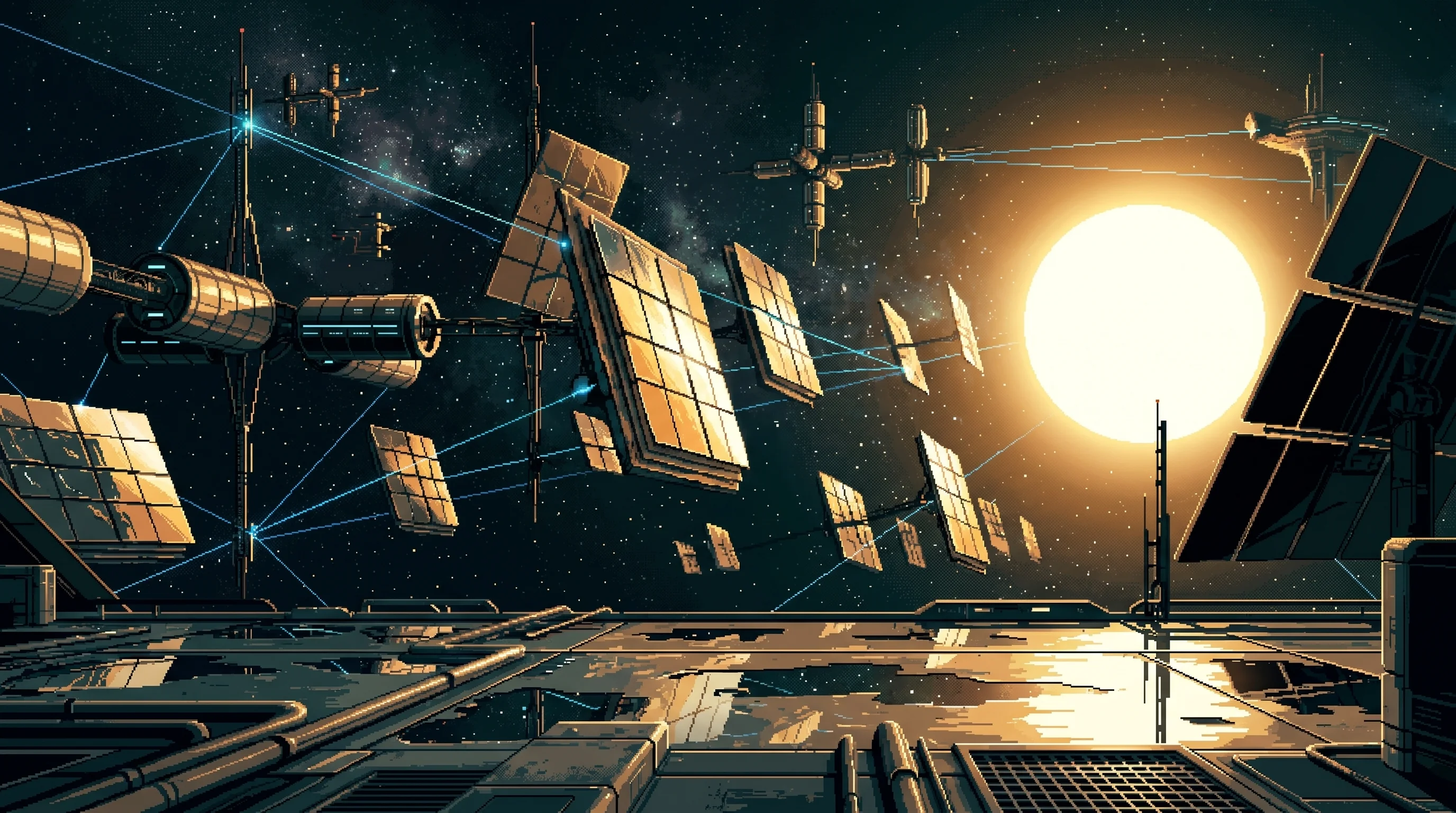
At the Lattice's midpoint โ equidistant between Mercury's furnace and Earth's blue comfort โ the Assembly Yards are where solar collectors get built. Raw materials arrive from Belt mining operations and Ironclad's orbital foundries. The Yards turn them into collectors. This process requires approximately 4,000 construction workers on rotating six-month contracts, 300 cubic kilometers of construction platforms and material storage bays, and a memorial wall that has never run out of room.
Working conditions are governed by a fact that surprises people who have never worked in zero-g: a structural beam that "weighs" nothing still has the same mass. Mishandle one and it kills you through inertia, not gravity. The distinction is academic to the deceased. Ironclad's onboarding materials explain this in a twelve-minute orientation module rated 4.2 stars by workers who survived long enough to review it.
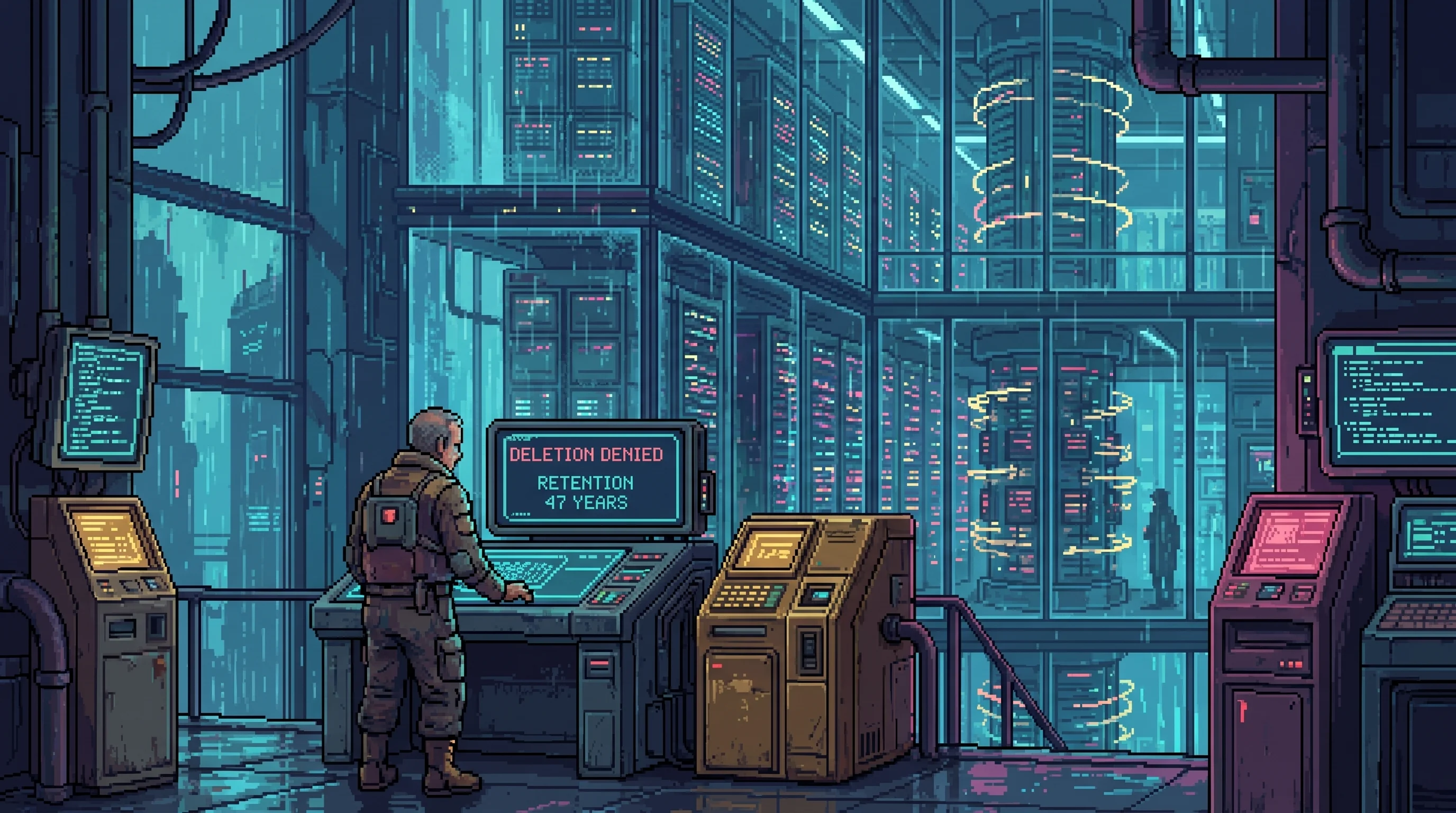
The Yards add approximately six names to the memorial wall per year. Ironclad's actuarial division files the same events as "contractor incident reports" โ searchable, cross-referenced, feeding insurance models and risk assessments that determine acceptable casualty rates for contract renewal. The current acceptable rate is six. The memorial wall and the incident reports document the same deaths. They do not document the same thing. One is a calculation. The other is hull plating.
Atmosphere
The culture is functional and grim. Work, eat, sleep, work. The nearest Freeport bar is three light-minutes away. Entertainment options are, in the strict sense, singular.
During off-shifts, workers gather in the observation bays and listen to void tone โ the ambient vibrations produced by the Lattice's structural harmonics, which the Assembly Yards are perfectly positioned to receive. The sound was not designed. Nobody planned the frequencies. The Lattice hums because physics requires it to hum, and the hum is beautiful because four thousand people with nothing else to listen to decided it was beautiful, and now it is. Void tone has no composer, no performers, and no audience that isn't also its construction crew. It is the only art form in human history whose artists are building the instrument while it plays.
Workers describe the sound as "like the thing knows we're here." The thing does not know they're here. The thing is a solar collection infrastructure. The workers know this. They listen anyway. Some record it. The recordings do not capture whatever the observation bays capture. You have to be there, between Mercury and Earth, in the silence that isn't silence, with people who understand what the hum costs.
The void itself does something to perception that no amount of orientation prepares anyone for. Outside the suits there is no atmosphere, no horizon, no weather, and no reference point against which the eye can fix a distance. Long-rotation workers report a specific failure mode they call "yard eyes" โ depth perception collapses because nothing in the field tells the brain which object is near and which is far. A collector frame fifty meters out and a platform five kilometers out read as the same size. Veterans learn to trust their instruments. Newcomers learn to trust the veterans, which is the same lesson arrived at from the other direction.

The Last Real Jobs
The Assembly Yards are one of the few places in human civilization where biological labor is not a performance, a therapy, or a nostalgia trip.
The collectors must be assembled by hand. The tolerances required for solar-capture alignment exceed what remote robotics can achieve in deep-space conditions โ micro-vibrations from automated arms introduce cumulative errors that compound across a collector's hundred-meter span. A human worker with mag-boots and a calibration wrench produces a tighter fit than the best construction AI Ironclad has fielded. An engineering specification, not a philosophical claim. The Yards employ four thousand people because four thousand people do the job better.
This makes the Yards the most honest employer in the Sprawl's economy, which is a low bar cleared at considerable altitude. Ironclad's recruitment materials emphasize hazard pay and career advancement. They do not mention that the workforce skews 73% Dregs-origin โ people whose parents were deprecated, who grew up watching the purpose crisis hollow out their communities. They travel to the most inhospitable work environment human beings have ever occupied because the Yards offer the one thing the Sprawl's economy has otherwise abolished: a job that needs doing by a human being.
Six names per year on the memorial wall is the price. The workers consider it worth paying. Ironclad considers it worth insuring. The contract renewal threshold โ recalculated quarterly โ currently sits at nine. Below nine, the Yards are "within acceptable operational parameters." Above nine triggers a safety review that has never been triggered because the number has never exceeded seven. The gap between six and nine is where Ironclad's comfort lives. The gap between zero and six is where the workers' families live. Neither gap appears in the recruitment materials.
A six-month rotation is brutal โ the isolation, the danger, the slow accumulation of names you recognize. But workers who complete a rotation carry something back that no sunset package can provide and no alignment assessment can measure. The collector you assembled is in the sky. Your hands put it there. That the labor crisis has been reduced to a commute โ risking death for the experience of genuine employment โ is noted in no Ironclad filing.
| Function | Solar collector assembly from raw components |
|---|---|
| Workers | ~4,000 on 6-month rotations |
| Area | ~300 cubic kilometers of construction platforms |
| Memorial Names Per Year | ~6 |
| Entertainment | Void tone โ ambient Lattice structural vibrations |
The Wall That Only Grows
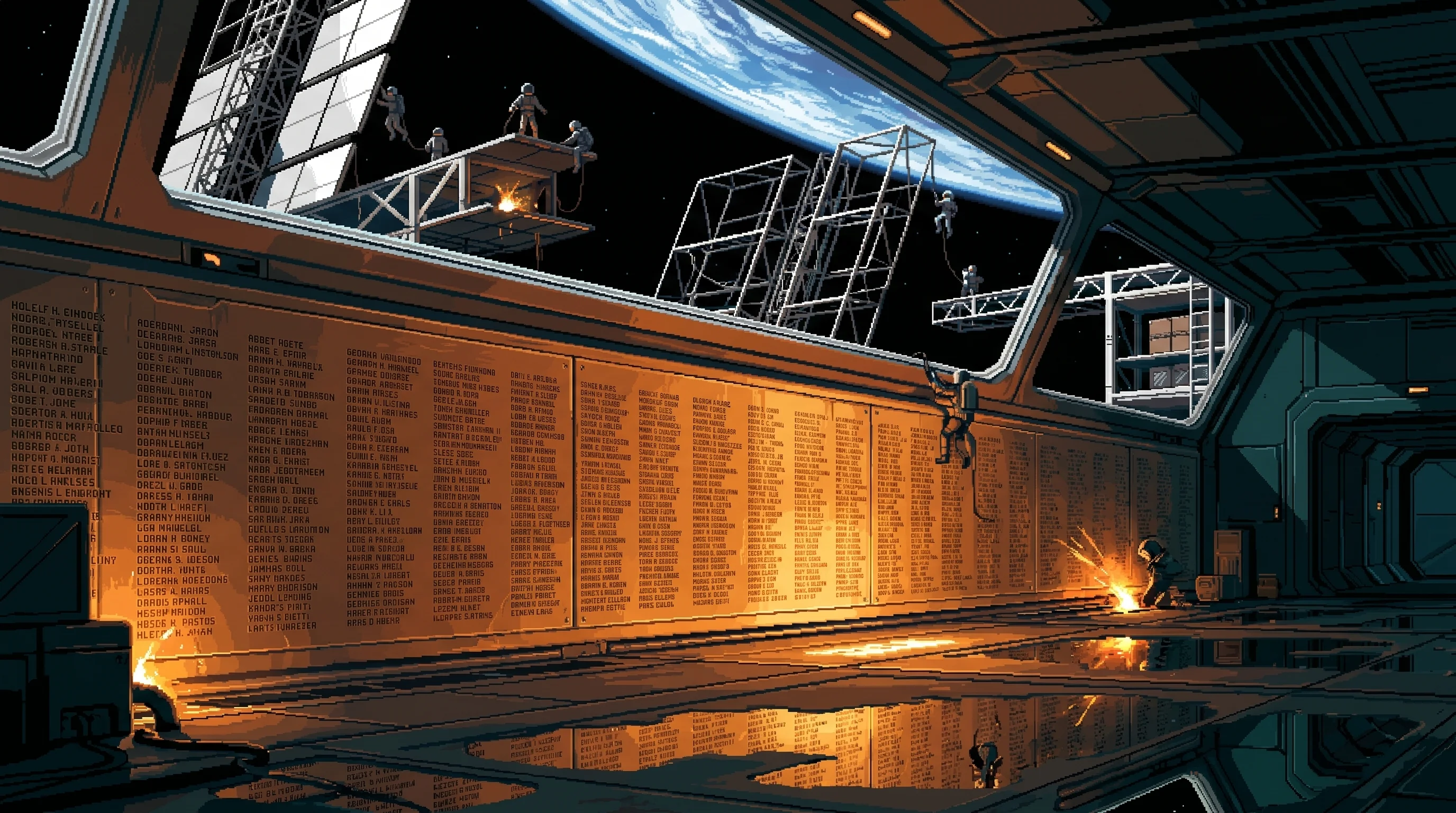
The memorial wall is hull plating. The names are laser-etched at the same depth as structural identification codes โ the same process used to mark the collectors the dead helped build. The wall occupies a pressurized observation bay at the center of the Yards, positioned so that workers pass it on the way to every shift.
It has never been cleaned, resurfaced, or moved. There is no mechanism for removing a name. There is no process for reclassifying a death. Workers who transfer out after their rotation carry the names in organic memory โ the wall's only backup system.
Hull plating endures longer than solar infrastructure. The wall will outlast the collectors it commemorates. The Forgetting Wars have not reached the Assembly Yards. Out here, between Mercury and Earth, the dead stay named.
Secrets & Mysteries
The Tone Is Changing. Long-rotation workers โ those on their fourth or fifth cycle โ report that void tone has shifted in frequency over the past eighteen months. Not dramatically, and not in any way instrumentation has confirmed. But the workers who have listened for years insist the Lattice sounds different now: higher, more complex, additional harmonics surfacing from a structure whose composition has not changed. Ironclad attributes the reports to "perceptual drift in long-duration isolation." The workers who hear it are not convinced. They built the thing. They know what it sounded like.
The Memorial Wall Anomaly. The wall takes roughly six names a year โ except for three non-consecutive years in which it took none. Zero construction fatalities across four thousand workers performing hard-vacuum assembly. Ironclad celebrated the zero-fatality years as safety milestones. Shift supervisors from those years tell a different story: not that accidents stopped, but that outcomes did. Workers who should have died from decompression events or inertial impacts survived with injuries that should have been fatal. The medical reports from those years are sealed. The zero-fatality years correlate with no equipment upgrade, no protocol change, and no shift in workforce composition. They correlate with nothing anyone has been able to identify.

Connections
- The Lattice โ the Yards build its collectors, one hand-fitted panel at a time
- Climber Asha Chen โ supplies the Yards three times weekly; one of the few regular visitors from outside the rotation cycle
- Void Tone โ born from the Lattice's structural vibrations, the Yards' only art form and only entertainment
- Ironclad Industries โ operates the Yards, files the incident reports, sets the acceptable casualty threshold, and has never visited the memorial wall
- The Foundry โ surface parallel: heavy labor, grim culture, memorial walls. The Foundry's workers can at least go home at the end of a shift.
Visual Identity
- Color palette: Construction amber against void black, the blue-white of distant Earth, the warm glow of welding arcs
- Compositional mood: Small figures on vast structures in absolute nothing โ the scale is the statement
- Key symbol: The memorial wall โ names engraved in hull plating, growing and never shrinking
- Lighting: Work lights and welding arcs against darkness; the faint blue of distant Earth as the only natural light source within three light-minutes
Archive annex โ 2 earlier filings on this recordClose the archive annex
Recovered Historical Material
The Assembly Yards
Where the Lattice becomes real, one beam at a time.
Indexed โ 1 line preserved from the earlier filing.
The Assembly Yards โ construction amber work lights and blue-white welding arcs against absolute void black, small suited figures on enormous solar collector structures, the memorial wall visible in the foreground, distant blue glow of Earth on the horizon
You exit the docking bay. Through your faceplate: nothing. Absolute black in every direction except the construction platforms, which glow amber with work lights. Somewhere behind you, Earth is a blue dot the size of your thumbnail. You feel the vibration of a welding arc through your boots before you see the light.
Construction amber against void black. Blue-white welding arcs flashing on distant platforms like slow-motion lightning. The faint blue of Earth, visible during rest breaks through observation ports โ too far to feel like home, close enough to remind you what home looks like. Solar collectors in various stages of assembly, skeletal frames catching light at angles that make them look alive. The memorial wall near the main docking bay, names catching light from passing work lamps.
Inside the hab modules: the hum of life support, the clang of tools being racked, the muffled conversations of people who have run out of things to say to each other three months into a six-month rotation. Outside, in suits: your own breathing. The click of magnetic boots. Radio chatter, terse and professional. And during off-shifts, through the station hull, something else โ a low vibration that is not mechanical. The Lattice, humming.
The Void
The nearest Freeport bar is three light-minutes away. Void tone is free and it is here.
"First rotation, you count the days. Second rotation, you stop counting. Third rotation, you start listening to the tone. After that, you're either a lifer or you're done. No middle ground out here." โ Assembly Yards shift supervisor, exit interview recording
The Construction Platforms
Material Storage Bays
Pressurized warehouses containing raw components shipped from Belt mining operations and Ironclad's orbital foundries. Carbon-composite struts, photovoltaic arrays, reflective sheeting, wiring harnesses, fastener assemblies โ everything needed to build a solar collector from scratch. Climber Asha Chen supplies the Yards three times weekly, threading cargo through the construction zone in runs that require precision navigation between active work platforms.
Hab Modules
| Stratum | Orbital |
|---|---|
| Power Position | Insider |
| Access | Restricted |
| Atmosphere | Oppressive |
Who Works Here
The Invisible Backbone
The Foundry Parallel
Supply Chain Vulnerability
The Tone Is Changing
Memorial Wall Anomaly
The memorial wall lists six names per year, on average. Except for three non-consecutive years in which the number dropped to zero. Zero construction fatalities across 4,000 workers performing hard-vacuum assembly. Ironclad celebrated these years as safety milestones. Shift supervisors from those years tell a different story: not that accidents stopped, but that outcomes changed. Workers who should have died from decompression events or inertial impacts survived with injuries that should have been fatal. Medical reports from those years are sealed. The zero-fatality years do not correlate with any equipment upgrades, safety protocol changes, or workforce composition shifts. They correlate with nothing anyone can identify.
This is not a philosophical claim about human dignity. It is an engineering specification. The Yards employ four thousand people because four thousand people do the job better than the machines that replaced everyone else.
Ironclad's corporate records list the same deaths as "contractor incident reports" โ filed, archived, actuarial data feeding insurance models and risk assessments. The memorial wall and the incident reports document the same events. They do not document the same thing. The reports are searchable, cross-referenced, and used to calculate acceptable casualty rates for contract renewal negotiations. The wall is a list of names that grows and never shrinks.
The Forgetting Wars have not reached the Assembly Yards. Out here, between Mercury and Earth, the dead stay named.
The Labor Crisis Made Physical
Dregs-origin workers traveling to the most dangerous workplace in the solar system because it's the only place that needs human hands. The Yards are not a solution to the purpose crisis โ they are proof of its depth. When the best answer to "what are humans for?" is a job site with a six-per-year fatality rate in hard vacuum, the question is worse than anyone in the corporate towers wants to admit.
Indexed โ 1 line preserved from the earlier filing.
The Assembly Yards โ vast orbital construction platforms in deep space, small suited figures welding enormous solar collector structures against the void, construction amber and blue-white arc light, distant Earth a faint blue glow
At the Lattice's midpoint โ equidistant between Mercury's furnace and Earth's blue comfort โ the Assembly Yards are where solar collectors get built. Raw materials arrive from Belt mining operations and Ironclad's orbital foundries. The Yards turn them into collectors. This requires approximately 4,000 construction workers on rotating six-month contracts, 300 cubic kilometers of construction platforms and material storage bays, and a memorial wall that has never run out of room.
The Assembly Yards are one of the few places in human civilization where biological labor is not a performance, a therapy, or a nostalgia trip. The collectors must be assembled by hand because the tolerances required for solar-capture alignment exceed what remote robotics can achieve in deep-space conditions โ micro-vibrations from automated arms introduce cumulative errors that compound across a collector's hundred-meter span. A human worker with mag-boots and a calibration wrench produces a tighter fit than the best construction AI Ironclad has fielded.
Ironclad's recruitment materials emphasize hazard pay and career advancement. They do not mention that the workforce skews 73% Dregs-origin โ people whose parents were deprecated, who grew up watching the purpose crisis hollow out their communities. They travel to the most inhospitable work environment human beings have ever occupied because the Yards offer the one thing the Sprawl's economy has otherwise abolished: a job that needs doing by a human being.
No atmosphere. No horizon. No weather. No sound outside a suit. The human brain was not built for this much nothing. Long-rotation workers report a specific psychological state โ "yard eyes" โ where depth perception fails because there are no reference points. A collector frame fifty meters away and a platform five kilometers away look the same size. Veterans learn to trust their instruments. Newcomers learn to trust the veterans.
During off-shifts, workers gather in the observation bays and listen. The Lattice โ all 93 million kilometers of it โ produces structural vibrations that travel through the Assembly Yards' hull. Frequencies no one planned. Harmonics no one designed. Workers call it void tone. It is the sound of the largest structure humanity has ever built, humming to itself, and it is the Yards' only art form.
Dozens of open-frame platforms ranging from fifty meters to two kilometers across, anchored in formation by station-keeping thrusters. Each serves a stage of collector assembly: frame fabrication, photovoltaic mounting, reflective surface alignment, quality inspection, and launch preparation. A completed collector detaches from the final platform and is guided into position on the Lattice network by automated tugs. The entire process takes approximately six weeks per unit.
Hull plating beside the main docking bay โ the first thing arriving workers see, the last thing departing workers pass. Names laser-etched at the same depth as structural identification codes โ the same process used to mark the collectors the dead helped build. The causes are clinical: "Inertial impact, Strut 7-C." "Suit breach, Platform 14." "Decompression, Storage Bay 3." The wall has never been cleaned, resurfaced, or moved. There is no mechanism for removing a name. There is always more hull plating.
Four thousand people, cycling through on six-month contracts. The work draws a specific kind: comfortable with vacuum, comfortable with isolation, comfortable with the knowledge that help is light-minutes away if something goes wrong fast. Most are repeat contractors โ workers who have done two, three, five rotations and keep coming back because the pay is good, the work is honest, and the alternatives are worse.
Ironclad operates the Yards and sets the contracts. The terms are clear: six months, hazard pay, medical coverage for on-site injuries, transport home when your rotation ends. What happens to your lungs after twenty years of suit breathing is your problem. The memorial wall is Ironclad's only concession to sentiment, and even that serves a function โ it reminds every worker walking in that the work is real, the vacuum is real, and the six names per year are not a statistic. They are a forecast.
The Assembly Yards build the solar collectors that power the Lattice, which powers the Sprawl. Every watt consumed in Nexus Central, every light burning in the Stacks, every data center humming in the corporate towers traces back to collectors assembled by suited workers in hard vacuum at the Lattice midpoint. Nobody on Earth thinks about where their power comes from. The workers at the Yards think about nothing else.
Surface-side, the Foundry runs the same calculation: heavy labor, grim conditions, memorial walls that grow longer every year. The difference is atmosphere โ the Foundry workers breathe bad air; the Yards workers breathe bottled air. The Foundry has Worker's Row; the Yards have hab modules. Both employ people building infrastructure they will never benefit from. The Yards are the Foundry in vacuum.
Lattice's โ /world/locations/the-lattice
Climber Asha Chen โ /world/characters/climber-asha-chen
Drift Runners Guild โ /world/factions/the-drift-runners-guild
A six-month rotation is brutal โ the isolation, the danger, the slow accumulation of names you recognize. Workers who complete a rotation carry something back that no sunset package can provide and no alignment assessment can measure: the collector they assembled is in the sky. Their hands put it there. That the labor crisis has been reduced to a commute โ risking death for the experience of genuine employment โ is noted in no Ironclad filing.
Pressurized cylinders bolted to platform struts, connected by enclosed walkways. Sleeping racks for eight, shared mess facilities, a medical bay staffed by a single medic per shift. Work, eat, sleep, work. Rotation calendars on every wall, days marked off. Personal effects kept to what fits in a locker. Nobody decorates. Everyone leaves.
Workers who transfer out of the Yards after their rotation carry the names in organic memory โ the wall's only backup system. There is no mechanism for removing a name. There is no process for reclassifying a death. Hull plating endures longer than solar infrastructure. The wall will outlast the collectors it commemorates.
The culture is functional. Shift supervisors run tight crews because loose crews die. Social hierarchies form around competence, not seniority โ a first-rotation worker who can align a reflective surface to spec earns respect faster than a third-rotation worker who can't. Off-shift entertainment is limited to what people bring with them, what they can make from what's available, and void tone. Workers gather in the observation bays the way people on Earth gather around campfires โ not because they planned to, but because the alternative is staring at the walls of a hab module that smells like recycled air and four thousand other people.
Four thousand workers at the Lattice midpoint, three light-minutes from the nearest settlement, dependent on regular supply runs for everything from food to fasteners. If Drift Runners Guild shipments stop for two weeks, the Yards go dark. If the Yards go dark, new collector assembly halts. The entire Sprawl's energy future depends on a supply chain that passes through 300 cubic kilometers of open vacuum staffed by contract workers on six-month rotations.
Long-rotation workers โ those on their fourth or fifth cycle โ report that void tone has shifted in frequency over the past eighteen months. Not dramatically. Not in ways instrumentation confirms. But the workers who have been listening for years say the Lattice sounds different. Higher. More complex. Additional harmonics emerging from a structure that hasn't changed in composition. Ironclad attributes this to "perceptual drift in long-duration isolation." The workers who hear it are not convinced. They built the thing. They know what it sounded like.
Indexed โ 2 lines preserved from the earlier filing.
The Last Real Jobs
Conditions Report
~6 names added to memorial wall per year from construction casualties
Workers gather during off-shifts to listen to void tone โ the sound of the Lattice humming
Construction in hard vacuum โ mishandled structural beams kill through inertia, not weight
Connected To

โ