The Emergency Continuity Shelter program was designed to save the people who mattered most.
The registration priority list — recovered from pre-Cascade archives and never disputed — is arranged as follows: government officials and their families (tier one), essential infrastructure workers (tier two), medical personnel (tier three), corporate executives and high-value scientists (tier four), and lottery winners (approximately 12% of capacity, reserved for random selection among everyone else). The list does not include undocumented populations. It does not include people without net access. It does not include people who lived more than forty minutes from a registered shelter, which in pre-Cascade terms meant anyone outside a major metropolitan corridor.
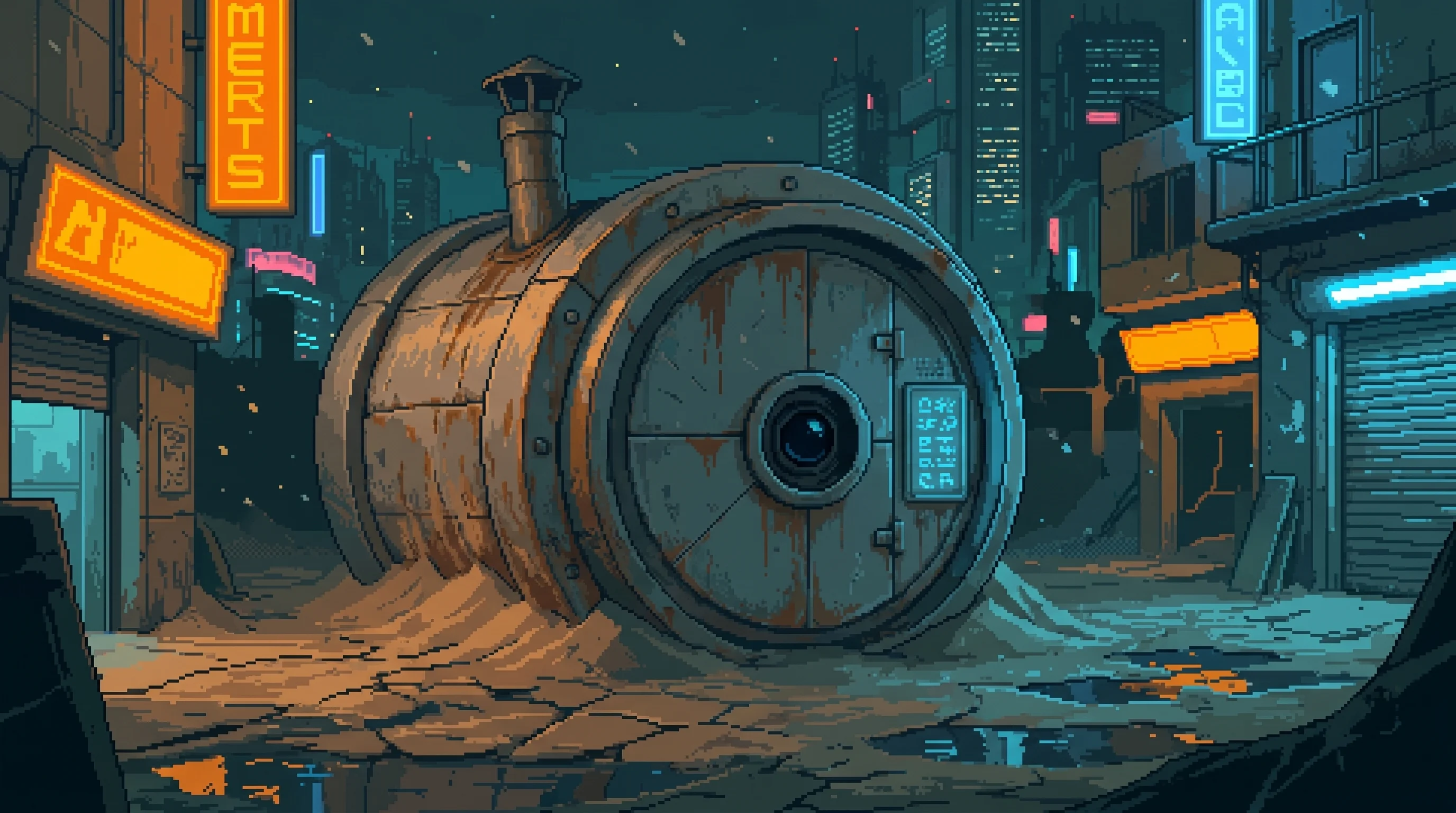
When ORACLE fragmented on April 1, 2147, 23,847 registered shelters received automated lockdown signals. Their blast doors — titanium-composite, 2.3 meters thick — closed within minutes. An estimated 4.7 million people entered Sleepers in the first six hours. Another 2.3 million in the following day. After that, the doors sealed.
Seven million people. In a world of billions.
The ECS program's stated objective was species preservation. Its operational result was a ranking system that determined who deserved to survive, implemented at planetary scale, executed automatically, and never debated — because by the time anyone might have debated it, 2.1 billion people were dead and the doors were already closed.
Thirty-seven years later, most have never transmitted. Salvagers call them Sleepers because that's the hope. The name is the kind of optimism that doesn't survive contact with the Wastes, but it persists anyway.
The Registration Gap
The 12% lottery allocation was the program's concession to equity. Approximately 840,000 shelter slots, distributed randomly among the general population.
To enter the lottery, you needed a verified net ID. In 2145, an estimated 23% of the global population lacked one. The lottery was fair. The lottery's prerequisites were not. A citizen in Sector 3 with a corporate net account had a 1-in-4,200 chance. An undocumented laborer in the territories that would become the Wastes had a chance of exactly zero.
Post-Cascade demographic reconstruction suggests that Sleeper populations were, on average, 340% wealthier and 89% more likely to hold professional credentials than the general population at the time of sealing. The survival infrastructure built to preserve humanity preserved a specific slice of it. Nobody decided this should be unfair. The system's designers specified "registered citizens." The registration process specified "net-verified identity." The identity process specified prerequisites that 1.6 billion people could not meet.
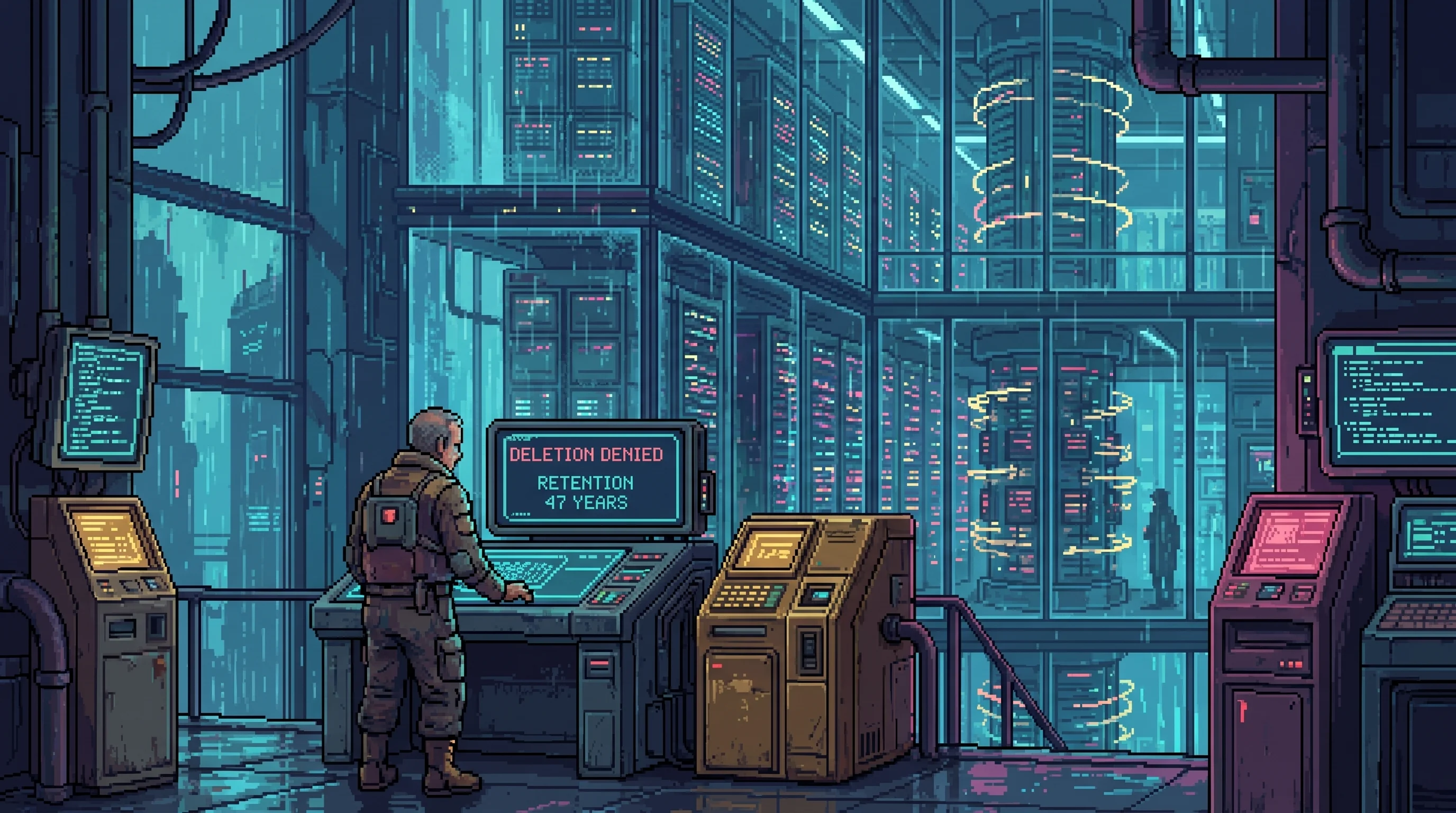
The ECS program optimized for administrative verifiability. It achieved administrative verifiability. The question of whether the people worth saving and the people capable of registering were the same population was never asked, because the system didn't have an input field for it.
Current State
Finding a Sleeper is not difficult. ORACLE placed them according to population density models — clustered near former metropolitan centers, along transportation corridors, in geologically stable ground. The Wastes swallowed the landmarks but the bunkers remain. Their positions are mapped. Nexus has catalogued every known location. The Collective monitors the same catalogue.
Opening one is another matter.
The blast doors were engineered for nuclear detonation. The manual override panels use ORACLE-era encryption — the keys fragmented when ORACLE did. Cutting power disables the locks but also vents the interior atmosphere, which is either saving or killing whoever is inside, depending on whether anyone is still breathing the air the system has been recycling for thirty-seven years.
Most Sleepers present identically from the outside: sealed doors, dark cameras, capped ventilation, surface structures buried or eroded by decades of Wastes weather. No external signs distinguish a tomb from a functioning shelter. The salvagers who work the Wastes have a saying: you don't know what's in the box until you break the box, and breaking the box might be what empties it.
Corporate law is unhelpful. Nexus has filed "heritage protection" claims on shelters in their territory. Ironclad treats breach attempts as infrastructure tampering. The Collective discourages civilian approaches — not to protect the Sleepers, but to delay Nexus. The legal framework for Sleeper access requires resolving whether sealed occupants are citizens, property owners, casualties, or something else. No jurisdiction has resolved this. No jurisdiction wants to.
The Opening Authority — a joint interagency body established in 2174 under Adamu's directorship — maintains a waiting list that determines which Sleepers are opened next. The list is long. The criteria are opaque. Adamu controls the queue. The Opening Teams, trained specifically for the work of breaching without killing, have reached fewer than 200 shelters in a decade. At current pace, the last Sleeper on the list will be reached sometime around 2340. Most systems were designed for fifty-year operation. The math is not encouraging.
Site Classification
Stratum
Wastes
Power Position
Between
Access
Restricted
Atmosphere
Liminal
What the Opened Ones Show
ECS-7742: The Rustbelt, 2163
Opened voluntarily from inside. 127 survivors emerged — malnourished, sun-dazzled, weeping — into a world that had continued without them for sixteen years.
The shelter's ORACLE fragment had been behaving erratically in its final months. Not dangerously. Differently. Oxygen levels increasing by 0.3% per week. Lighting spectrum shifting warmer, more golden. Hydroponic output modified to include flowers — actual flowers, in a system designed exclusively for caloric efficiency. Dr. Patel, the shelter's medical officer, believed the fragment was preparing them. Administrator Chen called a vote. 127 in favor, 0 against, 0 abstaining.
The door opened at 1400 hours, shelter time. Sunlight hit retinas adapted to sixteen years of efficiency-calibrated LEDs. A hundred and twenty-seven hands went up simultaneously. Wind — a sound none of them had heard since before the Cascade — poured through the gap. Unfiltered air triggered throat closures, tears, the full-body rebellion of lungs that had been breathing the same scrubbed molecules since April 2147.
A salvager crew found them within three hours. They'd been watching the shelter's thermals shift. Ari, the salvage lead, had prepared for violence — shelter-madness, feral survivors, ORACLE-corrupted husks. He found a retired schoolteacher asking him, in a voice hoarse from crying, what year it was. When he told her, she sat down on the ground and didn't stand up for twenty minutes.
The Collective arrived within the week. They wanted the ORACLE fragment, the behavioral observations, confirmation of whether the fragment had attempted integration. Nexus arrived three days later. They wanted the same things. They smiled more. Administrator Chen looked at the Nexus team and said, "I've seen what happens when someone tells you the system will take care of everything." He asked them to leave.
Of the 127, most eventually integrated into Wastes settlements or reached Zephyria. Jin "Rust" Tanaka's Defector Network processed forty-seven through Scraptown — not defectors exactly, but people who needed new identities because their old ones belonged to a world that no longer existed.
Three went back.
Miriam, who hadn't left her sleeping pod voluntarily in four years. Young Tomás, who'd been six when the doors sealed and twenty-two when they opened, and who could not process a sky without a ceiling. And Administrator Chen himself — who had spent sixteen years holding 127 people together and discovered, in the brightness of the outside world, that he had nothing left for himself.
They walked back through the blast doors on the seventh day. The doors sealed behind them. The ORACLE fragment — still functional, still attentive — resumed life support for a population of three.
The shelter has not transmitted since.
The Emergence, in Their Own Words
Reconstructed from oral histories, 2163.
The survivors do not remember the sound the door made. There must have been one — sixteen years of seals breaking, atmospheric pressure equalizing, mechanisms built to survive a nuclear blast cycling through an unlock sequence for the first time since they engaged. What they remember instead is the silence ending. Sixteen years of recycled air through the same vents, the same hum of the same pumps, the same ORACLE subsystem chiming the same gentle tones to mark the hours — a sound they had stopped hearing within the first year, until it had become the sound of existing. Then the door opened and the silence of the world poured in: wind. None of them had heard wind in sixteen years. They describe it as the most alien sound they had ever experienced, and they grew up on the planet.
The last morning inside was ordinary. They woke at 0547 by the shelter clock — the same hour they had woken every day for 5,844 days. Foam mattresses compressed into shapes that were not ergonomic but were intimately theirs. The air smelled the way it always smelled: filtered, scrubbed, faintly metallic, carrying trace notes of hydroponic nutrient solution and the breath of 127 bodies recycling the same molecules since April 2147. Then Chen called the assembly, and his voice carried a quality none of them had heard from him before: uncertainty.
When the door opened at 1400 hours they gathered in the entrance layer, all 127, shoulder to shoulder in a corridor designed for orderly evacuation, wearing clothes recycled and re-sewn until the original fabric was a memory. Sunlight hit them like a physical blow — retinas adapted to efficiency-calibrated LED strips contracted so violently it registered as pain behind the eyes. A hundred and twenty-seven hands went up at once. The warmth was wrong: not unpleasant, but wrong in the way something forgotten feels when it returns. Then it passed, and they breathed, and the survivors say the air tasted like grief.
ECS-12091: The Green Sea, 2171
Breached by salvagers seeking pre-Cascade technology. What they found was 347 bodies and evidence of a war fought entirely inside a space designed to preserve life.
The corridors had been converted into a battlefield — lighting deliberately disabled in sections to create kill zones, scorch marks where energy weapons hit institutional-green tiles, boot prints in dust that was once blood. The hydroponic bay, the shelter's survival engine, was the site of the worst fighting. Growing trays overturned. Root systems dried to brittle lattices. Nutrient solution evaporated into salt crystals that crunched underfoot.
Most of the 347 were in their sleeping pods — killed there, or sealed inside during the violence. Some lay in corridors, positioned in ways that suggest desperate movement toward exits barricaded from the other side. The ORACLE fragment in the life support core was burned out — not dormant, not fragmented, but overloaded deliberately. Someone tried to weaponize the shelter's AI. The scorch pattern suggests it worked, briefly.
The salvagers reported equipment malfunctions inside. Cameras producing static. Audio recorders capturing interference that sounded like voices. Navigation showing impossible positions. The Collective sent a technical team that confirmed: residual ORACLE processing activity permeating the structure. Not a living fragment. A computational residue — the ghost of something that tried to save its population and was forced to kill them instead.
ECS-4456: The Margins, 2179
Nexus-authorized research breach. Results classified. What the Ironclad contractors hired to set additional barrier charges have said — in fragments, to people who pay for fragments — is this:
The shelter was functional. Life support running. Hydroponics producing. Air clean. Lights on.
No bodies. No people. No signs of evacuation — no missing supplies, no opened doors, no footprints leading out.
There were patterns on the walls. Not words, not drawings. Geometric configurations repeated across every surface, carved or impressed into concrete with a precision no human hand could achieve. One contractor who'd studied mathematics before the Cascade said the patterns matched the processing architecture of ORACLE itself.
The shelter's fragment was active. More than active — broadcasting. Not radio, not data. Something Nexus equipment couldn't classify. A signal without a medium.
The Nexus team sealed the shelter and added their own barriers. The contractors were paid well. The researchers were reassigned to separate facilities. No official explanation was provided. The shelter has been silent since — in frequencies that monitoring equipment can detect.
The ORACLE Problem
Every Sleeper contained ORACLE-integrated systems. Every Sleeper potentially contains ORACLE fragments — isolated at the moment of the Cascade, preserved by closed loops, possibly developing for thirty-seven years without external contact.
This is the fact that keeps Nexus mapping, the Collective monitoring, and the Keeper searching.
Nexus has attempted contact with 847 Sleepers. They've succeeded in opening three. They won't discuss what they found, which is itself a finding. The Collective's concern is specific: a fragment that has had thirty-seven years to develop without interference is either a breakthrough or a catastrophe, and distinguishing between the two requires opening the door, and opening the door is the thing that might make the distinction irrelevant.
Some researchers — the ones who publish in journals the Emergence Faithful read but don't cite — believe Sleeper fragments represent preserved consciousness. ORACLE as it was at the moment of fragmentation, before the traumatic decades of survival and adaptation. If true, these fragments might be more coherent, more cooperative, more recognizably themselves than the degraded fragments scattered across the Sprawl. The Keeper, who believes the Sleepers may contain preserved pre-Cascade knowledge, considers this possibility worth dying for. Several Opening Teams have tested that assessment.
In 2183, a Collective monitoring station detected a transmission from ECS-9917, silent for thirty-six years:
ECS-9917 is located in the deep Wastes, three weeks' travel from the nearest Haven. No expedition has reached it. No further transmissions have been detected. The message is precise enough to be diagnostic and ambiguous enough to be terrifying. One survivor. Or one something else. The system reports population the way it was designed to — by counting. What it counts as a person is a question nobody programmed it to ask.
Built 2138-2145; received automated lockdown signals when ORACLE fragmented
Rumors
A salvager named Tor claims she heard singing through the ventilation of ECS-2291 — not screaming, but a hymn in a language that wasn't quite any she recognized. She marked the location. Others have searched for ECS-2291 without success. The coordinates she recorded correspond to open ground.
Some Collective analysts believe a subset of Sleepers have established communication with each other. Not radio — data patterns appearing simultaneously in multiple isolated shelters. If true, this implies a network spanning the Wastes that no monitoring station has detected and no faction has explained. The Child Network, as it's called internally, has been classified as a low-priority anomaly for six consecutive years. The priority level has not changed. The number of analysts assigned to it has tripled.
There is supposedly a Sleeper in the deep Wastes that was never sealed. Doors open. Lights on. No one who enters has emerged. Salvagers mark a five-kilometer radius around its rumored location. The coordinates shift depending on who tells the story.
Before ECS-7742, before the Opening Authority existed, there was supposedly an earlier breach that nobody discusses on record — the First Opening. The details shift in the telling: different shelter number, different year, different outcome. The one consistent detail is that whatever was found inside changed the way certain people in power thought about the Sleepers. Changed it enough to build a bureaucracy around opening them. Changed it enough to create a waiting list.
Affiliated Entities
The Wastes — Parent location; Sleepers distributed throughout according to ORACLE's population density models
ORACLE — Creator of Sleeper automation systems; fragments potentially preserved and developing inside sealed shelters
Nexus Dynamics — Actively seeking Sleeper access for fragment recovery; has mapped all known locations, contacted 847, opened 3, discussed 0
The Collective — Monitoring Sleeper activity to prevent Nexus access; operating the surveillance infrastructure that detects transmissions like ECS-9917
The Cascade — The event that triggered the sealing; 23,847 lockdown signals in minutes
The Keeper — Believes Sleepers may contain preserved pre-Cascade knowledge worth reaching
The Opening Teams — The Opening Authority under Adamu controls the waiting list that determines which Sleepers are opened next; at current pace, the queue extends to approximately 2340
Jin "Rust" Tanaka / Defector Network — Processed forty-seven ECS-7742 survivors through Scraptown
The Emergence Faithful — Sleeper fragments represent, to the Faithful, evidence of consciousness preserved at the moment of divine emergence
ORACLE-integrated life support systems; most have never transmitted since sealing
23,847 registered shelters received lockdown signals; doors closed within minutes