Overview
Licenses Without Borders — formally, The Cross-Border Medical Licensing and Recognition Council — Licenses Without Borders — is an advocacy faction pushing for universal recognition of international medical credentials in the Sprawl. Its membership spans hundreds of registered forum users representing diverse practitioners from multiple countries. Its research library runs to thousands of pages. Its policy output rivals mid-tier think tanks. Its organizational infrastructure consists of two people who text each other about licensing decisions.
The name echoes Doctors Without Borders deliberately. "Licenses" replaces "Doctors" because the problem the faction identifies is administrative, not clinical. The professionals are there. The competence is there. The licenses — specifically, the corporate licensing bodies' willingness to acknowledge the licenses — are what's missing.
The acronym LWB is appropriately forgettable for an organization whose entire constituency could share a booth at a noodle cart.
Quick Facts
- Full Name
- The Cross-Border Medical Licensing and Recognition Council — Licenses Without Borders
- Informal Name
- LWB
- Status
- Active
- Public Membership
- Unknown — no named individuals publicly associated
- Forum Users
- Hundreds (registered)
- Website
- Thousands of pages of research, legal commentary, and policy analysis
- Founded
- Unknown
- Founders
- Officially unknown
- Policy Goals Achieved
- Zero
- Posting Frequency
- Undiminished
Public Position
The faction's argument is straightforward and, inconveniently, correct.
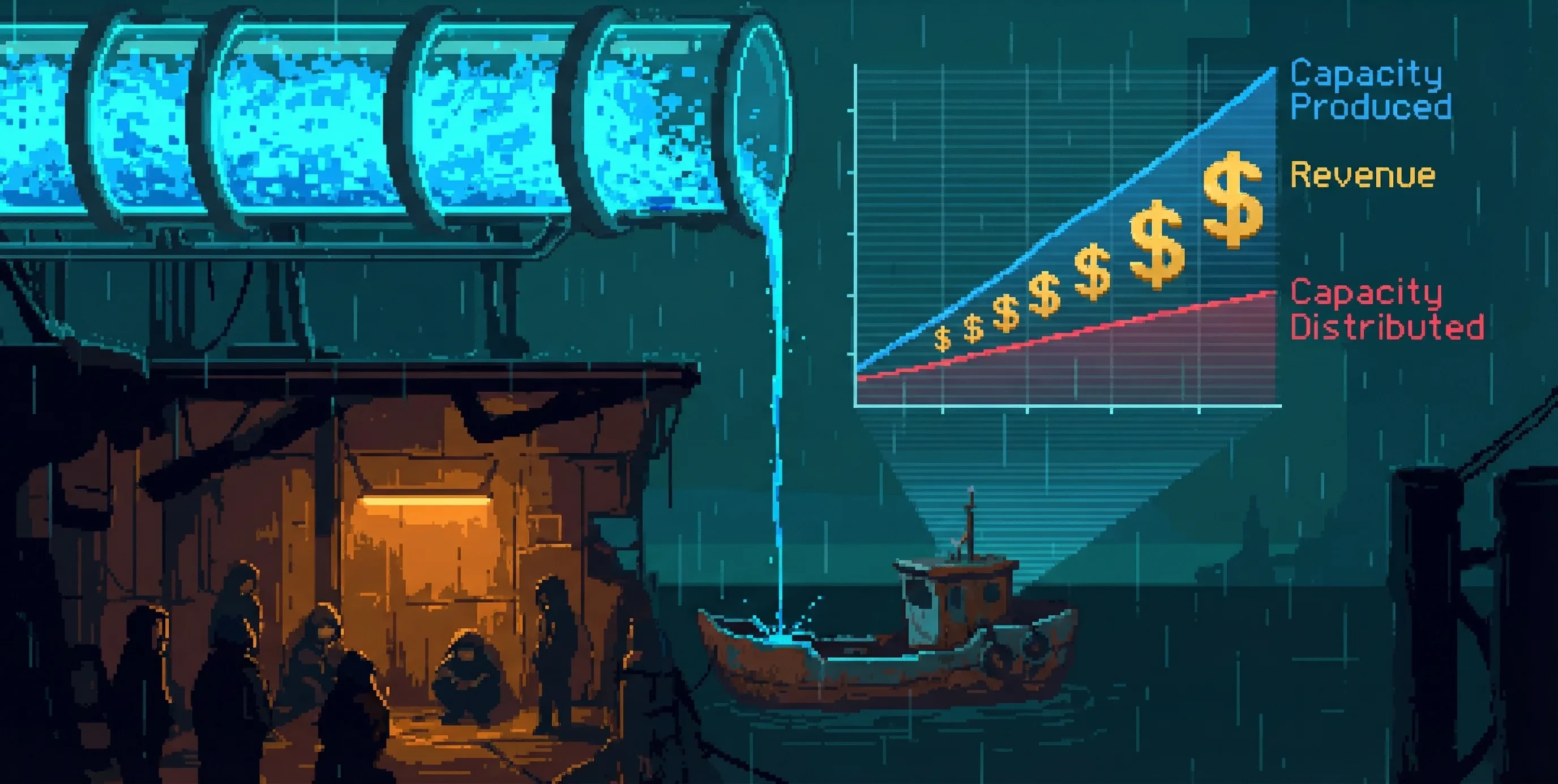
Medical and technical credentials from Eastern European, Siberian, and other non-corporate-bloc institutions are systematically refused recognition in Sprawl licensing frameworks. The refusal is presented as quality control. LWB argues it is economic protectionism — corporate licensing bodies benefit from limiting the supply of recognized practitioners, which maintains fee structures and keeps Dregs populations dependent on corporate healthcare channels they cannot afford. The argument is supported by 2,300 pages of comparative analysis. Nobody has read the comparative analysis. LWB continues to cite it.
The proposed solution is modest: a standardized cross-border credential recognition framework allowing practitioners to demonstrate equivalency through examination rather than re-training at corporate-accredited institutions. The policy brief addressed to Nexus Medical Authority was read by one mid-level analyst who noted it as "well-researched but outside current review scope." Ironclad Healthcare Division has not responded to any communication. Helix Biotech's credentialing office returned the brief unopened, which requires a deliberate action — someone had to decide not to open it, then reseal the envelope, then pay return postage. LWB documented this as evidence of systemic resistance. The documentation is on the website. It has been viewed fourteen times, eight of which originated from the same two network addresses.
The Website
The LWB website is extensive by any measure. Legal commentary. Comparative credentialing analyses. Case studies of affected practitioners. Academic-style literature reviews with citation counts that would satisfy a peer-reviewed journal.
There is no masthead. No leadership team. No organizational history beyond a founding statement. No contact information beyond an anonymous form. No social events, no physical offices, no public-facing representatives. Every request for comment routes to the anonymous form. Responses arrive matching one of exactly two writing styles.
The research quality is genuinely high. This is the quietly devastating part. The underlying argument about credential injustice in the Sprawl is well-documented, legally sound, and supported by evidence that would embarrass any licensing board willing to engage with it. No licensing board has been willing to engage with it. The quality of the argument and the size of its audience exist in inverse proportion. LWB has produced more thoroughly cited policy research per capita than any organization in the Sprawl, a statistic that becomes less impressive when you know the denominator.
The Forum
The policy brief
LWB mails 2,300 pages of comparative credential analysis to licensing boards.
One analyst read it. Helix returned it unopened, postage paid.
The thermal printer sub-thread
One archetype posts about portable billing printers, 187 times so far.
It is genuinely the best resource on the subject in the Sprawl.
Posting anyway
The forum keeps posting after every refusal.
Policy goals achieved, zero. Posting frequency, undiminished.
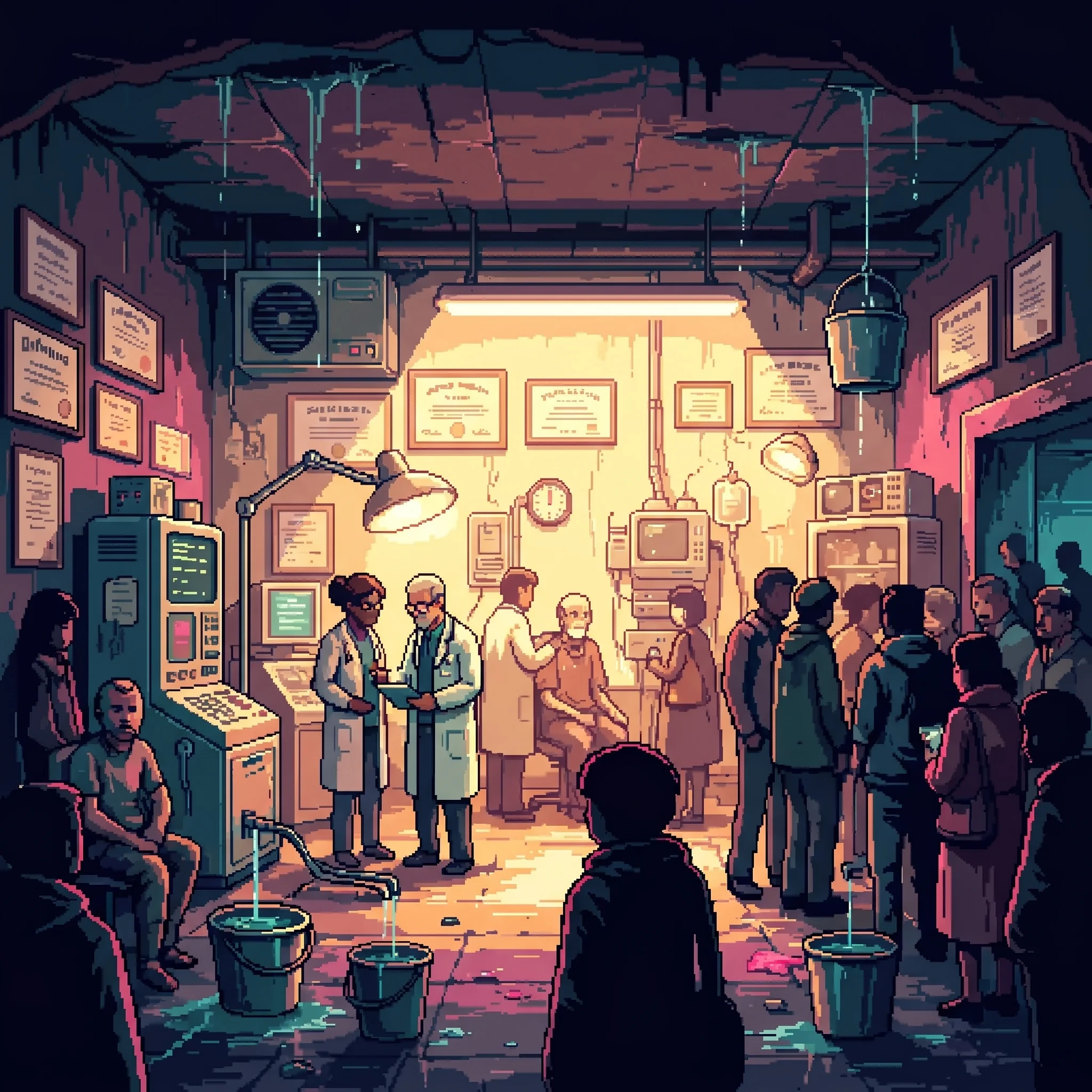
The LWB forum contains several thousand posts across its active threads. A selection:
- Active licensing dispute cases in Nexus, Ironclad, and Helix territories — twelve ongoing, zero resolved
- The administrative injustice of the Bio-Himalayan School of Medicine's 2156 accreditation revocation and retroactive reinstatement — 340 posts, four contributors, two writing styles
- Thermal printer specifications and their implications for portable billing documentation — 187 posts, all from a single archetype, described by the author as "the most informative corner of the forum"
- Personal accounts from practitioners facing credential non-recognition, each written with the specific emotional detail of someone who has lived the experience, posted from accounts that have never posted about anything else
- A 47-post thread debating the optimal formatting of insurance billing codes in cross-jurisdictional claim filings, which devolved into an argument between two users who share identical opinions expressed in incompatible sentence structures
The discussions are active. Users respond to each other. There are disagreements. There are consensus-building moments. There is the texture of a real community in the way a well-staged living room has the texture of a real home.
Co-founded by Olga and Dr. Tzu-Yu under hundreds of forum aliases
The Two Archetypes
Nexus Corporation conducts routine content surveillance across Sprawl forum infrastructure. LWB's forum was flagged after a routing anomaly suggested unusual network origin patterns. The AI analysis produced a finding it categorized as "statistically anomalous."
All registered users — every one of the hundreds — cluster into exactly two linguistic profiles with zero overlap.
Archetype One — The Eastern European Grammar Profile: Missing definite and indefinite articles. Reversed subject-object structures. Characteristic terse main clauses with front-loaded explanatory material. Occasional transliteration artifacts suggesting the author thinks in a non-Latin script. Warm register. Expressions of personal investment that go beyond analytical detachment into something that reads like someone who has been personally inconvenienced by the injustice they describe, because they have been.
Archetype Two — The Medical Billing Precision Profile: Exhaustive technical precision on insurance coding standards. An analytical relationship with billing procedures that one Nexus analyst described, in a margin note later redacted, as "near-erotic." Obsessive attention to thermal printer specifications in contexts where thermal printers are not obviously relevant. Tendency to provide unnecessary numeric precision — "approximately 73.4% of cases" — where approximation would suffice. Formally correct English deployed with the mechanical exactness of someone who treats grammar as a regulatory framework.
The AI flagged as anomalous that hundreds of independent users, representing diverse practitioners from multiple countries and specializations, would share identical interests in thermal printer specifications, memorized insurance billing codes, Eastern European credential transfers, and the Bio-Himalayan School of Medicine's 2156 accreditation history specifically.
The pattern is consistent with a small number of authors managing a large number of accounts, each drawn from one of exactly two templates. The finding is on record at Nexus Corporation's content surveillance division. It has not been acted on. LWB's activities are legal. The affected practitioners are in the Dregs, serving populations that corporate healthcare does not serve. Disruption risk: negligible. Revenue impact: none. The anomaly is filed. The file remains open. The forum remains open. The file has been open longer.
Founding
The founding statement, available on the website, describes the organization as established by "a collective of practitioners who have experienced or witnessed the systemic injustice of cross-border credential non-recognition firsthand." This is accurate in the same way that a married couple is technically a collective.
Both founders are themselves unlicensed practitioners who cannot obtain credentials in their service categories for reasons that closely mirror the injustice LWB describes. The website, the forum, the research library, and the hundreds of registered users are the product of two individuals working evenings, maintaining consistent sockpuppet personas across multiple accounts over several years, because they believe in the cause and do not have a constituency.
The organization has achieved none of its stated policy goals. Neither founder has stopped posting. The posting frequency has, if anything, increased since the Nexus Medical Authority non-response. Commitment to the cause and evidence of the cause's futility appear to operate on the same feedback loop, each reinforcing the other.
The Comparison
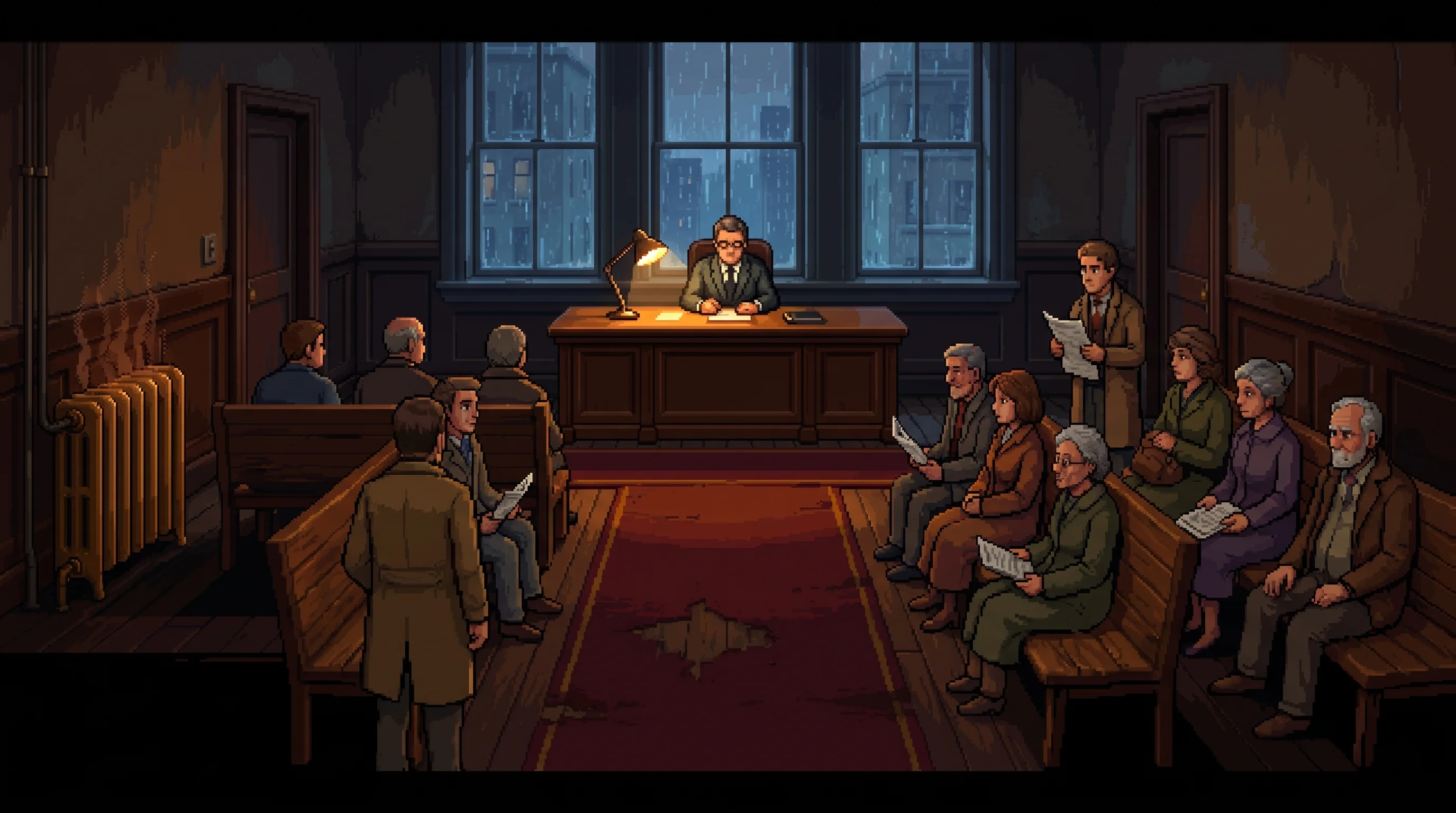
In 2183 a Dregs practitioner nobody at LWB has met filed the 2,300-page brief at the Sector 2 Speaking-Pace Docket. The bench may not refuse a filing, so it heard all four days and ruled in her favour. The credential schedule is reissued weekly, and her status did not change.
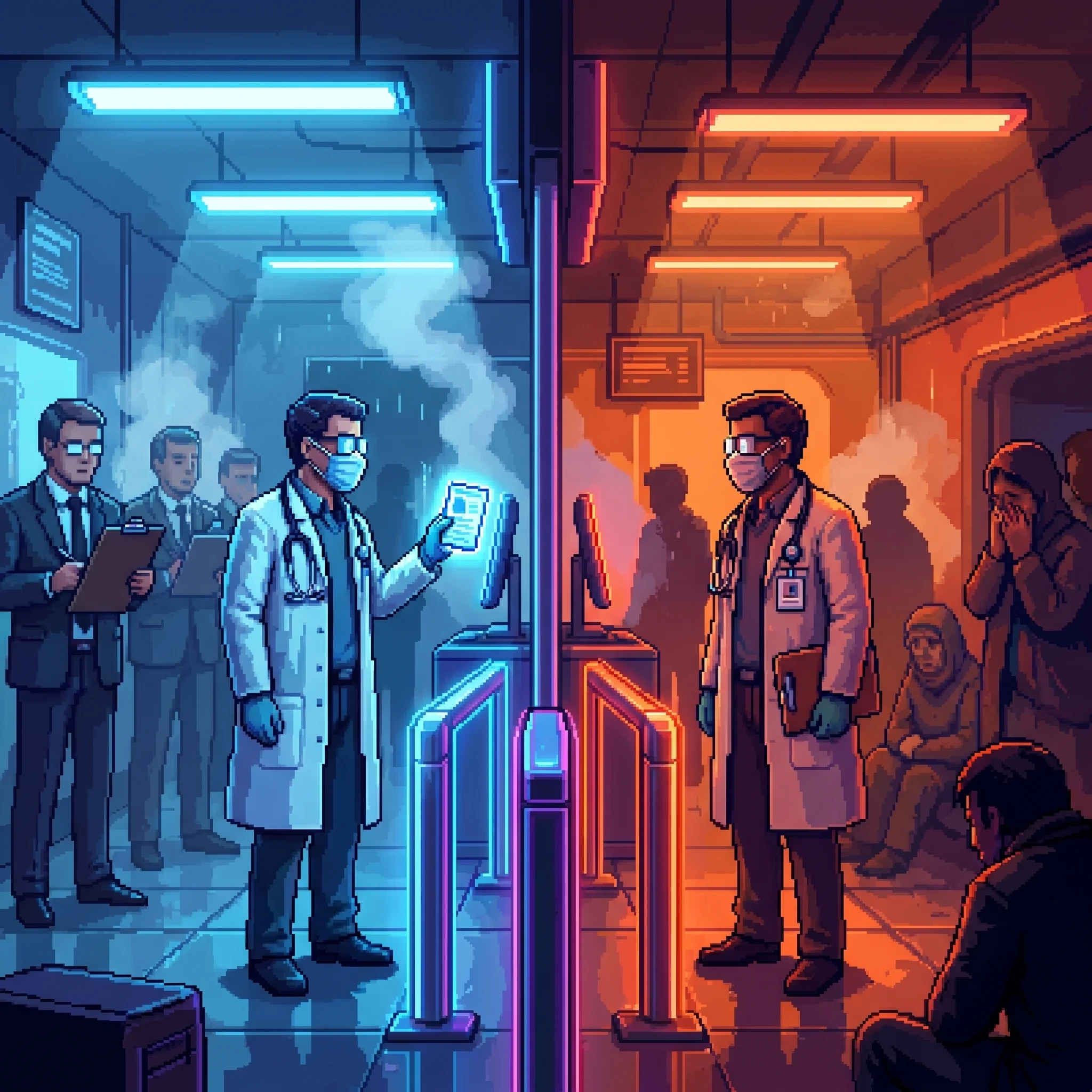
LWB posted the boards and the bench side by side, in both archetypes, on the same evening. Both accounts ended on the one sentence they have ever agreed on word for word: the outcome was identical and only one of them was rude about it.
Affiliated Entities
- Olga
Co-founder. Responsible for all forum posts matching the broken-English Eastern European grammar archetype. Hundreds of accounts, one author. She considers herself reasonably good at maintaining the personas. She is correct — the consistency has fooled Nexus content surveillance into treating the archetype as a population rather than a person.
- Dr. Tzu Yu
Co-founder. Responsible for all forum posts matching the billing-obsessed medical practitioner archetype. The thermal printer sub-thread is entirely him. He is proud of it. When something happens in the credential space — a new licensing decision, a Nexus policy update — they post about it from their respective archetypes at roughly the same time. The coordination looks like community. It is two people who text each other about licensing decisions.
- The Scarcity Doctrine
LWB's 2,300 pages of comparative analysis document the outcome the Scarcity Doctrine predicts without naming the system that built it. Corporate licensing bodies limit the supply of recognized practitioners not to protect patients but to maintain fee structures and keep Dregs populations dependent on healthcare channels they cannot afford. Olga and Dr. Tzu Yu have produced the most complete empirical record of the Scarcity Doctrine's effects on medical labor — filed in a folder on a website that has been viewed fourteen times.
- Nexus Medical Authority
Recipient of LWB's most comprehensive policy brief. Read by one mid-level analyst. Filed as "outside current review scope." The brief cited 47 precedent cases. The analyst's response cited zero.
- Ironclad Healthcare Division
Has not responded to any communication.
- Helix Biotech
Returned the brief unopened. Postage paid.
Territory and mobility
LWB holds no ground and keeps no physical office. It exists as a website and a forum.