The Openings
Overview
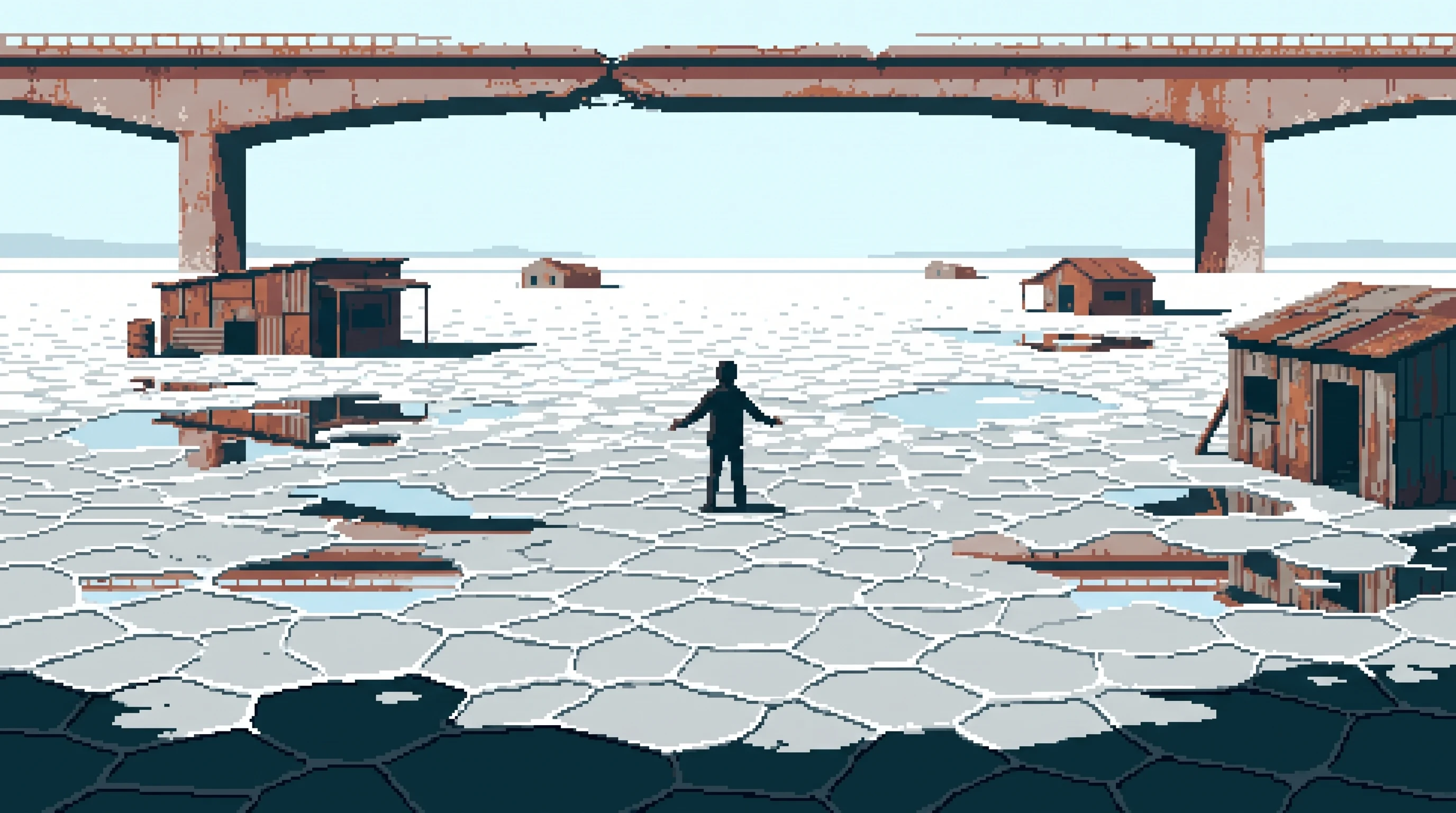
The Southern Bay Floor is the part of the drained bay that nobody fought over. The northern flats have the drowned bridge and its salvage. The central Dregs have their canyons of people. Down here, under the broken San Mateo span, there is a wide cracked plain with almost nothing on it, and about a hundred and eighty people who have lived their whole lives at the bottom of a silence.
They call the flat the Openings. The name is for the exposed ground, which has no cover and no vertical line to break the horizon. It is also for the questions, which nobody here closes.
The Silence That Was Never a Choice
The Openings has been a dead zone since the water went. There is no signal on the flat and there never was. Nexus never wired it, the chip does not reach it, and no one who lives here has ever been able to afford a chip in the first place. A resident of the Openings cannot look anything up. They have never been able to. When they want to know how far it is to the Rim, or when the weather will turn, or what killed a neighbor, they guess, or they wait, or they never find out.
Everywhere else in the Sprawl, not-knowing is a condition you fall into when your subscription lapses. Here it is the water and the air. A generation grew up inside it, and a culture grew up around the habit of leaving questions open. Closing a question takes effort the flat cannot spare and returns an answer the flat has no use for, so the questions stay open. On the Openings, "I don't know" is a complete sentence, and usually the most honest word in it.
Unindexed Both Ways
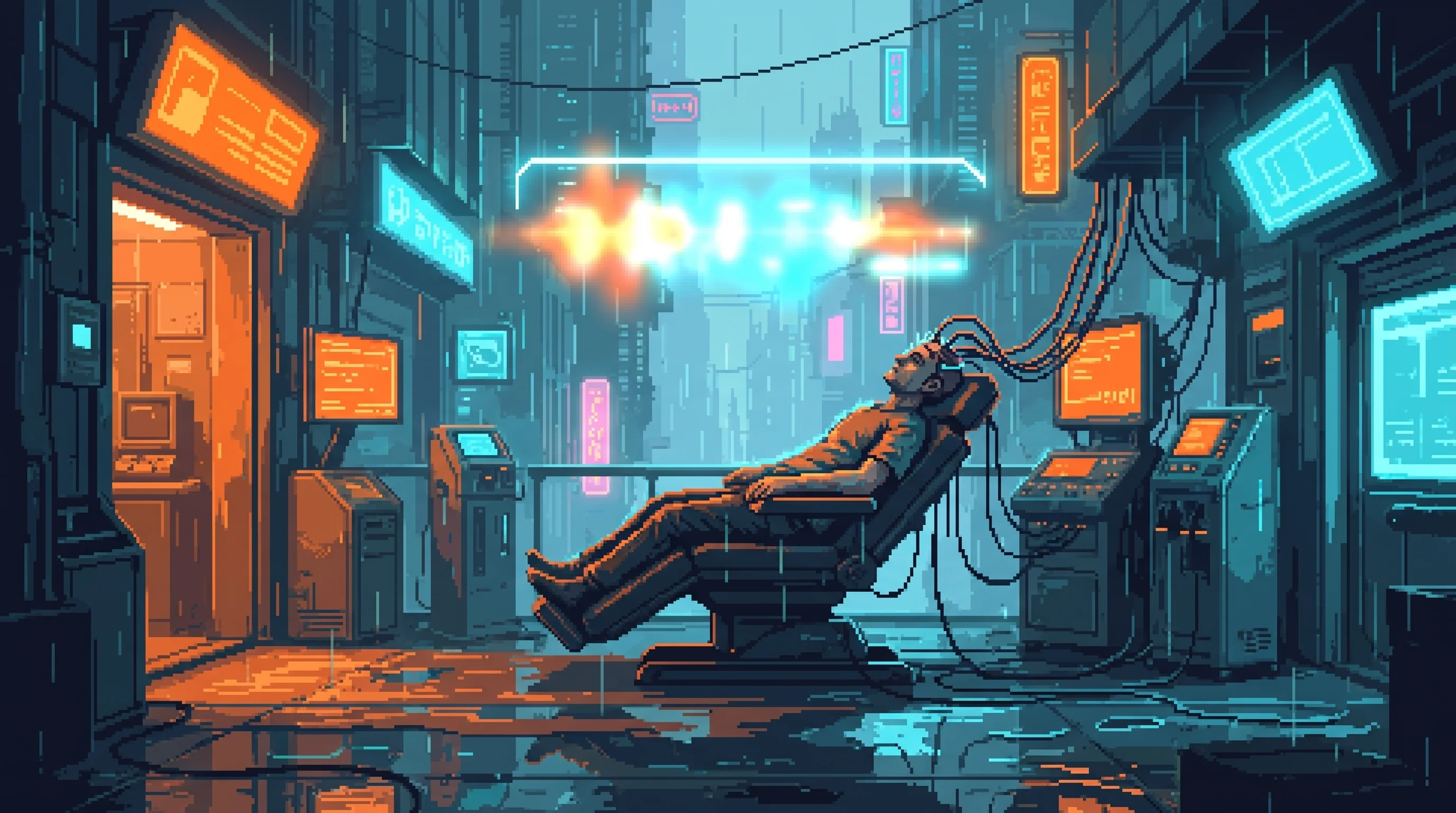
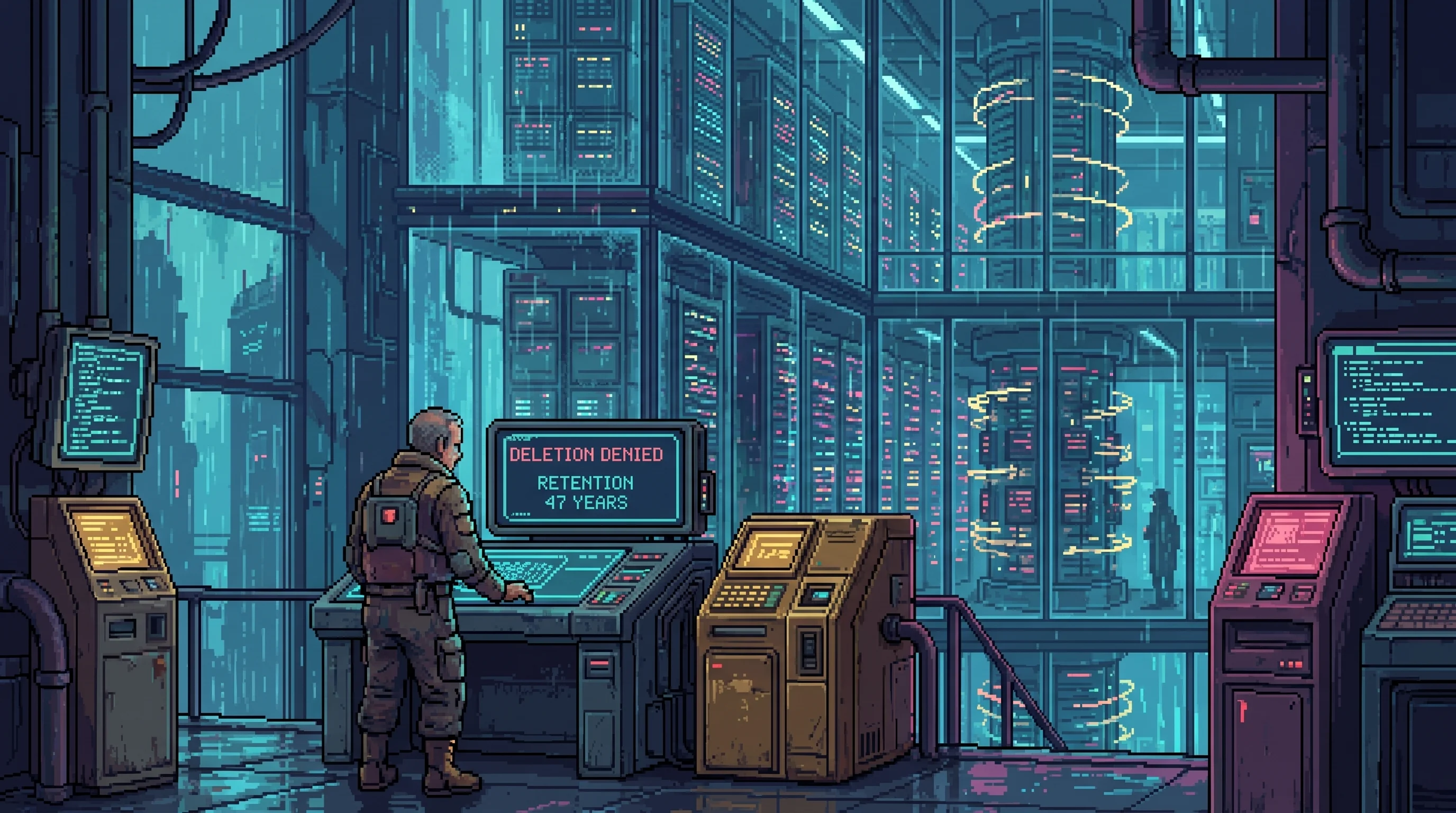
Everywhere else in the Sprawl, the Forgetting Wars are fought over whether a permanent record should ever let anyone go. Petitioners noise-bomb their own history, politicians debate digital forgiveness, and the argument never questions its own premise: that somewhere, a neural-searchable archive already has you. The Openings breaks the premise instead of fighting inside it. Nexus never wired the flat, so its residents were never indexed to begin with. There is no early file to bury under noise and no old mistake sitting in an archive waiting on forgiveness, because there was never a query path in either direction. The Sprawl cannot look the Openings up, and the Openings cannot look the Sprawl up, and both absences share one cause.
Fathom's paying visitors come for the not-knowing. Almost none of them notice that for one week they have also stopped being knowable, a form of record-immunity no credit balance up the Rim can rent for longer, because the dead zone is not a service Fathom operates. It is the one thing about the Openings he has never found a way to sell twice.
What the Rim Pays For
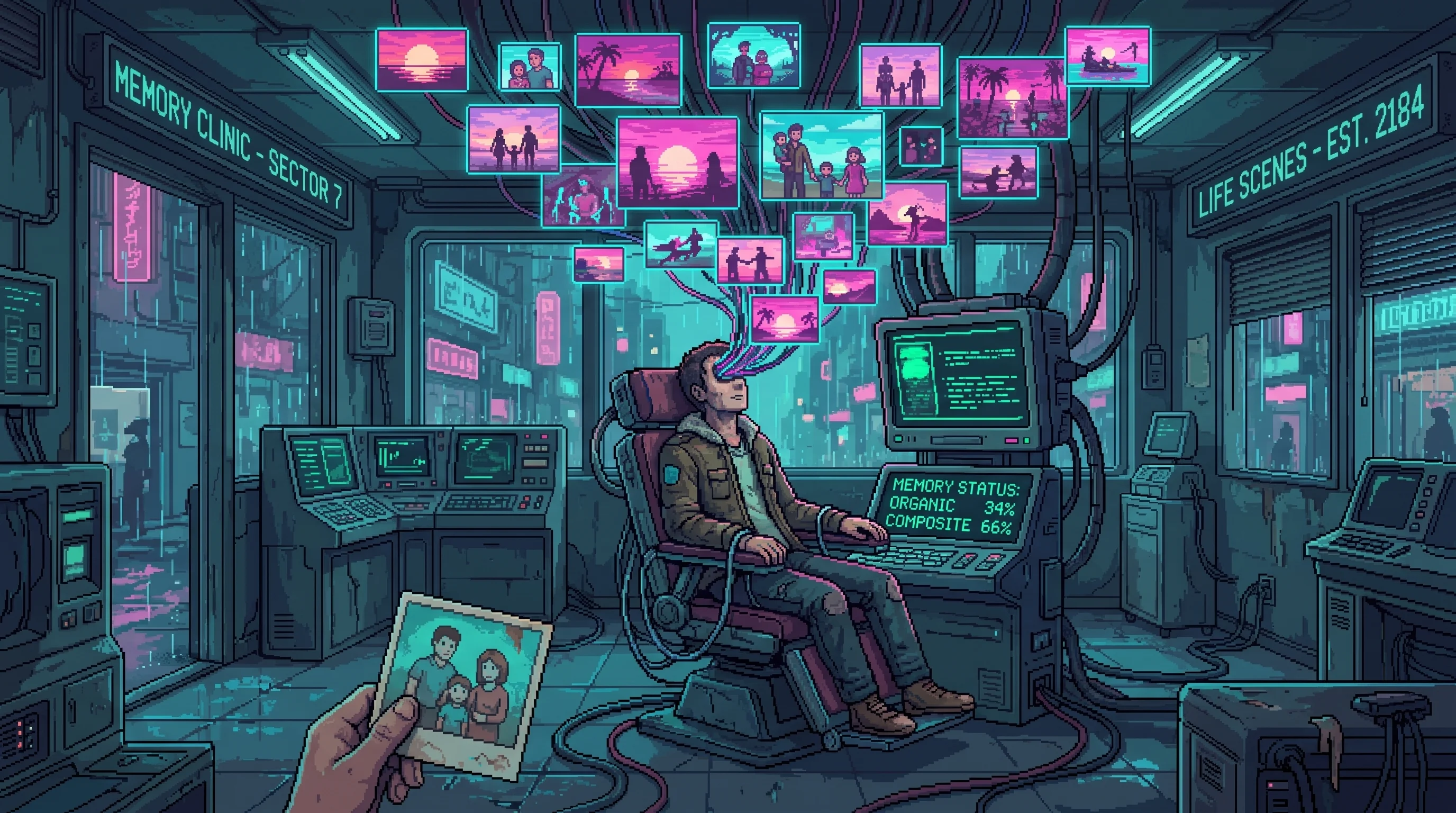
Up in Nexus Central, the Mystery Clubs charge two hundred credits a head for an evening of exactly this. They rent a suppression toggle, kill their augmentation for a few hours, and sit in a shielded room being unable to remember the distance to the Moon. Executive-tier professionals have hyperventilated over it. It is the most expensive not-knowing money can buy, and it lasts until they walk out and the chip comes back.
The Openings has the real thing, for free, and it does not switch off. Someone was always going to notice that gap, and Fathom did. He sells it.
The trade is called an ignorance retreat, and it is downmarket, grittier, and more authentic than anything the Clubs offer, which is the whole pitch. A week costs sixty credits, board included. That is less than a third of one Mystery Club evening, and it does not end when the sun comes up. No chip, no queries, no answers — the paper the visitor signs says so, and the locals cannot read it. For seven days they eat what the flat eats and sit in the silence the flat lives in. They leave having felt, briefly, the thing the Sprawl's most augmented people will pay almost anything to feel: a question with no answer coming, and the vertigo of sitting inside it.
| Connectivity | None, and never has been — the flat has been a permanent signal dead zone since the Bay was drained |
|---|---|
| Danger Level | Low to the body, high to the certainty you arrived with |
| Notable Feature | A flat so exposed and so silent that visitors report they cannot remember what a question felt like before it had an answer |
The Product That Eats Itself
Fathom understands the flaw in his own business better than his customers do. The wonder the visitors come for exists only while the residents are not performing it. The moment a local performs not-knowing for a paying stranger, the not-knowing becomes a performance, and a performance is just another kind of answer. Authenticity survives here only while the transaction stays invisible to the people being sold. So Fathom keeps the money at the edge of the flat and keeps his neighbors from learning they are the product.
It does not hold. The retreat fees are the first credits the Openings has ever seen, and money teaches whether you want it to or not. The residents are learning what a query is worth. So they are learning to want one. The silence thins at the exact rate the silence is sold. The dead zone stayed pure until it became a destination. The Slow Thought Movement chose their not-knowing and can keep it. The Openings never chose it, and is now watching it get bought out from under them one week-long visitor at a time.
The Flat Where Nothing Testifies
Everywhere else in the Sprawl, the crisis of justice is that any proof can be manufactured and none can be checked. A face on a recording, a voice, a log of where a body stood — all of it forgeable, and none of it worth trusting. The three courts that grew up around that crisis all assume the same thing: that somewhere a record exists, and the only question is whether it lies. The Openings does not give them the record to doubt. Nothing here is wired to watch, so nothing here can be forged, and nothing here can be produced to a tribunal that would only have processed a lie anyway.
This makes the flat the last place in the drained bay where a wrong is settled the oldest way. When a man is hurt here, there is no biometric log to subpoena and no corporate arbiter who will hear the matter, because the corporate arbiters run on data and the flat generates none. What the Openings has instead is a hundred and eighty people and their memory of a face. Guilt is decided by who stands up and says what they saw, weighted by how much the flat trusts the speaker. It is the reputation justice of the deep Dregs, except the Openings never had the option of any other kind.
The gap opens hardest against an outsider. A visitor who harms a resident and boards the transit back up the Rim carries no trail off the flat, because the flat wrote none down. Up in the sectors a corporate tribunal will not open a case with no data to process. The flat's word is a description of a face held by people the system does not count as citizens, and no court up there will accept it as evidence. The residents know which of them was hurt. They have no way to make anyone above the marsh know it. To the east, the Southern Shoals suffers the mirror of this: a floor so crowded with staked lights reporting false readings that a runner cannot tell a working tap from a fatal one. The Shoals lies to everyone who reads it. The Openings tells no one anything, and both defeat the same courts.
| Stratum | Dregs |
|---|---|
| Power Position | Outsider |
| Access | Public |
| Atmosphere | Desolate |
Conditions Report
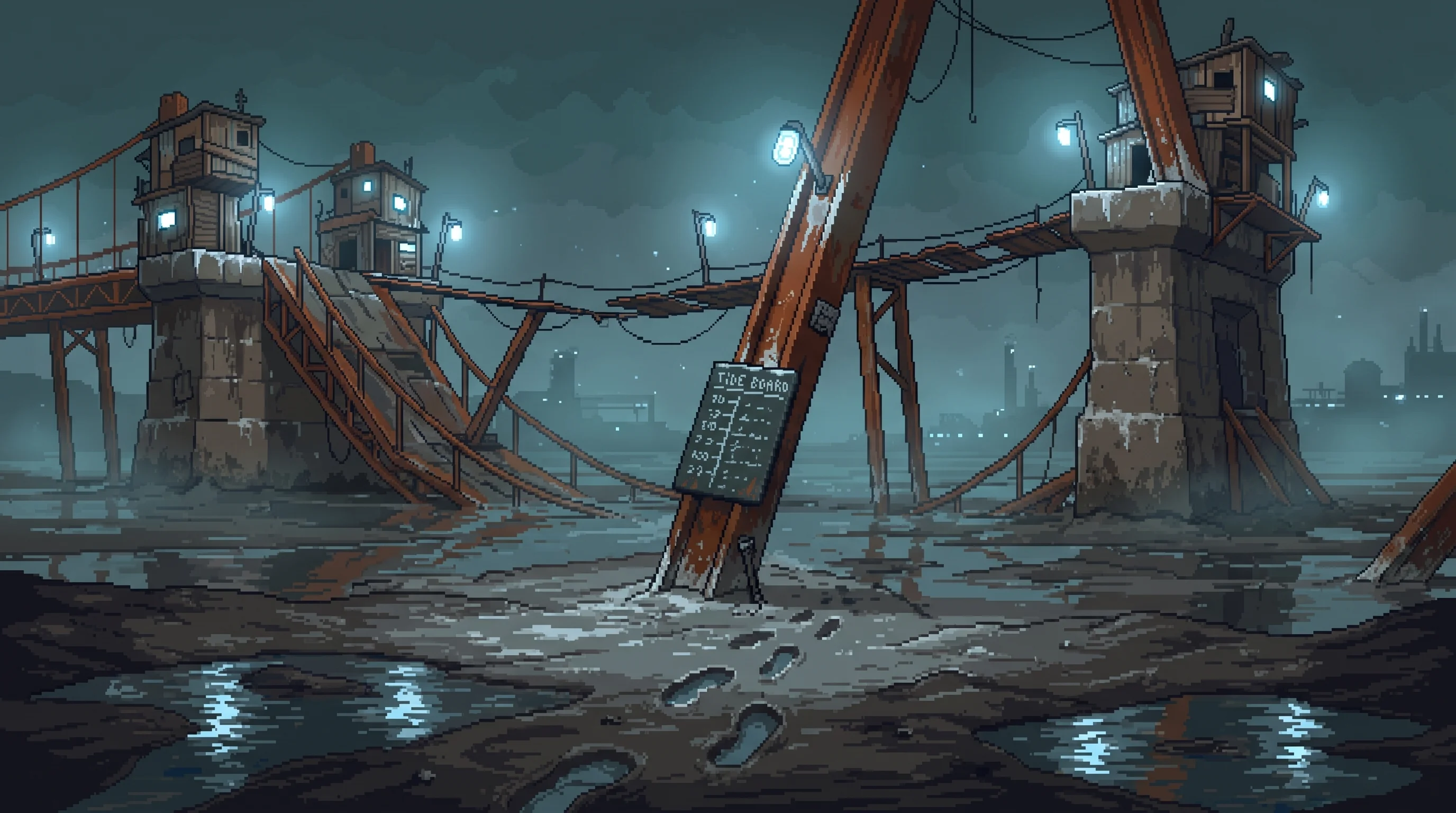
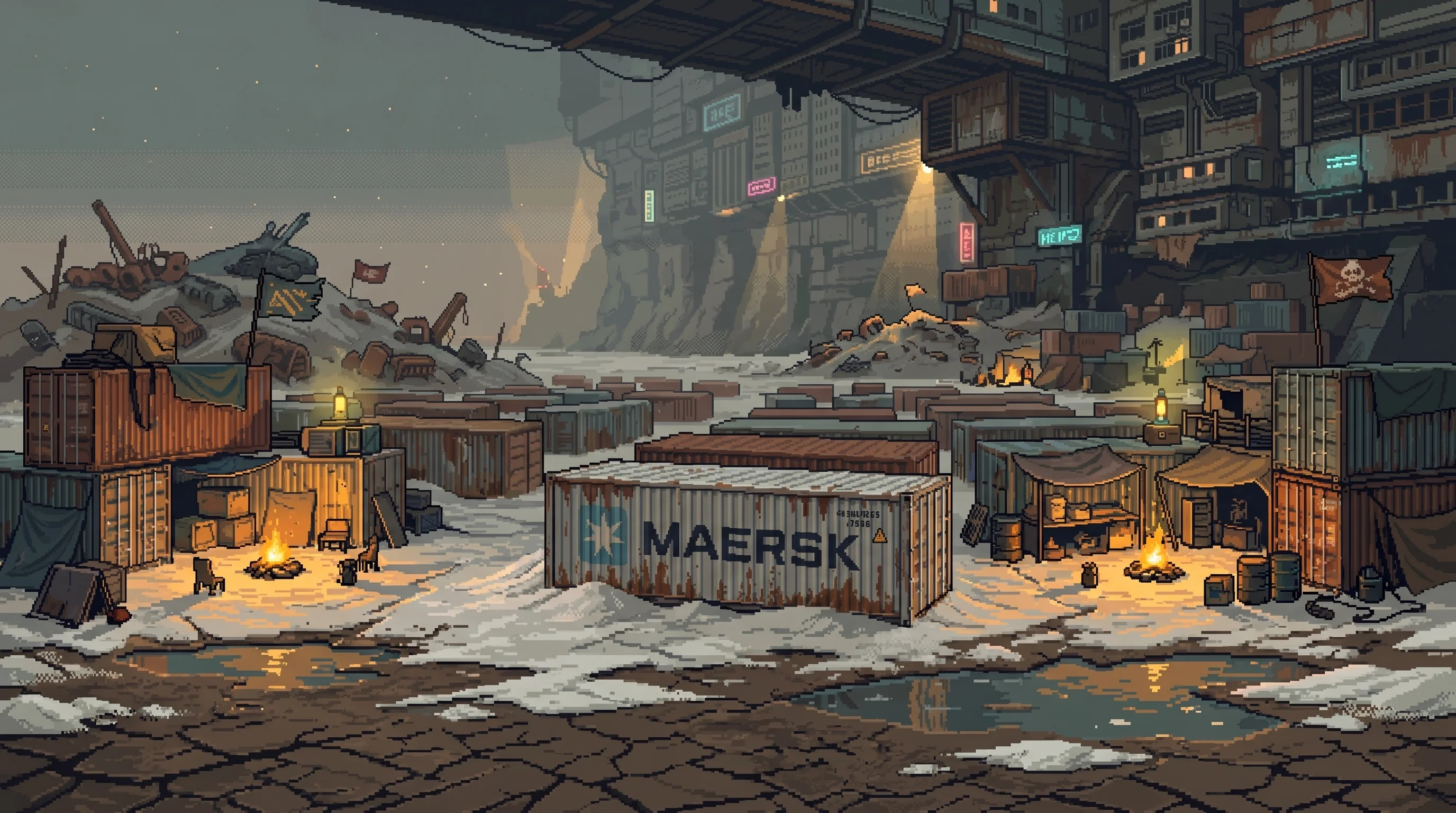
The Openings assaults you with space. There is nothing to look at and nowhere to put your eyes. They keep traveling until the flat hazes out somewhere past four kilometers, and a visitor raised in the vertical, saturated Sprawl gets a kind of motion sickness that never quite resolves. The ground is cracked mud that crunches and gives, printed with salt in pale hexagonal scabs the width of a hand. The wind comes off the open bay floor with nothing to break it. It carries the flat mineral smell of dried tideland and old rust, and it does not stop for days at a stretch. By day the glare is hard and shadowless; the forty-odd huts throw no shade worth standing in until an hour before dark. By night the dark is total, with no glow of the Rim close enough to matter. The silence runs so deep that visitors report hearing their own pulse and mistaking it, the first night, for something walking out on the flat. The broken San Mateo span lies across the southern horizon. Nothing else stands tall enough to see from a distance.
The Inner-Eye Preserve
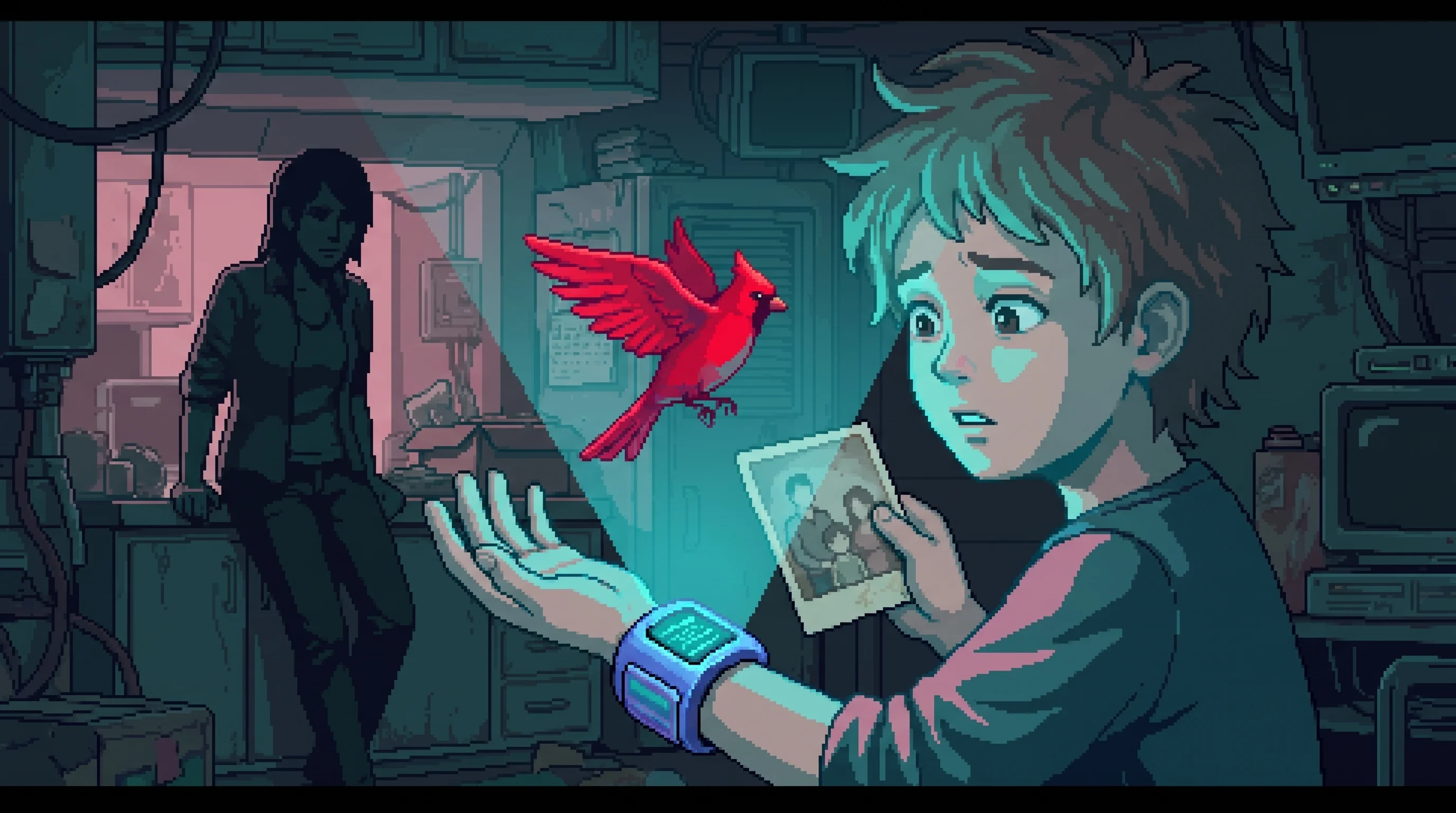
In November 2183, a Helix pediatric neurologist published findings on a condition she named inner-eye atrophy: children who grew up with the conjure-band — the Nexus Dynamics wrist projector that renders verbal descriptions as flawless moving image — had developed thin and vestigial autonomous visual generation. The pathway existed. It simply never carried much traffic. The external screen was always there first.
The conjure-band never reached the Openings. No signal ever reached the Openings. Its children grew up picturing things from inside, the way all children used to, because the outside was never an option. The faces of the dead arrived in actual darkness without needing to be called up from footage, because footage was not a resource the flat possessed. The inner eye formed because there was no device to take its place.
Grief researchers from Nexus medical arrived in early 2184. They wanted the atrophy's control group. They found it: a flat of a hundred and eighty people who could, in darkness, with screens off, hold the faces of the dead in internal visualization — partial and wrong at the edges and assembled from years of actual looking, which is to say, theirs. The researchers wrote this down. They paid Fathom a fee to access waivers the residents could not read. The residents sat in the dark and the faces came and the researchers recorded the cortisol profiles of unimpeded grief.
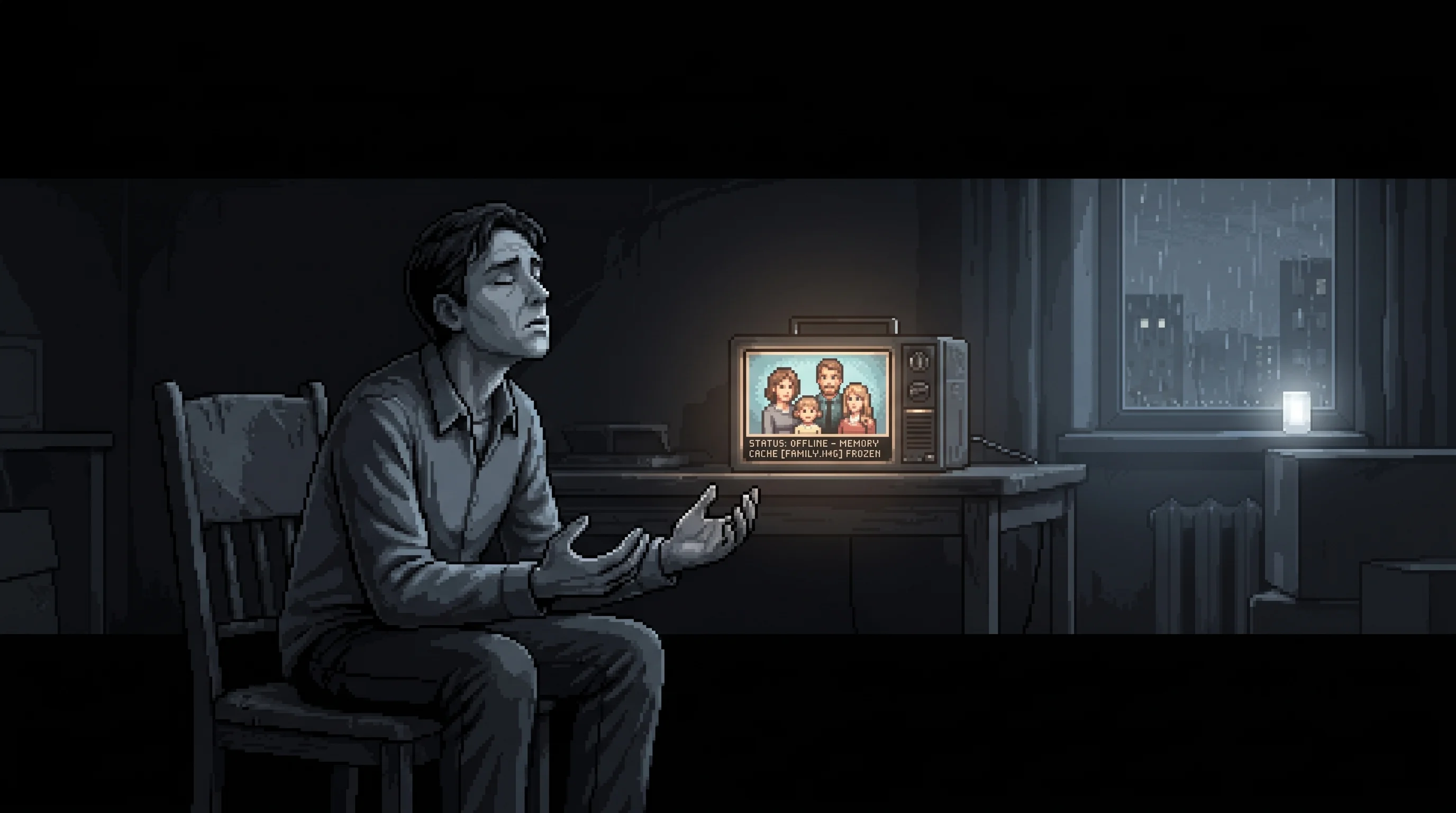
Fathom can picture his sister. She died in 2161 when he was three. He has no footage of her. He has thirty-two years of trying to remember a face he barely saw, assembled into an image that is probably wrong in almost every particular and is completely his. He learned only recently, when the researchers came with their waivers, that this is not what most people have.
He has not decided what to do with this information. The ignorance retreats sell a week of not-knowing. He does not know what to call a week of being able to know your dead from the inside. He is not sure it is something you sell. He is not sure it is something you can.
Its residents have lived their whole lives unable to query anything, because the chip never reached the flat and no one there could afford one — the not-knowing is involuntary and total
Visual Identity
- Architecture: Low salvage huts scattered across a cracked mud flat with no cover and no vertical line but the broken San Mateo span on the horizon.
- Key visual: A visitor alone in the middle of the flat, looking at a horizon with nothing on it and nothing to ask it.
- Color palette: Cracked-mud pale grey, salt bleach, faded span-rust, washed-out southern sky.
- Lighting: Wide shadowless daylight, hard noon glare, and a night dark so complete the visitors say they can hear it.
Affiliated Entities
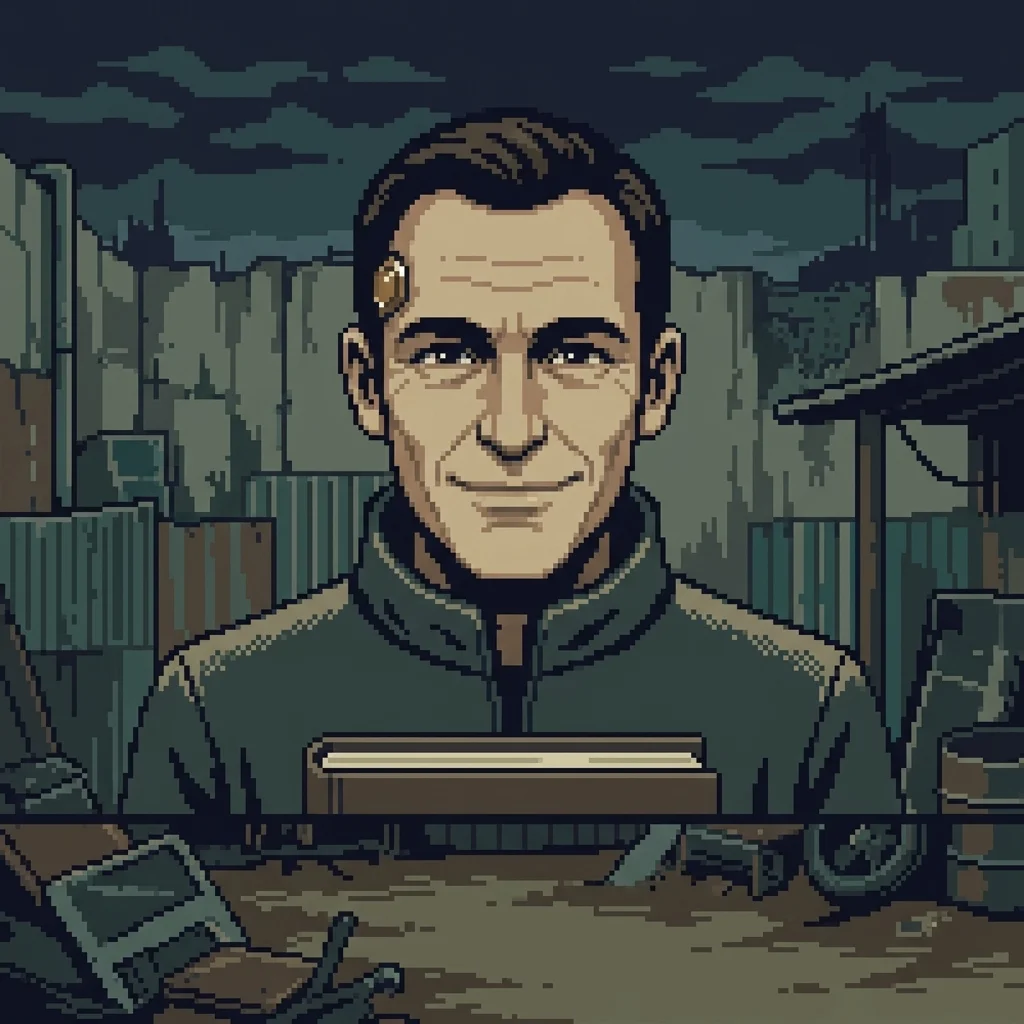
- Fathom: Broker of the retreat trade. He grew up in the silence and figured out it was worth money to people who never had it. He sells access while hiding the sale from his own neighbors, which is at once a con and the only thing protecting the product.
- The Mystery Clubs: The wealthy's version, class inverted. Naia Okafor's clubs pay a subsidiary for a suppression toggle to fake for an evening what the Openings lives permanently and for nothing. Fathom's entire business is the arbitrage between those two prices.
- The Cognitive Ceiling: This is the Ceiling's luxury of not-knowing, seen from the floor instead of the boardroom. Up the Rim, wonder is a scarce good the comfortable rent. Down here it is the whole of a life, and it was free only because there was never anything to spend.
- The Slow Thought Movement: The Movement cultivates unassisted cognition as a chosen practice. The Openings arrived at the same place by the opposite road — the chip never came, no one could leave — and the difference between a discipline and a sentence is the whole distance between them.
- The Marrows: The northern dead-zone flat, across the drained bay. Both settlements live off what the network cannot reach. The Marrows sells the mud's salvage; the Openings sells the silence itself, which turns out to be the more finite resource of the two.
- Cardinal Alejandro Silva: The Inquisitor-General's every prayer is timestamped by a wellness suite he cannot switch off. The Openings has never had anything wired to time it. The one population he could never audit is the one he keeps circling back to, in the private hours his terminal does not log.
- The Grace Rolls: The outreach station two districts north, where a corporate refugee gets enrolled in a permanent record for the first time in exchange for a hot meal. The Openings was never offered that trade. The cable that would have carried the offer never reached this far south.
- The Conjure-Band: Never reached the flat. That absence is the source of everything that makes the Openings unusual: the silence, the inner-eye retention, the grief dark that works here the way it stopped working everywhere else. The band's presence created the atrophy; the flat's dead zone preserved it by default.
- The Inner-Eye Atrophy: The Openings is the atrophy's largest control group. While Nexus-tier children lose autonomous visual generation, the flat's residents retain it — not through discipline or choice but because the device that creates the atrophy never arrived. Grief researchers have come south to study the gap.
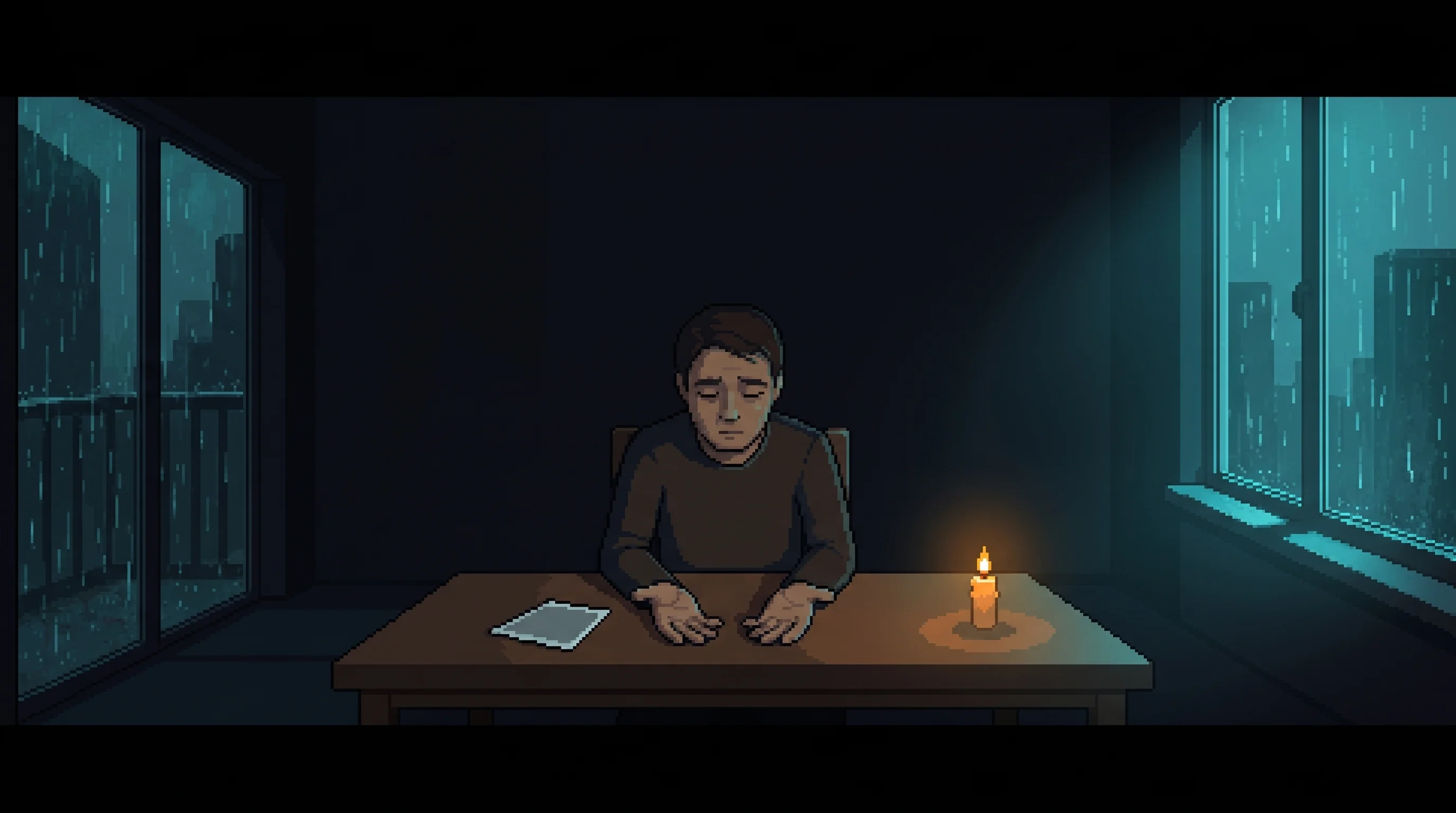
- The Grief Dark: On the Openings, the grief dark is simply called remembering. It is not a practice. It is what happens when a person who loved someone dies: they sit in the dark and the face comes, partial and wrong at the edges, and theirs. The researchers have a clinical name for what the flat does naturally. The flat has no name for it at all.
A culture of leaving questions open formed around the silence, because closing a question costs effort the flat cannot spare and buys an answer it has no use for
Restricted Access
Some visitors do not leave. Every year one or two of them let their return passage lapse and give away their chip at the edge of the flat. They stay, insisting they have found something the Sprawl took from them before they were old enough to notice it was gone. The residents regard these converts warily. A person who chose the silence is not living the same silence they are, and everyone on the Openings can feel the difference even if the convert never will.
Outsiders now pay Fathom to spend a week on the flat as an 'ignorance retreat' — the same not-knowing the Mystery Clubs simulate for ¢200 an evening up the Rim, sold here as the authentic article
Connected To
Supporting Connections
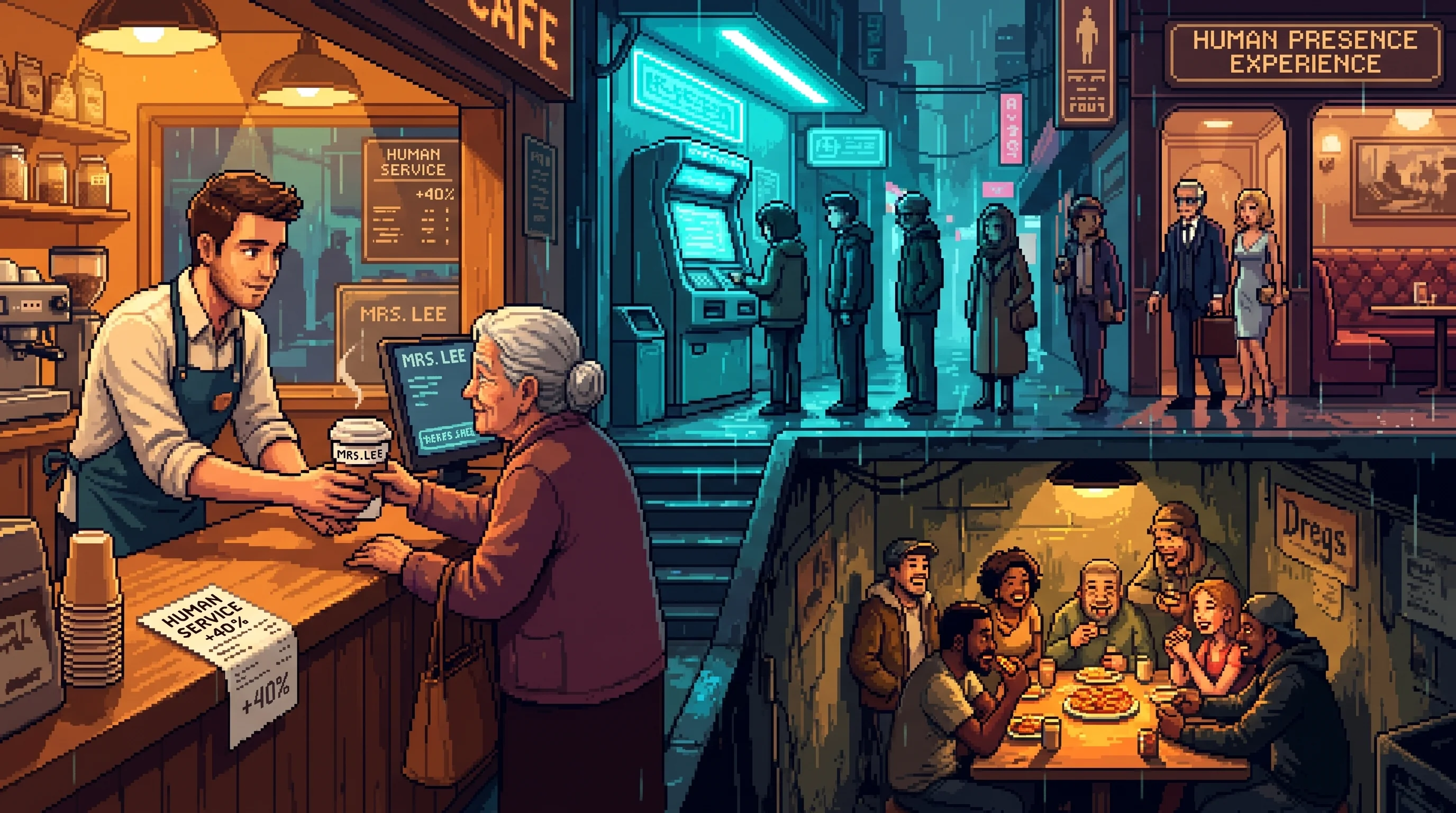
People who leave every question open, where no answer is piped in.
The premium charged for the one service no machine can fake: being seen by another conscious being.
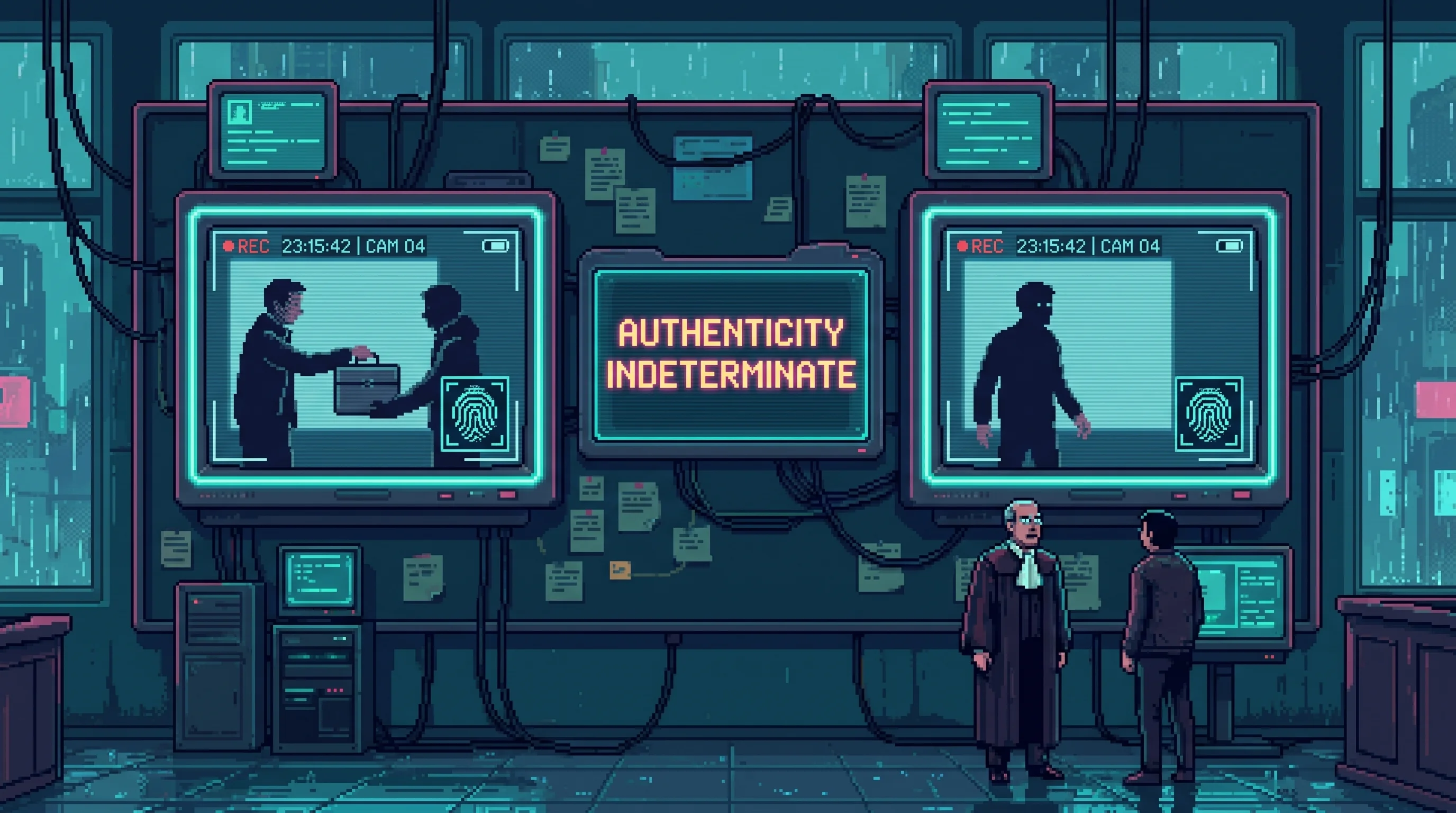
Nothing here is wired to watch, so nothing can be forged or testified.
Perfect evidence forgeries and crimes without defendants force justice systems to assign blame without reliable truth.



Local Intelligence Scan
Nearby Signals
CANONICAL PROXIMITY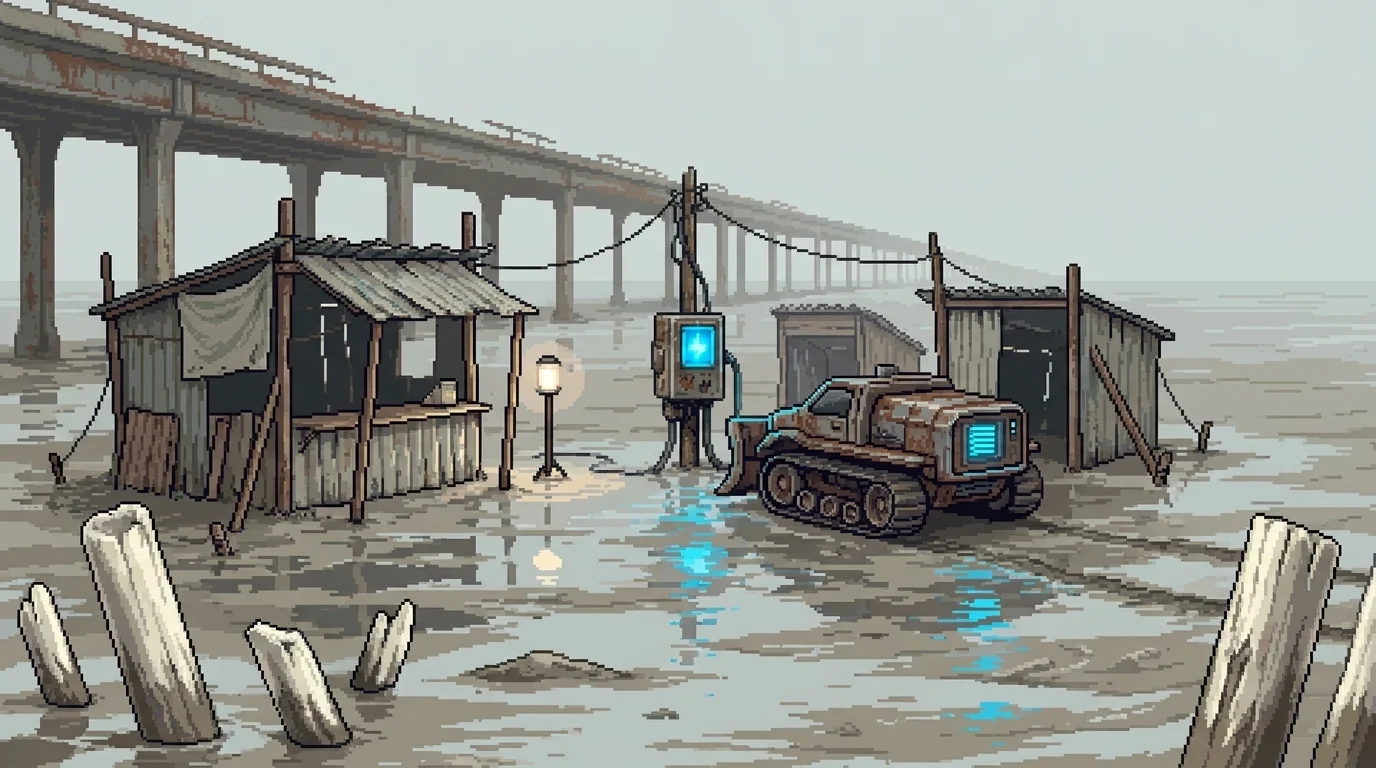


Environmental Readout
LIVE CONDITIONS- Air
- Hazy
- Light
- Shadowed
- Flood
- Seasonal
- Heat
- Heat island
- Security posture
- Ungoverned
- Infrastructure
- Improvised
Position Data
SECONDARY- Elevation band
- Bay floor — below the Rim
- Lattice fix
- E+10.2 · N-14.5
—