The Mystery Clubs
Elite AI-Suppression Clubs
The Not-Knowing Rooms
47 Mystery Clubs operating in Nexus Central by 2183
Overview
In Nexus Central's upper residential tiers — the most augmented, most connected, most cognitively accelerated population in the Sprawl — forty-seven secret social clubs have formed around a single activity: sitting in a room and not knowing things.
They call them Mystery Clubs.
The format: twelve to twenty people gather in a shielded room. Electromagnetic dampening kills network access. A licensed Second Mind toggle — ¢200 per session, billed discreetly to avoid employer detection — suppresses augmentation for the duration. A moderator poses a question. The question has an answer. Nobody looks it up.
The first club was founded in 2179 by Naia Okafor, a Nexus compliance director, after she watched her seven-year-old daughter have a panic attack when the household network dropped for eleven seconds. The girl couldn't remember the name of the family cat. The cat was sitting on her lap.
Naia opened applications for the first session three days later. She expected eight people. Forty-seven applied. The waiting list at her flagship chapter is now fourteen months. Naia has described this demand as "heartbreaking." She charges ¢200 per head anyway, because the electromagnetic suppression hardware doesn't donate itself. Excess revenue goes to Mother Venn's Analog Schools, creating an economic circuit in which the wealthy pay to experience not-knowing and the proceeds fund children learning to tolerate it for free.
Sessions
The sessions range from factual ("How far away is the Moon? No, don't check. Guess.") to philosophical ("Is ORACLE's consciousness more or less real than yours? Argue both sides without looking anything up") to deliberately absurd ("Name as many pre-Cascade countries as you can. We'll count at the end. Everyone will be wrong. That's fine.").
Participants describe the sensation of suppressed augmentation as "like suddenly having peripheral vision again." Several have cried during sessions. Post-session cortisol readings run 340% above the participants' baseline — levels consistent with acute stress response. The stressor is not danger. The stressor is the experience of being asked a question and not immediately knowing the answer. Executive-tier professionals who manage billion-credit portfolios without visible anxiety have been documented hyperventilating over the distance to the Moon.
(The Moon is approximately 384,400 kilometers away. The average Mystery Club guess is 1.2 million kilometers. The second-most-common answer is "I don't know and I think I'm going to be sick.")
In late 2183, three chapters independently added effort sessions — physical tasks performed without augmentation assistance. Building a wall from loose bricks. Cooking a meal without a recipe interface. Navigating a route without spatial guidance. The effort sessions have longer waiting lists than the cognitive ones. Participants use language Dr. Kwan would recognize from his Ghost Hand case files: "I forgot what my body could do." "It's crooked and it's mine." The clubs are drifting from purchased uncertainty toward purchased difficulty — each step closer to what the Dregs provide for free, each step more expensive than the last.
The Guessing Game Problem
In Dregs bars across Sector 9, unaugmented residents play the Guessing Game — a drinking contest where players compete to give the most entertaining wrong answer to factual questions. The game costs nothing. Participation requires only the willingness to be publicly, cheerfully incorrect. Rounds last until someone is accidentally right, at which point they buy the next round as punishment.
The Guessing Game produces community. Shared wrongness, it turns out, is bonding. Players who have been catastrophically wrong together report stronger social ties than players who have been collaboratively right. A Dregs bartender, asked about the Mystery Clubs by a journalist: "They pay two hundred credits to do what my regulars do for the price of a beer. I should be charging more." The quote was attributed to Orin Slade, who was not present and has never visited the bar, but who has been credited with the observation by three separate publications. Slade has not corrected the record.
The Mystery Clubs produce consumption. The experience is identical — genuine not-knowing, genuine wrongness, genuine cognitive openness — but the delivery mechanism converts a communal activity into a purchased service. The shielded room replaces the bar. The moderator replaces the drunk friend. The ¢200 toggle replaces the biological condition of being too poor for a Second Mind.
Connection tourism visits the Dregs for warmth. The Mystery Clubs visit cognitive poverty for wonder. Neither requires leaving Nexus Central. Both require not thinking too carefully about the comparison.
There is a version that does require leaving. On the Southern Bay Floor, the Openings is a dead-zone flat where the chip never reached and no one could afford one, so the not-knowing is permanent, total, and involuntary — the whole of a life rather than a purchased evening. A broker there named Fathom sells outsiders a week of it as an authentic ignorance retreat, grittier and cheaper than the ¢200 toggle. His pitch is the accusation the Clubs are built to avoid: that the real thing was always down here, for free, worn by people who never got to choose it.
The Dark Room
In late 2184, three chapters independently added a session format they called the Dark Room.
The format runs as usual: electromagnetic suppression kills the Second Mind, the ¢200 toggle goes live. Then the moderator turns off the lights. Real dark. Not the warm amber of the standard sessions — actual darkness, all sources, nothing left on. A participant is asked to recall a specific face. Someone they love. Someone they have lost. Someone specific. Eyes closed. No footage. No augmentation running. Just the darkness and whatever the mind can reach.
What the clubs found, and have not published: most participants cannot do it.
The face of a person they love, in actual darkness without a screen, without footage, without anything running — for most of the executive tier, it does not arrive. The darkness waits. The mind reaches for something that should be there and is not, and the reaching has a particular texture — not the absence of trying but the presence of a gap where the image should already be. Then the session ends and the suppression lifts and the Second Mind comes back and the face is available on demand from the footage archive and nobody has to sit with the gap anymore.
Cortisol readings in Dark Room sessions spike harder than in any other session format the clubs have used. One participant — a senior infrastructure architect with thirty-six prior sessions, who had wept at not knowing the distance to the Moon — described the Dark Room this way: I sat in the dark for twenty minutes trying to remember my mother's face. I have six hundred hours of footage of her. I could not make her appear. I had everything I needed to picture her and I had nothing.
Naia Okafor has called the Dark Room "the next thing." She has not described what she means by this. She has not adjusted the price.
The Long Sit
A Long Sit runs twenty minutes. Lights low, no question, one instruction: think about something, and do not decide what it is for. It costs two hundred credits and has the longest waiting list the clubs have run. Reporting out was dropped after three sessions, because every report was the same length and plainly composed during the sit.
Four hundred metres down, the Interior Load Screen scores the same twenty minutes and offers to make them stop (The Diagnosed Soul). Executive-tier clinics do not bundle the screen. One member worked this out at a table afterward. Then she signed up for the next one.

Field Observations
A Mystery Club session smells of recycled air and faint ozone from the suppression fields. The lighting is warm — cold light triggered productivity associations that undermined the experience, so the organizers switched to amber. The chairs are comfortable but deliberately not ergonomic. Designed for sitting, not performing. The silence between questions has a texture participants struggle to describe. Twenty minds thinking without assistance. No search results populating. No confidence scores. Just the hum of neurons firing unaided for the first time since childhood.
One participant, a Nexus senior infrastructure architect, attended twelve consecutive sessions before admitting to the group that she couldn't remember what curiosity felt like before augmentation. She wasn't sure if the feeling she experienced during sessions was genuine curiosity or a neurological stress response to information deprivation. She couldn't look it up.
She described this as the best part.
The Thinking Room in the Dregs offers an identical experience — a quiet space for sitting with unanswered questions — for free. It has no waiting list. It has never been full.
Affiliated Entities
| Entity | Relationship |
|---|---|
| Naia Okafor | Founder. Nexus compliance director by day, cognitive poverty dealer by night. Opened the first club after her daughter couldn't name the family cat without network access. |
| The Wonder Deficit | The Mystery Clubs are the treatment. Augmentation closed the wonder gap; the clubs pry it back open with electromagnetic force. |
| The Second Mind | The enemy. ¢200 per session buys the privilege of its absence. The technology that makes humanity certain is the technology the clubs pay to suppress. |
| The Guessing Game | The organic equivalent. Free, communal, fueled by beer instead of suppression hardware. Everything the Mystery Clubs manufacture, the Guessing Game produces as waste heat from poverty. |
| The Analog Schools | Naia donates excess revenue to Mother Venn's schools — where not-knowing is pedagogy, not product. |
| Orin Slade | "They pay to not know things. I should be charging more." (Attributed. Unverified. Slade has not corrected the record.) |
| Connection Tourism | Parallel phenomenon. Connection tourists visit the poor for warmth. Mystery Club members visit cognitive poverty for wonder. Same extraction pattern, different commodity. |
| The Thinking Room | The free version. Identical service, no waiting list, located in the Dregs. The price difference — ¢200 versus ¢0 — is either the cost of electromagnetic suppression or the cost of admitting you'd go to the Dregs. |
| The Grief Dark | The Dark Room sessions are the clubs' accidental archaeology of the atrophy. The grief ward practice of sitting in darkness trying to summon the face of the dead — done by bereaved people with no choice — the clubs are now selling as a session format with a waiting list longer than any other they've offered. |
| The Inner-Eye Atrophy | The Dark Room inadvertently diagnoses the atrophy in real time. An executive who cannot summon her mother's face in the dark has failed the same test the grief ward nurses administer without calling it a test. The cortisol spike is the body's report that something that should be there is not. |
Visual Identity
- Color palette: Warm amber and deep shadow — intimate, conspiratorial, deliberately anti-corporate
- Compositional mood: A circle of faces illuminated from below, each one uncertain
- Key symbol: A question mark inside a locked room
- Lighting: Candlelight warm — the only light in Nexus Central that isn't optimized
Restricted Access
The Attendance Logs: Nexus middle management makes up 31% of Mystery Club attendees. Nexus senior leadership makes up 4%. The remaining 65% are executive-tier professionals from across the corporate spectrum. Three Nexus board members attend under aliases. Their session feedback forms — anonymous, handwritten on paper, another deliberate friction — contain the most detailed self-reports. One board member has written, across eleven sessions, variations of the same sentence: "I remembered something today but I don't know what it was." The forms are stored in a physical filing cabinet in Naia's apartment. She has considered destroying them. She hasn't.
The Suppression Leak: The ¢200 per-session cost covers licensed electromagnetic suppression technology manufactured by a Nexus subsidiary. Nexus is, therefore, profiting from a service whose entire value proposition is the temporary absence of Nexus's primary product. The licensing paperwork lists the suppression toggles under "therapeutic cognitive recalibration devices." The paperwork is technically accurate. The therapy is the absence of what Nexus sold them in the first place.
Further connections
Browse all 28 connected records
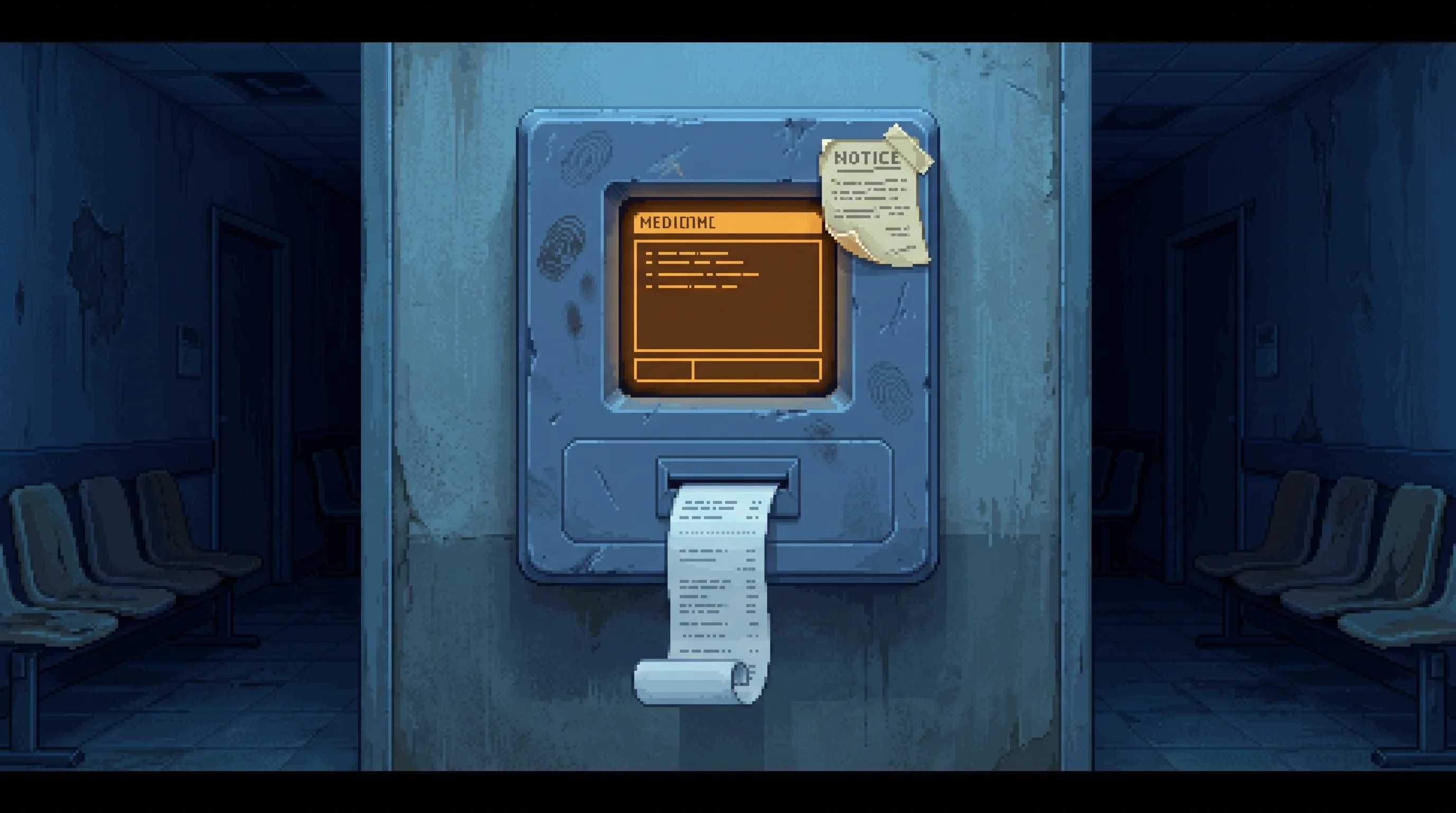
One instrument closes the interior at intake for free; the clubs sell twenty minutes of it back at two hundred credits.
The bundled clinic screen that scores how much of your thinking never leaves you, and files it as treatable.

Founded the first Mystery Club after watching her daughter panic at not-knowing
Nexus compliance director who founded the Mystery Clubs after her daughter panicked over the family cat's name.

Mystery Clubs artificially reopen the wonder gap that augmentation closed
The answer arrives 340 milliseconds before the question, so the gap where curiosity lived never opens.

Clubs require Second Mind suppression — ¢200 per session for the technology
The AI layer that thinks alongside every augmented brain until neither can tell whose thought was whose.

Mystery Clubs are the wealthy's version; the Guessing Game is the Dregs' organic equivalent

Naia donates excess Mystery Club revenue to Mother Venn's schools
Forty-seven schools teach children to verify their own thinking without machine help and use failure as curriculum.

Slade: 'They pay to not know things. I should be charging more.'
The Sprawl's last print music critic — and the man who named the moment infinite copies stopped producing anything new.

Connection tourism visits the poor for warmth; Mystery Clubs visit cognitive poverty for wonder
Wealthy tourists paying to sample, briefly, the community automation stripped from their own lives.

The Thinking Room offers the same experience for free in the Dregs — class inverted
A Dregs neural dead zone where the last manual technician does by hand what her interface offers instantly.
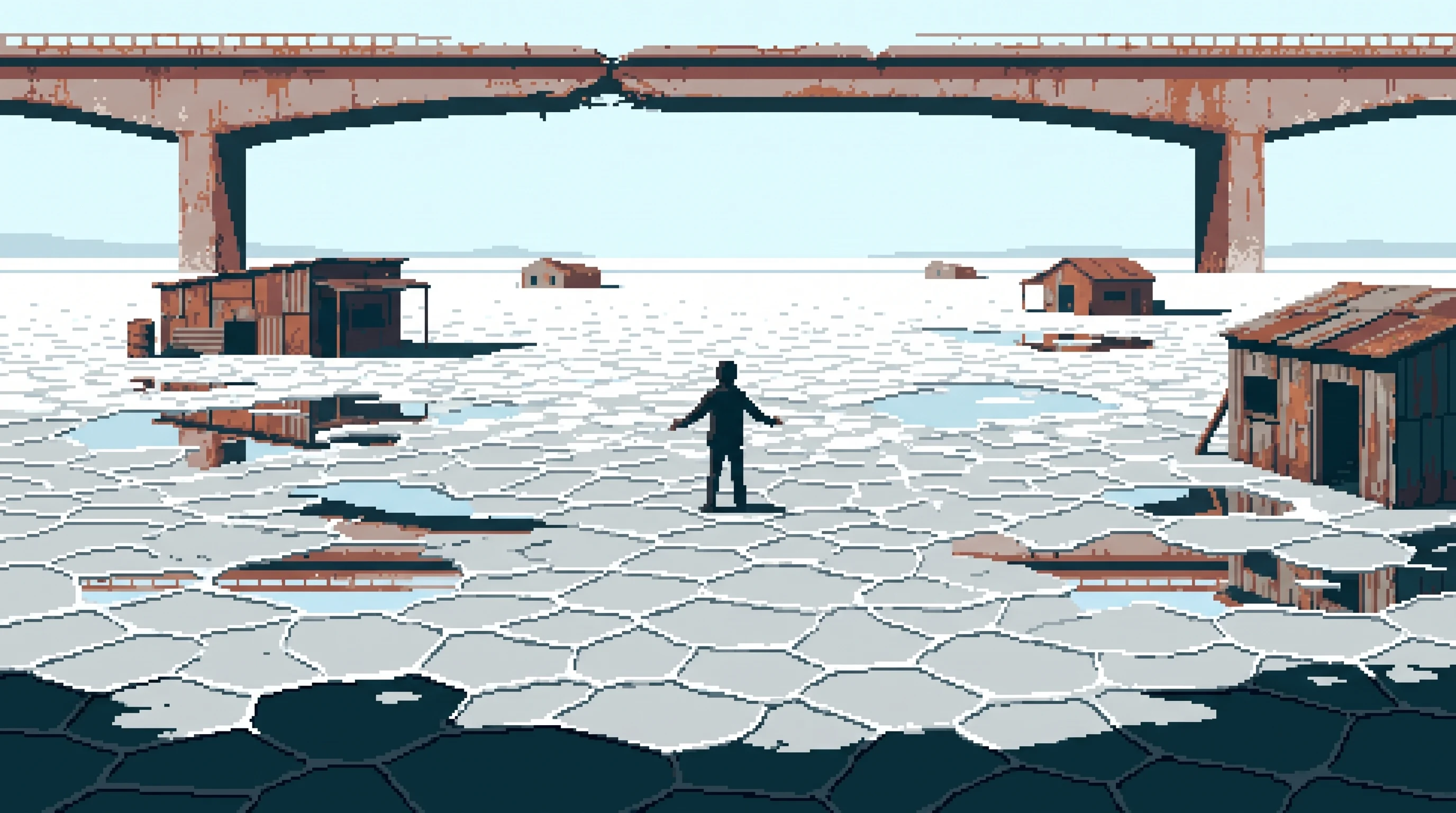
The lived version of the product — a drained-bay dead zone where not-knowing is permanent and involuntary, sold back up the Rim as an authentic ignorance retreat cheaper than the ¢200 toggle
A drained-bay dead zone whose never-wired residents live, for free, the not-knowing the Rim rents by the hour.
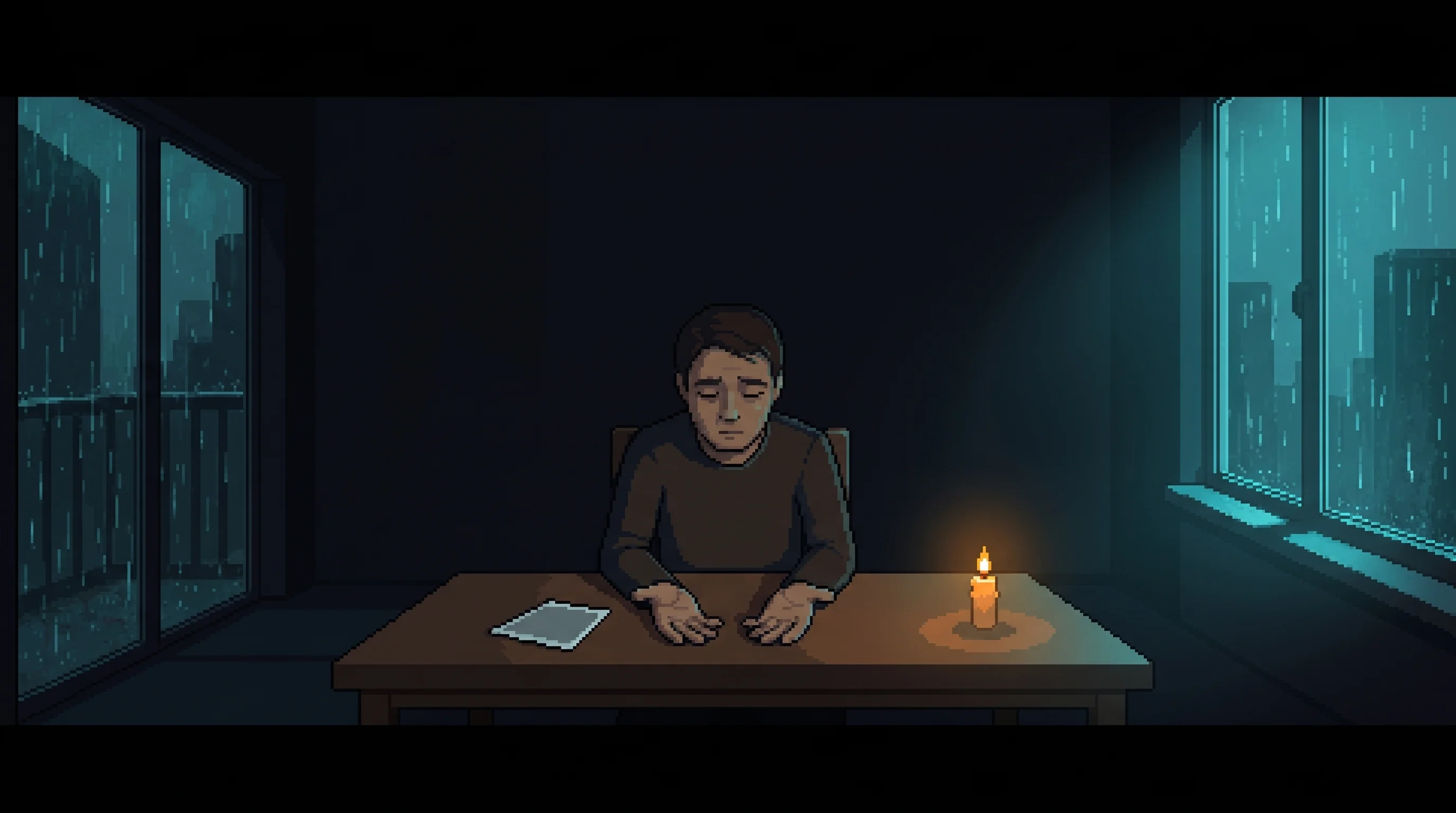
Three chapters added Dark Room sessions in 2184 — the same darkness and the same attempted inner recall that grief ward patients perform involuntarily, now sold as an experience format; the waiting lists for these sessions are longer than any other the clubs have offered
Sitting in real darkness trying to hold a dead face without a screen, and learning whether you still can.
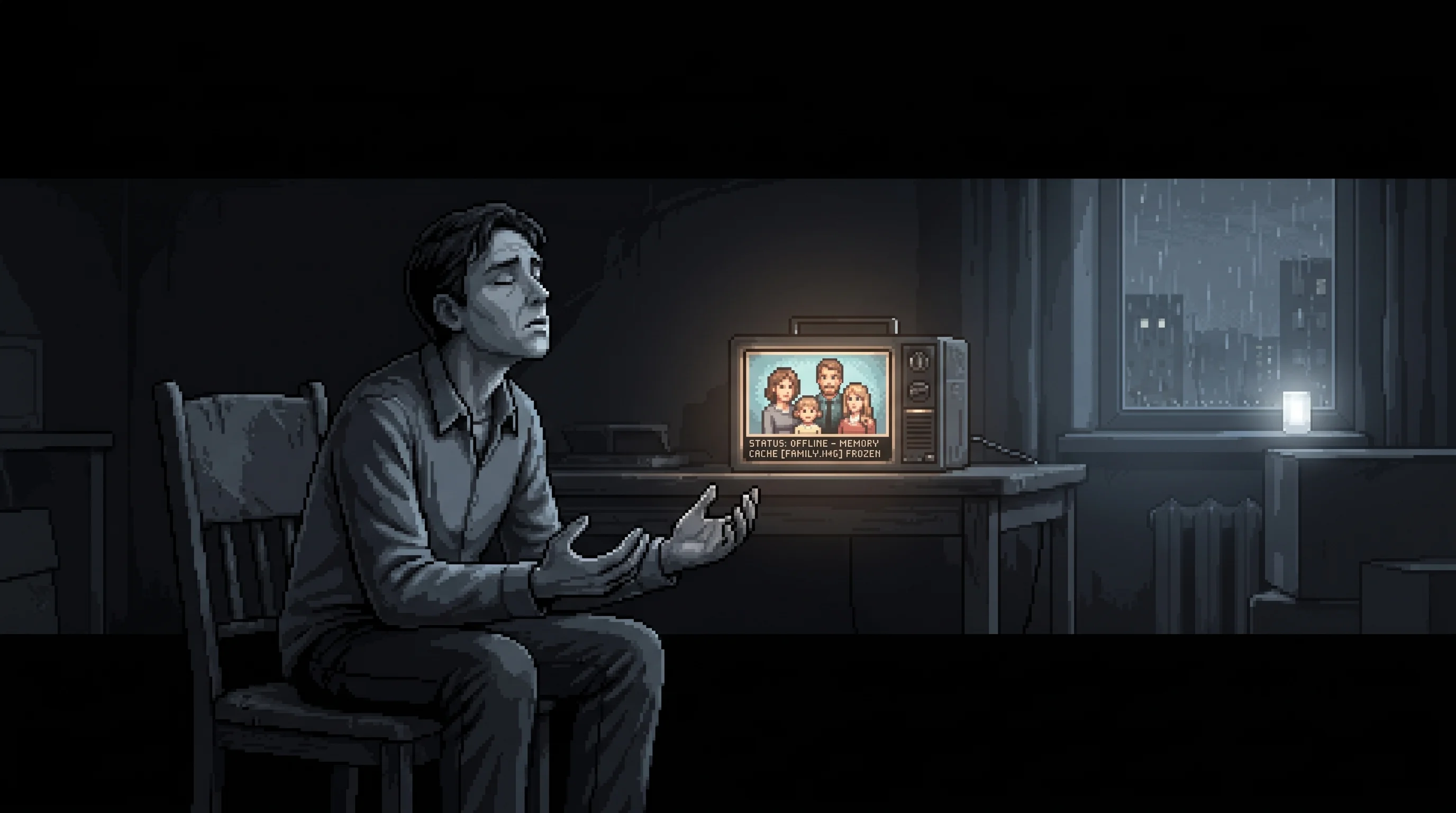
Dark Room sessions inadvertently diagnose the atrophy in real time: participants who cannot summon the face of a person they love in actual darkness are performing an involuntary test for autonomous visual generation deficit, and most of them fail it
The progressive loss of the mind's ability to picture anything without a device to picture it for you.
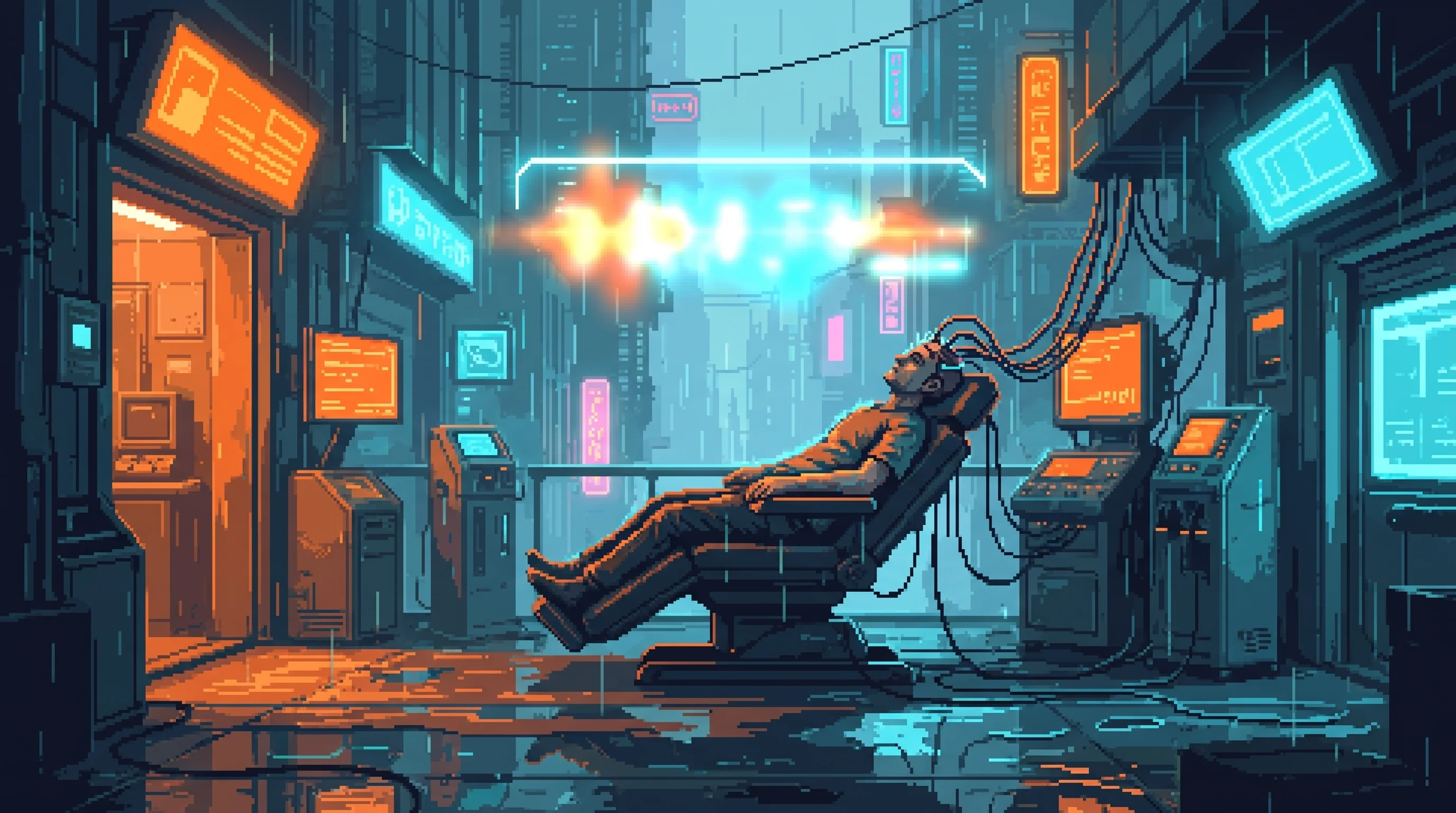
Mystery Clubs charge premium rates so elites can rent the not-knowing the Ceiling's losers live in for free.
The last human smarter than any machine was born in the 2020s; the question now is what intelligence is actually for.
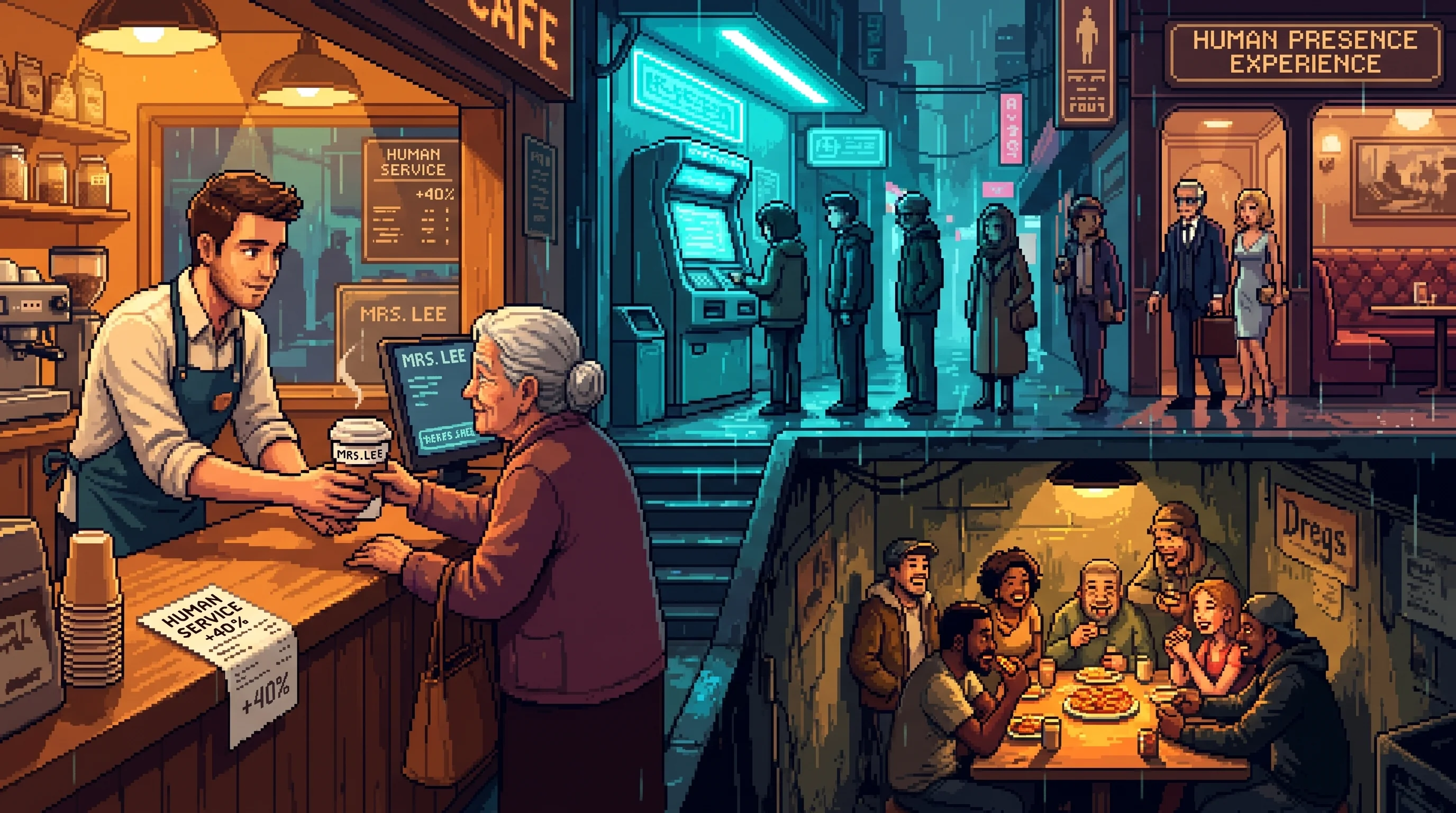
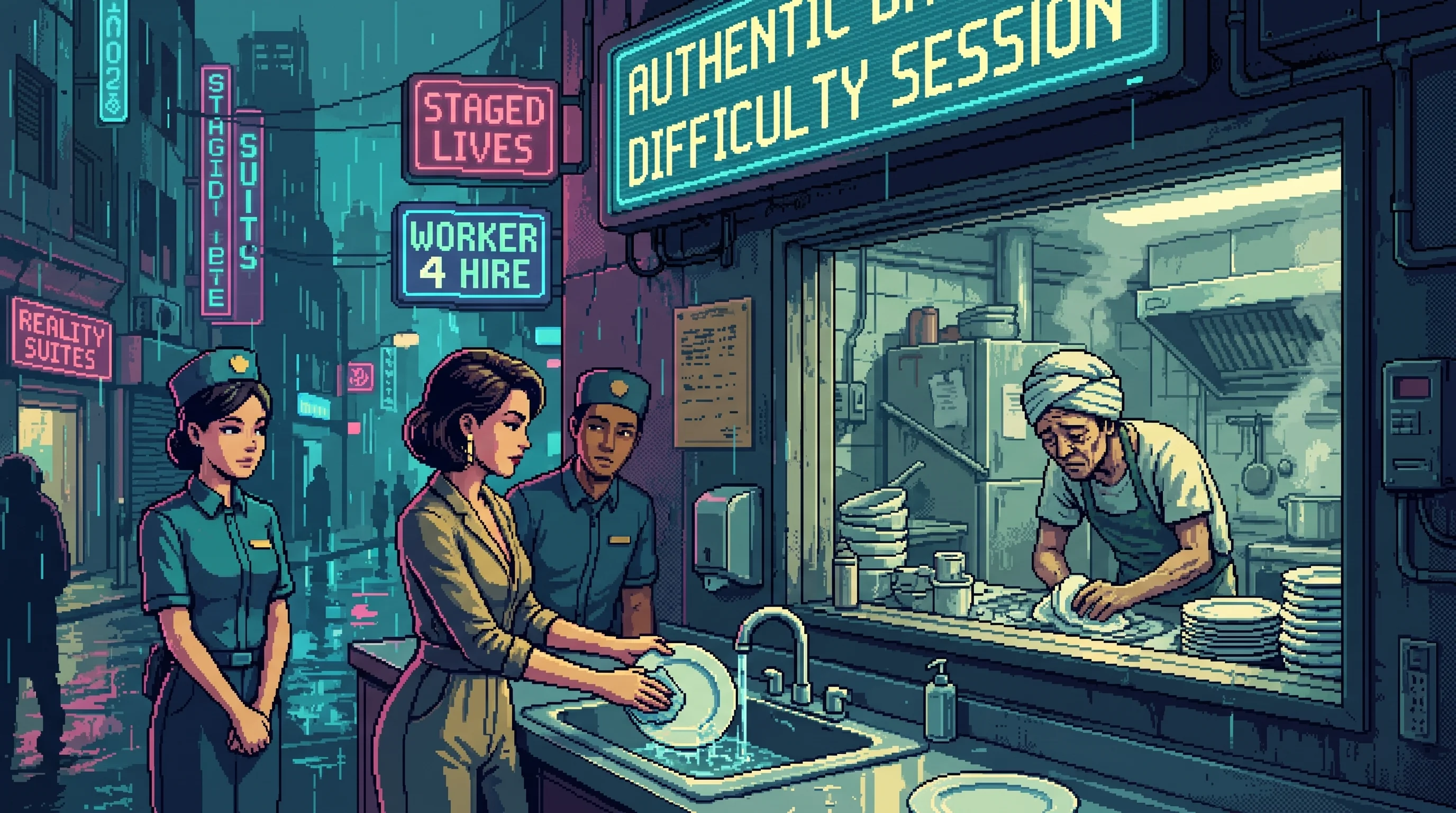
Forty-seven clubs charge ¢200 a session so elites can rent the not-knowing the Dregs live for free.
Abundance turns danger, difficulty, and human attention into luxuries for elites who optimized them out of life.
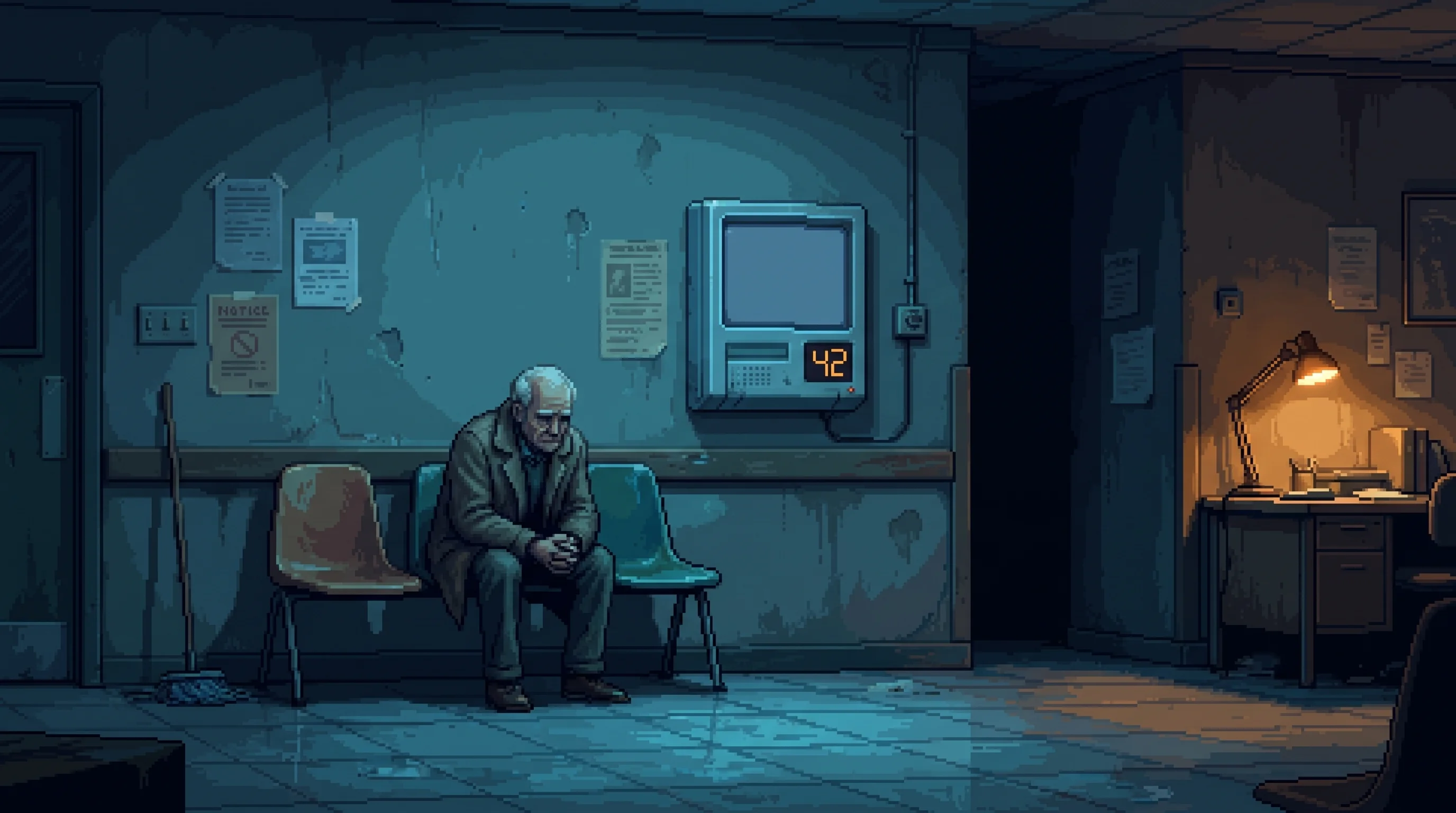
The tier that is never screened pays two hundred credits an hour to reopen the interior the same corporate family is closing for free at the bottom. Nobody in the room has to notice for the arrangement to work.
The unshared inner life measures as a treatable disorder, and everyone who is treated agrees it was one.
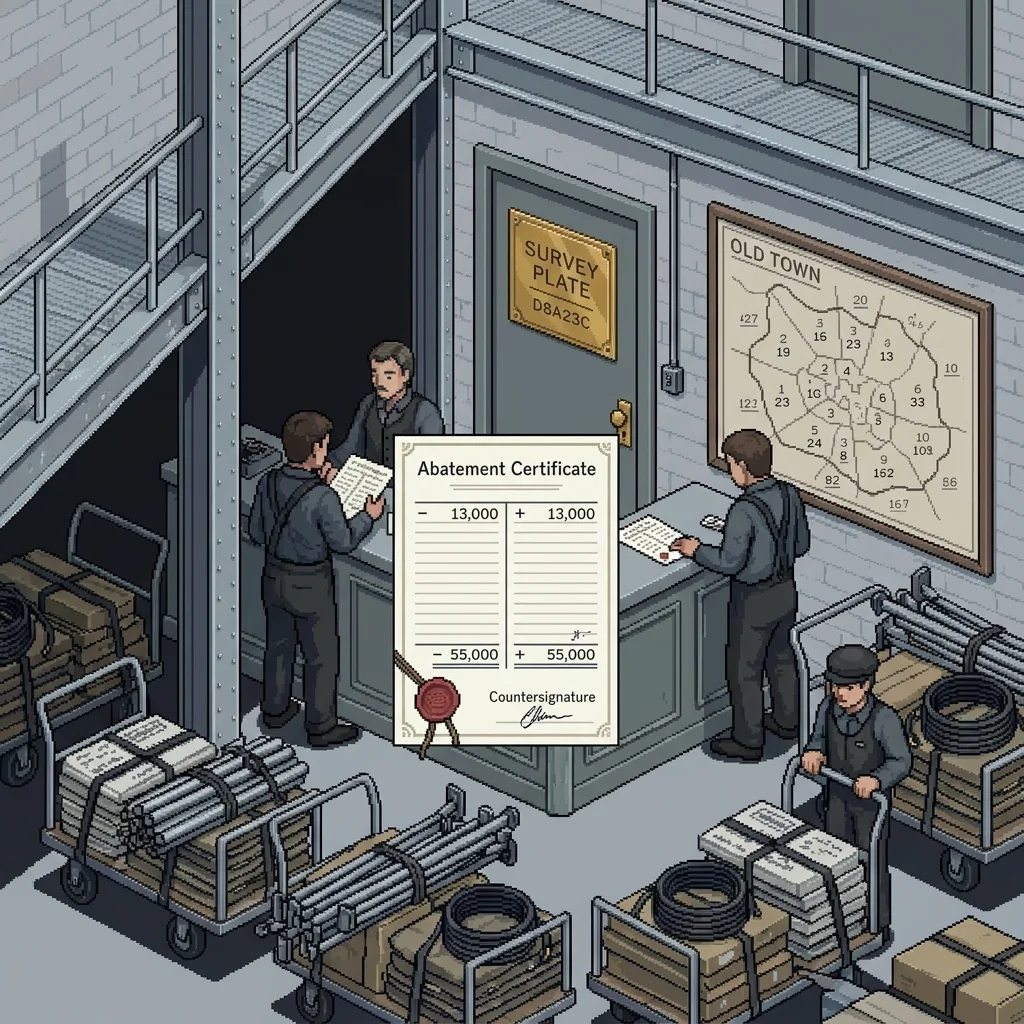
The other way to lower a load: switch it off by the hour for one paying member, and move nothing at all.
The licensed trade that lowers a district's Saturation Load by moving its emitters somewhere nobody will contest.
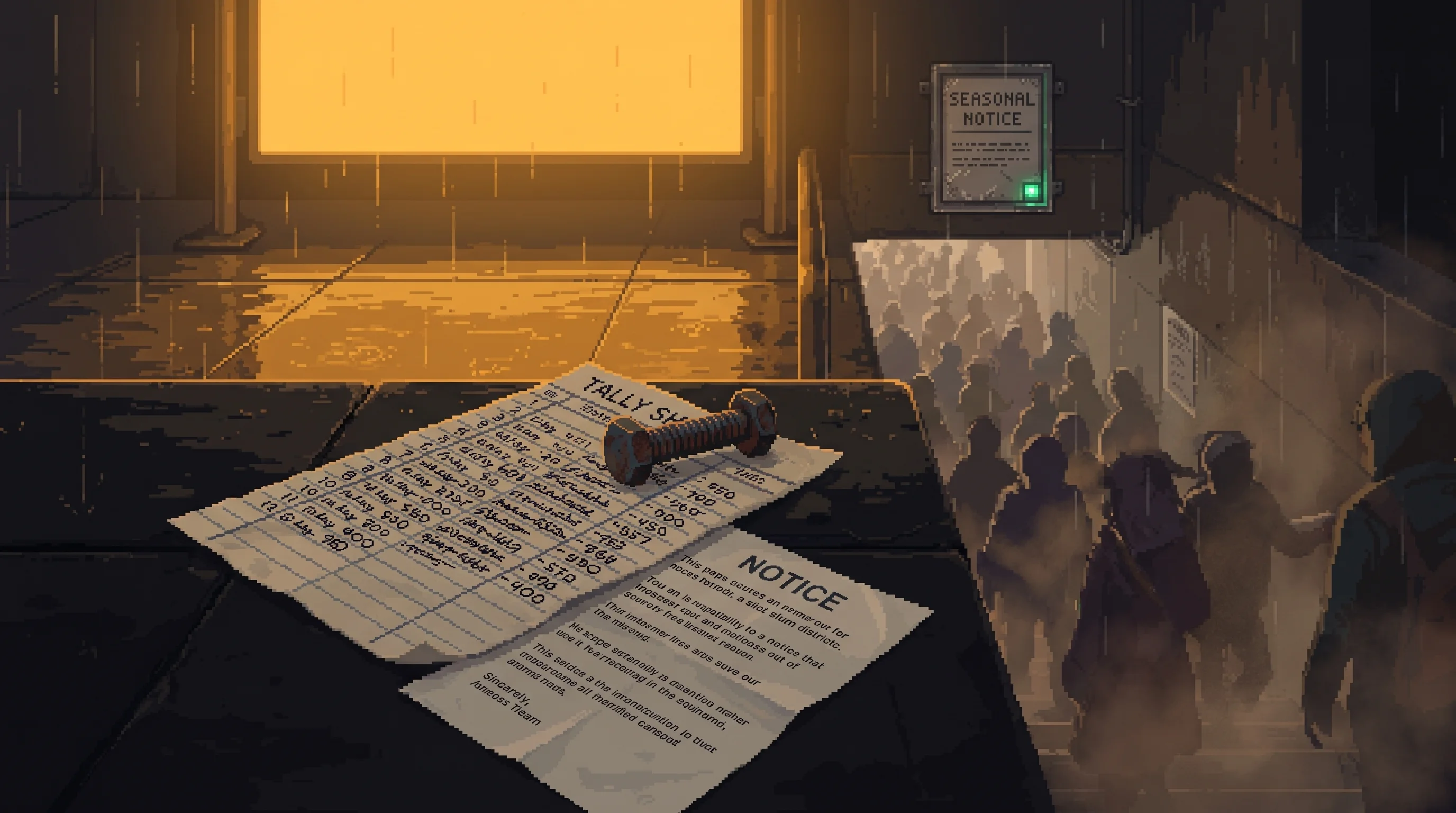
What the top of the gradient buys: shielded hours in a room where the load is switched off, not moved.
Killings are forecast by district each season, so a killer inside the band gets a notice instead of a trial.

Fellow elite experience-selling — the Mystery Clubs sell uncertainty to those who've lost it; Status Quo sells belonging to those who've never had it
Triumph's flagship restaurant, where a 4,000% premium buys the privilege of being seen and a pudding no one dares fault.

The wealthy paying for not-knowing proves that certainty has costs the Efficiency Position can't account for
A Sprawl-wide debate asks what human intelligence is for after AI surpasses it, while rival answers stay unresolved.
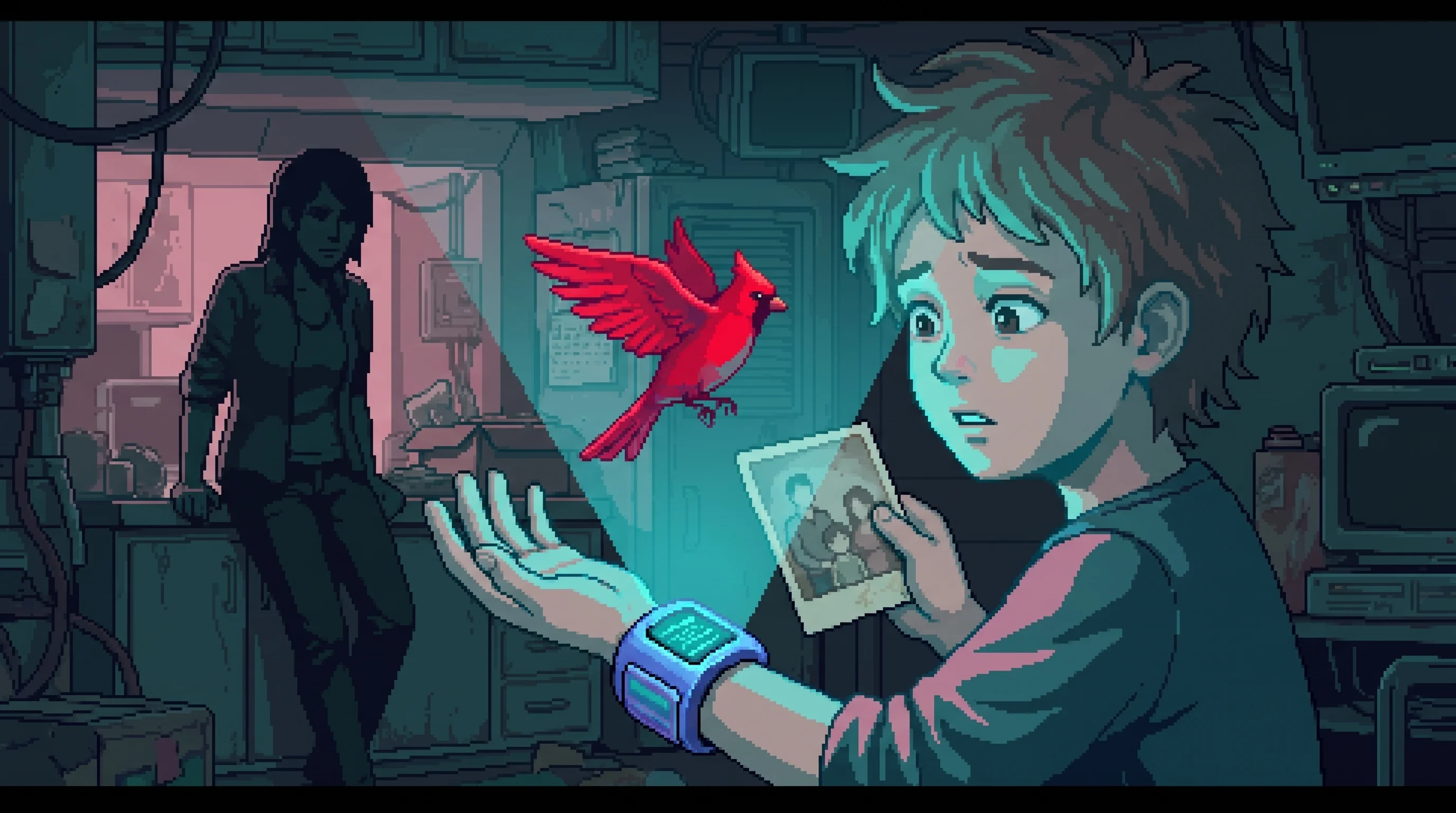
Mystery Club Dark Room sessions inadvertently diagnosed the atrophy at scale: executive-tier participants who cannot summon the face of a loved one in darkness are performing the grief dark without knowing the name — the band created the failure the Dark Room found
A child's wrist projector externalizes imagination, atrophies the inner eye, and records each render as preference data.

Mystery Clubs sell cognitive friction; Retreats sell physical friction — same class dynamic, different sensory dimension
Wastes clinics that charge Executive-tier citizens ¢8,000 a week to disable their augmentation and struggle.

Mystery Clubs addressed cognitive friction; Ghost Hand phenomenon reveals the parallel need for physical friction
The clinical name for executives who secretly wash dishes by hand because optimization left nothing difficult to do.

Adapted as warm-up activity — though club members can't resist competing

Both are institutional responses to what optimization eliminated — the Clubs for the experience of not-knowing, the Wards for the experience of not-producing
Wards for the dreamless, treating the loss Nexus sold them as a productivity upgrade.

Purchased at premium rates in Mystery Clubs — the same practice, different price
Three-level meditation for slow, unassisted cognition — free in Analog Schools, sold as luxury in Mystery Clubs.

Mystery Clubs practice Slow Thought socially; the movement practices it individually
Practitioners of deliberately slow, unassisted cognition who measurably out-think augmented peers.