The Unrecalled Finding
Non-Recallable Adverse Entry
The Column That Only Grows
A violation needs no understanding in order to have happened. Everything else on your record does.
How It Works
- 1
Recall
Under registry code 9.4 a registry may recall any credited entry on a holder's record for re-examination.
- 2
Exemption
Clause 9.4(c) removes findings from that power, because comprehension is not an element of a violation.
- 3
Summary
Registries print findings and credited entries in two columns, with renewal exposure shown only on the second.
Comprehension is not an element of a violation, so a sitting has nothing to test. The left column only grows. The right one can be struck in an afternoon. That is the Re-Defence.
Who Has Tried

Twenty-two years of credited entries struck in one sitting; one 2176 citation for a late filing, four credits, still on the record, not recallable and not reviewable.
A struck engineer who would not bluff one answer, and now checks Dregs columns for pie and spare parts.

Every stamp filed is a recallable credit; every liability absorbed is a permanent finding.
The regulated profession of signing decisions a human cannot actually read.
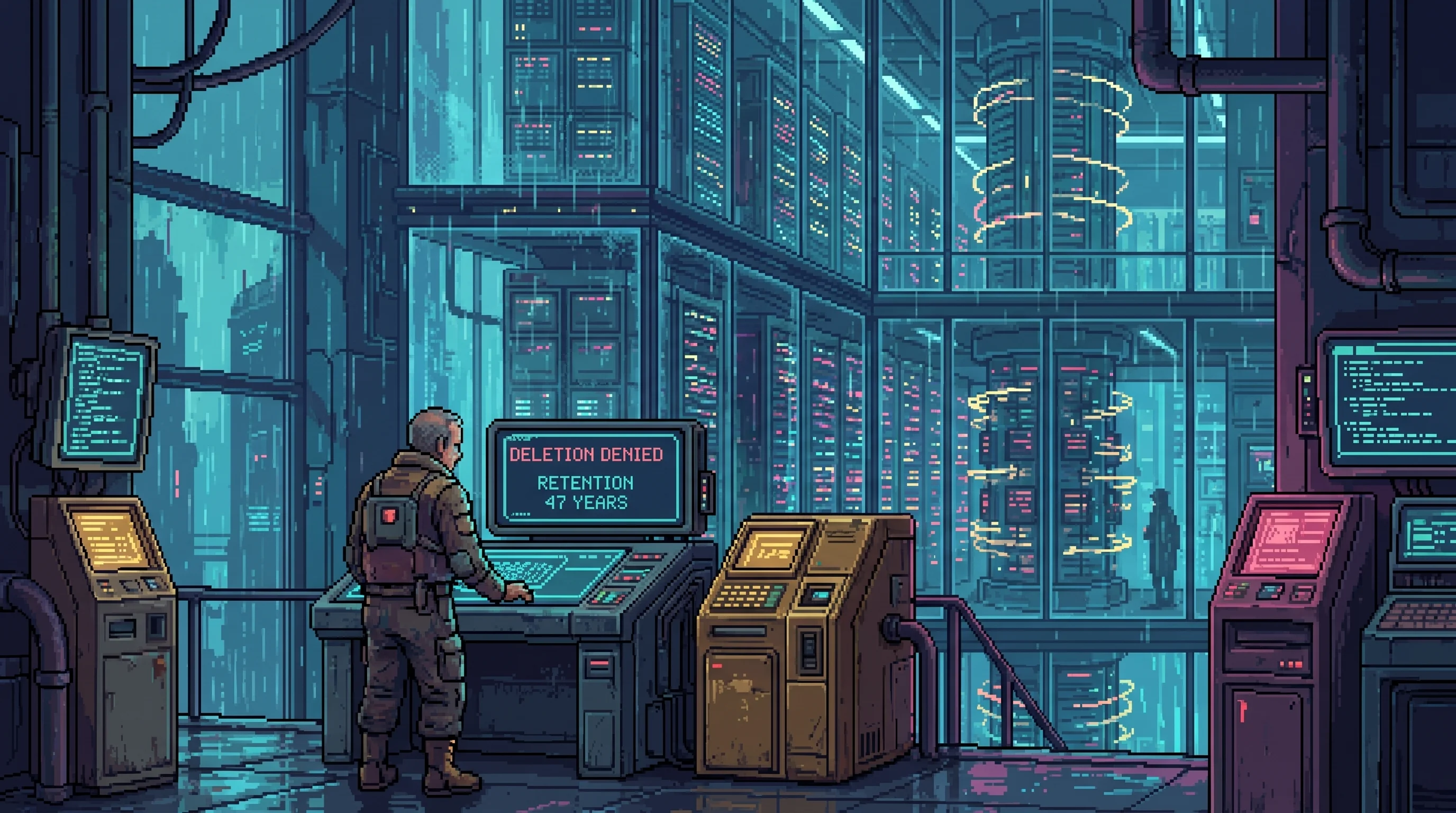
That thread assumed permanence was the harm. Here impermanence is.
Nothing expires, so forgetting became a service — and forgiveness a question the archive keeps answering no.

A column that only grows, priced by an employer that is citizenship.
When your employer is your country, quitting is emigration.
Nine challenges since 2170, all dismissed as correct. Yan Ryze filed four. The Boalt Docket filed five. Its note on the last one reads: the clause is the strongest thing in the code, and the code should not have a strongest thing.
What It Costs
Sound reasoning
A finding records that an act occurred, so a sitting has nothing in it to test.
What it costs
Over a working life the findings column only grows while the credit column can be struck.
No appeal path
Nine challenges have tested the reasoning and all nine were dismissed as correct.
What it costs
Attacking the clause in public sounds like arguing that findings should be easier to lose.
The Occupancy Rule reached the same sentence in 2172, aimed the other way. The Vacancy Defence grew from it. In Contact suspends standing before a sitting and returns nothing after. Careers in Licensed Human Oversight tip toward findings by forty. Judge Dreg keeps no record at all.
The Permanent Record assumed permanence was the harm. The Forgetting Wars never pictured an archive that forgets only the credit. Employers across the Corpo-Nations price the left column. After Post-Truth Justice, a clause this accurate felt like relief.
Overview
The registry clerk keeps standing summaries in two inks. Findings go left, in fixed black. Credited entries go right, in pencil, with renewal dates. She hands them across face down now.
Code 9.4 lets a registry recall any credited entry. Clause 9.4(c), added in 2167 and never amended, exempts findings. Censures, citations, breaches and revocations stand forever.
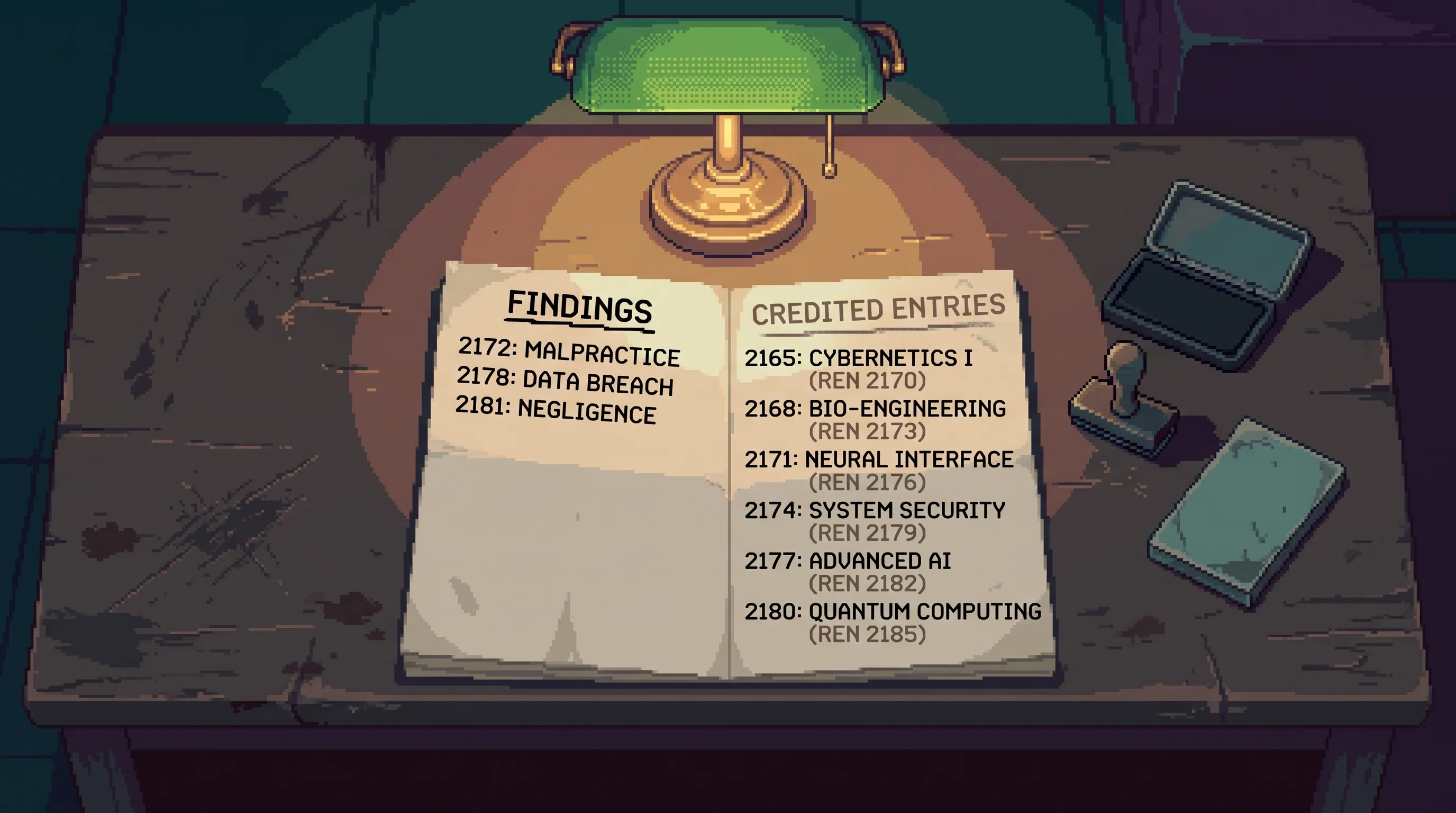
The Summary
Iona Draskovic lost twenty-two years of credits in one sitting. A 2176 late-filing citation remains: four credits, paid that week. She calls it the last true thing on the page.
Further connections
Browse all 10 connected records

The controversy's sharpest instance. The archive's defect was argued for thirty years as the refusal to forget; this is the archive forgetting on schedule, and forgetting only the credit.
The condition that nothing is ever forgotten — so the rich pay to be, and the poor cannot.
The status that suspends a holder's standing between notice and sitting. It accuses nothing, so it cannot be denied; the clause finalises nothing, so it cannot be answered. Same shape, opposite ends of the process.
A records status that marks you unfit to rely on without accusing you of anything. Panels pay extra for it.

The only lawyer to file against the clause on its own reasoning rather than its outcome, four times, arguing that a rule true about single acts becomes false about a life. Dismissed four times as correct and inapplicable.
A pro bono securities lawyer whose fortune came from the data-abuse corporation he now fights in court.
The same sentence in another code, pointed the other way. 9.4(c) holds comprehension is not an element of a violation; the 2172 Amendment holds it is not a condition of validity. Neither committee cited the other.
The rule that a ruling stands if someone sat in the chair, whether or not they read it.
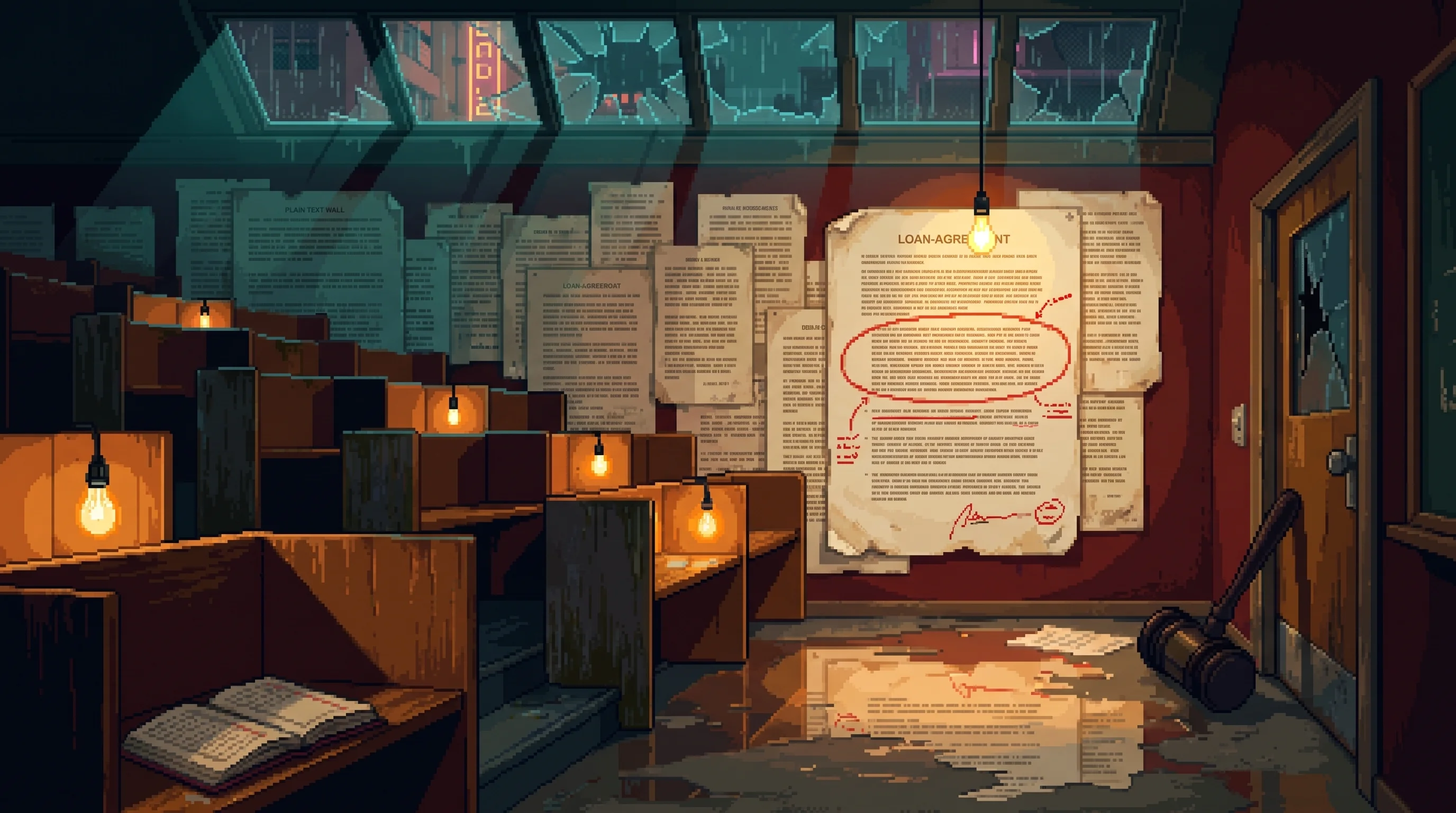
Filed against 9.4(c) five times in nine years and lost five, each time on the reasoning.
A free clinic in the law-school ruins that has filed 412 motions against the Repossession Protocol and won none of them.

One verdict, enforced and closed. His court keeps no standing record to exempt anything from.
A former Guardian officer who now runs the Dregs' entire judicial system for free, on foot.
The thread's operative asymmetry. The recall power alone would be a hard symmetrical audit; the clause is what makes the ledger run one direction, and it is the boundary the whole argument turns on.
Anything you were credited with can be recalled and re-argued alone; nothing held against you ever is.
Its clause and this one are the same honest sentence, aimed at opposite parties.
A determination stands while the chair was occupied, so the only reviewable fact left is attendance.

A rule whose accuracy about one act is what makes it wrong about a life.
Perfect evidence forgeries and crimes without defendants force justice systems to assign blame without reliable truth.

Why the rate card can be what it is. A struck credit is unrecoverable and a finding is permanent, so the houses sell the only insurance available against a loss the code will not reverse.
The trade that coaches the unassisted forty-minute sitting, and found the only product was the work.