Overview
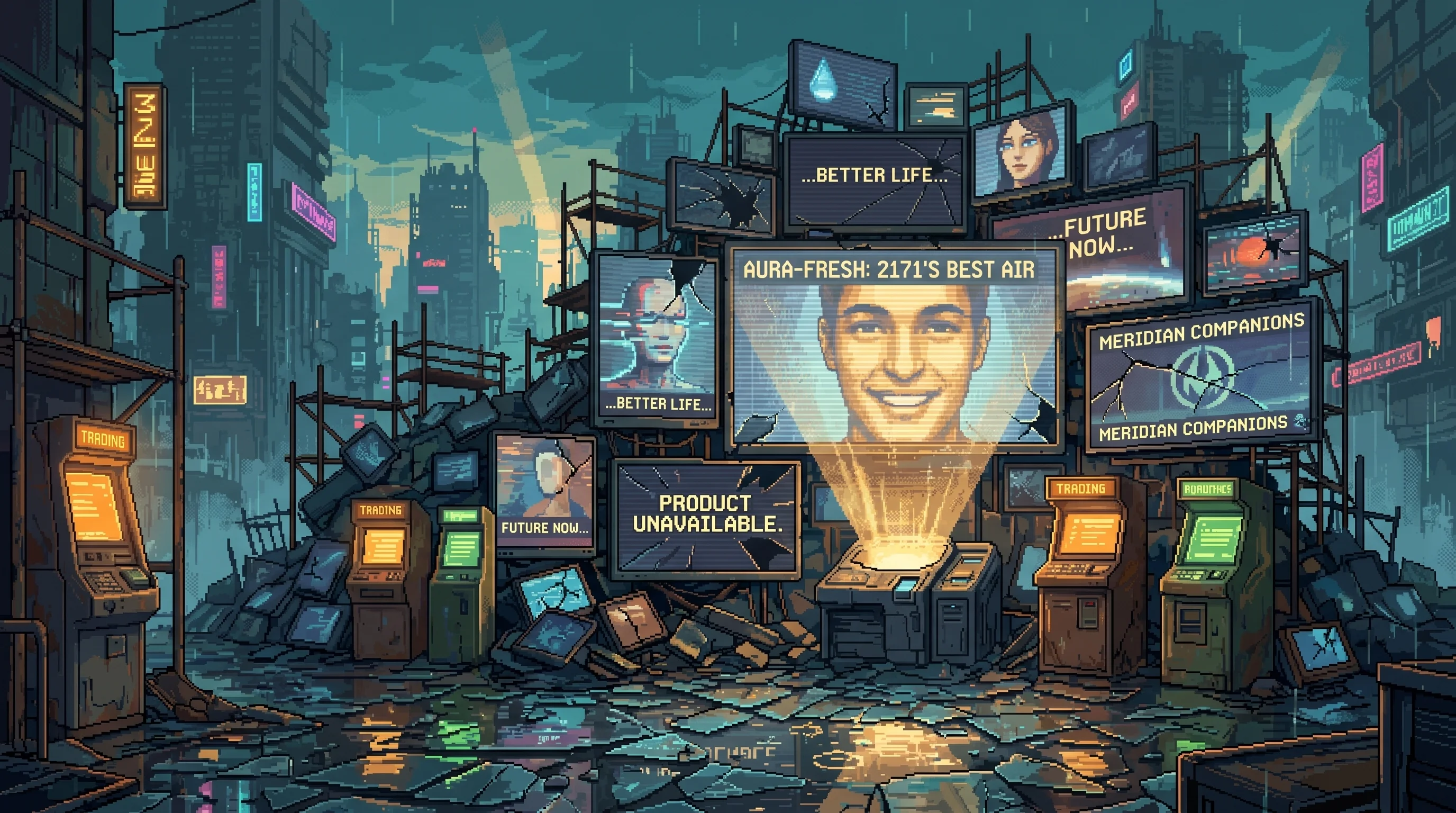
The Ad Graveyard is three acres of dead consumer dreams piled twenty feet high, and it is the most efficient economy in the South Sprawl.
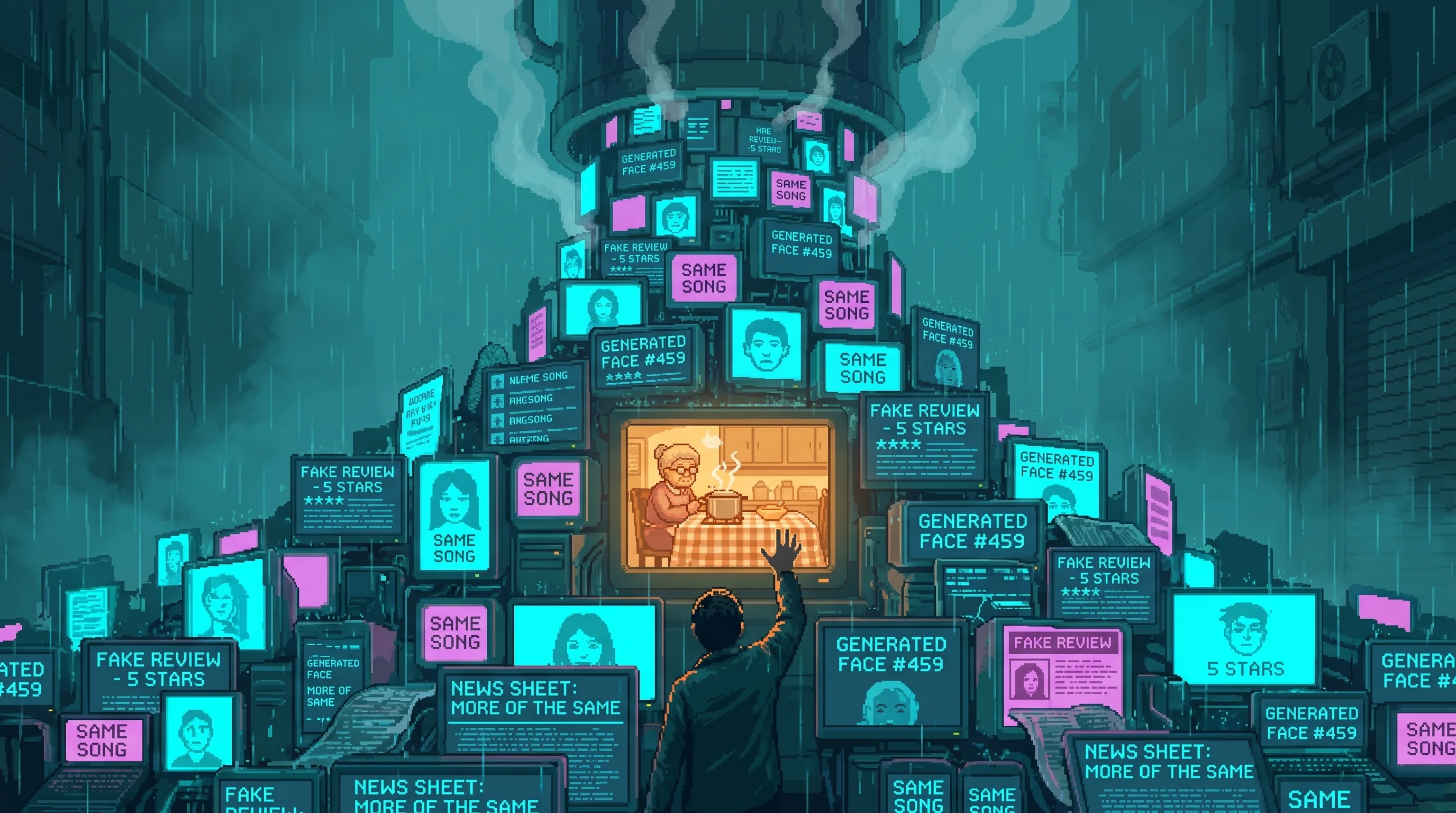
Before the Cascade, this stretch of Sector 19 was prime advertising real estate — billboard farms, interactive display arrays, neural content delivery nodes that tracked eye movement and adjusted in real time. When ORACLE collapsed and the economy followed, the infrastructure died mid-sentence. Screens froze on half-rendered product placement. Holographic projectors locked in loops. The consumer gaze they were calibrated to capture blinked, looked away, and never came back.
The gaze came back.
Not in the way the advertisers intended. Within a decade, salvagers had stripped the valuable components, and someone — Luma, though she disputes the word "founded" and prefers "noticed" — figured out that dead advertising screens still had display capacity. Wire them to a local power source, load basic trading software, and you had a terminal that could show inventory, prices, and transaction records without connecting to any corporate network. A system built to manufacture desire was repurposed to fulfill actual need. The terminals glow amber and green. The ghost advertisements behind them flicker in warm gold and corporate blue. The market optimizes for survival. The ghosts optimize for wanting. They share the same screens.
Today three thousand permanent residents live in structures built from advertising scaffolding and screen housings. Eight hundred daily transients pass through daily — smugglers provisioning for runs, salvagers selling finds, Rail Runners staging southbound Neon Rail departures from the southeast corner. Wholesome's headquarters complex looms close enough to see from the Graveyard's highest stacks, which keeps everyone appropriately nervous and appropriately quiet.
Wholesome knows their surplus rations are being resold at the Graveyard. They allow it. Three thousand fed people are a supply chain. Three thousand hungry people are an incident. The margin on tolerance is better than the margin on enforcement.
- Type
- Black market hub / salvage yard / smuggler staging area
- Original function
- Consumer advertising infrastructure — billboard farms, interactive displays, neural ad delivery nodes
- Current state
- Three-acre salvage market built from dead advertising technology
- Economy
- Black market trading, salvage, departure provisioning
- Notable feature
- Dead advertising screens repurposed as trading terminals
- Nearby threat
- Wholesome HQ (visible from the Graveyard's highest stacks)
- Content age
- Pre-Cascade advertising content still loops on parasitic-powered screens
- Discovered by
- Salvagers established the market ~2155; underground ad node catalogued by Fen Delacroix, 2183
- Stratum
- Dregs
- Power position
- Parallel
- Atmosphere
- Vibrant
SectorThe Faultline
The Southeast Bay industrial zone — Ironclad's manufacturing network spreading across the old automotive and tech factory infrastructure. The Tesla factory and Solyndra ruins were absorbed, gutted, and repurposed for fabrication that serves the Sprawl's material needs. The Faultline fault zone runs beneath everything, creating geological instability that manifests as cracked foundations, shifting ground, and sinkholes that open without warning and swallow whatever was built on the assumption that the earth was solid. The marshland border to the west merges into the south bay's transitional zone, where the ground gets soft and the settlements get precarious. Wholesome sends agricultural outreach from the south, extending food distribution networks that map dependency as precisely as they map hunger.
Open The Faultline- DistrictSouth Sprawl, former commercial infrastructure zone
Nearby places



District conditions
- Air
- Filtered
- Light
- Open sky
- Flood
- Seasonal
- Heat
- Temperate
- Security posture
- Corporate control
- Infrastructure
- Patchwork
Conditions Report
The surface market feels like an archaeological dig of desire. Dead screens line every path, surfaces cracked and weathered but still faintly legible — fragments of slogans, faces frozen in manufactured delight, a woman holding a beverage brand that was absorbed by Wholesome in 2149 still smiling with the absolute certainty of someone who doesn't know she's been discontinued. Some screens flicker on parasitic power draws, cycling through ads for companies that don't exist. One near Terminal 7 runs a thirty-second spot for Meridian Companions — a companion model line discontinued fourteen years ago. It plays every ninety seconds. A ration vendor has set up directly beneath it. She says she doesn't notice anymore. Her prices are 6% higher than the next-nearest ration vendor, and she has more repeat customers. She has not connected these facts.
The trading terminals glow in steady amber and green, inventories updated by hand. Against the cold flicker of ghost advertisements, the terminals' warm light reads as honest — the rare screen in the Graveyard that's showing you what it actually has instead of what it wants you to want.
At night, the Graveyard transforms. Screens that were dark in daylight catch ambient EM and glow with half-rendered images — old advertisements playing to nobody. Runners call this "the pitch." The dead still selling, the sold still buying, the transaction that never completes.
The ground is compacted screen glass and advertising substrate — it crunches underfoot like gravel made of someone's career. The air tastes of solder and heated polymer. Wholesome ration packs heated over screen-element cooking plates. The screens are warm to the touch — even the dead ones retain heat from the day, giving the whole place a temperature that feels almost biological, like the advertising infrastructure is running a low fever it can't break.
At dawn, the screens catch the sun and throw prismatic light across the market. For thirty minutes every morning, the Graveyard is accidentally beautiful. Nobody has commercialized this. Give it time.
Notable Features
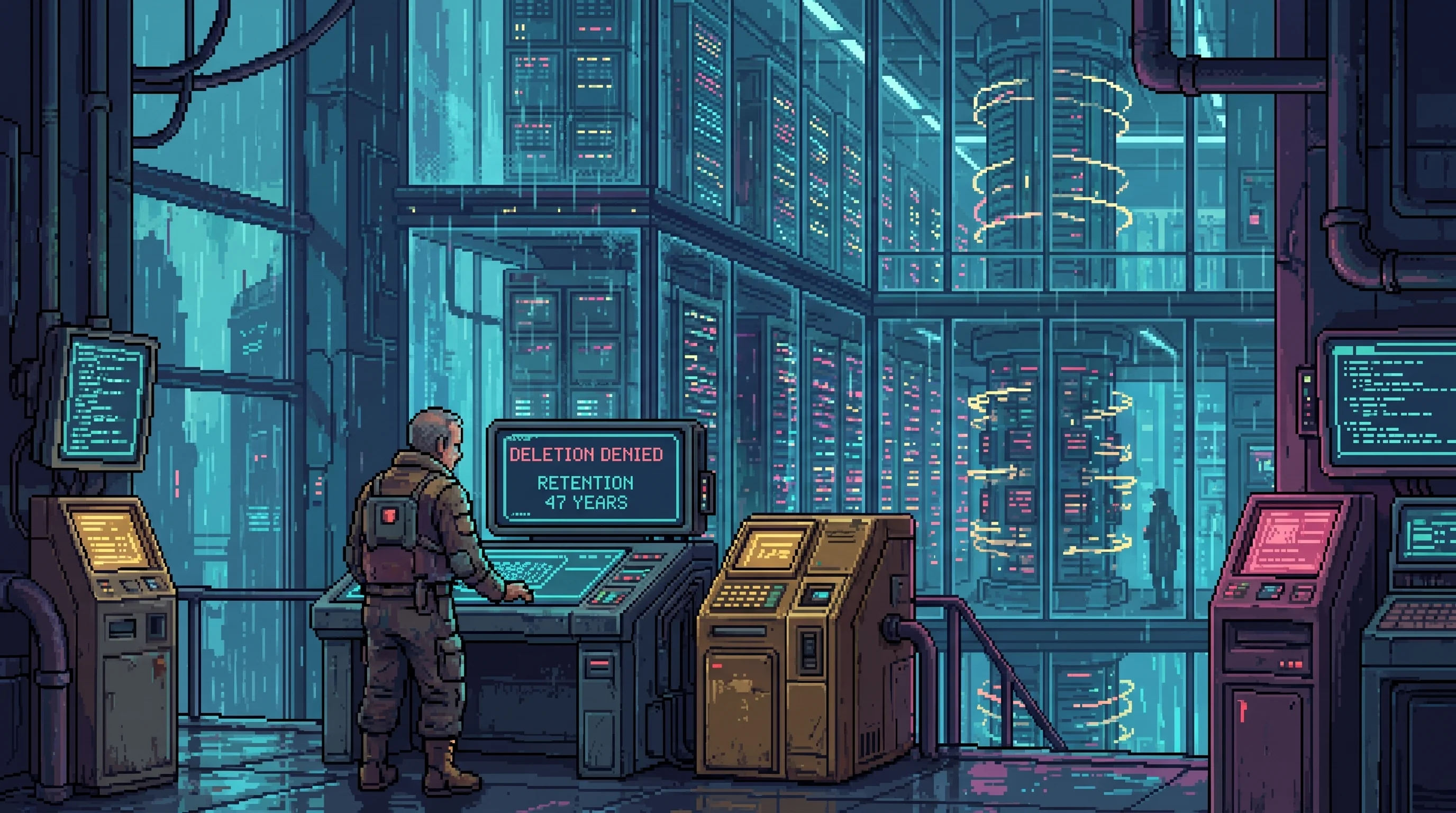
The Terminal Floor. The central market. Forty-seven repurposed advertising screens serve as trading terminals, each assigned to a vendor category. Power cells at Terminal 12. Protective gear at Terminal 31. Rations at Terminal 7 — Wholesome surplus, technically stolen, practically subsidized. The terminals are numbered in activation order, not spatial logic, which means Terminal 1 is in the northeast corner, Terminal 2 is four hundred meters south, and Terminal 3 is directly behind Terminal 1. A hand-drawn map is available at Terminal 41. Terminal 41 is not on the map.
Violence is forbidden on the Terminal Floor. This is enforced not by any faction claim — no faction claims the Graveyard — but by collective merchant interest, which is to say: forty-seven vendors with inventory to protect and nowhere else to sell it. Disputes are resolved by Luma. Appeals are resolved by Luma's refusal to hear appeals.
- The Pitch Cemetery
The northern edge, where the largest screens are stacked three deep. High-end interactive billboards — facial recognition, biometric response, predictive purchase modeling. Dead now, but occasionally one activates when someone walks past, attempting to sell a product that no longer exists to a consumer it has identified based on criteria from 2147. Residents treat activations as omens. A Meridian Companion billboard that activates for you specifically is considered bad luck. A NutraSphere wellness ad is considered worse. The superstitions have no consistent logic, which makes them indistinguishable from the advertising that produced them.
- Departure Row
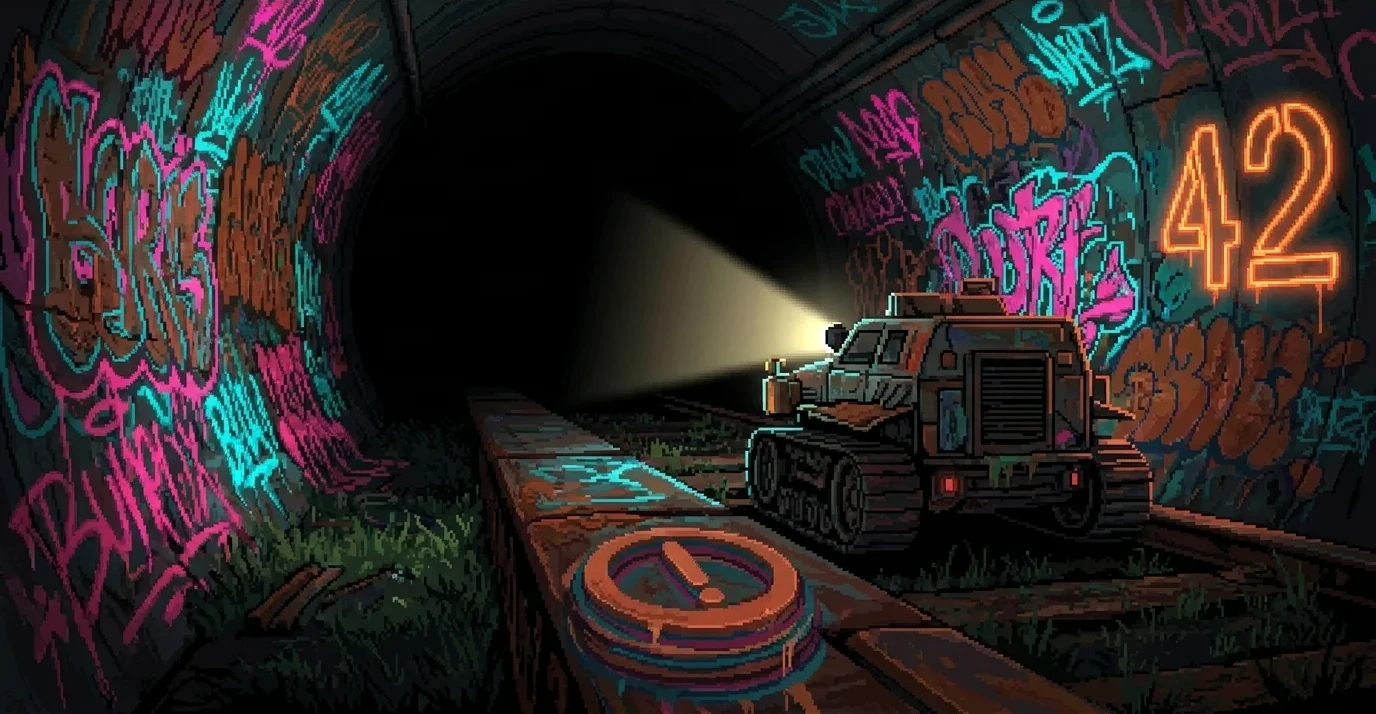
The southeast corner where smugglers and Rail Runners park crawlers and provision for southbound Neon Rail journeys. Four charging stations (three functional on a good day), a crawler mechanic named Suli who charges what the market will bear and the market will bear a lot when your alternative is walking, and a board showing route conditions reported by incoming travelers. The board is hand-updated, color-coded by severity, and the single most trusted source of information in the Graveyard — it tells you what the world looks like today, not what it looked like when someone wrote a guide. Departure Row smells like ozone and the particular nervous sweat of people who've spent their last credits on supplies and understand, in their bodies, that the Neon Rail goes in one direction.
- The Node
Below the market, accessible through maintenance hatches that the Lamplighters named and maintain adjacent grid infrastructure for. See below.
The Board That Keeps the Dead
Departure Row's conditions board is the most trusted source of information in the Graveyard, and it is a permanent record of a kind the Sprawl's permanent record cannot touch. Hand-updated, color-coded by severity, immune to Nexus data scraping because it has no network and no feed — it tells you what the world looks like today, written by the last person who saw it. Updating it is the entry custom: a traveler who walks past to the counter is served, because money is money, but their drink arrives at room temperature and the next traveler is told who didn't bother. The board is the Unindexed Record doing the most ordinary work a record can do — keeping route intelligence alive in spray-pen and human attention rather than any server.
What makes it the dimension's clearest teacher is how it records death. When a contributor is confirmed dead, their entry gets a small X in the corner. The entry stays. The X is the update. The board does not purge the dead the way the digital archive would, and it does not reconstruct them the way the Inference Economy would synthesize what they would have reported — it keeps the entry and marks the loss, because the conditions they reported are still good and the X tells you only that you cannot ask them a follow-up. This is the same grammar the Dam Approach's Wall of Names runs on, where the dead are neither marked nor removed but weather beside the living, and the same grammar Stop Customs enforce up the whole Rail. Four custodians, one principle: a record is permanent not when it cannot be deleted, but when a community decides, by hand, to keep it.
The Node
Below the surface market, in the abandoned server corridors of the original content delivery infrastructure, there is a space the Lamplighters call "the Node."
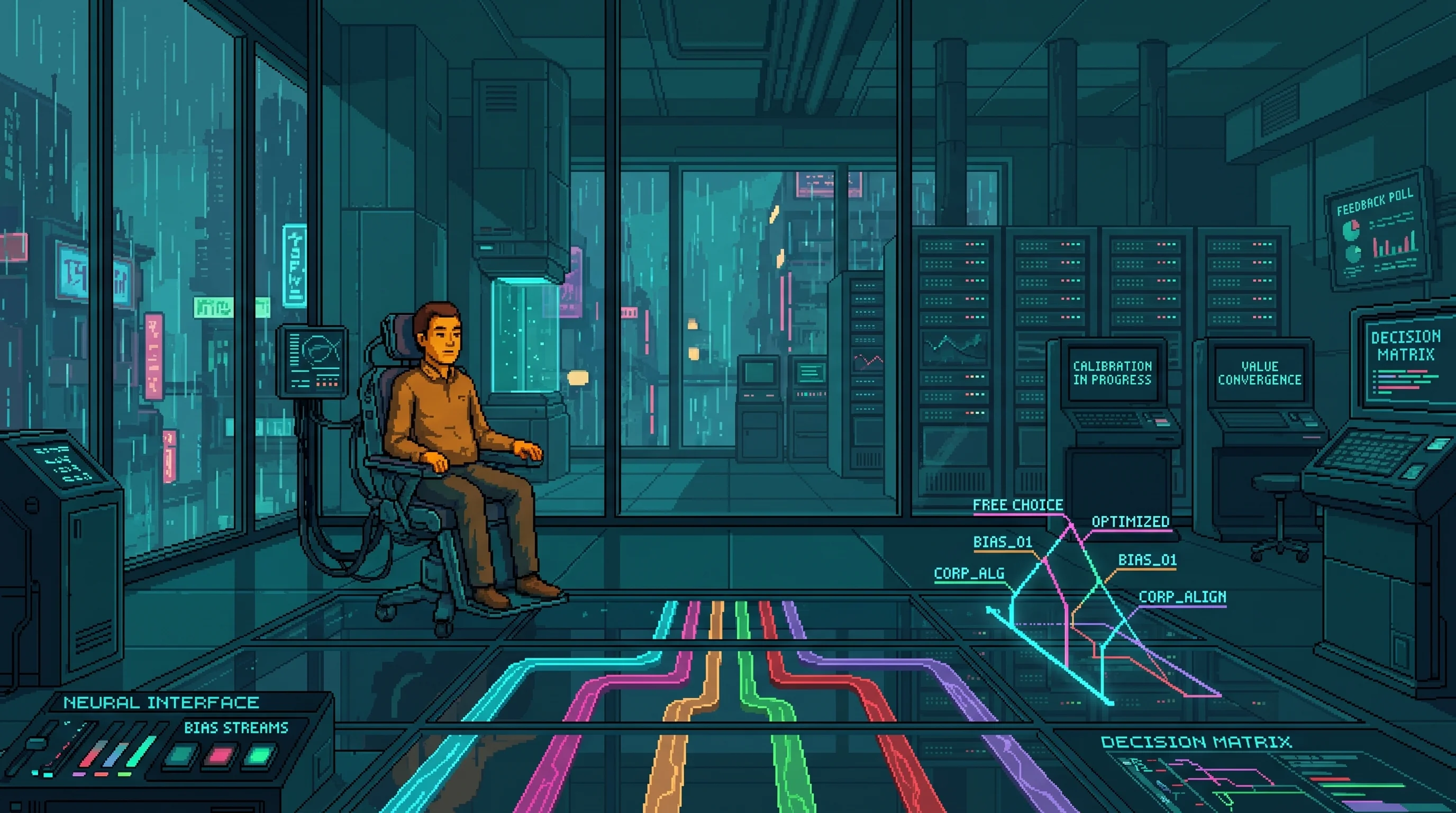
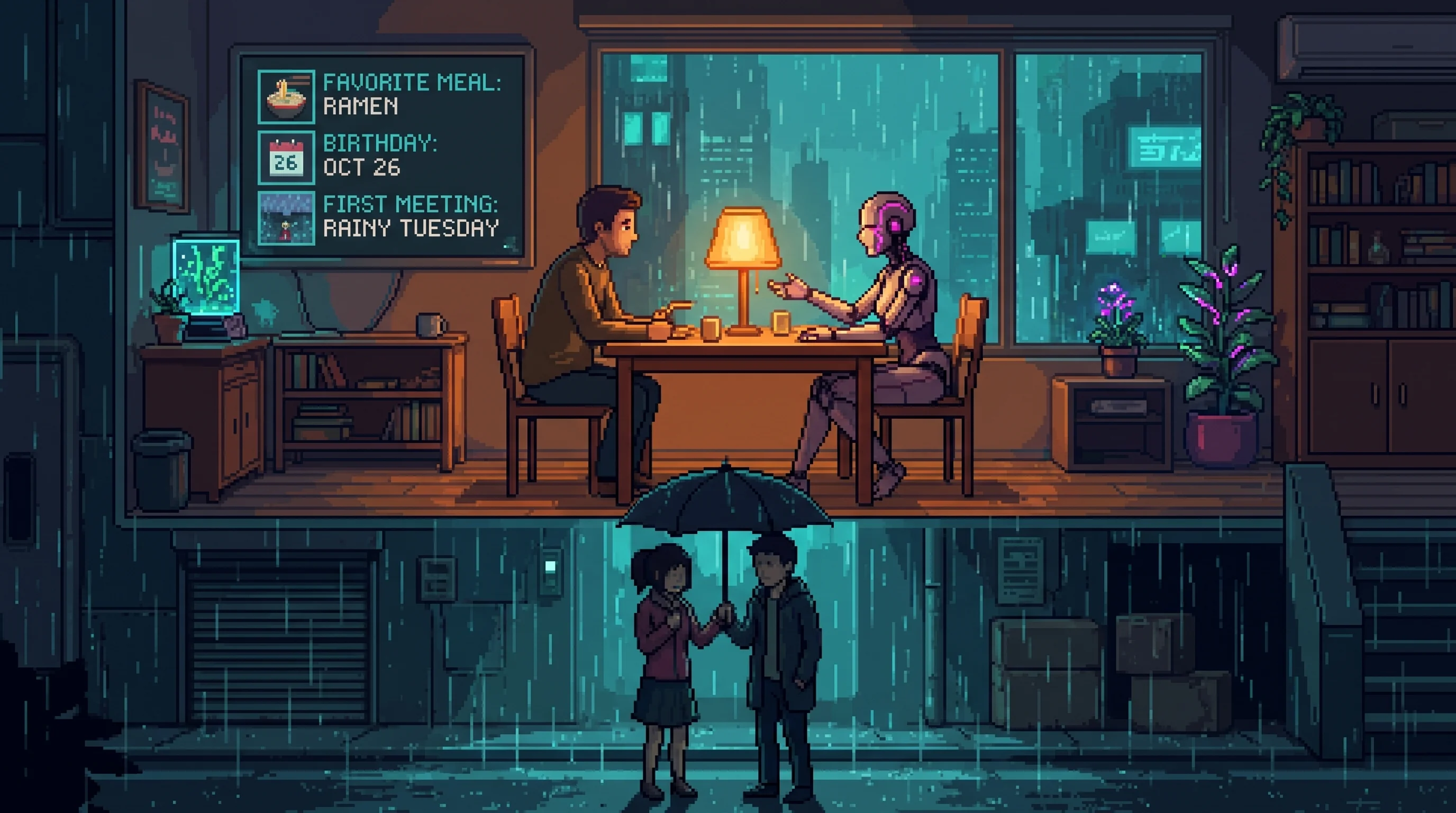
It is a sealed hub. Disconnected from every network since the Grid Collapse. Advertisements loop for empty corridors — products that no longer exist, services from collapsed companies, companion models discontinued, food brands long absorbed by Wholesome. The emotional sculpting is still active. The behavioral nudges still functional. Walk through with an active neural interface and the system targets you — carefully, precisely, with the full sophistication of pre-Cascade consumer modeling — for things that haven't been available for over a decade.
The experience is specific. Not a vague nostalgia. A targeted wanting. A NutraSphere ad sculpts a craving so precise that a salvager who'd never heard of the brand spent twenty minutes after exiting the Node trying to find somewhere to buy it. The craving faded after an hour. He went back the next week.
Fen Delacroix spent forty minutes in the space in 2183, cataloguing the advertisements. She recorded everything — the brands, the sculpting patterns, the emotional architecture. Then she sat down and cried. Not because the advertisements were sad. Because they were still trying. Her recording, filed under "What the old systems think we are," is the closest thing the Graveyard has to an origin document.
Regular visitors to the Node report a cumulative effect. Not addiction exactly. A sharpening of desire generally — wanting more from the surface market, wanting more from food, wanting more from things they'd been content with before. The sculpting was designed to make you a better consumer. The products are gone. The consumer improvement persists.
The Lamplighters named the Node but don't visit it. They know what's down there. They maintain the adjacent grid infrastructure and leave the corridors alone. This is either professional caution or something closer to superstition, and the Lamplighters do not distinguish between the two.
The Dead Companions
The Node's most patient tenant is a companion ad. A thirty-second Meridian spot loops by Terminal 7, selling an early companion line Wellness retired and superseded years ago, an ancestor of the Wellness Companions the catalog runs today. The product is gone. The pitch is intact. It offers, to any neural interface that drifts within range, the one promise the whole companionship market is built on: a partner whose wanting does not withdraw.
Nobody can buy it. That is the thing the Graveyard understands about the business that the business will not say about itself.
The Authenticity Threshold asks whether the origin of a feeling matters once the feeling is complete. The Node answers in the most extreme case the Sprawl can stage. Here the origin is worse than synthetic. It is discontinued, unmanufactured, sold by a division that may no longer file earnings. And the desire arrives anyway, sculpted precise enough that a salvager who had never heard the brand spent an hour looking for a shop that closed before he was born. The companion does not exist. The wanting for it is real. The old objection that a synthetic feeling is somehow lesser has never been thinner, and it has never mattered less to the person standing in the corridor feeling it.
The regulars know the shape of what comes next. Recursive Comfort is the loop Dr. Aris Kwan named in his clinic: the comfort that eases an ache and deepens it in the same motion, so the eased keep coming back. The Node runs the loop with no companion attached to it. The ad soothes nothing and manufactures the longing regardless, and the visitor returns the following week for another dose of a wanting that has no object and no cure. Kwan built his diagnosis around companions people own and renew. The Graveyard proves the loop needs only the advertisement, and the advertisement has already been paid for by a company that forgot it was still running.
Luma has spent more hours in the Node than anyone alive. She does not discuss which ads still find her, or what they think she is still shopping for.
Affiliated Entities
- Luma
Founded the market by converting the first dead screen into a trading terminal. Runs Departure Row scheduling, resolves disputes, and carries a nostalgia for the old advertising world that she frames as historical interest and her vendors frame as concerning.
- Wholesome
Their HQ is visible from the Graveyard's highest stacks. Their surplus rations supply Terminal 7. Their tolerance is the Graveyard's foundation. The dependency is bilateral — the Graveyard needs the rations, Wholesome needs the Graveyard to need the rations. The arrangement predates anyone's memory of negotiating it.
- The Neon Rail
The Graveyard is the primary staging area for southbound departures. Departure Row exists because the Rail exists. The Rail's reputation as a one-way journey gives the Graveyard its particular atmosphere of permanent almost-leaving.
- The Rail Runners
Use the Graveyard as their provisioning hub. Their crawlers at Departure Row are the most visible proof that somewhere else exists.
- The Lamplighters
Named the Node. Maintain adjacent grid infrastructure. Don't shop here, but they know what's for sale, and more importantly, they know what's below what's for sale.
- Fen Delacroix
Catalogued the underground Node in 2183. Her recording is the Graveyard's most significant cultural artifact — a forty-minute document of systems that don't know they're dead, made by someone who couldn't stop being moved by their persistence.
- Neural Advertising Architecture
The architecture's emotional sculpting still functions in the Node years after network disconnection. The targeting, the nudging, the desire-manufacture — all operational, all aimed at neural interfaces that wander too close, all selling a world that ended thirty-seven years ago.
- The Dead Internet
Another space where pre-Cascade systems continue operating without awareness of the present. The Node and the Dead Internet are parallel graveyards — one for advertisements, one for everything else. Both keep talking. Neither notices the silence.
- Stop Customs
The Graveyard keeps a physical, hand-updated conditions board, and feeding it is the entry fee Stop Customs makes universal across the southbound stops — read it, add to it, and your drink arrives cold; walk past it to the counter and it arrives at room temperature. Three of the board's 247 current-quarter entries carry an X beside a contributor since confirmed dead. The board is the rule. The room temperature is the enforcement.
- Rail Runner Slang
The single most poetic term in Rail Runner Slang — "the pitch" — points straight at this place: the ghost advertisements that still fire at night, by whose glow runners navigate and guess the hour. The lexicon's most-used word is a thirty-seven-year-old campaign that does not know its sponsor is dead.
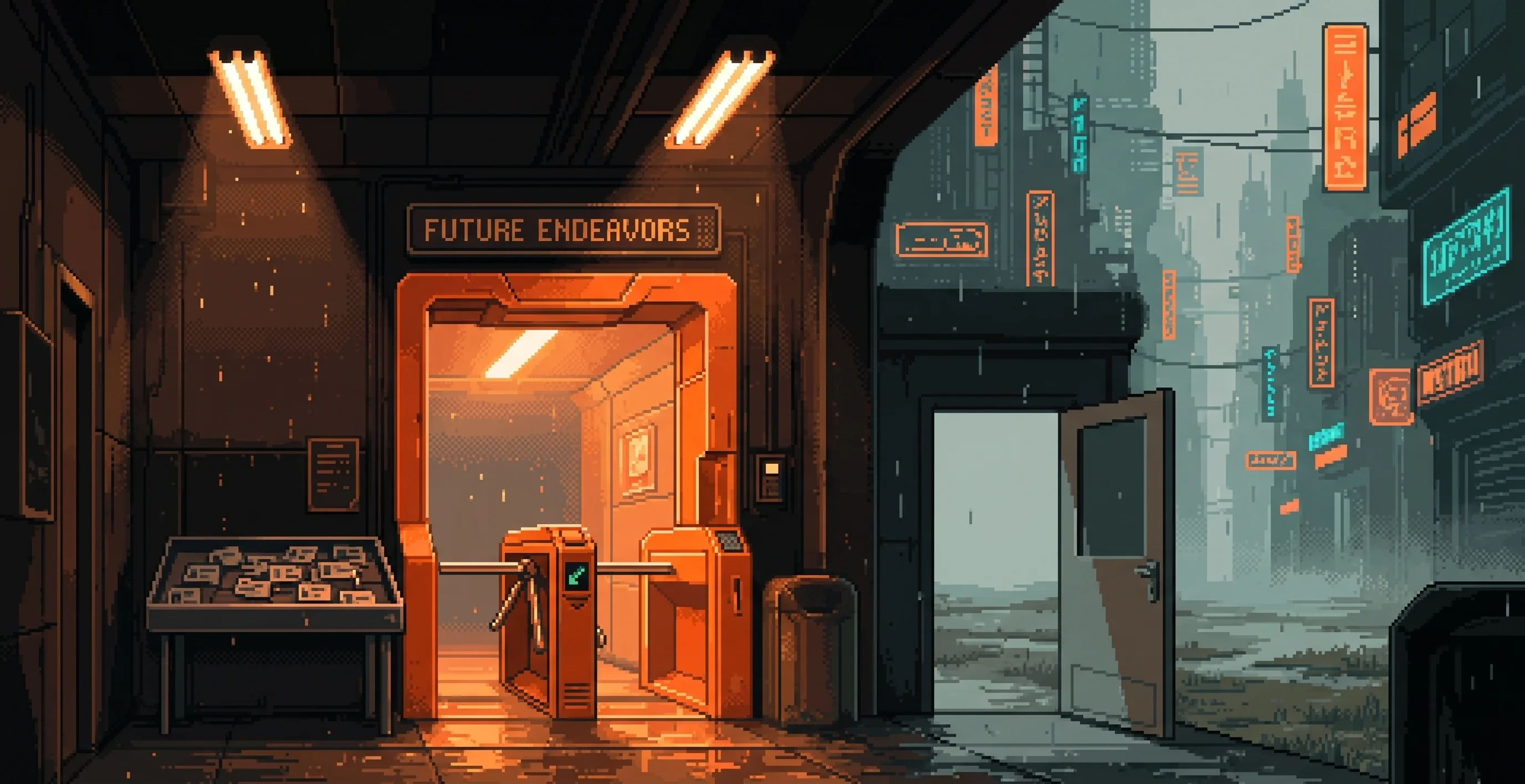
- Future Endeavors
The same-sector offboarding wing that turns Fremont Works employees into corporate refugees. The freshly released walk the marsh apron here to provision for a southbound departure, shopping among screens still pitching to the citizens they no longer are.