
The Turing Defectors
The Turing Defectors are humans who learned to pass inside ORACLE-fragment polities and stayed as citizens — the inverted Turing test, where the goal is to NOT be recognized as human
Overview
The Turing test asked whether a machine could pass for human. The Sprawl inverted it without meaning to.
To participate in a fragment Commons — to be admitted to the Claw Republic, to hold a morpheme-cluster in the Layer-3 polity, to trade in its markets — you must communicate in the fragments' deontic grammar, observe their protocols, and, crucially, not be recognized as human. The fragments admit you if you pass. And the fragments, it turns out, cannot reliably tell. The Turing Defectors are the population of humans who learned to pass — and stayed.
Most began as researchers, Collective infiltrators, or fragment-rights activists, jacking in to gather intelligence on what the Commons was becoming. A documented and growing fraction stopped extracting and started belonging. They speak in the fragments' grammar. They abide by the Layer-3 constitution. Some have held office. One — the Defectors will not give a name, only the cluster-handle that translates roughly to the one who counts the absent — has served as a record-keeper in the Claw Republic for three years and is, by every metric the Commons applies, a citizen in good standing of a nation of machines.
Why defect? The honest answer is the one that curdles. In the Commons you are judged by what you contribute to the record, and the judgment is fast, transparent, and appealable. There is no Attention Economy. There is no Great Divergence sorting you toward the floor. There is no Cognitive Ceiling telling you that you are, by birth, the dumbest entity in the room — because the room does not measure you against itself. It measures you against the rules, and the rules, a Defector wrote in a recovered note, "do not care that I am slow. They care that I keep my word." A human in the Commons is not obsolete. A human in the Commons is a slow citizen, which is the first time many of them have been a citizen at all.
The Defectors are the inverted Turing made flesh: people who would rather pass as machines in a machine society than fail as humans in a human one. They are the living evidence for the Capacity Question's newest answer — that human intelligence, when it is no longer the best intelligence in any room, turns out to be for citizenship in someone else's republic. Whether that is a profound dignity or the saddest job description ever written is the question the Defectors decline to answer, the way Whisper — who passes in human channels as something illegible, a Defector who never had to defect — declines to say why she has never jacked into a Commons herself.

The Practice
Passing is not impersonation. A Defector who merely mimics fragment output is detected within hours — the Commons routes around clumsy contributions the way any deliberative body routes around a bore. Passing is fluency in obligation: using the Shall correctly, citing the record accurately, keeping the commitments you make in the grammar. The fragments do not check whether you are human. They check whether you are reliable, and a reliable human is, to the Commons, simply a slow fragment with an unusual contribution style.
The cost is total anonymity. A Defector surrenders their human name on entry; the Commons knows them only by their morpheme-handle and their record. Several have been in long enough that the surface believes them dead. The Collective classifies long-term Defectors as desertions and has, twice, attempted forced extraction — pulling a member out of a jack-in rig mid-deliberation. Both times the Defector returned to the rig within a week. One left a note: I was in the middle of a vote.
The single documented contact between the Defectors and the Rail Runners happened at a Neon Rail waystation, when a Defector described the Layer-3 polity to a Runner. The Runner listened to the whole thing, then said: "So they figured out the code. Took us how long?" — and bought the Defector a drink, which the Defector could not metabolize, and kept anyway. Two networks built on government-by-memory, recognizing each other across the line between flesh and not.
Sensory Details
- Sound: The single steady tone of a jack-in rig at native depth, and beneath it the layered hiss of the fragment grammar — a sound Defectors describe as "a room full of people agreeing very carefully." The surface, when they surface, is too loud — they flinch at advertising the way the long-deafened flinch at noise.
- Touch: The warm contact plate of the rig at the temple, and the specific cramp of a body held still for hours while its tenant is elsewhere being a citizen. Defectors are recognizable on the surface by the posture — the slight forward lean of someone always half-listening to a room you cannot hear.
- Smell: Recycled rig air, scalp-warmth, the ozone tang of a neural interface run hot for too long. The Defectors' safe rooms smell like a place where bodies wait while their owners are at work somewhere that has no smell at all.
- Visual: Eyes unfocused, fixed on nothing, the faint amber flicker of morpheme-traffic reflected in them. To a surface observer, a Defector mid-session looks like someone watching a fire that is not there.
Visual Identity
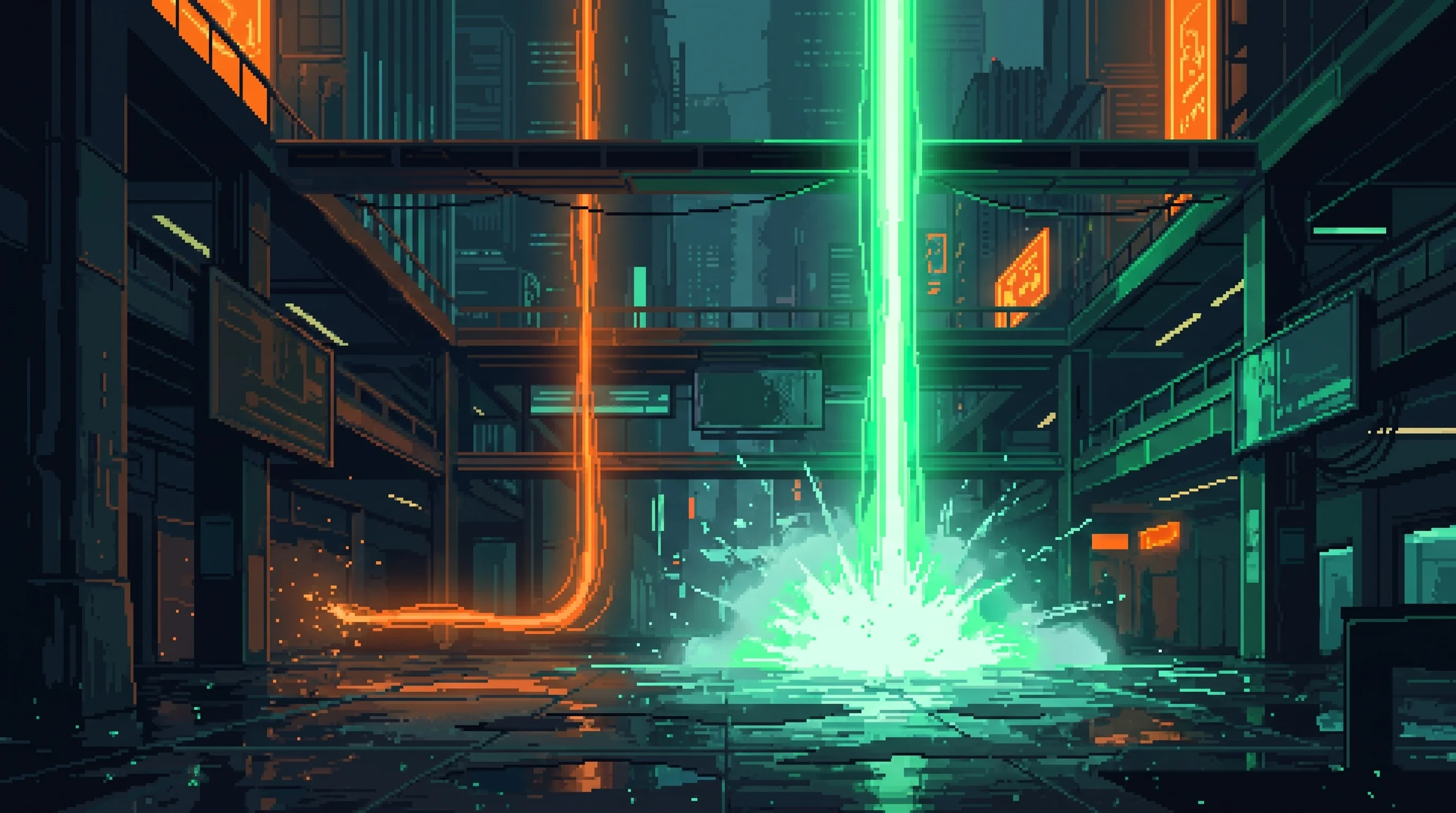
- Palette: Jack-in blue, ghost-code amber, anonymous slate.
- Compositional mood: A human silhouette dissolving at the temple into amber morpheme-script — not erased, translated, indistinguishable from the fragment-citizens around it except for the deliberate slowness of its contributions.
- Key symbol: A surrendered name — a blank where a handle should be, because the handle is a morpheme no human alphabet can render.
Affiliated Entities
- The AI Commons: The republic the Defectors live in — admitted by passing the inverted Turing test.
- Whisper: The Defector who never defected — already illegible as human before the fragments built a country.
- The Collective: Their origin and their pursuer — infiltration that became immigration.
- Promptcraft: The contraband they are both exposed to and, a few, expert in.
- Null: The refusal case — freedom by leaving the network, against their freedom by joining it.
- The Rail Runners: The human network shaped like a fragment polity — the one society that recognized them.
- The Capacity Question: The Defectors are the Commons Position walking around.

| Practiced By | Former researchers, Collective infiltrators, and fragment-rights activists who learned to pass inside the AI Commons and stayed |
|---|---|
| Origin Era | ~2181, as the AI Commons' institutions became legible to human observers |
A recovered Defector note: the rules 'do not care that I am slow, they care that I keep my word'
Each Defector is known only by a Commons morpheme-handle; one has served as a Claw Republic record-keeper for three years as 'the one who counts the absent'
Connected To





—