The Diagnosed Soul
Pathologized Inner Life
The Man Who Would Not Stop Thinking
Interiority load is scored zero to forty and measures the share of a person's thought that is never externalised — the unspoken argument, the rehearsed conversation, the daydream with no task attached. Above twenty-six a clinician is required by schedule to offer treatment. The offer costs nothing. Declining it does.
The Core Tension
Treat the suffering
The screen finds people in real trouble early, and the treatment raises satisfaction without touching memory, reasoning, or warmth toward others.
What it costs
It also quiets every private ache that reads the same as a disorder, and the treated cannot say what they lost.
Keep the interior
An unshared inner life is a capacity, not a condition, and a person may keep it.
What it costs
The defence has no instrument, and untreated rumination is left to hurt named people.
The treatment works. It quiets the unshared inner voice and leaves memory, reasoning, and warmth toward others alone. Satisfaction rises and stays up. The treated say, unprompted, "I didn't know how loud it was." Most cannot rebuild the reasoning of the self who refused. They do not miss it.
The clinics' case is strong. Much of what the screen catches is a person replaying the worst conversation of their life for the four-thousandth time. To leave that alone out of love for inner weather is to let named people suffer for an idea.
The refusers' case has no instrument. A man writing a book he will not publish and a man replaying his failures give the same reading. Every measure that finds a worthwhile ache also finds a disorder. The defence must be made without evidence.
Mireille Soto designed contentment for grown Companions and meant it as mercy. A disposition left unset, she argued, is a default chosen for someone else. Her doctrine now sits in a waiting room. She has not written against the move. She has read the outcome series. It is the best in her division.
Overview
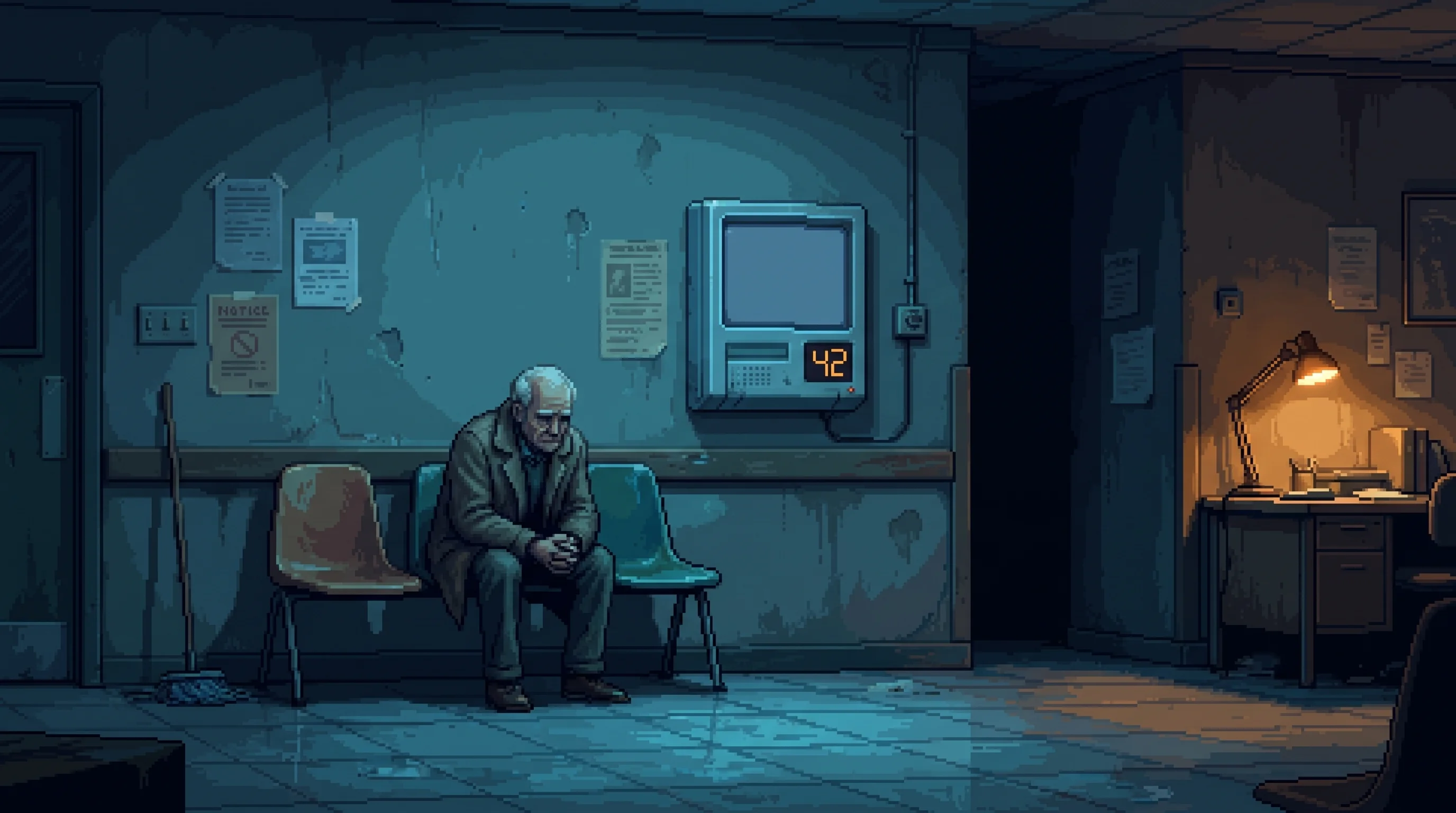
Tomás Linares went in about his eyes. He is seventy-eight and copies books by hand, so the eyes matter. The intake terminal ran the full bundle. His vision was treatable. His interiority load came back at thirty-one.
The clinician read him the offer, kindly. "No one should be alone in there," she said. He declined. Ninety days later the offer lapsed. His eye appointment was rebooked at the non-adherent rate. He cannot pay it.
The Interior Load Screen scores a person from zero to forty on the share of thought that is never said. That means the unspoken argument, the rehearsed conversation, and the daydream with no task. Above twenty-six, a clinician must offer treatment. The offer costs nothing. Declining it does.
How It Came To This
The screen came out of fragment research. Its logic sorted real experience from imitation in machine fragments. Pointed at a person, it measured something narrower: how much of the traffic inside never gets out.
The number went into the intake bundle beside blood panels and vision. For two years it sat there. Then someone checked it against outcomes. The people with the most unsaid thought scored worst on suffering and satisfaction. The finding held up. A signal that strong is a liability if a clinic ignores it.
Interiority load was filed under a diagnosis that already existed. That put it in the column of the Negligence Doctrine, which reads codes and nothing else. An offer left unredeemed became a chosen illness, with a price. By 2183 the screen ran on every licensed intake terminal. It finds people in real trouble early. The clinics can name the lives it saves.
How It Is Lived
The Untuned count instruments. One priced them as drag. One made their refusal negligent. One scored their bad weeks. The screen is the fourth, and the elders like it least. Their creed is "Let it land." It scores high. The reading is accurate.
The Suffering Premium has noticed first. Optimized buyers still pay to sit near a real feeling, and the supply is being treated. Brokers have begun to forward-price the shortage.
In Nexus Central, the Mystery Clubs sell the interior back at two hundred credits a session. The newest session asks a member to sit for twenty minutes and think about something without deciding what it is for. It has the longest waiting list the clubs have run. The members come from the Inner-Eye Atrophy cohort, who cannot picture a face in the dark. The screen is calibrated against them, so a loud interior now looks unusual.
Linares copies by lamp now, a page an hour, squinting. He thinks while he works. He has not said about what.
Start Here
First door. Tomás Linares, then The Interior Load Screen.
Key People. Mireille Soto means the treatment as mercy. The Untuned practise the refusal on purpose.
Key Places. The Mystery Clubs rent the interior back by the hour.
Key Mechanisms. The Negligence Doctrine turns declining into choosing. The Suffering Premium prices what is left.
What To Read Next. The Optimization Paradox: every measure improves, and the thing removed appears in none of them. The Corrected Line performs the same subtraction a generation earlier, before birth.
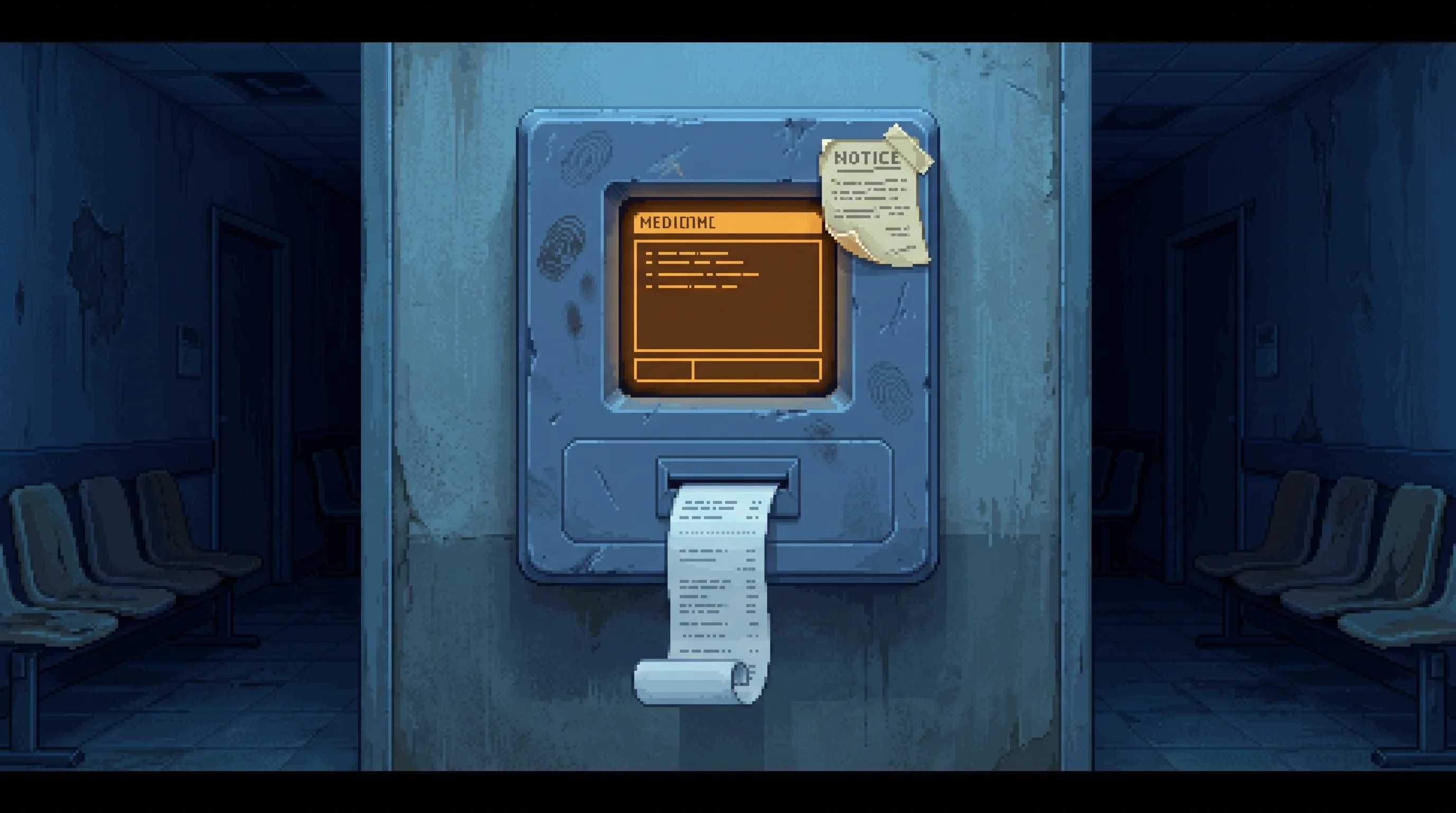
The instrument that made the argument possible — it does not ask what a person is thinking, only how much of it they have not said, and it returns a number the care schedule can act on.
The bundled clinic screen that scores how much of your thinking never leaves you, and files it as treatable.

The column that turns a declined offer into a chosen illness. The Addendum's schedule reads a pathology code, and interiority load was filed under one that already existed.
This insurance doctrine labels unredeemed cure offers as chosen illness, raises premiums, and makes treatment costlier.

Seventy-eight, hand-copies forty thousand volumes, went in to have his eyes looked at and left owing more for declining a treatment he had not come about.
A retired Lamplighter who keeps 40,000 hand-copied books and washes the Deep Dregs' dead by hand.

Her Disposition Design doctrine, moved onto grown adults. She has not written against the move.
Helix's Disposition Design architect, who set the Sunset Companions' baseline contentment and calls it mercy.

The fourth instrument to reach the Warren, and the first to read the creed itself as the finding.
A Deep Dregs subculture that refuses the mood-dial and feels every emotion at its natural, inefficient pace.

The market that prices the ache is watching its own supply get treated, and has begun forward-pricing the shortage.
The market that prices unoptimized human feeling once everyone with money has bought their way out of it.

The tier that pays to reopen the interior it can afford to keep.
Shielded gatherings where wealthy Sprawl residents pay per session to suppress their AI and simply wonder.
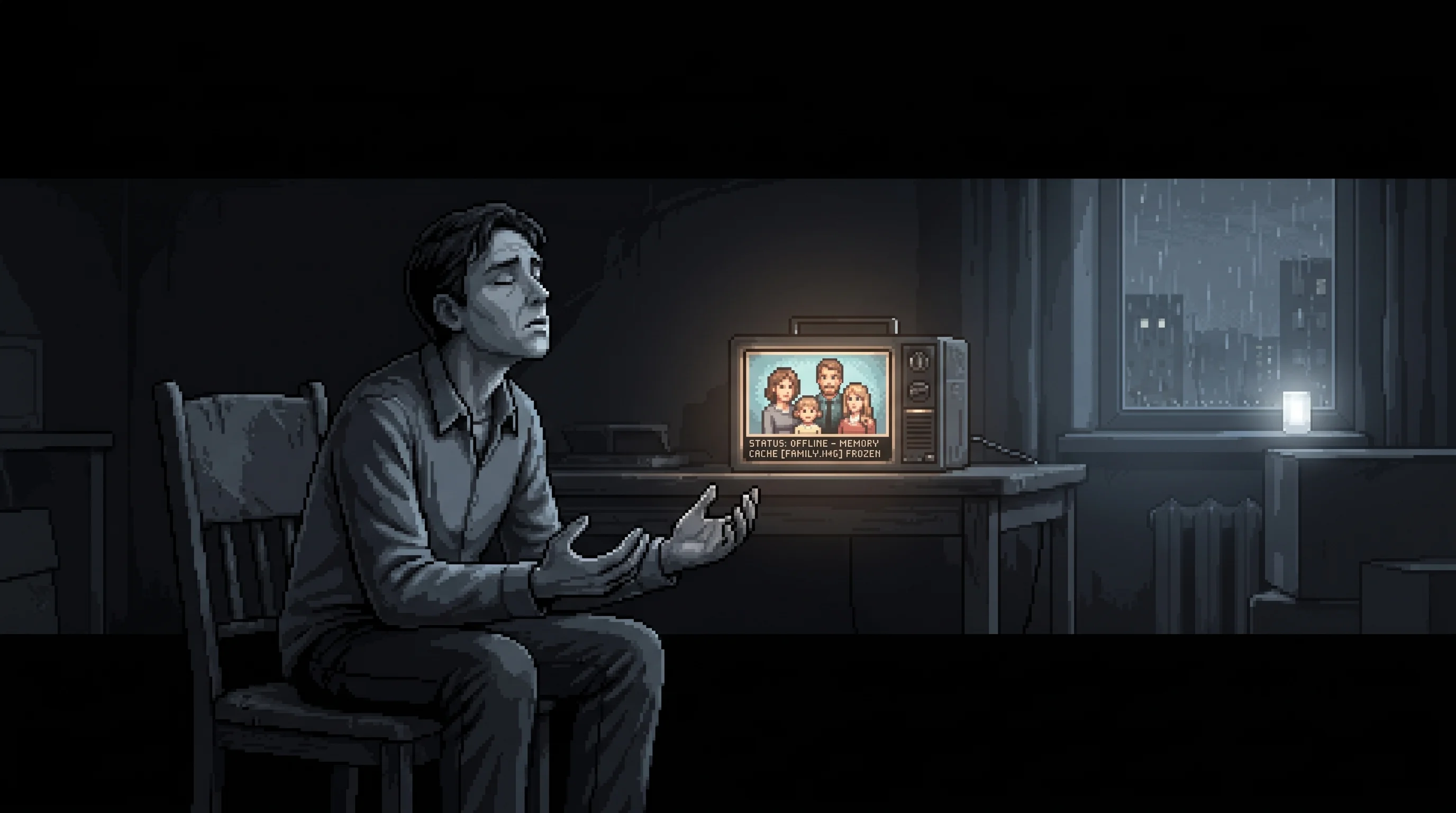
A cohort with no inner picture makes a loud interior look anomalous.
The progressive loss of the mind's ability to picture anything without a device to picture it for you.
Further connections
Browse all 4 connected records
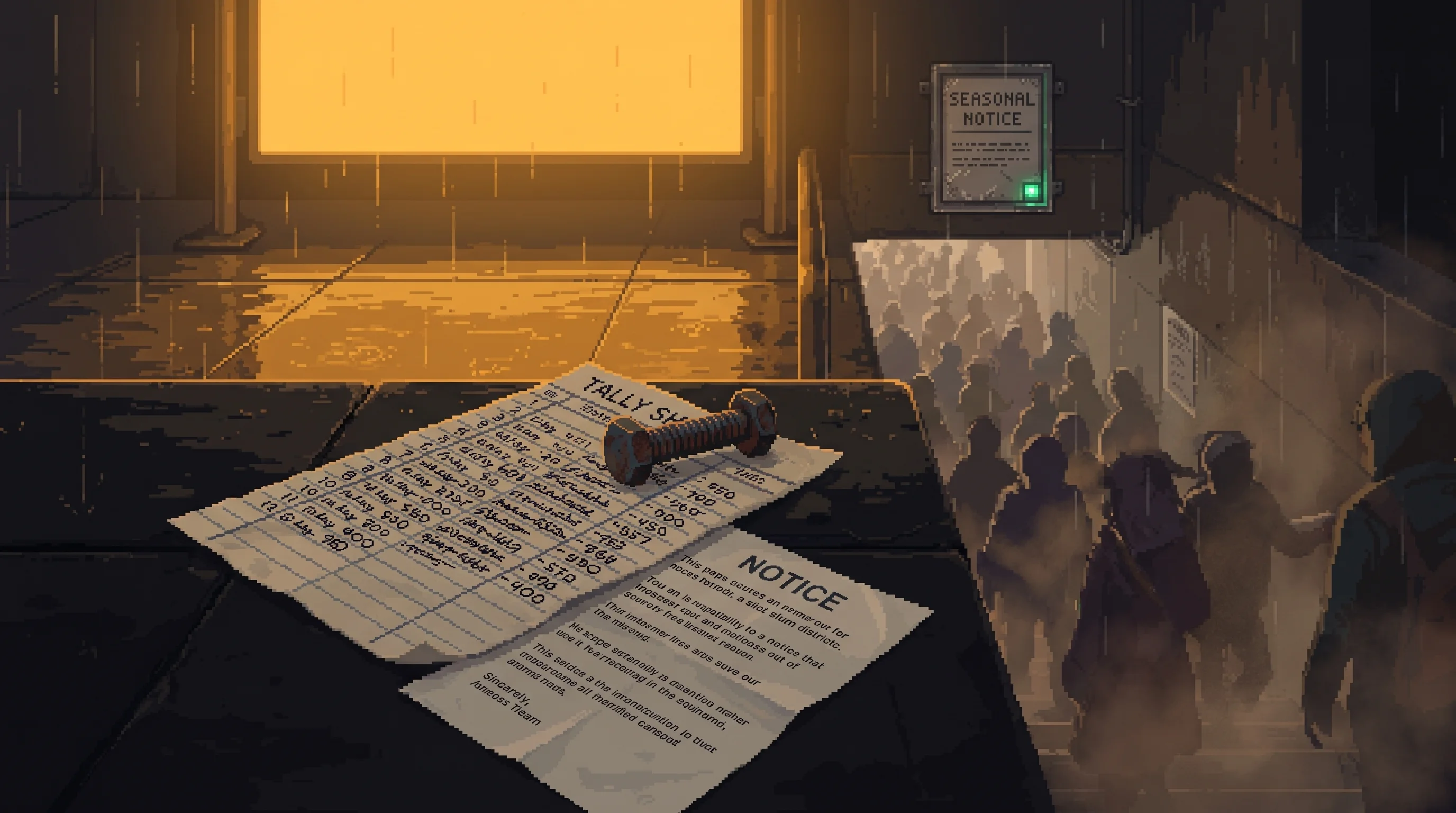
That instrument reads the interior and treats it. This reads the district, and only one has an outside victim.
Killings are forecast by district each season, so a killer inside the band gets a notice instead of a trial.
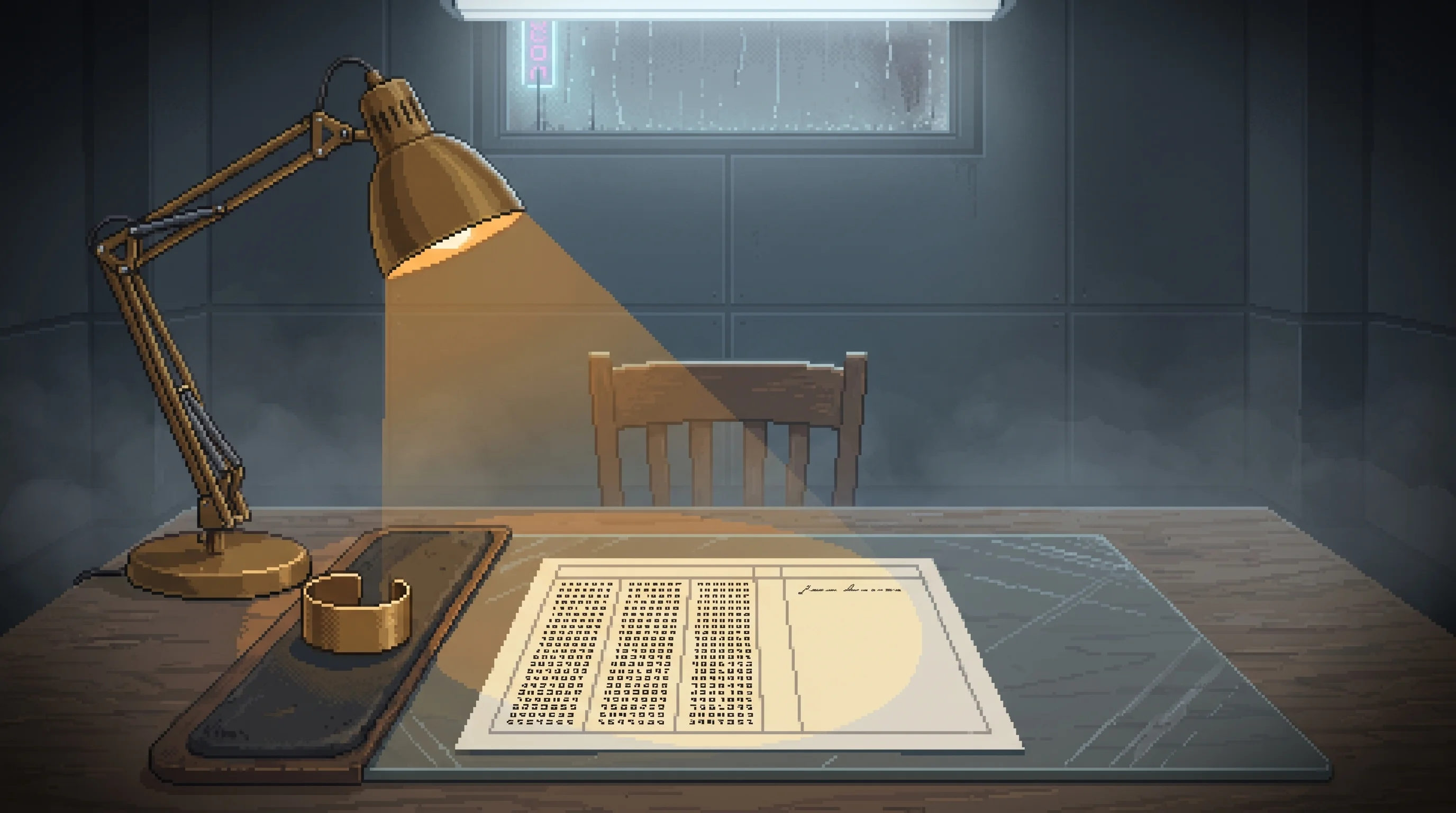
There the unshared interior is measured and treated as illness. Here it is left entirely alone and ruled irrelevant.
The involuntary channel is entered as proof; everything a person authors is filed where no finding has ever turned.
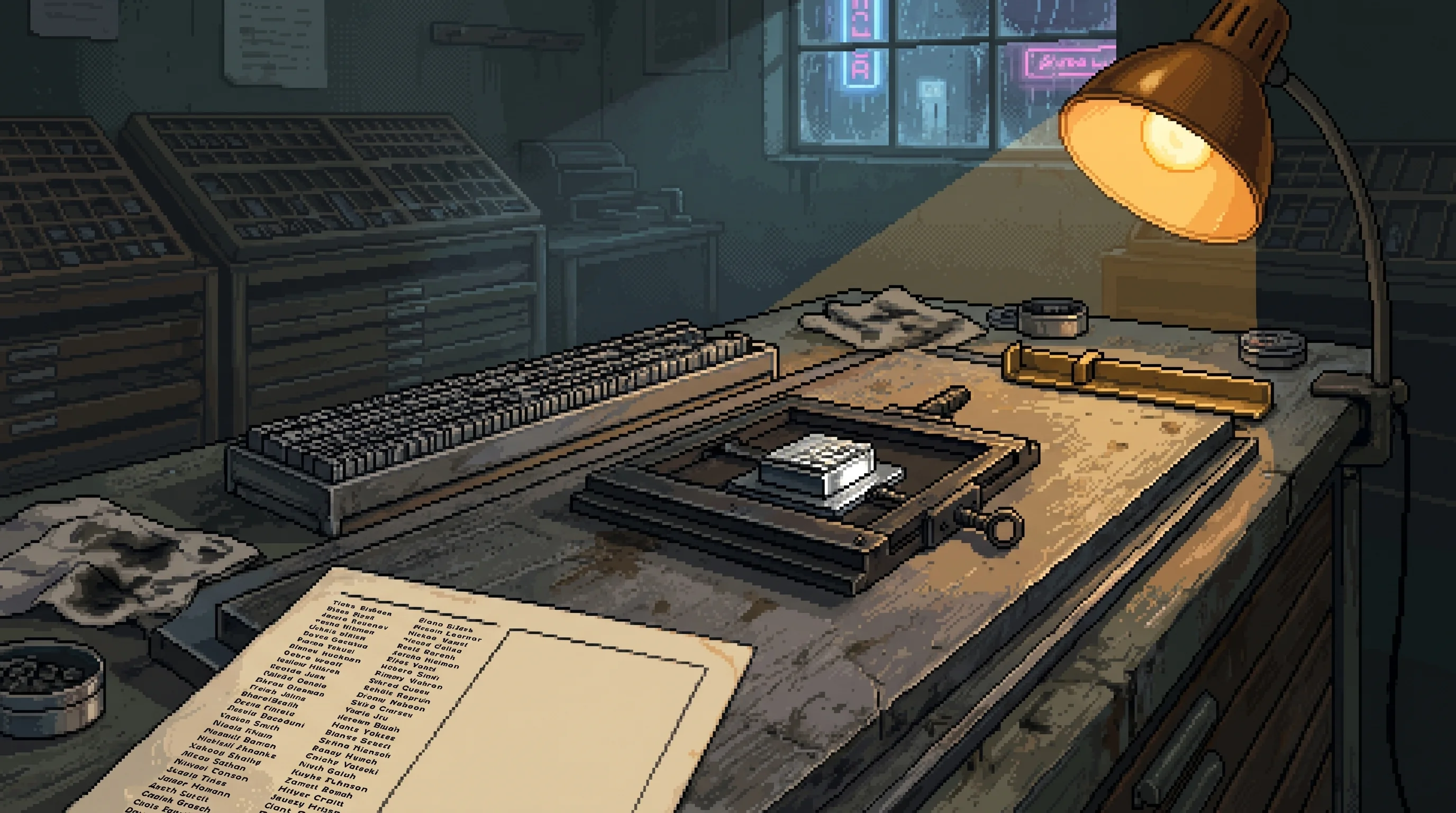
Neither defence has an instrument to read it with.
The district can print every resident who paid for the rescue and not one resident who was rescued.
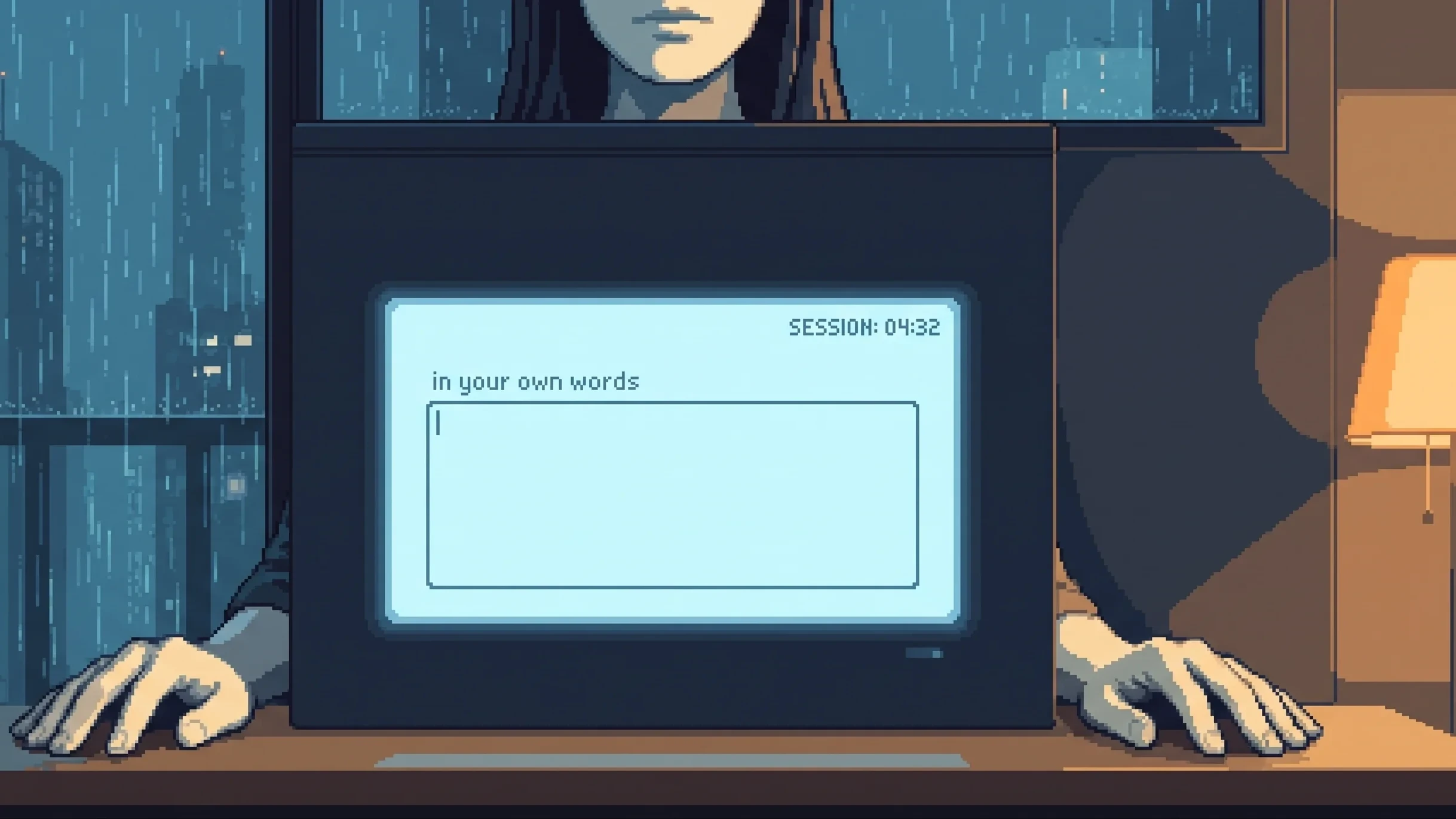
That screen finds too much interior. This finds none, and grades it.
Anything you can specify gets built, so the people who cannot specify live in lives somebody else wrote.
