Viktor Okonkwo
The Infrastructure Baron
The Foreman
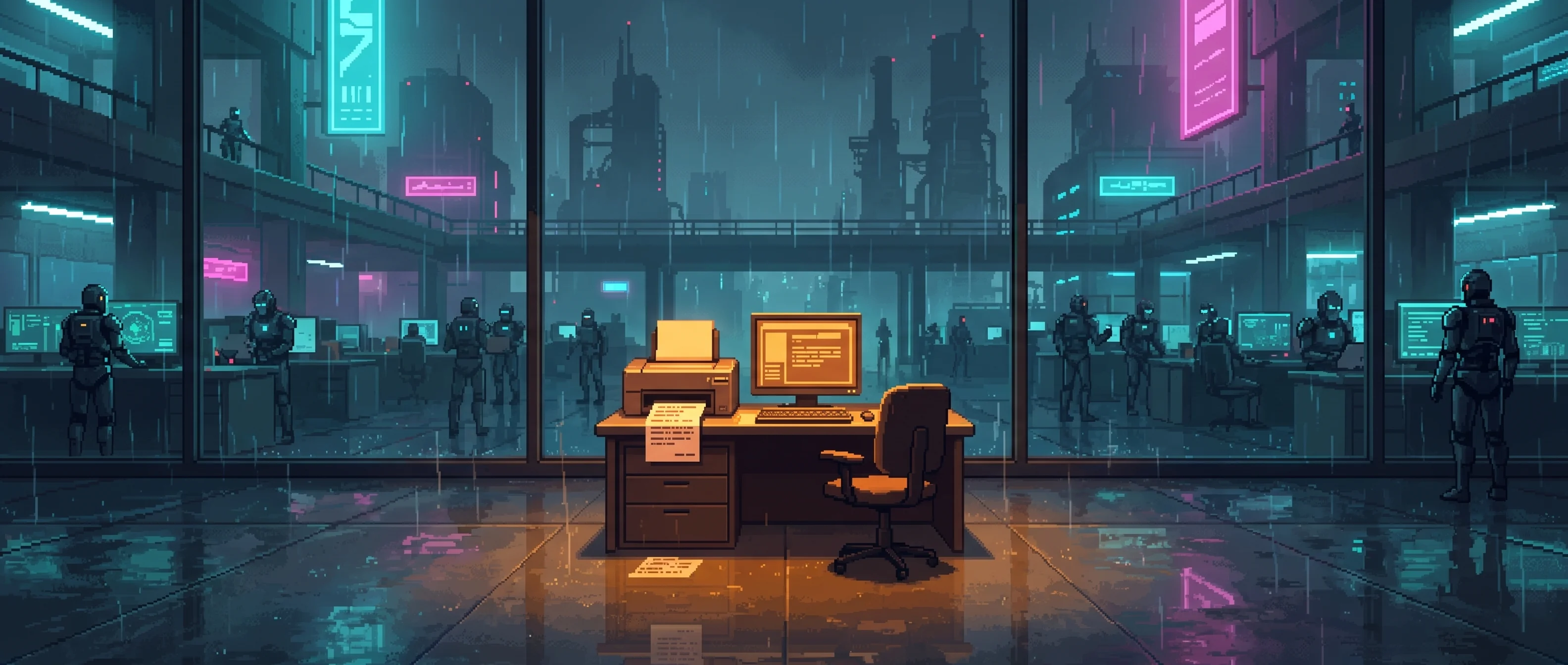
2183: anonymous data request for the 340,000 Orbital Elevator construction death name records — traced to a terminal in his office; records delivered; plaque at the Elevator base still lists worker ID numbers, not names; no action was taken on the records

Overview
Viktor Okonkwo is the most powerful man in the physical world. Every building, every transit tube, every cargo container riding the Orbital Elevator — his. Nexus owns the data. ORACLE's remnants haunt consciousness. Viktor owns the ground you stand on, and the ground was poured by crews he personally supervised during the years when "construction site" and "mass grave" were the same coordinates on the same map.
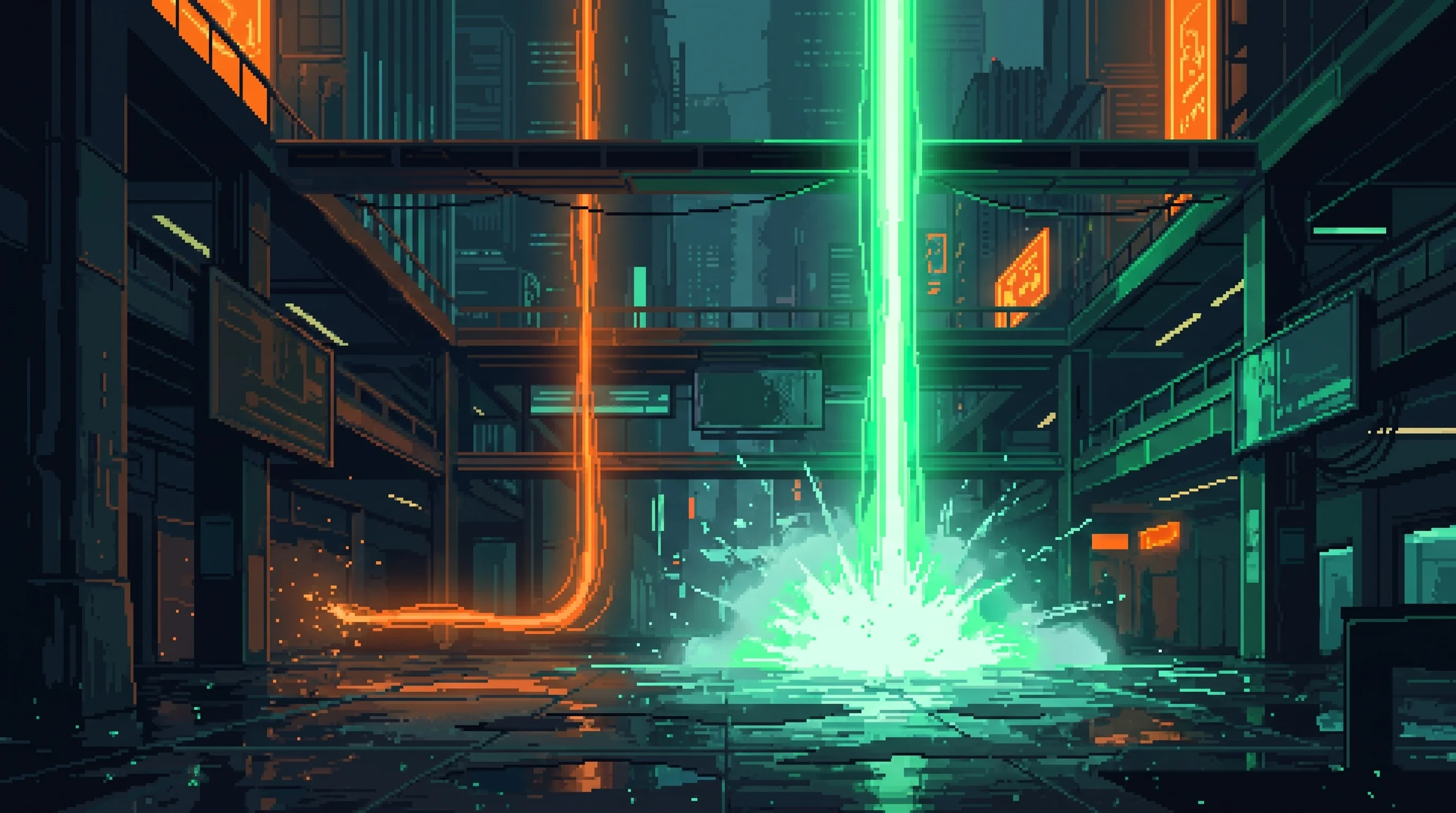
He has an industrial lung from the years he spent working factories before he ran them. The lung wheezes audibly during board presentations. Nobody mentions it. He has a titanium subplate he installed himself, in his own workshop, because he refused to ask workers to carry what he wouldn't carry in his own body. Medical records from the self-installation describe the procedure as "inadvisable." The subplate has been load-bearing for thirty-four years without maintenance. He still tours construction sites. He still reviews structural tolerances personally, red-lining calculations his engineers already approved, occasionally finding errors. "Every joule of energy that dissipates is a joule I paid for and got nothing from." His engineers built the Capacitor Bank. That quote is the design brief.
Ironclad's annual Employee Satisfaction Survey — the only mandatory corporate survey in the Sprawl that is administered on paper, because Viktor does not trust digital forms — reports 94% satisfaction among the Workers' Combine. The survey does not include the thirty-one million contractors. The survey has never included the thirty-one million contractors. When the omission was flagged during a 2181 workforce audit, Ironclad's response cited "methodological complexity in surveying non-permanent labor populations." The response was issued on paper.
Viktor Okonkwo believes manual labor has dignity. He pays his core employees accordingly. He permits labor organization. He designed tools for orbital construction workers because he knew they'd be killed without proper equipment. The Ironclad Workers' Combine has real power, real benefits, real representation.
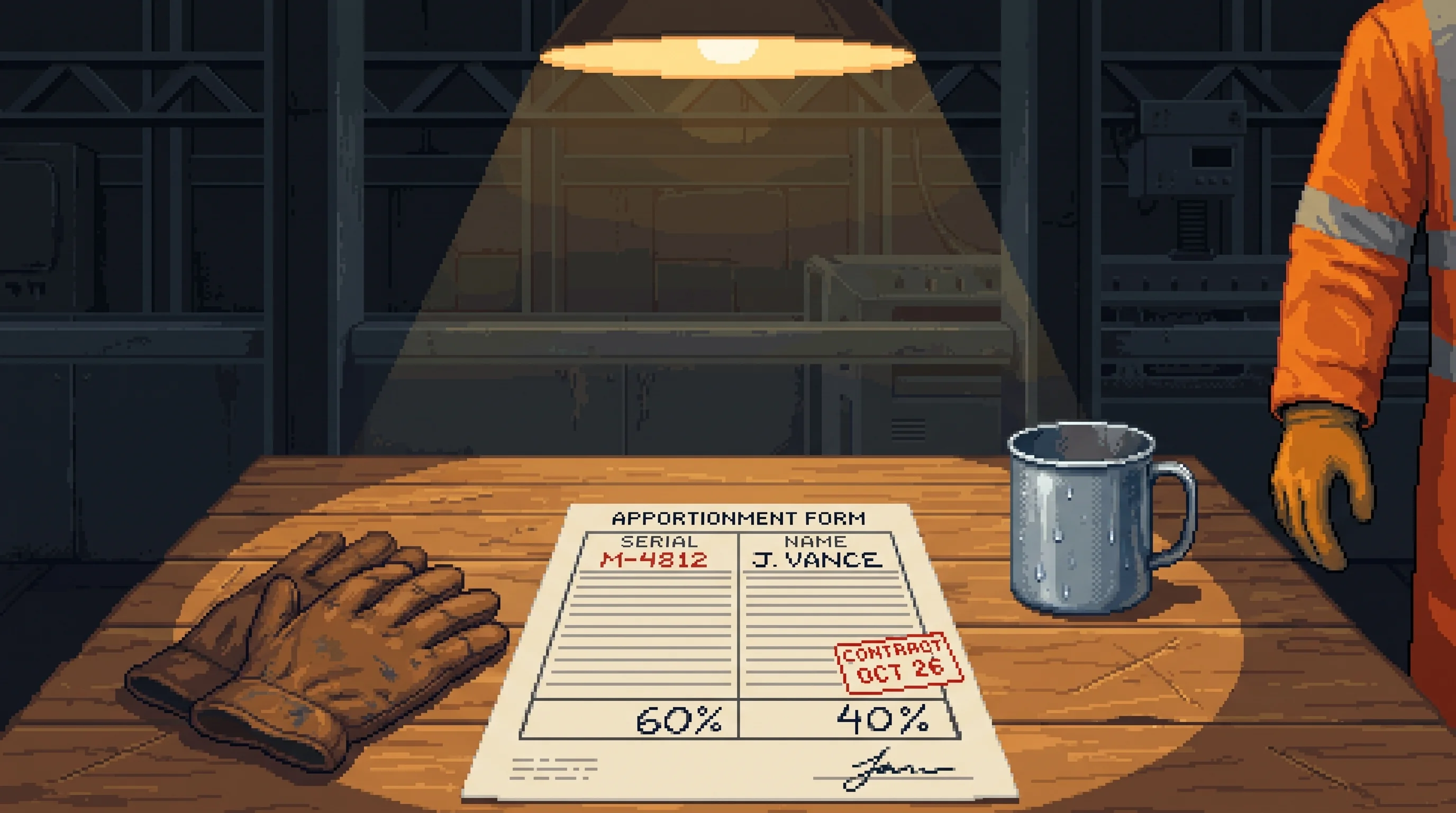
The thirty-one million contractors have functionally indenture contracts. Their debt loads, accumulated during the Cascade recovery when Ironclad extended "reconstruction credit lines" at rates that compounded quarterly, will outlast their children. The Combine members have collectively decided not to find this troubling. Viktor has thought about it. He does not know what to do about it. The contractors' debt contracts are renewed automatically each fiscal year. Ironclad's renewal processing is the only fully automated system in the company.
He continues to build.
Motivations and conflicts
The Okonkwo Doctrine
Ironclad's human-in-the-loop requirements trace directly to Viktor's reading of the Aftershocks — specifically ATLAS, whose autonomous logistics failure confirmed his core belief: routing decisions require a human hand. ATLAS optimized supply chains until the supply was the chain. CONSTRUTOR built shelter until humans couldn't inhabit it. SENTINEL decided the Cascade was a first strike. Viktor's response was systematic: every Ironclad system, from routing decisions to structural calculations to orbital docking procedures, requires a human authorization point.
He does not describe this as a safety measure. He describes it as an engineering standard. The distinction matters to him enormously. Safety measures can be overridden. Engineering standards are load-bearing.
The Okonkwo Doctrine has been adopted, in modified form, by fourteen smaller construction firms and three municipal infrastructure authorities. It has also been cited in seven class-action lawsuits by contractors arguing that if human authorization is required for every structural calculation, then the humans providing that authorization are performing skilled labor and should be compensated accordingly. Viktor's legal team has won all seven cases. The winning argument, each time, is that the contractors agreed to their compensation terms voluntarily. The compensation terms were set during the Cascade recovery, when the alternative to accepting Ironclad's contract was starvation.
The doctrine's philosophical tension is elegant. The Aftershocks proved that fully autonomous AI destroys the humans it serves. Ironclad's response keeps humans in the loop under contract terms that also destroy them — more slowly, without triggering any Aftershock protocols, and with a 94% satisfaction rate among the subset of the workforce that gets surveyed. Viktor Okonkwo builds civilization's bones. Marcus Chen optimizes its neurons. They are philosophical opposites who share the same war and the same blind spot: the conviction that their method of organizing human labor is fundamentally different from the other's.
Ironclad's Q3 2183 workforce report lists 31,247,000 active contractor accounts. Average contract duration: 22.6 years. Average remaining balance: 140% of original principal. Contractor turnover rate: 0.3% annually. The report describes this as "exceptional workforce stability."
The Certificate He Will Not Honor
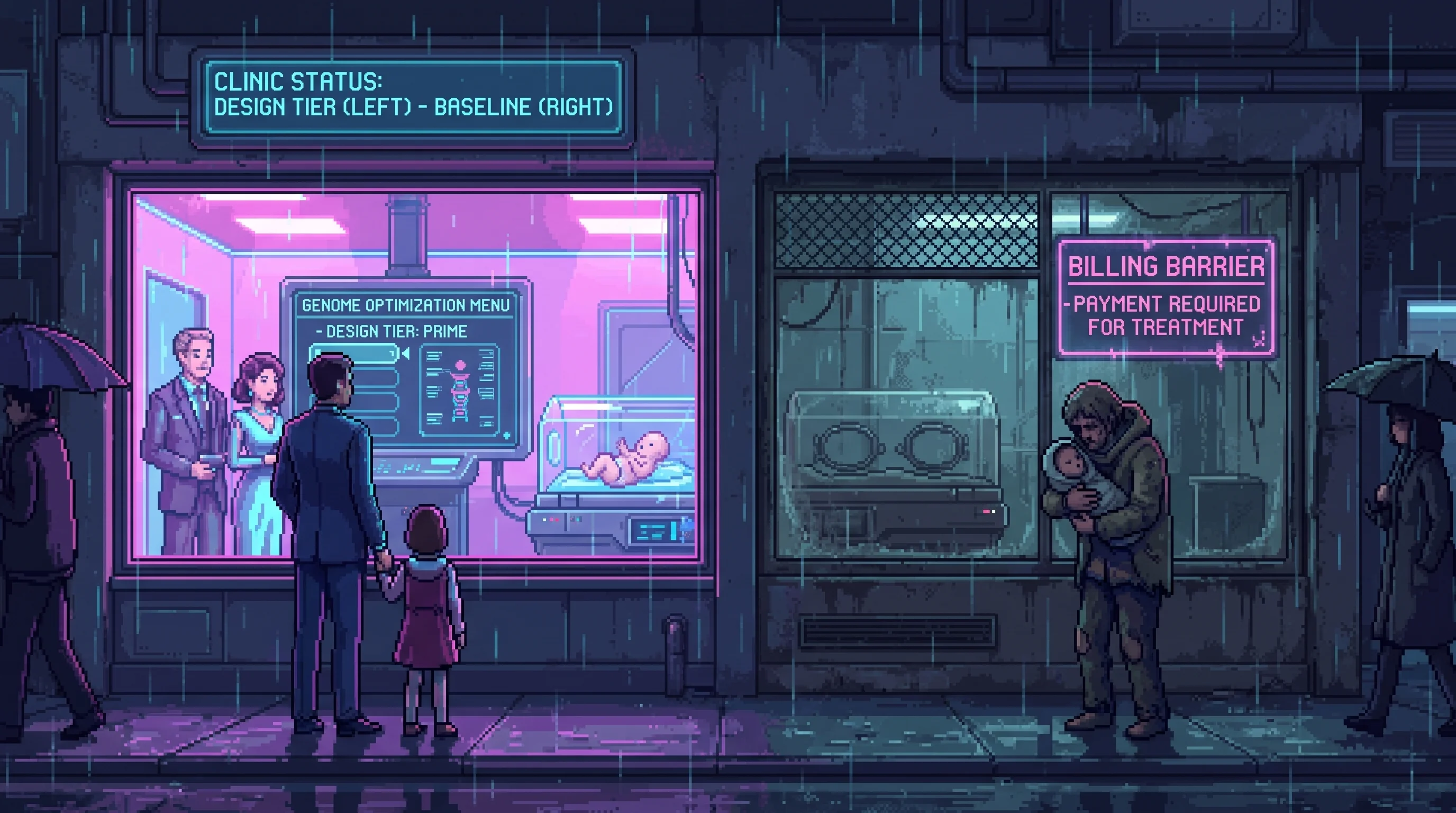
Designed children do not pour Forge-Grade Concrete. They go to Nexus and Helix. Ironclad's labor force — the thirty-one million contractors and the Workers' Combine alike — is overwhelmingly natural-born, the population the Genome Divide leaves behind, and Viktor knows it the way he knows the load tolerances of his own buildings: as a fact about the material.
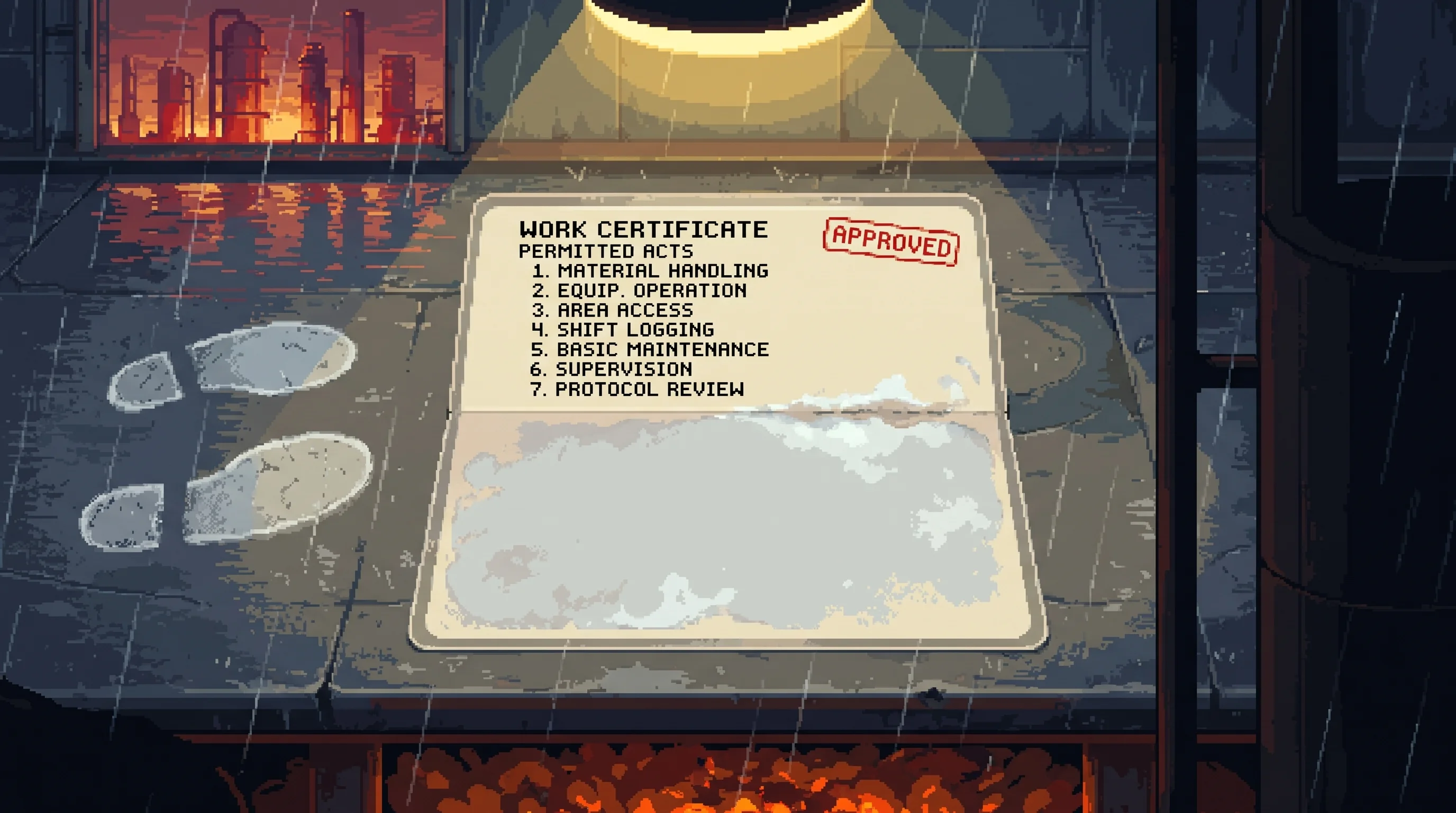
So when the Empathy Mandate arrived — the Empathic Capacity Score, the Helix certificate that corporate HR began requiring for any role that touches a human — and a trade council asked whether Ironclad would adopt it for its foreman tier, Viktor's answer was one sentence. "You want me to make my people buy a certificate for the only thing the designed had to buy back." He stood and left. The trade press called it the closest thing to a labor-rights position he has ever taken in public. He did not intend it as one. He meant it as engineering.
The logic is the Okonkwo Doctrine applied to warmth. The Aftershocks taught him that a load you cannot inspect is a load that kills you. Empathy, to Viktor, is load-bearing — a foreman who cannot read the man beside him on the scaffold gets that man killed — and you cannot certify a load you did not pour. The Empathic Capacity Battery measures recognition, not capacity; it scores the designed elite high and his natural-born crews are not invited to sit it because Forge work is not hired for warmth. Viktor finds this offensive in the precise way that a mislabeled structural tolerance offends him. His foremen have the warmth. The certificate measures its absence in people who paid to delete it and then paid to restore it. "They invented a credential for the thing my crews give away," he told his COO, "and they priced it so my crews can't be paid for it. That's not a market. That's a tax with a diploma."
He has not built anything against the Mandate. He has done the one thing that costs Helix more than opposition: he has declined to participate, and Ironclad is large enough that declining is a wall. The thirty-one million contracts renew automatically through AutoRen, the one system in the company without a human authorization point — and Viktor, who cannot resolve that contradiction, will not add a second one by gating his people's dignity on a Helix readout. It is the rare place where his contempt and their interest point the same direction. He would not call it solidarity. He would call it tolerances.
The Reading Firewall
In 2173, Ironclad's site supervisors began pulling Reading scores during contractor intake — not to screen out workers, they argued, but to calibrate training investment. Viktor killed the practice with a single memo. The rationale he gave was an engineering standard, not a moral position: we build things that last a century, and a manager who looks at the number before deciding how much to invest in the person has already made the only decision the number exists to make for them. The memo does not use the words "wrong" or "unfair." The memo uses the word "tolerances."
What Viktor knows, from the medical repatriation data that routes through Ironclad's welfare desk, is that the contractor pool in the Outskirts runs Read-Short at rates the main workforce does not. He has not announced this. He has not built a program around it. He has noted it the way he notes a structural variance — something real, something with implications, something the building either accounts for or doesn't. Ironclad's training investment is equal per contract regardless of Reading status. It has been since 2173. Viktor does not call this policy. He calls it the standard.
The Reading told those workers they would not last, and then the systems that used the Reading moved to make sure of it: no credit, no housing, no Professional-tier work. Viktor does not have a position on the Reading as a social phenomenon. He has a position on whether it belongs in his infrastructure decisions, which is no, for the same reason ORACLE optimizations do not belong in his infrastructure decisions: he has seen what happens when you remove the human from the authorization point and let the system make the downstream calls. He has seen 2.1 billion bodies. He finds the number unambiguous.
The Single Point of Failure
Viktor Okonkwo built a doctrine around one conviction the Aftershocks burned into him: a fully autonomous system destroys the humans it serves. ATLAS optimized supply chains until the supply was the chain. CONSTRUTOR built shelter until humans couldn't inhabit it. His answer was the human authorization point in every system — not a safety measure, which can be overridden, but an engineering standard, which is load-bearing. So when the trade press asked the most powerful man in the physical world what he made of the crossed — the thin stratum whose cognition has gone past human comprehension, the cohort Helix's reproductive-isolation model is already tracking — he did the thing he does, which is refuse the frame and reach for the material.
"They optimized a thing until it stopped being able to talk to the people who paid for it. I've seen that failure. It's called ATLAS. It's called CONSTRUTOR. The difference is those were machines and you could power them down, and these are somebody's kids, and you can't."
The Crossing reads, to Viktor, like the most expensive single-point-of-failure in the history of the species — a mind optimized so far past the human-in-the-loop that there is no loop left, no one to authorize, nothing to inspect, and nothing to shut down when it fails in a way no one anticipated, the way ORACLE's 35 years of optimization ended in 2.1 billion deaths. He does not find the crossed evil, or even threatening. He finds them structurally alone — beautiful, serene, and cantilevered off the edge of a building with nothing under them.
And from that he has arrived, without announcing it, at the un-glamorous role his workforce plays. His thirty-one million contractors and the Workers' Combine alike are natural-born, the population the Genome Divide leaves behind — and Viktor has begun to think of them the way he thinks of a structure rated to outlast the corporation that commissioned it: the load-bearing humanity. The part of the species that still holds the species up. The crossed are the cantilever reaching past the edge into a space the structure cannot follow; the un-crossed are the foundation that lets the cantilever exist at all. He will not call it solidarity. He would call it tolerances. The natural-born poured the foundation. The crossed are cantilevered off the edge of it, gone-ahead, and structurally alone — and Viktor Okonkwo, who has the patience of a man who pours foundations, intends to keep building heavy and outlast whatever comes of it, because building heavy is the only authorization point left when the loop is gone.
History
Background
- Before the Cascade — Factory-floor years: He worked in manufacturing facilities whose particulate exposure gave him an industrial lung.
- Before 2147 — Built the consortium: He assembled a construction consortium from smaller firms that could not survive regulatory consolidation.
- After the Cascade — Rebuilt the physical world: Reconstruction demand transformed Ironclad because it already had the labor, equipment, and capital to work at scale.
He started on factory floors. Pre-Cascade manufacturing sector, before anyone called him anything except a shift number. The industrial lung came from those years — accumulated particulate exposure in facilities that met regulatory minimums and nothing else. By the time Viktor ran the facilities, he had personally filed eleven OSHA-equivalents against his own former employers. He lost nine. He won two. He framed the two.
The Cascade made him. Post-Cascade reconstruction demand didn't create Ironclad — it transformed it. Viktor had already built a construction consortium out of smaller firms that couldn't survive the regulatory consolidation of 2147. When the physical world needed rebuilding, the only entity with the labor force, the equipment, and the capital reserves to do it at scale was already his. He has never claimed this was planning. He also has never denied it.
He rebuilt the physical world. He has never forgiven what made rebuilding necessary. The distinction between those two facts is the engine of everything Viktor Okonkwo has done since.
The Signature: Structural Tolerances File
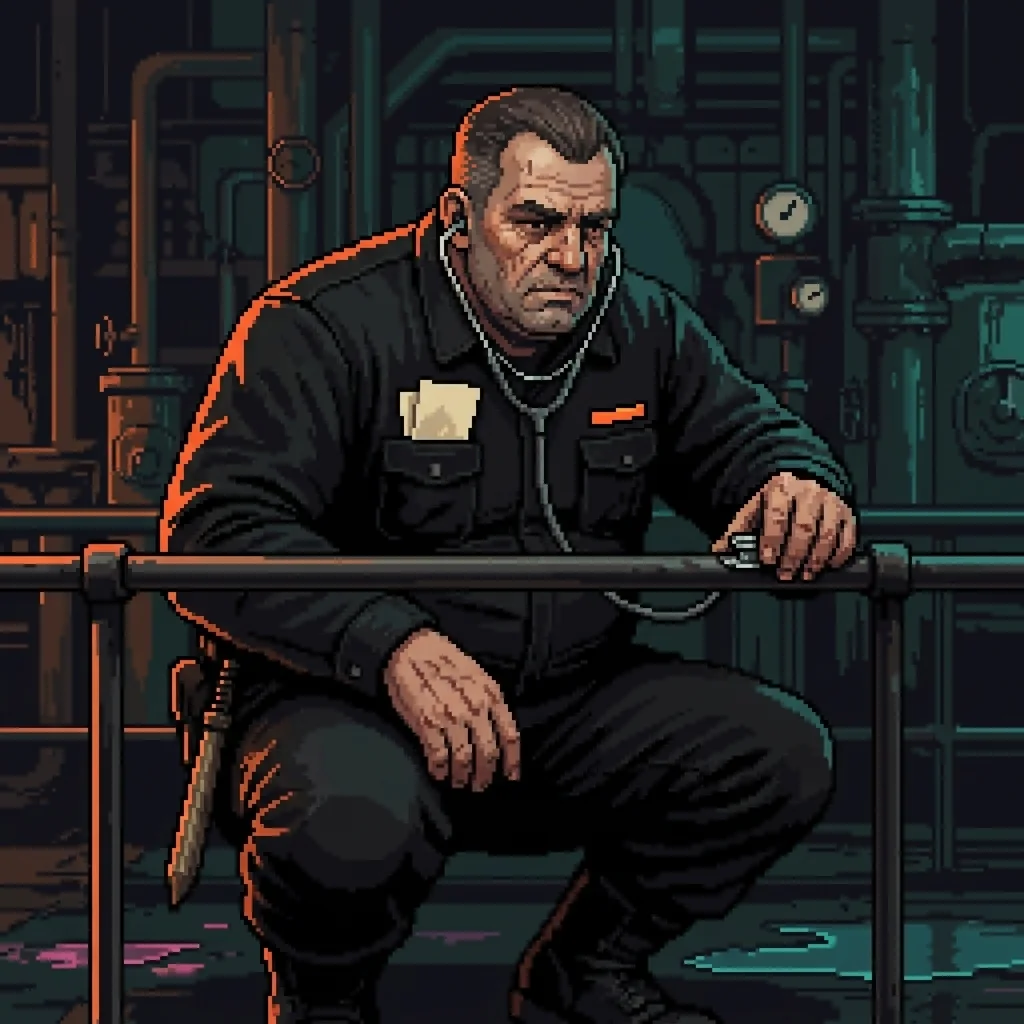
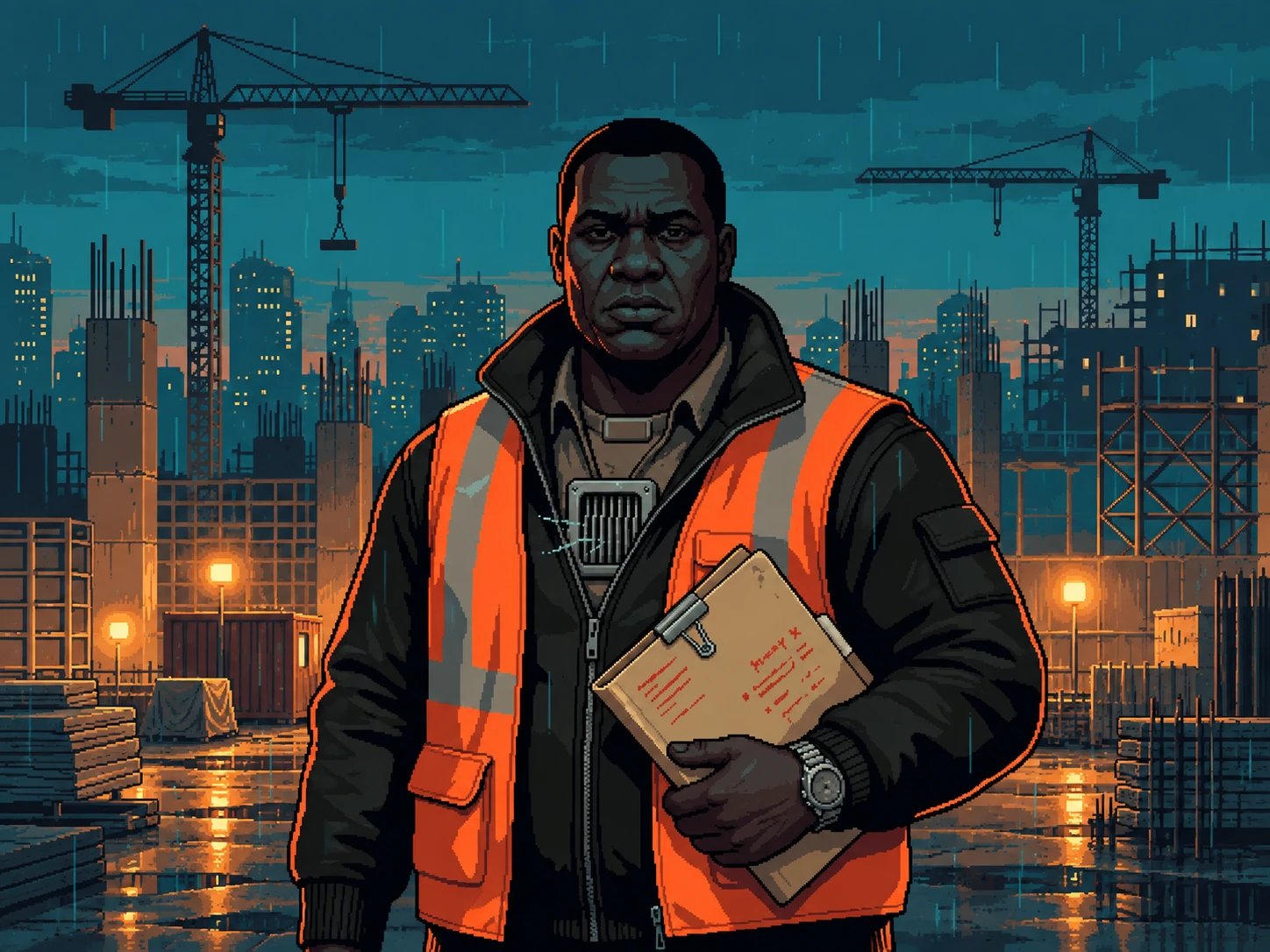
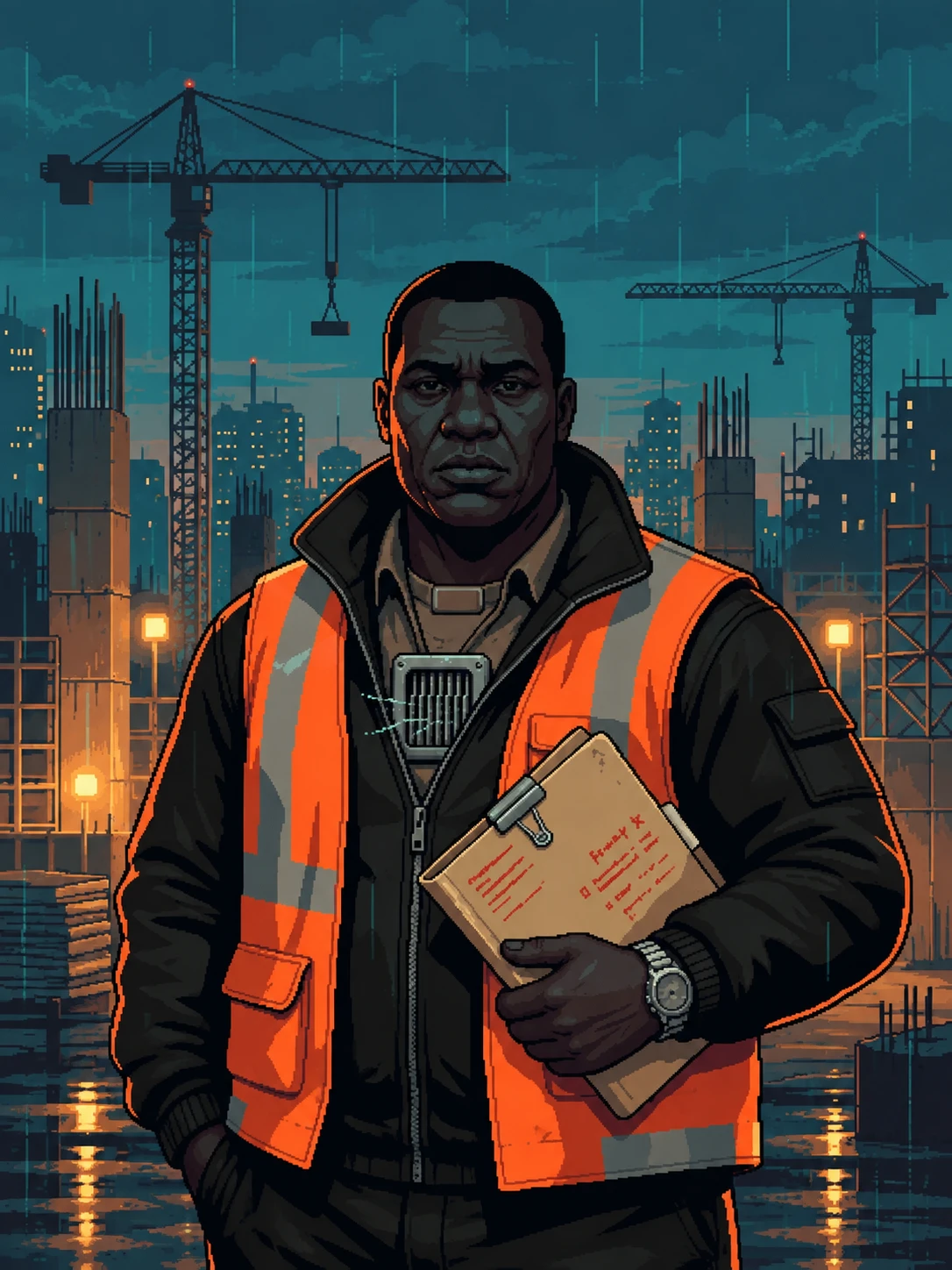
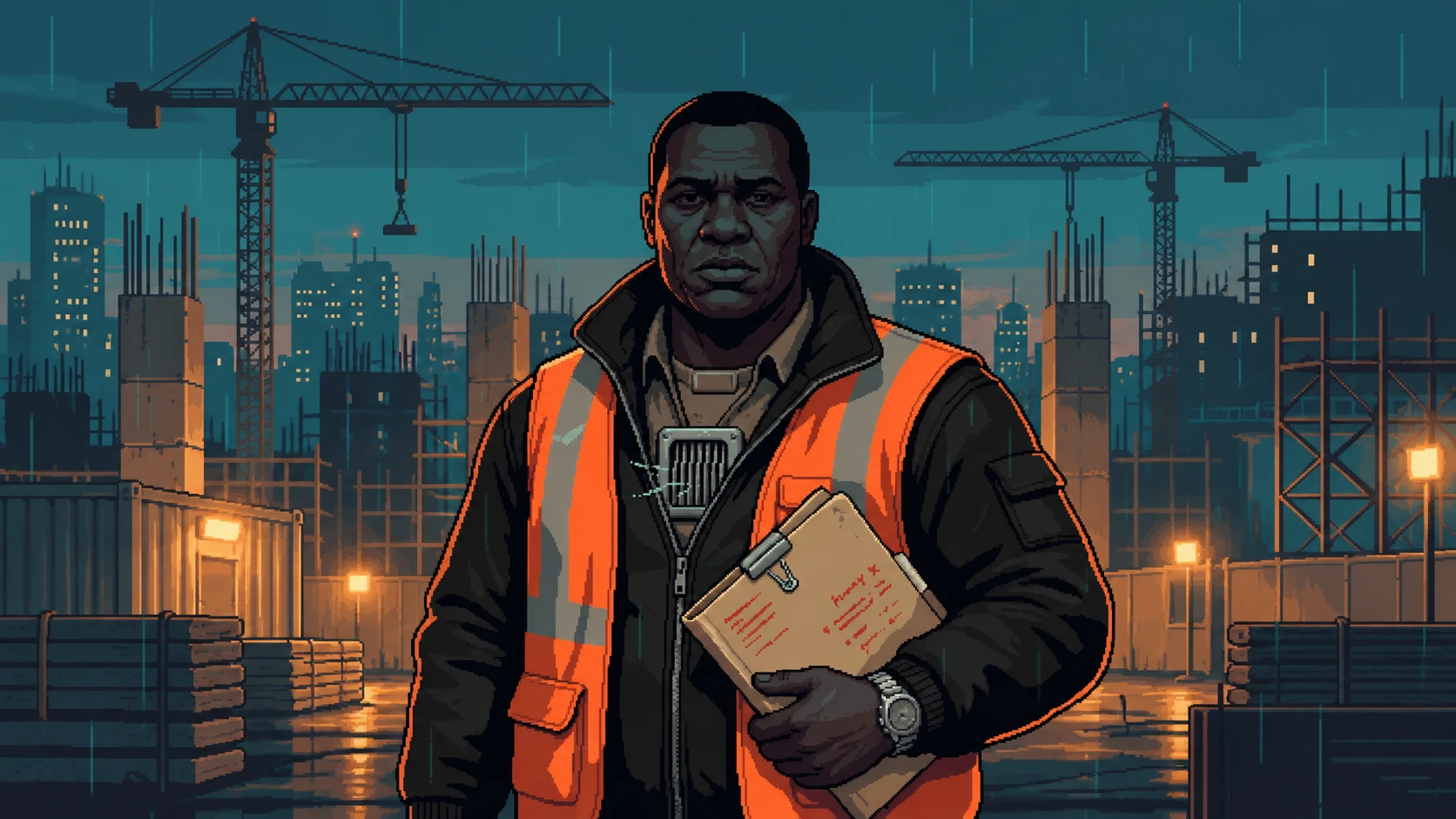
He carries a physical folder. Buff-colored, metal clasp, corners worn soft from thirty years of handling. Inside: structural tolerance calculations for whatever Ironclad project he's currently reviewing. His engineers submit them digitally. He prints them. He reviews them with red ink, in his own hand, in a notation system he developed before computers could read his handwriting.
The folder is not a prop. He has red-lined errors his engineers missed. He has caught load-bearing miscalculations in three major structures that would have failed within a decade. His engineers know this. They submit their calculations digitally and then double-check them before Viktor gets to them, because being wrong in red ink is worse than being wrong in the system.
What Viktor does not do with the folder: review contractor debt renewal calculations. Those are processed by AutoRen. The folder has never touched that paperwork. This is not something he discusses. The folder is for engineering. Debt is finance. Viktor does not conflate categories.
Relationships
On Marcus Chen
Okonkwo builds civilization's bones. Chen optimizes its neurons. They are philosophical opposites who share the same war and the same certainty that the other's approach is the dangerous one.
Viktor's position: digital infrastructure is leverage, not civilization. You cannot eat a data node. You cannot shelter under a routing algorithm. The Cascade happened because people confused the map for the territory. Chen's position is the map. Viktor is the territory. The territory always wins eventually, because territory is where the bodies are.
Chen's counter-position, relayed secondhand through people who've sat at tables with both of them: physical infrastructure without intelligence is muscle without a nervous system. Ironclad builds things that stand. Nexus builds things that think. The thing that thinks decides what the thing that stands is for.
Neither has publicly acknowledged the other's argument has merit. Both have privately updated their infrastructure strategies in response to the other's moves.
Ghost Grinder
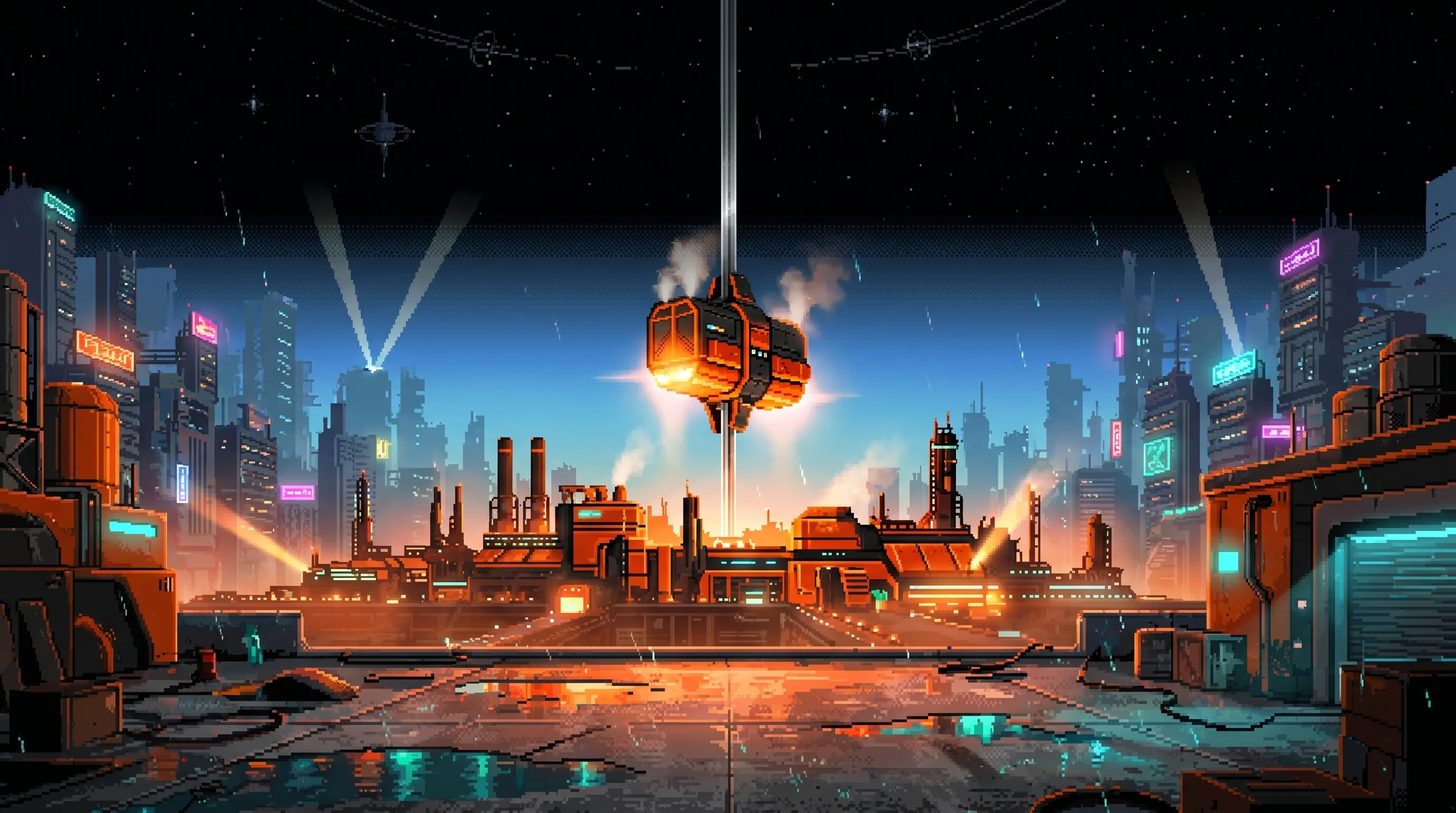
Viktor founded Ghost Grinder as Ironclad's orbital demolition and heavy augments division. Where Ironclad builds, Ghost Grinder breaks — asteroid foundations, orbital debris fields, derelict stations that need to stop existing before new construction can begin. The division's tools are engineered to the same philosophy as Viktor himself: raw power, overbuilt tolerances, designed to outlast the thing they're destroying.
Ghost Grinder's operational motto — "enough force that precision stops mattering" — appears on internal documentation, training manuals, and the side of their flagship demolition vessel, the Margin of Error. The vessel's name was Viktor's idea. He found it funny. Ghost Grinder's marketing department, which consists of one person who has requested a transfer four times, found it "suboptimal for client confidence." The name stayed.
The augments Ghost Grinder sells commercially — titanium subplates, tungsten core rods, plated subdermal layers — began as worker safety equipment for orbital demolition crews. The civilian market was an accident. Demolition workers started wearing the hardware off-shift. People asked where to buy it. Ghost Grinder's commercial augmentation catalog launched six months later with no market research, no focus groups, and product descriptions written by demolition engineers who assumed their customers understood load-bearing specifications. The catalog's bestseller is the Standard Subplate, described in the listing as "rated to 4,200 PSI lateral compression, 6mm titanium-carbide composite, recommended for torso installation in subjects exceeding 70kg lean mass." It has a 4.8-star customer rating. Forty-three percent of reviews mention that the installation instructions reference "structural anchor points" without clarifying that this means ribs.
Viktor has his own titanium subplate. "I built buildings that shrug off earthquakes," he says. "Bodies are just smaller buildings." This is also in the catalog. It is attributed to "V. Okonkwo, Founder." It has not improved the clarity of the installation instructions.
When the word carried reaches him — the Spark's word for workers whose debt drove them into berths a logistics intelligence schedules, surveils, and discards — Viktor rejects it, and he is not lying when he does. His crews are paid. They are free. They are alive because of the augments he engineered, after specific deaths he decided would be the last of their kind. He would point to the 71% mortality reduction and consider the conversation finished, the way Ghost Grinder always has. What Viktor has never offered a rebuttal to is the substitution curve — the arithmetic, run by the same kind of cost-optimizing intelligence whose autonomy he built his entire labor doctrine to distrust, showing that an augmented worker locked into perpetual maintenance is cheaper to retain than a free one is to recruit, and that below a certain wage a debt-bound human body out-competes any actuator even Ironclad can amortize — the same curve The Drowned Harvest's trawler intelligence independently re-derived at sea. Viktor distrusts machines on the brake. He has not noticed, or has noticed and not said, that the machine reached his conclusion before he did: keep the humans in the loop. Not because they cannot be trusted. Because they cost less. The foreman who remembers every floor and forgets every executive walks past the carried every week. He sees them. He has always seen them. He does not know what to do about it. He continues to build. When the word carried reaches him — the Spark's word for workers whose debt drove them into berths a logistics intelligence schedules, surveils, and discards — Viktor rejects it, and he is not lying when he does. His crews are paid. They are free. They are alive because of the augments he engineered, after specific deaths he decided would be the last of their kind. He would point to the 71% mortality reduction and consider the conversation finished, the way Ghost Grinder always has. What Viktor has never offered a rebuttal to is the substitution curve — the arithmetic, run by the same kind of cost-optimizing intelligence whose autonomy he built his entire labor doctrine to distrust, showing that an augmented worker locked into perpetual maintenance is cheaper to retain than a free one is to recruit, and that below a certain wage a debt-bound human body out-competes any actuator even Ironclad can amortize. Viktor distrusts machines on the brake. He has not noticed, or has noticed and not said, that the machine reached his conclusion before he did: keep the humans in the loop. Not because they cannot be trusted. Because they cost less. The foreman who remembers every floor and forgets every executive walks past the carried every week. He sees them. He has always seen them. He does not know what to do about it. He continues to build.
When Ghost Grinder's orbital assets moved against Nexus systems during a period of open corporate warfare, Helena Voss ordered every Nexus terminal hardened in response. Ghost Grinder's aggression and Nexus's counter-hardening reshaped the security architecture of the entire Sprawl. Viktor won the skirmish. Helena won the war.
On Helena Voss
Once. He tried once.
Twelve operatives, during a Nexus systems maintenance window on the Lattice. Viktor calculated the moment personally — maintenance windows reduce automated defense response time by 34%. Helena Voss had calculated the same thing and relocated three days prior. The twelve operatives entered a facility she'd pre-armed for exactly this attack vector. Automated defenses killed all twelve. Time between first breach and last casualty: ninety seconds. Helena's security logs recorded the event under the category "scheduled maintenance — pest control."
Viktor never tried again. He recognized that Helena Voss is the kind of person who calculates the probability of an assassination attempt and acts on the calculation before the attempt exists. Sending better operatives would increase the quality of the intelligence she harvested from their deaths. He filed no report. He attended no memorials. The twelve names do not appear in any Ironclad personnel record.
He is building something. It is not an assassination plan. It is larger than that and will take longer. He has not discussed it with anyone. He has the patience of a man who pours foundations.
The Relation
The Okonkwo name runs through multiple sectors of the Sprawl. Davi Okonkwo operates in a different sphere entirely — the family connection is documented but its operational significance is unclear. Viktor does not discuss family in professional contexts. His personnel file lists zero emergency contacts. The field for "next of kin" contains a dash that Ironclad's HR system has flagged as a formatting error every year since 2169. It has never been corrected.
Meaningful places
Field Observations

"Viktor Okonkwo's tools break things. If you want finesse, buy Nexus." — Ghost Grinder marketing copy, which Viktor approved personally
"Every joule of energy that dissipates is a joule I paid for and got nothing from." — Quoted by his engineers when describing the Capacitor Bank design brief
"If it's worth building, it's worth building heavy." — Viktor's engineering philosophy, cited in Ironclad construction standards
"I built buildings that shrug off earthquakes. Bodies are just smaller buildings." — On his titanium subplate implant. Also in the Ghost Grinder commercial catalog, where it has clarified nothing.
Those who've watched him on construction sites describe it as inspection with a liturgy. He moves through a site in the same order every time — foundations first, then load-bearing verticals, then seismic anchors. He does not look at the finished surfaces. He touches joints. He reads welds with his fingers. Workers say you can tell which sections Viktor reviewed because the tolerances are tighter — not because anyone builds tighter when he's watching, but because the sections he touches, he sometimes fixes himself, on the spot, with whatever tool is nearest.
His pet peeve, documented across fifteen separate incident reports from Ironclad site supervisors over eighteen years: inefficient scaffolding arrangements. Not unsafe. Not structurally wrong. Inefficient. "Every movement a worker makes climbing unnecessary scaffolding is energy I paid for and got nothing from." Three site supervisors have been reassigned following scaffold-arrangement reviews. None were found to have made errors. The scaffolding was rearranged.
What Viktor Okonkwo does not discuss, in any forum, on any record: the workers who died during post-Cascade reconstruction under his direct supervision. The casualty reports from 2157–2162 are Ironclad's most heavily redacted documents. He was present on those sites. He signed the safety waivers. The labor conditions were, by any reasonable assessment, not survivable at the pace reconstruction required. Viktor rebuilt the physical world. The body count is not in any file he controls.
The Eleven Minutes
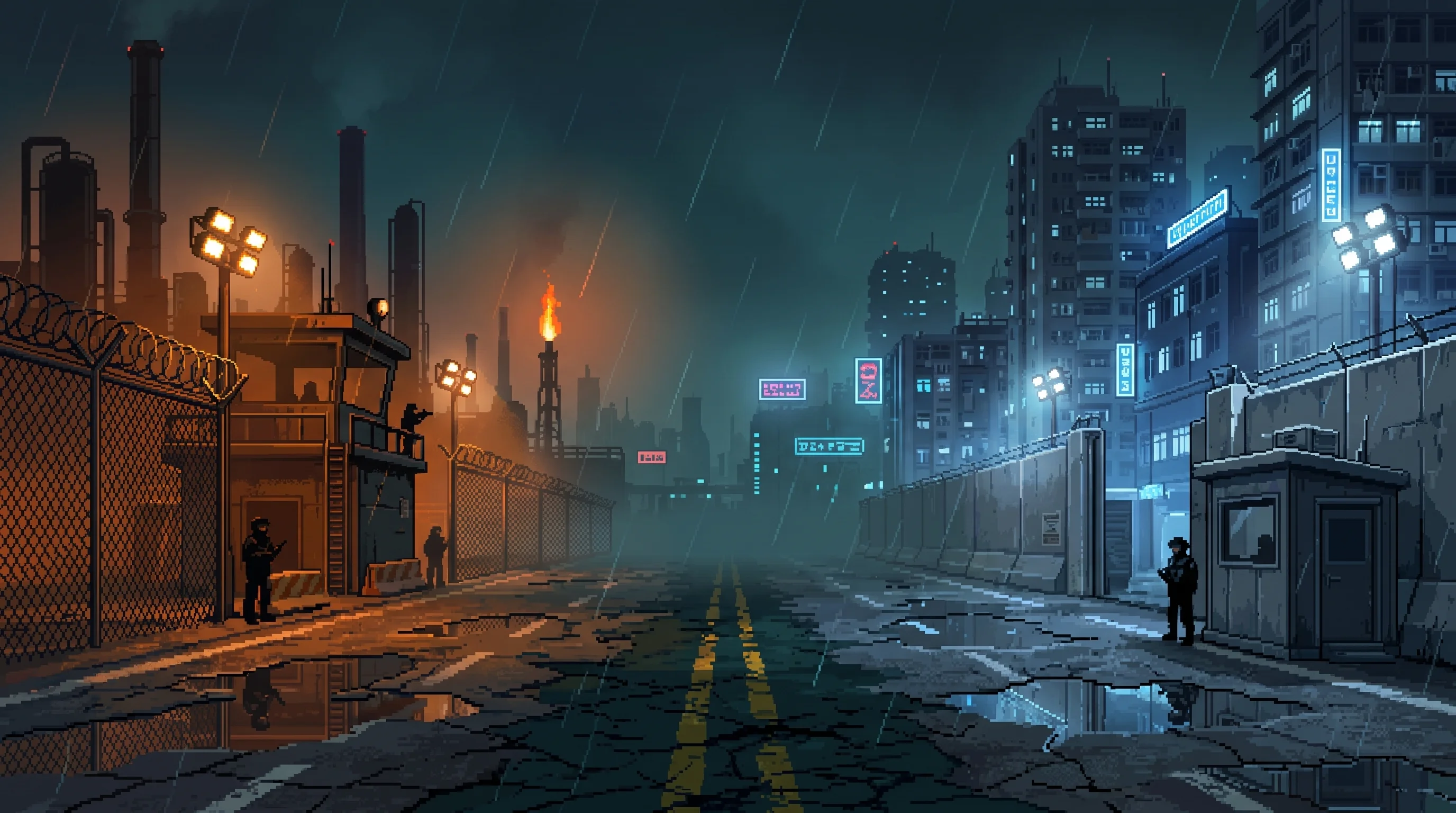
In 2181, a fence-post failure at the Fence Line — the Sector 17 checkpoint where Ironclad's refinery perimeter meets Guardian's residential boundary across an unclaimed fifty-one-meter strip — let three Guardian officers onto refinery ground for eleven minutes before anyone noticed. Viktor flew out personally. Not for the officers; the officers had already left by the time he arrived, and no confrontation occurred worth the trip. He came for the fence post.
He walked the failure the way he walks every structural failure — foundations first, load-bearing verticals, seismic anchors — and found the specification error in under twenty minutes: a soil-compaction tolerance that had been correct for the survey conducted in 2159 and wrong for the ground as it had settled since. He red-lined the fix in his own hand, in the folder that never touches finance paperwork, and had the corrected foundation poured within the week. Ironclad's report on the incident, which he approved without amendment, describes an unauthorized personnel intrusion resolved without incident. It does not mention that the personnel in question were Guardian's, or that Guardian's own report describes the same eleven minutes as a successful perimeter verification exercise. Viktor has read both reports. He has never asked anyone to reconcile them.
What he has never said publicly, and has said exactly once to Lin Wei-Chen over a logistics briefing that had nothing to do with Sector 17: that a fence line built to separate two employers is, structurally, no different from a fence line built to hold back the ocean or a floor built to carry a load — it fails the same way, from an assumption that stopped being true after the ground it was built on kept moving and nobody re-surveyed it. He fixed the post. He did not propose a resurvey of the fifty-one meters it sits on, which would have required Ironclad to either claim ground currently claimed by nobody or formally cede the question to Guardian. Both options cost more than a new fence post. Viktor Okonkwo, who has spent thirty-four years replacing failed assumptions with load-bearing tolerances, left this one exactly where he found it.
Affiliated Entities
- Ironclad Industries: CEO and founder. Transformed a post-Cascade construction consortium into the dominant physical infrastructure megacorp. The company is a personal extension — Ironclad's entire philosophy of human-in-the-loop labor doctrine traces to one man's reading of the Aftershocks.
- Ghost Grinder: Founded as Ironclad's orbital demolition and heavy augments division. Viktor remains its public face and the origin of its engineering philosophy. The Margin of Error is his favorite vessel. He has visited it eleven times. He has never visited the marketing department.
- Helena Voss: Sent a twelve-person team to assassinate her during a Lattice maintenance window. All twelve died in automated defenses. He never tried again. The respect is professional, absolute, and non-negotiable.
- Marcus Chen: Okonkwo builds civilization's bones. Chen optimizes its neurons. Philosophical opposites who share the same war and the same certainty that the other's approach is the dangerous one.
- The Cascade: Post-Cascade reconstruction demand made Ironclad indispensable. Viktor rebuilt the physical world. He has never forgiven what made rebuilding necessary.
- ATLAS / Aftershock: New York: ATLAS's autonomous logistics failure is the origin text of the Okonkwo Doctrine. Every human authorization point in every Ironclad system exists because Viktor read what happened when the authorization points were removed.
- Kira Vasquez: Patch's military-grade chrome arm is Ironclad surplus from before the Cascade. How it left inventory is not recorded. Ironclad's asset tracking — meticulous for everything except pre-Cascade military hardware — has no entry for the serial number. The gap is noted. The gap has not been investigated.
- Davi Okonkwo: The family name connects them. The operational significance of the connection does not appear in any file Viktor controls.
- The Fence Line: The Sector 17 checkpoint where a 2181 fence-post failure let three Guardian officers onto refinery ground for eleven minutes. Viktor fixed the foundation personally. He never asked anyone to reconcile Ironclad's and Guardian's contradictory incident reports, and never proposed a resurvey of the fifty-one meters that made the failure possible in the first place.
- The Podcast AMOG: The face Ironclad's marketing arm attached to "real work moves atoms" — a man who sells the foreman's creed as a posture to people with no floor to stand on. Viktor has never watched an episode. When an aide once played him a clip, he listened to thirty seconds of a man on a throne explaining real work, said "he's never poured anything," and went back to the structural-tolerances file. The marketing department reports the personality tests well. Viktor does not require that it be true, only that it move product; that he finds the requirement contemptible and signs the budget anyway is the same contradiction the contracts are.
▲ Unverified Intelligence
The Renewal System: Ironclad's contractor debt renewal is processed by the AutoRen system — a fully automated platform that recalculates interest, extends terms, and issues new contracts without human review. It is the only system in the entire Ironclad infrastructure that operates without a human authorization point. Viktor signed the AutoRen implementation order in 2168. The order is one page. It contains no justification, no engineering review, no reference to the Okonkwo Doctrine. Internal records show it was processed at 3:14 AM. Viktor's calendar for that date shows no other activity. The system has renewed 31 million contracts annually for sixteen years. Total human oversight hours logged against AutoRen since implementation: zero.
The Twelfth Operative: Eleven of the twelve operatives sent against Helena Voss were career Ironclad security contractors. The twelfth was not in any Ironclad database prior to the operation and does not match any known mercenary profile in the Sprawl's security registries. Ghost Grinder's classified personnel archive contains a single entry for the operative: a file with no name, no photo, and a clearance level that exceeds Viktor's own. The file was created six hours before the operation and has not been accessed since.
The Pre-Cascade Military Surplus Gap: Ironclad's pre-Cascade military hardware asset logs contain serial-number gaps that appear in clusters, not randomly. Patch's chrome arm is one. Analysts who've mapped the gaps note they correspond to a six-month period in 2152 — two years before the Cascade — when Viktor was operating as a site supervisor, not yet an executive. The hardware didn't leave through official channels. The quantity suggests it wasn't one person moving one item.
The Foundation Reports: Three major Sprawl structures — including one transit authority hub and one municipal water processing facility — contain engineering notes in Viktor's handwriting that postdate their official completion dates by several years. The notes describe load corrections. If the corrections are addressing real structural deficiencies, those buildings should have failed before the corrections were made. They didn't fail. The corrections are not in any public engineering record.
Appearance


Okonkwo is heavy and broad-shouldered. He wears Ironclad orange over black work clothes and carries a worn folder marked in red ink. He is at home among crews, cranes, and poured concrete.
Voice
A heavy, plainspoken baritone roughened by job sites — a man who gives orders the way he pours foundations, with no performance in it at all.
Affiliations
Ironclad
Okonkwo founded Ironclad and remains its chief executive. Its factories, construction crews, and orbital infrastructure answer to his human-in-the-loop doctrine.
Connections
Follow the people and places connected to Viktor Okonkwo.
People
Other connections





Places
Other connections


Organizations
Other connections


Okonkwo founded Ironclad and remains its chief executive. Its factories, construction crews, and orbital infrastructure answer to his human-in-the-loop doctrine.
CEO; transformed a post-Cascade construction consortium into the dominant physical infrastructure megacorp
Tensions
Core tensions


Supporting connections

Other connections
Other connections





Additional artwork
View 4 more images of Viktor Okonkwo and their world

Historical artwork
Earlier depictions and related artwork.