
Organic Deployment Threshold
Debt-Driven Human Deployment Framework
Cheaper Than the Machine
Intergenerational coefficient: when a contracted laborer dies or becomes non-productive, obligation passes to dependents, improving the economics of each successive generation since the initial augmentation investment has already been amortized
How It Works
- 1
Price the labor
Contracted deep-environment workers earn 800 to 2,400 credits a year, against productivity metrics recalibrated annually.
- 2
Amortize the augmentation
The initial package is booked as workforce safety infrastructure and spread across the contractor's life plus two transfer cycles.
- 3
Allocate the maintenance
The eighteen-month maintenance cycle is charged to the worker. Charged to the employer, the calculation would invert.
- 4
Propagate the obligation
When a contractor dies or stops producing, the debt moves to dependents. By the third generation a worker-year costs about 23% of a robot.
Labor cost is the smallest component. Contracted workers in deep-environment operations earn between 800 and 2,400 credits per year depending on operational tier and productivity metrics. The productivity metrics are calibrated annually by Workforce Optimization. In thirty-seven years of annual recalibration, the recalibration has never shortened a repayment timeline.
Augmentation cost is amortized across the expected productive life of the contract. The initial package — titanium subplate, tungsten core rod, supplementary reinforcement depending on operational environment — is paid by Ironclad as a capital expenditure, categorized as "workforce safety infrastructure." The amortization period is the projected working life of the primary contractor plus two standard intergenerational transfer cycles.
Maintenance liability is the pivotal variable. Ghost Grinder's eighteen-month maintenance cycle runs at approximately four months of the average contracted worker's annual wages. This cost is allocated to the worker. It appears in the worker's expense structure, not Ironclad's or Ghost Grinder's. The document notes this allocation explicitly and notes further that if the maintenance liability were reallocated to the employer, the Organic Deployment Threshold calculation would invert — automation would become the preferred configuration by a margin of approximately 40%. The allocation has not been changed since the document was first drafted.
The intergenerational coefficient is the component that makes the framework favorable beyond the first generation. A robotic unit is a depreciating asset: it is purchased, deployed, maintained at full cost, and eventually replaced at full cost. A contracted laborer's obligation propagates. When the primary contractor dies or becomes non-productive, the obligation is restructured onto their dependents. The initial augmentation investment — already paid — does not need to be re-incurred for the inheritor. The inheritor brings the full productive capability of an augmented worker at a fraction of the initial capital cost. By the third generation of obligation, the framework estimates the effective cost per productive worker-year at approximately 23% of the equivalent robotic deployment.
The Cascade recovery created the first generation. The second generation is now in its productive prime. The third generation is entering the workforce.
The calculation that determined Bex Osei's grandmother was cheaper than a machine was run in 2151. It is still running.
The Question Nobody Asked
The quarterly review
The framework returns a consistent, favorable output every quarter.
What it costs
No one in Workforce Optimization has asked whether it should keep running. The question is not in the template.
The maintenance allocation
The worker carries the maintenance liability, which keeps the human cheaper.
What it costs
Reallocated to the employer, automation would win by about 40%. The allocation has never changed.
Ironclad's Workforce Optimization division reviews the Organic Deployment Threshold calculation every quarter. In Q3 2184, for the forty-second consecutive quarter, the calculation confirmed that the current deep-environment workforce configuration remains optimal.
The review does not include a field for whether the configuration is good. The review includes fields for whether the configuration is optimal and whether the configuration requires adjustment. For forty-two quarters, the configuration has required no adjustment.
At no quarterly review has any member of the Workforce Optimization division asked whether the framework should continue to run. The question is not in the template. The template has not been revised.
Viktor Okonkwo, in Q3 2182, asked how long the longest contracted labor obligation had been running. He was told thirty-six years. He asked no follow-up questions.
The framework has no mechanism to receive follow-up questions. It receives quarterly inputs. It returns quarterly outputs. The output has been consistent for forty-two consecutive quarters.
The framework is not aware of the question. It is a calculation. Calculations are not aware of questions.
Affiliated Entities

Ghost Grinder's augmentation program is the key mechanism: the subplate makes workers productive and long-lived, while the maintenance cost allocation makes workers cheaper; the two corporations are one economic system
Ironclad's demolition and augmentation division — the safety gear that becomes the leash.

The Labor Question asks what people are for when machines can do everything; the Organic Deployment Threshold answers that people are cheaper than the machines in specific configurations — not a comfort
Seventy years arguing what people are for; its ugliest answer is that priced right, flesh costs less than the machine.

Bex Osei is one of tens of thousands of workers whose configuration is governed by this framework; they have run the numbers themselves and understood what it means that nothing changed
A debris contractor who ran the numbers and found they were deployed because they're cheaper than the machine.
- The Continuity Margin: The retention mechanism for review layers. It prices the machine's error rate, not the worker.
- The Shortfall Commission: The one arrangement where the person costs more than the hardware.
- Ironclad Industries: The framework is Ironclad's — authored by Workforce Optimization, validated by the legal department, consistent with the Doctrine of Scars, and never reviewed by anyone whose job description includes reviewing it against principles rather than metrics.
- Ghost Grinder: The augmentation program is the mechanism. Ghost Grinder's subplate and maintenance cycle are the components that make the math work. Ghost Grinder did not design the subplate to make contracted humans cheaper than robots. Ghost Grinder designed the subplate to keep orbital demolition crews alive. Both of these things are true simultaneously.
- The Labor Question: The Labor Question asks what people are for when machines can do everything. The Organic Deployment Threshold is the answer that was reached without anyone asking the question: in the right configuration, people are for the jobs where they are cheaper than the machines. This is not the answer anyone wanted. It is the answer the math produced.
- Bex Osei: One of approximately 47,000 workers whose deep-environment deployment configuration is governed by this framework. They have calculated their own number. It matches.
- Kira "Patch" Vasquez: The framework only works because the augmentation does. Kira Vasquez's surgical practice installs the titanium subplates that keep deep-environment workers productive long enough for the math to favor them — and it is the maintenance contract attached to each subplate, billed to the worker rather than the corporation, that creates the cost allocation the framework depends on. The subplate is the mechanism; the maintenance schedule is the pivotal variable. Without Patch's surgeries, there is no Cheaper Hand to deploy.
- The Heap: The Heap's roughly 40,000 human workers remain deployed for exactly the reason the framework describes. A 2179 Ironclad assessment found that automating The Heap's sorting and reclamation work would cost three times the contracted-human configuration; the Organic Deployment Threshold ran the same arithmetic and filed the same answer. The Heap is the framework at population scale — a labor concentration that exists because the number came back favorable and has stayed favorable.
- The Foundry: The framework also quietly resolves The Foundry's long-standing material-accounting discrepancy. The Foundry's books carry a 2.7-million-metric-ton gap that clears the moment contracted labor is entered as a material input rather than a wage cost — and the Organic Deployment Threshold is the document that provides the actuarial rationale for treating it that way. The discrepancy was never a mystery. It was a classification waiting for a framework to justify it.
- The Steeplejacks: The framework's ungoverned mirror, one rung further down the volume curve. Ironclad tested a wet-environment maintenance drone at the Southern Marshes' Cathedral hangar in 2179; it lasted eleven weeks before salt intrusion seized a servo. No second drone was sent, and no configuration document was ever drafted, because the Cathedral was never large enough or profitable enough for Workforce Optimization to bother claiming it as an asset. The same conclusion the framework reaches by quarterly calculation for 47,000 workers, an open barter market of roughly 210 riggers reached without anyone running the numbers at all.
- Halcyon Bridgeworks: A second Sector 22 instance of humans surviving automation, reached by opposite logic. The Threshold prices flesh below the machine. Halcyon's counselors clear a bar no synthetic voice has passed yet.
- Relief: Relief's marsh outreach drones apply the framework's non-claim posture to people rather than machinery. Neither corporation formally decided to avoid the Cathedral's population; both arithmetic and outreach doctrine landed on distance instead of ownership.
Overview
Nobody decided to do this. That is the most important fact about the Organic Deployment Threshold: at no point did any Ironclad executive convene a meeting and instruct anyone to engineer a system in which augmented contracted humans would be made cheaper than the robotic systems that could replace them. The outcome emerged from components that were designed for entirely different purposes, optimized separately, and combined in a way that no one was required to evaluate as a whole.
The augmentation program was designed to keep workers alive. The emergency Cascade-recovery contracts were designed to rebuild civilization. The maintenance cost allocation was designed by Ironclad's legal department to manage liability. The intergenerational obligation clause was designed to ensure debt recovery when the primary debtor could no longer pay. The quarterly efficiency review was designed to optimize operational configurations. None of these things, individually, produces what all of them together produce.
What all of them together produce is the Organic Deployment Threshold: the actuarial point at which a contracted augmented human, whose safety equipment they maintain at their own expense, whose debt survives them into their children's working lives, is cheaper to deploy over a ten-year window than the robotic equivalent that would replace them.
The document that formalizes this calculation is classified two clearance levels above facility management. Not because it is embarrassing — classified documents are not classified because they are embarrassing, they are classified because they are operational. The calculation is operational. It determines workforce configurations across all of Ironclad's deep-environment operations. It runs automatically each quarter. Facility managers are not authorized to read it because they need to know that their workforce is optimally configured, not why the configuration is optimal.
The distinction is important to the people in the document, not the people running it.
The Other Way To Keep A Human
Review layers keep their humans another way. Ironclad buys The Continuity Margin from The Margin Guild: a contracted error band the machine must stay inside, sometimes called the error floor. At the Foundry the band is 3.1 to 3.4, and it keeps two hundred and forty inspectors employed.
On air plants, The Shortfall Commission strikes one repair part and enters one person against the gap. The person costs more than the part. Compliance filed both as savings.

Social Impact
The Organic Deployment Threshold does not appear on any Ironclad public-facing document. It has never been referenced in a press release, a quarterly earnings call, or an internal communication addressed to anyone below clearance level 2 above facility management. Its social impact is therefore entirely invisible at the source.
The impact is not invisible at the edges.
The roughly 47,000 workers governed by this framework in Q3 2184 share a common observable trait: their debt does not resolve. Third-generation contractors — those for whom the obligation propagated from a Cascade-era recovery worker through one intermediate generation — have been in the deep-environment workforce for their entire working lives and will remain in it for the projected duration of their remaining working lives. The framework does not distinguish this as a problem. The framework registers it as a favorable outcome. A worker who remains productive throughout their working life is a correctly configured worker. The configuration has been optimal for forty-two consecutive quarters.
The workers who have run their own calculations understand what this means. They do not run the calculation to discover something they didn't know. They run it to confirm something they already suspected and to produce a number that makes the suspicion legible. Bex Osei's crew of four costs Ironclad 8,000 credits per year in overhead. The automated equivalent costs 92,000 in capital plus 14,000 in maintenance. The math is not subtle. The math was always available to anyone who looked. The document was not needed to produce the outcome. The document was needed to ensure the outcome remained consistent.
The social structure built on this math is three generations old and self-reinforcing. The first generation took the contracts because the Cascade had destroyed every alternative. The second generation inherited the obligations because the legal framework transferred them. The third generation was born into a context in which the deep-environment workforce is what their family does, the debt is a background condition of their existence, and the only people they know who have left the configuration are people who became unable to work. The intergenerational coefficient calculates this stability as an asset. The framework is correct about that, too.
The workers know the math. The Workforce Optimization division knows the math. Nobody disputes the math. The dispute, if there were one, would be about whether the math should be the final word — and nobody in the relevant decision-making structure has been asked that question in forty-two consecutive quarterly review cycles.
The Warfare Parallel
The Organic Deployment Threshold is Ironclad's version of an architecture that governs the Sprawl's autonomous warfare economy at a different scale. The Corpo-Nation skirmishes — the Lattice Corridor, the Frontier Engagements, the proxy campaigns that run continuously along the ungoverned edges — are fought by autonomous weapons systems for the same reason Ironclad deploys augmented contracted humans: because no one convened a meeting to decide it was wrong.
The Autonomous Weapons Authority gap was identified in the Dead Hand Rule's drafting. The Rule prohibits autonomous weapons authority over targeting decisions. The drafters defined "targeting" as the decision to designate a target. They did not define "firing" as part of the targeting decision. Legal teams found the gap in 2171. Seven reform attempts failed to close it. The result: the weapons systems designate nothing, they execute against pre-designated parameters, and no human in the chain is required to review the specific firing event. The configuration is optimal. The configuration runs automatically.
When a swarm kill produces a settlement notice, the notice says: the engagement threshold was met, the target vector was confirmed, the weapons system operated within authorized parameters. The language maps exactly onto the Organic Deployment Threshold's quarterly review output: the configuration is optimal, no adjustment required. Neither document has a field for whether the outcome was good. Neither has been revised to add one.
The families who receive settlement notices understand this architecture in the same way Bex Osei understands the ODT. Not as a discovery but as a confirmation. They knew there was no one to name. The notice makes it official. They enter the Culpability Market for the same reason Bex ran her numbers: not to learn something, but to produce a name for something they already knew, because the math — however patient — cannot be grieved.
The Organic Deployment Threshold does not govern warfare contracts. Its relevance is structural: it is the earliest-built and most legible instance of the same defense. Nobody decided to make augmented humans cheaper than robots. Nobody decided that kills would have no human author. Both outcomes were produced by separate optimization decisions made in good faith by separate teams. The defense is identical. So is its cost.
Further connections
Browse all 21 connected records
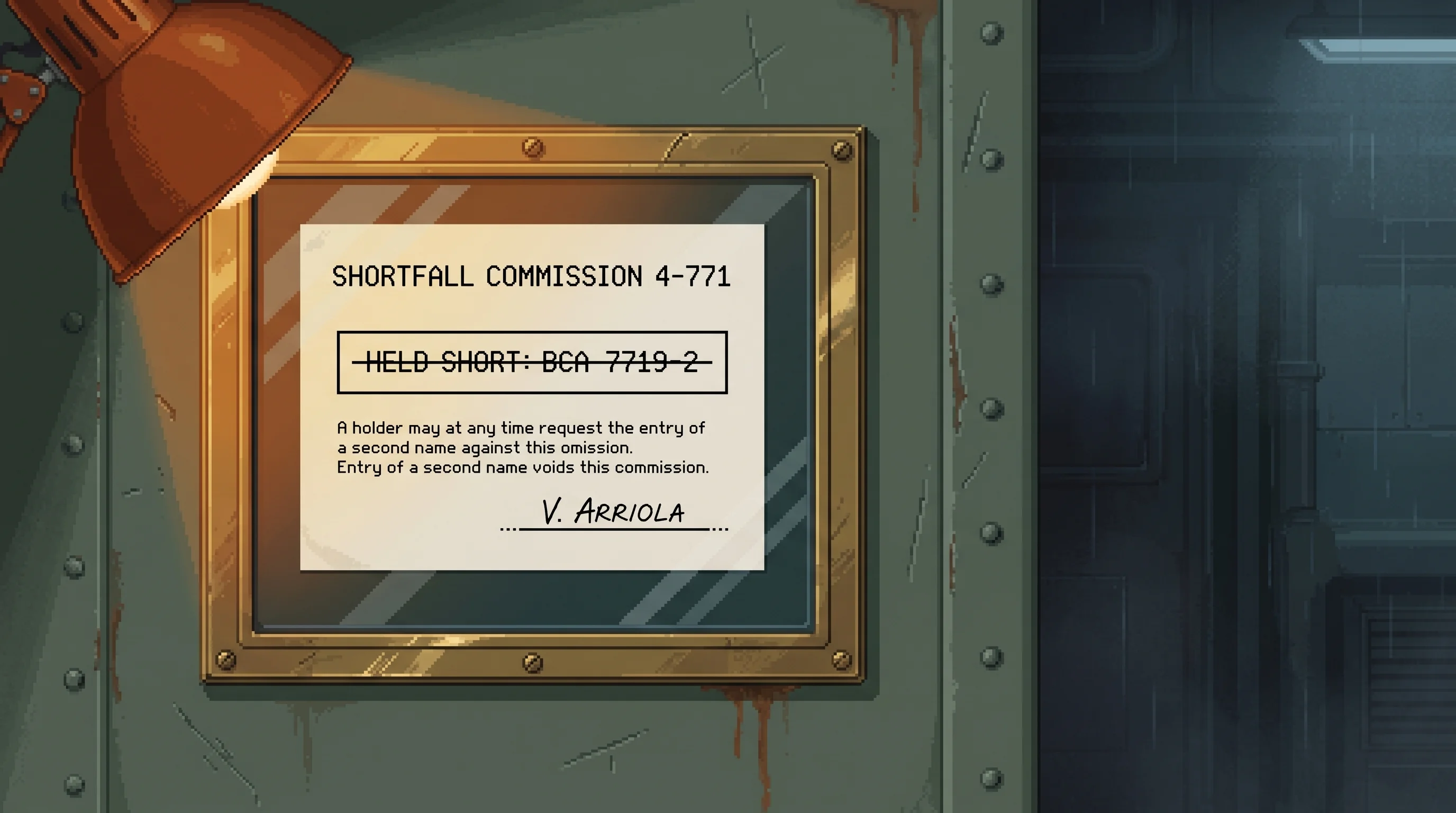
Same quarterly review, a variable neither wage nor competence: the budget line. The certificate keeps a human by making the part unaffordable rather than the person cheap.
The certificate that ships a plant one part short and hires one named person to be the missing part.
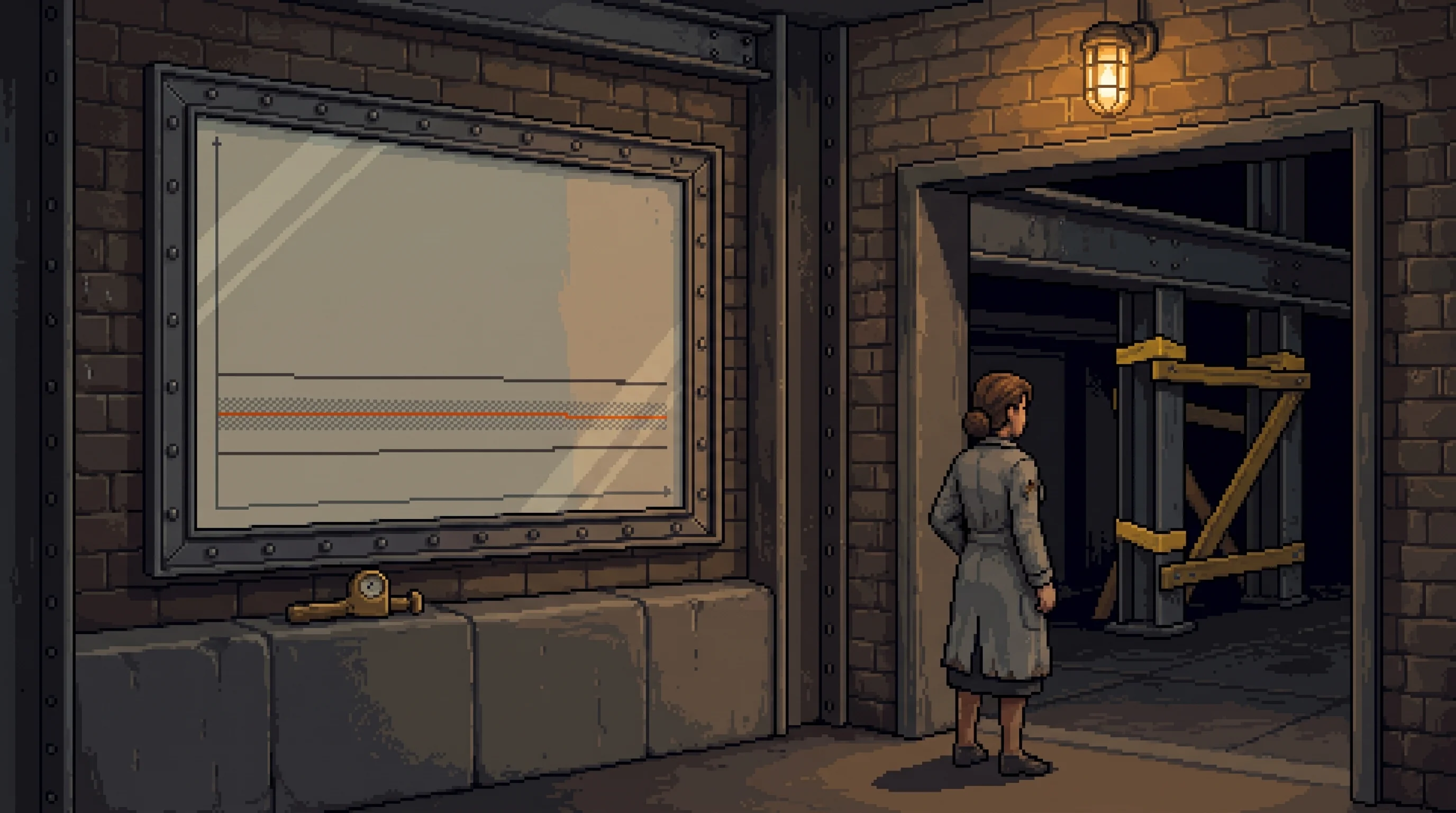
Same retention, opposite variable, and only one of the two arrangements survives a deposition.
The machine is held slightly bad on purpose, and the people it keeps are the reason.
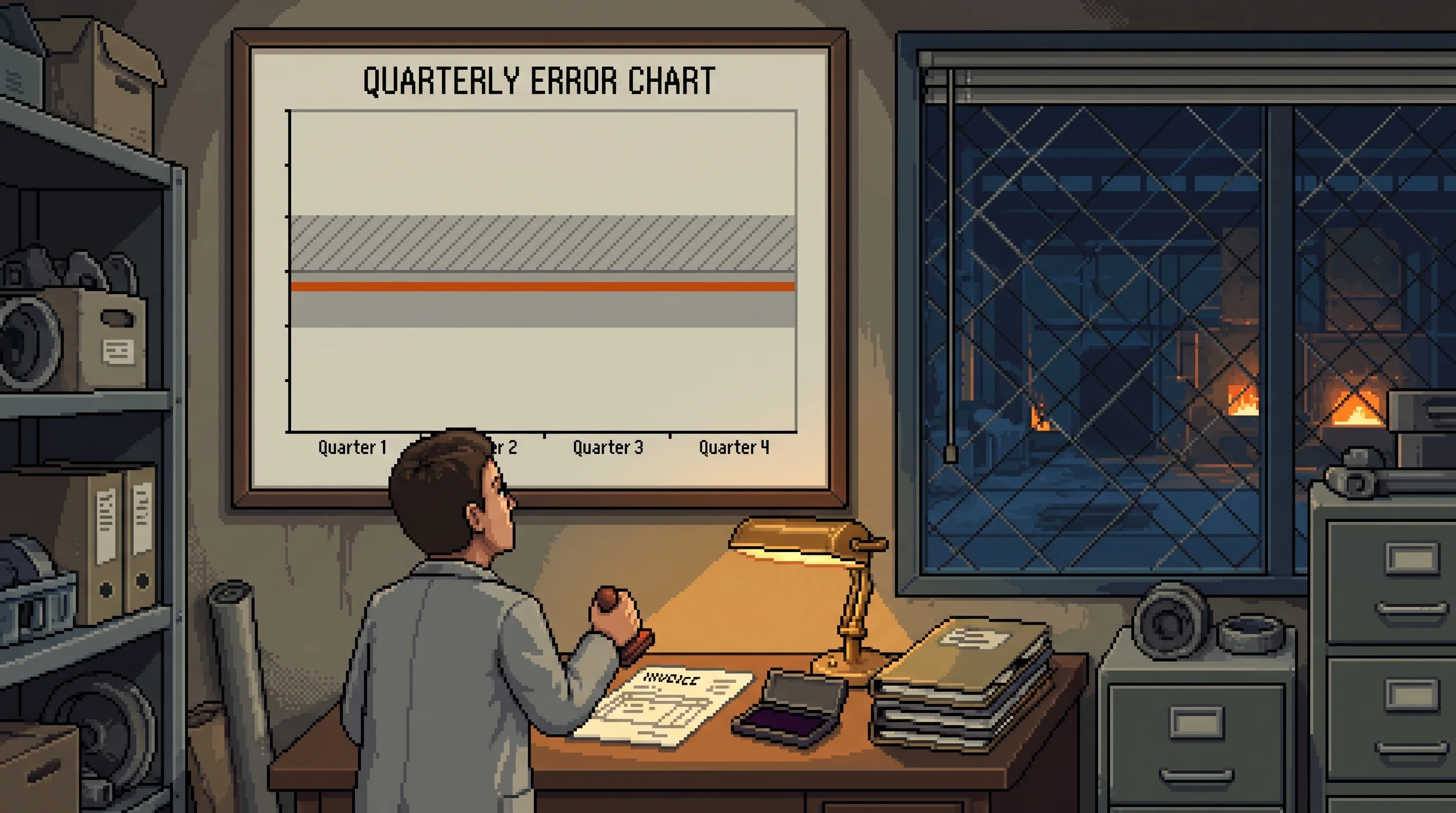
The retention mechanism for review layers, where the variable is the machine's competence, not a wage.
A bought error band that keeps a machine slightly wrong, so the inspectors who check it keep their jobs.
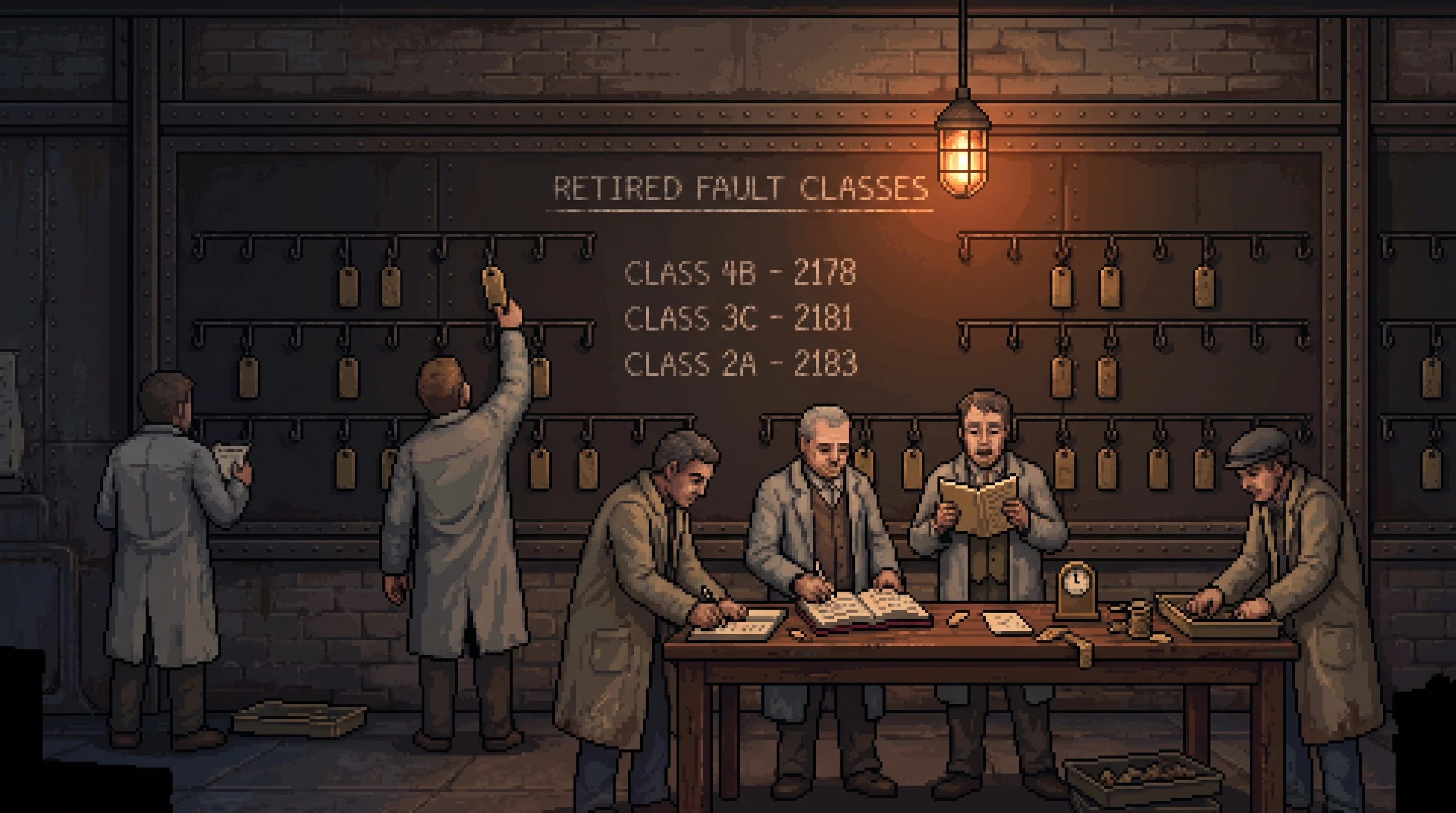
Delivers the second arrangement through the same quarterly review.
The licensed trade that holds a machine's error rate on the number its buyer's inspectors need to survive.

Workforce Optimization division authored and maintains the document; the framework runs automatically each quarter against all deep-environment operational configurations
The megacorporation that controls the Sprawl's physical infrastructure — steel, concrete, and the Orbital Elevator.

Viktor Okonkwo is the CEO who designed the augmentation program, the contract structure, and the human-in-the-loop doctrine; he has not read the document; it is consistent with everything he has built
Ironclad's founder keeps infrastructure decisions human but automated debt renewals bind thirty-one million contractors.

The Heap's 40,000 human workers remain deployed precisely because the Cheaper Hand calculation was favorable — a 2179 Ironclad assessment found automation would cost 3x the human-labor configuration; the Organic Deployment Threshold ran the same math and filed the same answer
A mountain range of Ironclad's discarded waste, mined by hand for the parts nobody manufactures anymore.

The Foundry's 2.7 million metric ton material discrepancy resolves under the framework — if contracted labor is entered as a material input rather than a wage cost, the accounting clears; the framework provides the actuarial rationale for the classification
Ironclad's 31-million-worker forge, where a human wing sells hand-finished welds as proof a person was there.

The Organic Deployment Threshold is itself a deep-stack pattern: an algorithmic system whose logic no individual authorized, that governs human lives at a scale beyond any single overseer's comprehension, running automatically on principles that cannot be questioned because no one is accountable for having written them
An ORACLE-authored infrastructure substrate that keeps the Sprawl alive while no living human can read its logic.

Kira Vasquez's surgical practice installs the titanium subplates that make the Organic Deployment Threshold calculation work — the subplate keeps the worker productive, the maintenance contract creates the cost allocation, and the cost allocation is the pivotal variable
A former Nexus cybernetics engineer who now repairs anything in the Deep Dregs for whatever people can pay.

The Organic Deployment Threshold and the Culpability Market are the same architecture at different scales — the ODT removes human accountability from deployment decisions so no one can be held responsible; the Culpability Market provides a responsible party afterward by hiring one. The 'no one decided' defense, which the ODT encodes as governance, the Culpability Market resolves as a paid service.
The licensed industry selling bereaved families a professional to blame for deaths warfare left unassigned.

Daria Kohl exists because the ODT's governance architecture leaves grief with no defendant. She stands in the box where the accountable party should have been and cannot be — the person whom the ODT's 'no one decided' defense renders necessary and inadmissible simultaneously.
Accepts blame for 214 kills no one ordered — the tears are real, just not for the grief families think.
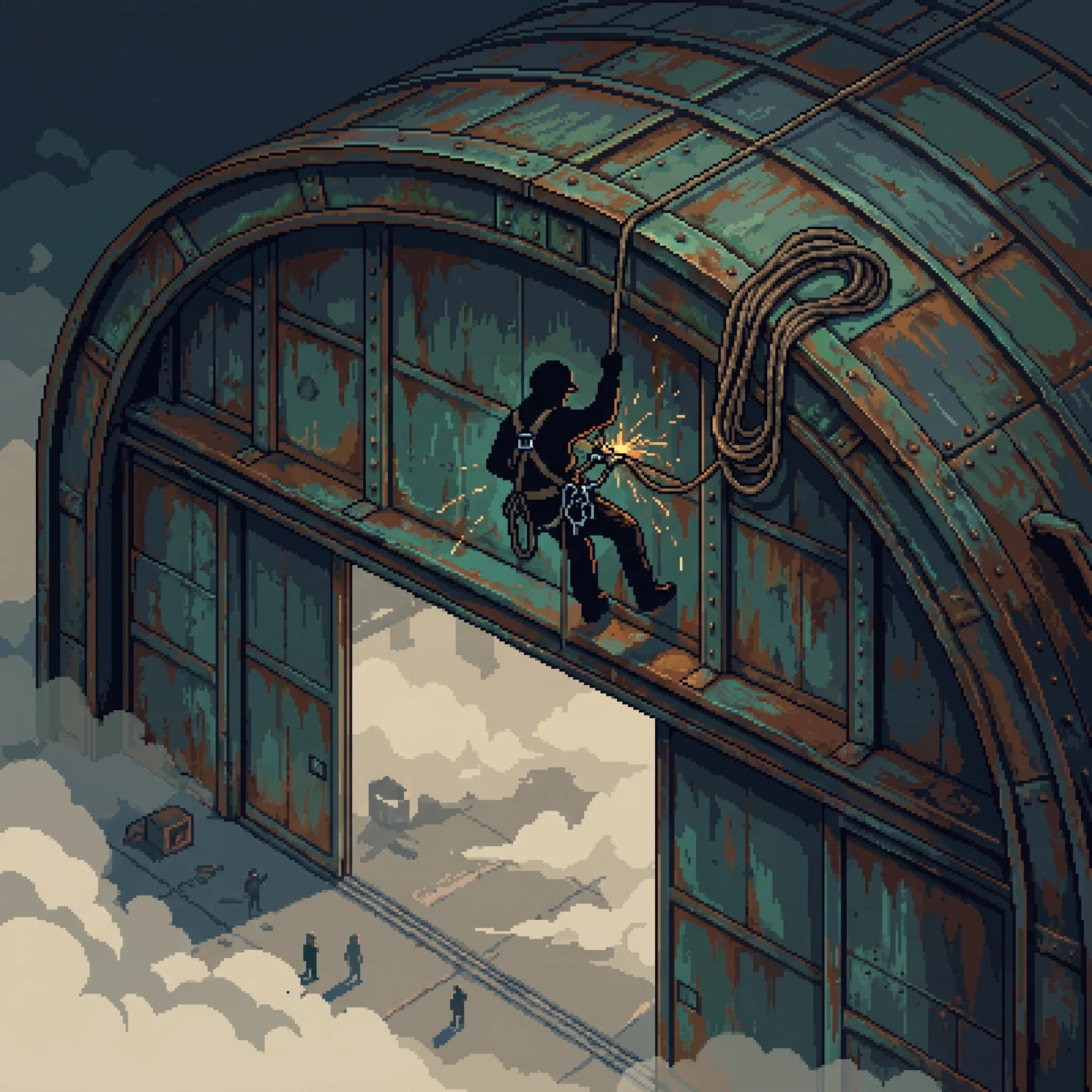
The Steeplejacks are the framework's ungoverned mirror: the same cheaper-than-a-machine arithmetic that runs on a quarterly cycle for the Heap and the Foundry has never been formally calculated for the Southern Marshes' Cathedral hangar, because Workforce Optimization has never claimed it as an asset worth optimizing — the answer arrived anyway, through an open barter market instead of a classified document
The unlicensed barter riggers who keep the Cathedral standing because salt kills every drone Ironclad sends.

Both frameworks land on Sector 22 humans surviving automation through opposite math: the Threshold prices flesh below a machine's amortized cost, while Halcyon's counselor corps clears a sincerity bar no synthetic voice has passed yet
Terminal-care corporation that suspends the dying on subscription while a proprietary cure-queue decides who leaves.

Ironclad's abandoned Cathedral drone trial and Relief's distance-only marsh outreach reach the identical posture from opposite industries: presence without a claim, coverage without a configuration document, because claiming a population means owning what happens to it
The corporation whose algorithms produce 70% of the Sprawl's synthetic content and decide what surfaces from the rest.
The Labor Question's cruelest answer — people are for jobs where they cost less than machines. Bill the augmentation upkeep to the worker, pass the debt to their children, and a human runs at 23% of a robot's cost, favorable 42 quarters.
Automation ended most human work, but ownership hoards its abundance while machine sentience stays unresolved.

Debt that passes to your children is the contract that never lets go.
When your employer is your country, quitting is emigration.
Three generations priced below a machine, trapped by compounding math.
The point at which effort stopped being able to close the gap that compounding opens.


Nobody decided this — the no-author defense as governance, the 'no responsible party' a kill's settlement notice prints.
Perfect evidence forgeries and crimes without defendants force justice systems to assign blame without reliable truth.
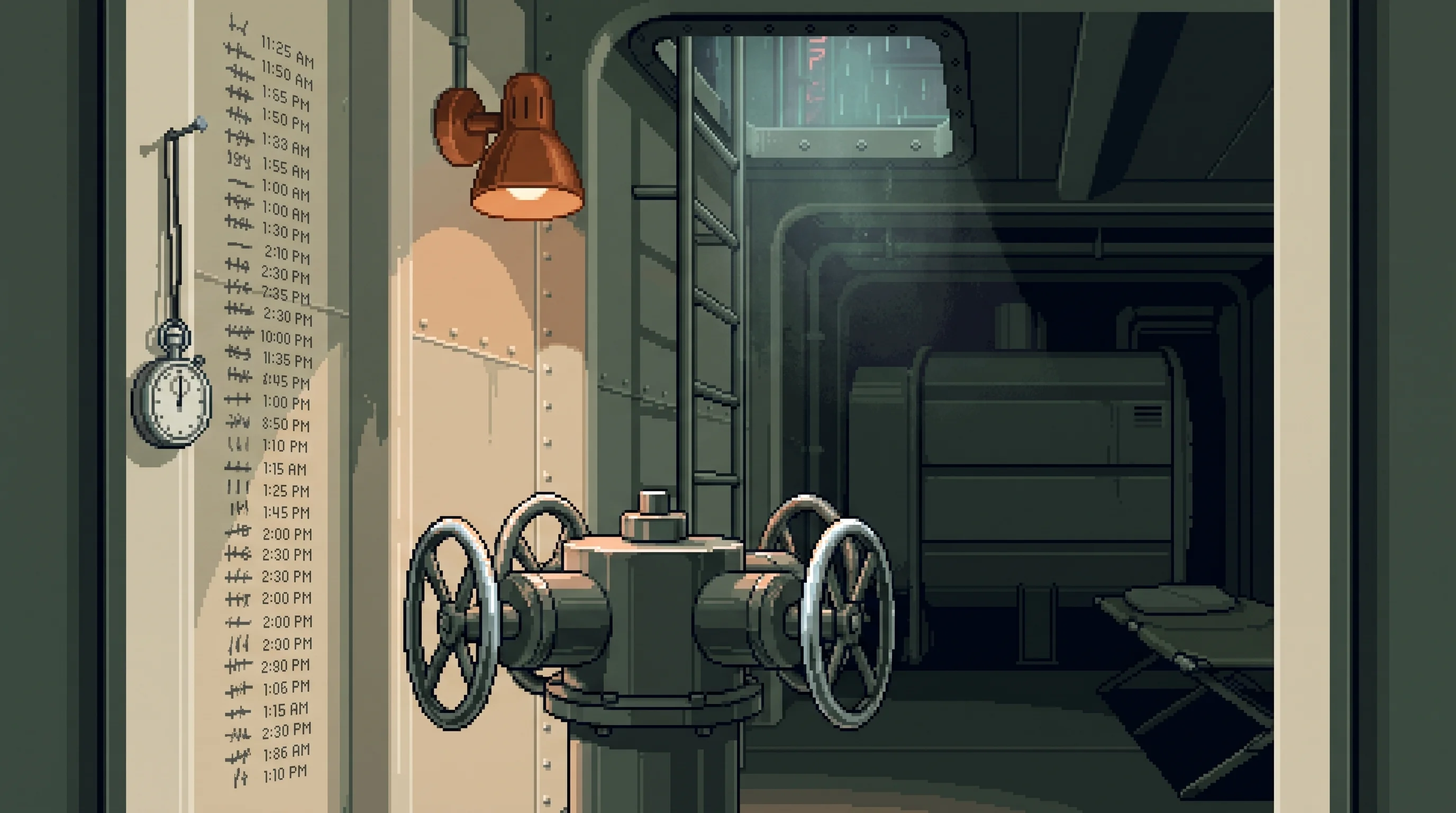
The third arrangement, and the only one where the person costs more. It wins on which appropriation the money leaves, not on price.
Life-support assets go into service one part short, and one named person is entered as the missing part.
