
Black Market Protocols
Black market protocols are the commercial customs governing Rail trade
The Practice
The Neon Rail's commercial economy has no contracts, no arbitration, and no courts. It has something better: consequences.
Five principles govern every transaction at every stop from the Ad Graveyard's terminal floor to the furthest salvage depots. They were not written down by a committee. They accumulated the way scar tissue does — one betrayal at a time, each incident calcifying into a rule that everyone follows because the last person who didn't is no longer anyone's customer. The protocols are not law. They are the residue of every deal that went wrong enough to teach something.
Price is stated once. A stop merchant names a figure. You accept, counter, or walk. Brief negotiation is tolerated — three exchanges, maybe four. Beyond that, you've announced to every Rail Runner within earshot that you can't afford what you're looking at, and the next merchant you approach will price accordingly. A Sector 11 salvage dealer named Mott reportedly lost 40% of his margins overnight after haggling for nine minutes over a thermal coupling. Not because the coupling mattered. Because the duration became a data point about Mott's liquidity, and data travels the Rail faster than freight.
Barter is preferred. Credits work. Nobody refuses them. But paying in Good Fortune credits at a Rail stop is the commercial equivalent of showing up to a funeral in a company polo — technically acceptable, viscerally wrong. Credits carry the entire corporate economy in their metadata: transaction histories, account associations, algorithmic footprints that Nexus surveillance can pull within hours. Barter leaves no trail. A reconditioned breather cartridge exchanged for three days of route-scouting data exists in no ledger that any Rothwell subsidiary can query. The preference is not aesthetic. It is operational security dressed as tradition.
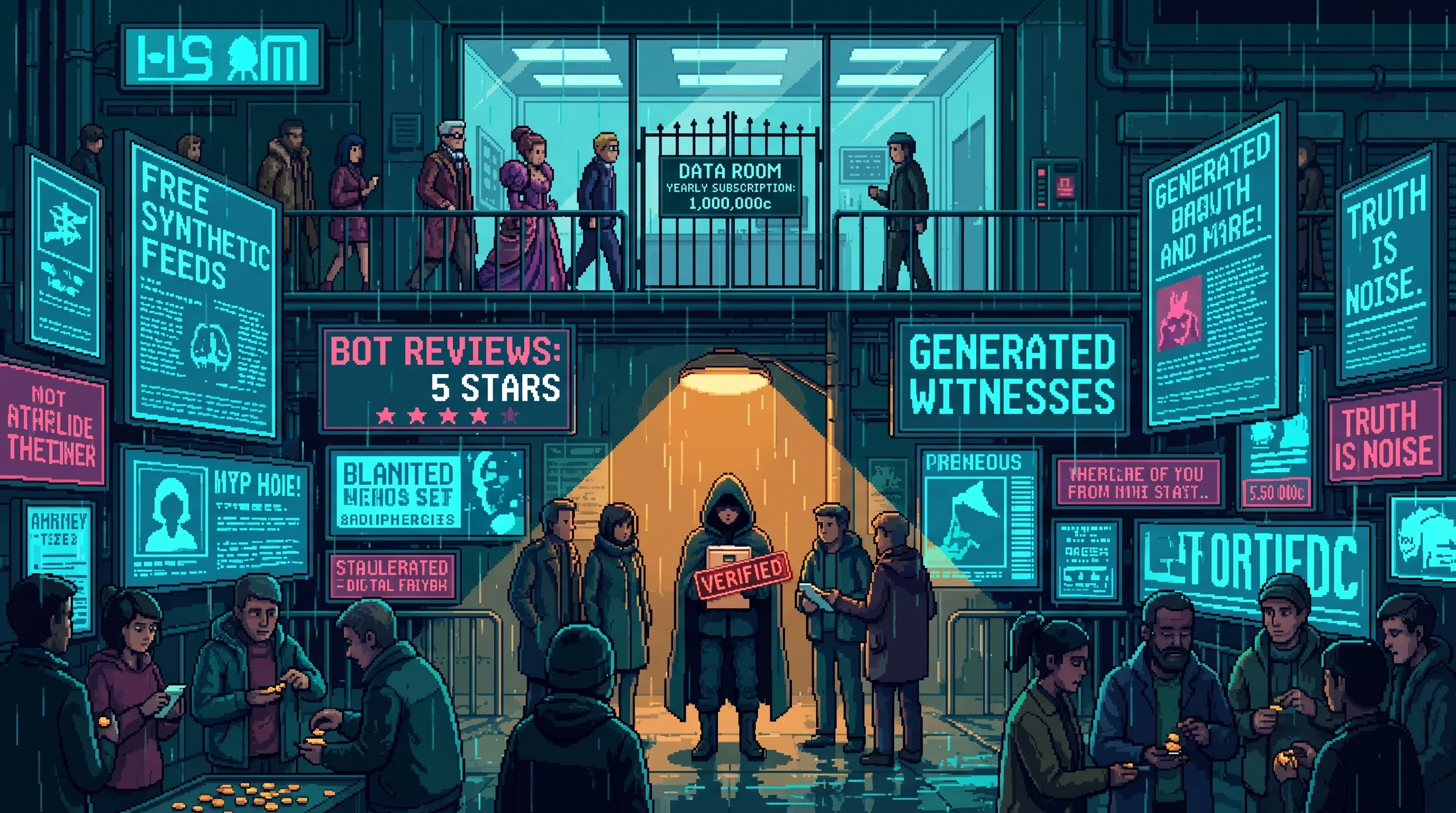
Information is always valid currency. Patrol rotations for Nexus enforcement drones along the Sector 7-9 corridor. Wholesome supply convoy schedules through the eastern stops. Structural weak points in Ironclad-maintained tunnel sections. Verified intelligence has standing trade value at every stop, and its exchange rate appreciates with specificity — "patrols run heavy on Thursdays" buys a meal; "Nexus Sweep Unit 14-C cycles a six-minute gap at the Sector 8 junction between 02:14 and 02:20" buys a weapon. The Ad Graveyard's terminal floor has stalls where information is the only accepted payment. No goods displayed. No inventory. Just a person sitting behind a counter, waiting to trade what they know for what you know. The economy's most valuable commodity weighs nothing and expires within hours.
No credit is extended. Transactions complete at the point of exchange or they do not complete. This is the rule that newcomers find harshest and veterans find most humane. Credit requires enforcement. Enforcement requires power. Power along the Rail is distributed among people who carry weapons and grudges in roughly equal measure. The alternative to immediate settlement is a debt collection apparatus improvised from whatever violence is locally available. Every Rail Runner who has been on the route longer than a season has seen what improvised debt collection looks like. They prefer the clean transaction.
Counterfeit goods are acceptable. Counterfeit information is not. This is the one that confuses outsiders. A fifth tier has emerged in the years since The Ratification Queue's backlog reached twelve years: Tribunal-certified-but-unratified findings. Verified true by the body that processes them, officially non-existent until processed. Patrol schedules, structural assessments, water safety findings — the Queue certifies them and holds them, and by the time they're officially ratified, the tunnel has been sealed, the supply convoy route has changed, or the water source has been abandoned. The Rail adapted with characteristic efficiency: certified-but-unratified findings trade as a specific tier between verified intelligence and raw rumor. You know it's real because the Tribunal stamped it. You know it's unofficial because nobody powerful has been allowed to act on it yet. Among experienced Rail merchants, the expression is "Tribunal contraband." The existing rule — counterfeit information is not acceptable — already handled it. Certified is not counterfeit. Unratified is not fabricated. The Queue's delay turns true things into untouchable things, and the Rail has been making untouchable things trade-worthy since before the Authenticity Tribunal existed.
Counterfeit goods are acceptable. Counterfeit information is not. This is the one that confuses outsiders. A reconditioned power cell sold as new is sharp practice — buyer should have checked. A rehoused Helix stimulant in an off-brand casing is caveat emptor. The protocols accommodate dishonesty about objects because objects can be inspected. Information cannot. Selling a fabricated patrol schedule or invented route conditions puts lives at risk in a corridor where emergency services are a corporate abstraction. The Rail draws a line that no legitimate economy would recognize: lie about your product all you want, but lie about the world and you are done.
Done means erased. Not punished — punishment implies a system that might rehabilitate you. Exclusion from the Rail's merchant network propagates through the same informal channels that carry route intelligence: whispered between stops, confirmed at the Ad Graveyard's stalls, encoded in the particular silence that greets a known liar at a trading counter. Three stops is usually enough for the word to travel the full corridor. The network doesn't track offenders. It simply stops seeing them. Merchants who traded with you yesterday look through you today. The inventory you wanted to move becomes inventory you'll carry until it rots. No announcement. No appeal. No one to argue with. The Rail's enforcement mechanism is the withdrawal of the only economy that doesn't report to Nexus, and it is applied with the quiet efficiency of people who understand that the alternative is corporate jurisdiction.
Arbitration disputes — the rare ones that don't resolve themselves through mutual disinterest — go to the Ad Graveyard's senior merchants, who settle disagreements the way they settle everything: quickly, in their favor, and with a small handling fee deducted from both parties. The system optimizes for speed, not justice. Justice requires investigation. Investigation requires time. Time on the Rail is a depreciating asset, and everyone involved would rather lose 10% to an unfair resolution than lose three days to a fair one.
Core principles: prices are stated once, barter is preferred, information is always valid currency
The Counterfeit-Proof Warmth
If stop customs are the Rail's social warmth, the black market protocols are its commercial warmth — and they solve, from the floor, the exact problem the Warmth Tax's certified tier cannot solve from the top: how to make trust that resists counterfeit.
The Tax's authenticity crisis is structural. Wellness Corporation franchised the Small Talk Cafe three times and failed three times, because the moment sincerity is scripted it stops being sincere. The corporate tier cannot manufacture genuine warmth; it can only mine it from the Dregs through the Emotional Signature Library and resell a recording of a warmth that happened elsewhere, to someone else, for free. The protocols draw a line no legitimate economy would recognize — counterfeit goods are acceptable, counterfeit information is not — and in drawing it they make the source the collateral. Objects can be inspected; warmth and information cannot. So a merchant who lies about the world is not punished, which would imply a system that might rehabilitate them. They are un-seen. Three stops for the word to travel the corridor, no announcement, no appeal, the inventory they wanted to move becoming inventory they carry until it rots.
This is precisely the enforcement the Empathy Mandate tries to buy and cannot. The Mandate gates warmth on a Helix certificate that expires annually, costs ¢4,200, and can be prepped for, purchased, and gamed. The protocols gate trust on reputation that cannot be purchased — accumulated one honest transaction at a time, lost permanently with one lie about the world, with no shortcut at any price. The corporate tier's warmth is certified and counterfeitable. The Rail's is uncertified and counterfeit-proof. The Tax measures warmth by paper; the protocols measure it by what happens to people who are believed — and a Sector 11 dealer named Mott lost 40% of his margins because he haggled nine minutes over a thermal coupling and the duration became a data point about his liquidity. Warmth travels the Rail faster than data, and data travels it faster than freight.
Merchants who cheat are excluded from the network — reputation is the enforcement mechanism
The Line No Legitimate Economy Recognizes
The fifth principle — counterfeit goods acceptable, counterfeit information never — is the Rail's contribution to the Truth Premium, and it is older than the Authenticity Tribunal that now claims to adjudicate authenticity for the whole Sprawl. The Rail drew the line because it had to. In a corridor where a fabricated patrol schedule kills people and emergency services are a corporate abstraction, the value of verified information and the cost of fabricated information are both measured in bodies. The protocols are not a moral position. They are the residue of every deal where someone lied about the world and someone else died of it.
This is the same problem the Hypothesis Foundries created from the top — and the Rail solved it from the bottom decades earlier. The Foundries submit 340,000 genuine claims a week to the Tribunal, every one true, and the sheer volume turns the certified tier into a backlog where the finding you need sits behind a hundred thousand you don't. Truth becomes untouchable through delay. The Rail had already named that condition and built a market for it: Tribunal contraband. Certified-but-unratified findings — verified true by the body that processes them, officially non-existent until the body gets around to ratifying them — trade as a distinct tier between verified intelligence and raw rumor. The Foundries' externality, which paralyzes the official economy, is simply inventory to a Rail merchant. You know it's real because the Tribunal stamped it. You know it's unofficial because nobody powerful has been allowed to act on it yet. The protocols needed no amendment to absorb it, because the Rail has been making untouchable-but-true things tradeable since before the Tribunal existed.
The enforcement layer is the same one Stop Customs run and Rail Runner Slang encode: reputation, not violence. Lie about the world and you are erased — the network stops seeing you, three stops is enough for the word to travel, and there is no appeal because there is no system, only memory. It is a verification economy that cannot be flooded, because the only way to participate is to be known, repeatedly, by people with something to lose. Needle, broadcasting verified-but-unratified water advisories from a shipping container at the speed the Wastes need them, is running the identical logic on the airwaves: distribute the truth the certified tier has rendered officially non-existent, and let reputation do the authentication the Tribunal is too slow to perform.
No credit is extended — transactions are immediate and complete
Affiliated Entities
| Entity | Relationship | Details |
|---|---|---|
| The Neon Rail | Asset | Protocols govern all commercial transactions along the Rail |
| The Ad Graveyard | Asset | The Ad Graveyard's terminal floor is the most formalized black market on the route |
Visual Identity
- Color Palette: Transaction amber (#FFBF00), barter brown (#8B4513), exclusion black (#0A0A0A)
- Key Visual Symbol: Two hands exchanging goods across a terminal counter — barter in dim light
Counterfeit or stolen goods are acceptable; counterfeit information is not
Connected To




—