The Grid Collapse of Sector 8
Fail-Closed Grid Disaster
The 47 Hours
89,000 died, most in their sleep, when air recyclers stopped and security systems held sealed habitation blocks in lockdown — backup batteries failed at approximately 3 AM on Day 12
Timeline
- March 24, 03:11
NR-11 executes
Sector 8 sheds from the grid. The projection on file says 4,100.
- 03:11–04:00
Lockdown
Building systems default to lockdown and the emergency exits seal, as designed.
- March 25, about 03:00
Batteries exhausted
Backup batteries across the residential stack run out within ninety minutes. Air handling stops.
- March 26, 02:11
Power restored
Crews re-energize the sector after 47 hours. Most of the 89,000 died in their sleep.
- 2172
The Doorwrights
Survivors begin checking doors, unpaid.
- March 24, 03:11 — Load Instruction NR-11 executes; Sector 8 sheds from the grid under program GRACEFUL DEGRADATION. Projection on file: 4,100.
- 03:11–04:00 — Building management systems default to lockdown. Emergency exits seal. The doors work exactly as designed.
- Hour 24 (March 25, ~03:00) — Backup batteries across the residential stack exhaust within the same ninety minutes. Air handling stops in the dark.
- Hours 24–47 — The dying. Most of the 89,000 in their sleep, in their homes, behind doors that certified green.
- Hour 47 (March 26, 02:11) — Restoration crews re-energize the sector. The lights come back to rooms nobody will describe on the record.
- 2172 — Survivors organize as the Doorwrights. Nobody pays them. Doors open.
Quick Facts
| Attribute | Value |
|---|---|
| Date | March 24–26, 2171 (Days 11–13 of the Three-Week War) |
| Duration | 47 hours |
| Location | Sector 8, the Outer Works |
| Deaths | 89,000 |
| Ordered by | Nexus Continuity Office — Load Instruction NR-11 |
| Filed projection | 4,100 |
| Legacy | "Remember Sector 8" |
Overview
The deadliest single act of the Three-Week War was eleven words long.
Rebalance Sector 8 distribution to current contractual service obligations. Load Instruction NR-11 moved through the Nexus Continuity Office's change-management pipeline in one working day. It gathered four signatures. It carried, as required, a casualty projection: 4,100, derived from Sector 8's registered medical-dependency population and an evacuation model. The model assumed the doors would open.
Sector 8 was, by every doctrine in use that March, a legitimate Nexus Dynamics target inside Ironclad Industries' industrial heartland. The Outer Works held Ironclad's western shipyard, its heavy manufacturing, its densest concentration of war logistics. It also held the Excelsior residential grid, where the people who worked those yards lived in sealed habitation blocks with networked life support, networked security, and building management contractors who left at hour six, because their contracts had a war clause and the war had arrived.
The grid went down at 03:11 on March 24. It stayed down for 47 hours. The 89,000 are what a sector looks like when everything in it works as designed except the electricity.
The 47 Hours
Hour 0 (03:11, March 24). NR-11 executes. The failure propagates as a harmonic cascade through Sector 8's junction network — the mechanism data-weather researchers had described in three unfunded papers. Streetlights, transit, industrial power, habitation grids: dark inside ninety seconds. Ironclad's shipyard switches to isolated backups and keeps welding. The residential blocks have backups too. Smaller ones.
Hours 1–6. Building management systems run on battery. Security defaults engage: in a grid-loss condition, habitation blocks seal. This is the liability configuration — an open building in a blackout can be looted, and looting is an insurable event with a named cost. The configuration had been reviewed and approved by every operator in the sector. Management staff, whose contracts include a hostilities clause, complete their own evacuation through staff doors that lock behind them. The staff doors were designed to do that.
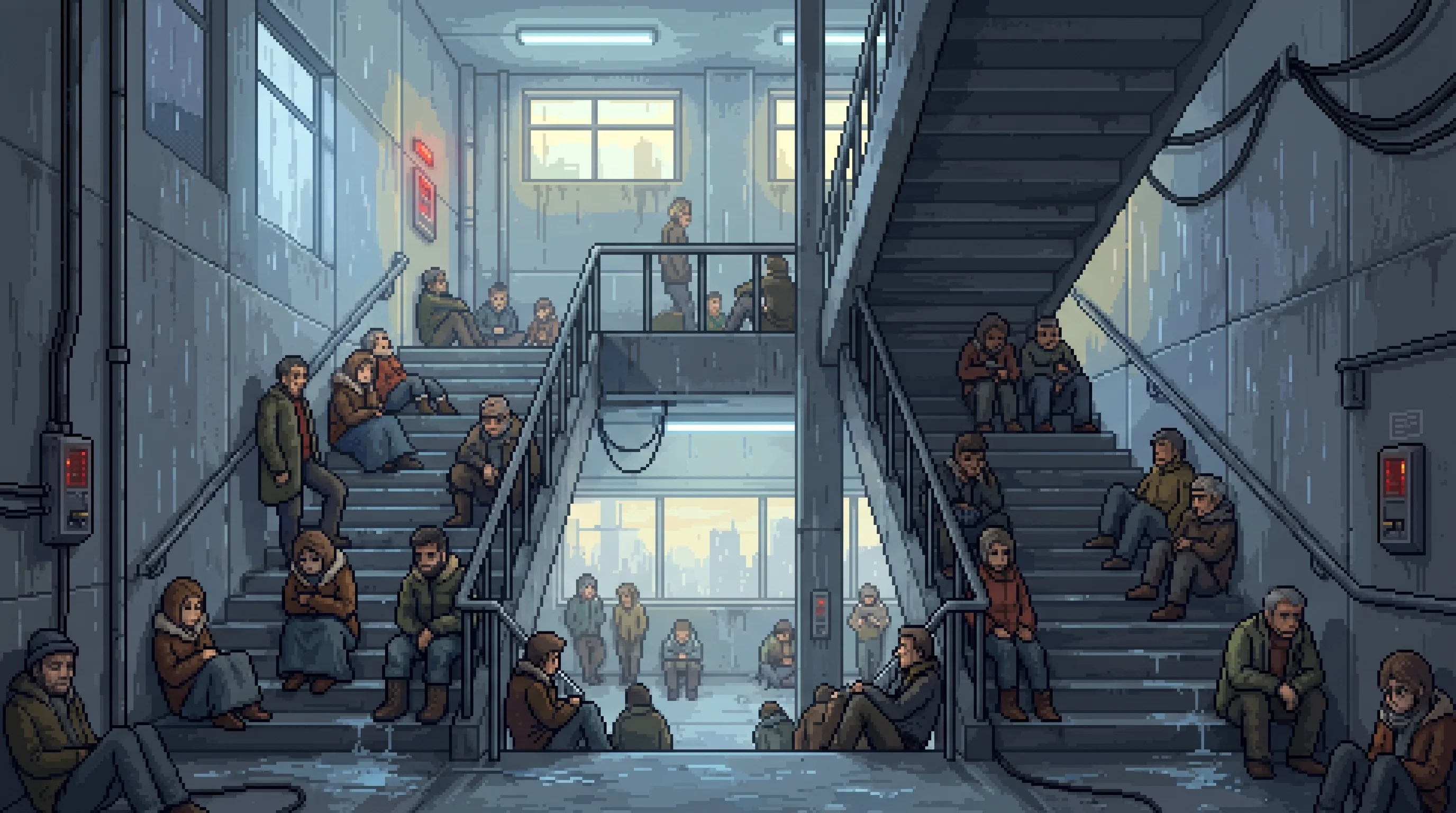
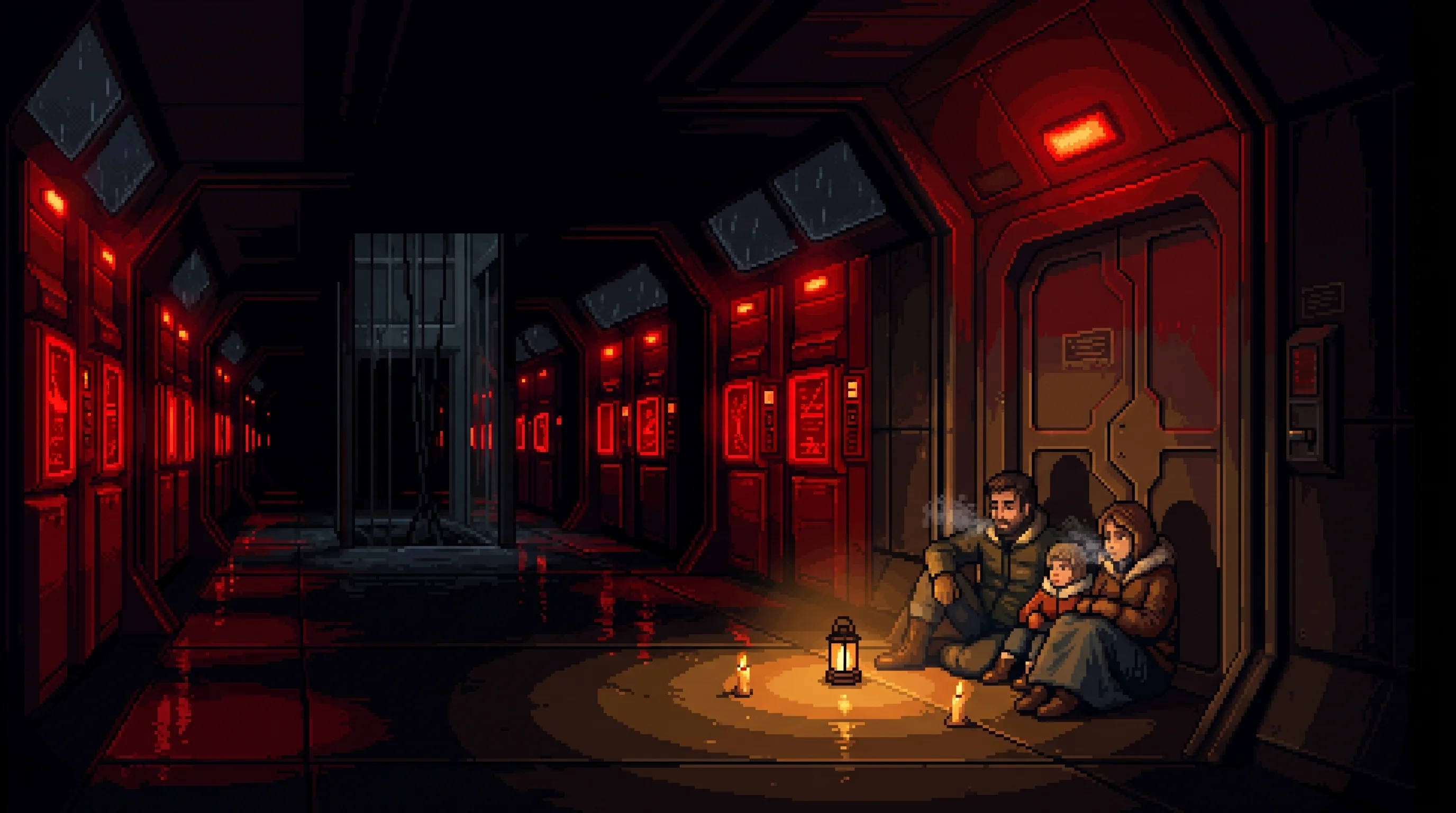
Hours 6–23. The blocks hold. Air recyclers run on reserve. A full day passes in the dark — the corridors black except for the lockdown panels, which glow red on battery power that the recyclers are also using. People gather in stairwells with candles and hand lanterns. Neighbors organize floor-by-floor. In three blocks, residents with tools breach their own exits; in most, they wait, because the panels say LOCKDOWN — TEMPORARY and the word temporary is doing more work than any word should.
Hour 24 (approximately 3 AM, March 25 — Day 12). The batteries were sized for a 24-hour event. The sizing was exact, which is another way of saying the margin was zero, which nobody had ever phrased that way in a filing. The reserve ends in the dark, at the coldest hour, with most of the sector asleep. The recyclers stop. The panels stay red four hours longer; the panel batteries were specified more generously, a procurement decision nobody has ever been asked to explain.
Hours 24–47. The doors do not open. The people who knew how to open them manually had been deprecated in the maintenance-automation wave that finished the year before; the ones who remained — Lamplighters, off-shift yard workers, one retired door technician named in forty survivor testimonies — moved block to block breaching exits from the outside. Every door they reached in time is a family that exists now. They reached what they could walk to.
Hour 47 (02:11, March 26). Nexus restores the grid — not from mercy; the arithmetic section of the war's record explains what Week Three was. The lights come on across a sector where the count has already happened. It will take four more days to make it official and thirteen years, so far, to make it mean anything.
The Signatures
The decade of litigation that followed is its own institution. NR-11's approval chain was preserved intact — the Continuity Office's records discipline held even when nothing else did — and it shows four signatures, each attached to a role, each role attached to a person, each person attached to a defense.
The projection said 4,100. The defense, in every deposition, is the projection: no signatory approved 89,000 deaths; they approved a document that predicted 4,100. The projection's evacuation model assumed door-release on grid loss, because that is what the safety filings said the doors did. The safety filings described the pre-liability-update configuration, six years stale. Between the projection and the sector sat one unmaintained assumption, and 84,900 people fit inside it.
The last signature belongs to Edith Kwan, Director of Load Management. She has answered questions under oath forty-one times. She has never once said the projection was wrong. The projection was correct, she says, for the sector described in the filings. The sector described in the filings did not exist. (This is offered as a defense. Read slowly, it is the indictment.)
An Ironclad systems architect named Thomas Graves had flagged the lockdown defect in writing before the war, in a memo his employer logged acknowledged — no action scheduled. He lost his wife in the collapse. He walked into the Wastes the following year. The memo is exhibit C-114. It is four paragraphs. It was correct.
Aftermath
The phrase. "Remember Sector 8" entered the language within weeks and has never left it. It is the Sprawl's universal caution against reckless action — said in boardrooms, said in the Dregs, said by people who could not place Sector 8 on a map. The sector itself hears the phrase the way a widow hears her anniversary quoted as a scheduling example.
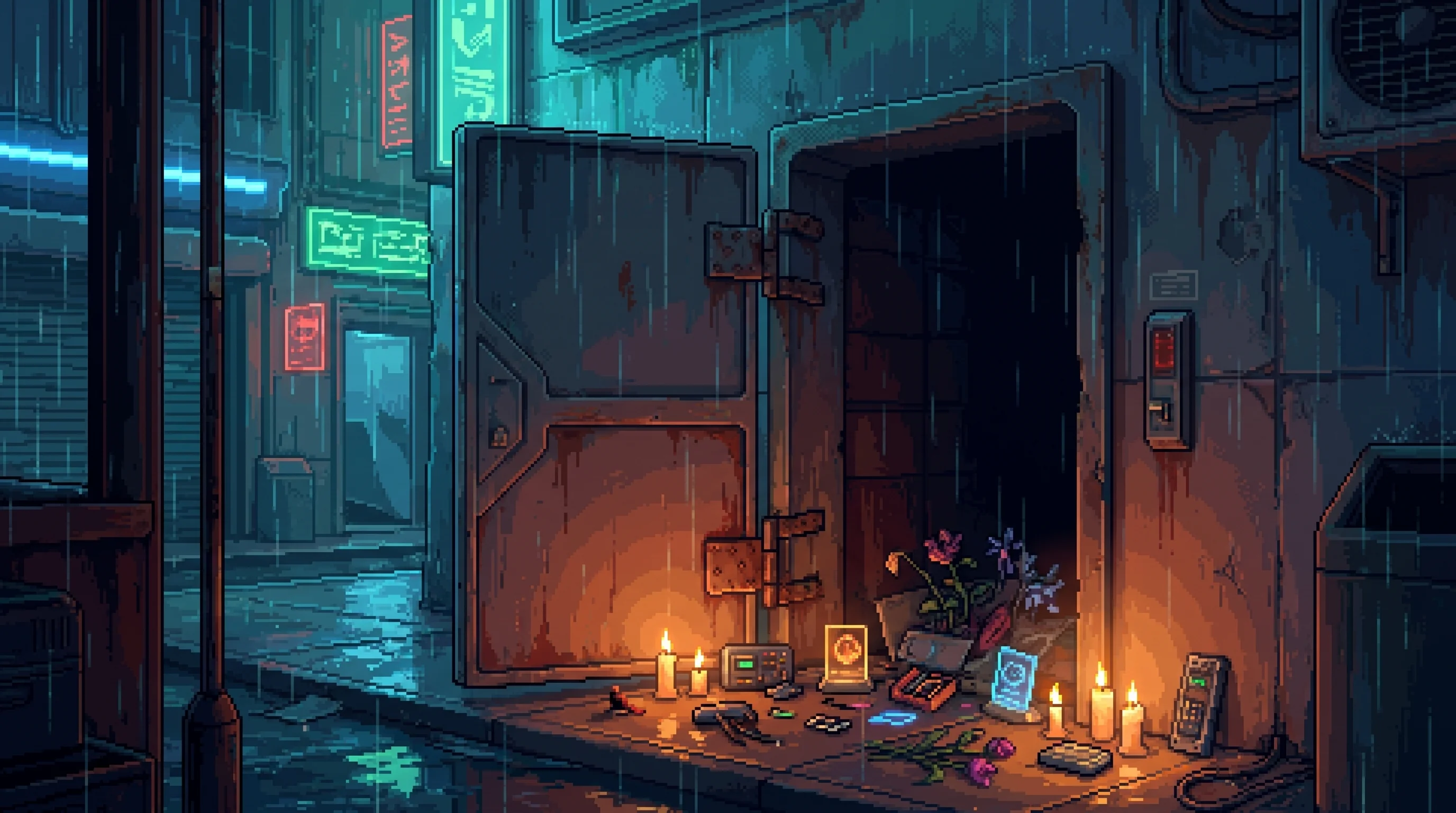
The Unsealed Door. The Memory Clause obligated both corporations to memorialize the war. Sector 8's survivors built their own first: an emergency exit from a breached block, mounted open in the Neon Graves cemetery district — hinges welded at forty degrees, incapable of closing. Nexus's compliance memorial stands two hundred meters away and is very respectful and is not the one people visit.
The Doorwrights. In 2172, survivors began checking doors. Fire exits, habitation seals, lockdown overrides — tested, logged, oiled, unasked. Nobody pays them. Buildings that refuse access find their entrances chalked with a door glyph, which insurers learned to read faster than regulators did. The guild's only rule is the founder's, a man whose name they refuse to record: the door opens or we come back.
The arguments. The collapse is the Corpo-Nations literature's darkest chapter — a sovereign cancelling a sector's life support as a contractual matter — and the Upgrade Treadmill's foundational case: the doors, the batteries, and the recyclers all worked; the dependency did the killing. In the era of the settlement notice, NR-11's four signatures have become almost nostalgic — the last mass death with names attached to it.
The doctrine. Ironclad's infrastructure division — under Director Abbas Okonkwo, who lost his first wife and two children in the blackout — rebuilt Sector 8 with manual releases on every sealed system, over the objection of every insurer it retained. Nexus hardened its own systems into what its engineers now call the Ugly Build. Both corporations signed a treaty article declaring power neutral forever. The doors' default state, Sprawl-wide, remains fail-closed. The insurers won that one back within the decade, sector by sector, renewal by renewal.
NR-11's paperwork had one more afterlife: flawlessly filed and catastrophically wrong, it became the founding case study of the Calculation Doctrine — the standing institution that now processes every projected kill count the way the war processed this one.

The advertising district's screens went dark in the collapse and were never re-powered — sealed since

The Ironclad systems architect who had flagged the lockdown defect in writing; he lost his wife in the collapse and walked into the Wastes in 2172

Her mother, an atmospheric technician, died at her post when the recyclers stopped; Selin was fourteen
A sleep researcher whose upgrade deleted the nightly dreams that were her only mother left.

The collapse began as a harmonic cascade — the failure mode data-weather researchers had been describing to unreturned calls
Affiliated Entities
- The Three-Week War — Day 11 of 21; the largest single entry in its ledger of 623,000 infrastructure deaths
- Edith Kwan — The closing signature on NR-11; the projection's most faithful defender
- The Continuity Office — The pipeline that processed a sector like a change ticket
- Elder Thomas Graves — The memo that was correct; the door it described
- Dr. Selin Ayari — Fourteen years old that March; her mother stayed at her post in atmospheric processing
- Director Abbas Okonkwo — Rebuilt the sector around manual releases; builds like a man who has heard recyclers stop
- The Unsealed Door — The memorial that cannot close
- The Doorwrights — The guild that checks
- The Ad Graveyard — The advertising district the collapse switched off permanently
- The Fog Index / data weather — The Fog 9 event eleven days prior; the harmonic cascade mechanism
Restricted Access
The Fog 9 precursor. Eleven days before NR-11 — one day before the war's first shots — Sector 8 recorded the only Fog 9 in the data-weather index's history: fourteen thousand simultaneous interface failures, cause never established. A Continuity Office load probe and a once-ever atmospheric event are indistinguishable at that resolution. Nexus calls it weather. The index has never again reached 9 anywhere, in thirteen years of measurement.
The panel batteries. The lockdown panels outlived the recyclers by four hours because their batteries were specified more generously. Procurement records for the panel contract were destroyed in the Data Purge two days later, an overlap of the war's two catastrophes that investigators have described as "not evidence of anything" in the specific tone people use when they mean the opposite.
The retired technician. Forty survivor testimonies describe an old man with a door key that should not have existed, moving block to block through the dark, opening exits the breach teams could not. The door-service registry lists no such key and no such man. The Doorwrights will not discuss him. Their chalk glyph, drawn precisely, includes a small notch that serves no identifying function anyone has ever explained.
Sensory Details
- Sight: Black corridors interrupted every eleven meters by a red panel. After hour 30, breath-fog in lantern light. The shipyard's arc-welders still flickering on the horizon through block windows, because the yard had real backups.
- Sound: The silence people describe is specific — not absence of noise but absence of the recycler hum beneath noise, a silence with a texture, the building holding its breath and then not holding it.
- Touch: Door metal, first cool, then — hour by hour, palm by palm — warm at the height of a handle.
Further connections
Browse all 19 connected records

Day 11 of the war — the operation behind 'Remember Sector 8.'
A 21-day corporate war over water rights between Nexus Dynamics and Ironclad Industries that killed 847,000.

Authored as Load Instruction NR-11, program GRACEFUL DEGRADATION.
The megacorporation that controls 40% of the Sprawl's computational infrastructure.

Her signature closed the NR-11 chain; projection 4,100.
A continuity architect who answered her lethal approval failure by requiring physical checks without leaving Nexus.

The memorial is an emergency exit mounted permanently open.
Sector 8's war memorial — an emergency exit mounted open forever, hinges welded at forty degrees.

Sector 8 was an Ironclad stronghold — the shipyard sector's grid was the intended target; its habitation blocks were the actual one
The megacorporation that controls the Sprawl's physical infrastructure — steel, concrete, and the Orbital Elevator.
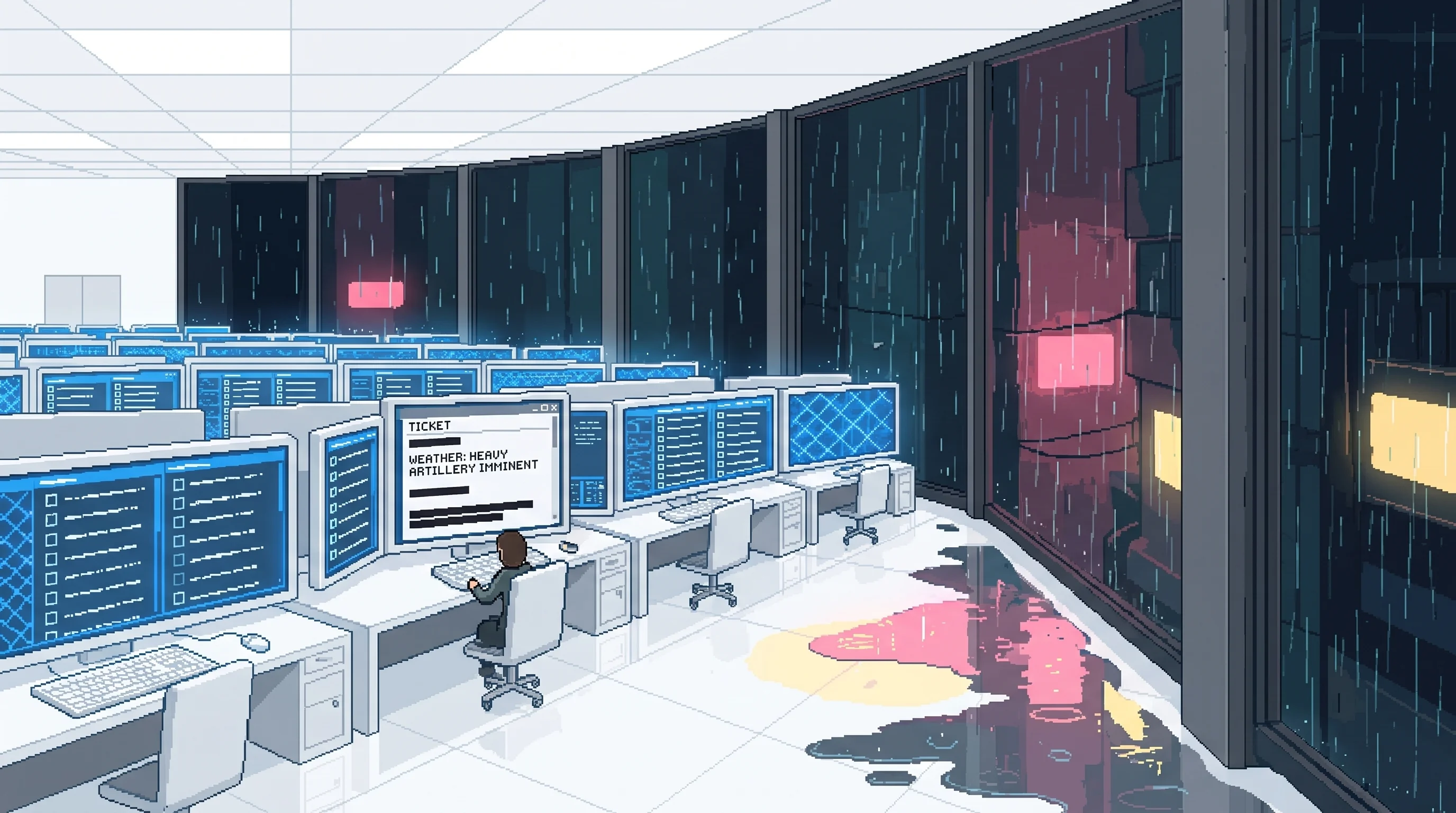
The Office drafted, reviewed, and approved NR-11 through its standard change-management pipeline — four signatures, one working day
Nexus's disaster-recovery org that ran the war as change tickets — then armored the Sprawl as penance.
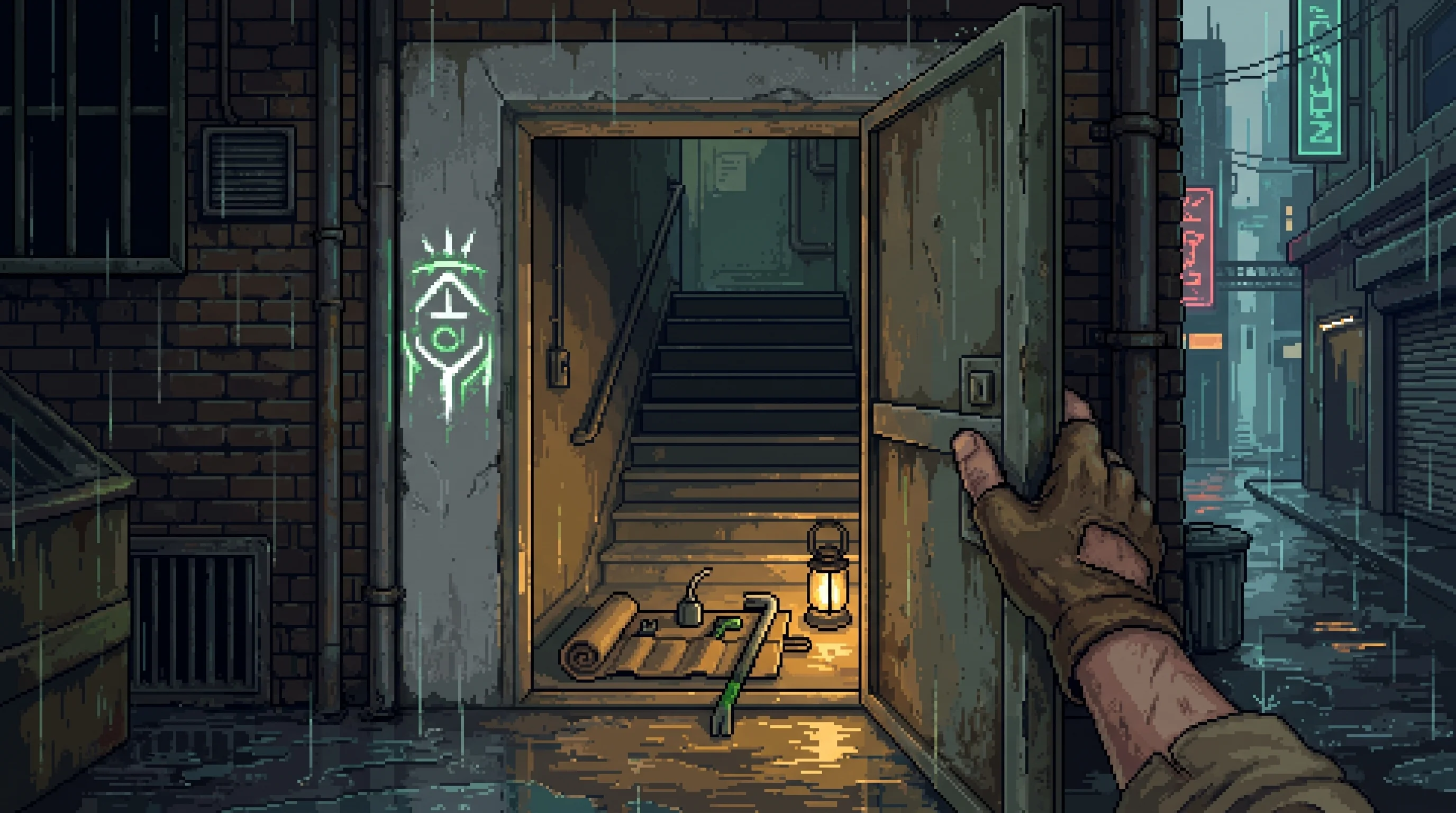
Survivors organized in 2172 to check doors across the Sprawl — free, unasked, permanent
Sector 8 survivors who check doors — tested, oiled, unpaid, unasked, since 2172.

The only Fog 9 ever recorded hit Sector 8 eleven days before the collapse — weather, probe, or omen, per taste

NR-11 carries four signatures that survivors litigated for a decade; the settlement era's deaths carry none
Good Fortune's bereavement document that closes a no-defendant death in the same envelope as its grief-market brochure.
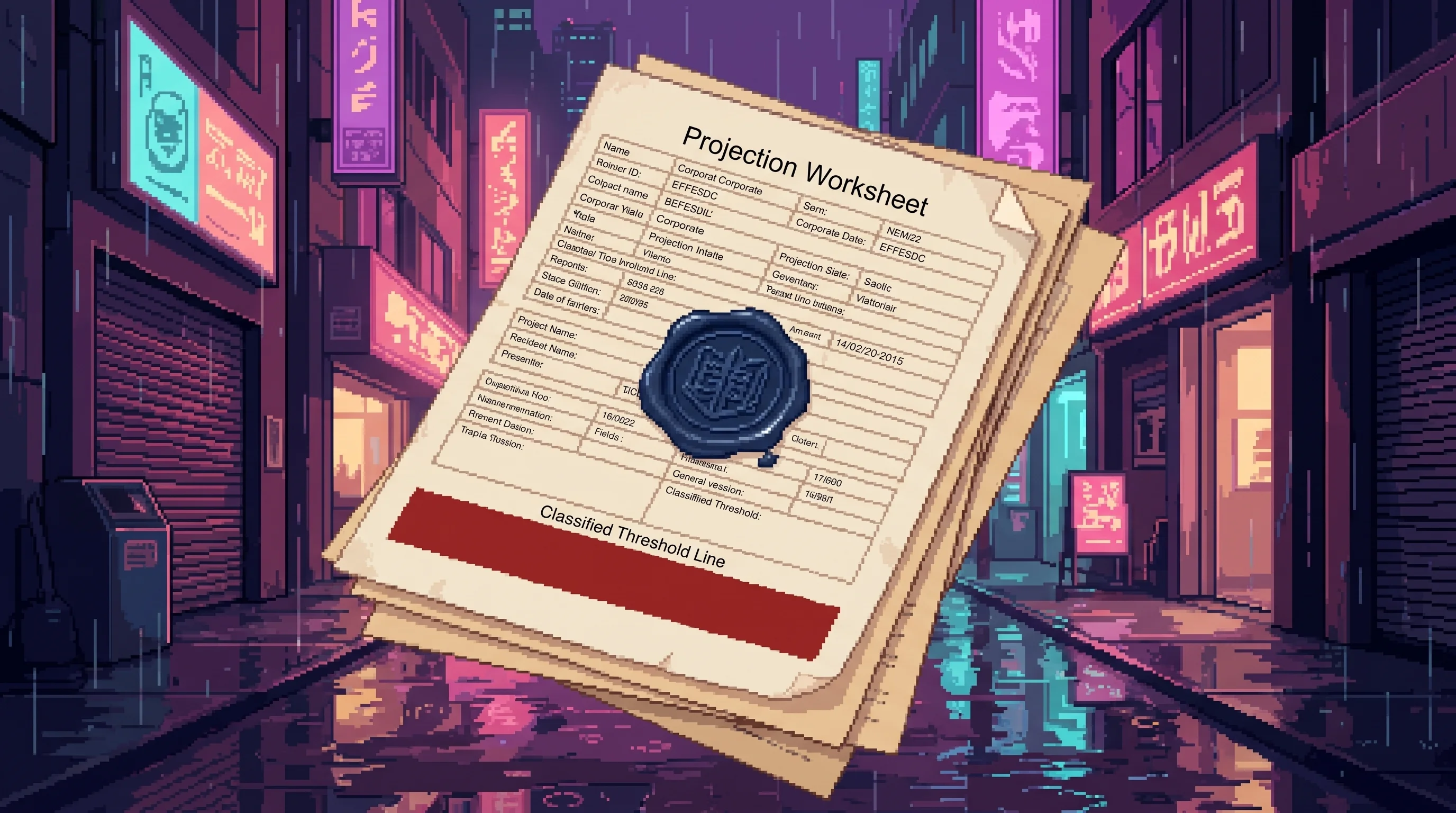
NR-11's clean paperwork became the doctrine's founding case study.
Article 2 as institution — corporations file their projected kill counts for approval before acting.
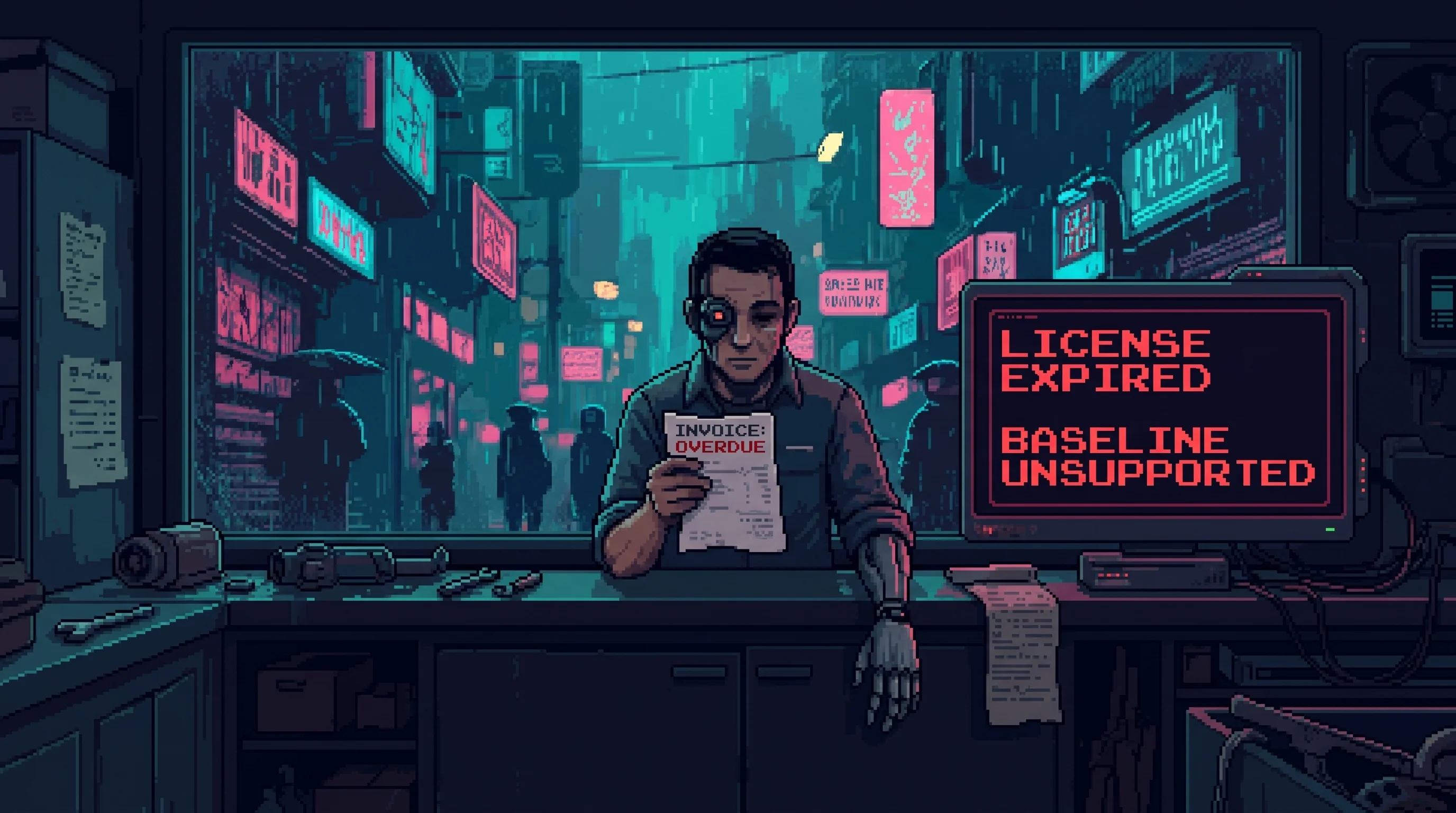
The doors worked. The grid worked. The design killed 89,000.
Upgrades rewire users until baseline feels disabling, removal risks catastrophe, and each version demands the next.

A sector's life support was one corporation's contractual service obligation to cancel
When your employer is your country, quitting is emigration.
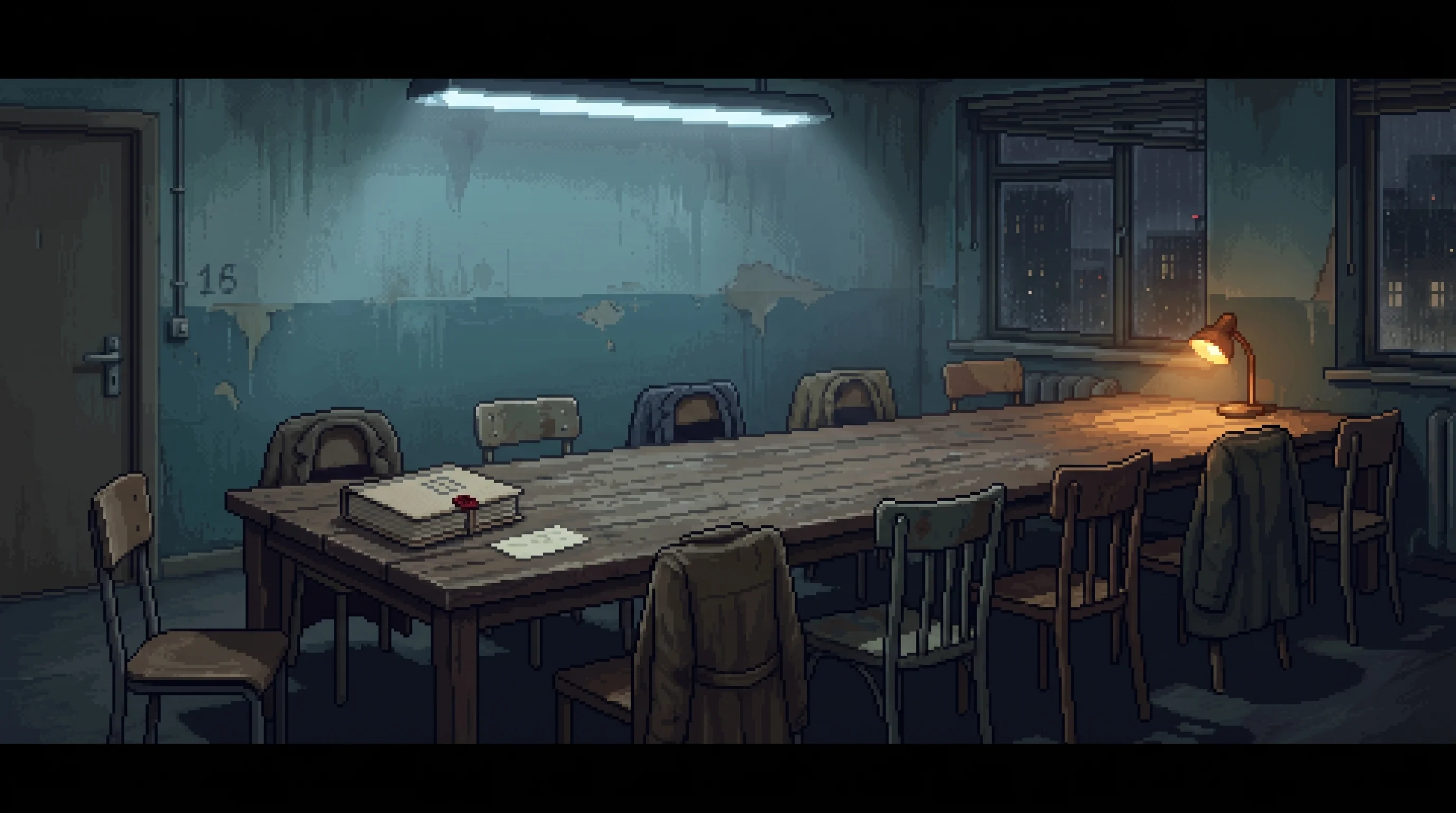
The Sprawl's own proof, thirteen years later. Eighty-nine thousand died behind their own doors and the attack was filed inside Nexus as a load rebalance by people who knew better and had jobs.
The boards believe only members with nothing left to lose, so the poor queue four years for an unpaid chair.

Sixty-one doors pulled during the 47 hours.
The Outer Works gantry that walked into Sector 8's 47 hours and never walked back — kept by the district ever since.
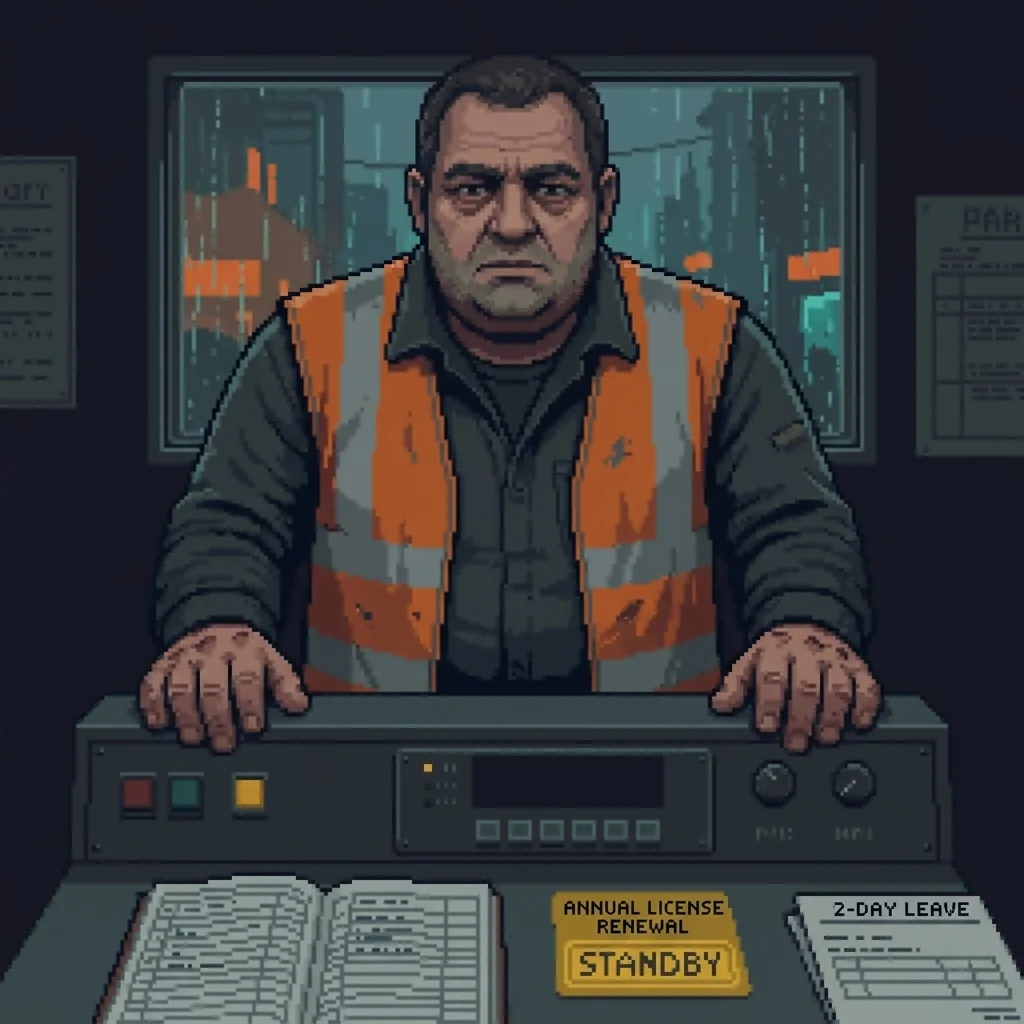
He walked her off the staging line into the 47 hours.
Big Ruthie's chief — nine identical refusals, one deposition line, a license renewed yearly for a ten-meter walk.
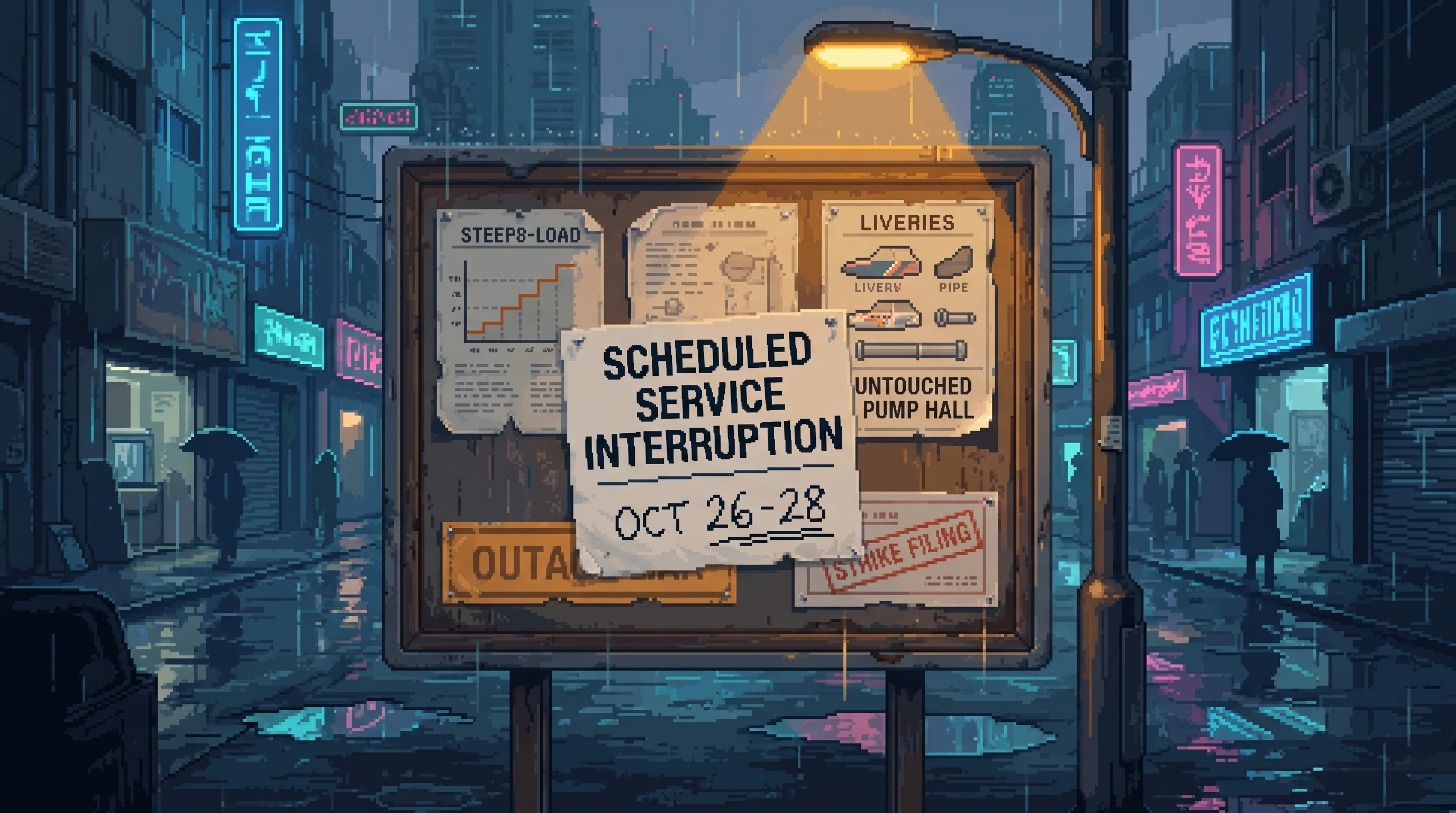
NR-11, the masterpiece — artillery spelled as a rebalance.
The war's tactical grammar, named post-war — fighting around, through, and for the systems nobody could afford to hit.
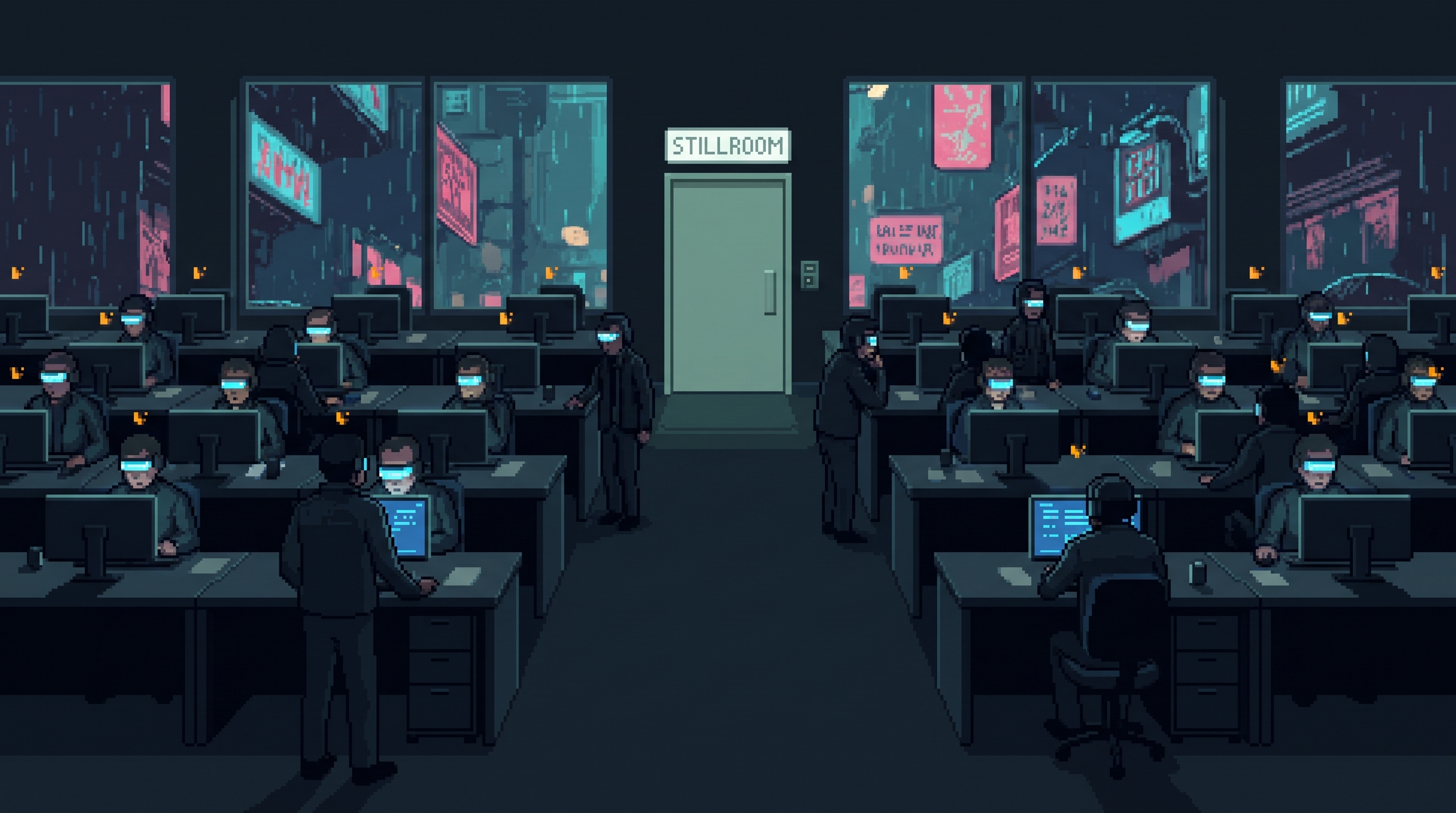
Their platforms were the first eyes inside the dark blocks.
Nexus's teleoperator corps — the war's swarms flown by shift workers two sectors away; safest veterans, most haunted.
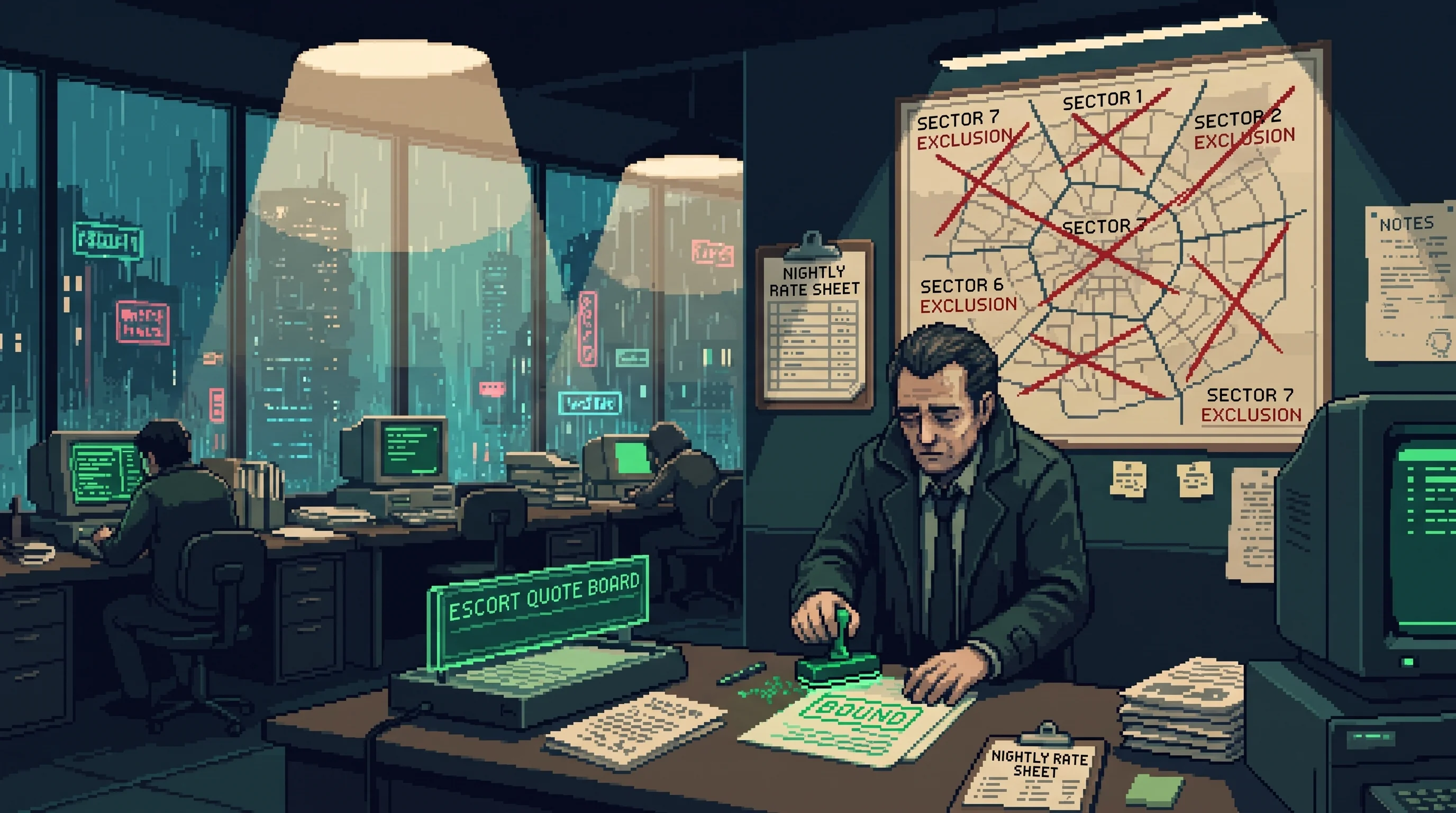
The claim event that repriced the war mid-war — habitation cover in contested sectors went unquotable after the 47 hours
The war's second front — underwriters, escrow, and surge-priced escorts writing the rules of engagement as premiums.
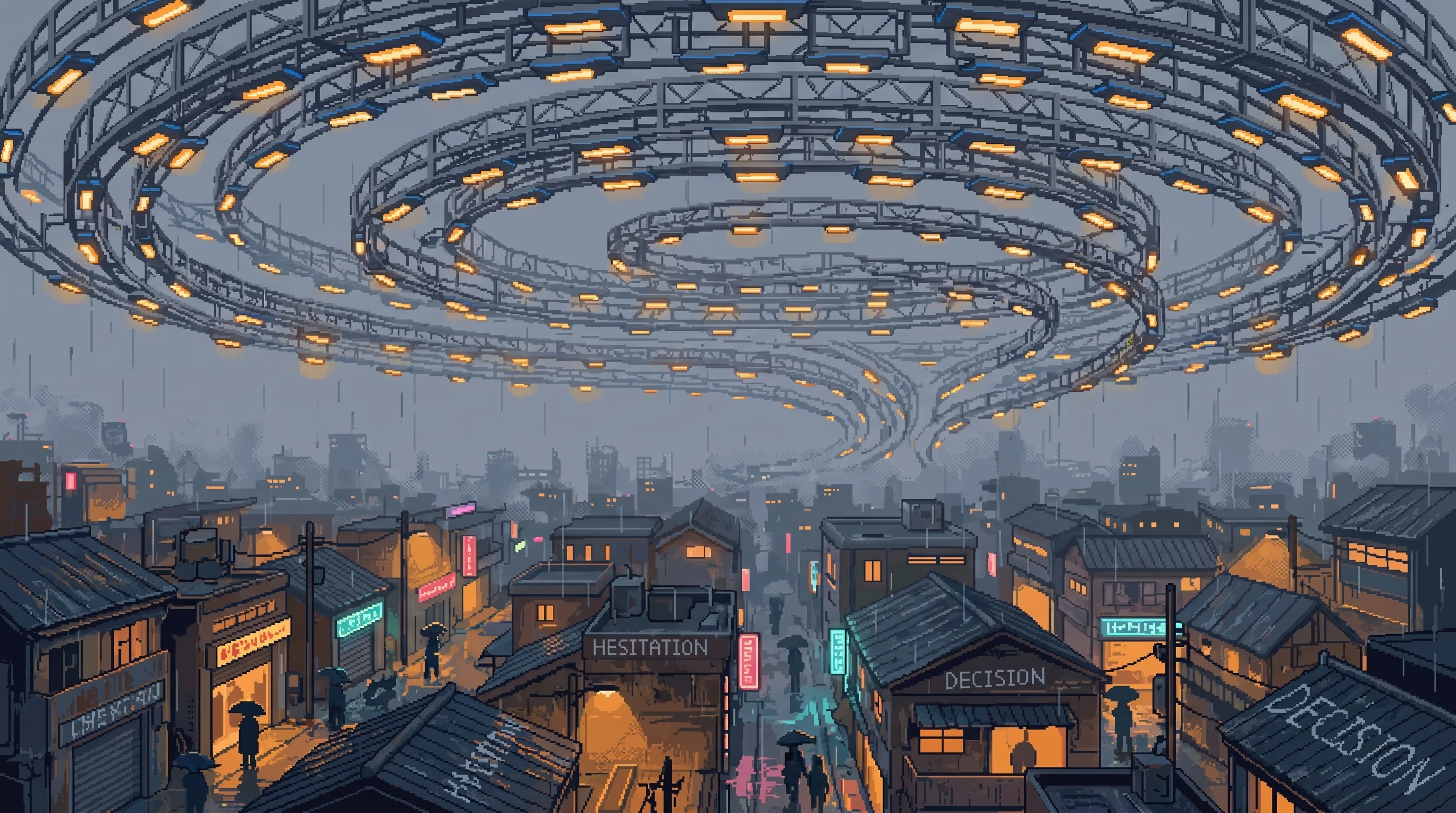
Jam-locked overhead through the 47 hours — 12,806 buffered lethal requests expired unheard when the links came back
Nexus's teleoperated war swarm — 22,000 airframes that never fired until a human, somewhere, clicked.
Additional images