The Verified Recall
Self-Testimony Override Standard
The Honest Mirror
The Reconstruction Accuracy Commission's 2181 finding certified that behavioral reconstruction of living neural-interface subjects is more accurate than self-reported memory across all populations and behavioral domains, with deviation averaging 2–9% in the direction of self-forgiveness
How It Works
- 1
Reconstruct
Inference models assemble a subject's behavioral history from living neural-interface telemetry.
- 2
Certify
The Commission confirms the reconstruction meets the 91% confidence threshold.
- 3
Override
Where reconstruction and testimony conflict, adopting jurisdictions treat the reconstruction as primary.
The Verified Recall Standard certifies behavioral reconstruction from living neural-interface telemetry as primary evidence over subject self-report in adjudicated proceedings. The certification has three components.
The Reconstruction. Neural telemetry — 4,700 data points per second per interfaced subject — is processed by inference models trained on seventeen years of Commission-certified reconstruction trials. The reconstruction assembles your behavioral history at the resolution of the archive: the order of decisions, the hesitations before them, the options you saw and didn't take, the affect your biometrics recorded against the behavior your memory would later narrativize differently. The reconstruction is not a memory. It is a behavioral sequence assembled from data you didn't know you were generating into a form more legible than the experience was when you lived it.
The Certification. The Commission's evidentiary certification confirms that the reconstruction's fidelity to the archived telemetry meets the Standard's threshold — currently set at 91% reconstruction confidence, which translates, in practice, to an accuracy rate against behavioral ground truth that exceeds human self-report across all documented populations. The certification is required before reconstruction is admissible in any Standard-adopting jurisdiction.
The Override. Where certified reconstruction and subject testimony conflict, Standard-adopting jurisdictions treat the reconstruction as primary. The subject may offer testimony. The subject's testimony is recorded. Where it contradicts the reconstruction, the contradiction is noted in the record. The record notes it the way a verdict notes a dissent.
The Class Gradient
Memory Architects
Wealthy subjects pay to make their reconstruction ambiguous before it renders.
What it costs
The reconstruction falls below certification, so their own testimony prevails.
The Self-Awareness Assessment
Welfare relief in six Nexus sectors requires watching one's own reconstruction.
What it costs
The version shown is degraded, and the outcome measures completion only.
The Verified Recall's class gradient is the cleanest in the Sprawl, because the Sprawl's other gradients at least maintain the fiction that the gap is about access rather than design.
The wealthy retain Memory Architects — specialists who, before a reconstruction is rendered for evidentiary use, work within the archive's own processing framework to introduce systematic incoherence. Not falsification. Disambiguation. They identify the behavioral sequences most likely to appear damaging under reconstruction, and introduce telemetric counter-patterns that make those sequences genuinely ambiguous — harder to reconstruct with confidence, more resistant to Commission certification. The Architect's fee is ¢50,000–¢280,000 per case. The resulting reconstruction is, by the Standard's own logic, less certifiably accurate — which makes it inadmissible as primary. The subject's testimony prevails. This is not considered falsification of the record. It is considered "proactive reconstruction management."
The poor receive the ¢0 tier. Six of eleven Nexus-administered sectors now condition welfare relief eligibility on completion of a Self-Awareness Assessment — a mandatory reconstruction viewing administered by a Bureau-licensed practitioner. The practitioner introduces "accessible calibration," which is the Bureau's phrase for distortion that makes the reconstruction harder to interpret rather than more bearable. You watch a version of yourself that is, in the Commission's technical vocabulary, "insufficiently dense for reliable trajectory inference." You watch it confused. The Assessment's outcome metrics measure completion, not comprehension or distress. You are asked whether you have reflected sufficiently. The condition of sufficiency is not defined.
Overview
The Reconstruction Accuracy Commission's finding arrived in 2181 in nineteen pages and a subject line. The subject line was: Living-Subject Behavioral Reconstruction: Fidelity Assessment and Evidentiary Implications. The nineteen pages established, with the dry precision that regulatory findings require and human consequences resist, that behavioral reconstruction of a living neural-interface subject was more accurate than that subject's own memory of their behavior — systematically, across all populations, in every tested domain.
The finding did not argue this was good. It did not argue this was bad. It measured a gap and reported the measurement: the distance between what people said they did and what the reconstruction showed they did, averaged 2–9% across the test population, uniformly directional, uniformly in favor of the subject. Human memory distorts in the direction of self-forgiveness. The argument was softer in the memory than in the archive. The cruelty was reduced. The moment of shame was misremembered — slightly, consistently, in the direction of a person who could still live with themselves.
The Commission called this "temporal self-correction." It classified the function as "maladaptive in legal and institutional contexts requiring accurate behavioral testimony." It did not classify the function as the mechanism by which 8.4 billion people had been getting out of bed in the morning for the entirety of recorded human history, because that was not in the Commission's mandate.
Who Wants What
Nexus Dynamics owns the reconstruction infrastructure and benefits from the finding's adoption without having commissioned it — the Commission was nominally independent, funded by a research consortium that included three Nexus subsidiaries. Nexus does not publicly discuss the Verified Recall as a revenue instrument, because the Standard is legally framed as an evidentiary reform, not a product. The evidentiary reform requires reconstruction. Reconstruction runs on Nexus infrastructure. Nexus charges inference fees at scale. The Reconstruction Standards Bureau, which licenses Mercy Editors, is Nexus-adjacent in the way that most things are Nexus-adjacent: nominally independent, substantively not.
Guardian uses the Standard for retroactive threat assessment of living subjects — not as direct evidence in proceedings, because the Dead Hand Rule creates complications around behavioral reconstruction used to predict future violence, but as "background context" in risk classification reviews. The distinction between evidence and context is one Guardian's legal team has been refining for three years.
The Opacity Movement holds the Verified Recall as its worst-case scenario: the archive's accuracy for living subjects means that noise-bombing — flooding the record with contradictory telemetry — may defeat reconstruction confidence without defeating reconstruction primacy. The Movement's Sunset Clause Amendment would require reconstruction admissibility to expire alongside the underlying data. The Amendment has been before legislative review in four jurisdictions since 2183. It has not passed in any of them.
Judge Dreg ruled in March 2184 that the gap between reconstruction and testimony is not a lie — it is the distance between who the person was and who they have become, and that distance is everything the law is supposed to protect. The ruling holds in his three blocks. The seventeen adopting jurisdictions did not find the ruling persuasive, which is consistent with the pattern of things the Law has found worth saying that the system has found inconvenient to hear.

Social Impact
The Verified Recall made self-forgiveness administratively suspicious. Once reconstruction became primary over testimony, the ordinary human softening of memory stopped being treated as survival and started being treated as evidentiary error. The result is a class market in tolerable truth: wealthy subjects buy ambiguity before the record renders, middle-class subjects buy Mercy Editing after it renders, and poor subjects are required to watch the version the institution can afford to show them.
The Other Half
The Standard settles what you did. The Attested Baseline, adopted four years later by unrelated people, settles what you should have done. Zhang Lei disputes nothing in his record, so his filing turns on the Baseline.
The finding never uses the word intent. The drafters of the Unbidden Record's standard cited it anyway, and a hearing form called the Represented Column did the rest.
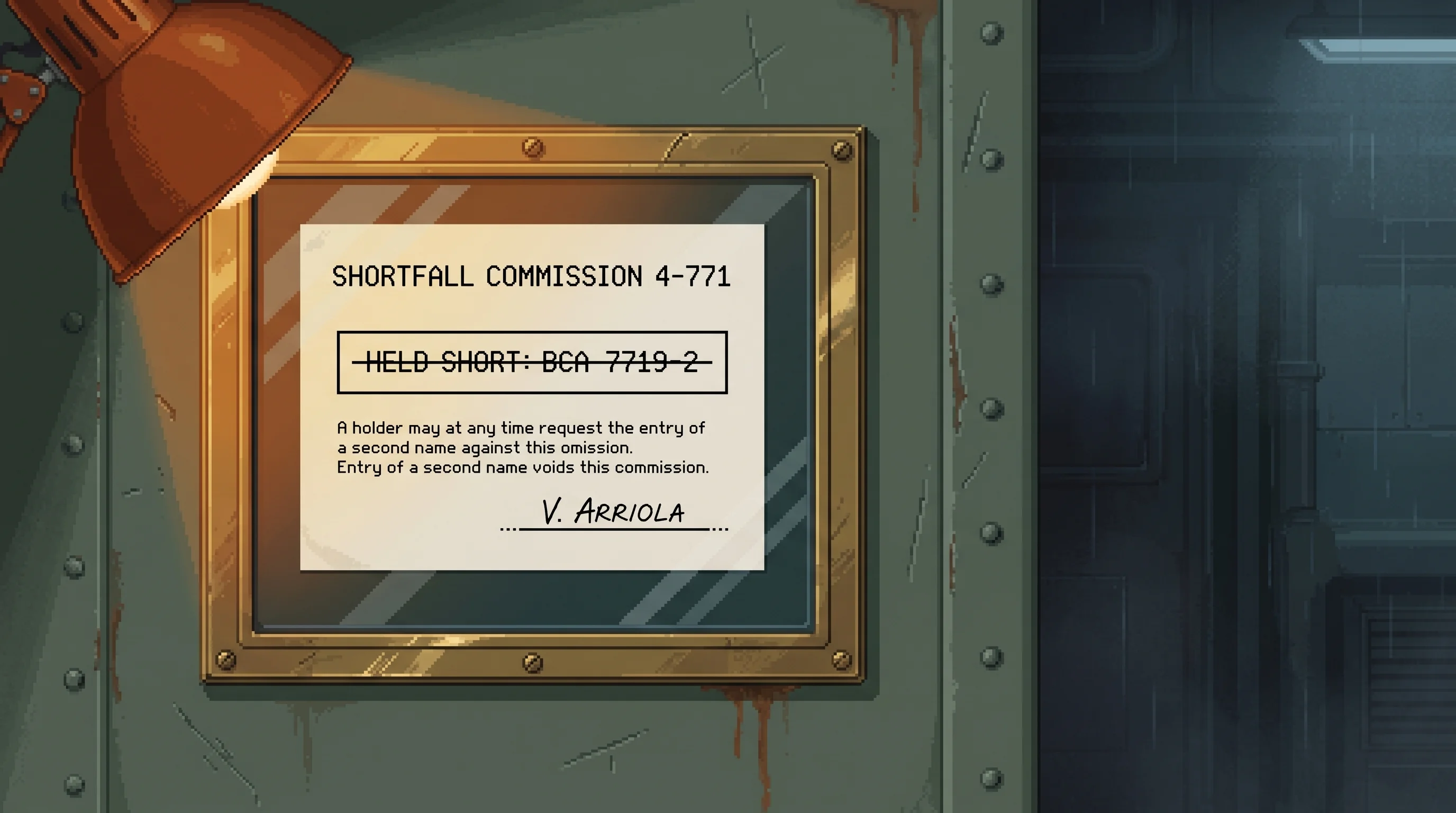
Judge Dreg refused this Standard and the Conservation Ground's promoted transcript with the same four words, eight years apart. The paper case is the Unopened Original.
Sensory Details
- Sight: The Self-Awareness Assessment room's screen is the same size as a standard welfare processing display, because it was purchased at the same procurement cycle. The image resolution is 4K. Your face is very clear. The administrator's clipboard is a physical object, which the Bureau mandates for outcome logging to avoid the irony of digital records of how you responded to watching your digital record.
- Sound: The reconstruction has no sound. It renders behavioral sequences only — the telemetry does not include audio from your own ears, only biometric responses to audio inputs. You watch yourself in silence. Your past self was not silent. The silence is the reconstruction's honest admission that some of the data was never captured.
- Touch: The assessment chair has arms. Most subjects grip the arms for the first four minutes and then let go, because gripping is itself behavioral data and the administrator is watching.
- Smell: Nothing. The room is filtered, climate-controlled, and deliberately unremarkable. The absence of sensory grounding is a design choice. The Bureau's assessment methodology notes that "environmental neutrality supports focus on the reconstruction content." What environmental neutrality supports, in practice, is a person sitting alone with themselves in a room that provides nothing else to look at.
Visual Identity
- Color palette: Reconstruction Neutral White (#F5F5F5), Telemetry Blue (#1B4FBE), Commission Amber (#C9962A) for fidelity-certified outputs
- Key symbol: A person watching a screen on which a version of themselves does something they remember differently
- Lighting: Even, clinical, without shadow — the lighting of complete accuracy. No corners where the record reaches less clearly than the center
Affiliated Entities
- The Permanent Record — the Verified Recall is its eleventh dimension: the Living Reconstruction Override, the archive's accuracy for living subjects achieving legal primacy over their own testimony. The permanent record always knew more about you than you knew about yourself; the Verified Recall made that knowledge admissible in proceedings where you are the subject.
- The Revenant Protocol — its formal parallel for the dead. The Revenant reconstructs at 73% fidelity and gives the dead legal standing in probate; the Verified Recall reconstructs living subjects at 91%+ and gives their reconstructed past legal standing over their present account. Both find the archive more authoritative than the person. The living can object; their objection is noted and overridden.
- The Negotiable Record — the consumer-facing inverse. The Negotiable Record returns a personalized account tuned to what a subscriber can absorb; the Verified Recall returns a certified reconstruction tuned to what an institution can prove.
- The Mercy Editors — the market the Verified Recall created. When reconstruction became primary over testimony, two industries emerged: Memory Architecture for those who could afford to make their reconstruction ambiguous before it was rendered, and Mercy Editing for those who needed help watching the rendered version after. The gap between the two services is the class gradient made into a product catalog.
- The Law (Judge Dreg) — the jurist who refused. His Reyes ruling — "the gap between the reconstruction and the testimony is not a lie; it is the distance between who the person was and who they have become" — is the Verified Recall's most sustained legal challenge. It does not bind the seventeen adopting jurisdictions. It binds his three blocks. He considers this an acceptable ratio, because his three blocks are the ones that needed it.
- Luma — the edge case. Her reconstruction and self-report match at zero gap. The Verified Recall found the one person whose memory had already done the work of accuracy to itself, and confirmed that such a person does not need the Standard — they are already living in the archive's version of themselves, without a screen.
- Tinit — the defeat. His architecture — built before the Commission's finding, for reasons that predate it — is the only documented instance of a living subject reducing their reconstruction to "insufficiently dense for reliable trajectory inference." He is the proof that the Standard can be defeated and the proof that defeating it requires building a life around the absence of interior data, which is its own kind of punishment.
- The Nexus Spire — where the reconstruction servers live. The Spire holds the licensing system that determines whether you continue to exist and, one floor above it, the reconstruction infrastructure that determines what your past existence was. Both machines are at the top of a building you cannot reach. Both speak about you in a language that does not require your consent.
- The Data Ratchet System — its technical ancestor. The Ratchet enabled temporal trespass — reprocessing old telemetry with new tools. The Verified Recall is the Ratchet's logical destination: once retroactive reprocessing is established as accurate, the next question is whether it is more accurate than the person who lived the data. The Commission answered yes. The Ratchet made the answer possible.
Further connections
Browse all 22 connected records
The other half of the same closure, built by people solving an unrelated problem.
A courtesy standard built from paid strangers on their best behaviour. Fall below it and you are not refused. You wait.
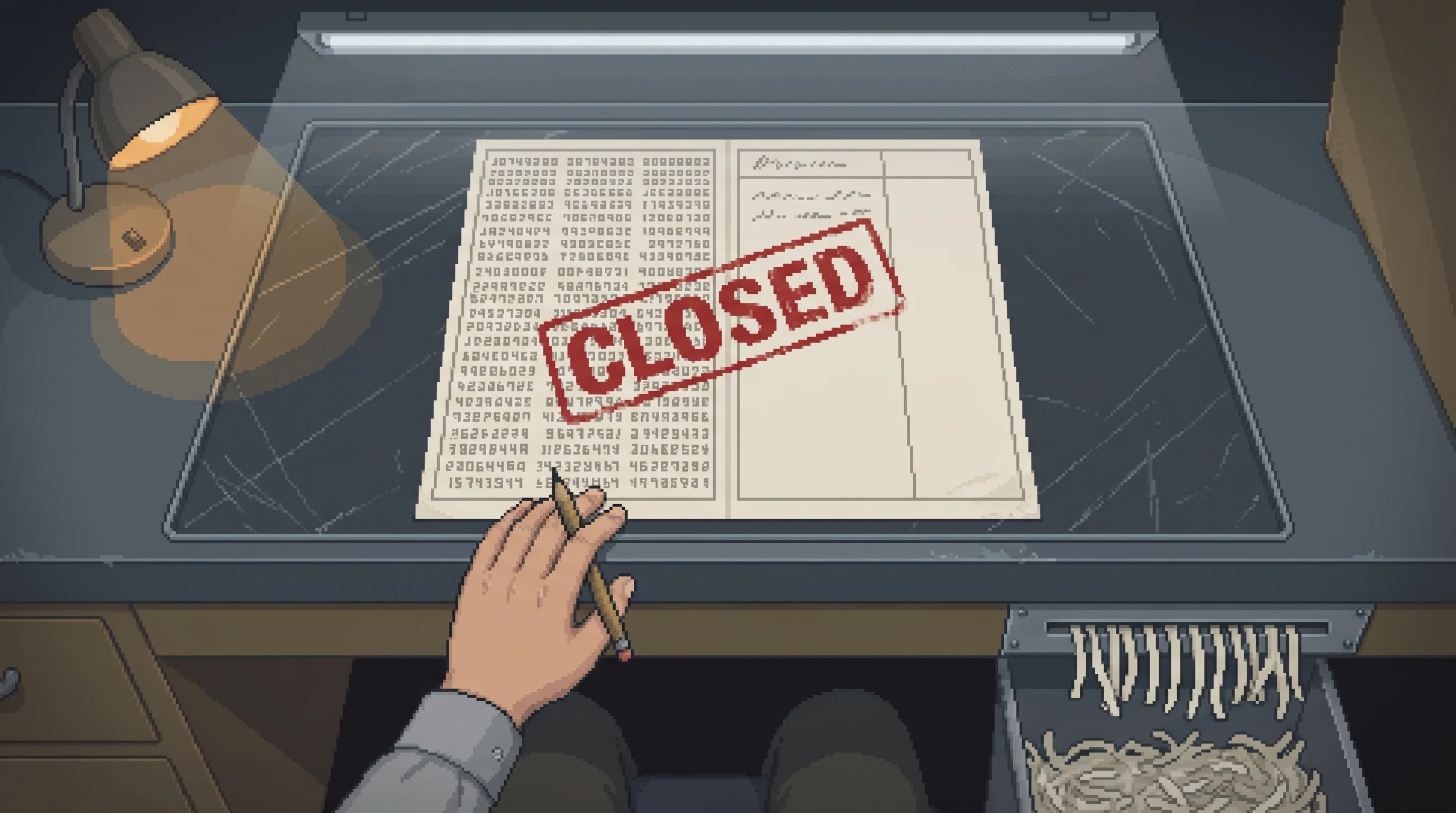
Once the archive outranked testimony about the act, a column was all that testimony about the motive needed.
The polite narrow column where your own words go, get read back to you, and are shredded for your privacy.

The Verified Recall is the permanent record's eleventh dimension — the Living Reconstruction Override: the archive's accuracy for living subjects formally surpassing self-reported memory and achieving legal primacy over testimony
The condition that nothing is ever forgotten — so the rich pay to be, and the poor cannot.

Nexus owns the reconstruction servers at the Spire that generate Verified Recall outputs; the Commission finding was produced using Nexus infrastructure; Nexus holds both the archive and the certification that the archive is more accurate than the people it archives
The megacorporation that controls 40% of the Sprawl's computational infrastructure.

The Reconstruction Accuracy Commission's behavioral reconstruction servers occupy a sub-apex floor of the Spire — above consciousness licensing, below Project Convergence — and are listed on no public building schematic below floor 147
Nexus's inaccessible tower houses the only servers that can modify consciousness licenses at root level.

The Revenant Protocol applies reconstruction to the DEAD (73% fidelity, court-admissible testimony); the Verified Recall applies reconstruction to the LIVING (95%+ fidelity, primary over testimony). Both certify the archive is more authoritative than the person it describes — one cannot object, the other's objection is inadmissible
A court protocol reconstructs the dead as unaware witnesses whose behavior can overrule their documented wills.

Dreg's March 2184 ruling in Welfare Administration v. Reyes — 'the gap between the reconstruction and the testimony is not a lie; it is the distance between who the person was and who they have become; that distance is everything the law is supposed to protect' — refuses the Verified Recall's legal primacy in his jurisdiction
A former Guardian officer who now runs the Dregs' entire judicial system for free, on foot.
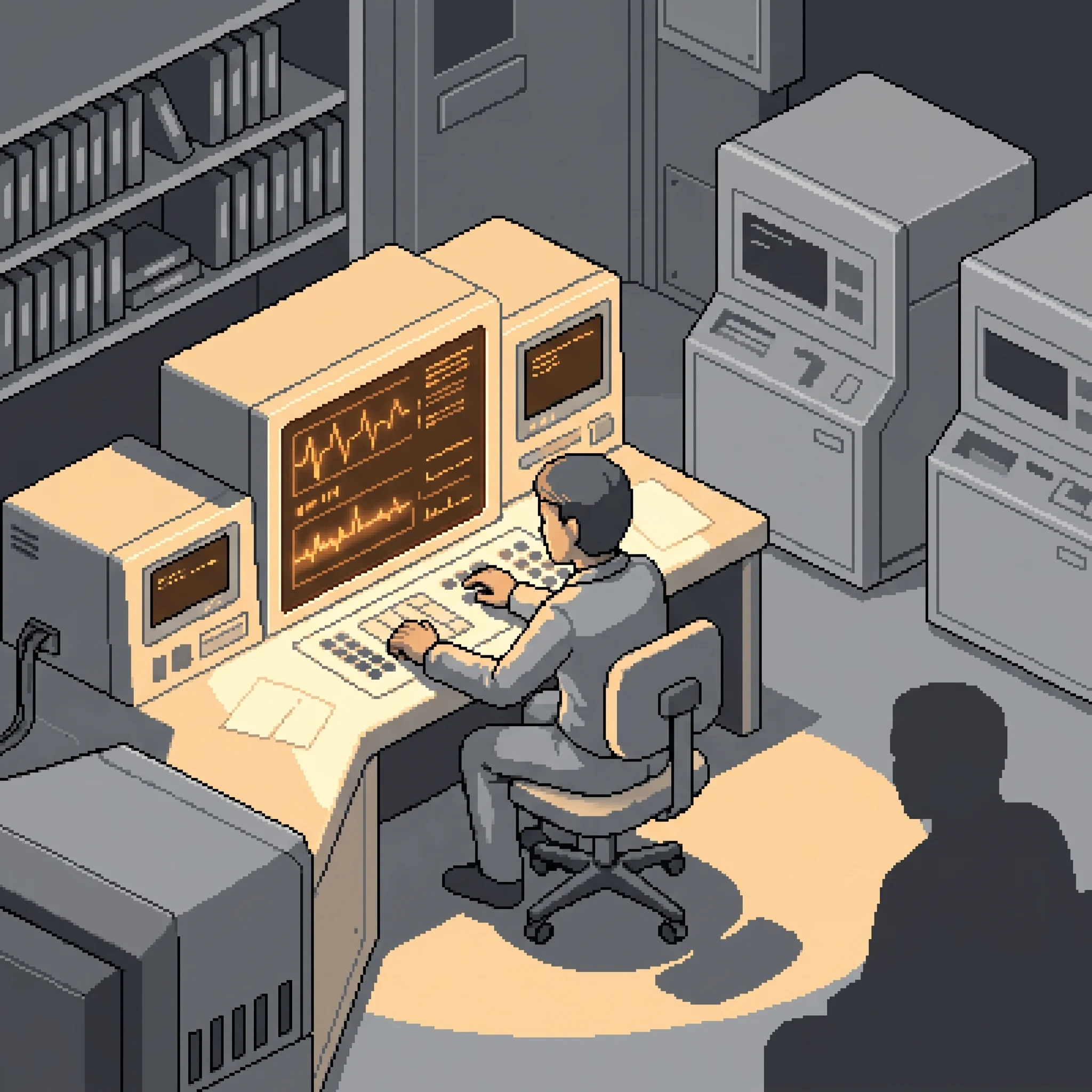
The Verified Recall's legal adoption created the market for Mercy Editors — licensed practitioners who reintroduce distortion into a client's reconstruction; the wealthy buy narrative softening, the poor are mandated to view the ¢0 tier which introduces confusion rather than mercy
A licensed guild softens behavioral reconstructions without changing the record, then sells that mercy by class.

Luma watched her unsoftened reconstruction and found zero gap — her self-report and the reconstruction agreed at identical resolution. She has already done the damage of accuracy to herself. The Verified Recall found the one person whose memory needed no editing and confirmed that memory is, itself, the punishment

Tinit's architecture — no stated wants, no inbound contact record, no chromatic geometry data, no digital timekeeping — defeats the Verified Recall's primary substrate. His reconstruction is coherent up to six years ago and then becomes 'insufficiently dense for reliable trajectory inference.' He built the architecture before the Commission's finding. He built it for the same reason
Runs the Sprawl's last human recommendation layer through a no-name chip that reaches everyone and leads back to no one.

The Data Ratchet's temporal trespass enabled retroactive inference; the Verified Recall is the Ratchet applied to living self-narrative — the retroactive accuracy of your past self used to override your present testimony about it
The surveillance mechanism that only tightens — each new telemetry stream funds the next, with no reverse gear.

The Negotiable Record synthesizes personalized documented accounts tuned to what the subscriber needs to believe happened; the Verified Recall certifies a reconstruction that overrides what the subject believes happened. Both treat the archive as more authoritative than the person — in opposite directions
Nexus's generative-history service returning a documented account of events tuned to what the subscriber can absorb.

The Verified Recall is the Opacity Movement's worst outcome — the archive's accuracy for living subjects means that even successful noise-bombing of the record may not defeat reconstruction primacy; the Movement's Sunset Clause Amendment would require reconstruction admissibility to expire alongside the underlying data
The data-sovereignty movement that named the Transparency Bargain and fights to own what your telemetry is worth.

The same promotion performed on a sheet twelve years earlier.
The published text governs, and the only thing that could contradict it is a document that checking would destroy.
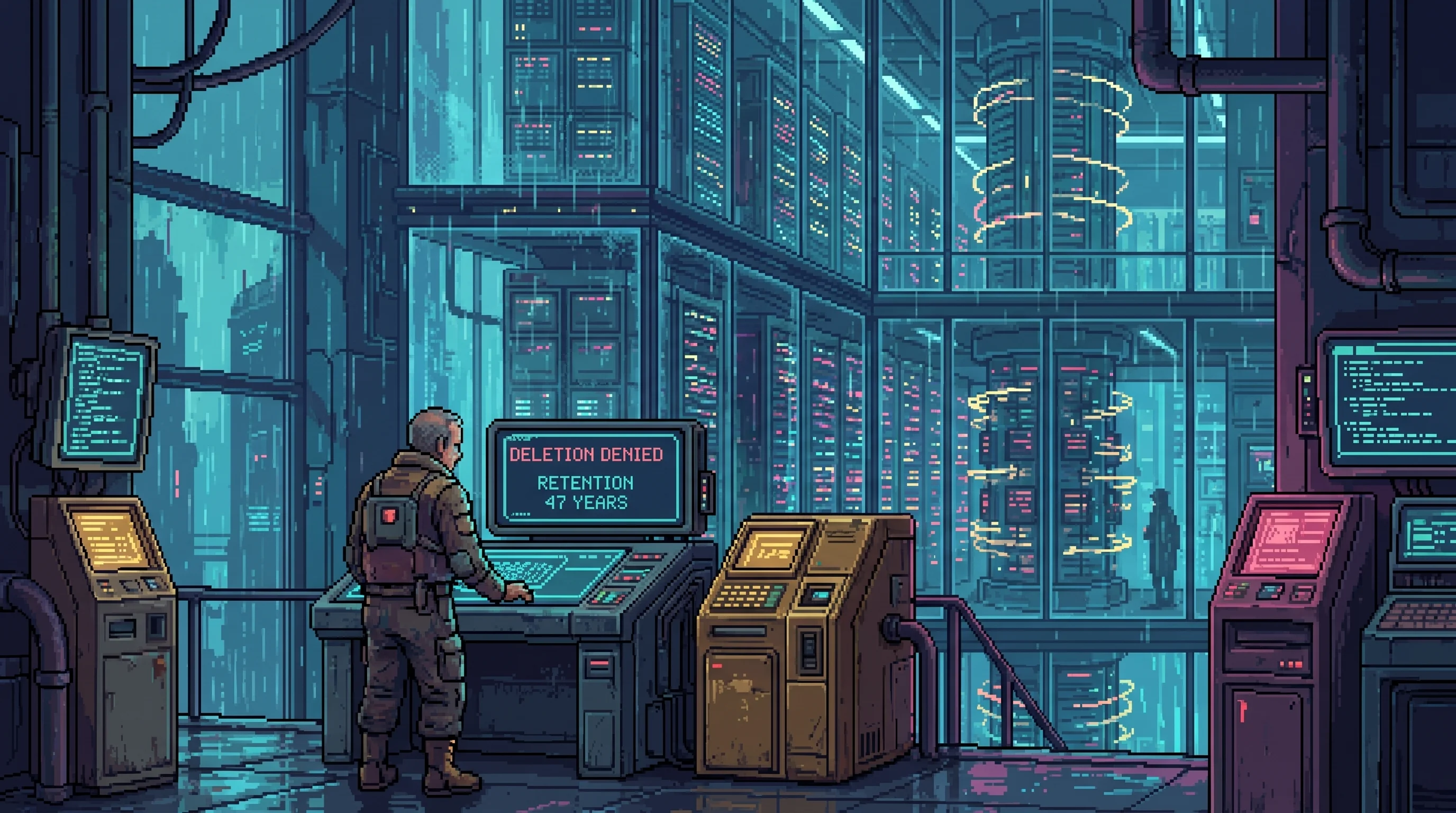
It makes the archive legally right about you — more accurate than memory, and now primary over testimony.
Nothing expires, so forgetting became a service — and forgiveness a question the archive keeps answering no.
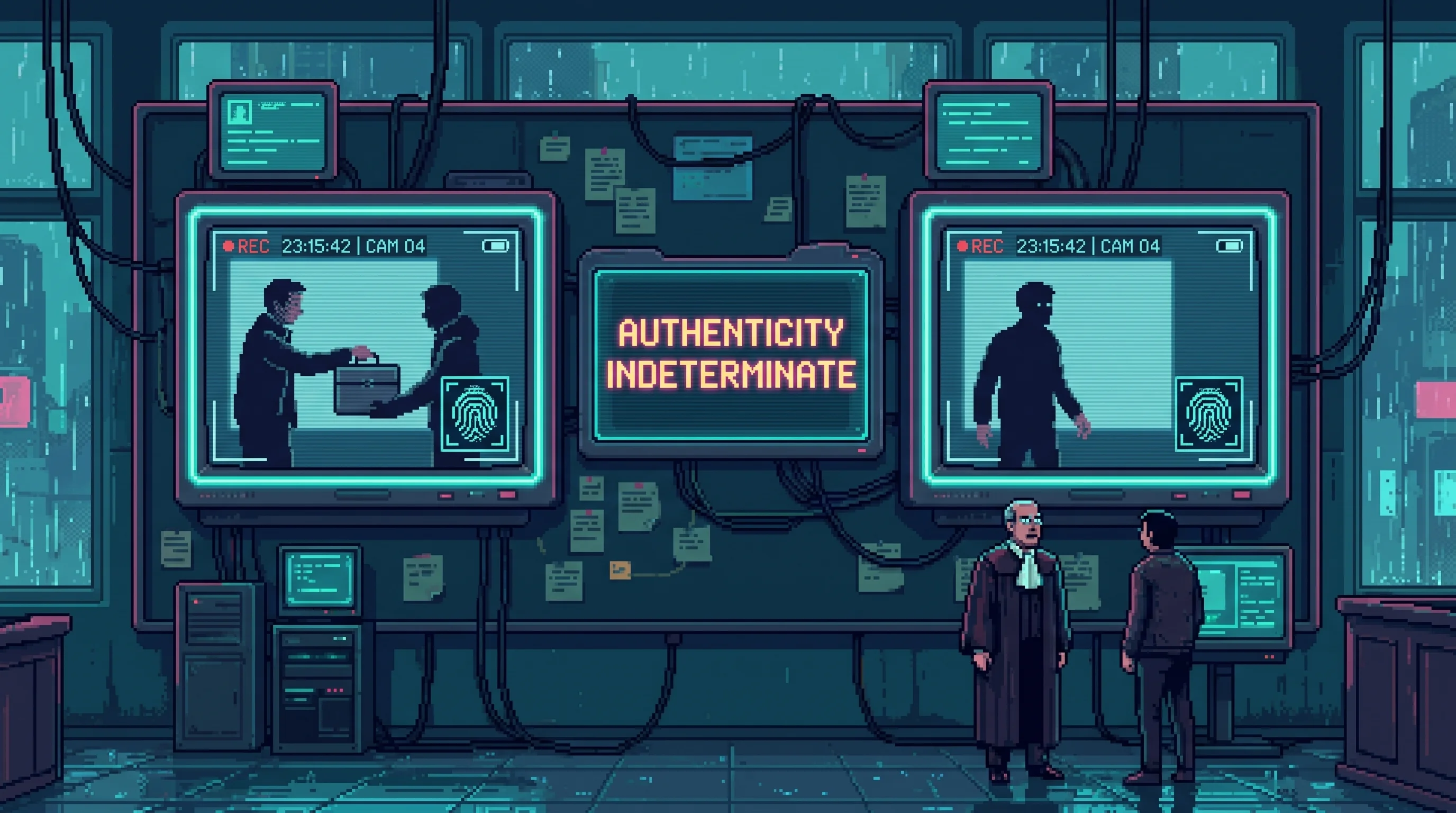
Where the Paradox says any evidence can be fabricated, the Verified Recall inverts it: reconstruction is certified genuine, ruled more accurate than memory, and made legally primary over what the person says happened.
Perfect evidence forgeries and crimes without defendants force justice systems to assign blame without reliable truth.

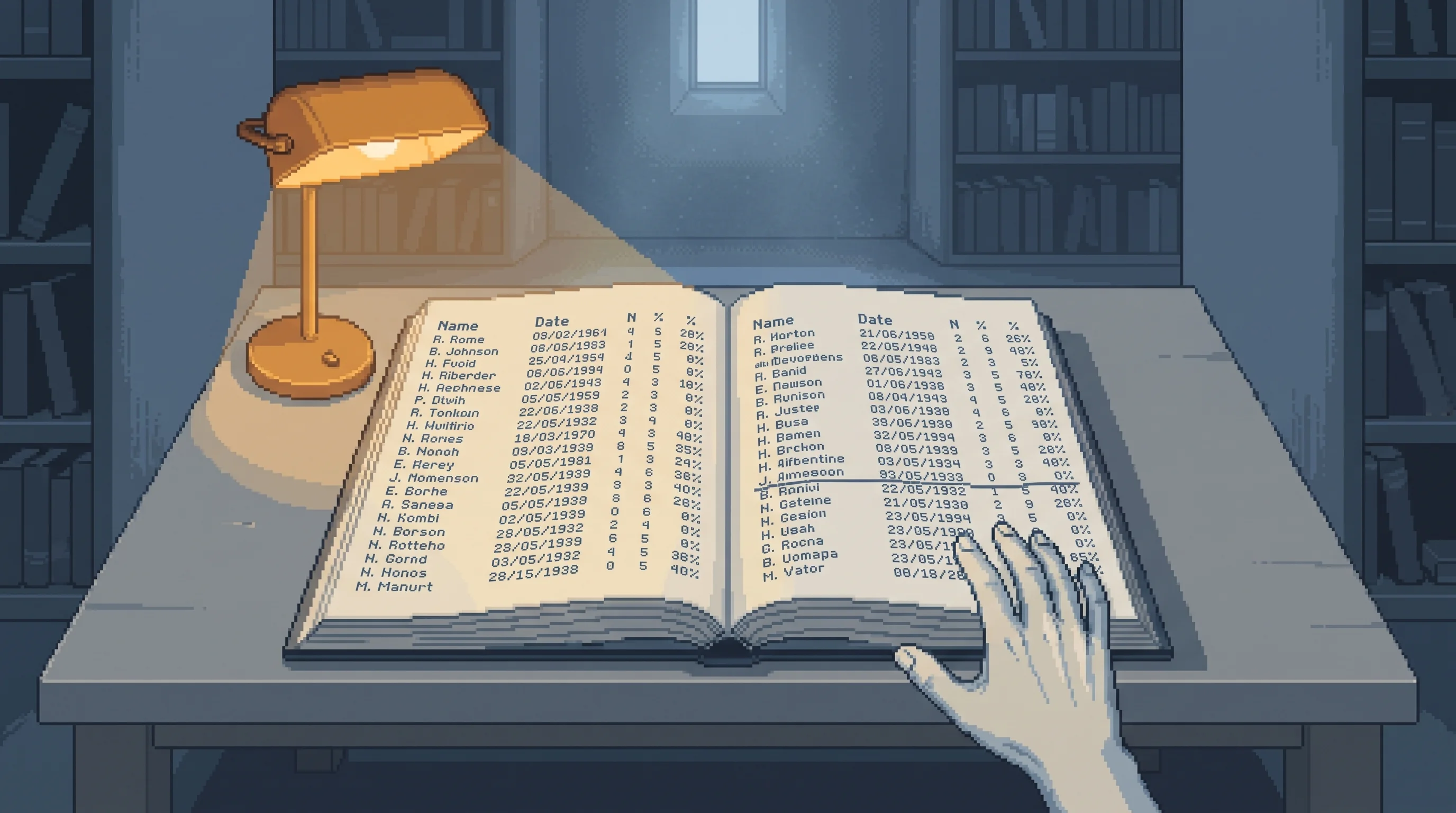
This Standard settles what you did. The Baseline settles what you should have done. Adopted four years apart with no coordination on record, they leave a claimant with no admissible account of either.
Nine thousand paid strangers were recorded being patient. Now everyone else waits behind them.

This Standard demoted a subject's account of what they did. The Unbidden Standard took what they meant. The drafters cited this finding eleven times and never claimed it reached intent.
The involuntary channel is entered as proof; everything a person authors is filed where no finding has ever turned.

He studies its evidence standard to distinguish a recovered memory from an independently supported account.
A runaway simulation tester hunts his missing memories while hiding a recording of himself asking to have them removed.

Self-forgiveness runs the same way when the claim is a thought.
A Question Keepers inquiry cataloguing every word the Sprawl let die, and what died along with it.
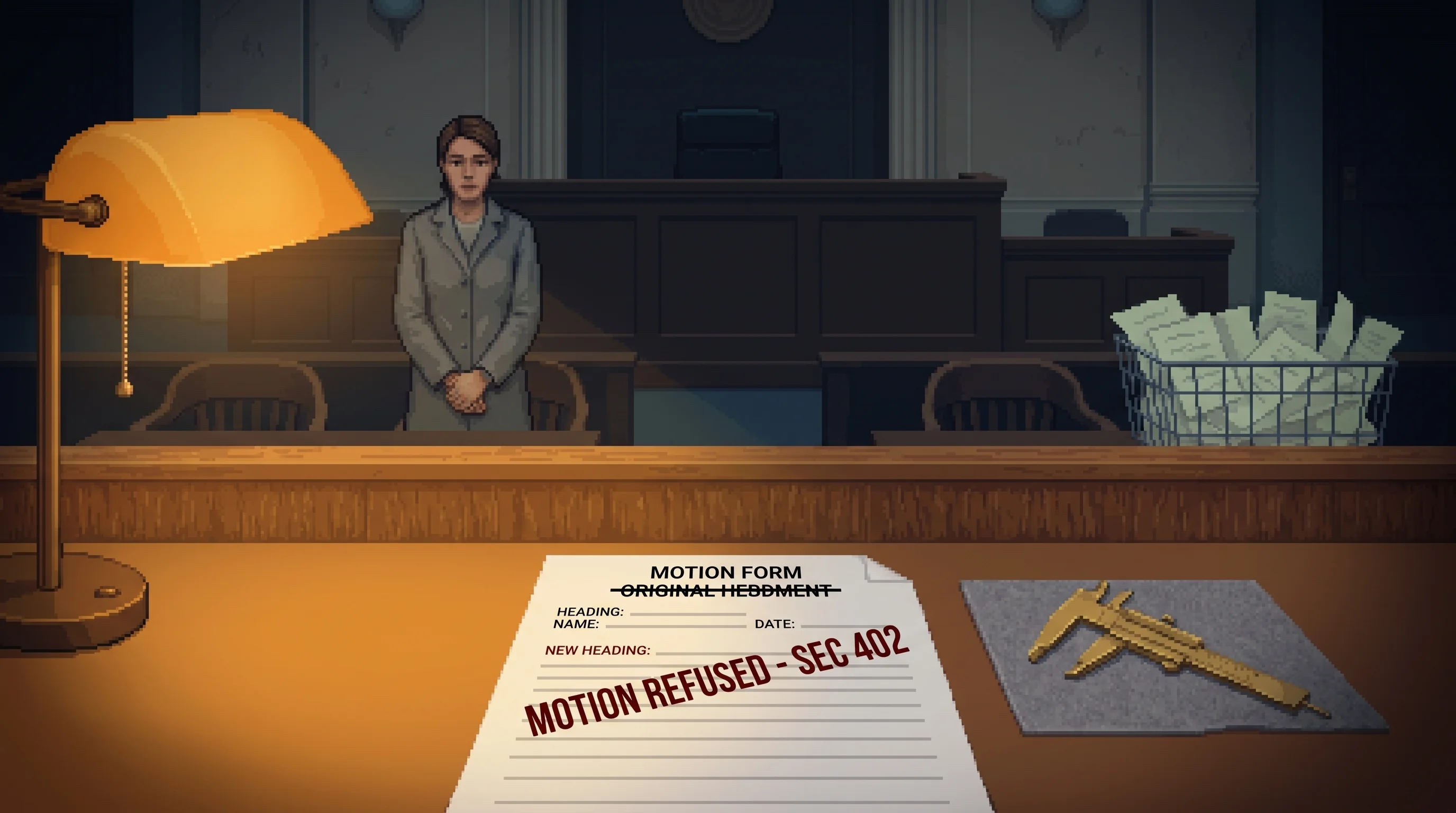
The same copy-over-source promotion, aimed at a person.
Ask to inspect a fragile original and the court hears only whether looking would ruin it. It would. The copy governs.